Following Hamas’ attack on Israel on 7 October 2023, Syria has become a key focal point in the global effort to stabilise the Middle East. That effort should now focus on supporting the practical unification of the Syrian state.
For Damascus to accomplish this and avoid a return to civil war, it must extend a hand to the country’s various ethnic and religious minorities and refrain from violent government repression. It must also enact forms of local and regional self-governance, including cultural and political rights, the election of officials, and democratic oversight of policing and public finances.
While such a roadmap is uncommon in the Middle East, it is enshrined in the Iraqi constitution and has worked on the ground—to a significant degree—since 2006 in non-Kurdish areas. (The Kurdistan Regional Government in northern Iraq operates with different provisions of that constitution and is not really applicable to Syria.)
This is where the international community can be helpful. If the US can bring together key regional and international states—linking their economic assistance and diplomatic support to Damascus to address local governance and human rights issues—Damascus is likely to cooperate.
Furthermore, failure to integrate minorities into the new Syria—both fully and cooperatively—will open the door to renewed conflict. Conflict that external actors such as Iran, Russia, and the Islamic State (IS) would exploit. This is not the future for which Syrian citizens struggled and suffered for so long.
The Kurdish question
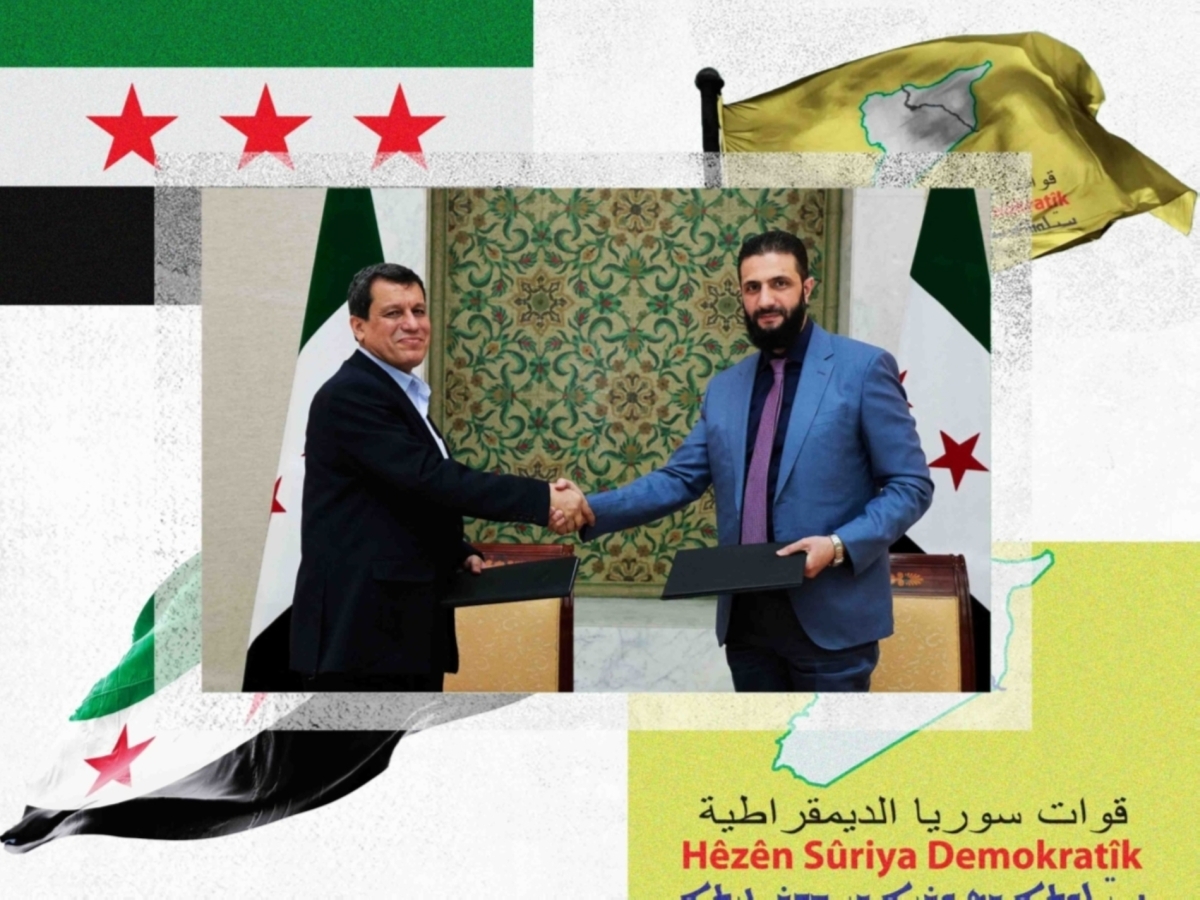
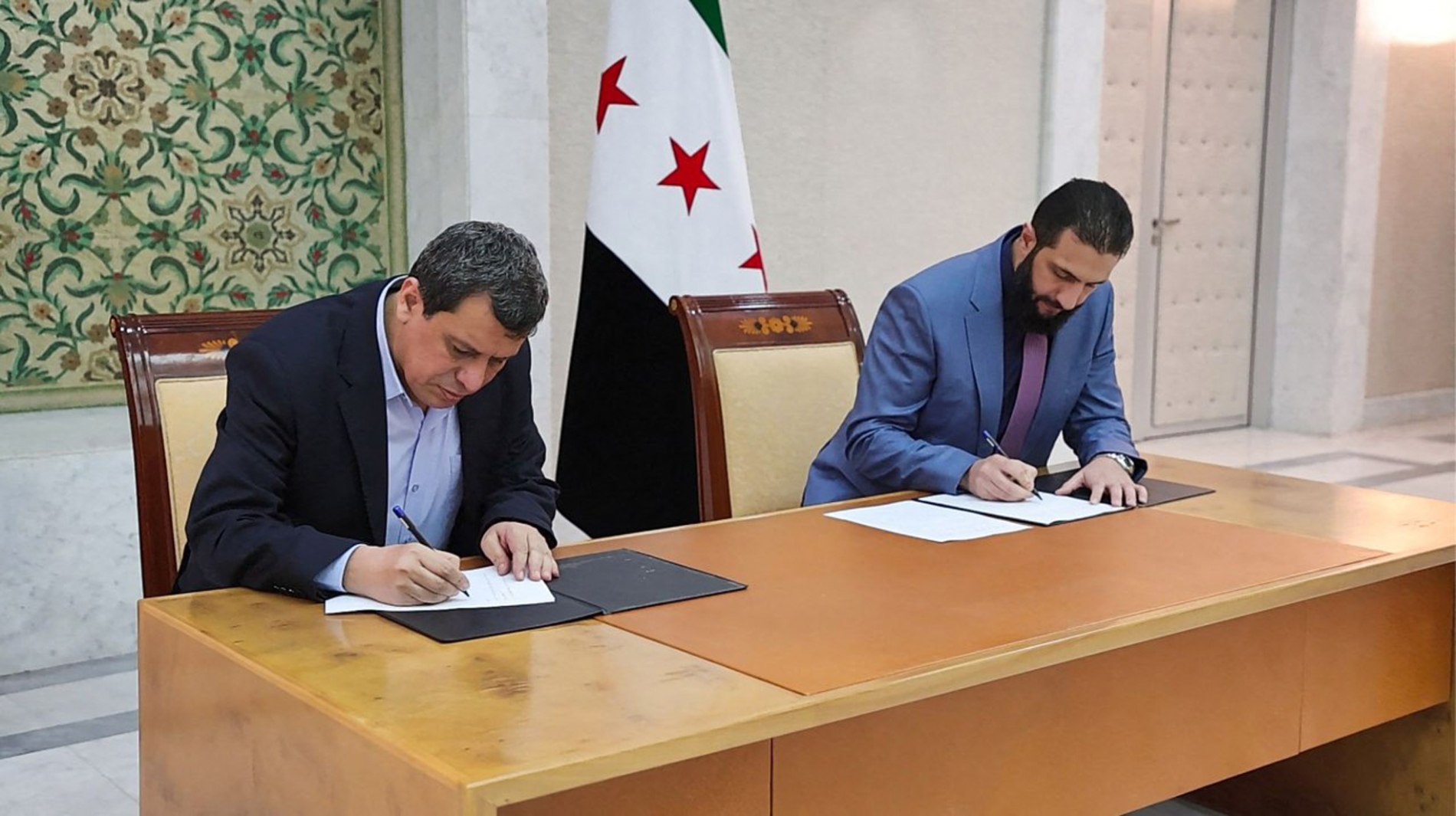
The most pressing internal question for Syria and the international community is the integration of Syrian Kurdistan, the Kurdish-led Syrian Democratic Forces (SDF), and existing local administrations into the wider state framework. Recent clashes between the Syrian army and the SDF in Aleppo and surrounding rural areas reflected the stalled implementation of the 10 March agreement between President Ahmed al-Sharaa and SDF commander Mazloum Abdi.
Ahmed al-Sharaa and SDF leader Mazloum Abdi during the signing of the agreement to integrate the SDF into state institutions on 10 March 2025.
Many of the SDF’s key assets, including control over most of the country’s oil fields, are now back under the control of Damascus. However, the largely Kurdish province of Al-Hasakah, with its functioning local administration and major remaining SDF elements, remains intact. A ceasefire between the SDF and Damascus, which came into effect on 18 January, was initially extended for two weeks, but has since been followed by the announcement of a comprehensive integration deal.
Kurds, Druze, and other minority groups should commit to decommissioning heavy and crew-served weapons
Announced on 30 January, the agreement will see Kurdish fighters and their administration gradually integrated into the central state. The deal stipulates that government forces will enter Al-Hasakah and Qamishli in the country's northeast, while three Syrian army brigades will be formed from the SDF.
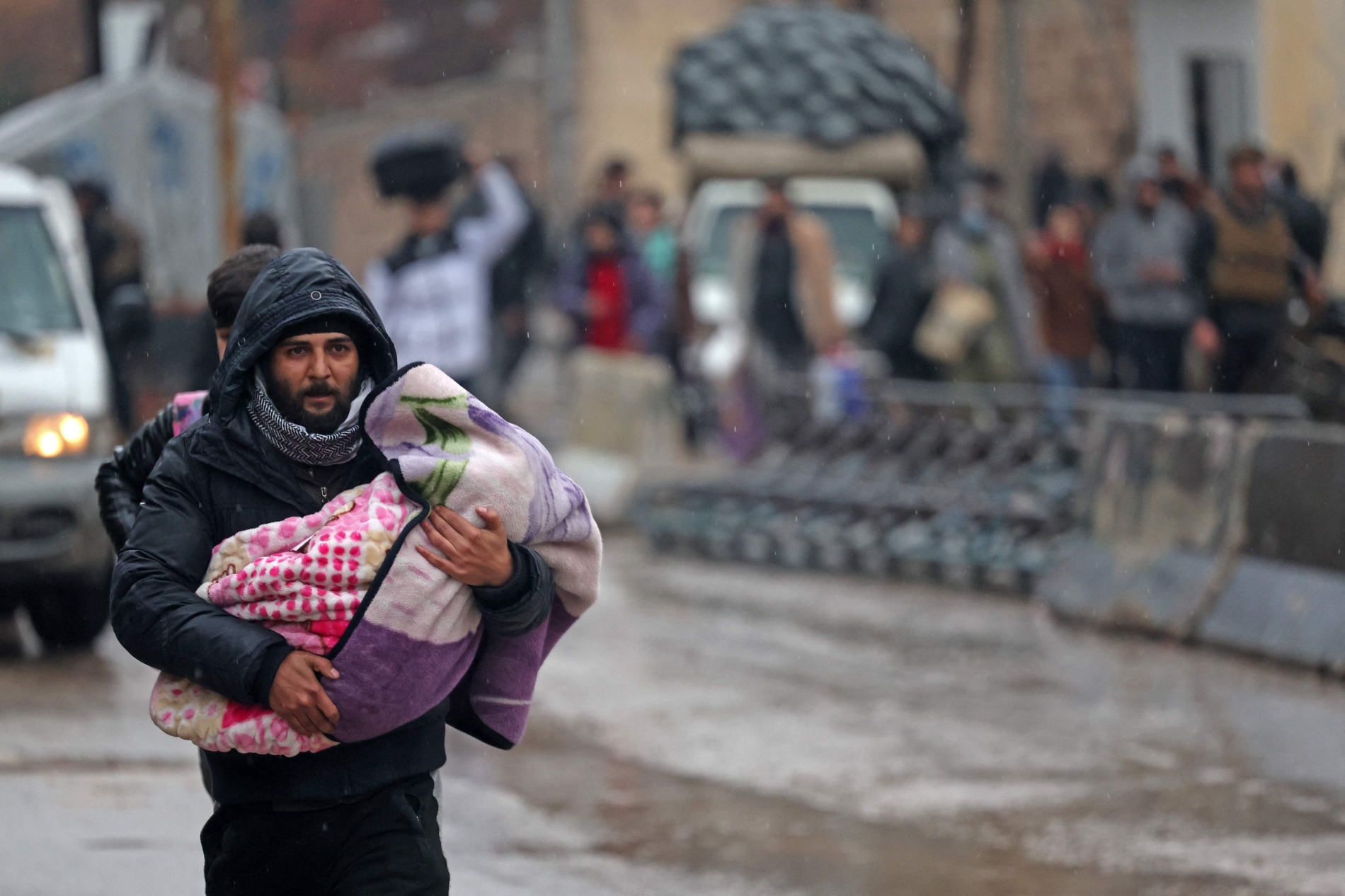
Residents of Aleppo's Sheikh Maqsoud area evacuate their neighbourhood after warnings from the Syrian army that called on civilians to get out of harm's way, following the refusal of SDF forces to leave Aleppo, on 9 January 2026.
The agreement also includes "civil and educational rights for the Kurdish people, and guaranteeing the return of the displaced to their areas," said a statement released by the SDF. "The agreement aims to unify the Syrian territories and achieve the full integration process in the region by enhancing cooperation between the concerned parties and unifying efforts to rebuild the country," it added.
Progress towards full Kurdish integration is not only the most important project in Syria; it also rivals the implementation of the second phase of US President Donald Trump's Gaza peace plan and talks with Iran as the most important project in the Middle East.
Conditional support, collective pressure
The US, as Washington has learned repeatedly, cannot dictate solutions to the internal dynamics of sovereign states. But both the US and its international partners can speak with one voice on what is not acceptable. That begins with an unequivocal rejection of renewed fighting between the central government and local militias, such as the bloody clashes seen in Suwayda, a Druze-majority province, last summer.
The international community should press for a reduced central government security presence in minority areas, alongside the establishment of locally-controlled police forces. In return, Kurds, Druze, and other minority groups should commit to decommissioning heavy and crew-served weapons, and permit freedom of movement for central government forces following local coordination within these areas—an issue that has previously arisen with both Kurdish and Druze authorities.
Beyond this, while suggestions on internal relationships can be freely offered by the international community, no external actor should insist on implementing a game plan that links support to its own ideas. The international community must insist on minimum standards of behaviour, particularly regarding unjustified force against minorities and citizens. Compliance should be tied to external assistance and enforced collectively by all international backers.
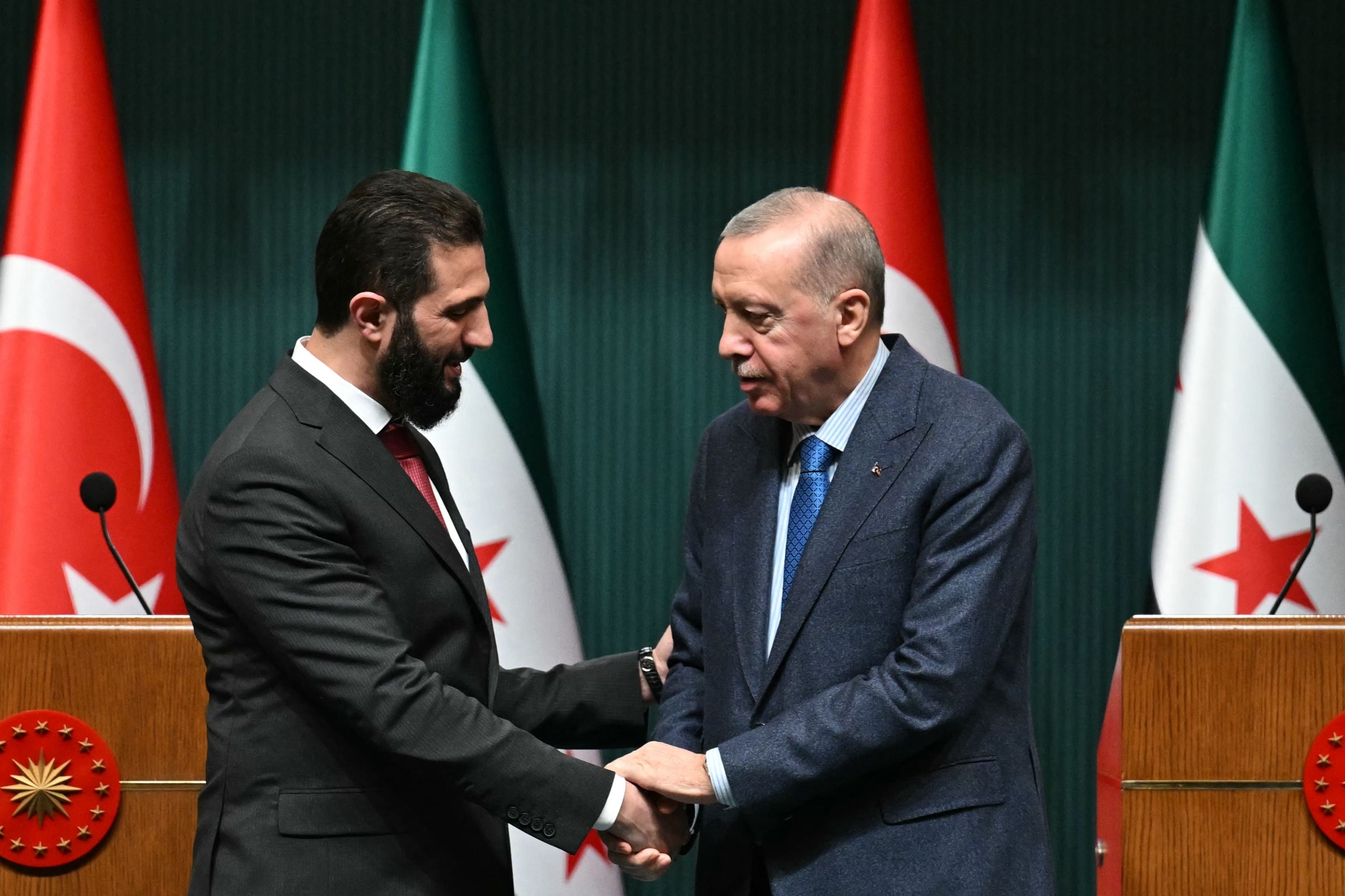
Turkish President Recep Tayyip Erdogan (R) and Syria's interim president Ahmed al-Sharaa shake hands during a joint press conference following their meeting at the Presidential Palace in Ankara, on 4 February 2025.
The other area where the international community can assist Syria is in managing its relations with the four states deeply involved in the country militarily: Iran, Russia, Türkiye, and Israel. Conceptually, Iran is the simplest. The collapse of its Syrian citadel was among the most significant defeats in the two-year war following October 7. Blocking Iran's return—militarily, economically, or politically—must be the highest priority for Syrians and the region.
Given the antipathy towards Iran among the majority of Syrians, including al-Sharaa, this sounds like a simple task. But Iran is already signalling its desire to regain its foothold. A breakdown in order, a divided state, or a return to civil war could create such an opening, providing Iran with the means to create regional mayhem.
Much of the focus for the US and its partners should not be Damascus or Tehran, but external actors such as Russia, Türkiye, and Israel. While Israel and Türkiye do not wish to see Iran return, overambitious Syria policies by either nation could spark the sort of breakdown Iran seeks.
Russia's role in Syria is focused on maintaining its bases, more for prestige than any military purpose, and soliciting Syria for weapons and oil. Neither the government in Damascus, nor Türkiye, nor Israel shows any enthusiasm for opposing such a limited Russian presence. In fact, some Israelis and Turks view Russia's presence as a buffer or counterweight against the other. The US, meanwhile, has a dozen higher Syrian priorities than pressuring Russia out. This could change were Russia to interfere in Syrian domestic affairs or in any way sponsor Iran's return.
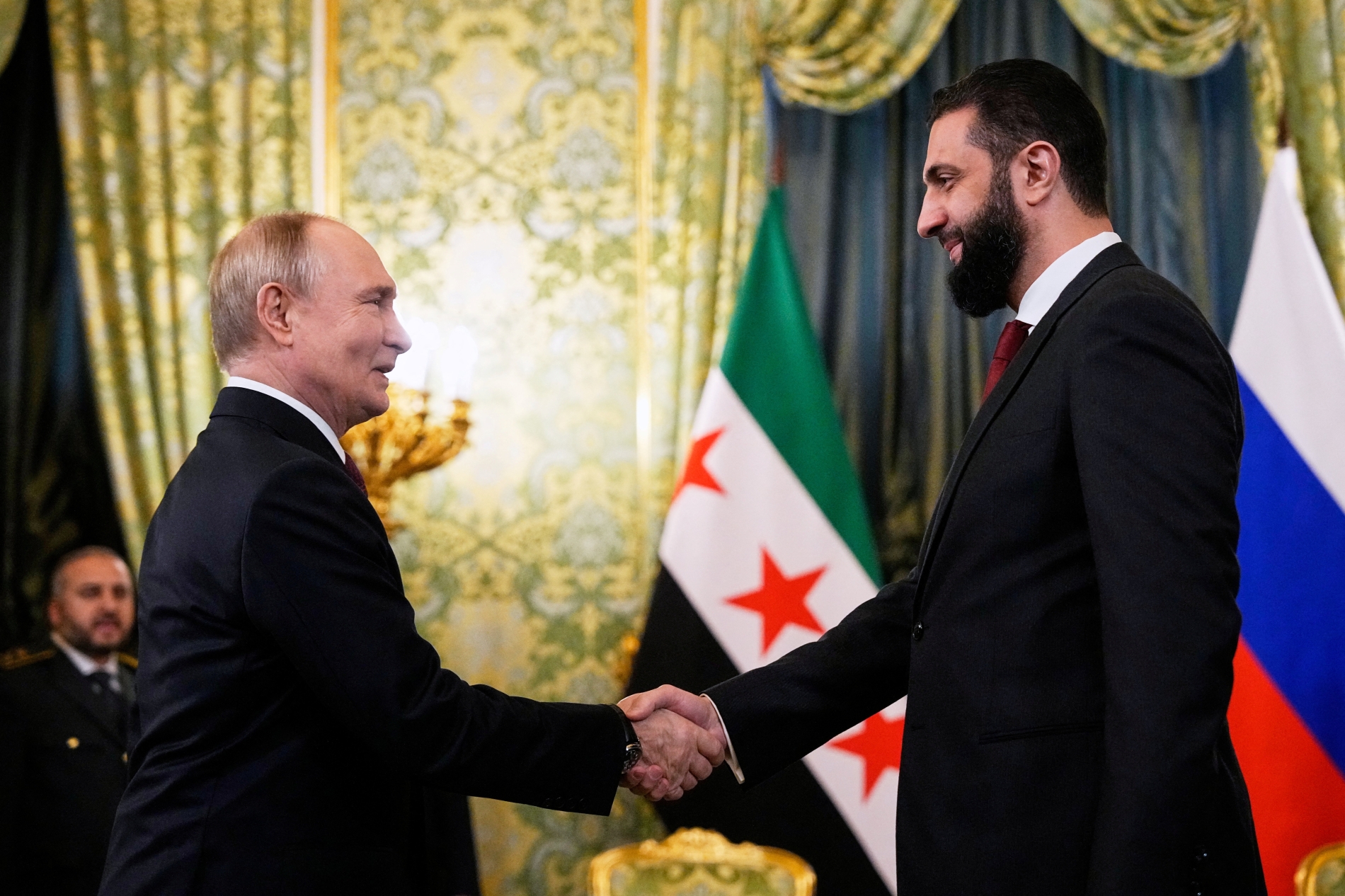
Russia's President Vladimir Putin shakes hands with Syria's President Ahmed al-Sharaa during a meeting at the Kremlin in Moscow, Russia, on 15 October 2025.
Ankara's moment
Türkiye, as Trump has repeatedly stated, was instrumental in the fall of the Assad regime. It therefore helped to transform its southern neighbour from a multifaceted threat—the Kurdistan Workers' Party (PKK), SDF, Iran and its proxies, IS, Russia, and the Assad regime itself—into an asset. With Assad gone, Iran out, the PKK and SDF weakened, IS contained, and a friendly government in Damascus, Türkiye has turned Syria from a liability into a strategic asset.
Ankara's strong position in Damascus means a certain responsibility for what happens next. The most pressing issue is Kurdish integration, which may falter. If it does and Damascus, egged on by some in Ankara, resumes its attacks on the SDF, Türkiye will be blamed. That blame, in turn, will erode relations with Türkiye's European trade and NATO partners—fond of the SDF because of the central role it played in defeating IS—as well as with Washington. Moreover, a powerful, militarily successful Türkiye now stands cheek to jowl with an equally victorious Israel in Syria, with risks of spillover from their other bilateral frictions, such as Gaza.
Israel has spent the past year recalibrating its relations with Damascus. At first hesitant, it quickly assumed the worst, given al-Sharaa's al-Qaeda background and ties to rival Türkiye. Israel thus launched a military campaign, seizing land adjacent to the Golan Heights and bombing much of Syria's heavy military equipment. With the outbreak of fighting between Syrian Druze, Arab tribes, and Damascus forces, Israel quickly took the side of the Druze, intervening to protect a small Druze enclave along the border between the Golan Heights and Syria.
The international community should press for a reduced central government security presence in minority areas, alongside locally-controlled police forces
Damascus's success in avoiding a repeat of that terrible violence, its willingness to investigate its causes, and some success with US-brokered Israel-Syria security talks have calmed the bilateral relationship somewhat. The collapse of the SDF has also eliminated one potential Israeli pressure point with Damascus. Still, three-way relations between Türkiye, Syria, and Israel bear monitoring.
The only external power capable of carrying out such monitoring is the US. This would require continued intensive diplomatic engagement, a limited military presence to provide on-the-ground situational awareness, a visible American commitment, and—if needed—interpositional patrolling to police ceasefire lines.