Trump's retreat from multilateralism throws up a host of challenges

Going forward, the international community needs to reduce dependence on the US without upsetting the world's largest military and economic power. It will be a shaky tightrope to walk.

Al Majalla

Trump's retreat from multilateralism throws up a host of challenges

In modern international diplomacy, few developments carry more weight than the quiet withdrawal of a superpower, which is unfolding as the United States exits 66 international organisations—31 United Nations entities and 35 other global bodies. Washington is doing far more than reducing its membership roster. It is dismantling key pillars of the post-World War II international architecture that it helped design, legitimise, and sustain.

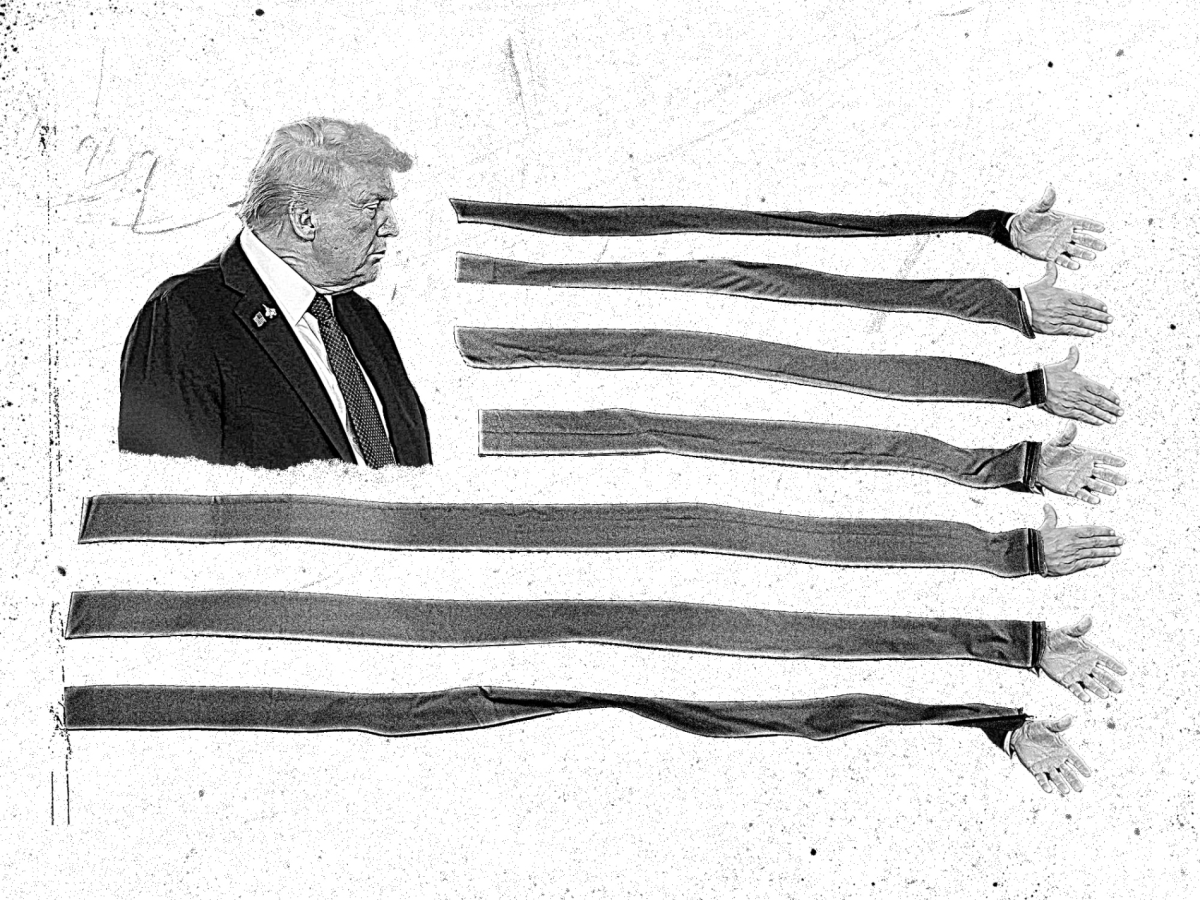
The ‘America First’ doctrine pushed by US President Donald Trump takes aim at multilateral institutions working on climate change, trade, development, and international law, to name but some. Yet this is no sudden rupture. Rather, it is the acceleration of a longer-term trajectory long spotted by observers: the gradual erosion of a unipolar order centred on American leadership, and the emergence of a multipolar world increasingly organised around regional spheres of influence.

As destabilising as this moment appears to proponents of multilateralism, it may paradoxically present the global community with the reason to undertake meaningful reform of an international system whose dysfunction and paralysis have become increasingly unsustainable. Does the rest of the world have the political will to seize the moment? Or will the US withdrawal simply hasten the system’s descent into irrelevance?

Rejecting internationalism

The intellectual foundation for America’s policy shift is explicitly laid out in the recently released 2025 US National Security Strategy. Withdrawing from international organisations is the deliberate execution of a coherent—if controversial—doctrine. The strategy rejects broad, values-driven internationalism in favour of a narrowly defined national interest calculus.

It declares that “the days of... propping up the entire world order like Atlas are over”. It privileges sovereignty, economic strength, and regional dominance over maintaining a liberal international order. In practice, this translates into transactional bilateralism and a deep scepticism toward international legal and institutional constraints.

Where previous national security strategies framed global institutions as indispensable platforms for collective problem-solving, the 2025 NSS sees them as diluting or undermining US influence. Trump calls organisations like the UN Population Fund, the Intergovernmental Panel on Climate Change (IPCC), and the International Union for Conservation of Nature “globalist bureaucracies” misaligned with American priorities.

The immediate crisis confronting the UN system is both existential and financial. In the past, the US contributed more than a fifth of the regular UN budget, and more than a quarter of its peacekeeping, yet Trump now proposes cutting funding for most UN bodies, even withholding funds already authorised under previous Congressional appropriations.
Michael M. Santiago / AFP
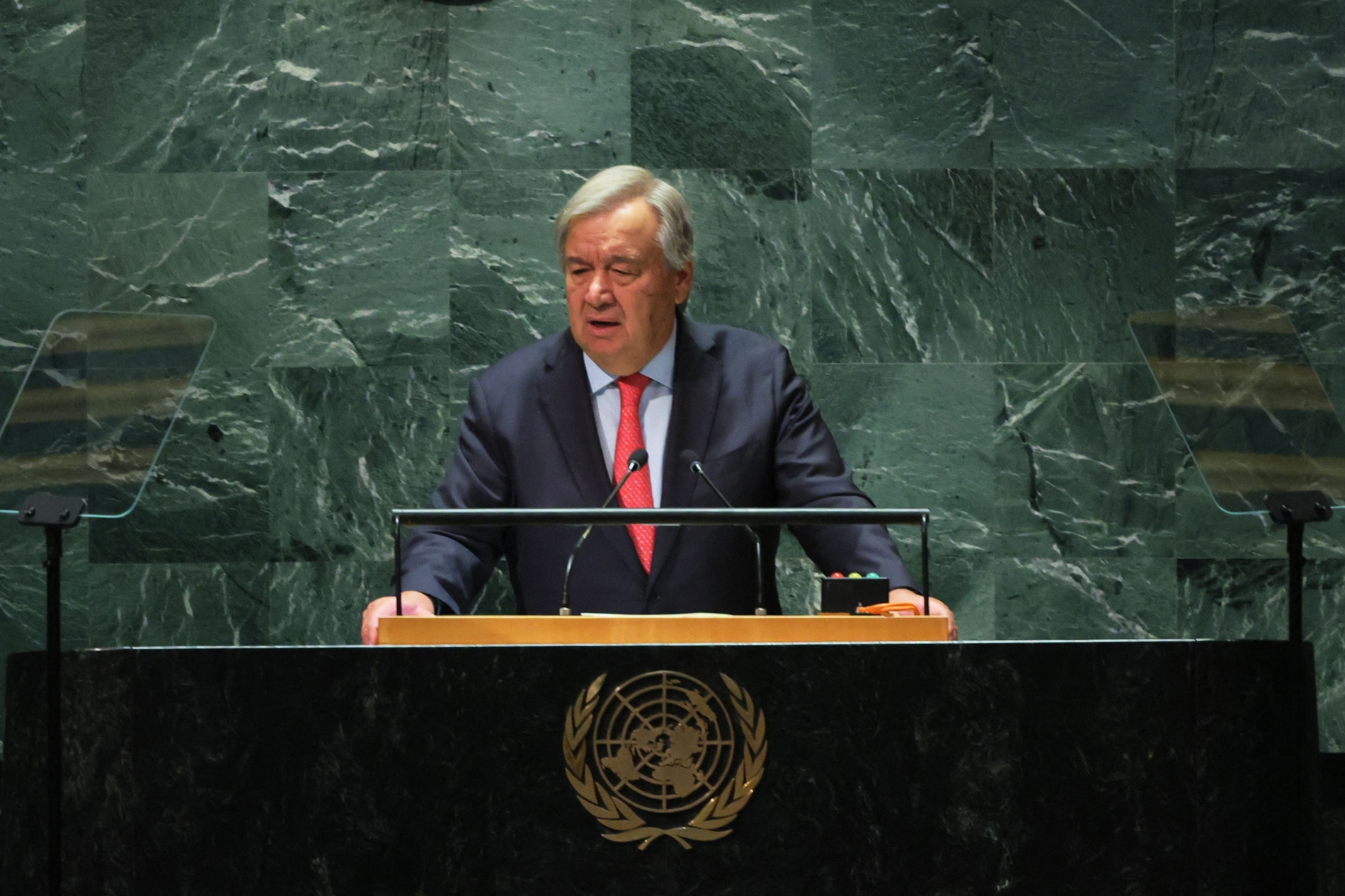
UN Secretary General Antonio Guterres speaks during the United Nations General Assembly (UNGA) at the United Nations headquarters on 19 September 2023, in New York City.

For his part, UN Secretary-General António Guterres said assessed contributions constitute “a legal obligation under the UN Charter,” but ‘legal obligations' carry limited weight when the violator is the world’s largest economy.

The consequences extend to voluntary contributions, which fund the bulk of UN operational activities—from climate mitigation initiatives (such as UN-REDD) to education in emergencies to programmes combating sexual violence in conflict. Withdrawing funds will cause immediate harm to vulnerable populations worldwide.

The US withdrawal from international organisations gives the world an opportunity to build institutions genuinely fit for a multipolar world

Time for a Plan B

Alternative financing mechanisms are urgently needed. Several options warrant consideration. The UN General Assembly could revise assessment scales to redistribute the American share among other major economies, notably China (whose assessed contribution has risen to roughly 20%), as well as India, Brazil, and the Gulf states, whose financial capabilities far exceed their current contributions.

The international community must tackle today's excessive reliance on voluntary funding as a structural weakness. While politically flexible, voluntary contributions create dangerous dependencies and expose institutions to what scholars call "corporate capture" if private financing expands unchecked. A more sustainable approach is to combine mandatory assessments with targeted levies on financial transaction taxes, carbon pricing mechanisms, or commercial shipping in international waters. 

Johanna Geron/Reuters
Flags fly outside the European Commission HQ in Brussels.

Regional organisations like the African Union, the European Union, ASEAN, and the Arab League could assume greater responsibility for funding UN operations within their respective regions. This would produce a more distributed and resilient financial architecture and aligns with longstanding proposals to grant regional organisations enhanced roles within the UN Security Council framework.

Paradoxically, this crisis may represent the most compelling catalyst for UN reform in decades, including the Security Council and Bretton Woods institutions. Calls to do so in the past have been met by inertia. The five permanent members of the Security Council (the US, China, Russia, France, and the UK) in particular have resisted reforms, fearing they would dilute their status. With the US stepping back, the landscape may finally shift.

At the heart of reform demands—especially from the Global South—is the call for more equitable representation in global decision-making, most notably within the Security Council. But American withdrawal forces a more fundamental question: if the system can no longer rely on its traditional guarantor, is it still legitimate and of use? Reform is daunting. It requires a level of consensus that has proved historically elusive, but the status quo is increasingly indefensible.

Towards fragmentation

The post-1945 international system has been in transition since the end of the Cold War, a period of unchallenged American primacy. Yet with the rise of China and the growing assertiveness of middle powers such as Brazil, India, and Saudi Arabia, US withdrawal only hastens the redistribution of global influence. If multilateral cooperation cannot be renewed, a fragmented system of competing spheres of influence will take hold.

The alternative is a revitalised and reformed multilateralism capable of channelling multipolarity toward stability, rather than fragmentation. But that requires institutions seen as legitimate by rising powers, something current UN structures manifestly are not. Developments such as China's Belt and Road Initiative, the expansion of BRICS, and the proliferation of regional security arrangements underscore the urgency of reform.

The central strategic challenge confronting the international community lies in a fundamental paradox: reducing dependence on the US without upsetting the world's largest military and economic power. It requires a balance that neither acquiesces to unilateralism nor provokes counterproductive confrontation.

ANDREW CABALLERO-REYNOLDS / AFP
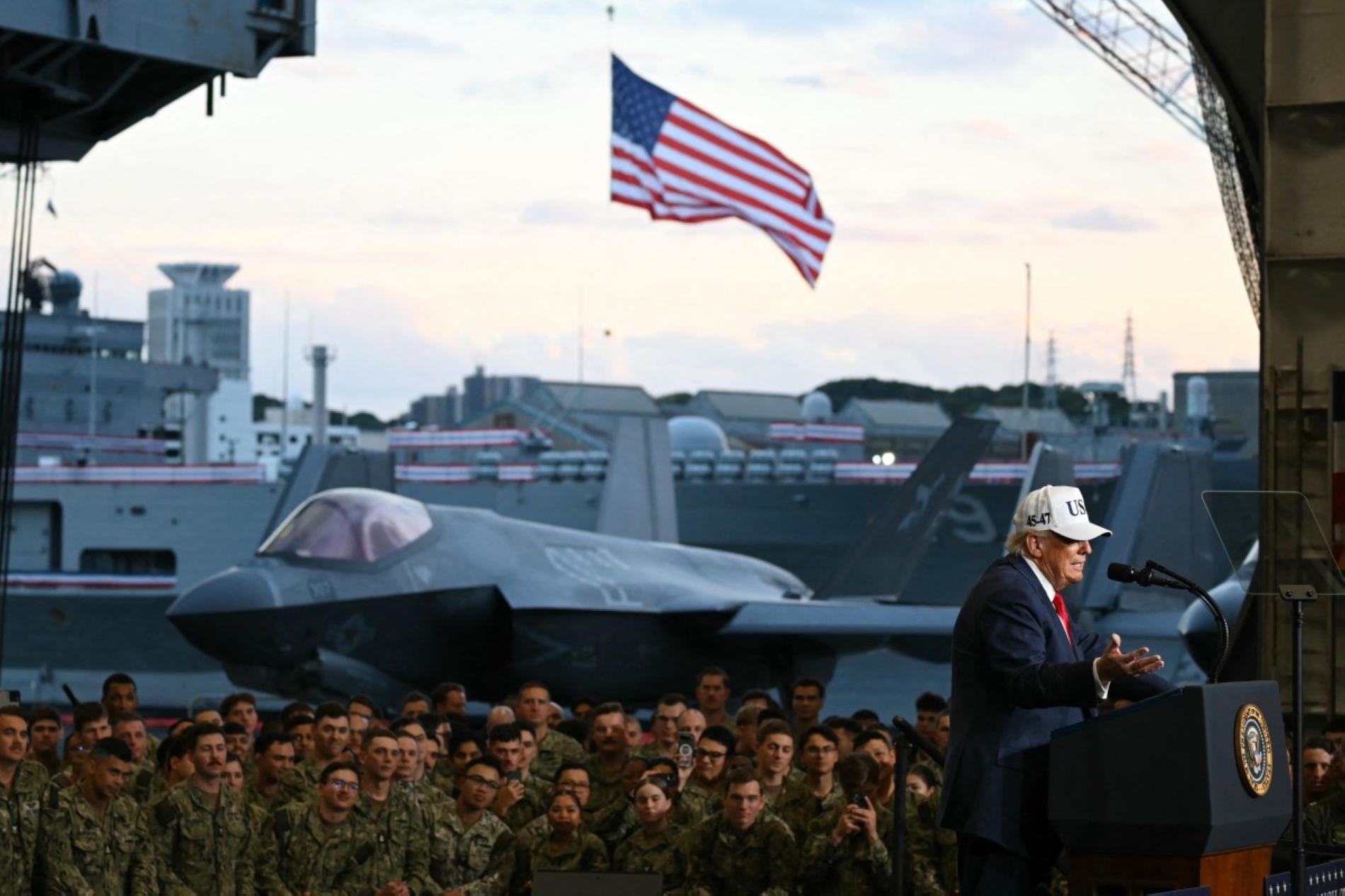
US President Donald Trump delivers a speech in front of US Navy personnel on board the US Navy's USS George Washington aircraft carrier at the US naval base in Yokosuka on 28 October 2025.

It also means accepting that some American criticisms of international institutions are not without merit. UN agencies can suffer from inefficiency, duplication, and capture by narrow interests. True reform would therefore strengthen institutional legitimacy. At the same time, complete American disengagement serves no one's interests. Work on climate change, pandemics, nuclear proliferation, and cybersecurity all require US participation.

The objective, therefore, should be to construct institutions resilient enough to function without American leadership, but still able to reintegrate Washington when political conditions change—as they have in the past and inevitably will again.

Goodbye, international law

The US withdrawal from international organisations constitutes a profound crisis for global governance. The precedent of a great power abandoning treaty obligations risks encouraging similar behaviour elsewhere. The most lasting damage may be symbolic: the erosion of faith in the very notion of binding international law.

Yet a world beyond American hegemony need not be a world without effective global cooperation. Institutions designed for 1945 cannot adequately serve the realities of 2026, so reform can no longer be deferred or demoted to incremental adjustments. The choice now is between fundamental transformation or irrelevance.

History suggests that crises can be effective catalysts for change. The United Nations itself emerged from the failure of the League of Nations and the devastation of World War II. This is an opportunity to build institutions genuinely fit for a multipolar world—more representative, more resilient, and less dependent on a single power. Whether world leaders have the vision and courage to seize this moment remains to be seen.

font change