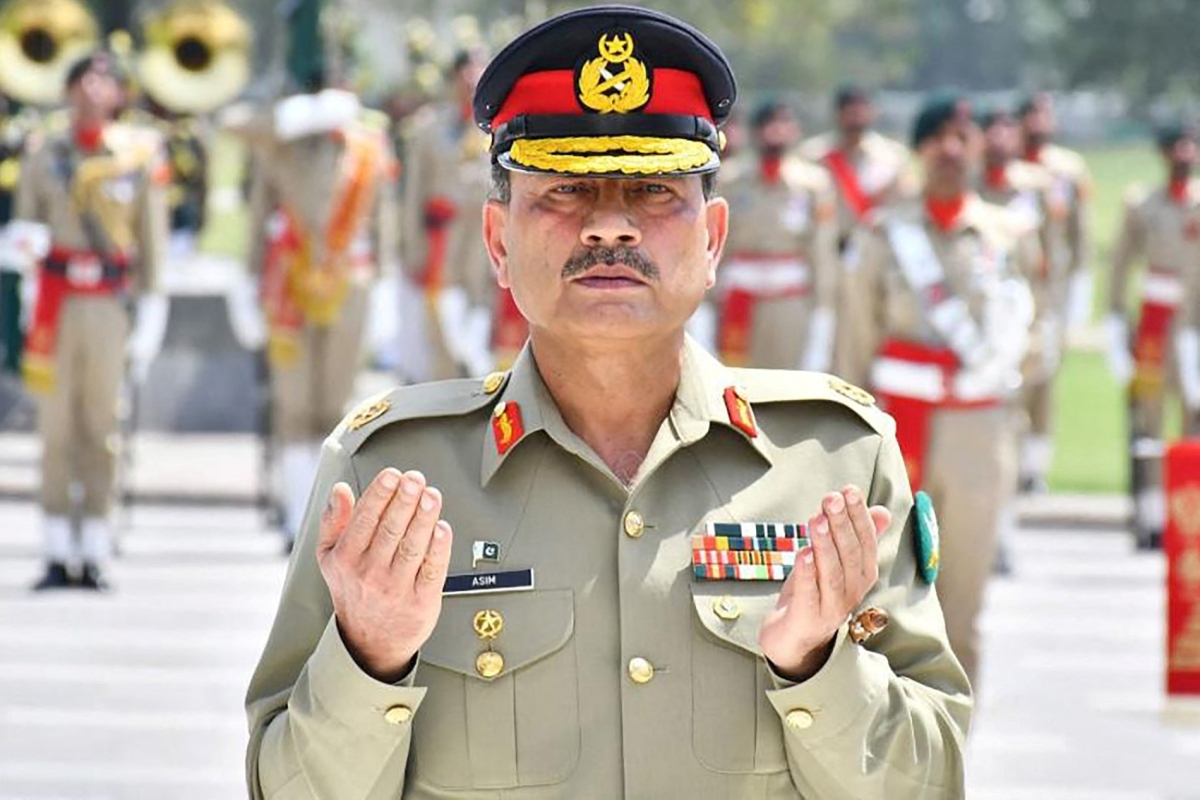

Since its inception in 1947, Pakistan’s military has played an active role in the Arab world and the wider Middle East. This engagement echoes the British Indian Army’s former policy of policing what the British referred to as ‘East of Suez’, although Pakistan’s role has been limited to training and protecting key allies, namely Saudi Arabia, Jordan, and, to a lesser extent, Syria and Iraq.
Over the last year, however, the US has ceded much of its defence diplomacy to the Pakistan Army and its chief, Field Marshal Asim Munir. Munir has been present not only as a military officer but also as a diplomatic chief, helping to de-escalate tensions with Iran behind the scenes and featuring prominently in American discussions on a potential Gaza stabilisation force. His involvement has been such that US President Donald Trump publicly praised him, singling out his role among other global figures.
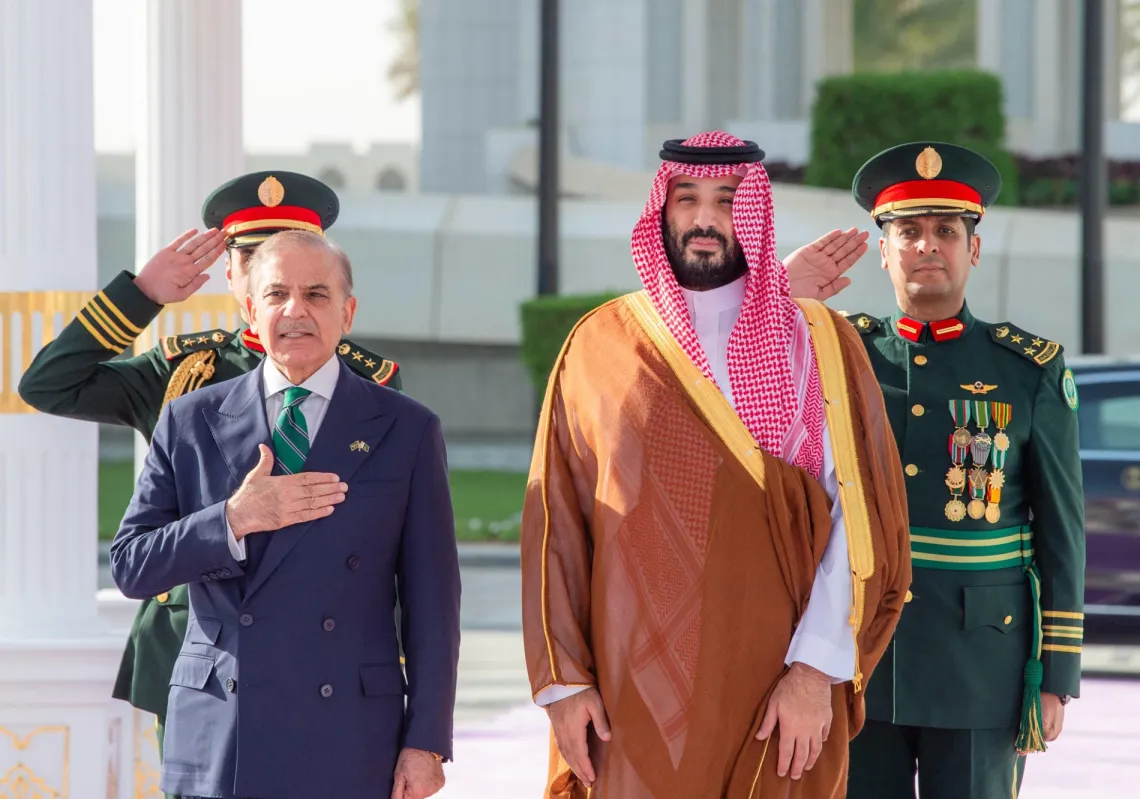
Pakistan’s military under Munir has met Saudi Arabia’s Crown Prince Mohammed bin Salman; Khalifa Haftar, commander of the Libyan National Army (LNA); King Abdullah II of Jordan; Egypt’s President Abdel-Fattah al-Sisi; and UAE President Mohamed bin Zayed Al Nahyan. It has even stepped in to help calm tensions between Saudi Arabia and the UAE over Yemen, following a public rift between the two nations.
Pakistan has evolved from being a traditional provider of security to using defence diplomacy as a tool for advancing potential solutions across multiple regions—from North Africa to the emerging Iran-Gulf thaw. This shifting role positions the Pakistani military as a possible stabilising force amid heightened regional uncertainty.
Inherited military culture
Pakistan’s modern military inherited much of its professional culture from the British Indian Army, in which large numbers of soldiers from what would later become Pakistan served across multiple theatres, including the Middle East and North Africa, during the First and Second World Wars. Those soldiers served in Jerusalem, Baghdad, Cairo, and other locations across the region.
One abiding feature of this legacy is the military’s central role in Pakistan’s foreign policy. Today, it serves as a key military partner to several states across the region, including Saudi Arabia, Türkiye, Bahrain, Iraq, Jordan, and Oman.
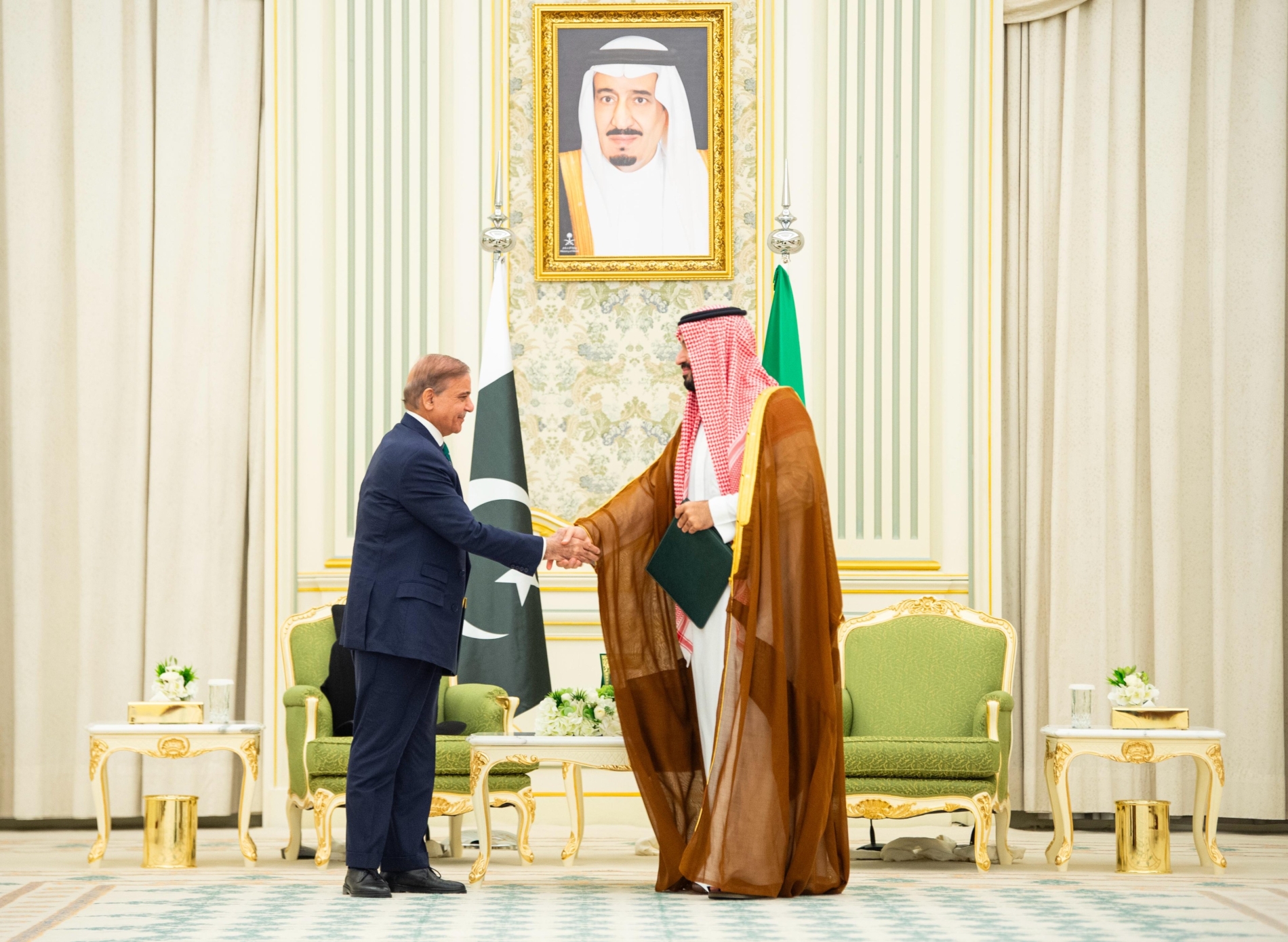
Read more: Saudi-Pakistan defence pact cements already robust ties
These alliances vary in scope. Saudi Arabia has a mutual defence pact; Bahrain employs thousands of Pakistani personnel across its security forces, including the military, as does Oman; Iraq has received pilot and counter terror training; and Türkiye publicly maintains Pakistan is its most important bilateral ally, despite its recent military deal with Türkiye’s rival in Libya, Haftar. Türkiye’s most prominent military podcaster, Admiral Cihat Yayci, an Erdogan insider, said it was inconceivable that Türkiye and Pakistan could ever hurt each other.
Pakistan has also used its close ties with Saudi Arabia to mediate with Iran, while Pakistan’s army played a leading role in mediating an end to the Iraq-Iran war, something the late Iranian president Akbar Hashemi Rafsanjani appreciated.
After almost 80 years of involvement with regional powers and maintaining several seemingly contradictory alliances, Pakistan has reached a position of diplomatic maturity, enabling it to act as a bridge between various Arab and non-Arab states and intra-Arab rivalries across the Middle East.
Bridge-builder and de-escalator
In late December, Saudi Arabia and the UAE faced heightened tensions over the UAE’s backing of Southern Transitional Council (STC) forces in southern Yemen. On 30 December, Saudi airstrikes targeted alleged Emirati arms shipments in the port city of Mukalla, deepening the feud between Saudi Arabia and the UAE. Following the airstrikes, Pakistan offered ‘complete solidarity’ with Saudi Arabia, while seeking a diplomatic resolution to the dispute between the two GCC nations.

Read more: Saudi Arabia's red line in Yemen explained
Pakistan has, however, come to understand its limits both as a mediator and ally, given its decades-long military alliances with multiple actors, some of whom now find themselves on different sides of the conflicts in Libya and Yemen.
In Libya, it recently concluded one of the largest defence deals since the fall of Muammar Gaddafi. Valued at $4bn, the deal covers fighter jets, tanks, and military jet training aircraft for the LNA, as well as offshore oil drilling using Pakistani military defence industries. This deal has led some observers to question the state of Pakistan’s relationship with Türkiye, given Ankara’s official backing of Tripoli’s Government of National Unity.
Erdogan insiders, however, have asserted the deal was green-lit by Türkiye, given Türkiye’s rapprochement with Haftar, and hinted at Pakistan’s role in arranging meetings with Haftar’s son, Saddam Haftar, after his trips to Pakistan.
Pakistan, of course, has also been Türkiye’s biggest military partner in terms of Ankara’s support of Azerbaijan against Armenia, and is an official partner in developing Türkiye’s fifth-generation fighter jet programme. The Greeks, meanwhile, have regularly complained about Pakistan’s military involvement and encroachment in Aegean skies and waters, which signals Pakistan’s readiness to help Türkiye combat threats on its borders.