Engineering a modern state: 25 years of Saudi developmenthttps://en.majalla.com/node/329045/business-economy/engineering-modern-state-25-years-saudi-development
Engineering a modern state: 25 years of Saudi development
From education and infrastructure to housing, culture, construction, creativity, technology, workforce participation, and innovation, the country is rapidly moving beyond oil
Engineering a modern state: 25 years of Saudi development
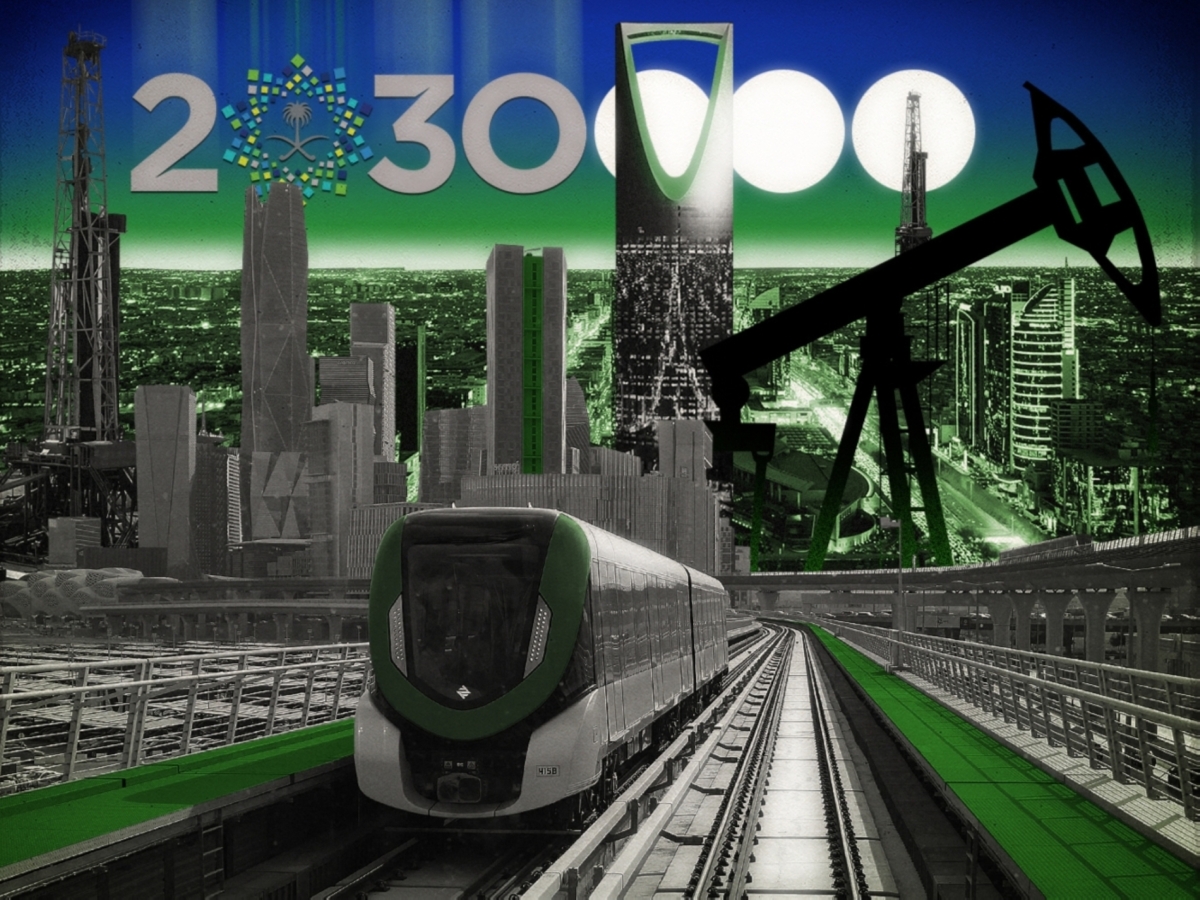
When future historians look back on Saudi Arabia’s development, the launch of Vision 2030 in 2016 will stand out as a turning point—one that reshaped the contours of both the economy and society, moving the state away from its reliance on finite hydrocarbons. Important as it was, though, reducing modern Saudi Arabia to a single moment risks missing the wider cumulative context.
The construction boom and technological shifts seen across the state today do not all stem from one document or one time. Rather, they are the harvest of a long and carefully planned path to modernisation and diversification. At the turn of the century, development incorporated education and infrastructure, while in the 2020s, there has been a digital take-off and a broadening of industrial sectors. It has been a dizzying first quarter of a century for Saudi Arabia. A look back at events helps gain perspective.
At its heart, this is the story of a state reinvesting its capabilities intelligently, engineering its fiscal policy and establishing a post-oil economy anchored in data, artificial intelligence (AI), tourism, and quality of life. The past 25 years can be understood in two phases that converge on a single purpose: to build a globally competitive economy. From 2000-15, there was investment in human capital through scholarship programmes and the establishment of universities. From 2016, this has been a period of returns, deploying these minds and energies to build a modern economic and technological ecosystem.
Institutional efficiency
To understand this transformation is to understand the shift in the philosophy of public administration. The Saudi state apparatus has been comprehensively rationalised. Previously, the focus was on distributing oil revenues to preserve stability. Today, under the leadership of Crown Prince Mohammed bin Salman, the country has adopted a management-by-objectives model.
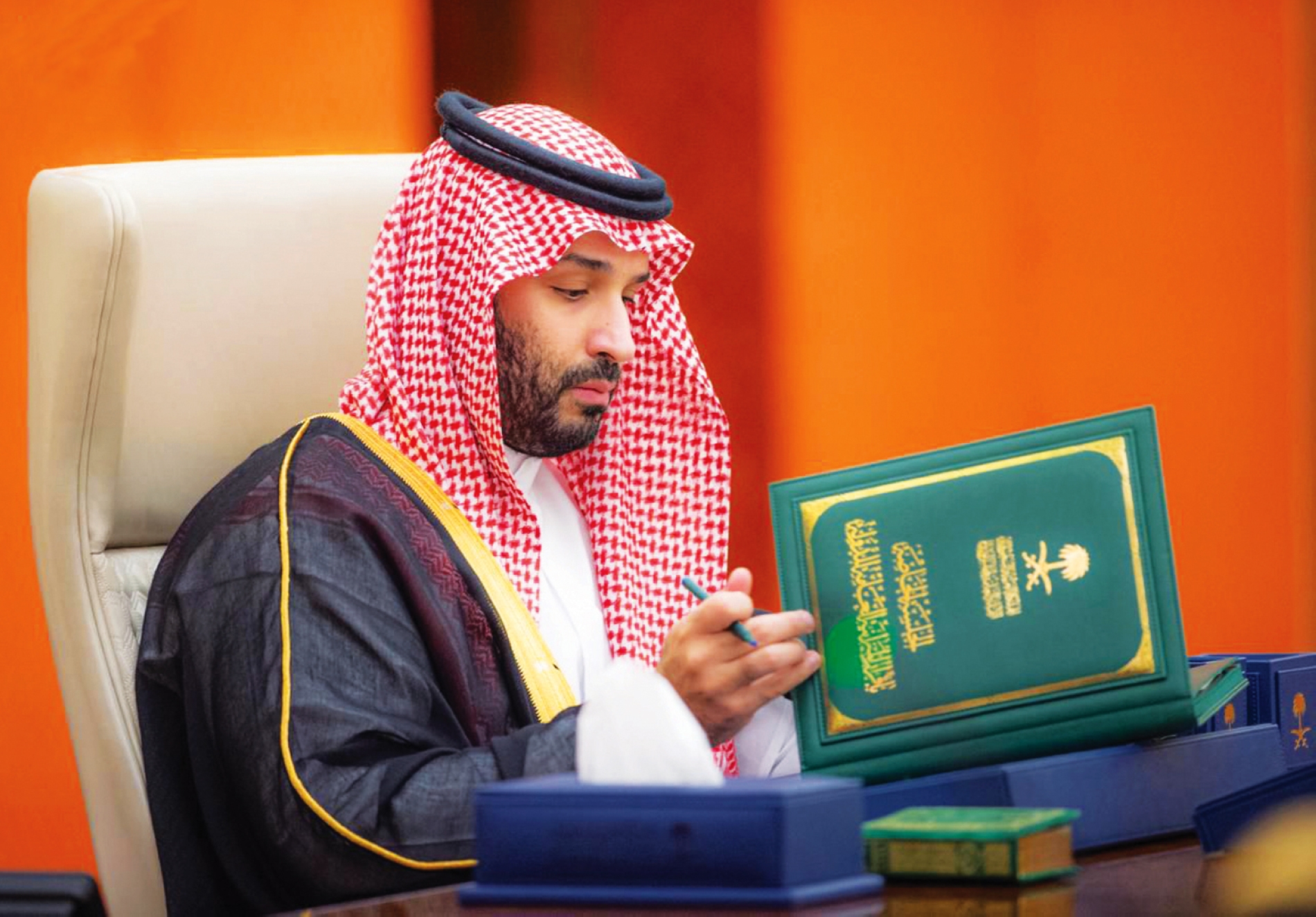
Saudi Crown Prince and Prime Minister Prince Mohammed bin Salman, during the Cabinet session dedicated to approving the 2026 budget.
Key performance indicators (KPIs) serve as the benchmark for success and evaluation. Government projects are no longer judged solely by budget size, but by their economic and social impact, while their delivery is judged against strict timelines. This shift in governance philosophy aims to mirror the speed, flexibility, and meritocracy of the world’s leading technology companies.
At the same time, the state’s administrative structure has been streamlined, with multiple councils abolished and authority consolidated in two main bodies: the Council of Economic and Development Affairs and the Council of Political and Security Affairs. This ensures centralised planning and faster decision-making, acting as the foundation for a sweeping digital transformation.
Absher is the electronic platform of the Ministry of Interior, providing integrated services digitally to citizens, residents and visitors. Likewise, Tawakkalna is Saudi Arabia’s national app. Initially launched for COVID-19 health management, it now offers access to government services, digital documents (such as ID cards or passports), health status, permits (including religious), and tourism and entertainment information. These platforms have become global models for harnessing technology in the service of the economy and society, reducing inefficiencies and raising productivity.
Average non-oil GDP (gross domestic product) has grown by more than 4% for the past three years
Diversified economy
The second transformation, whose future impact is deeper, lies in dismantling the structure of a single-resource economy reliant on oil and establishing a diversified and resilient economy with strong immunity to global shocks. Statistics help show the scale of the achievement. Non-oil activities have posted rapid and steady growth. Average non-oil GDP (gross domestic product) has grown by more than 4% for the past three years.
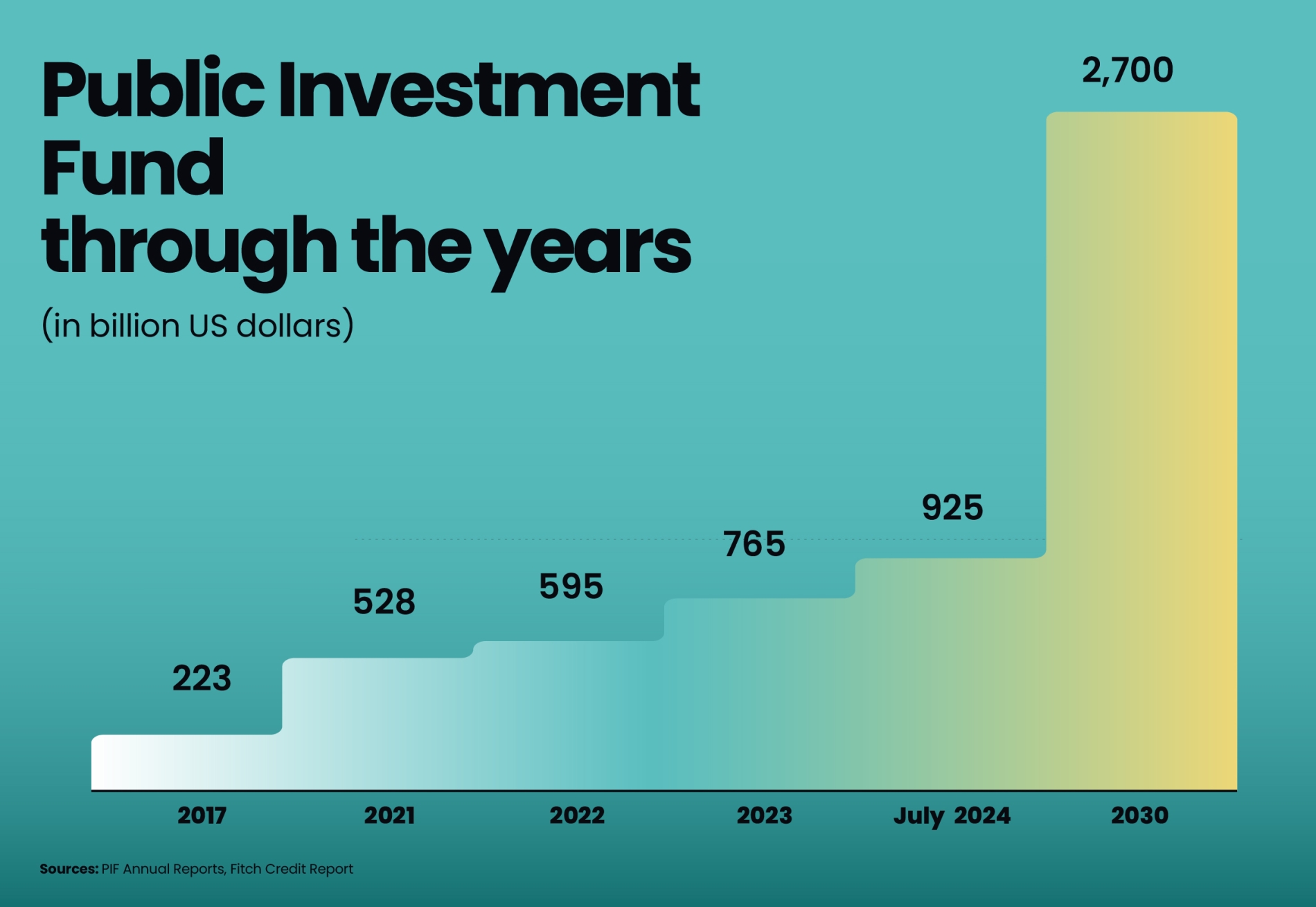
At the heart of this shift, the Public Investment Fund (PIF) serves as the locomotive. Once a traditional sovereign wealth portfolio, today it acts as a market-maker and an influential global investor. With assets under management of around $925bn by the end of 2024, its domestic investment portfolio has increased by more than 50%, showing that the Fund is committed to channelling liquidity back into the national economy.
Of interest to the PIF are promising new Saudi sectors, including electric-vehicle manufacturing (through Ceer and Lucid), clean technologies, defence manufacturing, entertainment, tourism, and global sports investment. The Fund's investment strategy aims not only for financial returns but also to transfer and localise technology and knowledge, thereby creating high-quality job opportunities for young Saudis.
PIF: The main driver of Saudi Arabia's economic transformation
Digital transformation
If oil was the fuel of the 20th century, data is the fuel of the 21st. Saudi Arabia recognised this early and made the AI economy central to its development strategy. Not content to import technology, it has sought to become a regional hub by attracting and partnering with big technology firms such as Google, Microsoft, and Oracle to establish cloud zones and large data centres, strengthening its position as a digital bridge linking three continents. In this, the Saudi Data and Artificial Intelligence Authority (SDAIA) has been key.
The authority has moved beyond a purely regulatory remit to become the leading national enabler of digital transformation. It has built a robust digital infrastructure that allows the state to manage its resources with unprecedented efficiency. The Estishraf decision support platform is a prime example. It has delivered savings and returns of more than $13bn by using big data analysis to identify efficiencies in government spending.
Saudi ambitions extend beyond the domestic; it now seeks to export technology and share its digital success story. Platforms such as Nafath (a national digital identity system) serve more than 22 million users, while Tawakkalna has more than 33 million users. These are now exportable products and models for smart digital government.
Furthermore, through dedicated initiatives and a 'Made in Saudi' programme for technology, the country helps its companies compete in global markets, an effort that is anchored in an ambitious national data and AI strategy that aims to make Saudi Arabia a global hub for technology and innovation by 2030.
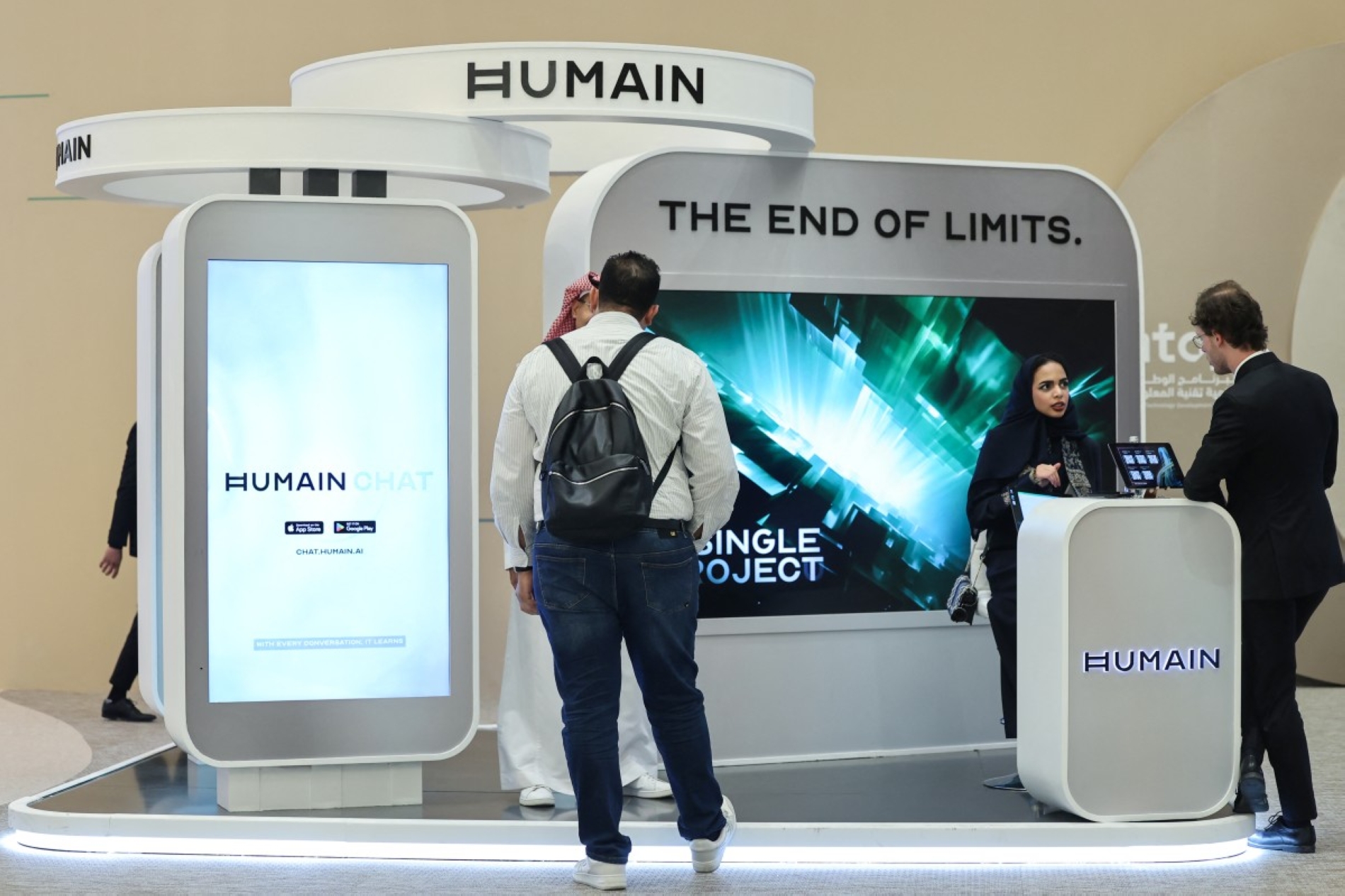
Saudi AI company Humain during the Future Investment Initiative (FII) conference in Riyadh on 29 October 2025.
Quality of life
Within this new development model, the relationship between citizens and the economy has shifted from the consumption of services to a partnership in development and value creation, in which there is a quality of life that meets global standards. Housing is one area where the state is turning challenges into opportunities. According to the Housing Programme's annual report, home ownership among Saudi citizens rose to more than 65% by the end of 2024, compared with less than 50% before 2016.
This is no mere statistical marker; it is a vital driver of construction, mortgage finance, and urban development led by major companies such as Roshn, which is building integrated, smart residential communities. In parallel, tourism has emerged as a Saudi success story, with more than 109 million domestic and international tourists in 2023, and nearing 116 million in 2024. This is due to revitalised hotels, flights, and $68bn channelled back into the local economy, creating thousands of jobs and energising local economies.
Human capital
The changes underway in the Saudi labour market go beyond cosmetic change; they strike at the heart of the value-based foundation of work. The changes reflect the gradual dismantling of the patronage mentality and citizens' total reliance on the state, replacing it with a new mentality that values productivity and individual initiative. Carefully-designed localisation policies, improved education, and support for small and medium-sized enterprises (SMEs) have combined to foster an entrepreneurial and creative generation.
Young Saudis no longer simply aspire to traditional government employment. New horizons have opened in areas such as financial technology (fintech) and the creative industries. Today, these opportunities are open to both men and women, not because of human rights, but because the inclusion of both genders in the workforce is now seen as an urgent economic necessity.
As such, female labour force participation has more than doubled over the past decade, rising from 17% before 2016 to more than 35% today. This surpasses initial targets years ahead of schedule. Integrating half the population into the production cycle enhances Saudi competitiveness and channels high-calibre but underutilised talent and skills towards national targets and priorities.
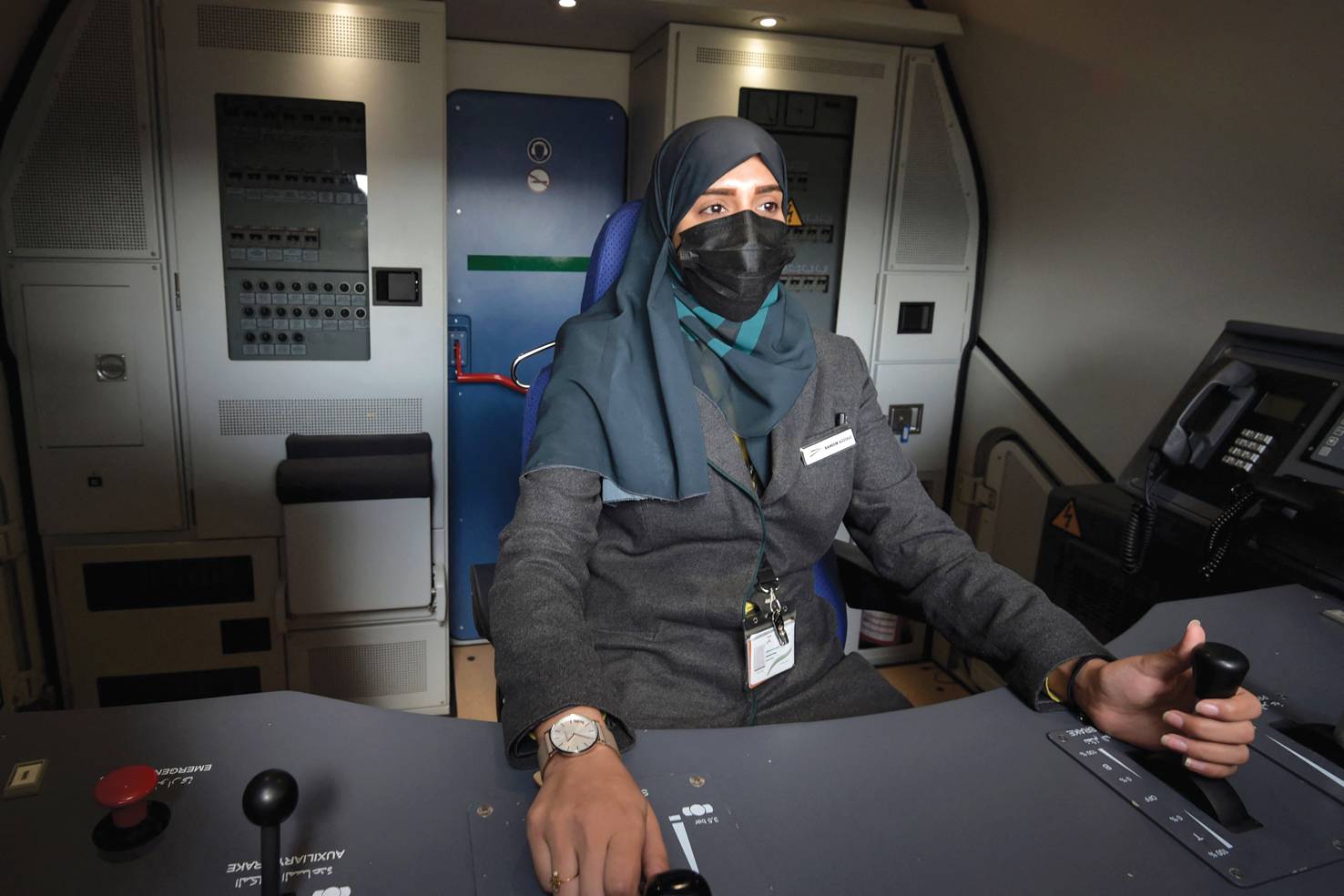
Saudi conductor Raneem Azzouz drives a high-speed train ferrying pilgrims to Mecca, in Saudi Arabia's Red Sea coastal city of Jeddah, on January 22, 2023.
Culture as soft power
For many observers, Saudi culture and heritage have shifted from a quiet local legacy to an international product at the centre of an entertainment and tourism industry that now generates substantial returns. Years ago, cultural introversion kept the country off the global tourism map. Today, the equation has been completely recast. Culture is now both a source of soft power and a strategic economic asset. The state is no longer apprehensive of globalisation but invests in its instruments.
International festivals, the Riyadh and Jeddah Seasons, and the rehabilitation of historic sites in AlUla and Diriyah all serve to establish Saudi Arabia as a global destination. This embrace of the arts, entertainment, and cinema is not incidental; it is the foundation of a new economic sector providing jobs, raising the quality of life, attracting foreign direct investment (FDI), and attracting mobile talent—sought-after specialists who choose where to be not purely on financial considerations but because they are also looking for a vibrant and appealing living environment.
Architecture of space
No reading of Saudi Arabia's first quarter of the 21st century is complete without addressing the giga-projects such as NEOM, the Red Sea, Qiddiya, and New Murabba. These go far beyond the traditional concept of real estate development; they become innovation incubators, shaping the future. NEOM, for example, is not merely a new city; it is a living laboratory for tomorrow's technologies, including the use of 100% renewable energy, intelligent transport systems, and biotechnology. In short, it boldly redefines the very idea of the city and urban life.
In parallel, the capital, Riyadh, is undergoing a radical transformation. It plans to accommodate close to 15 million residents and has become a never-ending construction site with an integrated public transport network (led by the Riyadh Metro), vast green spaces (such as King Salman Park), and landmark architectural projects. The aim of this integrated system is to localise the economy. Rather than Saudi citizens travelling abroad in search of quality of life and opportunities, the state is bringing the world to them.
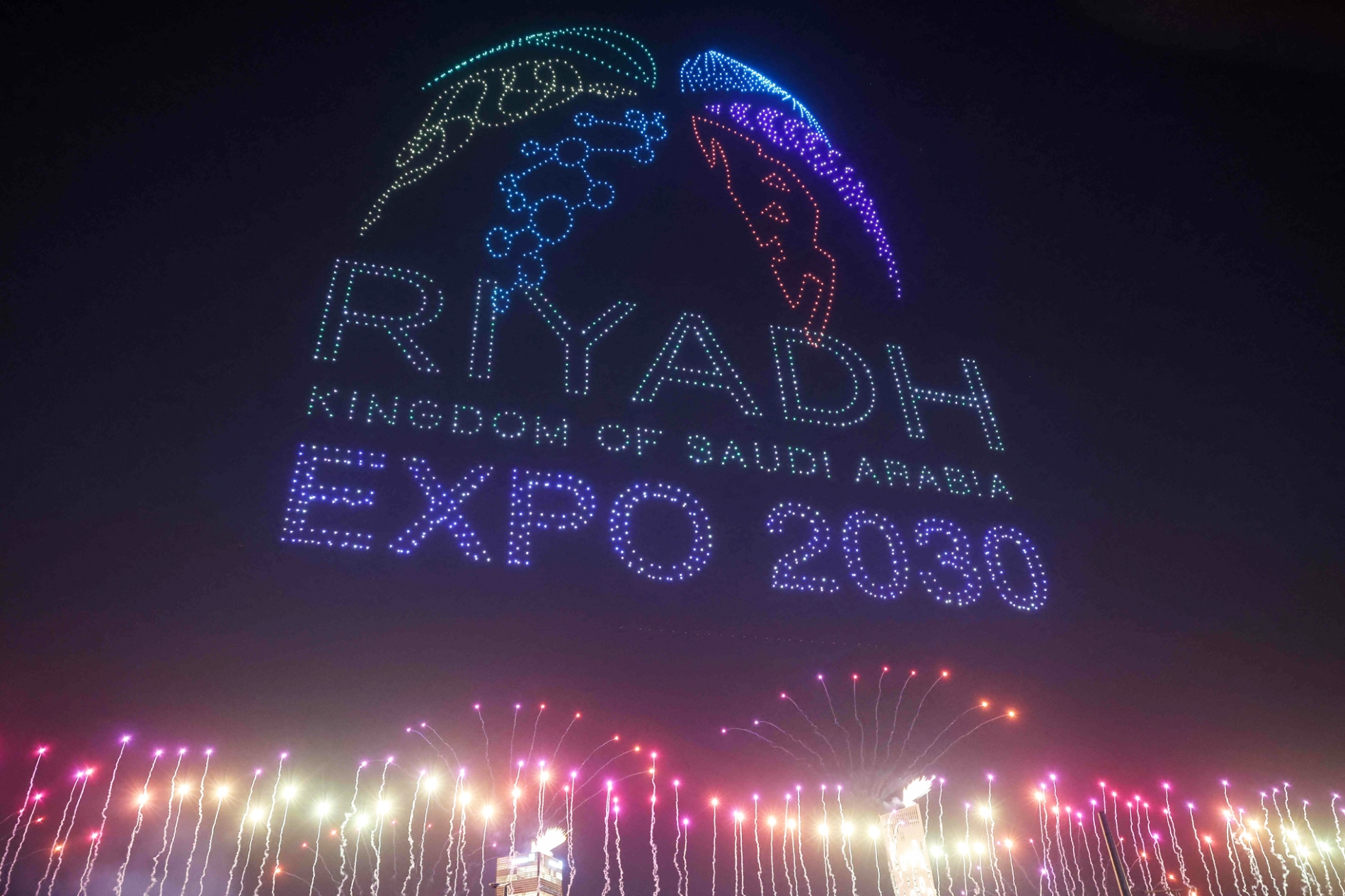
Events celebrating the announcement that Riyadh won the right to host Expo 2030 on 28 November 2023.
Turning to the future
It is clear that Saudi Arabia is no longer defined by oil, but by its achievements and ambitions. Hosting Expo 2030 and the 2034 Football World Cup places both the public and private sectors under pressure to deliver the highest standards to strict timelines. These commitments are more than milestones for celebration; they are catalysts to accelerate the completion of infrastructure such as transport networks and new cities. They also tell the world that Saudi Arabia is a reliable partner able to organise and manage major events with all the efficiency of an advanced state.
What the state has witnessed over the past quarter of a century—and at an accelerated pace over the past decade—has turned the traditional idea of development on its head. It has moved the country away from its reliance on depleting natural resources toward investing in its human and technological resources within a competitive digital economy, in which all citizens are now encouraged to take the initiative.
Today, Saudi Arabia is both a reservoir of energy and a major investment power, a global logistics hub, and an active partner in AI and innovation. It is a story of transformation written in the language of numbers and achievements, affirming that the winning bet is always on the future and on people.