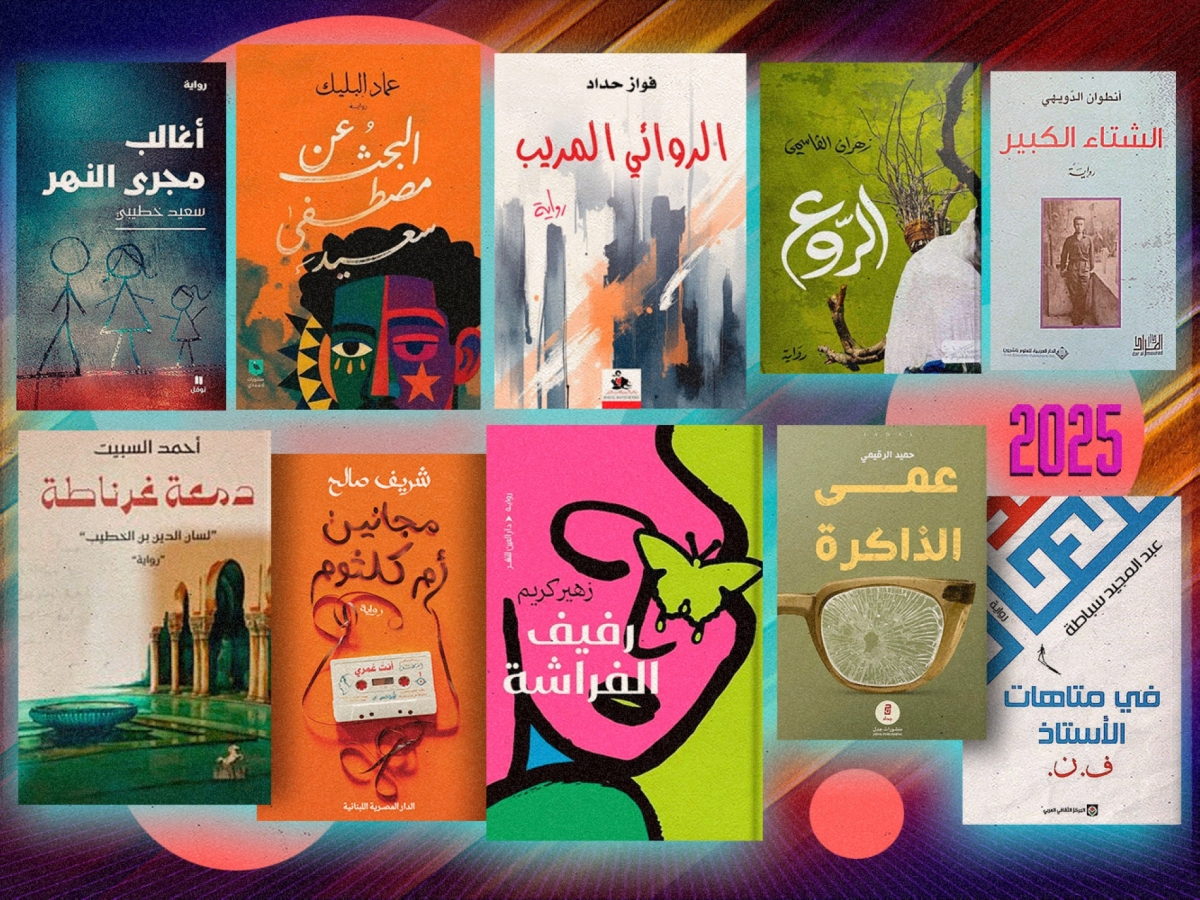

The Arabic novel in 2025 followed a variety of rich and dynamic directions. Some tackled contemporary life—its realities, tragedies, and evolving conditions—with clarity and sober precision. Others turned to the past as an escape, critically distancing themselves from the present's crises. Still others wove together threads of past and present, constructing layered worlds that challenged the reader to reflect on present-day problems while confronting age-old questions in pursuit of a new horizon. Here are some titles that stood out in 2025.
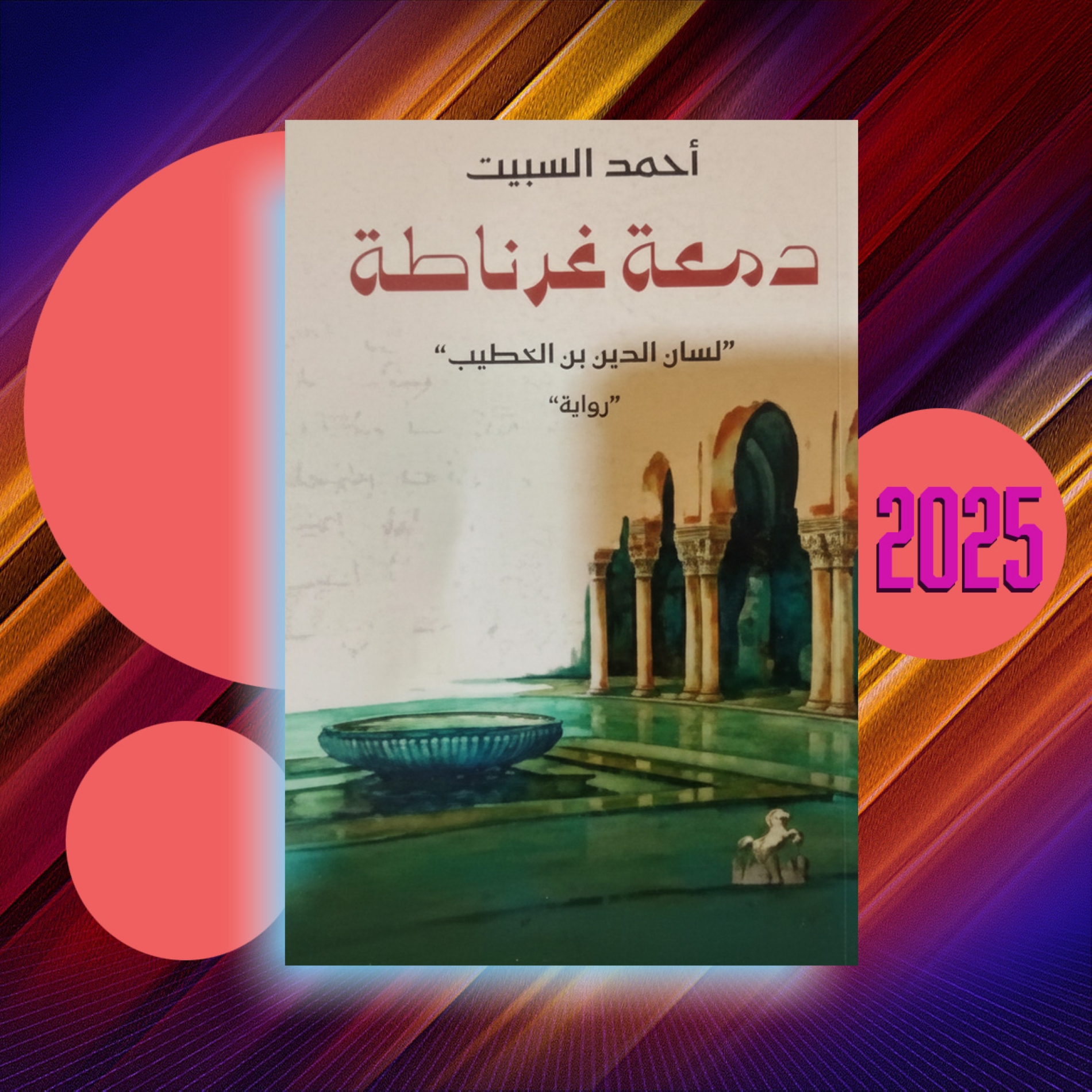
Tear of Granada by Ahmed al‑Subait
Saudi novelist Ahmed al‑Subait transports the reader back in time to the Andalusian era in his novel Tear of Granada, reviving a defining period in Islamic history through the figure of one of its most prominent scholars and intellectuals, Lisan al‑Din ibn al‑Khatib. Though the era has been extensively explored in fiction, al‑Subait grounds the narrative in the life of a real historical figure while imbuing it with creative depth.
We follow Ibn al‑Khatib from his formative years amid the palaces of sultans, through his ascension as a trusted adviser, and onto his tragic downfall, as the political turmoil of al‑Andalus turns against him. Imprisoned, he emerges once more as a luminous voice in literary and intellectual circles. Al‑Subait’s illustration of this journey offers a vivid portrait of the man and a window into a time marked by brilliance and betrayal.
The novel was published by Dar Madamin and was longlisted for the Sheikh Zayed Book Award this year.
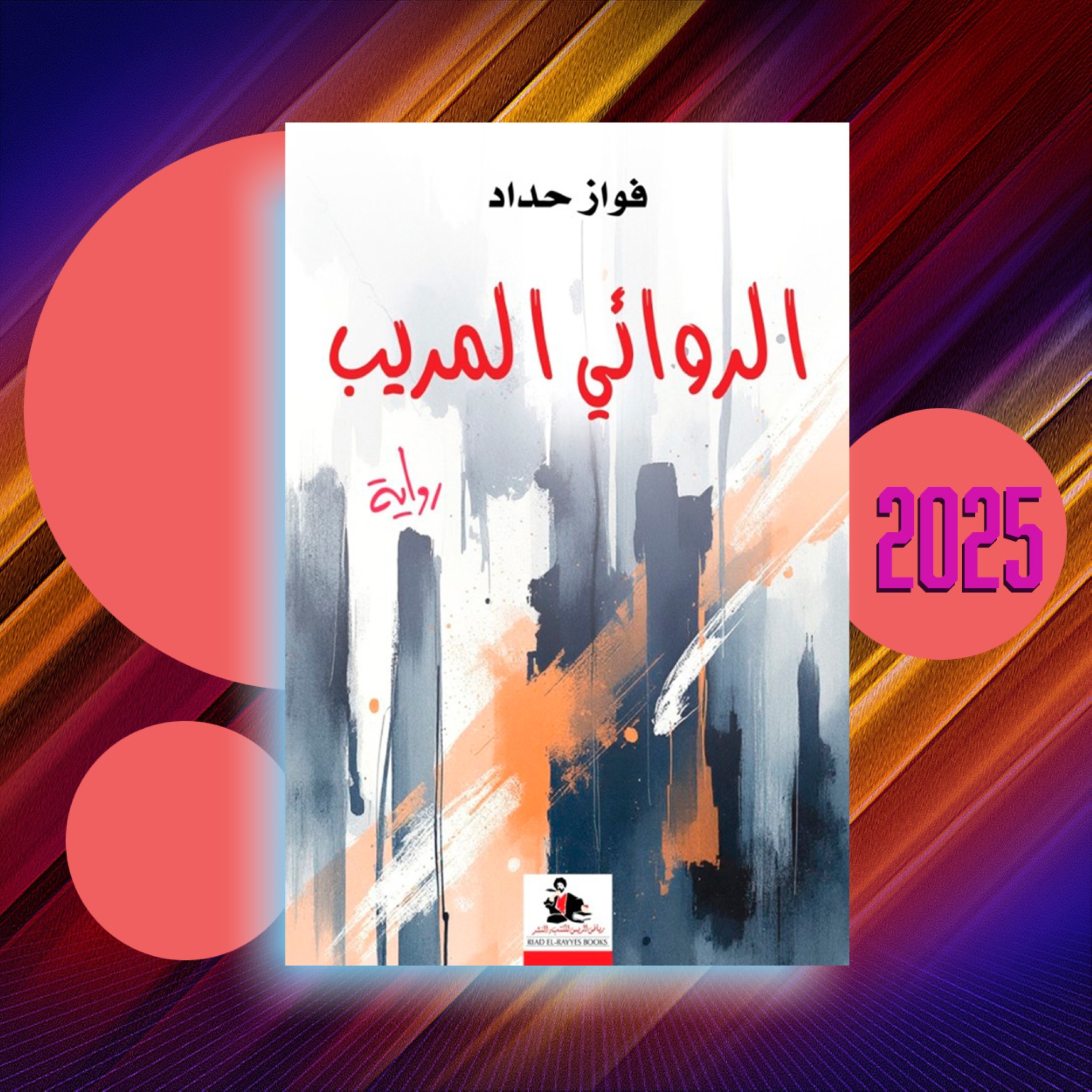
The Dubious Novelist by Fawwaz Haddad
Syria’s cultural scene takes centre stage in The Dubious Novelist, the latest work by veteran Syrian author Fawwaz Haddad. The novel returns to the world of intellectuals and writers during the long shadow of Baathist rule, exposing how literature and cultural production were conscripted as tools of restriction, repression, and ideological control.
The narrative begins with an ostensibly minor event— the sudden appearance of a novel by an unknown writer. From that moment, a deeper excavation begins, laying bare Syrian society and the insidious effects of authoritarian power. One of the novel’s most compelling features is its stroll through Damascene cafés, where Haddad offers insights into the diverse personalities and temperaments of its intellectual class.
But the novel’s scope delves deeper than subtle critique, it poses philosophical questions about literature’s place in society: what is the true role of the writer? Does the presence—or absence—of the intellectual make any real difference? These reflections are layered with moments of sharp satire and psychological acuity, revealing how politics, repression, and the longue durée of authoritarianism have inscribed themselves on people’s identities, and how these inscriptions manifest in their writing and their interpretations of literature—literature that ought to hold up a mirror to society, exposing its distortions and contradictions without embellishment or bias.
The novel was released this autumn by the Dar Riyad al‑Rayyis publishing house.
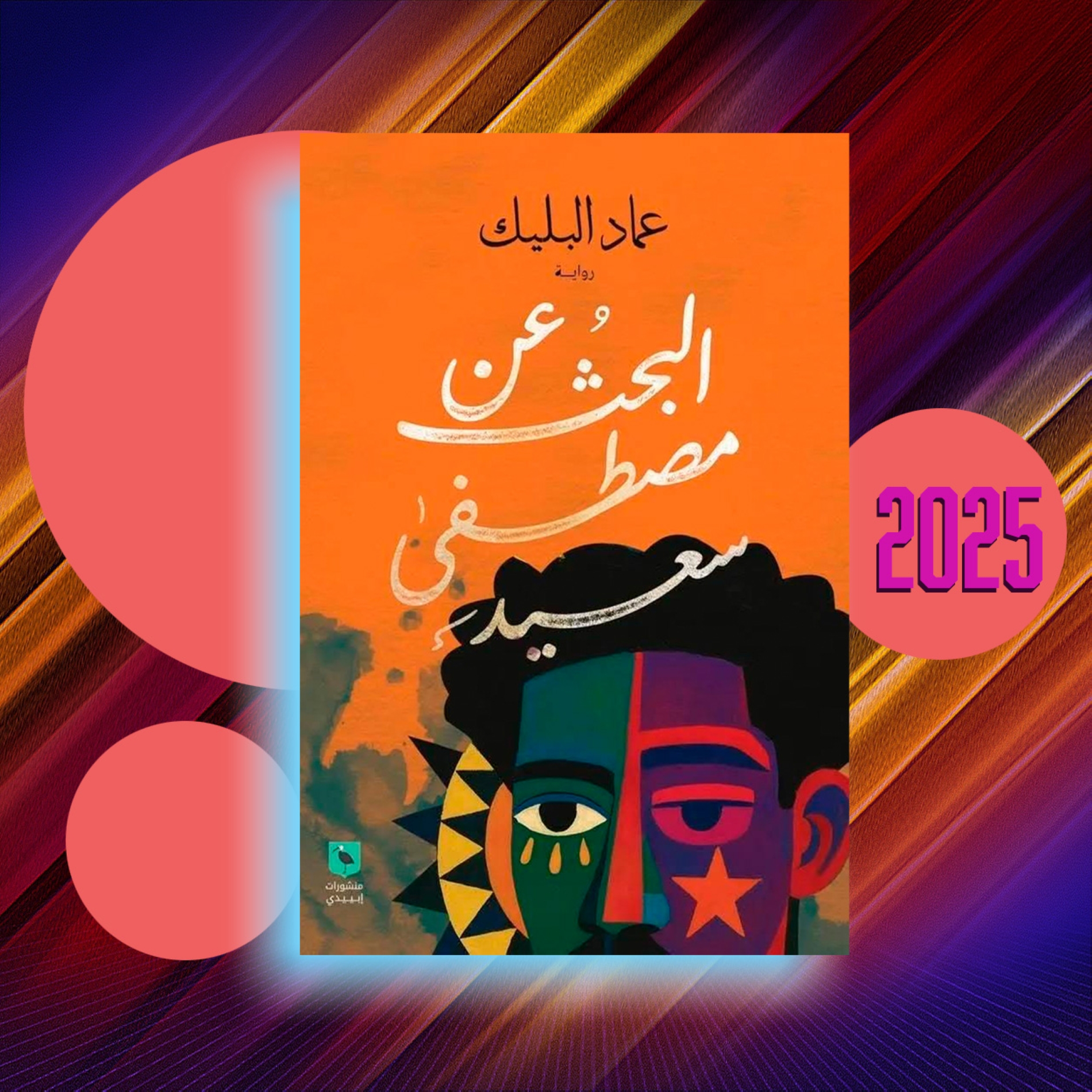
In Search of Mustafa Saeed by Imad al-Balik
Imad al-Balik draws inspiration from Tayeb Salih’s iconic character, Mustafa Saeed, from the seminal Season of Migration to the North, to explore the painful transformations Sudan has undergone in recent years. His protagonist returns to Sudan in the aftermath of the revolution, bearing promises of freedom and liberation from the old regime’s tyranny, only to find that the country remains gripped by heightened tensions and that he himself is barred from travel.
Forced to relive the ordeal he once escaped through exile, the protagonist becomes a living witness to the harshness of Sudan’s reality. As he is compelled to reconnect with estranged family members, a series of events drives him to re-examine his identity, his homeland, and the fraught relationship between exile, return, and belonging amid a landscape scarred by war and devastation.
Through this figure, al-Balik revisits questions once posed by Mustafa Saeed, reframing them from a perspective rooted in the post-revolutionary disillusionment of contemporary Sudan.
The novel was published by Dar Ibidi in Cairo.
At the End of Time by Adel Asmat
The quaint Egyptian village continues to inspire novelists who see within its confines a concentrated reflection of broader social transformations. Among them is Adel Asmat, whose novel At the End of Time unfolds in the village of Nakhtai—a microcosm in which shifting roles, power relations, and questions of identity play out.
Here, the mayor looms as a dominating figure, the humble villager endures the weight of daily labour, and the intellectual grapples with reconciling his rural origins with the promises and contradictions of urban modernity. Through these intertwined lives, Asmat captures the pulse of a community in flux.
Spanning the period from before the 1952 Revolution to the present day, the novel traces the advent of successive technological innovations, from the train and the television to the internet and mobile phones. Each novelty is greeted with a sense that time itself is drawing to a close. Yet the years continue to unfold, and time, rather than ending, renews its cycles, reshaping lives, reordering fates, and moving endlessly forward.
The novel was published earlier this year by Kotob Khan in Cairo.
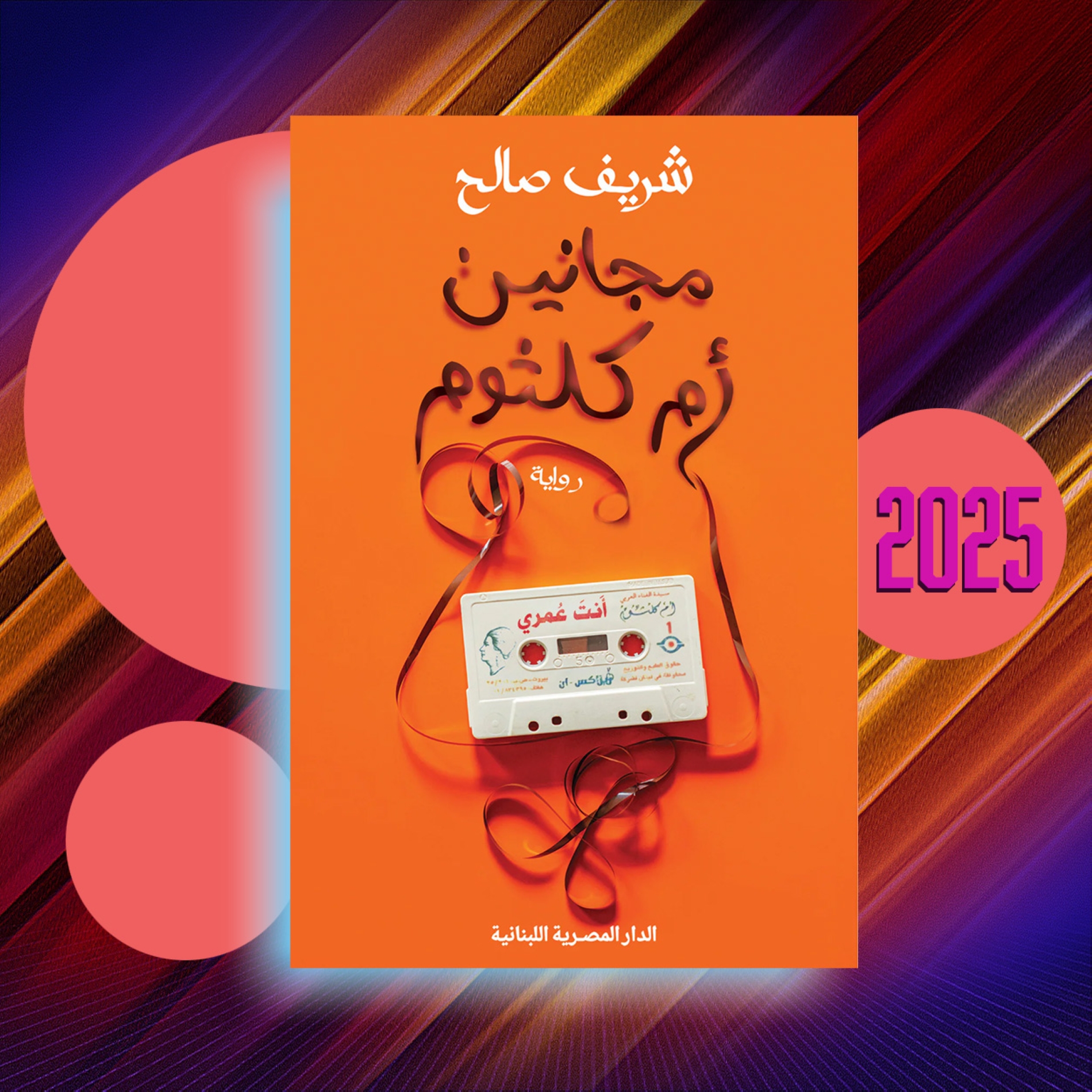
Umm Kulthum’s Madmen by Sherif Saleh
In Umm Kulthum’s Madmen, Egyptian author Sherif Saleh returns to the enduring world of the legendary singer, exploring the lives of her most ardent admirers in a novel steeped in music, memory, and melancholy. At its centre is Jalal, a theatre director who inherits his love for Umm Kulthum from his mother and sets out to establish the first association devoted to her legacy: Guardians of the Lady (Hurrās al-Sitt).
The narrative unfolds through the interwoven stories of the association’s eclectic members, Jalal’s personal dilemmas, and the omnipresent songs of Umm Kulthum that colour their lives. Jalal, the reflective intellectual, becomes entangled in an emotionally lopsided love after meeting Wissam. Their swift courtship leads to marriage, only for differences and tensions to surface soon after.
With quiet emotional resonance, the novel juxtaposes Jalal’s intimate disappointments with the timeless lyrics of Umm Kulthum – “You and I wronged love” – while interspersing the stories of other members of the association, each of whom emerges as the protagonist of his own private drama.
The novel was published at the beginning of the year by Al-Masriyya al-Lubnaniyya.
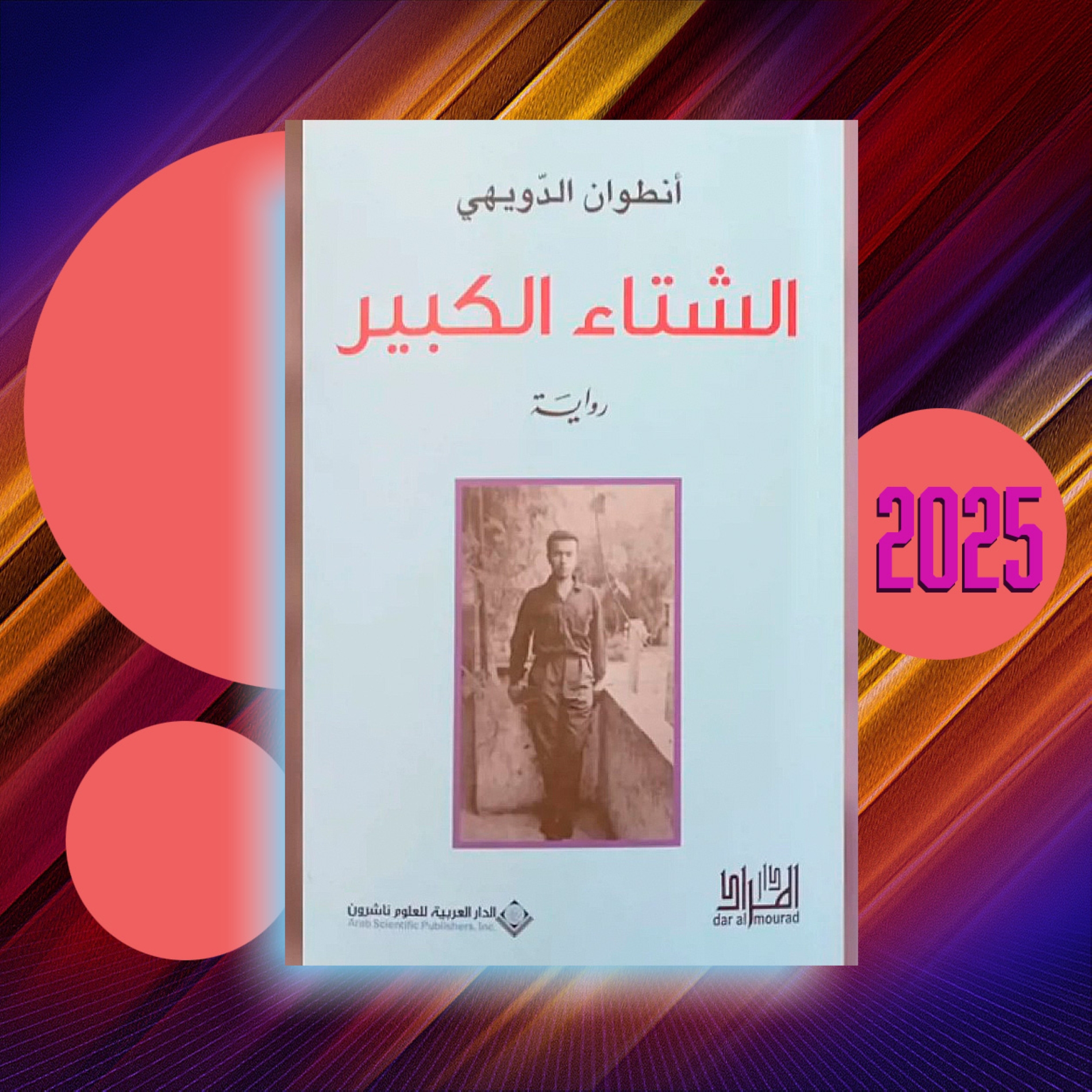
The Great Winter by Anton Douaihy
Into the realm of imagination, Lebanese novelist Anton Douaihy captivates with his novel, The Great Winter, through the lens of a 17-year-old narrator, in the fictional town of Moria. He lives in the town’s western quarter and loves a girl from the eastern side, yet refuses to cross to reach her. Instead, he remains in place, letting his longing unfold in silence.
Between these two poles, Douaihy offers glimpses of life on both sides of the divide, lives that resonate powerfully with readers familiar with the recent histories of Lebanon and other Arab nations.
Despite Moria’s isolation, siege and the cycle of blood feuds and intermittent war, the narrator speaks of his town fondly. He clings to its landscape, convinced that no other place could compare. Even its violent rituals have become embedded customs. His story becomes a confession—a cathartic narrative—alternating between tender reflections and chilling recollections of the violence that shapes his world until he turns 50. Although it's fiction, the novel holds up a mirror to contemporary Arab reality, carrying deep emotional and political resonance.
The novel was published by Arab Scientific Publishers in collaboration with Dar al‑Madar.
The Affair of His Dead Kin by Mohamed Abdel‑Gawad
In The Affair of His Dead Kin, Egyptian novelist Mohamed Abdel‑Gawad dabbles in the family saga tradition, tracing the fortunes of a Cairo household from the era of Muhammad Ali to the aftermath of the 2011 revolution. Through the lineage of Ramadan al‑Razz, his children and grandchildren, the novel reveals the layered complexity of middle-class life in the Egyptian capital.
Three family members stand at the centre of the tale: Hassan, the eldest, who embodies the ambitions of the class and its yearning for social ascent; Hussein, the middle brother, a figure of rebellion and unorthodox freedom, known for his adventures in Sayyida Zaynab and a string of marriages; and Amīna, the sister who safeguards the family’s dignity and preserves its traditions against the ravages of time.
Abdel‑Gawad elegantly weaves these characters together, charting the broader metamorphoses of Egyptian society, from the July 1952 Revolution and its turbulent aftermath to the rise of the 1980s generation and the technological shifts that have shaped the lives of today’s youth.
The novel was published by Dar Tanmia.

In the Labyrinths of Professor F.N. by Abdelmajid Sabata
Moroccan author Abdelmajid Sabata structures In the Labyrinths of Professor F.N. around the mysterious suicide of a university professor accused of harassment. But what begins as a singular, tragic incident soon expands into a complex investigation, unearthing histories and narratives beyond the scandal at hand.
Sabata takes the reader on a multi-layered journey, moving through 14 interlinked stories that span centuries—from the expulsion of Muslims from Andalusia to the global cataclysms of the world wars. Despite their stark differences, these stories are artfully woven together through the character of Rashid Banaser, a professor of comparative literature, who introduces each tale with a critical commentary on an Arabic or international text. These preludes unlock the broader meaning and emotional resonance of the chapters that follow.
The novel was published by al‑Markaz al‑Thaqafi al‑Arabi.
Escape into Shadow by Farid Abdel‑Azim
Escape into Shadow, the latest novel by Egyptian author Farid Abdel‑Azim, filters through the lens of two different generations. The main character, Bahij Dawud, a writer from the 1960s generation, has withdrawn from literary life and entered into solitude. But that solitude is disrupted when a group of young intellectuals seeks him out, urging him to revisit an unfinished idea: a novel centred on Farid Haddad, a leftist Egyptian doctor who died in detention during the Nasser era. Though little is known about Haddad, Bahij sets out to write about him, crafting a story that straddles two overlapping realms, the author’s present life and a past marked by hope, struggle, and repression.
As Bahij is drawn into the younger generation’s seminars and gatherings in downtown Cairo, the novel unfolds as a dialogue between two modes of engagement with the world—one withdrawn, the other idealistic. Meanwhile, the story of Farid Haddad serves as a counter-image to Bahij’s own—a man who lived for others and whose prison death fuelled his legacy.
The novel was published by Dar al‑Maraya.
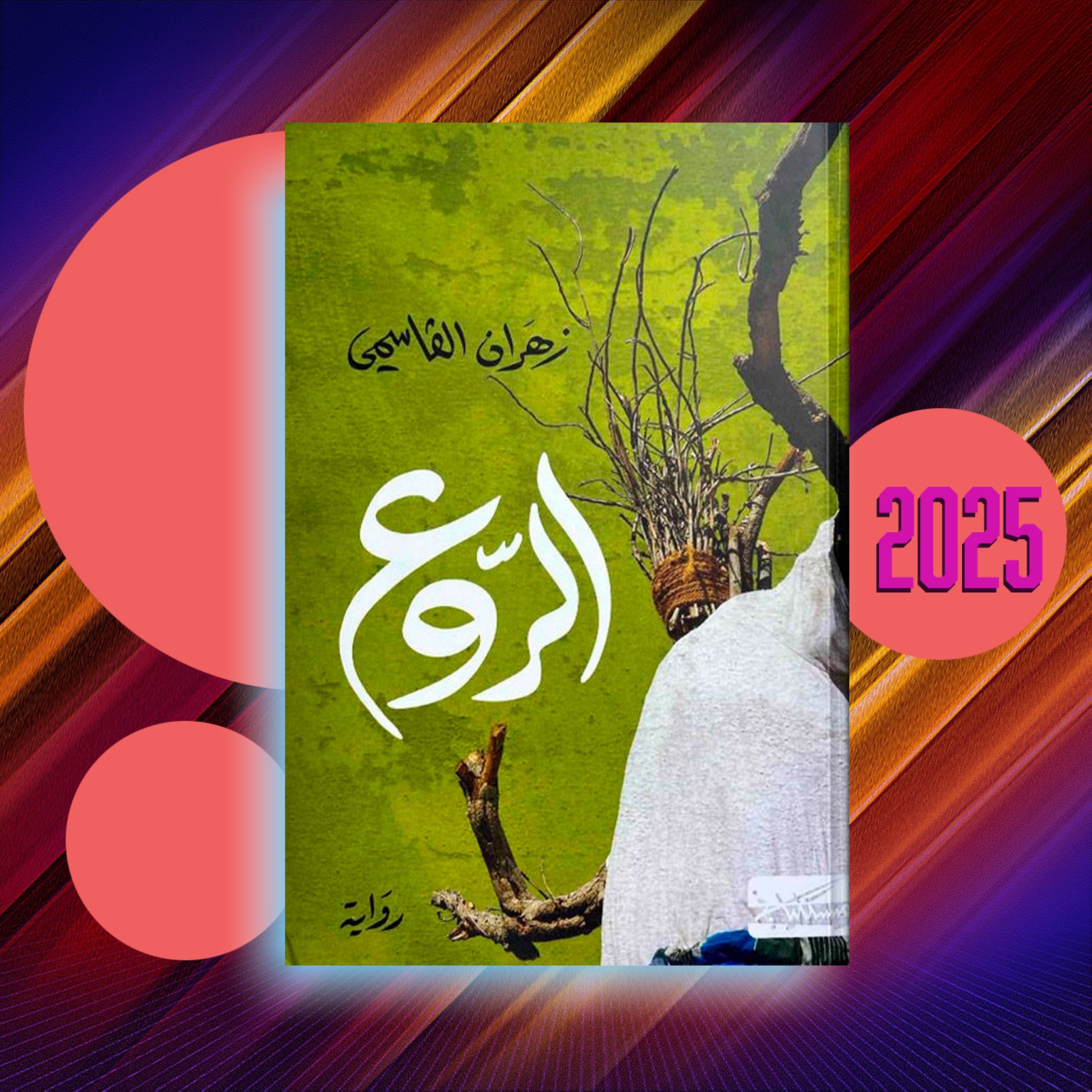
The Terror by Zahran Alqasmi
Omani novelist Zahran Alqasmi returns to familiar terrain—Oman’s mountains and valleys—with The Terror, a contemplative novel that centres on a single, quiet protagonist whose lived experience serves as a lens for exploring the human condition. At the novel’s heart lies the theme of fear and its silent, persistent presence in every life.
The narrative follows Mahjan, a simple man who constructs a scarecrow to protect his fields from birds and desert animals. Yet the scarecrow comes to symbolise far more than its humble purpose—it becomes a mirror through which Mahjan confronts his memories, his fears, and the silent burdens that have shaped his life.
Through Mahjan’s journey, the novel paints a portrait of village life in Oman—its intimate connections, its struggles against nature, and its subtle emotional undercurrents. Alqasimi invites readers to reflect on how fears, often rooted in the past or born of social ties, come to define us, and how quiet, seemingly insignificant acts can become turning points in the journey toward resilience and self-understanding.
The novel was published by Dar Meskeliani.
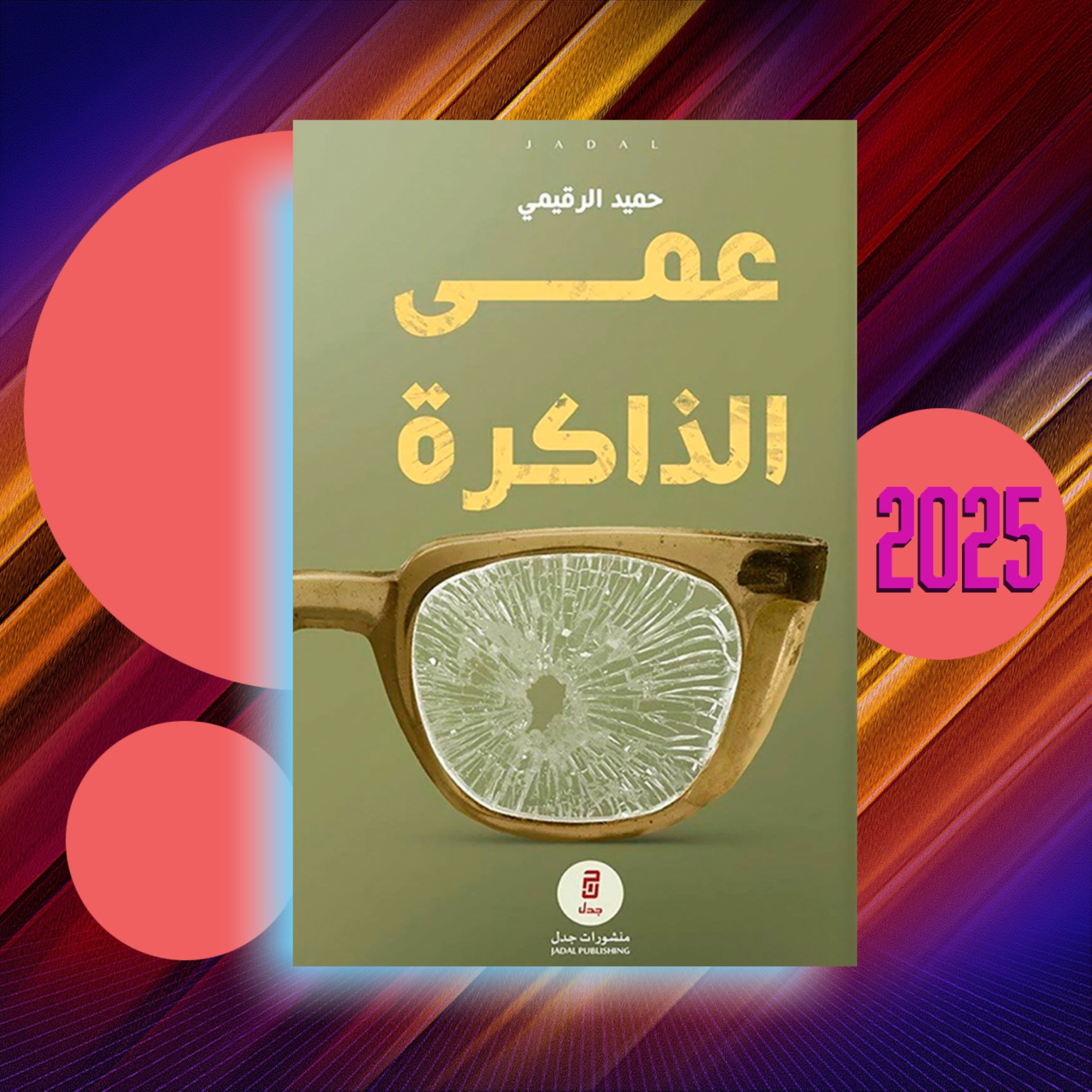
Blindness of Memory by Hamid al‑Ruqaymi
In his debut novel, Blindness of Memory, Yemeni author Hamid al‑Ruqaymi delivers a poignant exploration of war, identity, and displacement in a country ravaged by years of conflict. The story follows a young boy rescued from the ruins of war and adopted by a tribal sheikh, who raises him as his grandson, giving him the name Salim and surrounding him with stories that shape his understanding of himself.
As Salim grows, facing both the trauma of war and the quiet cruelties of everyday life, he begins to question the identity imposed upon him. His search for truth leads him through the fractured landscapes of Yemen and beyond—to Cairo, Khartoum, and Libya—and into the perilous world of irregular migration. Like many young Arabs, Salim dreams of reaching Europe, but the path he chooses, aboard a smuggler’s boat, is one marked by peril and the looming spectre of loss.
Al‑Ruqaymi weaves together a powerful narrative that captures the devastation of war and the fragile threads of memory and selfhood. While deeply rooted in Yemen, the novel echoes the struggles of countless victims of conflict across the Arab world.
Published by Dar Jadal, the novel was awarded the Katara Prize for the Novel this year.
The Great Ones Die in April by Amira Ghenim
In The Great Ones Die in April, Tunisian novelist Amira Ghenim continues her literary engagement with modern Tunisian history by evoking episodes from the life of Habib Bourguiba. From distant childhood to the heights of national leadership, Bourguiba’s memories in his twilight years become the lens through which Ghenim explores Tunisia’s evolving society, drawing a nuanced portrait of one of its most influential figures.
This focus on the literary reconstruction of Tunisia’s past has long characterised Ghenim’s previous works—from Nazlat Dar al‑Akabir to last year’s Hot Soil. Alongside the political arc of Bourguiba’s life, Ghenim turns attention to the women who shaped his world—his mother, his sister, and four pivotal relationships, through whom she traces his enduring proximity to power.
Blending documentary fidelity with imaginative re-creation, she reveals both the public and private aspects of the statesman’s psyche: his emotional responses, ambitions, conflicts, and the reactions of those around him. The novel is as much about the man as it is about the human cost of leadership, and the intimate spaces where history and personal struggle collide.
The novel was published by Dar Meskeliani.

Flutter of a Butterfly by Zuhair Karim
Iraqi novelist and short-story writer Zuhair Karim offers a lyrical, multi-layered elegy for a world marked by exile and quiet suffering in his latest novel, Flutter of a Butterfly. His protagonist, Kamil, is an engineer who dreams of building a unique home but stumbles upon a manuscript that grants him the ability to travel through time and space. Alongside him is his love, Hanan, who is gripped by political ideals and subjected to torture in prison.
From these different threads, Karim constructs a novel that meditates on personal and collective memory and demonstrates the role of art, books, music, and architecture in shaping consciousness and preserving dignity. The line between author and character blurs, as Karim sometimes appears to be the narrator and at other times Kamil.
The narrative repeatedly returns to 1980s Baghdad, a city shadowed by repression, detention, and silence, while also extending its reach to Amman, Tehran, Islamabad, and Libya in search of renewal and the possibility of redemption. The novel is expansive yet intimate, political yet poetic, and grounded in historical trauma yet aspiring toward aesthetic transcendence.
It was published earlier this year by Dar al‑Ain in Cairo.
This Is Not a Bullet by Abdullah Nasser
In his debut novel following two acclaimed short-story collections, Saudi writer Abdullah Nasser offers a taut and original narrative shaped by a childhood recollection: the sound of his father firing a bullet. From this seemingly simple memory, Nasser's novel reflects on notions of family, guilt, and truth.
While the story's structure is similar to that of a crime novel, it avoids some of its more stereotypical conventions. Instead, he delivers a compact yet richly textured narrative that probes the relationships within a Saudi household, focusing on the narrator’s attempt to re-examine an old court case for which his father served a prison sentence.
The novel also explores intergenerational memory—how stories are told, concealed, or inherited within families. Nasser brings a poet’s eye to detail, from weapons and first aid to legal interpretations of manslaughter. He also introduces a conceptual layer by linking the novel to Magritte’s painting The Survivor, suggesting a symbolic reading of the rifle’s presence and absence.
With restrained prose and vivid imagery, This Is Not a Bullet resonates far beyond its brevity, capturing the emotional weight of familial legacy and the lingering imprint of the past.
The novel was published by Dar al‑Karma in Cairo.
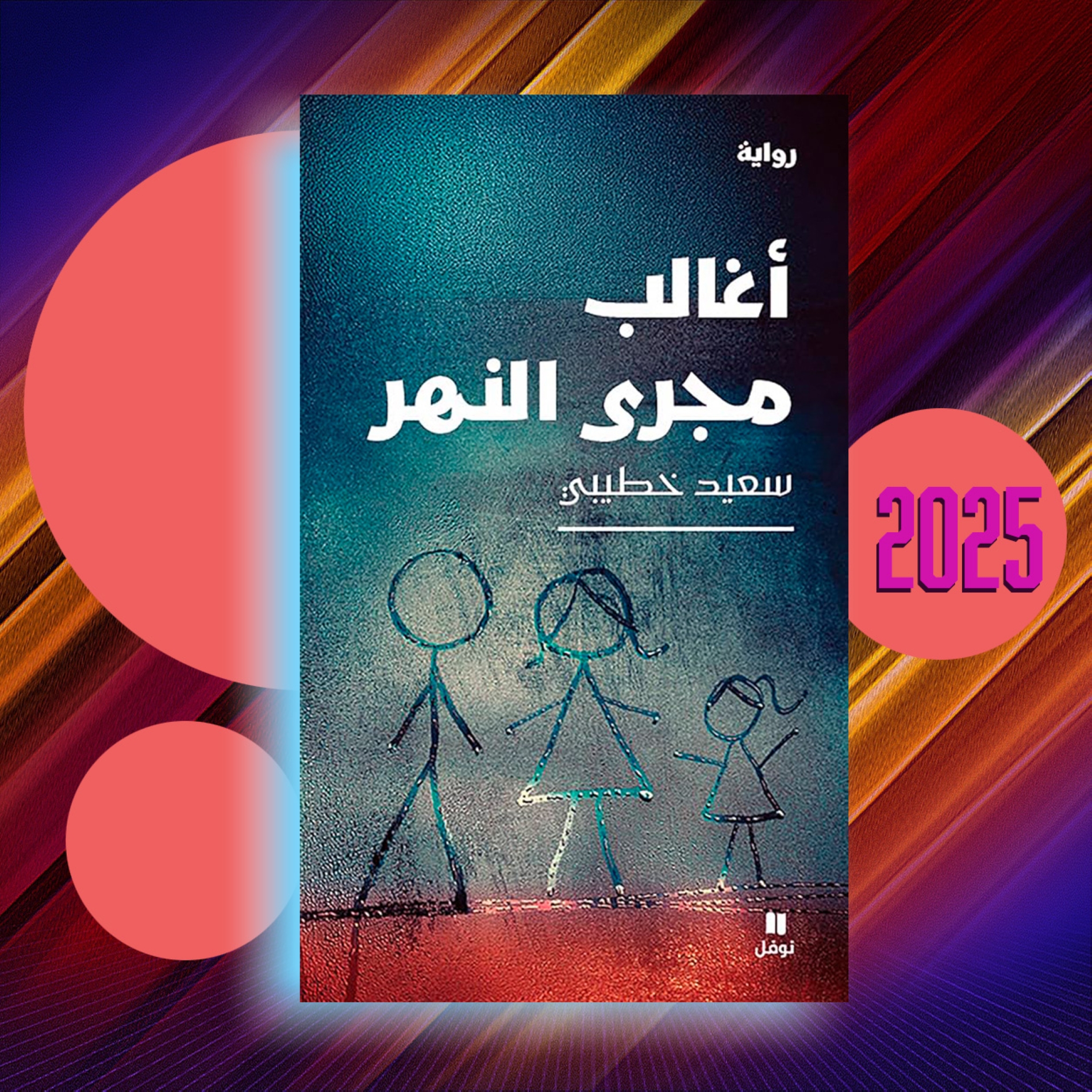
I Struggle with the River’s Course by Saïd Khatibi
In I Struggle with the River’s Course, Algerian novelist Saïd Khatibi returns to the charged terrain of his country’s modern history, blending crime fiction with political narrative. The novel begins with the investigation of an ophthalmologist suspected of murdering her husband, a forensic doctor. What appears at first to be a conventional whodunnit soon deepens into an exploration of the complex relationship between the couple and the crimes they carried out together, culminating in the wife's interrogation.
The second part of the novel pivots to a different narrative thread: the story of the woman’s father, a veteran of Algeria’s war of liberation. Through his memories, Khatibi uncovers the difficult terrain of post-independence Algeria. Among his children, one son becomes enmeshed in illicit dealings, adding a darker layer to the family’s entanglement with the state and its shadows.
These dual narratives—wife and husband, father and son—interweave to form a dense tapestry of Algeria’s past and present. The novel addresses complex themes, including resistance and complicity, heroism and betrayal, and the blurred boundaries between victimhood and culpability. It offers a powerful meditation on how politics, violence, and generational memory shape personal and national destinies.
The novel was published by Hachette Antoine.
Epic of the Outlaws by Ammar Ali Hassan
In Epic of the Outlaws, Egyptian novelist and political analyst Ammar Ali Hassan undertakes a sweeping narrative spanning five centuries of Upper Egyptian history. Centred on the enduring rivalry between two families, the Sawabir and the Jawabir, the novel examines cycles of power, land, and conflict. The Sawabir represent the working classes and the dispossessed; the Jawabir symbolise landowners and the ruling elite. Yet as authority shifts across generations, the fortunes of each family ebb and flow, each mirroring a different stage in the evolution of Egyptian society.
Though deeply rooted in the villages and folkways of Upper Egypt, the novel unfolds as a broader allegory of the human struggle for justice, survival, and identity. Hassan evokes the intimate relationship between people and the land, the enduring weight of myth and tradition, and the social forces that govern the lives of the marginalised.