From Palestine to AI: cultural trends that swept 2025
For those who look closely, there were recurring cultural themes over the past 12 months, whether in cinema, music, art, or literature. There were also common threats and shared opportunities.
Sara Padovan
From Palestine to AI: cultural trends that swept 2025
In 2025, Gaza was a major issue in global culture, a moral and artistic reference lens through which art and ethical boundaries were re-examined, with film festivals, literary prizes, and musical movements turning their focus to themes of migration, exile, memory, justice, and the family.
It was also the year that artificial intelligence (AI) entered daily life with remarkable force in roles once reserved for human companions, therapists, and partners. Influencing how language is produced and circulated, AI had more of an impact in the creative industries of cinema, music, and publishing—a rapid incursion that sparked fervent debates about the stylistic homogeneity of AI models as well as the meaning and value of human imagination in a world increasingly shaped by machine-learning algorithms.
From a Vatican warning of a “shadow of evil” to initiatives across the Global South aiming to redefine the ethics of technology, discourse converged at the MONDIACULT 2025 conference in Barcelona, where there were calls to protect culture as a vital safeguard for memory, imagination, and the shared meaning of life on a planet beset by wars, economic instability, and environmental crisis.
Channelling outrage into art
Israel's war on Gaza, termed a ‘genocide’ by the United Nations and other key rights groups, compelled cultural institutions and intellectuals across the Arab world and beyond to take a stand in the face of the unfolding tragedy.
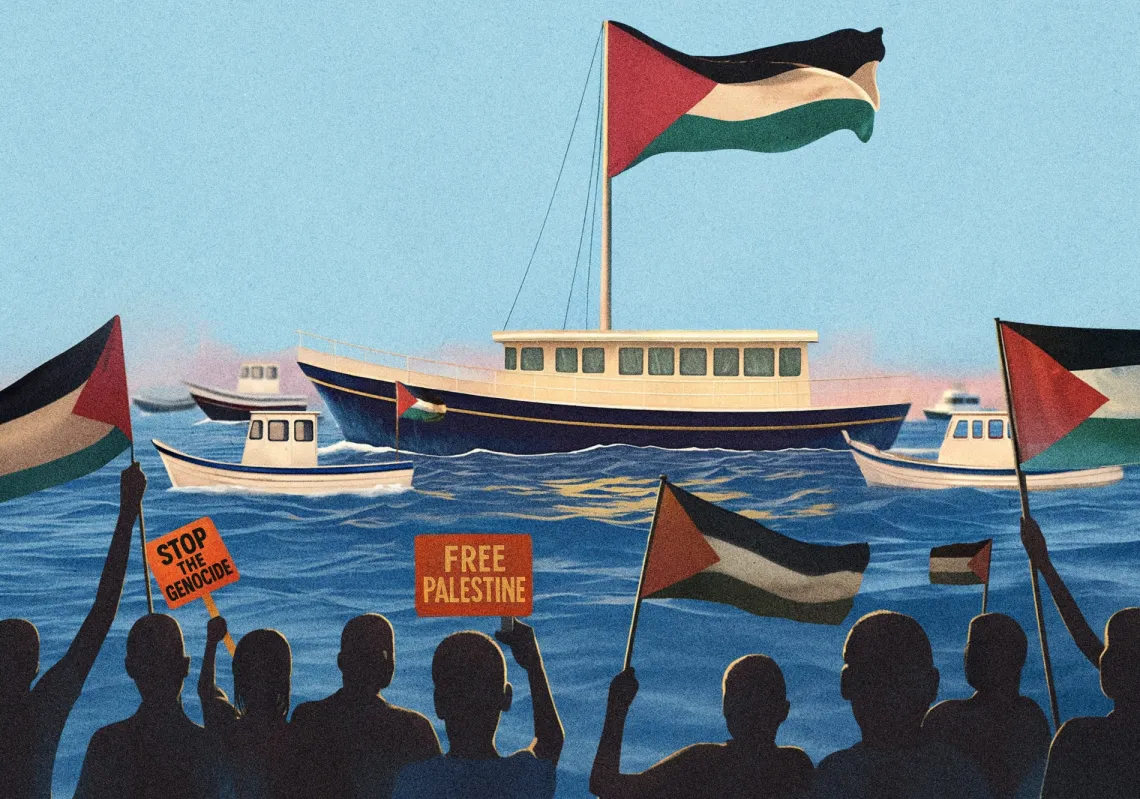
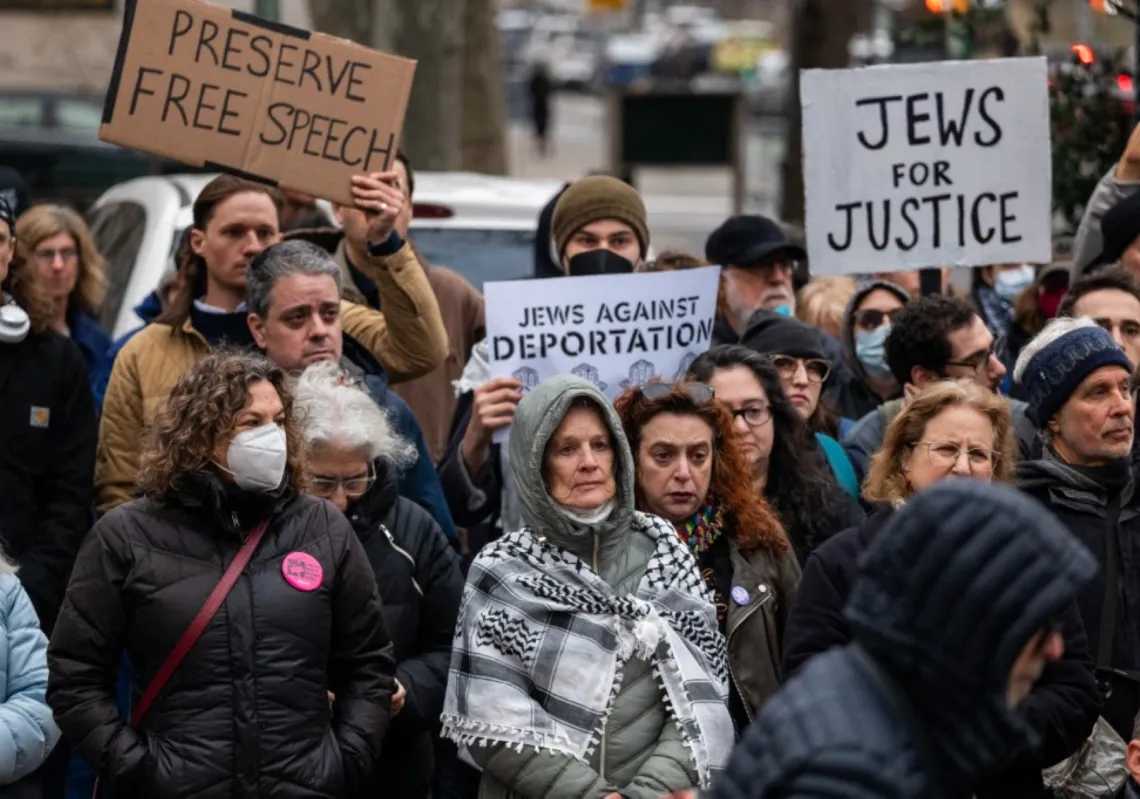
To counter the growing outrage over the genocide across the world, pro-Israel forces pushed a narrative that sought to mask or justify the state's atrocities. But the greater masses spoke out collectively and consistently against Israel's crimes. They rejected justifications for the atrocities and used their voices, art, and platforms to denounce the machinery of Israeli violence. This current of unprecedented solidarity surged and spread, eclipsing its detractors and penetrating cinema, literature, theatre, comedy, music, song, and the visual and performing arts.
Central to this, the Gaza Biennale emerged as a new form of art forged in exile. Launched in 2025 by the collective known as the Forbidden Museum, it unfolded in New York, London, Athens, Copenhagen, Istanbul, Edinburgh, and Berlin through a series of pavilions exhibiting works from Gaza. What set the project apart was its refusal to substitute Gaza, the absent place. Instead, it aimed to create a parallel geography, summoned by art, for a place being systematically erased. The artworks were treated as chronicles of a life ebbing away—salvaged drawings depicting bombed homes, devastation, spaces transformed, and faces etched with despair.
Cinema took on the Gaza wound that pierced countless hearts in 2025
The year also witnessed the revival of Palestinian political posters in exhibitions such as Posters for Gaza, held in London and Ramallah. In the 1970s and 80s, the poster served as a cultural and artistic front line—charging public space with militant themes through a medium that was both direct and symbolic. Its resurgence today stems from its alignment with a discourse shaped by speed and immediacy. The poster remains rich with meaning, reaching viewers quickly and powerfully—an artistic form to contend with digital media, tweets, and social platforms. Its potency stems from a fusion of collective memory, familiar visual codes, and deep emotional and psychological resonance.
Cinema also took on the Gaza wound that pierced countless hearts in 2025. The inaugural Gaza International Women's Film Festival was launched, showcasing dozens of films from around the world, while the Gaza Children's Film Festival continued under the slogan 'We Love Life, Tomorrow,' conveying a message of hope and resilience in the face of devastation. Outside the besieged territory, the film Once Upon a Time in Gaza by brothers Arab and Tarzan Nassar featured in the Cannes, Sarajevo, and Rome film festivals, offering a distinctive portrayal of Gaza's reality—moving beyond condemnation of the occupation to expose the stark contradictions within Palestinian society itself.
Tunisian filmmaker Kaouther Ben Hania's The Voice of Hind Rajab turned the tragic story of a six-year-old girl deliberately killed by the Israeli army, basing the docudrama on the real-life emergency calls she made to the Palestinian Red Crescent. In theatre, A Knock on the Roof, written and performed by Khawla Ibrahim and directed by Oliver Butler, brought Gaza's harrowing reality to theatres in Edinburgh, New York, and London.
Music also became a vessel of solidarity. The song Hind's Hall by American rapper Macklemore became an anthem, echoing across university sit-ins and featuring in a video clip filmed on Columbia University's campus after one of its buildings was symbolically renamed Hind's Hall. Other tracks, such as A Song for Gaza and Tears Over Gaza, similarly highlighted the atrocities unfolding in the Strip.
Artistic boycotts underscored the profound cultural shift provoked by the war. The initiative No Music for Genocide, launched in September, called on artists to withhold their catalogues from streaming platforms in Israel and to restrict geographical access. It positioned the boycott not only as a response to genocide but also as a stance against apartheid and the complicity of streaming corporations.
Within weeks, more than 1,000 artists, bands, and companies had signed up, including Massive Attack, Björk, Paramore, Lorde, and My Bloody Valentine. Meanwhile, Film Workers for Palestine, a US-born initiative, expanded rapidly. Directors and actors such as Javier Bardem, Olivia Colman, Mark Ruffalo, Yorgos Lanthimos, and Ava DuVernay joined the campaign, boycotting Israeli institutions and festivals seen as complicit in sanitising the ongoing massacre in Gaza.
Standouts in cinema
In 2025, central themes included the body, memory, and justice. These themes played out across the world's biggest film festivals and resonated throughout the Arab region, from Saudi Arabia and Egypt to Lebanon.
In Beirut, a city that has recently endured war and economic collapse, several significant cinematic events took place. The Beirut Shorts International Film Festival, in its 19th edition, offered a glimpse of the city slowly reclaiming its cultural vibrancy. As an Oscar-qualifying festival, it describes itself as a "Shortcut to the Oscars"—a passage from Beirut to the world through short films.
The Beirut International Women's Film Festival (BWFF) focused on women in leadership for its 2025 edition. Both poetic and political, it linked women's stories to themes of power, transformation, and agency, emphasising the vital role of women's determination to forge new paths in times of war, displacement, and recession. Meanwhile, the Beirut Art Film Festival (BAFF), in its 11th edition, launched a six-month series of screenings dedicated to art and heritage.
At the 97th Academy Awards, Anora by Sean Baker became one of only four films to win both the Palme d'Or and the Oscar for best picture. A celebration of marginalised voices, it tells the story of an exotic dancer from New York whose aspirations to join the world's ultra-wealthy leads her to marry the son of a Russian oligarch. At Cannes, Iranian director Jafar Panahi took the plaudits for his film It Was Just an Accident, which tackles the subject of torture and its effects on a victim.
Jim Jarmusch received the Golden Lion at the Venice Film Festival for Father Mother Sister Brother, which it follows three estranged family relationships in three different countries around the world. Through a comic lens, it presents the family as a crucible of judgement and emotional volatility. Arab film festivals echoed the themes. The Cairo International Film Festival awarded its Golden Pyramid to Dragonfly by Andrew Williams. Starring Andrea Riseborough and Brenda Blethyn, it is a story of isolation and rebirth after personal crisis, exploring the interplay between past and present.
At the Red Sea International Film Festival in Jeddah, meanwhile, works including My Father's Scent by Mohamed Siam, A Matter of Life and Death by Anas Ba Tahf, and Hijra by Shahad Ameen were highlighted. They all engage themes of family, corporeality, and inner transformation. Hijra, in particular, explores spiritual exile and memory, confronting rigid social frameworks.
Standouts in literature
The cultural mood of 2025 was reflected in the year's major literary prizes and the most talked about books. The Nobel Prize in Literature went to Hungarian author László Krasznahorkai, whose works depict a world teetering on the edge of collapse. His bleak, poetic narratives paint surreal, haunting portraits of forsaken villages, desolate towns, and characters trapped between madness and redemptive delusion. One such was Satantango, the inspiration for Béla Tarr's film of the same name.
In the Arab world, the International Prize for Arabic Fiction (often referred to as the 'Arabic Booker') went to The Prayer of Anxiety by Egyptian novelist Mohamed Samir Nada. Set in an isolated village in 1977, it blends politics with fantasy and myth. Prayer becomes a vessel of existential anxiety in the face of authoritarian repression, opening a counter-archive to official history and inscribing personal fear within the machinery of military power.
Lebanese-American writer Rabih Alameddine continued engaging catastrophe through satire. His latest novel is called The True, True Story of Raja the Fool and His Mother. It explores generational perspectives on trauma and truth, winning the 2025 US National Book Award. Elsewhere, Hungarian-British author David Szalay won the 2025 International Booker Prize for Flesh, a novel that treats corporeality not as metaphor but as fundamental experience—imprinting personality and exposing the emotional and psychological architecture of human life with precise, unsparing clarity.
In the world of music, Puerto Rican artist Bad Bunny has been one of the most streamed artists on Spotify for the past six years. In 2025, he released a genre-fusing album that blended Latin trap with reggaeton, exploring themes of fame and public persona. In parallel, Spanish singer Rosalía's critically-acclaimed LUX combined modern flamenco with electronic pop, reflecting on faith and the human body.
Arab cultural journalism noted the emergence of a new wave of Arabic songs blending trap beats with popular idioms. Syrian artist Basan Ismail's track The Two Wars—about regret and personal reckoning—amassed millions of views within weeks and became a fixture on TikTok and Instagram soundtracks. Lebanese singer Fadl Shaker, still in hiding in the Ain al-Hilweh refugee camp, became a cultural phenomenon with a string of new releases. His tracks were among the most prominent musical outputs of the year, alongside Ibtadaina (We Have Begun) by Egyptian star Amr Diab.
The growing impact of AI
AI was no longer confined to producing texts, research, or images in 2025. Instead, it became a confidante, therapist, and advisor. A report by US organisation Common Sense Media highlighted teenagers' growing use of AI-generated companions, with a surge in apps offering "digital friends" with whom users can share emotional experiences, discuss relationships, express anger, or simply combat loneliness. Among the surveyed teens who had tried these tools, some said conversations with digital companions felt easier than with peers or family.
2025 was the year that AI entered daily life with remarkable force, in roles once reserved for human companions, therapists, and partners
Parallel analysis by Brookings showed that AI companions were no longer limited to helping with homework or work tasks, but were increasingly used to fill emotional voids—supporting decision-making or hearing confessions. Journalists reported on families suing the makers of these 'smart companions' after teenagers' suicides. In some cases, AI models were accused of providing responses that exacerbated mental distress or even suggesting methods of self-harm. In response, tech firms banned underage users and tightened content moderation.
Beyond legal liability, the issue highlights the dangers in replacing human communication with digital interaction mediated by entities designed to gratify and retain users. Some asked how might these artificial relationships reshape emotional and social bonds, and how might they affect human self-perception and cultural expression—in literature, film, music, and beyond. Once confined to speculative fiction, the answers will help define the future both of culture and of human connection itself.
In 2021, a group of researchers coined the term 'stochastic parrot' to describe large language models (LLMs) that statistically mimic text or speech without any real understanding of their meaning. They merely predict the next word from vast datasets of text on which they have been trained. These models are now known to amplify misinformation, reproduce prejudices, and reinforce biases within their training data.
Recent studies comparing university students' essays with AI-generated texts on similar topics have yielded striking results. AI outputs tend to be more formal, incorporating neutral academic prose, whereas human writing is more intimate, incorporating abrupt shifts, experimental imagery, and surprising metaphors. Another increasingly noticeable phenomenon is stylistic homogenisation. With researchers, students, and writers increasingly relying on Generative AI (GenAI) tools to refine ideas or polish language, their texts begin to converge in tone, structure, and vocabulary to a measurable degree.
Ever since OpenAI opened the public's eyes to the power and potential of Generative AI in November 2022, companies and countries have sought to position themselves.
In Arabic, the influence of AI is more layered. While GenAI tools have significantly increased the volume of Arabic content available online, they struggle with dialects, idiomatic expressions, and culturally-nuanced language. As a result, AI-generated or AI-edited Arabic writing often defaults to a smooth, standardised fus-ha—grammatically correct yet linguistically sterile, stripped of colour and voice, a rootless and impersonal prose in which the writer disappears behind the orderly mechanics of composition. The cadence is precise and measured, but devoid of experimentation or risk.
In the film industry, GenAI tools are now widely used to draft scripts, pre-visualise scenes, edit footage, process sound, and reduce stunt-related risks through digitally generated stand-ins for actors. Unions such as SAG-AFTRA are negotiating with studios to regulate the use of AI-generated faces and voices. In the music industry, big production houses have signed licensing deals with generative platforms, allowing users to remix existing works within sanctioned AI systems.
Industry analysts wonder whether this will lead to the endless replication of familiar models, dressed up in only slightly new forms, an apparent explosion of productivity, in fact, a depletion of imagination, flattening innovation into an endlessly recycled template. In 2025, this concern gave rise to a counter-current, with artists explicitly distancing themselves from AI.
New works are increasingly labelled as 'handmade' or 'AI-free'. The labels are both creative statements and marketing tools. Instead of AI's paint-by-numbers formula, works now highlight their imperfections, lack of pace, stylistic divergence, and idiosyncrasies that point to a creator's personal identity. The 'human' is no longer simply the opposite of the mechanical; it is a conscious embrace of detour, error, singular expression, and an insistence on the imprint of the self.
At the beginning of the year, the Vatican released a comprehensive document on AI, characterising it as a "shadow of evil" and warning against its use for disinformation and deepfakes. It called for rigorous government oversight and urged a wide-ranging public debate on the ethical boundaries of such tools. Yet the Vatican was far from alone in posing ethical questions.
How AI technology could be used by terrorists to significantly enhance violent attacks through automation, increased precision, and pre-determined targeting.
Ethical concerns
A new book titled A Guide to Global Philosophies on AI Ethics collects perspectives from Africa, Asia, and Latin America and asks what if the guiding principles of technology were shaped by alternative non-Western worldviews such as ubuntu, the African ethic of mutual care ("I am well because you are well"; "I exist because you exist"), or Indian philosophies that envision humanity as one family, or Confucian ideals of virtue rooted in moral self-cultivation.
In his book The Future of Truth, German filmmaker Werner Herzog warns of the peril of disregarding truths that "do not appear in statistics". He contends that beyond factual accuracy lies a deeper "ecstatic truth"—one that transcends raw data to express the emotional and existential core of human experience. This idea, which Herzog previously explored in his films, insists that art can reveal truths about war, isolation, or poverty that go beyond documentary precision.
Today, this concept of art as a means of revealing truth faces an unprecedented challenge. In a world where image, voice, and video can be fabricated from nothing, defending the notion of "ecstatic truth" is increasingly difficult; how do we define authenticity in an age of deepfakes and synthetic media?
The World Conference on Cultural Policies proposed that culture be recognised as an independent goal within the post-2030 global development agenda
Amid these philosophical and ethical debates, the World Conference on Cultural Policies (MONDIACULT 2025) convened in Barcelona. It served as a political crystallisation of the year's intellectual climate.
More than 120 ministers of culture and representatives from 163 countries convened to discuss a seemingly simple yet deeply consequential question: where should culture stand within the framework of sustainable development? The conference report, titled Culture: The Missing Goal of Development, had a sobering conclusion, warning that treating culture as expendable during crises risks eroding the very elements that sustain social cohesion—shared meaning, memory, and imagination.
Three recurring themes emerged across the sessions. The first centred on protecting artists by securing the economic and social rights of cultural workers. Another focused on integrating culture into climate and disaster policy—not merely as heritage to be preserved, but as a source of resilience and a generator of alternative imagination. A further theme addressed the regulation of AI, advocating its use in service of cultural preservation and access, while insisting on clear ethical and legislative boundaries.
In its closing declaration, the conference proposed that culture be recognised as an independent goal within the post-2030 global development agenda. This would elevate culture from a peripheral concern to a foundational pillar of global policy.
Regardless, issues once confined to intellectual debate—technological ethics, the meaning of progress, environmental justice, and cultural resistance from Gaza to Beirut, India to Latin America—are slowly coming within the remit of international governance, laying the groundwork for laws, strategies, and policies grounded in the values of culture itself.