Fresh UK sanctions on Syria send a message

London is making it clear that it expects more than just symbolic gestures from Damascus when it comes to holding security forces accountable for atrocities

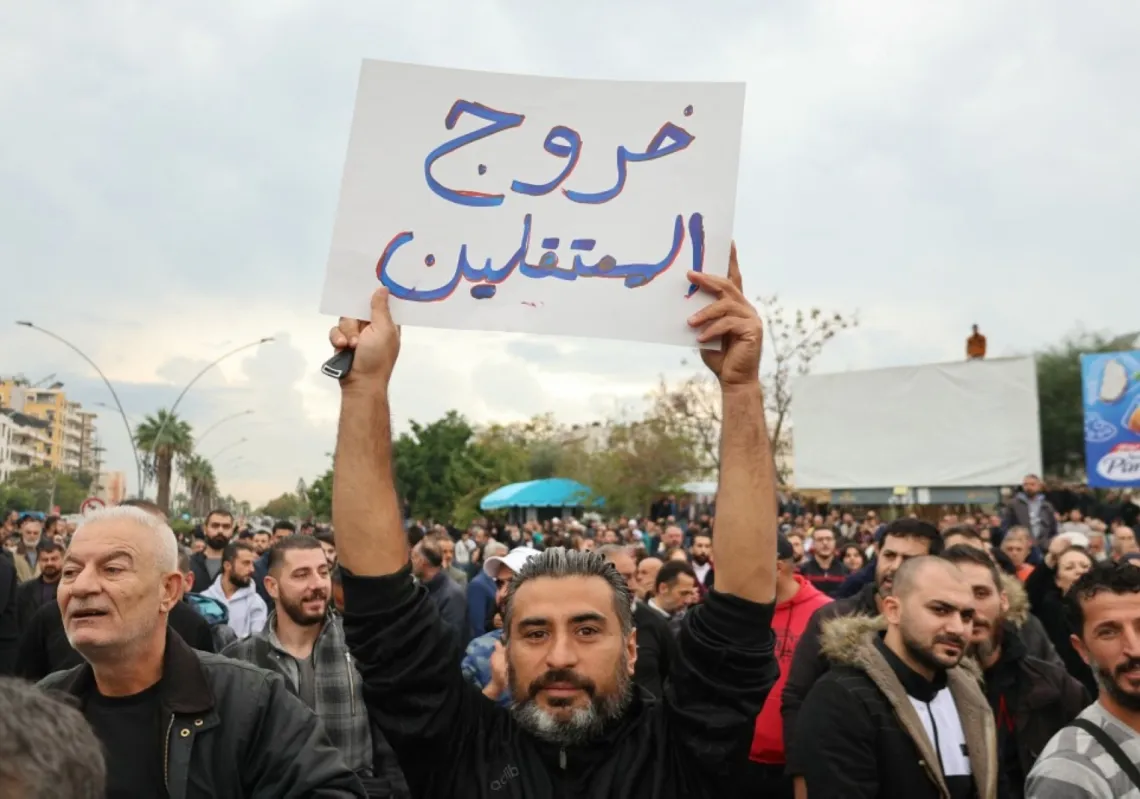
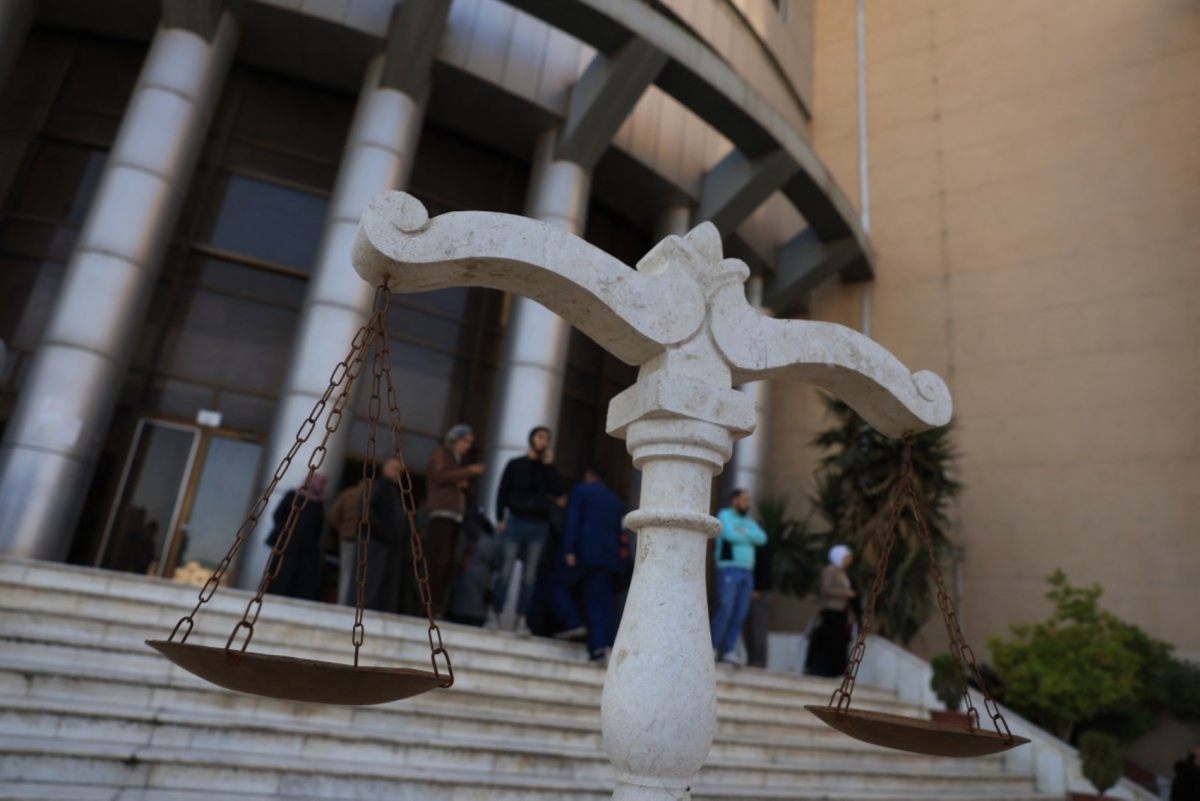
People stand outside the Justice Palace after first trial of more than a dozen suspects linked to massacres that left hundreds dead in Syria's Alawite coastal heartland earlier this year, in Aleppo on 18 November 2025.
BAKR ALKASEM / AFP
People stand outside the Justice Palace after first trial of more than a dozen suspects linked to massacres that left hundreds dead in Syria's Alawite coastal heartland earlier this year, in Aleppo on 18 November 2025.

Fresh UK sanctions on Syria send a message

As Syrians were celebrating the full repeal of the Caesar Syria Civilian Protection Act, the United Kingdom announced a new round of sanctions—an unmistakable reminder that Syria’s reckoning with punitive measures is far from over. By targeting not only figures linked to the former regime but also commanders and armed factions now folded into the country’s transitional security forces, explicitly citing their role in the March coastal violence, London sent a blunt message: integration into the new state does not absolve responsibility for abuse.

The timing was deliberate. The sanctions were unveiled just as Syria’s transitional authorities launched public trials against individuals accused of involvement in the coastal violence, a move intended to signal a break with the past. The UK decision, however, makes clear that symbolic gestures and selective prosecutions will not be enough. What Western capitals are watching is not whether Damascus can initiate accountability, but whether it can institutionalise it—applying the law consistently, including to commanders embedded within the new security apparatus.

By elevating the coastal violence from a localised security failure to a broader test of the transition, the sanctions refocus attention on how Damascus consolidates authority: through narrow, case-by-case accountability or by embedding clear and uniform standards of responsibility within emerging state institutions. Accountability, in this view, is not optional and cannot be deferred until the transition stabilises. It must be integral to the transition itself.

Fresh attack

The sanctions take on added importance in light of a new attack on minorities in Homs on an Alawite mosque during Friday prayers on 26 December. Explosives were reportedly placed in the Imam Ali ibn Abi Talib Mosque and detonated while worshippers gathered, killing at least eight people and injuring 18. Authorities are still searching for the perpetrators, but the jihadist group Saraya Ansar al-Sunnah claimed responsibility for the explosion.

The UK sanctions announced on 19 December targeted several individuals accused of violence against civilians during both the Assad era and the transitional period. Among them were Mohammad al-Jasim, commander of the Sultan Suleiman Shah faction, and Sayf Boulad, commander of the Hamza Division.

London also designated three armed groups—the Sultan Murad Division, the Sultan Suleiman Shah Division, and the Hamza Division—all accused of involvement in atrocities during the civil war and in the recent coastal clashes that reportedly left around 1,400 people dead.

REUTERS/Karam al-Masri
People walk past damaged vehicles, as Syria's interim President Ahmed al-Sharaa grapples with the fallout from reported mass killings of Alawite minority members, in Jableh, Syria March 12, 2025.

Read more: Syria coastal violence: a critical test for Sharaa's government

These designations carry particular political weight because the sanctioned commanders hold positions within the new military structure. Although these groups no longer formally exist on paper, having been absorbed into the Ministry of Defence, their internal hierarchies appear largely intact. The Sultan Suleiman Shah Brigade, for example, was folded into the 25th Division, still led by Mohammad al-Jasim, also known as Abu Amsha. The Hamza Division became part of the 76th Division under Sayf Boulad, also known as Abu Bakr.

By targeting figures implicated not only in Assad-era abuses but also in more recent violations, the UK reinforced a principle increasingly shared by Western governments: integration into state institutions does not absolve responsibility. If anything, it heightens it.

The move also makes clear that lifting broad economic sanctions imposed because of the former regime does not mean justice has been sidelined. Accountability, in this view, is not an afterthought to stability; it is the condition that makes stability possible.
Delivering justice in a post-conflict society is never easy. But delaying it is not a neutral choice; it is a gamble with long-term stability

A test of intent

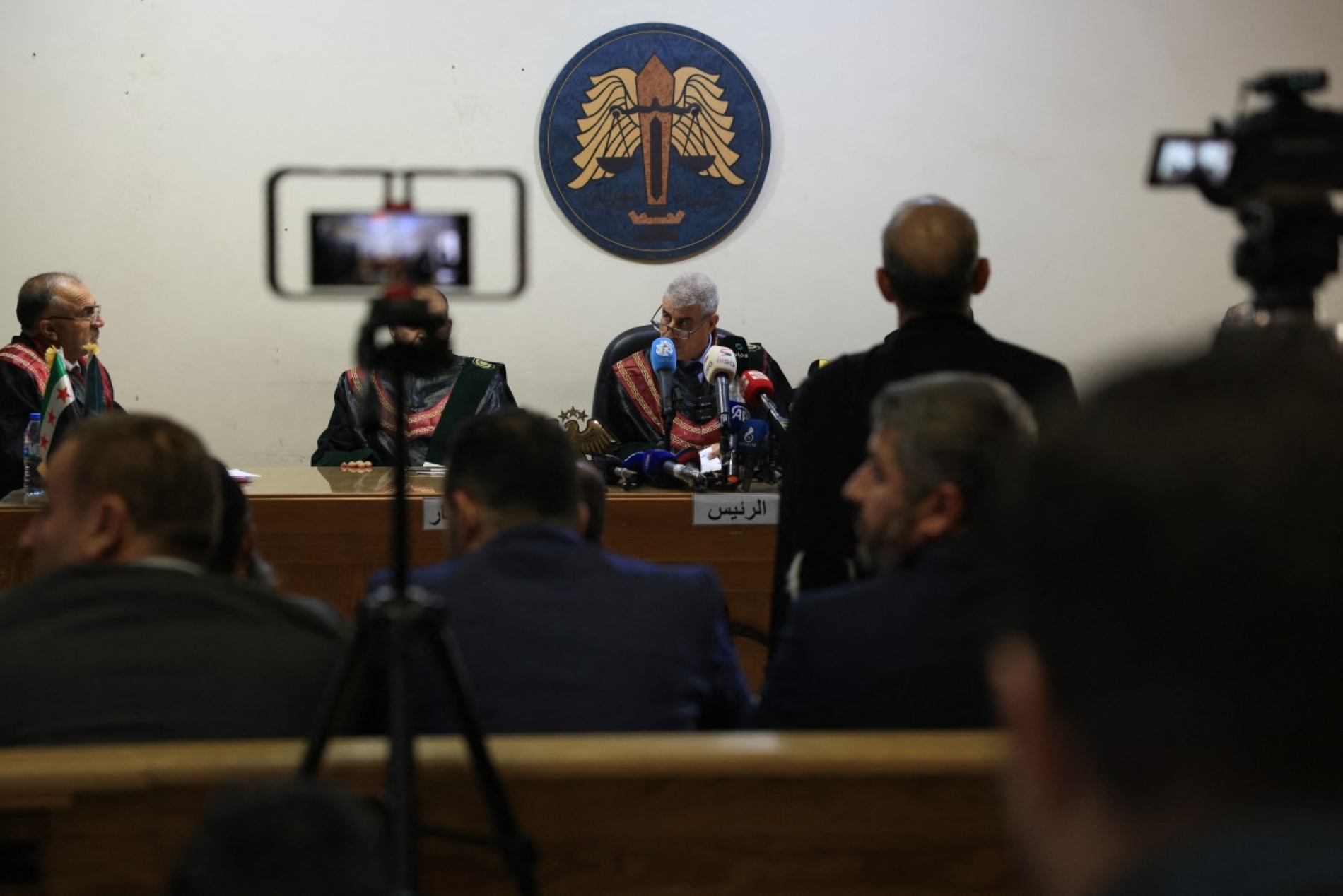
Syria's transitional authorities have pledged to hold perpetrators accountable regardless of rank or affiliation, but have taken only limited steps in that direction. The ongoing public trial of 14 men accused of involvement in the coastal bloodshed—half of them members of the security forces—is meant to demonstrate that accountability has begun, even within state institutions.

Yet despite its symbolic value, the trial also exposes the political trade-offs shaping the government's approach to justice. Officials argue that the sanctioned commanders have not been directly implicated by the government's own fact-finding mission, justifying the lack of action against them. Critics counter that the investigation focused narrowly on individual perpetrators while failing to examine command responsibility or the permissive conditions that enabled large-scale abuses.

More importantly, the two sanctioned commanders have well-documented records of violations unrelated to the coastal violence. Elevating them to senior positions despite sanctions and credible allegations appears more like a political calculation than a legal judgment.

This logic extends beyond opposition-linked commanders to figures implicated in Assad-era atrocities. Transitional authorities have prioritised prosecutions for recent crimes while delaying accountability for older abuses, a strategy that appears designed to bolster short-term credibility rather than to establish a comprehensive justice framework. That delay is rooted in fear: that sweeping prosecutions of former regime officials and former opposition figures could destabilise an already fragile transition.

BAKR ALKASEM / AFP
People follow the proceedings of the first trial of more than a dozen suspects linked to massacres that left hundreds dead in Syria's Alawite coastal heartland earlier this year, at the Justice Palace in Aleppo on 18 November 2025.

Accountability can't be postponed

It is precisely this calculation that makes the timing of the UK sanctions so consequential. Announcing them as Syria's transition enters its second year was no coincidence. The message is clear: accountability cannot be postponed in the name of stability. Justice treated as a future problem is unlikely to produce lasting peace.

Allowing individuals accused of war crimes to occupy senior positions carries real costs. It undermines claims of impartial accountability, fuels cycles of vigilante justice, and erodes public trust in the state. For communities that have borne the brunt of violence by their fighters—including Kurds, Alawites, and Druze—the reappearance of familiar perpetrators under new institutional banners deepens fear rather than reassurance.

Delivering justice in a post-conflict society is never easy. But delaying it is not a neutral choice; it is a gamble with long-term stability—promises of accountability matter. Delivering on them—early, credibly, and without exception—matters far more.

For Damascus, the choice is no longer abstract. Accountability is not about convenience or political timing; it is about standards. By choosing justice over expediency, the transitional authorities can send a message more powerful than any speech or sanction: that impunity has truly ended, regardless of affiliation. Only then would Syria's transition begin to look like a genuine new beginning.

font change