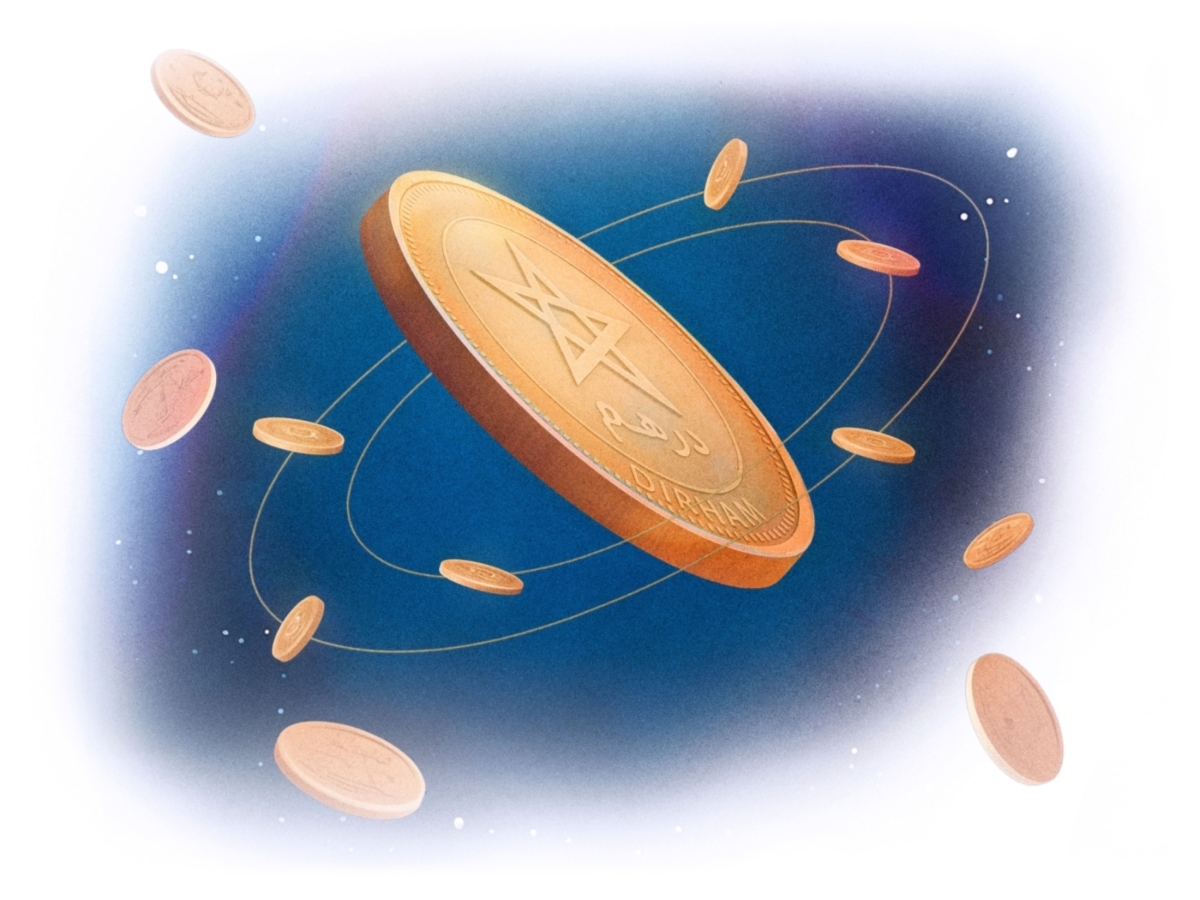
The Moroccan dirham emerges as an alternative currency in African markets

As European banks retreat, debt balloons, and price volatility spooks central banks, Morocco’s national currency is increasingly being used in continental trading.

Lina Jaradat

The Moroccan dirham emerges as an alternative currency in African markets

A growing number of African states are exploring adopting regional currencies instead of the dollar, the euro, and the CFA franc for intra-African trade. Many of their national currencies have sharply depreciated when measured against international benchmarks, and the aim is to shield them from volatile exchange rates.

Among the most pressing causes of liquidity shortages are widening external deficits and mounting pressure on foreign reserves. These strains expose African currencies to depletion, fuelling inflation and eroding purchasing power.

The International Monetary Fund (IMF) continues to encourage further reforms to foster a monetary environment conducive to expanding intra-African commerce, stimulating growth and stabilising macroeconomic accounts, while addressing the chronic scarcity of foreign exchange. Yet the Fund insists that all financing and debt servicing will remain denominated in dollars and governed by the system of Special Drawing Rights.

Some nations aggrieved with the prevailing global economic order aspire to emulate the financial arrangements between Russia and China, where trade is increasingly conducted in national currencies (the rouble and the yuan), particularly in oil, energy, industrial inputs, and consumer goods. This came in response to Western sanctions.

In the medium term, debt is a formidable challenge in Africa, where debt is overwhelmingly denominated in dollars through international financial institutions and where 14 countries already have debt exceeding 180% of their gross domestic product (GDP). Sudan’s debt is more than 200%.

The momentum behind alternative initiatives is widening, now encompassing India, North Korea, Brazil and several members of the BRICS group. Much of this relies on the New Development Bank, in which Beijing holds the largest stake. Yet African economies are far smaller (projected to remain less than $4tn by the end of 2025), their sources of income are insufficiently diversified, per capita earnings remain low, reserves are fragile, and intra-continental trade is limited. Moreover, the continent depends heavily on industrial and technological goods that are produced only sparingly within its borders.

Lina Jaradat

The debt crisis

Debt has long been the central obstacle to Africa’s economic stability. External debt servicing consumes nearly 20% of GDP across 25 nations, costing $89bn in 2025—twice the amount of foreign direct investment (FDI) flowing into Sub-Saharan Africa. Average debt levels are around 64% of GDP, concentrated in the continent’s largest economies. According to data from the African Export and Import Bank, the combined debt of the two largest economies—South Africa and Egypt—stands at around $336bn.

Since the COVID-19 pandemic, several African countries have exported more foreign currency than they earned through trade surpluses. This imbalance persists despite some indicators improving, leaving the continent vulnerable to fresh financial storms, such as the one triggered by the American subprime mortgage crisis of 2008.

Several African economies have resorted to floating their national currencies and deliberately devaluing them against the dollar in recent years. This policy has enabled parallel exchange markets to flourish, encouraging transactions in foreign currencies without central bank intervention. The Ethiopian birr was devalued by 127%, the Nigerian naira by 72%, and the Egyptian pound by 64%, all in exchange for emergency IMF financing.

Among the financial institutions that have extended trade finance lines are the Islamic Development Bank, the European Investment Bank, the Japan Bank for International Cooperation (JBIC), and the German Bank, all working to ensure the flow of imports and to apply downward pressure on prices. Other states, faced with inflation, have instead chosen to print money, often without the sanction of international financial bodies. This relies on reserves as cover to ease liquidity shortages but carries serious risks, particularly if export revenues decline or if commodity or energy prices fall.

The African Export-Import Bank, which finances intra-African trade, revealed that trade among African nations reached $208bn last year. Of this, $58bn was exchanged among southern countries, $53bn among those in the west, $49bn in the east, and no more than $31bn among the Mediterranean states—a region that remains marked by deep political rifts, especially between Algeria and Morocco.
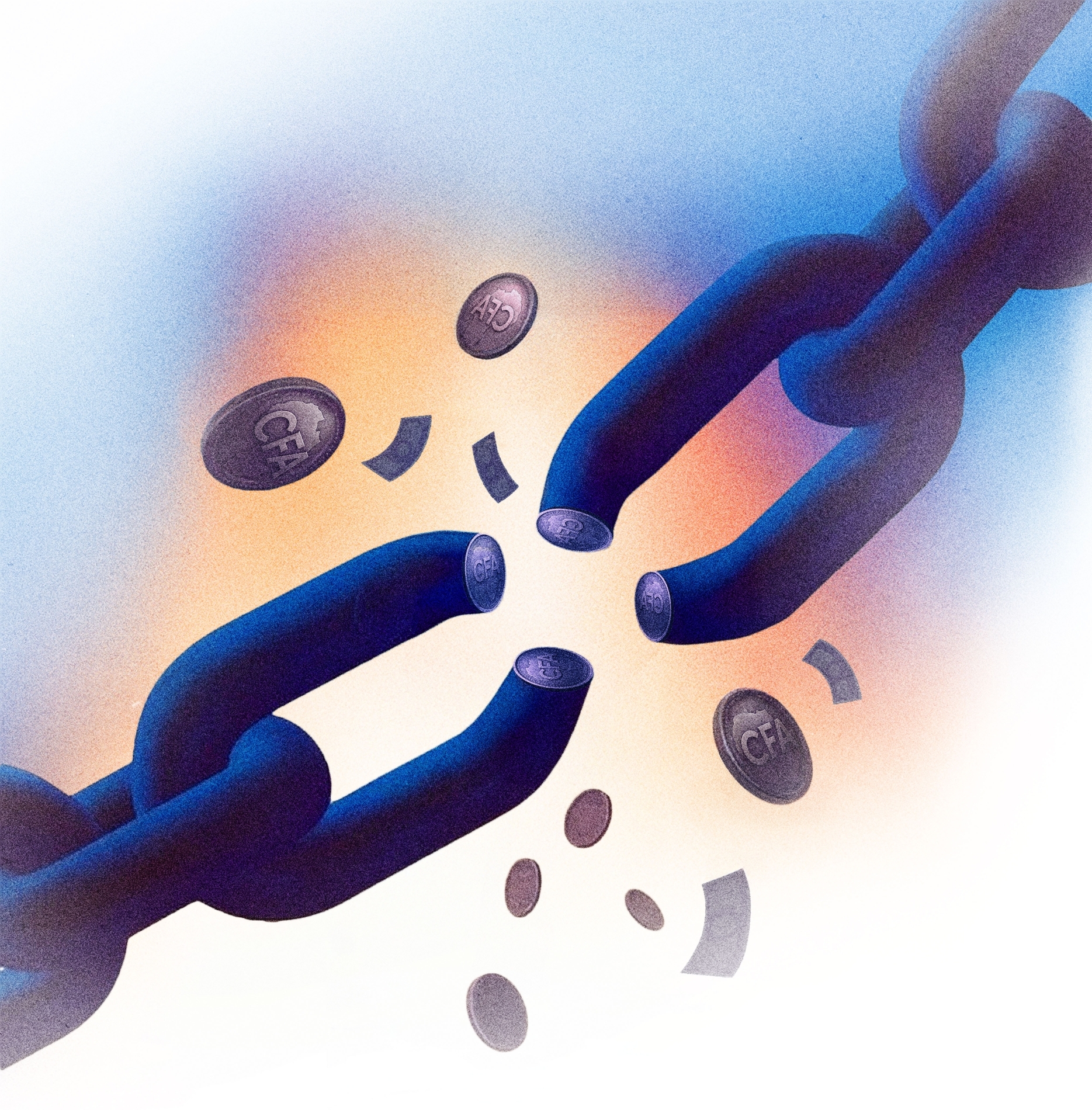
Debt is a formidable challenge in Africa, where 14 countries already have debts exceeding 180% of their GDP

By contrast, Africa's trade with the wider world amounted to $1.4tn, with $682bn in exports (up 9.8%) and $719bn in imports (up 2.4%). Yet this external commerce does little to improve per capita income or to finance economic and social development. It remains largely dominated by European, Chinese, American, and Russian firms that cash in without necessarily benefiting the continent's populations. As such, resentment of both old and new colonial powers continues to grow.

The African Export-Import Bank does not oppose the creation of unified regional currencies for trade and exchange, provided they are established by mutual agreement. It recommends that such initiatives begin among a limited number of states before expanding if successful.

Africa today comprises eight regional economic blocs, covering 54 countries and 30 million square kilometres, from the Mediterranean to the Cape of Good Hope, and from the Atlantic to the Indian Ocean. These blocs differ in terms of economic size and income diversification. Most African nations rely on a narrow range of exports—energy, minerals, agriculture—leaving them vulnerable to the volatility of international commodity prices. The African Continental Free Trade Area (ZLECAF) has 54 signatories, each seeking new export markets to redress external imbalances.

Positive projections

The IMF is positive. It projects that intra-African trade will rise by 15%, commerce with the rest of the world by 53%, and per capita income by 10%. At the same time, poverty is expected to affect up to 50 million less people by 2030. Such projections enhance Africa's attractiveness for investment and tourism, yet this relies on the development of transport networks, highways, railways, and ports, as well as on the opening of borders and the resolution of armed conflicts.

Landlocked states in the heart of the continent, particularly in the Sahel, face formidable climatic and geographic challenges, compounded by their lack of access to the sea. Morocco has proposed creating a vast 16-nation trade zone encompassing West Africa and the Sahel within a regional economic grouping called 'Atlantic Africa'.

Reuters
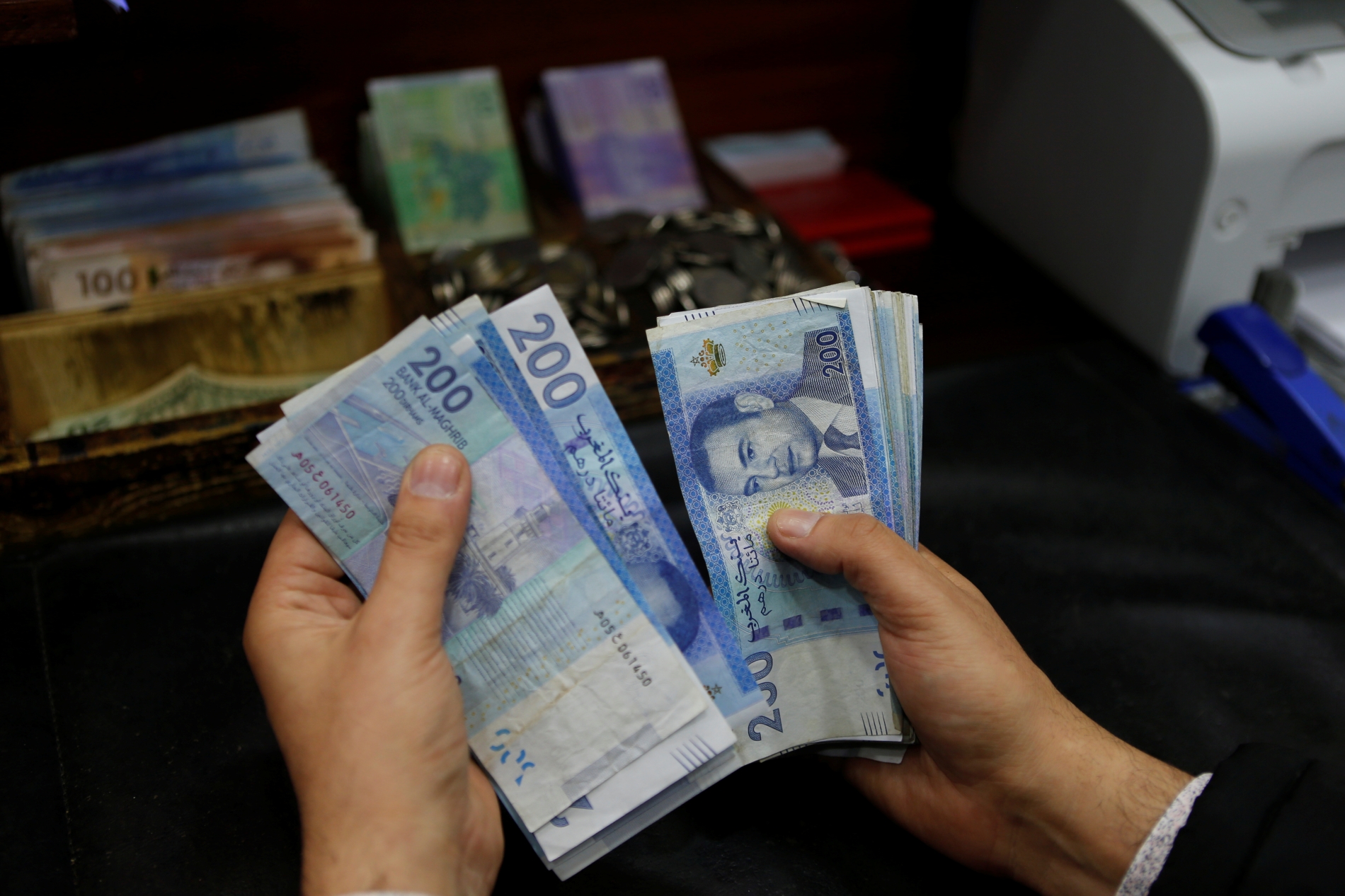
An employee counts Moroccan dirhams in Rabat, on 20 February 2020.

The Moroccan dirham

Rabat has pledged to shoulder the financial and investment burden of building infrastructure to connect these nations with its Atlantic ports. Foremost among these projects is the $2bn Dakhla port being built. It is set to be the largest commercial port on the southern Atlantic coast of Africa.

Together with Nigeria, Morocco is also sharing the cost of a new natural gas pipeline that will pass through 13 African countries to the Mediterranean and on to European customers. At a cost of up to $35bn, the project aims to create a vast market for gas and electricity, expected to benefit around 400 million people.

Moroccan firms are expanding across North, West and Central Africa. Traders report a marked rise in the use of the Moroccan currency (the dirham) in markets across West Africa and the Sahel, including Mauritania, Senegal, Mali, Guinea, Gambia, Niger, Burkina Faso, Côte d'Ivoire, Ghana, Togo, Gabon, Cameroon, and the Central African Republic. This marks a significant shift in a region that has long been anchored to the CFA franc, historically tied to the French central bank.

Traders report a marked rise in the use of the dirham in several central and Western African states

Although 14 African states still officially use the CFA franc, the dirham has begun to circulate more widely, functioning as both a substitute and a complement. A report by CNBC found that many African nations had expressed an interest in adopting the Moroccan currency for trade and transactions, in part owing to Morocco's expanding economic partnerships and the broad presence of its banks, now operating in more than 30 countries, including Egypt, Tunisia, Senegal, and Côte d'Ivoire.

In less than two decades, the banking map of Sub-Saharan Africa has been redrawn. The large European groups that once dominated the market are gradually withdrawing, being replaced by groups from countries like Morocco. Meanwhile, major Moroccan firms such as OCP Group are investing up to $9bn in major projects in Nigeria, Ethiopia, and Kenya to produce agricultural fertilisers. Official figures confirm a sharp increase in trade between Morocco and West African countries in recent years, accelerating the spread of the dirham in regional markets.

Since Morocco's return to the African Union in 2017, it has been active in sectors such as telecoms, infrastructure, finance, insurance, tourism, real estate, agriculture, phosphates, mining, energy, and technology, with 54 Moroccan companies operating in Sub-Saharan Africa this year alone. Recorded transactions amount to nearly $56bn, $39bn of which were from the private sector.

Lina Jaradat

Seizing the mantle

Analysts note that the presence of three major Moroccan banking networks in 32 African countries has played a key role in facilitating the spread of the dirham. Yet this trend extends beyond financial considerations, encompassing political influence and diplomatic strategy. As France exits the stage, Morocco is leveraging its cordial relations with African nations to promote cooperation free from foreign interference—sometimes described as the 'elder brother' model.

African states are expected to explore alternative paths to enhance their monetary and financial sovereignty as European dominance fades. This could prompt the dirham's further expansion, alongside Moroccan geopolitical ambitions and desire for regional leadership. But the political and economic stability of partner nations remains a challenge. There are also questions over whether Morocco's own economy, reserves, and central bank can maintain the dirham's value in the event of any shocks.

Still, the signs point to a currency now asserting itself beyond Morocco's borders. French economic journals have observed that, in less than 20 years, the banking landscape of Sub-Saharan Africa has been fundamentally transformed, with big European groups retreating and rising powers like Morocco stepping in to fill the vacuum, acquiring the legacy operations of Barclays, Standard Chartered, Société Générale, and BNP Paribas. For now, it looks like the dirham's decade.

font change