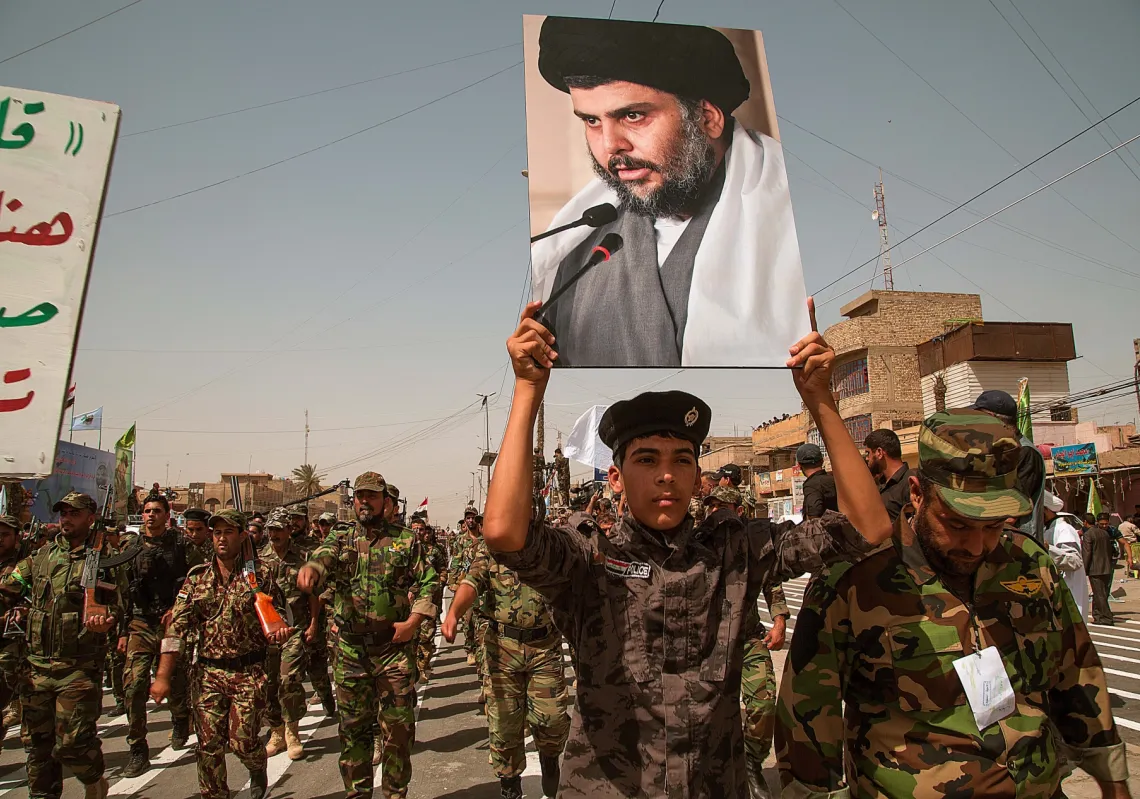
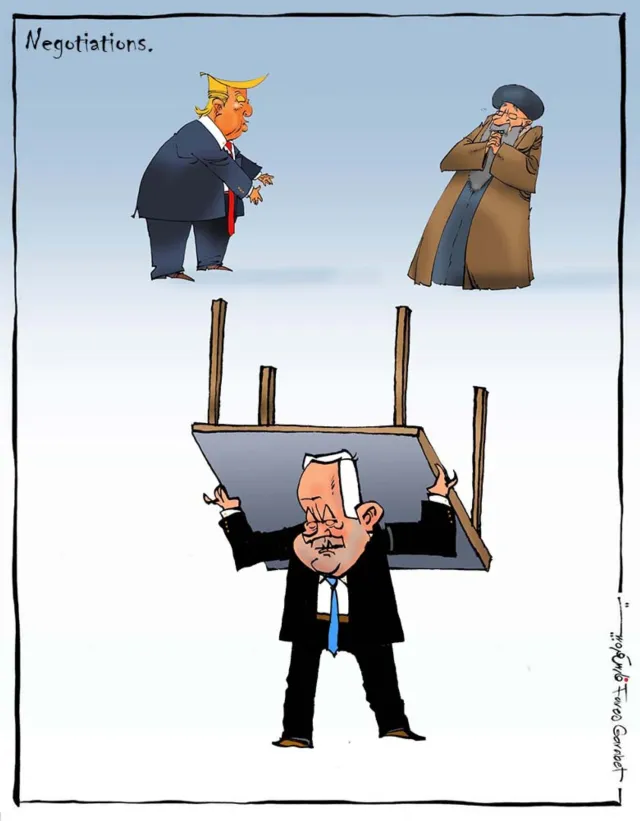
As the US-Iran war intensifies, it has drawn in non-state actors across the region. While Baghdad says it is not a party to the conflict, militias have stepped in on Tehran's side.
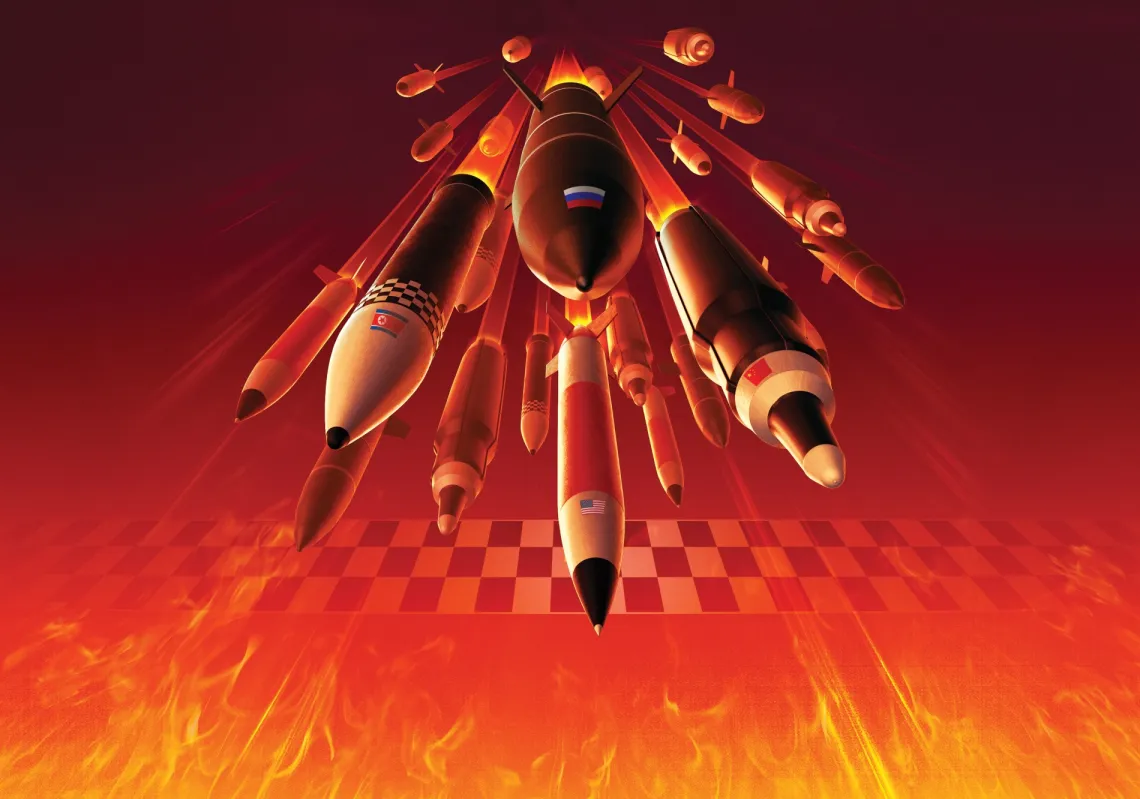
As the future of the US presence in the Middle East is being debated, foreign policy discussions would be incomplete without considering Russia's role in the region. Al Majalla explains.
China's maritime focus at present remains in its vicinity. Its presence in the Middle East is a slow build. It might never become a regional military superpower, but it can't be ruled out entirely.
What would the regional and global implications of a US military withdrawal from the region look like? Our March issue's cover story provides some answers.
A huge belt of land dividing the dry Sahara from the tropical savannah has become a playground for mercenaries. An absence of state security, poverty, and a lack of education create the perfect storm.
From the arming of tribes to protect goat herders to the rise of the RSF, who are currently fighting the military, Al Majalla sheds light on Sudan's endemic militia problem.
Because the government ceded an unhealthy degree of authority to local militias and tribal intermediaries, no one can dismantle these groups without risking their own lives.
In three generations, Palestinians have sought liberation, return, Jerusalem, statehood, nationhood, self-governance, and autonomy. Fatah has changed with the times and with events.
The US-Israeli war against Iran aims to draw in Gulf states, but history has shown that entering wars is far easier than exiting them. Prudence is needed now more than ever.
PA Foreign Minister Varsen Aghabekian Shahin tells Al Majalla that Israel is taking advantage of the fact that the world is distracted by the US-Iran war to create irreversible facts on the ground
Given the effective closure of the Hormuz Strait and Houthi threats to close off the Red Sea, Syria may emerge as a corridor and conduit to bypass these embattled maritime chokepoints
A former army forensics employee who later became known as Caesar tells Al Majalla how he risked his life to expose the torture and killing of countless Syrians in regime prisons