

Al Majalla obtains draft agreement that includes a prisoner exchange, an intensification of humanitarian aid, the recognition of a Palestinian state, and regional security agreements.
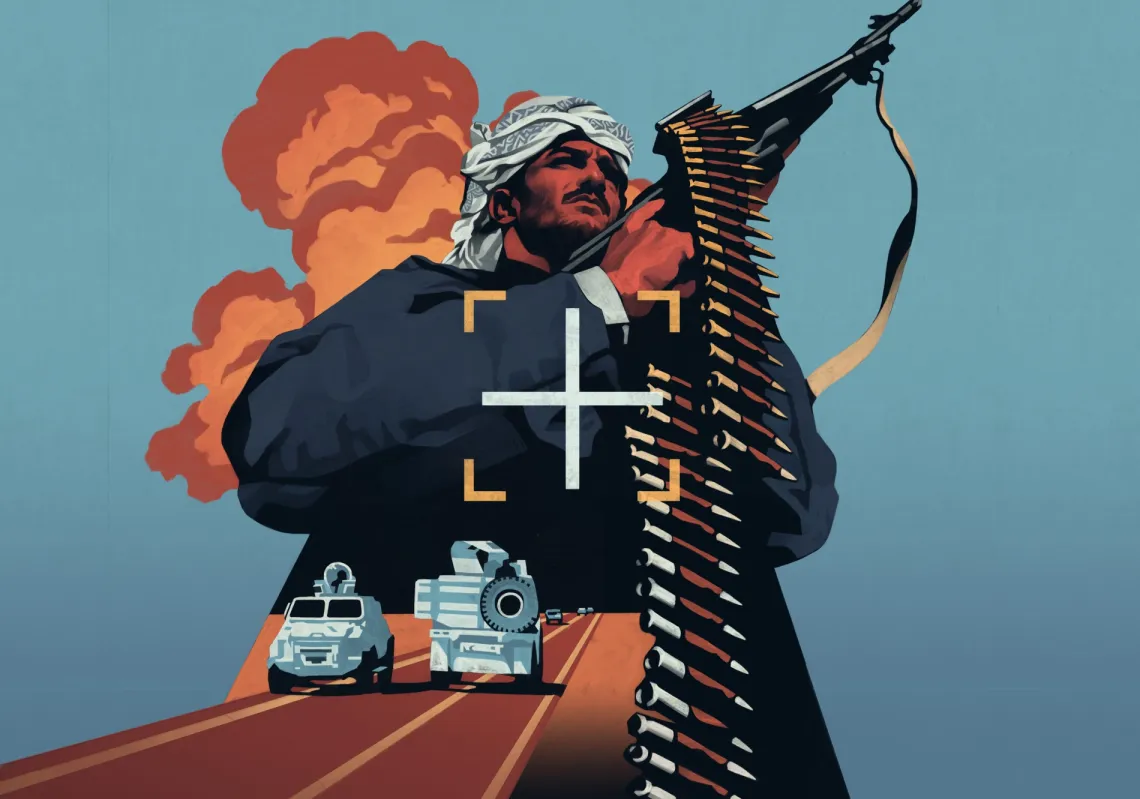
Al Majalla dedicates its February issue to exploring Iran's use of militias to exert influence and negotiate with the United States and other major powers.
From Iraq to Syria and Lebanon to Yemen, Iran-backed militias have expanded their power and influence. However, regional escalation following the 7 October attack on Israel is testing their limits.
Armed groups have proliferated in the Iraqi security vacuum, in some cases supported by Iran. After three US soldiers were killed, the Americans have hit back. How will the militias react now?
Yallah Gaza by Roland Nurier was filmed before the war swept devastation over the enclave. Beautiful but flawed, its airing in Paris helps keep Gaza in the minds of an apathetic public.
In response to the killing of three US soldiers in Jordan last week, the US attacked more than 80 targets belonging to Iran-backed proxy groups and Tehran's Revolutionary Guard.
The Middle East is no stranger to displacement. Al Majalla highlights case studies in Lebanon and Syria as a potential template for the future of Gaza.
The Egyptian Pound is weak, and the country is losing income from Houthi missiles, causing ships to avoid the Suez Canal. The timing is bad, as Cairo asks the IMF for $750mn in loans.
Disruption in the Hormuz can have major implications for global trade, but it also creates opportunities for smaller nations like Iran to become global political players
The Iraq war was viewed as disastrous in retrospect, while the Iran war was unpopular from the get-go. Al Majalla highlights the similarities and differences between the two.
Pipelines have a chequered history in the Middle East, but the closure of the Strait of Hormuz has led US Tom Barrack to conclude that a new route through Syria could solve some problems.
