The US plan to turn Syria into an oil transit hub

Pipelines have a chequered history in the Middle East, but the closure of the Strait of Hormuz has led US Tom Barrack to conclude that a new route through Syria could solve some problems.

Al Majalla

The US plan to turn Syria into an oil transit hub

After years of missed economic opportunity, Syria’s oil reserves in the north-east are once again a strategic option for Damascus following a confluence of events, most recently the US-Israeli war against Iran and the latter’s decision to block the Strait of Hormuz, through which much of the Gulf’s oil and gas is exported.

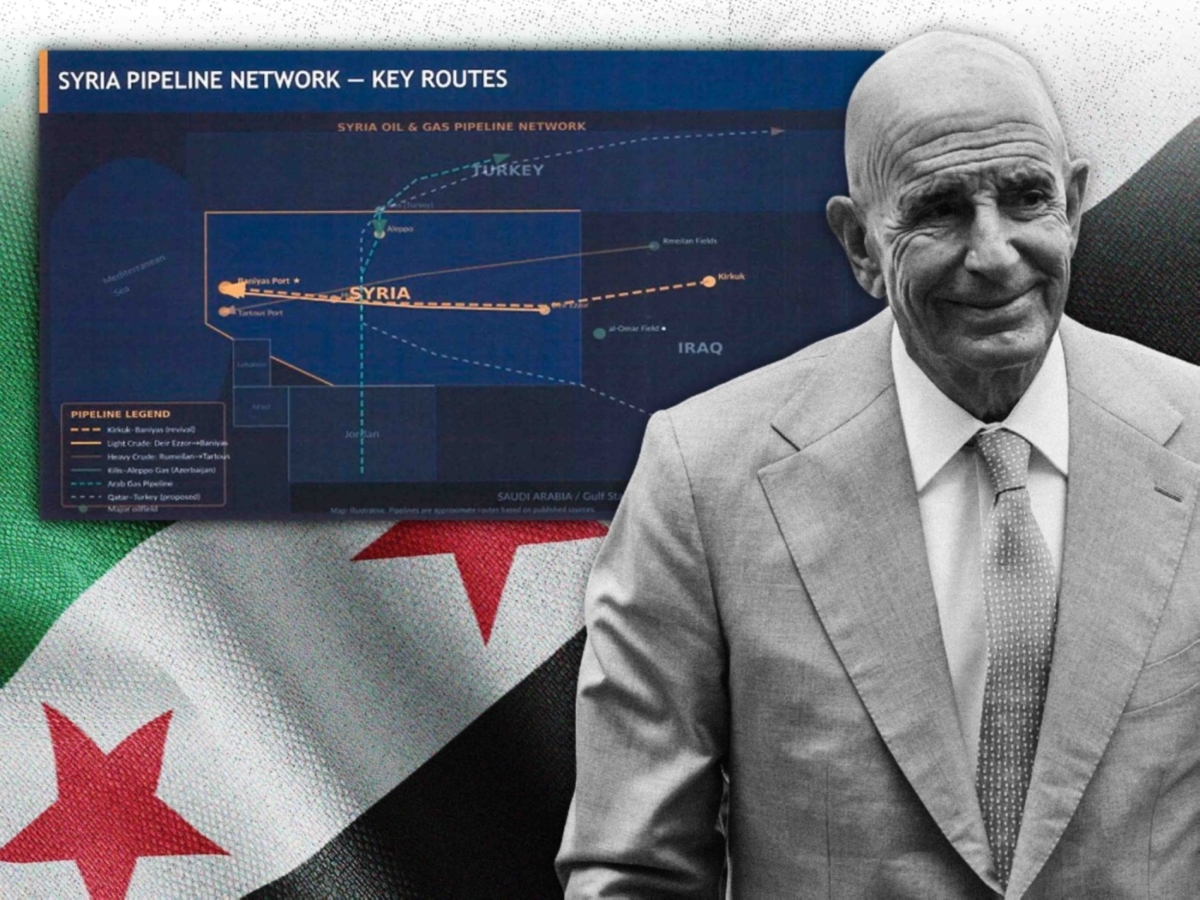
The strait’s closure has disrupted global energy flows, leading the US and big energy importers to seek alternatives, knowing that shipping through the Bab al-Mandab Strait (to the Red Sea) could also be halted by Houthi attacks from Yemen. According to a document prepared by the US envoy Tom Barrack, a copy of which has been seen by Al Majalla, Syria forms part of the thinking.

For all its complexities, Syria occupies a strategic geographic position that cannot be ignored. The ports of Baniyas and Tartus provide direct export access to the Mediterranean and Europe, while Syria offers the only viable overland route linking Iraq and the Gulf on one side with Türkiye and the European Union on the other. Could Syria become a major energy hub? After all, it would bypass Russian gas and compete with Israel’s ambitious energy corridors.
Al Majalla

Promoting interest

The idea would once have been considered far-fetched, but several factors suggest that the moment may be ripe for different choices. Since the fall of Bashar al-Assad’s Syrian regime on 8 December 2024, efforts to rehabilitate the oil sector have accelerated. The Caesar Act (legislation outlining US sanctions against Syria) was repealed in December 2025, SWIFT (banking) transfers have now resumed, and the Syrian Petroleum Company (SPC) was re-established by presidential decree as a unified entity overseeing the entire value chain.

Last month, SPC participated in the CERAWeek energy conference in Houston, which is now open to international partnerships, particularly with US firms. Led by chief executive Youssef Qablawi, the firm showcased deep-water exploration projects to investors. In February 2026, SPC signed a memorandum of understanding with Chevron and Qatar’s Power International Holding to explore for oil and gas in Syrian territorial waters. Last week, it said Chevron had confirmed its intention to invest offshore, pending final contracts.

When it comes to Syria’s hydrocarbon resources, the timing is opportune. In January, Damascus finally regained on-the-ground control of the principal oilfields in the north-east from the semi-autonomous Kurdish-led Syria Democratic Forces (SDF), including Al-Omar, Conoco, Al-Tanak, Rmeilan, and Al-Suwaydiyah. This restored around 70% of Syria’s oil reserves to state authority after years of them being held by the SDF.

The government is open to resuming exports and welcoming back Western energy companies, supported by legislative reforms that allow full foreign ownership of projects and by Gulf investment pledges totalling $28bn. In February, Barrack said: “Syria is impressing us under the leadership of President Ahmad al-Sharaa.” He described the country’s political leadership as “a fundamental pillar in building a phase of recovery and stability”.
OMAR HAJ KADOUR / AFP
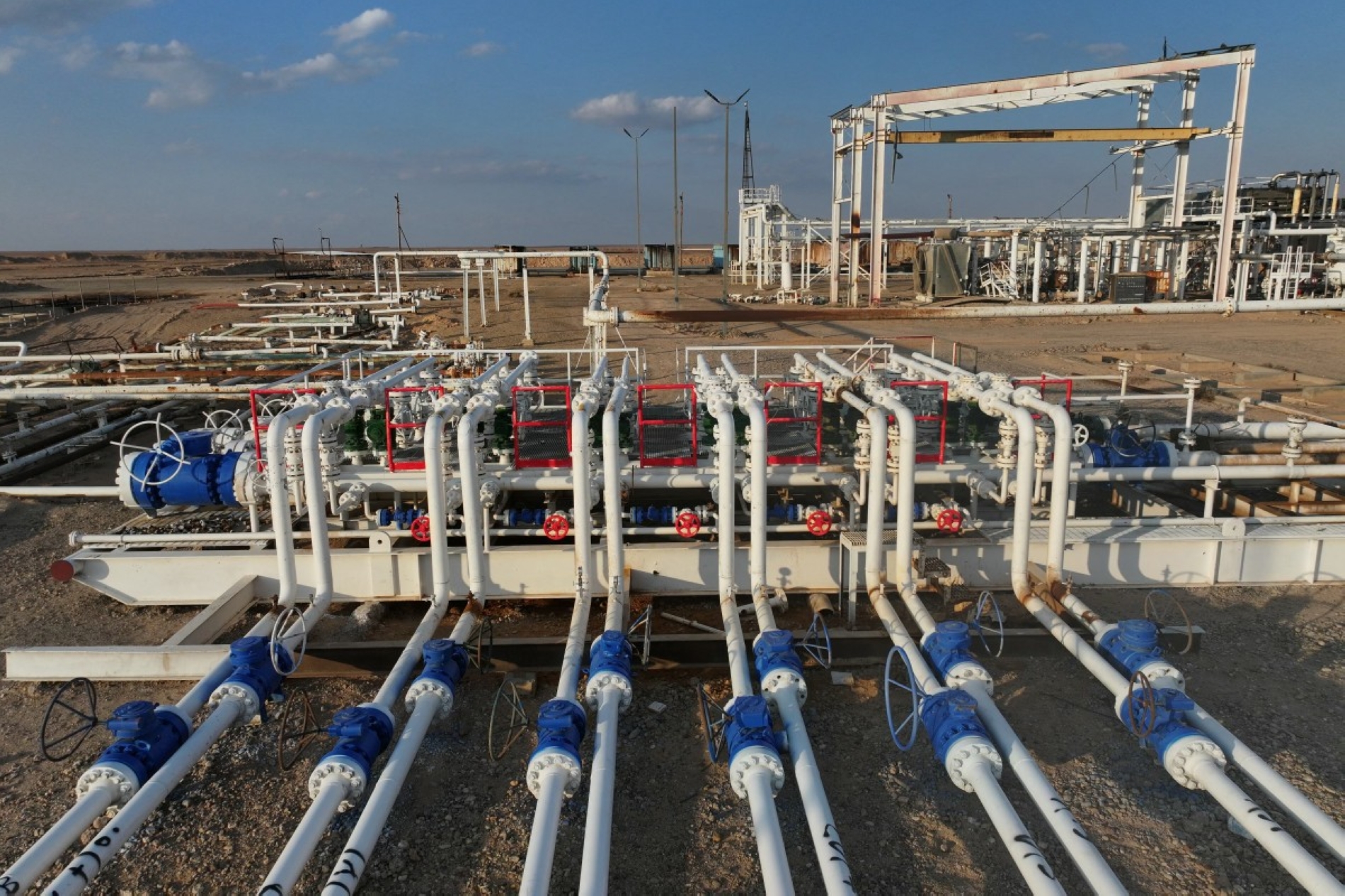
An areal photograph shows part of the Al-Omar oil field in Syria’s eastern Deir ez-Zor province on 19 January 2026.

Signing deals

US firms Baker Hughes, Hunt Energy, and Argent LNG, alongside Saudi firms TAQA and ACWA Power, said in February that they were forming a consortium to explore for and produce oil and gas in north-eastern Syria, covering 4-5 exploratory sites.

More recently, on 5 April, SPC signed a contract with the Saudi company ADES covering the maintenance and development of existing wells, as well as the drilling of new exploratory wells, with gas production expected to rise by up to 25% within the first six months. Syria is also currently in talks with major international energy companies over licences for oil and gas exploration, amid estimates suggesting that undiscovered gas reserves may amount to trillions of cubic metres.

Late last year, SPC signed a memorandum of understanding with the American firms ConocoPhillips and Novatera to develop the gas sector and boost production from existing fields, alongside a similar memorandum with the UAE’s Dana Gas to redevelop and expand several strategic fields. Beyond that, SPC continues to discuss ideas with oil giants Eni and BP, while Damascus also appears open to Russian and Chinese investment, according to Qablawi.

The Syrian government expects public revenues to rise by around 149% in 2026, driven primarily by oil and gas income. Before the civil war began in 2011, Syria’s oil production peaked at 380,000 barrels per day (bpd), but conflict and damaged infrastructure led to it falling to around 110,000 bpd by 2026. The Syrian government estimates that total losses in the oil sector since 2011 amount to $115bn.
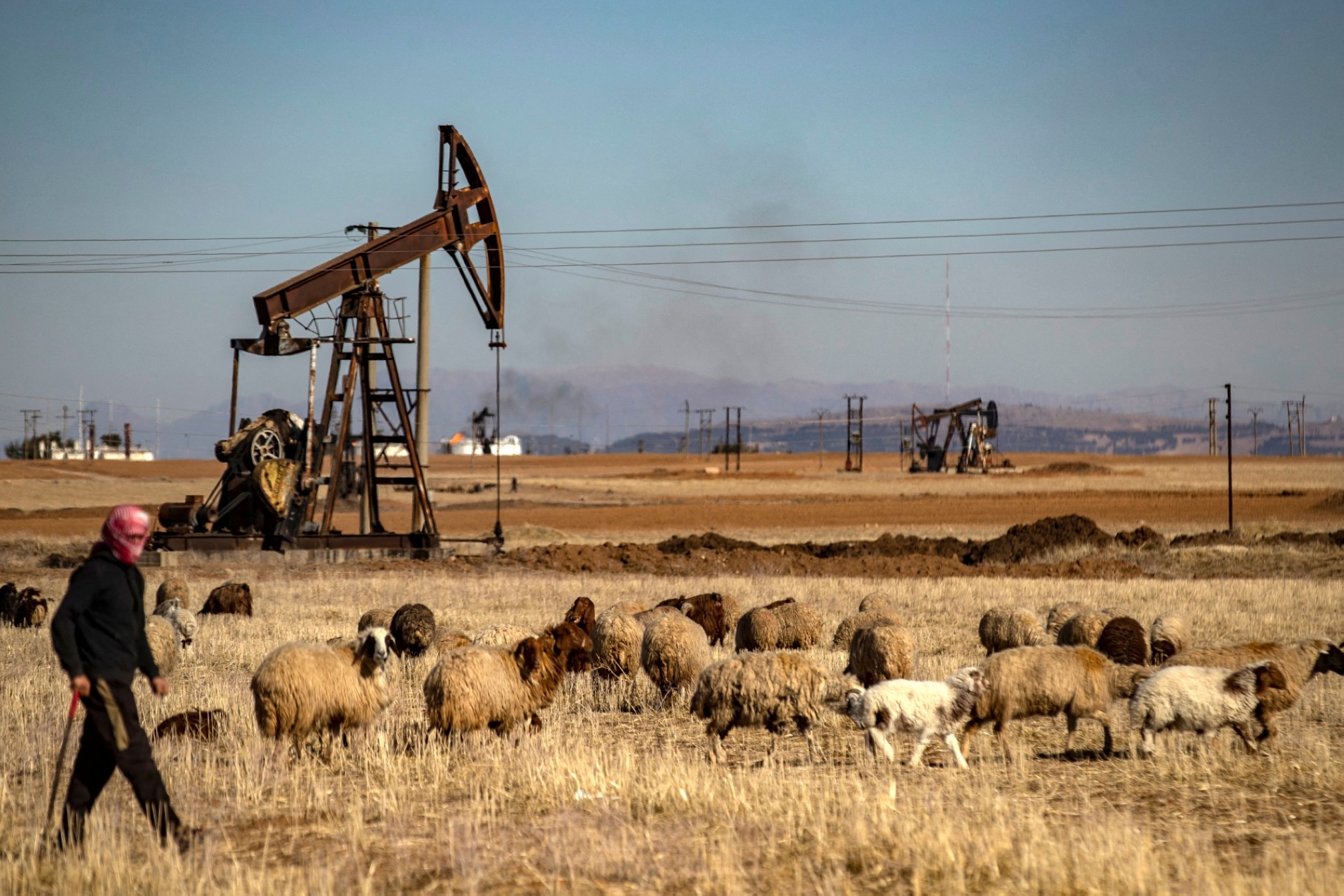
Delil SOULEIMAN / AFP
A shepherd walks past the Rmeilan oil field in northeastern Syria, near the border with Turkey, on 8 January 2025.

Reserves and output

Syria’s recoverable reserves are estimated at 2.5 billion barrels, with the potential to generate annual revenues of up to $6.1bn if the fields are brought back into operation. A 2010 study by the General Petroleum Corporation estimated Syria’s oil reserves at around 27 billion barrels and its gas reserves at 678 billion cubic metres, excluding offshore reserves.

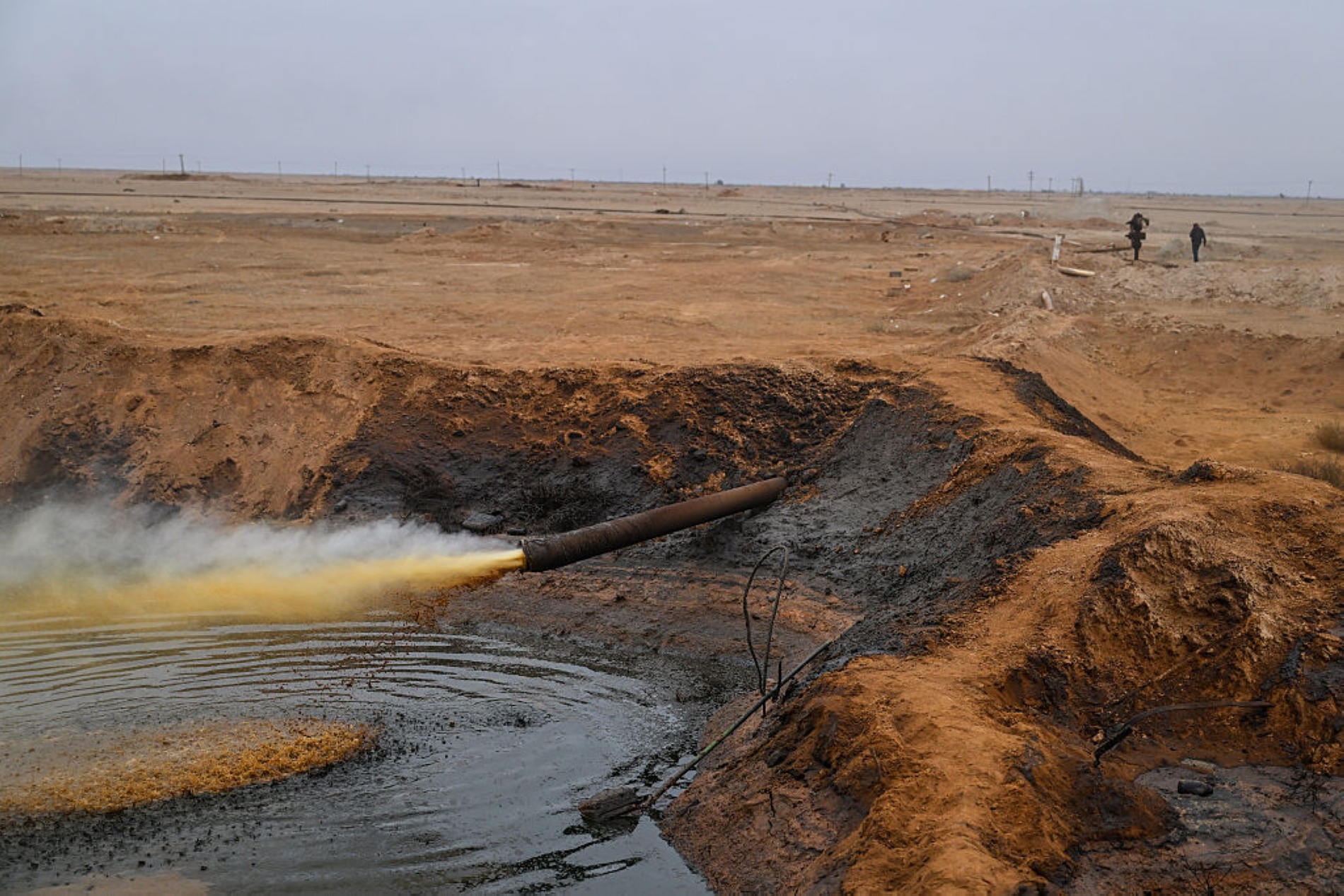
Focusing on existing fields, output at Al-Tanak has fallen by 97.5%. The Conoco gas complex, which once produced 13 million cubic metres per day, has come to a complete standstill, while refining capacity in Homs and Baniyas has dropped from 250,000 bpd to 50,000 bpd. The pipeline network has sustained extensive damage, and only 37% of the country's electricity grid remains serviceable. More than 1,000km of the network in north-eastern Syria requires full replacement. Qablawi said it had “severely deteriorated as a result of chemical deposits and salts”.
The Syrian government expects public revenues to rise by around 149% in 2026, driven primarily by oil and gas income

According to the American plan, rehabilitating the energy system in northern Syria would cost around $30bn. Re-establishing Syria's oil fields will require a three-phase programme running from 2026-30. The first phase includes low-cost well maintenance and essential infrastructure repairs to raise oil production by 45,000 bpd and gas output by 25-50% through Saudi-backed technical agreements.

The second phase, from 2027-28, would involve installing water-injection systems and artificial-lift technologies, replacing pipelines, upgrading the Homs and Baniyas refineries, and launching a new refinery with a 150,000 bpd capacity. The third phase, from 2028-30, would fully redevelop the fields and establish offshore exploration infrastructure, with plans to build a gas export line to Türkiye and Europe. Capacity could return to 380,000 bpd depending on security, governance, and investment.

Abdulmonam Eassa/Getty
The al-Omar oil field, Syria's largest by area and production, near the Euphrates River east of al-Shuhail and approximately 10 kilometres east of al-Mayadin in Deir ez-Zor Governorate on 22 January 2026 in Deir ez-Zor, Syria.

Opportunities and challenges

The US plan sets out immediate priorities, including institutional coordination, easing legal constraints, field assessments, clear contractual models to attract investment, reliable banking channels, international arbitration, transparent offshore licensing, and a clear financial framework with international backing. It then envisages centres on tenders for infrastructure rehabilitation, partnerships for technology transfer, security assessments, and the activation of financing and insurance tools to support investment.

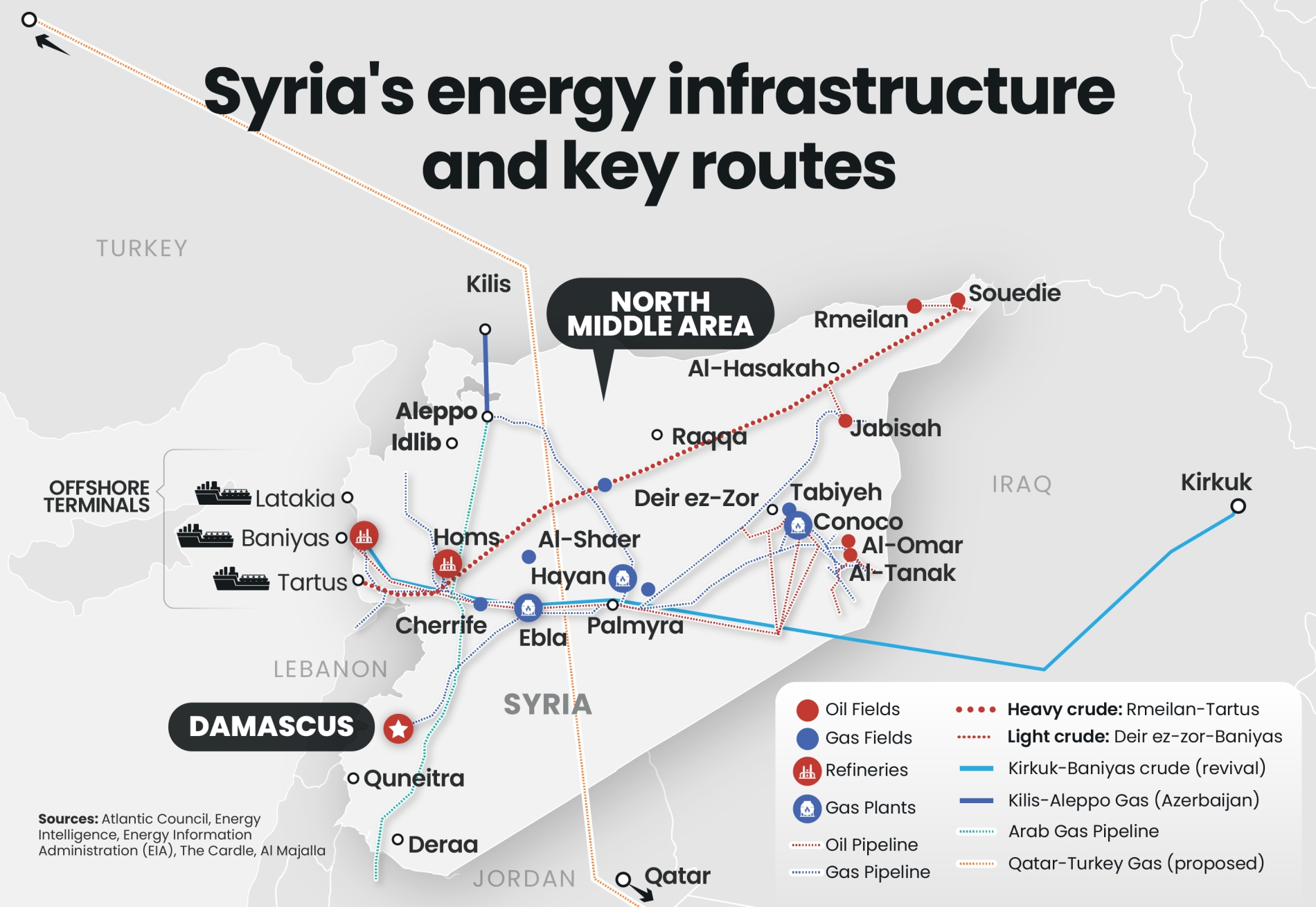
Syria's structural challenges include fragile governance and regional risks to weakened infrastructure and a frail financial system, but the American plan spots opportunities, among the first of which is the Kirkuk-Baniyas pipeline, from Iraq through Syria to the Mediterranean. Dormant since 2003, it would require $4.5bn over 36 months. In August 2025, Baghdad and Damascus agreed to restore it through the construction of two lines with a combined capacity of 1.5 million bpd. Transit fees could generate $200mn annually for Syria, with the possibility of extending the line to the Lebanese port of Tripoli.

The second opportunity centres on a Qatar-Türkiye gas pipeline, a project with unmistakable geopolitical dimensions, linking the Gulf through Jordan and Syria to Türkiye and onwards to Europe. Plans were shelved in 2009 under Russian pressure, but recent events have renewed interest. Its purpose is to transport gas from Qatar's North Field to European markets via the TANAP pipeline, bypassing Russian supplies.

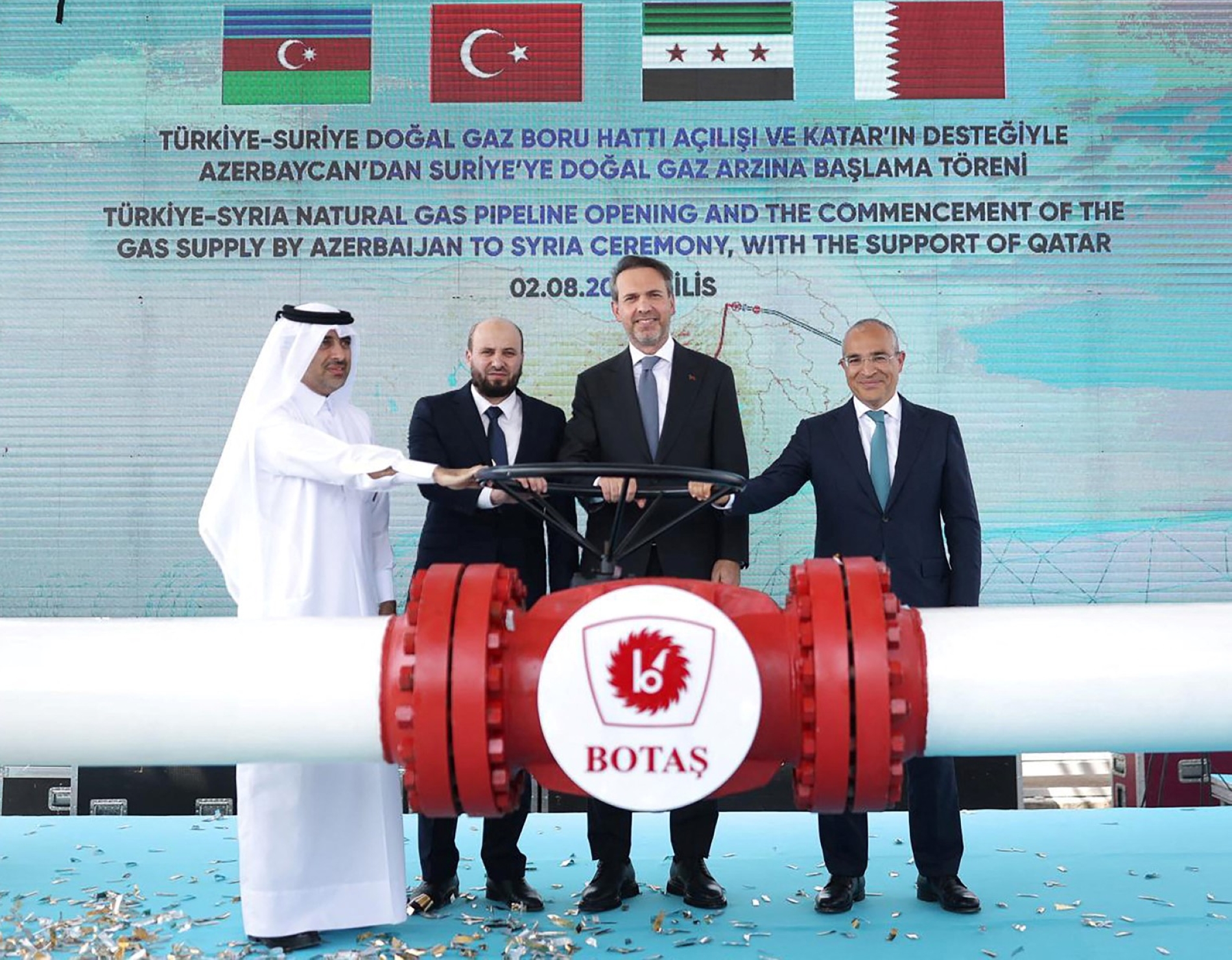
The third opportunity lies in the Azerbaijan-Kilis-Aleppo gas line, the first functioning energy corridor since the war. Constructed from Kilis in Türkiye to Aleppo, it has a capacity of 1.2 billion cubic metres annually and entered service in August 2025 under an agreement with the State Oil Company of the Azerbaijan Republic (SOCAR). The line supplies around 900 megawatts to the Aleppo thermal power plant, with the possibility of extending it south towards Homs.

The fourth opportunity involves extending the Arab Gas Pipeline, which runs from Egypt through Jordan and Syria towards Türkiye. This is a regional project focused on Europe, and the Syrian segment serves as its essential overland link despite remaining partly neglected. Türkiye is currently examining ways to revive the route to facilitate the export of Egyptian and Israeli gas to European markets.

Barrack expects Syria's energy sector to begin a gradual recovery, starting with limited repairs in 2026, gathering pace in 2027 through the completion of feasibility studies for the Kirkuk-Baniyas pipeline, the extension of Azerbaijani gas supplies, and the modernisation of refineries, before culminating in the full reconstruction of the line within roughly three years. Alongside this, larger projects such as the Qatar-Türkiye pipeline would be settled, while offshore exploration continues.

TURKISH ENERGY MINISTRY / AFP
The Türkiye-Syria Natural gas pıpeline opening ceremony in Kilis, Türkiye, on 2 August 2025. The project kick-started the gas supply from Azerbaijan to Syria.

These pipeline projects reflect a deeper web of geopolitical complexity. Major initiatives such as the Nabucco corridor and the Qatar-Türkiye pipeline faltered under Russian pressure and regional opposition, while Syria has long sought to position itself as a regional energy hub linking routes from the Gulf, the Mediterranean, and the Caspian. Yet these projects remain hostage to politics, including the positions of transit states, limiting their chances of becoming operational realities.

As for the dormant pipeline linking Qatar's North Field through Saudi Arabia, Jordan, Syria, and Türkiye to Europe as part of the Nabucco corridor, the proposed cost is $10bn, while the line itself extends for 1,500km. Previous problems arose from Moscow's bid to preserve its (then) dominant position as a supplier to Europe, and from Saudi Arabia's refusal to allow any Qatari gas pipeline to cross its territory.

Syria's energy sector also faces security risks. The threat posed by Islamic State (IS) groups has not fully receded, while government control over the fields is recent and vulnerable to reversal. Likewise, Russia still seeks to preserve its influence in the European energy market, Iran maintains an indirect presence, and Israeli manoeuvres add uncertainty. Energy projects thus remain subject to shifting political balances.

At the same time, sectarian tensions persist. Trust between the state and local communities needs rebuilding. Until then, there is an increased risk of instability, undermining investor confidence. Meanwhile, global energy market demand is shifting towards greater flexibility in liquefied natural gas (LNG), while the appeal of pipelines has diminished owing to their long history of disruptions. The difficulty, therefore, lies less in a shortage of opportunities than in the way these risks converge. Any investment in Syria's energy sector remains dependent on achieving a minimum level of political and security stability, alongside a clear economic and regulatory framework.

REUTERS/Mahmoud Hassano
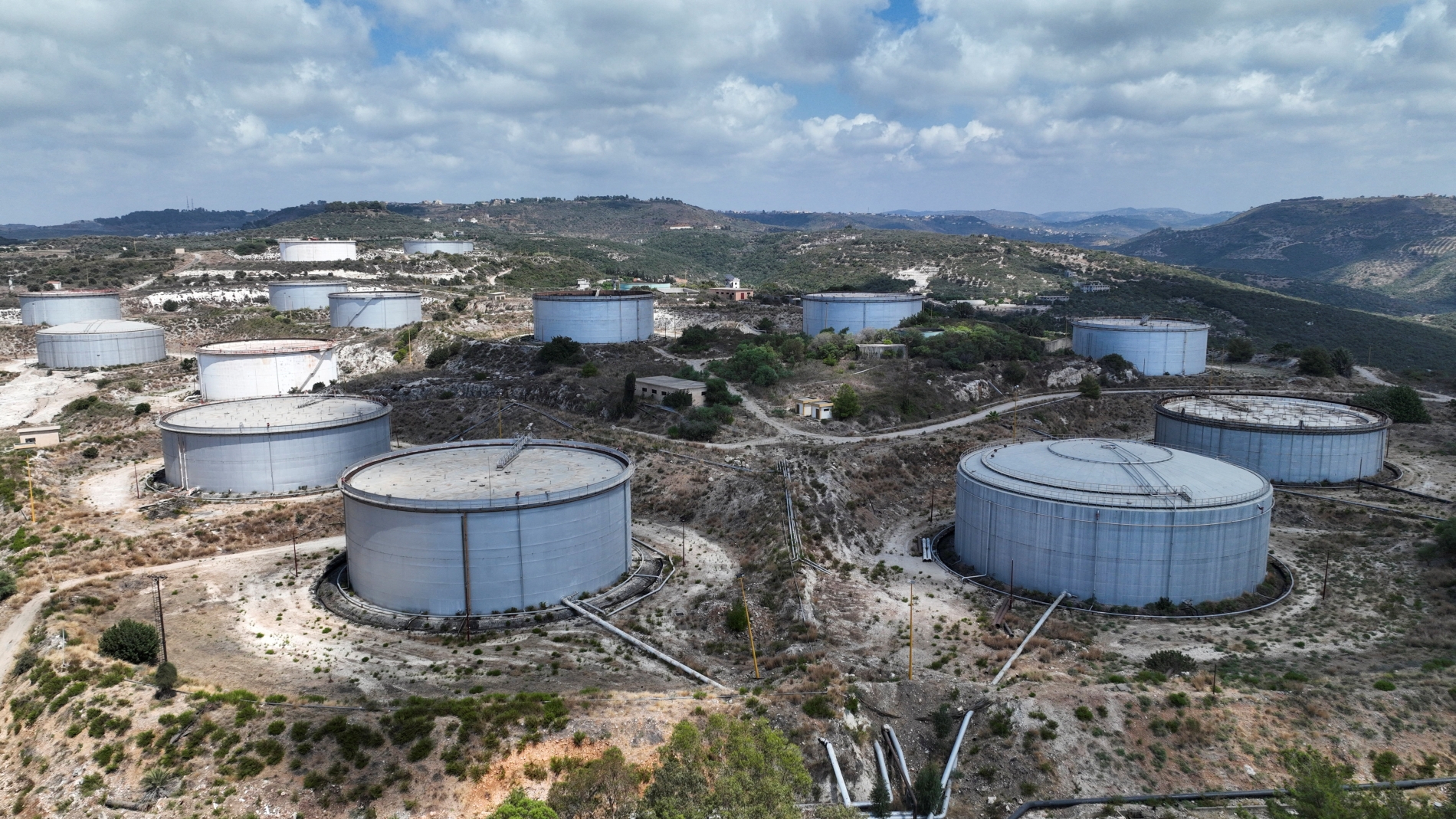
A drone view shows oil storage tanks, as Syria begins to transport oil for the first time since the fall of Bashar al-Assad's regime, in the port of Tartus, Syria, on 1 September 2025.

The repercussions of the 2026 US-Israeli war against Iran further reveal the fragility of Syria's position. Air strikes and airspace closures disrupted supply chains and travel, resulting in gas shortages and electricity rationing, just as 78,000 Syrian refugees returned from Lebanon as a result of the Israeli bombing campaign against Hezbollah. The war against Iran now threatens to reduce Gulf funding for reconstruction, leaving Syria's entire path to economic recovery contingent on regional stability.

Market factors

A structural shift is underway from pipeline gas to LNG, and it is already advancing at a pace that will be difficult to reverse. By 2029, more than half the world's long-distance gas trade is expected to move through LNG. By 2030, new global LNG capacity is projected to reach 300 billion cubic metres annually.

Preliminary data from the London Stock Exchange Group showed that in 2025, the United States became the first country to surpass 100 million tonnes a year in LNG exports, benefitting from new production facilities, while Europe is on track to receive record LNG imports (185 billion cubic metres) in 2026, according to the International Energy Agency (IEA), deepening its dependence on a highly volatile global market.

LNG now accounts for about 45% of Europe's supplies, up from 20% in 2021, with Russian gas supply receding ahead of a 2027 European Union ban. Asia leads the growth in LNG demand, while Latin America is introducing flexible solutions through floating storage units. Yet the LNG picture is not completely rose-tinted. For a start, the flexibility LNG offers comes at a price. Europe's replacement of Russian pipeline gas with LNG has already raised prices by between 20-50%, weakening the competitiveness of European industry.

Moreover, the IEA expects a surplus of around 65 billion cubic metres of gas by 2030. The nominal capacity due to come on-stream by 2028, amounting to 666 million tonnes annually, already exceeds the IEA's long-term demand scenario for 2050, which stands at 482 million tonnes per year. Further, Europe's gas imports are expected to decline after 2030 according to the REPowerEU plan, under which renewables will soon generate 42.5% of total energy. Demand in Japan has already fallen by 20% since 2018. Prolonged low prices, meanwhile, could deter upstream investment.

REUTERS/Mahmoud Hassano
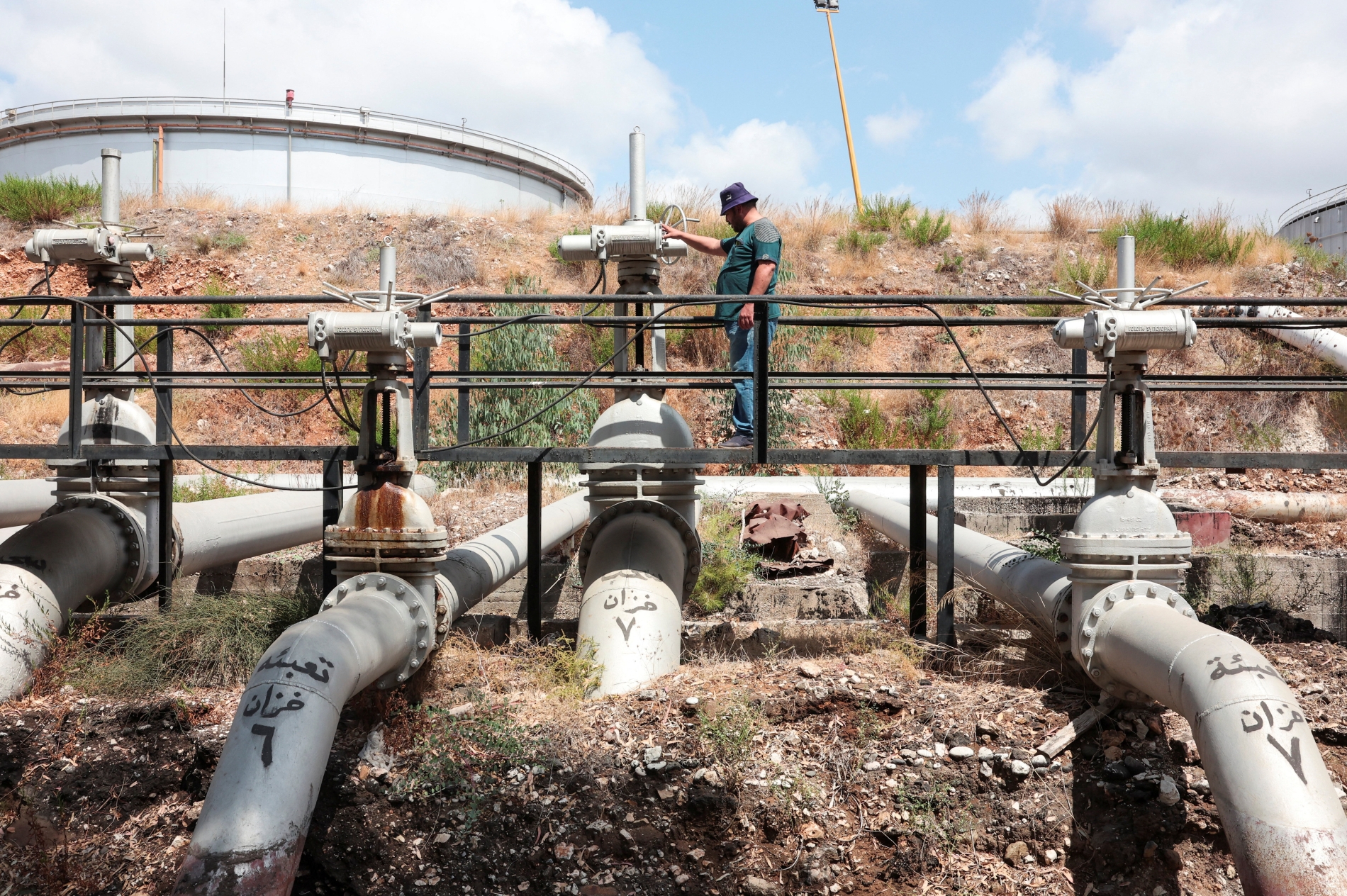
A worker operates a pipeline, as Syria begins to transport oil for the first time since the fall of Bashar al-Assad's regime, in the port of Tartus, Syria, on 1 September 2025.

Looking ahead

Those considering future construction will be mindful that pipelines have a mixed history in the Middle East. In practice, their operational lifespan can be little more than 36% of what was originally envisaged, and repeated shutdowns have left most of them moribund. Increasingly, they become instruments of political leverage, transit states exploiting geography to dictate terms, drawing investors into what is known as the "sunk-cost trap", in which vast capital outlays cease to be an asset and become a burden. Investors are then forced to renegotiate, accepting higher transit fees, perhaps under the threat of nationalisation. The rise of LNG and the move to renewables have further diminished the appeal of pipelines as investment propositions.

The energy market is now shaped by two rival forces: the flexibility of LNG, which allows cargoes to be redirected and spot prices to be seized; and geopolitics, which reveals the vulnerability of maritime routes in times of crisis. Despite their troubled record, overland pipelines—particularly those crossing Syria—are now back under reconsideration as a way of bypassing maritime chokepoints. So long as oversupply persists, markets tend to prize cost above all else, but in moments of tension, reliability comes to the fore, making pipelines assets of strategic consequence.

In his report, Barrack said: "The conflict of Operation Epic Fury, the closure of Hormuz, and the chokepoints in the Red Sea have fundamentally altered the equation, making the overland bridge through Syria a geopolitical security asset rather than merely a commercial project. The case for a Syrian energy corridor must therefore be built first on geopolitical security grounds, because the commercial case alone cannot withstand the historical record." He added: "When maritime chokepoints are turned into weapons, securing supplies through a dependable overland route may justify what market economics alone would reject. That is the winning argument."

font change