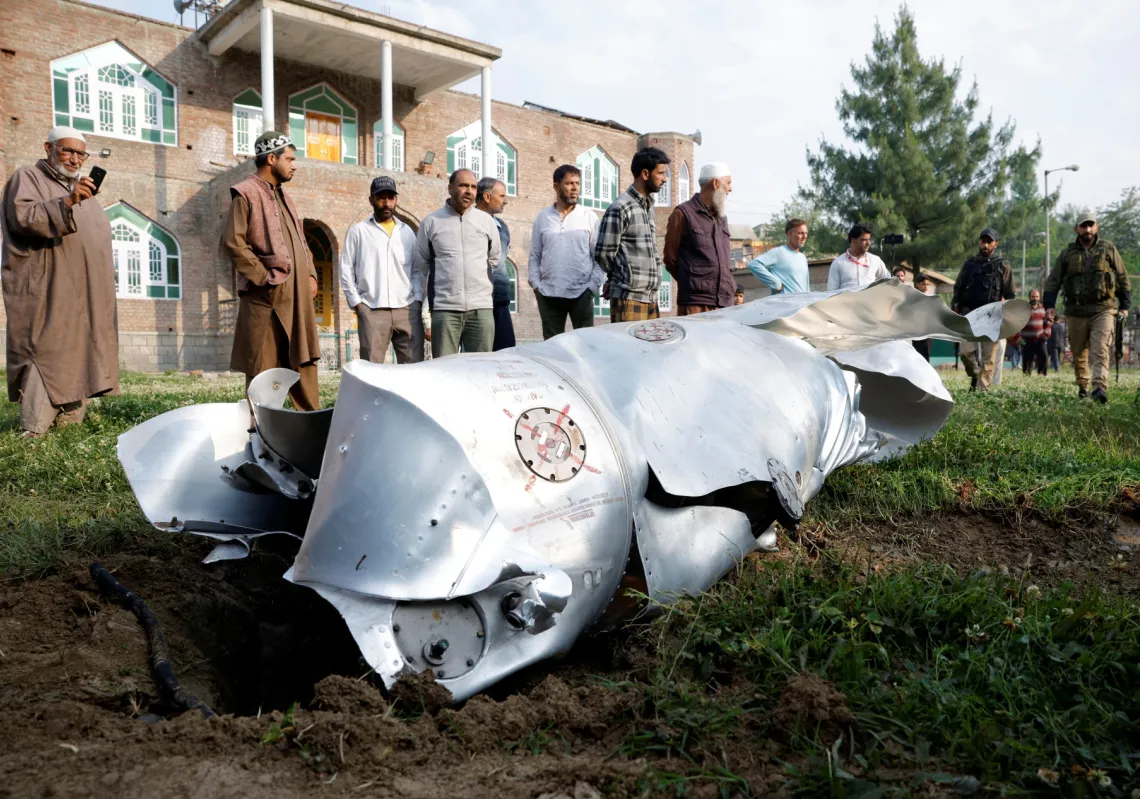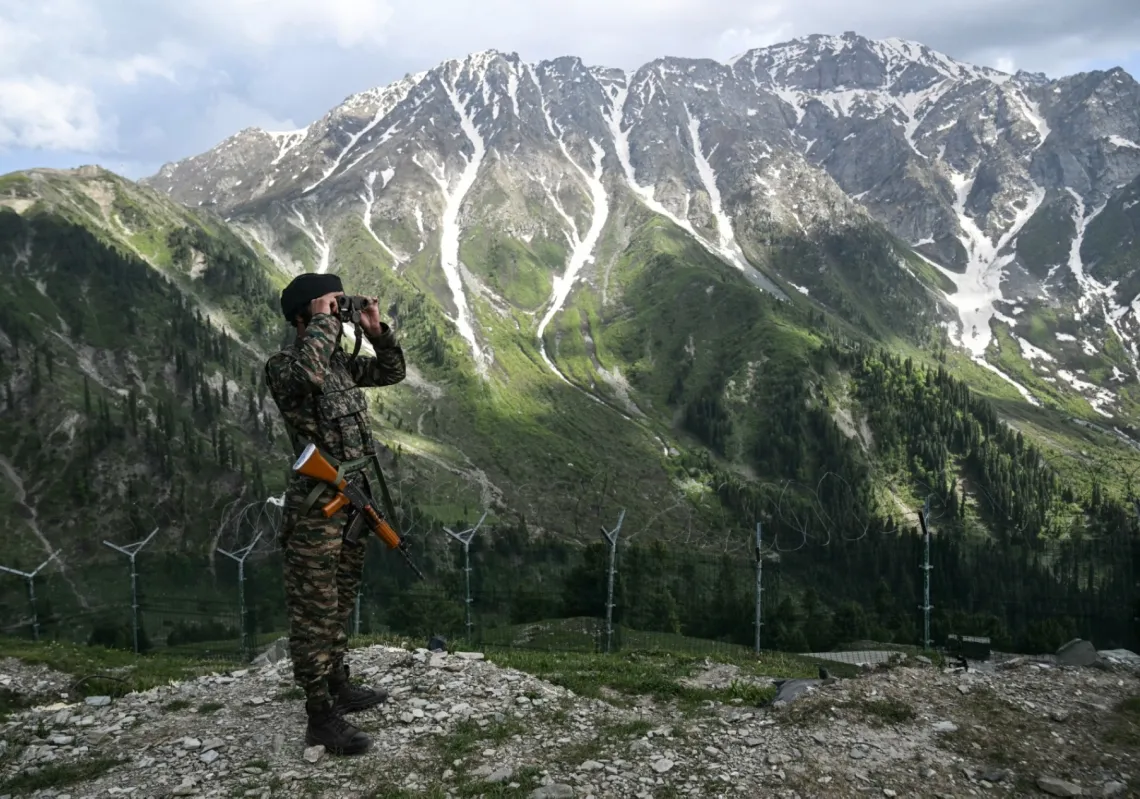
Since last May's brief yet dangerous military confrontation between two nuclear-armed powers, a tenuous calm has held. But should a new war erupt, the margin of error this time will be far slimmer.
The recent military flare-up begged questions on who would win in the event of a nuclear or conventional war. Here, Al Majalla compares their arsenals and respective journeys to become nuclear powers.
India-Pakistan tensions reached a fever pitch after a 22 April attack in Pahalgam, a town in Indian-controlled Kashmir, a disputed region divided by a de facto border called the Line of Control. The…
With "three dozen countries" involved, international diplomacy was key to de-escalation, showing how a multipolar world can offer more levers for peace
Chabahar on the Gulf of Oman is India's first overseas port. It has the handy benefit of bypassing Pakistan, which is currently a key Chinese trade hub. But will New Delhi now be hit by US sanctions?
Shaibani held several calls with the Mossad chief days before the strike, explaining why the airport's runway was being rehabilitated and that it had no hostile intentions, but Israel bombed it anyway
Ambassador Asim Iftikhar Ahmad speaks to Al Majalla about Islamabad's diplomatic role in the talks between the US and Iran, its balancing act between Tehran and Riyadh and the Mecca Pact
From Apple's chips to Nvidia's data centres, Israeli tech has embedded itself in the global tech ecosystem. This comes with grave national security implications.
Balancing the competing interests of regional and global stakeholders is no easy task. Can the president keep Syria from becoming an arena for regional conflict?