Inside Egypt’s long fight against Sinai’s smuggling tunnels

Whether by sewage, cement, or seawater, Egyptian army engineers destroyed thousands of tunnels from Gaza over several years to combat terrorism in the peninsula

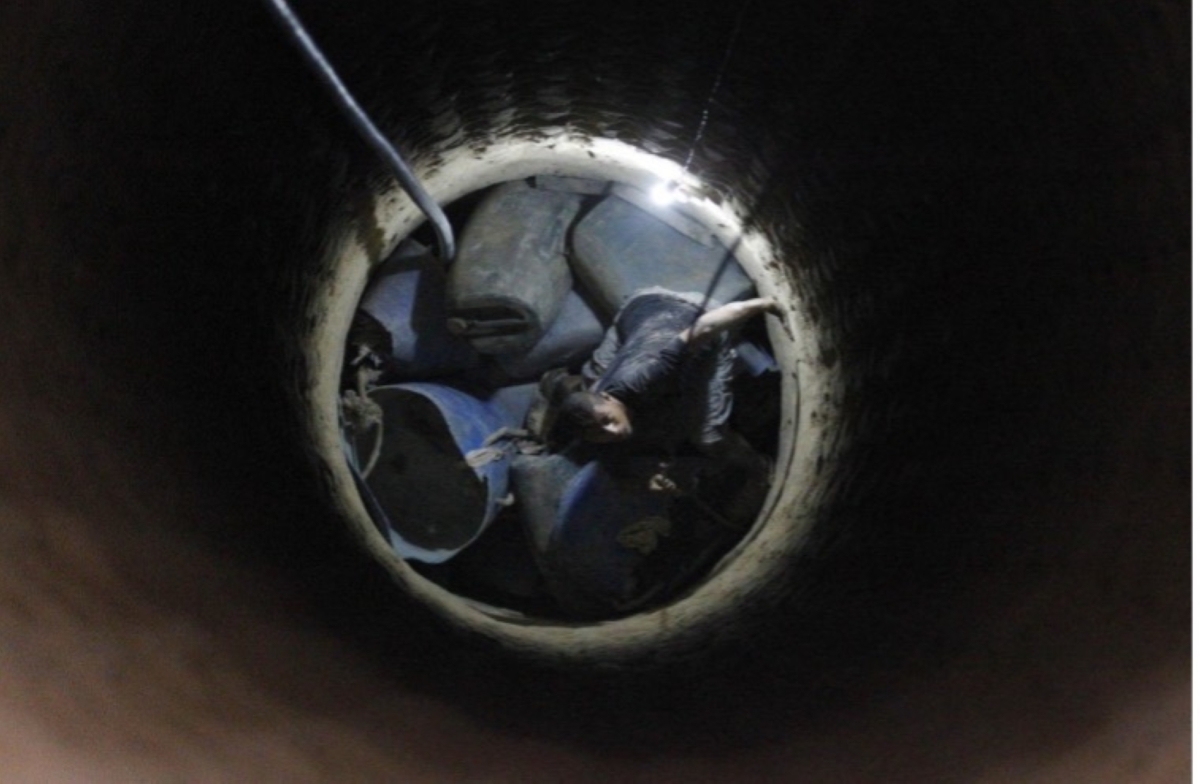
A Palestinian worker in a tunnel speaks to a colleague from inside a smuggling tunnel dug beneath the border between the Gaza Strip and Egypt, in the southern Gaza Strip, on 27 August 2013.
AFP
A Palestinian worker in a tunnel speaks to a colleague from inside a smuggling tunnel dug beneath the border between the Gaza Strip and Egypt, in the southern Gaza Strip, on 27 August 2013.

Inside Egypt’s long fight against Sinai’s smuggling tunnels

In 2013, Gen. Ahmed Ibrahim Kamel watched as the Egyptian army fought the Islamic State (IS) in Sinai, the peninsula that borders both Israel and the Gaza Strip. Almost 40 years earlier, he was among the troops crossing the Suez Canal into Sinai to regain control of the territory, which had been occupied by Israel six years earlier. The crossing paved the way for a much-needed victory in October 1973, which proved consequential for the Middle East’s military balance of power for the following decades.

To Gen. Kamel, defeating IS in Sinai was tantamount to another crossing, smaller in scale than 1973 but no less vital. As of 2012, IS controlled pockets of the north-eastern peninsula and aspired to establish a caliphate there. “The presence of such a terrorist group on Egypt’s border with other countries was extremely dangerous,” he said, speaking to Al Majalla. The group’s presence facilitated external resupply lines, fuelling its expansion. “This threatened to undermine Egypt’s sovereignty over Sinai, a territory that Egyptians had paid with their blood to liberate.”

At the time, IS had already overrun large swaths of Syria and Iraq, and was threatening other regional countries, aspiring to establish a caliphate across most of the Middle East. To defeat it, the Egyptian army had to cut off its supply routes, about which it knew little. These routes were providing the jihadists with weapons and recruits. The Sinai borders Gaza, but relations between Egypt and Hamas (which Cairo sees as an ideological offshoot of the Muslim Brotherhood) had deteriorated, which reduced information-sharing.

The first challenge facing the army command was to trace the tunnels. Most had a covered opening that led into a series of routes, Gen. Kamel said. “They were also at different depths,” he added. Some had openings concealed inside homes in the city of Rafah on the border with Gaza. Others were hidden in mosques. Once the tunnels were located, army engineers faced a new challenge: how to destroy them.
AFP
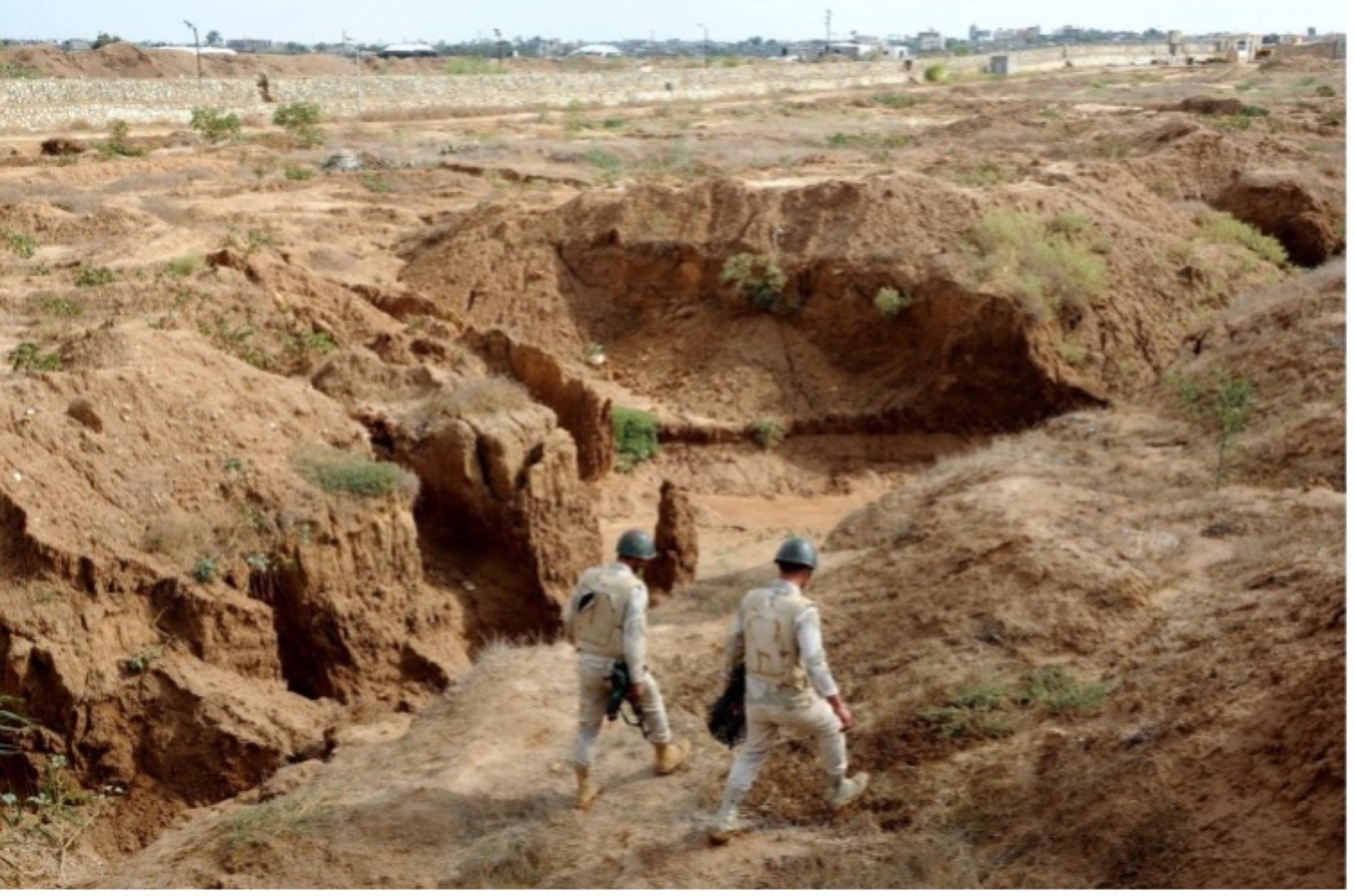
Egyptian soldiers inspect a smuggling tunnel in the divided border city of Rafah, along the border with the Gaza Strip—which is controlled by the Hamas movement—on 4 November 2014.

Flooding the arteries

The engineers came up with a series of ideas to eliminate the extensive network of smuggling tunnels between Sinai and Gaza. By early 2013, their preference was to flood the discovered tunnels with raw sewage and untreated wastewater. Toxic waste soon filled the underground passages, releasing noxious gases and triggering structural mudslides, followed by further flooding from seawater from the Mediterranean.

“It proved very effective,” said Gen. Ali Hefzi, another October war veteran and a former governor of North Sinai. “It incapacitated most of the tunnels where it was used, eventually causing their collapse.” Hefzi believes the sewage-water tactic echoed the water pumping used to destroy the Bar Lev Line at the start of the war in 1973 (the Bar Lev Line was a chain of Israeli military fortifications along the eastern bank of the Suez Canal, built after the 1967 War and designed to make it impossible for Egyptian troops and tanks to cross into Sinai).
Some tunnels had openings concealed inside homes in the city of Rafah. Others were hidden in mosques

From 2015, the Egyptian army scaled up its tunnel-pumping campaign in Sinai to achieve a permanent engineering solution. It did this by deploying heavy civil engineering infrastructure along the border. Military engineers installed high-capacity water pumps and buried large-diameter pipelines along the border with Gaza. Seawater was continuously pumped into deep trenches and underground conduits parallel to the border.

The saltwater quickly saturated the sandy soil, causing structural collapse, but the millions of gallons of salty water led to severe soil salinisation along the southern border of Gaza, damaging agricultural fields. Environmental groups and Palestinian authorities also reported contamination of the coastal aquifer near Rafah, raising local freshwater salinity levels. So, although it succeeded on a military level, it came at a high social and ecological cost.

AFP
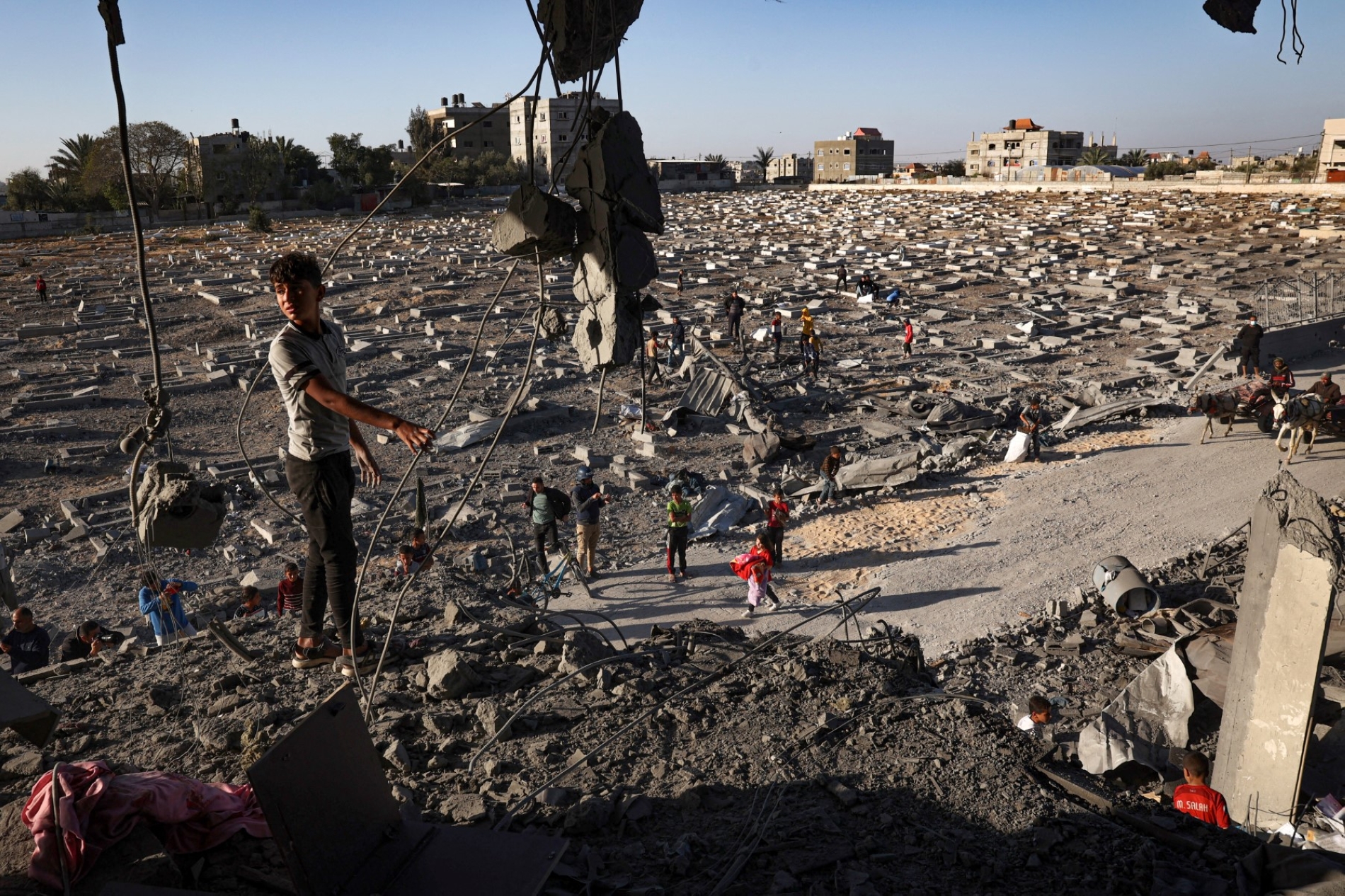
A Palestinian child boy stands on what remains of a balcony of a flat hit by overnight Israeli bombing in Rafah in the southern Gaza Strip on 20 April 2024, amid the ongoing conflict between Israel and the Hamas movement.

A flattened frontier

The complete destruction of the border tunnel network made it necessary for the Egyptian army to clear the Egyptian side of Rafah city of all residents and buildings. This aimed to turn Rafah into a buffer zone so it would cease to function as a smuggling hotspot between Egypt and Gaza. The buffer zone was implemented in progressive stages, the aim being to destroy the underground economy and the tactical access points used by IS terrorists.

Launched in 2014, the first stage cleared homes within 500m of the border. The second stage expanded it to 1,000m. In subsequent years, it stretched 5km deep into North Sinai. By the time of completion, nearly all of Rafah on the Egyptian side was flattened, including homes, commercial districts, schools, and infrastructure.

This was crucial for tackling IS operations. "It meant that the group would stop receiving supplies and recruits," said Hefzi. "It also helped army troops to lay a siege around it on all sides." By clearing ground-level structures, Hefzi said, soldiers could eliminate concealable tunnel shafts, exit points, and supply caches. Yet this land clearance also required the destruction of thousands of hectares of olive groves, palm trees, and farmland.

It eliminated high-visibility vantage points, hiding spots, and sniper nests that targeted border control posts and military patrols, but the erasure of Rafah and the displacement of its residents drew intense criticism from international human rights organisations, local civil society groups, and legal experts who estimated that over 100,000 city residents lost their homes.

MOHAMMED ABED / AFP
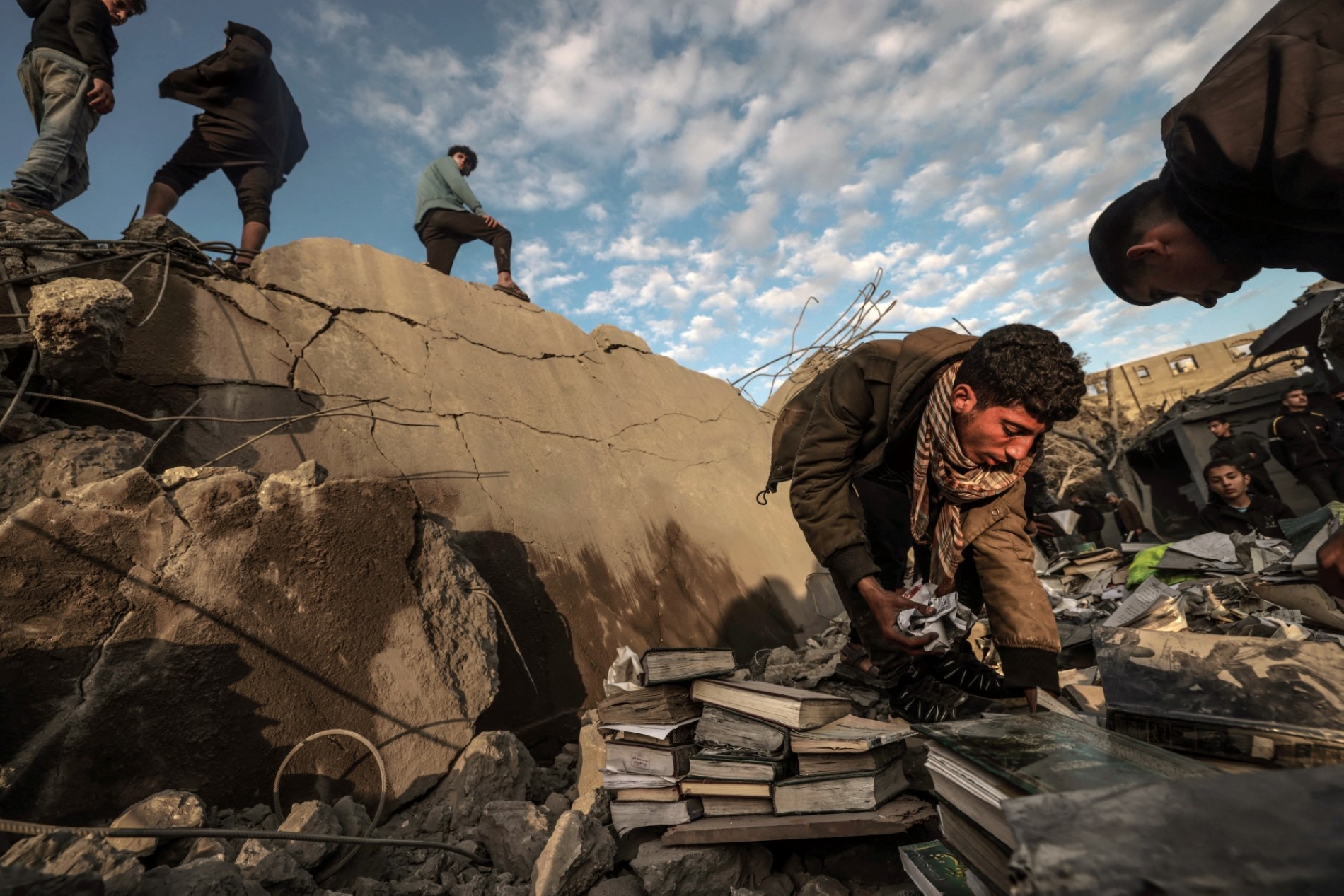
Palestinian youth retrieve books from the rubble of a mosque and buildings which collapsed during Israeli bombardment around the town of Rafah in the southern Gaza Strip on 24 January 2024.

Cutting the lifeline

From 2013-20, flooding and surface demolitions were paired with targeted tunnel blasting operations. Egyptian military engineers set structured, high-yield explosive charges inside tunnel shafts, causing them to collapse along the length of the passage. They also injected thousands of tonnes of wet concrete, liquid cement, and heavy mud to permanently solidify them.

During this seven-year period, Egypt destroyed more than 3,000 smuggling tunnels between Rafah and Gaza, according to the army. This required a combination of technical tracking, human intelligence, and specialised demolition techniques. It was a decisive factor in IS's defeat in the Sinai, as it cut the flow of arms, explosives, fighters, and financing.

This significantly degraded the group's ability to conduct large-scale, coordinated assaults on Egyptian military outposts. "Cooperation from Sinai locals, including Bedouin tribes, also helped a lot," noted Gen. Kamel. "When you look back at the scale of the threat then, compared to Sinai's current stability, you realise the immense sacrifices made by the army."

font change