Türkiye’s bid to reunify Libya reaches a critical moment

East Libya’s ruler has paid his first visit to Ankara, meeting senior ministers, plus army and spy chiefs. Last month, his parliament ratified a maritime boundary deal. Is Libya coming together?

Turkish President Tayyip Erdogan (R) and leader of the eastern half of divided Libya Khalifa Haftar posing (R) ahead of a meeting at the Presidential Complex in Ankara on 25 November 2026.
TURKISH PRESIDENCY PRESS OFFICE / AFP
Turkish President Tayyip Erdogan (R) and leader of the eastern half of divided Libya Khalifa Haftar posing (R) ahead of a meeting at the Presidential Complex in Ankara on 25 November 2026.

Türkiye’s bid to reunify Libya reaches a critical moment

The man whose forces have controlled eastern Libya for the past 15 years paid his first official visit to Türkiye this week, just days after the leader of the western Libyan government based in Tripoli did likewise. The two-day stopover is being seen as a potential new beginning for relations.

Khalifa Haftar, 83, who heads the Libyan National Army (LNA), flew into the Turkish capital on 24-25 November and was greeted with an official ceremony at the airport, led by the Turkish army chief. He later held talks with the foreign minister, defence minister, energy minister, and head of intelligence, and was also received by President Recep Tayyip Erdoğan. At the meetings, Haftar was accompanied by his sons Saddam, Khaled, and Belqasem, with Saddam widely expected to take over from his father.

Just a few years ago, such scenes would have been difficult to imagine. In 2019-20, Türkiye responded to a call for help from Libya’s internationally recognised government in Tripoli. The assistance prevented Haftar’s forces from overrunning the Libyan capital and pushed the LNA back. At the time, Haftar denounced Türkiye as an enemy and threatened Turkish interests, but a lot has changed since then.

After Türkiye helped troops in western Libya halt the military offensive by Haftar’s forces, a ceasefire was reached, and the relative calm facilitated a years-long political process between the warring parties that is now bearing fruit. As part of this, Türkiye established dialogue with Benghazi. Saddam Haftar (deputy commander of the LNA) later visited Türkiye, and the Turkish consulate in Benghazi reopened. Shortly before his father visited Ankara this week, Saddam flew to Doha and Cairo.

A diplomatic win

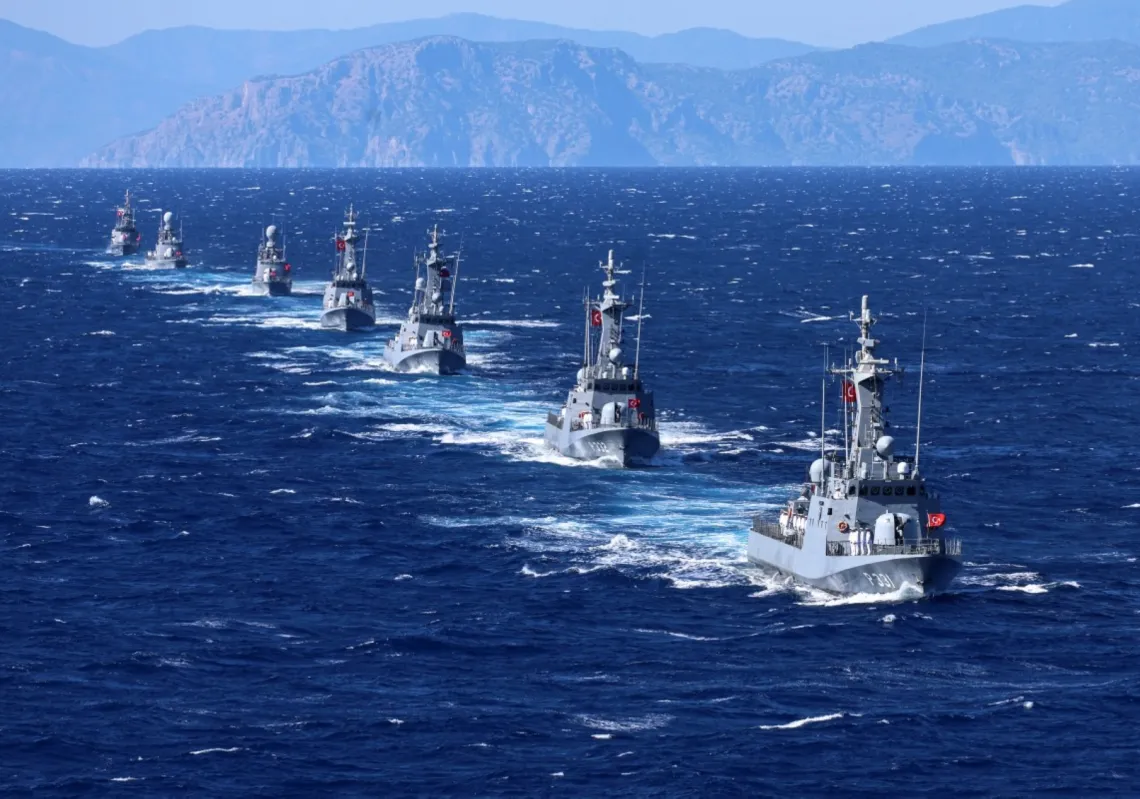
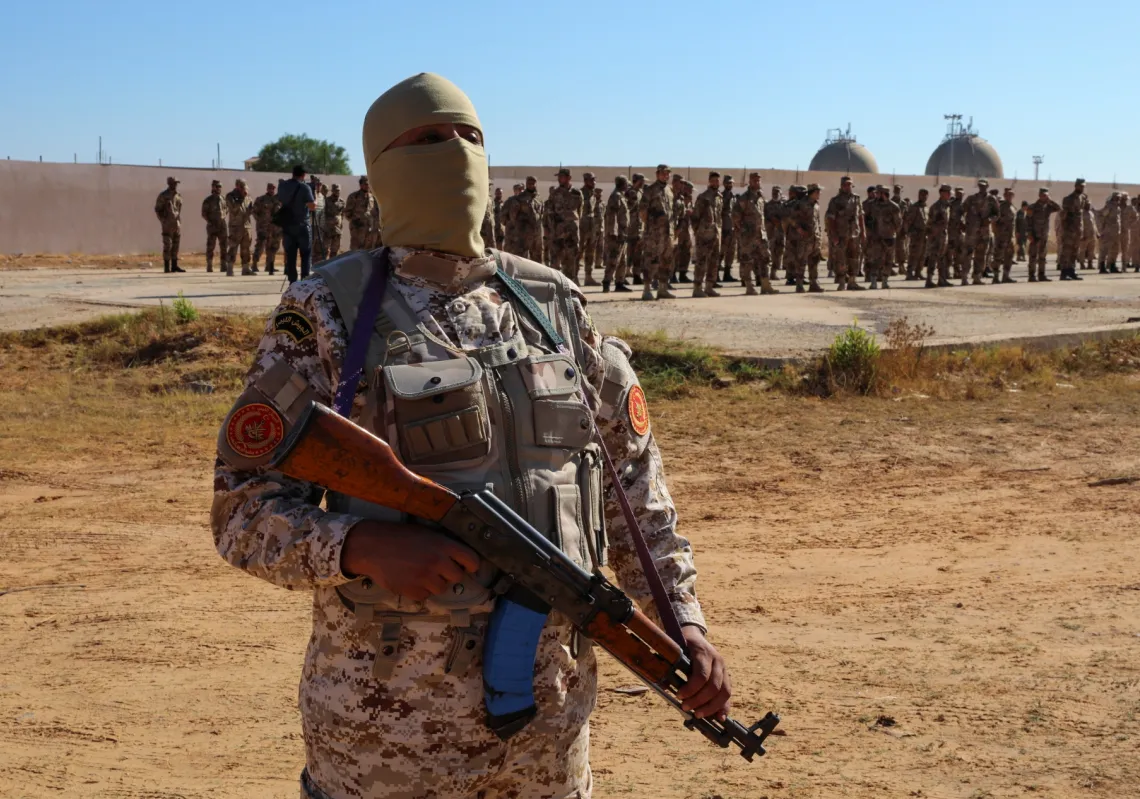
Improving relations culminated last month when Haftar’s east Libyan parliament (based in Tobruk) ratified a maritime delimitation agreement signed between Türkiye and Tripoli seven years earlier. It is a diplomatic and economic win for Türkiye, which is supporting Libyan reunification efforts. Key to this will be unifying the armed forces of east and west into a single army. Ankara will support the process by offering military cooperation and training to both sides.

For years, east Libya suspected that Türkiye backed Tripoli because of its support for Islamist forces, but these concerns have since receded, with Türkiye establishing relations with Benghazi and setting a framework that encompasses both sides for Libya’s reunification. It is a Libyan-led, Libyan-owned process described as the ‘One Libya Policy’.

Recent high-level visits between Türkiye and both Libyan governments have accelerated over 2026. Between May and August, Saddam Haftar visited Ankara and Turkish Foreign Minister Hakan Fidan visited both Tripoli and Benghazi. On 21 November, just three days before Khalifa Haftar’s visit, Abdulhamid Dbeibeh, Prime Minister of the Tripoli-based Government of National Unity (GNU), was in Ankara.
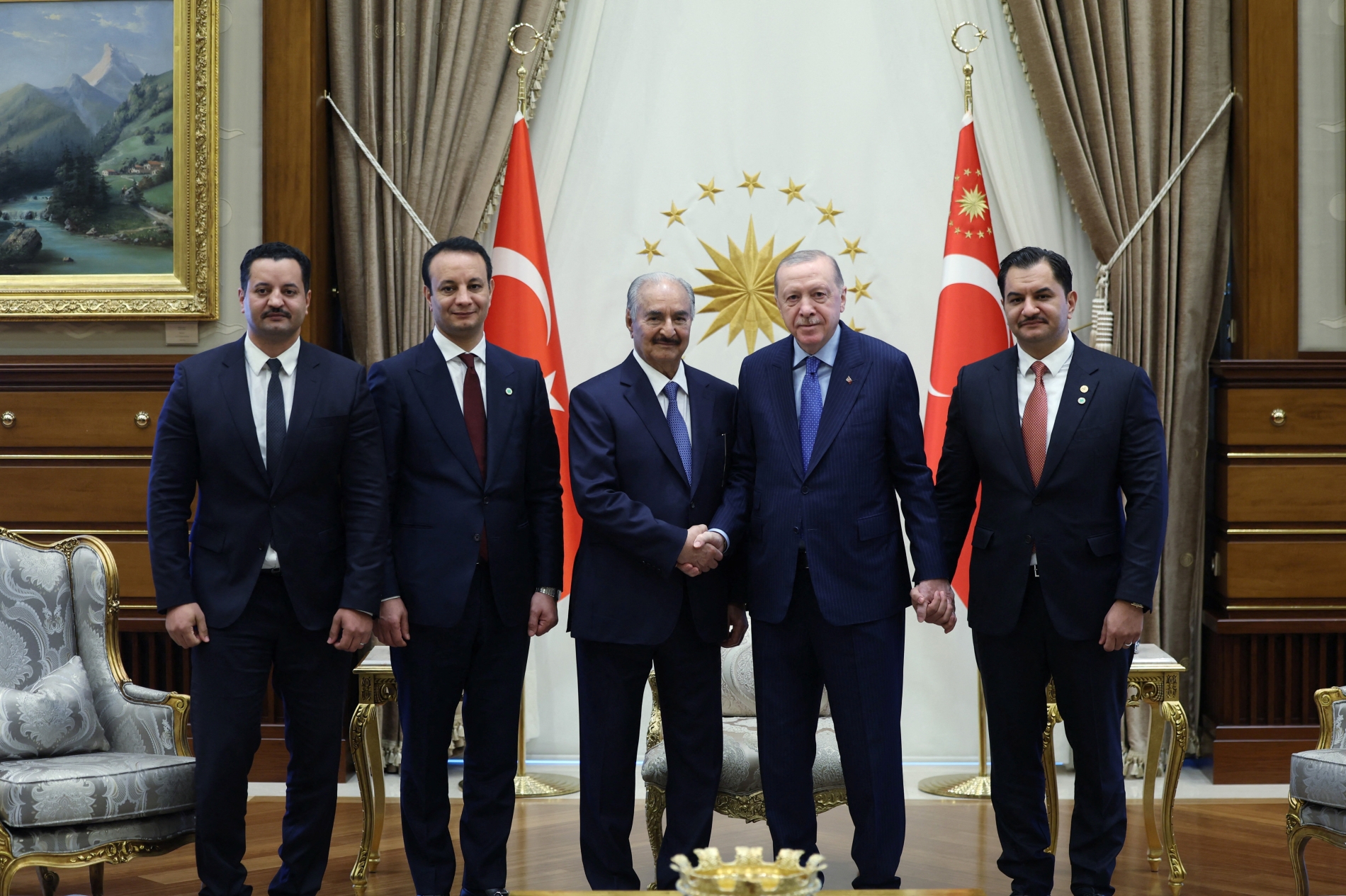
TURKISH PRESIDENCY PRESS OFFICE / AFP
Turkish President Tayyip Erdogan (R) and leader of eastern Libya Khalifa Haftar pose for a picture along with his sons, including Saddam, in Ankara on 25 November 2026.

Türkiye-Libya relations

During the long reign of Muammar Gaddafi (1979-2011), Libya became an important market for Turkish companies, especially construction firms, which built a significant portion of Libya’s infrastructure. Turkish firms which left Libya because of the conflict are now returning, including to Benghazi. In terms of Libya’s imports, Türkiye ranks in the top three, alongside the European Union and China.

Türkiye and Libya have signed agreements on energy exploration, and according to media outlets affiliated with Haftar, Erdoğan agreed to waive visa requirements for Libyans, prompting Tobruk to reciprocate. Erdoğan will travel to Tripoli in December to attend the fourth Africa-Türkiye Partnership Summit, having last visited the North African country in 2011.
Khalifa Haftar's two-day stopover in Ankara is being seen as a potential new beginning for relations

The dialogue between the Libyan parties centres on unifying institutions (including the armed forces), forming a unified government, and holding elections. While progress is being made, whether it ultimately succeeds or fails depends on the political will of the governments in both the east and the west, where grievances simmer after their recent civil war. Neither wants to compromise its positions in the negotiations for fear of losing out.

Third-party involvement is important to the direction that Libya will take and to the wider situation in the eastern Mediterranean, with its associated impact on regional energy security. Türkiye's standing and achievements in Libya have caused unease in Greece, Cyprus, and Israel, the trio having formed something of an eastern Mediterranean bloc when it comes to natural gas exploration and recovery.

Mustafa Kamaci / AFP
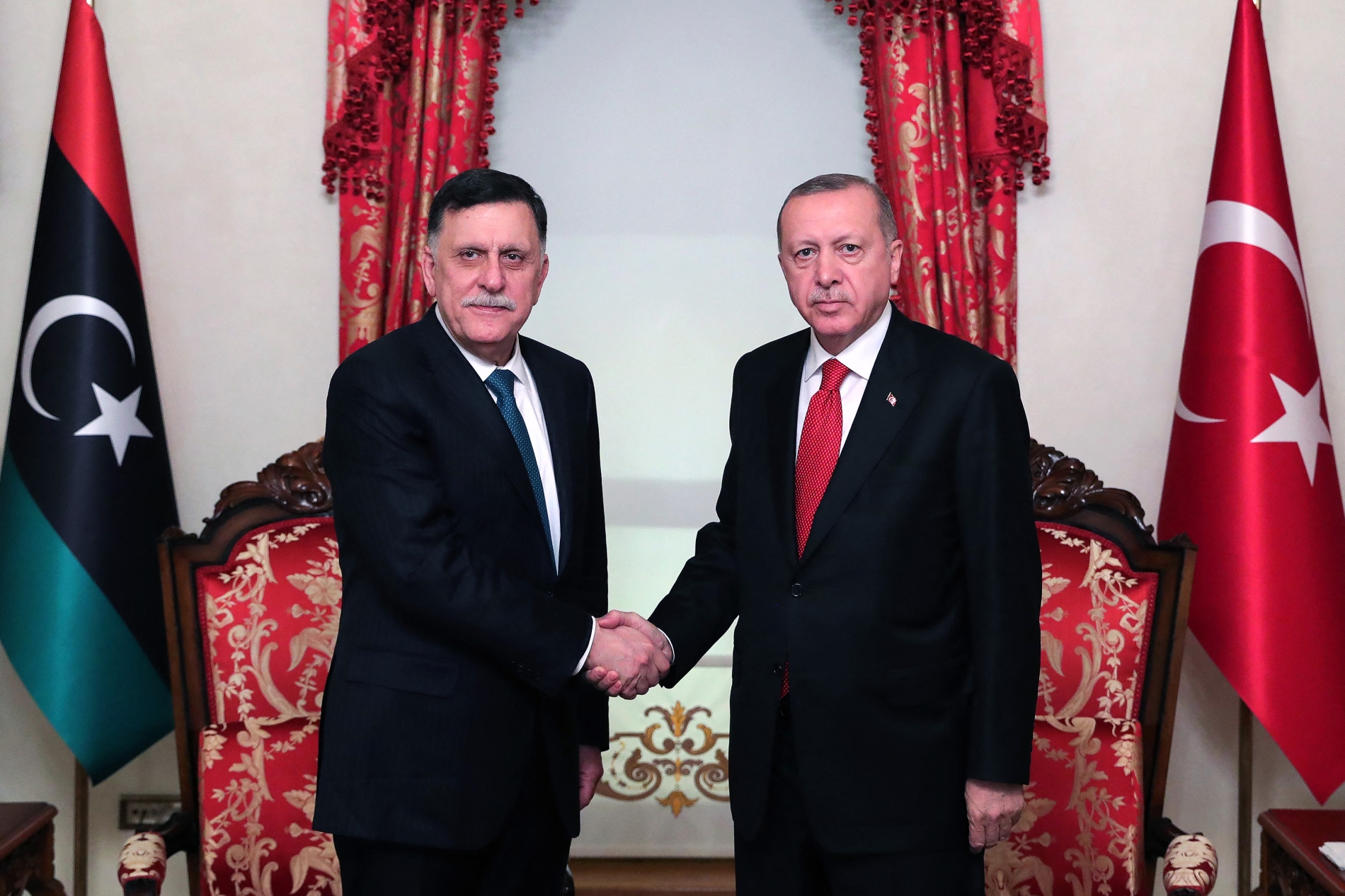
Turkish President Recep Tayyip Erdogan shakes hands with Fayez al-Sarraj, the head of the Tripoli-based Government of National Accord, in Istanbul after signing a military deal on 27 November 2019.

An East Med issue

Tobruk's ratification in October 2026 of the 2019 maritime delimitation agreement between Ankara and Tripoli came as a shock to Israel, Cyprus, and Greece, because it upsets their expansion plans in the eastern Mediterranean. Egypt was also unhappy, saying it considers the 2019 agreement null and void. Some observers have been concerned that this negative reaction from Cairo may usher in a new period of tension with Türkiye.

In post-Gaddafi Libya, Türkiye and Egypt have supported opposite sides. In 2020, Egyptian President Abdel Fattah al-Sisi declared a "red line," threatening to intervene militarily if Turkish-backed forces loyal to Tripoli pushed eastward. That same year, Egypt and Greece demarcated their maritime borders in what was considered a direct response to the Ankara-Tripoli deal. Yet from 2021, relations between Türkiye and Egypt improved. Confrontation gave way to dialogue and diplomacy.

Türkiye recognises Egypt's importance, and the two states have cooperated over Palestine and in the defence industry. Türkiye wants to further develop good relations with countries in the region while also supporting Libyan reunification and ensuring energy security in the Eastern Mediterranean, which includes a legally grounded balance in maritime zones.

AFP
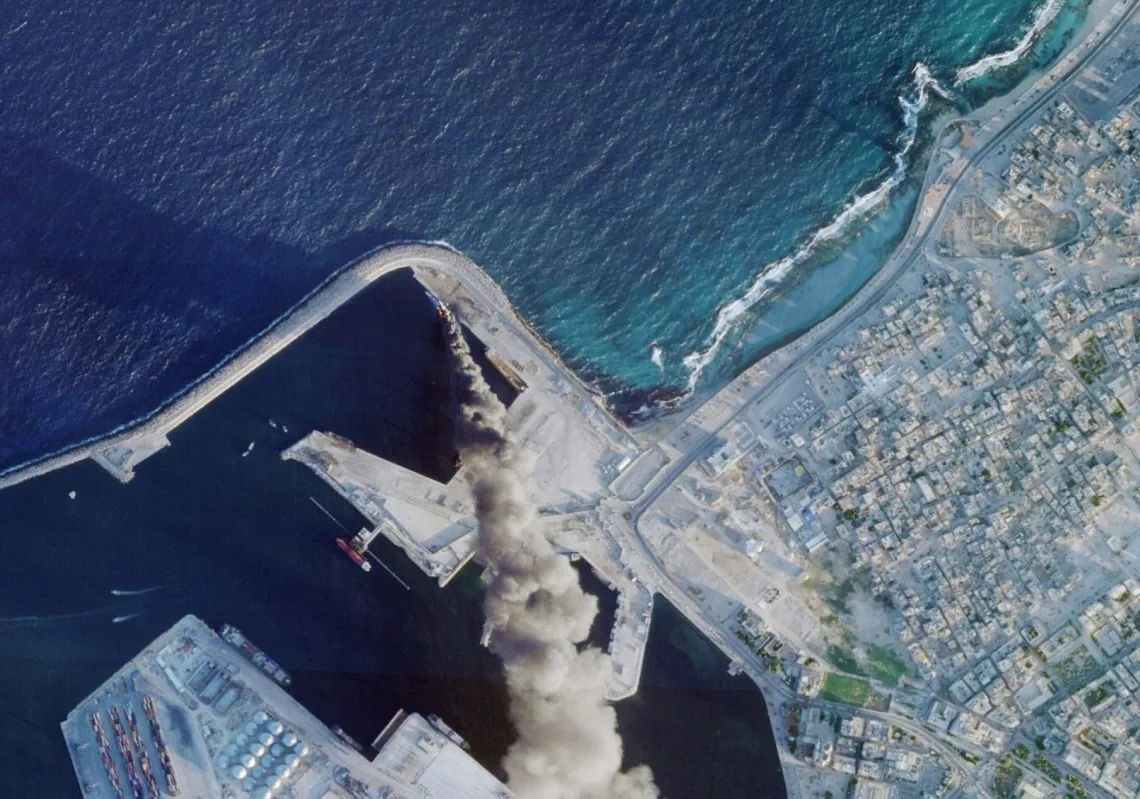
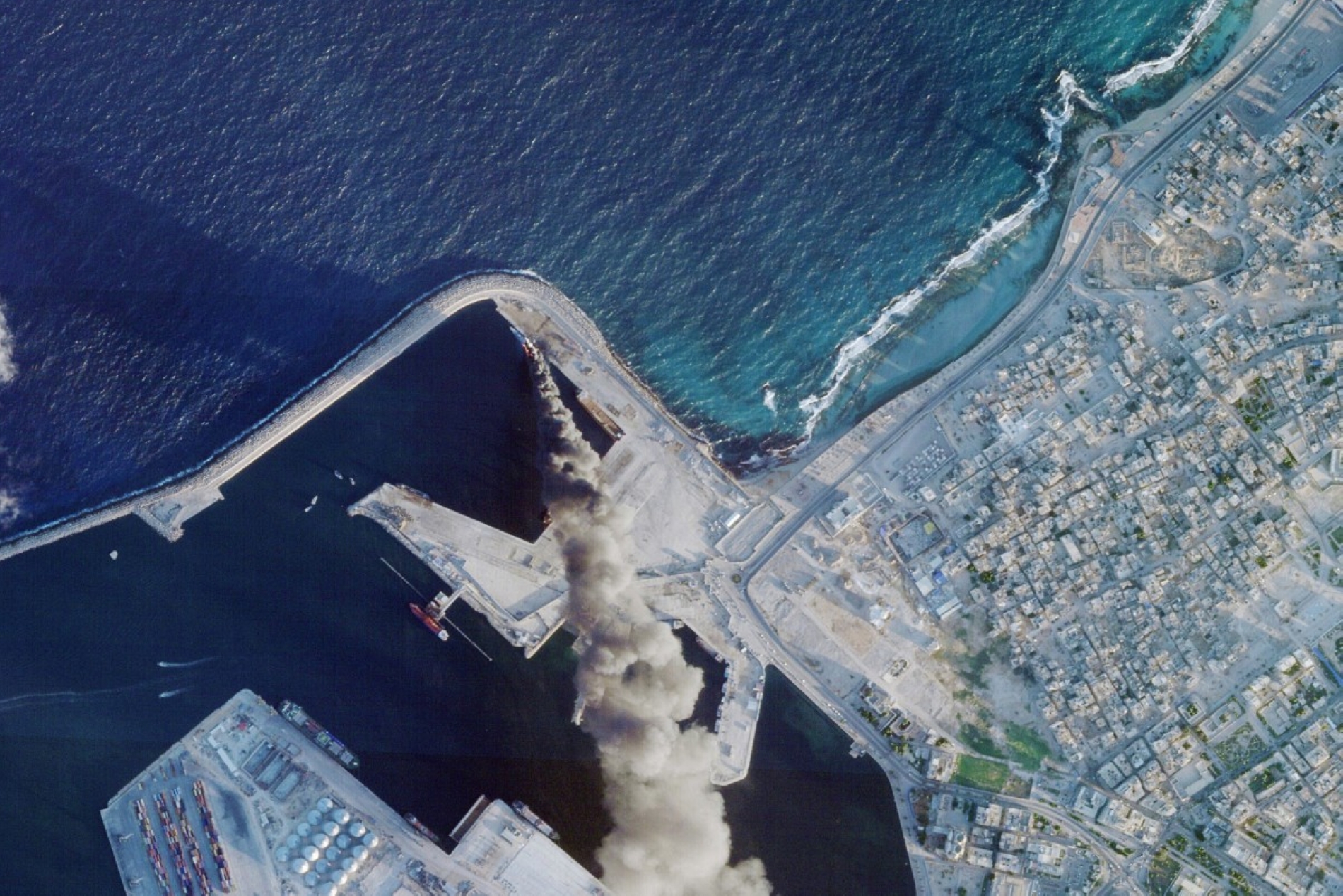
A satellite image shows smoke rising from a burning ship in the Libyan port of Benghazi on 22 November 2026.

Problems at sea

The sinking of a Russian warship docked in the port of Benghazi by Ukrainian unmanned sea drones in recent days, alongside the attack on a nearby Russian cargo ship believed to be carrying military supplies, constitutes a significant development, one that has caught the attention of Turks and Libyans alike. Two Libyan naval personnel were killed, prompting the LNA to declare that it would retaliate against Ukraine "at the appropriate time and place," without saying how.

Analysts have suggested that Ukraine (which lacks a navy) could not have carried out such an ambitious raid against a Russian warship so far from home without assistance from an as-yet-unknown third party. If Libya becomes a proxy battleground, it risks undermining progress toward reunification. As a result, Türkiye, Egypt, and others are monitoring the situation closely.

Haftar's visit to Türkiye, along with his son's visits to Doha and Cairo, shows that regional actors with interests and concerns in Libya should maintain constant dialogue to prevent a drift into a new phase of conflict.

font change