Al-Zaidi hits Iraq’s militias where it hurts

Iraq’s young prime minister is determined to bring a mass of private weapons under state control, but armed groups loyal to Iran have other ideas, so he is targeting their finances

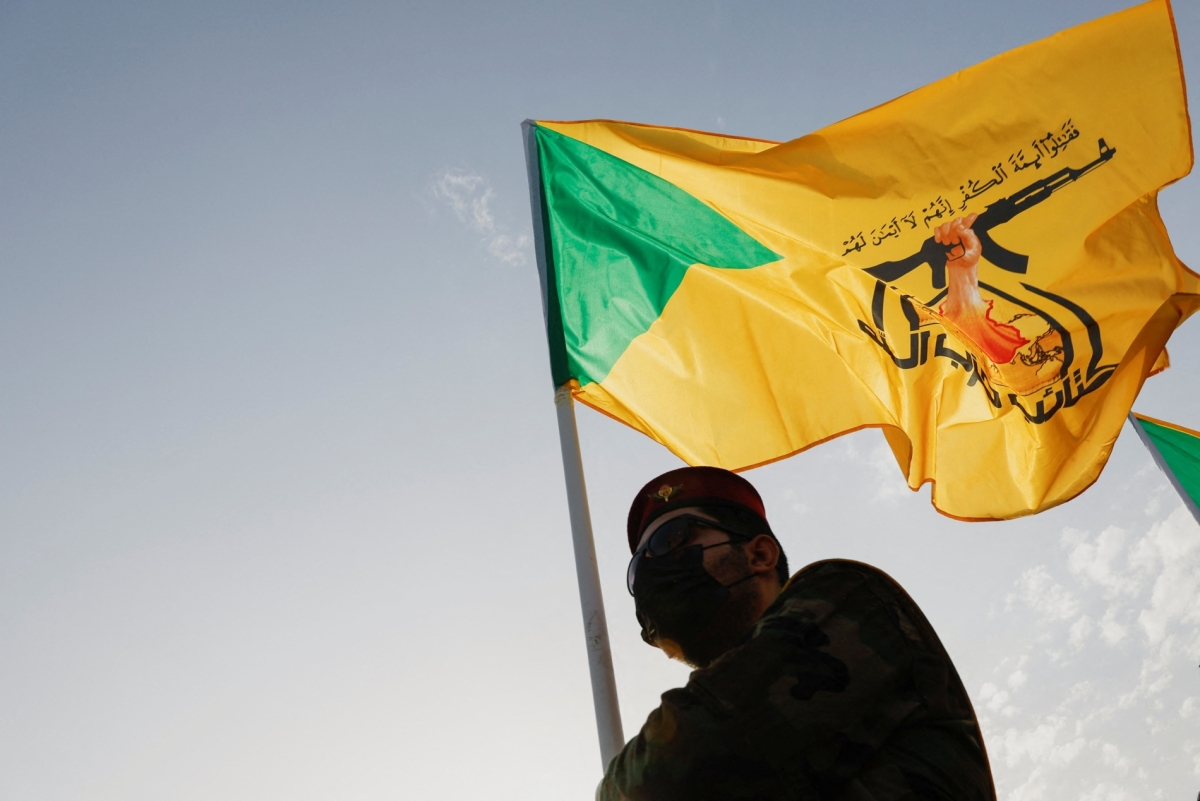
A mourner attends the funeral of a commander from Iraq's Kataib Hezbollah armed group in Baghdad on 22 September 2024, who was killed days before in an Israeli strike, in the Syrian capital Damascus.
REUTERS/Thaier Al-Sudani
A mourner attends the funeral of a commander from Iraq's Kataib Hezbollah armed group in Baghdad on 22 September 2024, who was killed days before in an Israeli strike, in the Syrian capital Damascus.

Al-Zaidi hits Iraq’s militias where it hurts

After a brief lull, the debate over bringing all weapons in Iraq under state control has returned to the fore, having first erupted after 30 September. The battle pits Prime Minister Ali al-Zaidi's government against an array of Iran-backed militias. Some take their orders from Tehran; some have arsenals that rival those of states. These armed factions have been asked to turn in their weapons. For those who refuse, al-Zaidi has turned to Plan B: pressuring them through their financial interests.

The disorder that has gripped Iraqi politics since 2003 has produced a system sustained by three closely intertwined forces: corruption, armed power, and political money. So deeply connected are these three pillars of the ruling order that it is hard to separate them. Iraq's economy, resources, and institutions have been carved into fiefdoms controlled by political parties and powerful families. Politicians have extended their grip on public wealth, initially assisted in their arrangements by armed groups.

Alliances between political actors and armed factions became a means of accumulating wealth. The growing relationship between weapons and money gave rise to a new form of kleptocratic rule, a phenomenon examined by the American journalist Robert F. Worth in The New York Times on 6 August 2020. Kleptocracy (which literally translates as ‘rule by thieves’) describes a system in which those holding political and administrative office exploit their authority to appropriate public and private wealth.

In a kleptocracy, corruption and the systematic plunder of public resources are the defining features of government, and in his investigative article, Worth offered a revealing account of Iraqi political corruption as it might appear to outsiders. He observed that Iraqi politics could outwardly resemble gang warfare, yet the theft taking place beneath the surface of those conflicts in fact proceeded remarkably quietly.

Divide and rule

The Iraqi government appears to be bringing weapons under state control through a strategy of divide-and-rule, adopting a different approach to the three different categories of armed factions. The first category is being enticed into government with positions commensurate with groups’ political strength after the latest elections. The second group is being dealt with through somewhat secretive agreements. This approach has been applied to Harakat Hezbollah al-Nujaba, which objects to the failure to enact the Popular Mobilisation Forces (PMF) law. The PMF is an umbrella group of mainly Shiite militias, and the law incorporates it into the state.

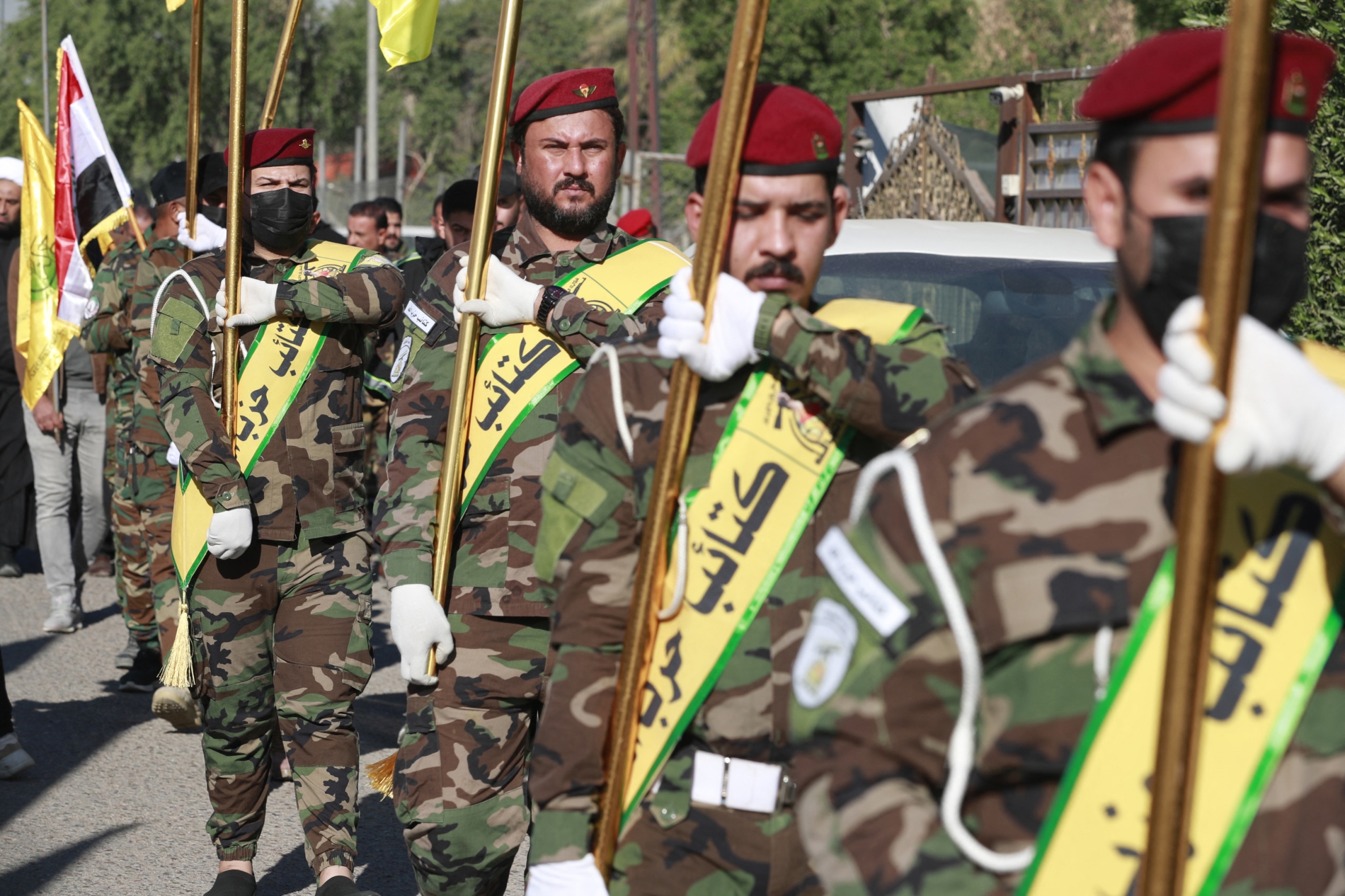
The third category comprises Kataib Hezbollah. Having maintained its weapons and confrontational stance, government pressure is now being directed at its investments and commercial activities, which some say are aided by the coercive power of its weapons and fighters.
AHMAD AL-RUBAYE / AFP
Fighters lift flags of Iraq and paramilitary groups, including al-Nujaba and Kataib Hezbollah, during a funeral in Baghdad for five militants killed a day earlier in a US strike in northern Iraq, on 4 December 2023.

Al Majalla has learnt that parties to the Coordination Framework (or CF, a council of major Iraqi Shiite parties) recently met with al-Zaidi but did not reach an agreement on the steps required to bring weapons under state control. Even armed factions within the CF that secured government ministries seem unwilling to reconsider the role of their weapons should war break out again between the US and Iran.

According to leaked minutes, al-Zaidi’s threat to use force against any armed group challenging the government’s war-fighting authority received no support from the CF. Moreover, the CF parties threatened to open a military front in support of Iran if war resumed. If accurate, this undermines the understandings reportedly reached after 30 September, including with factions that continue to reject disarmament.
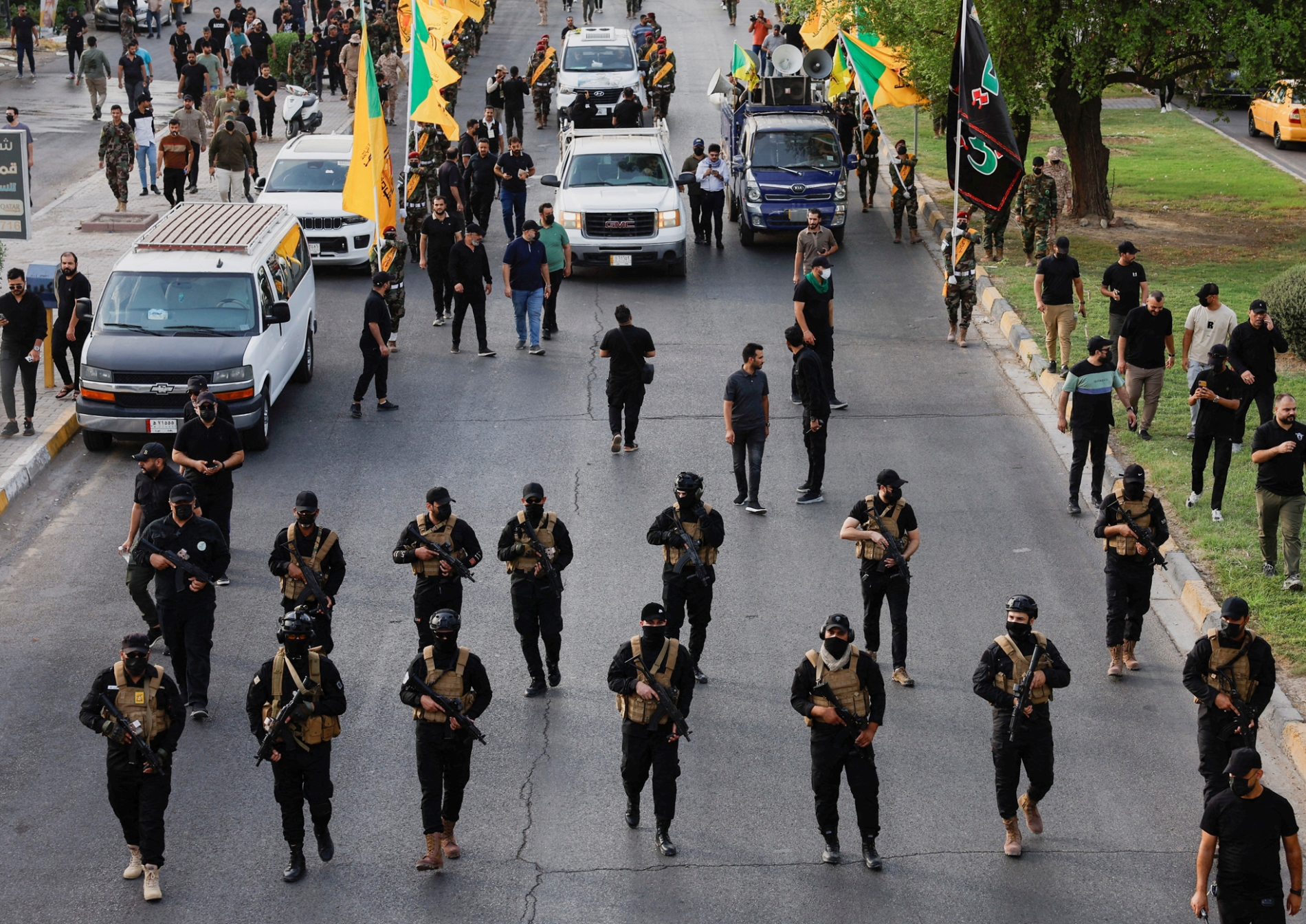
US journalist Robert F. Worth noted how Iraqi politics can outwardly resemble gang warfare, yet the theft taking place beneath the surface happens quietly

Money and weapons

Kataib Hezbollah fired the opening salvo against the government over oil sales contracts with the Abu Dhabi National Oil Company (ADNOC). In a post published on the account of Abu Mujahid al-Assaf, the group's security chief, al-Zaidi was derisively described as the CF's "authorised managing director". The post declared that Kataib Hezbollah was awaiting a copy of the agreement between the "Islamic Resistance" and the CF committee, while accusing the government of "delivering nothing but unfulfilled promises".

Al-Zaidi's government avoided an online confrontation with Kataib Hezbollah, instead threatening to dismantle the network of investment contracts managed by the group through intermediary companies. This includes cancelling contracts with the Military Industrialisation Authority and investment agreements for Mosul International Airport.

Reports soon appeared alleging oil smuggling in areas under Kataib Hezbollah control, while government media outlets began identifying companies and investment projects allegedly owned by individuals close to Abu Hussein al-Hamidawi, the secretary-general of Kataib Hezbollah in Iraq, and managed through his associates.

Al-Assaf denied any "partnership or intermediary role, either direct or indirect", particularly in dealings with the Military Industrialisation Authority, before turning his ire on al-Zaidi's brother, describing him as "the official responsible for media and security in the PM's Office", despite him holding no formal position in government, before asking "how you built your vast financial empires... how you amassed such wealth in no more than ten years".

REUTERS/Thaier Al-Sudani
A vehicle carries the coffin of a commander from Iraq's Kataib Hezbollah armed group in Baghdad on 22 September 2024, who was killed days before in an Israeli strike, in the Syrian capital Damascus.

Calls to investigate

A parliamentarian from the Huqooq Movement, which represents Kataib Hezbollah's political constituency, later wrote to the head of the Integrity Commission requesting an investigation into "the wealth of Prime Minister Ali al-Zaidi, his financial disclosure, and conflicts of interest," all of which signals a new phase in the government's fight to bring weapons under state control, with money becoming the main battleground.

Al-Zaidi has another option if financial pressure does not force the group to relinquish their weapons: threatening to restructure the PMF brigades affiliated with Kataib Hezbollah, severing their organisational ties to the group's military command. This would force its members to choose between staying in their existing military formations and losing their state-funded salaries, or accepting the restructuring, submitting to government authority, and keeping their pay.

Kataib Hezbollah shows no sign of backing down. On 11 November 2026, al-Assaf put out a statement reaffirming the group's refusal to surrender its weapons and its determination not to make any concessions, before again questioning the sources of al-Zaidi's family wealth, then urging "honourable MPs" to investigate contracts relating to the public food ration system and the provision of meals to the armed forces. Al-Assaf also said al-Zaidi would be "fully responsible for any attack" against Iraq's Shiite militias.

Iraqi politicians know that political influence is a sure route to the state's wealth and resources. After every electoral cycle, they seek a prime minister who is willing and able to guarantee their share of senior government appointments and safeguard (or, preferably, expand) their control over lucrative sources of public revenue. At the very least, they expect him to leave their economic interests undisturbed. For this reason, al-Zaidi may struggle to use financial pressure to secure disarmament.

Iraqi Prime Minister's Media Office/ REUTERS
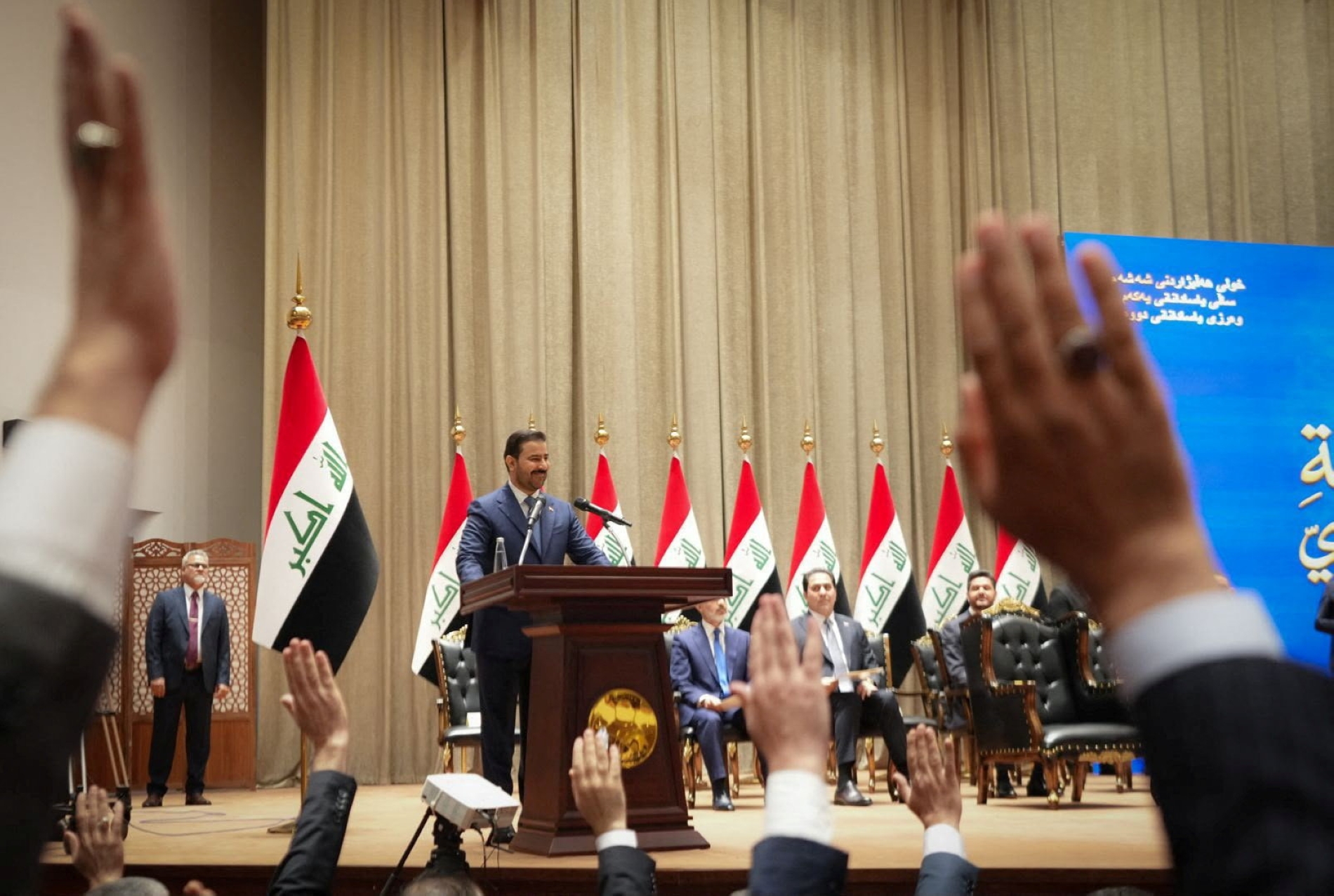
Iraqi Prime Minister Ali al-Zaidi attends a parliamentary session to approve the remaining members of his cabinet in Baghdad, Iraq, on 15 October 2026.

Eye on the prize

Still, if he succeeds, he would have won an important victory—one that might embolden him to scrutinise the investments and contracts of other political factions, secured through control of their ministries and state institutions, or through armed coercion. Oddly enough, the more firmly the prime minister asserts his office's authority, the more the ruling factions' power and influence diminish. Two weeks ago, just seven months after he became prime minister, al-Zaidi named himself director of Iraq's national intelligence service, dismissing the incumbent.

Entrenched interests are not taking this challenge lying down. No rival political factions want to see the authority of the state and the rule of law prevail; their interests are better served by the status quo, in which non-state armed actors continue to wield power, rival factions divide political power and wealth, and networks of political corruption flourish while governments neglect their sovereign responsibilities.

Al-Zaidi is engaged in a tit-for-tat battle in which the state tries to control the militias, and the militias try to control the state. The outcome may yet be the collapse of Iraq's post-2003 political system. Poverty is spreading and marginalised communities are expanding, particularly those subject to violence and score-settling in the absence of effective state authority. Such a reckoning could arise from within Iraq or with outside support. Whether it is the solution or the future remains to be seen.

font change