New Black Sea attacks raise threat of global food crisis

Zelensky has warned the world could see a new food crisis after attacks and insecurity severely disrupted the maritime routes through which millions of tonnes of Ukrainian exports normally pass

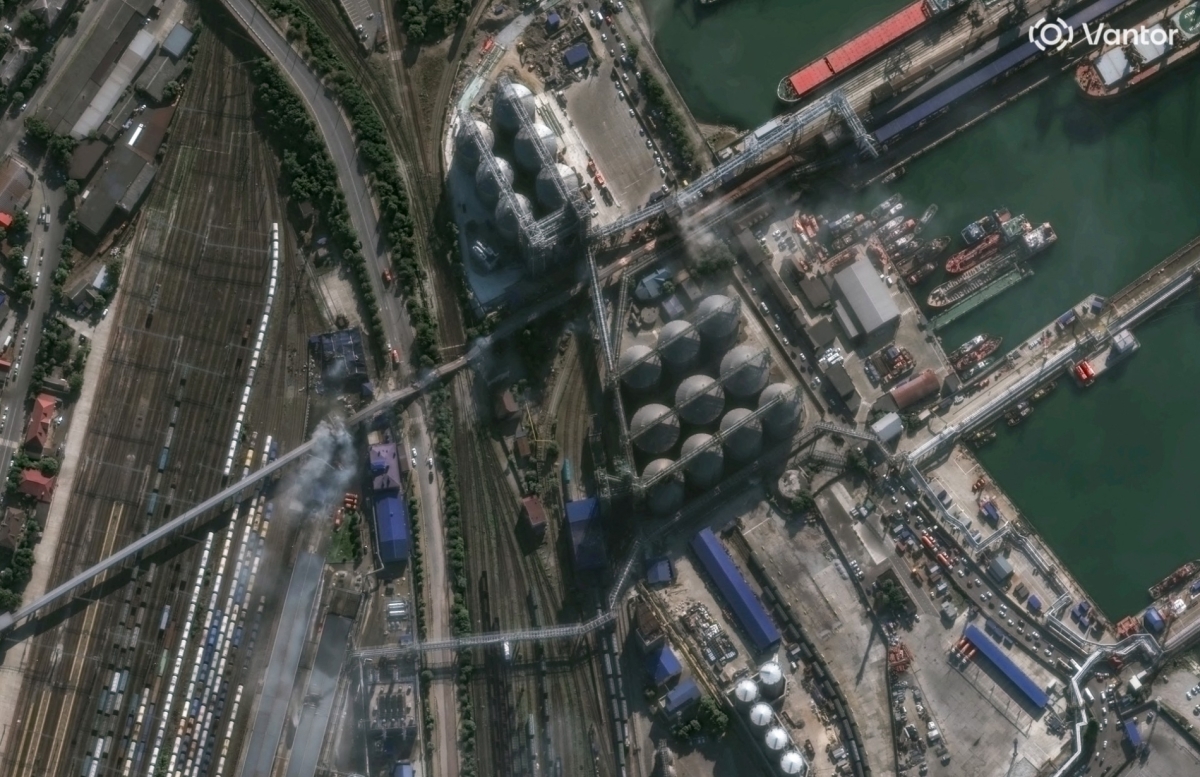
This handout satellite image, taken and released by Vantor on 12 August 2026, shows smoke rising near a grain facility at the Black Sea port of Novorossiysk in Russia, following Ukrainian strikes.
SATELLITE IMAGE ©2026 VANTOR / AFP
This handout satellite image, taken and released by Vantor on 12 August 2026, shows smoke rising near a grain facility at the Black Sea port of Novorossiysk in Russia, following Ukrainian strikes.

New Black Sea attacks raise threat of global food crisis

When Ukrainian President Volodymyr Zelensky warned at the Warsaw Security Forum on 12 October 2026 that a grain crisis could emerge within months, he was not speaking only about Ukraine’s loss of export revenue. He was warning that the war could once again spread from the Black Sea coast to dinner tables far away in Africa, Asia and the Middle East.

The official transcript of his remarks conveyed greater urgency than some reports quoting him. Zelensky said that “within a month or two”, the world could begin talking about an agricultural and food crisis after attacks and insecurity severely disrupted the maritime routes through which millions of tonnes of Ukrainian exports normally pass. Five days later, Hungarian Prime Minister Péter Magyar said that Zelensky had asked Poland, Romania, Slovakia and Hungary to facilitate the overland transit of Ukrainian grain—an indication that the problem was no longer merely a potential threat but a logistical crisis already under way.

Any comparison between the present situation and 2022, however, requires caution. In both cases, a major agricultural producer is under wartime pressure, ports are being disrupted, insurance and freight costs are rising, and importers are searching for alternatives. Yet the starting point is different, as are global stock levels, the ability of markets to adapt and the geographical distribution of the countries most exposed.

The world is unlikely to be heading for an exact replay of the 2022 crisis. It may instead face a more uneven crisis: wealthy countries, or those with ample financial reserves and strategic stocks, will be able to absorb the shock, while poor and heavily indebted countries pay through more expensive bread, weaker currencies and reduced humanitarian assistance.

The paradox is that Ukraine has not lost its capacity to produce grain. In its latest forecast for the 2026-27 season, the US Department of Agriculture estimates the Ukrainian wheat harvest at around 26 million tonnes and exports at approximately 12.5 million tonnes. It puts maize production at about 31.8 million tonnes, with potential exports of 22 million tonnes.

The problem lies not only in the fields, but in the distance between silo and ship, and between ship and buyer. About 90% of Ukraine’s wheat, maize and sunflower-seed exports normally pass through the Black Sea, making its seaports the real bottleneck in the grain trade.
Reuters
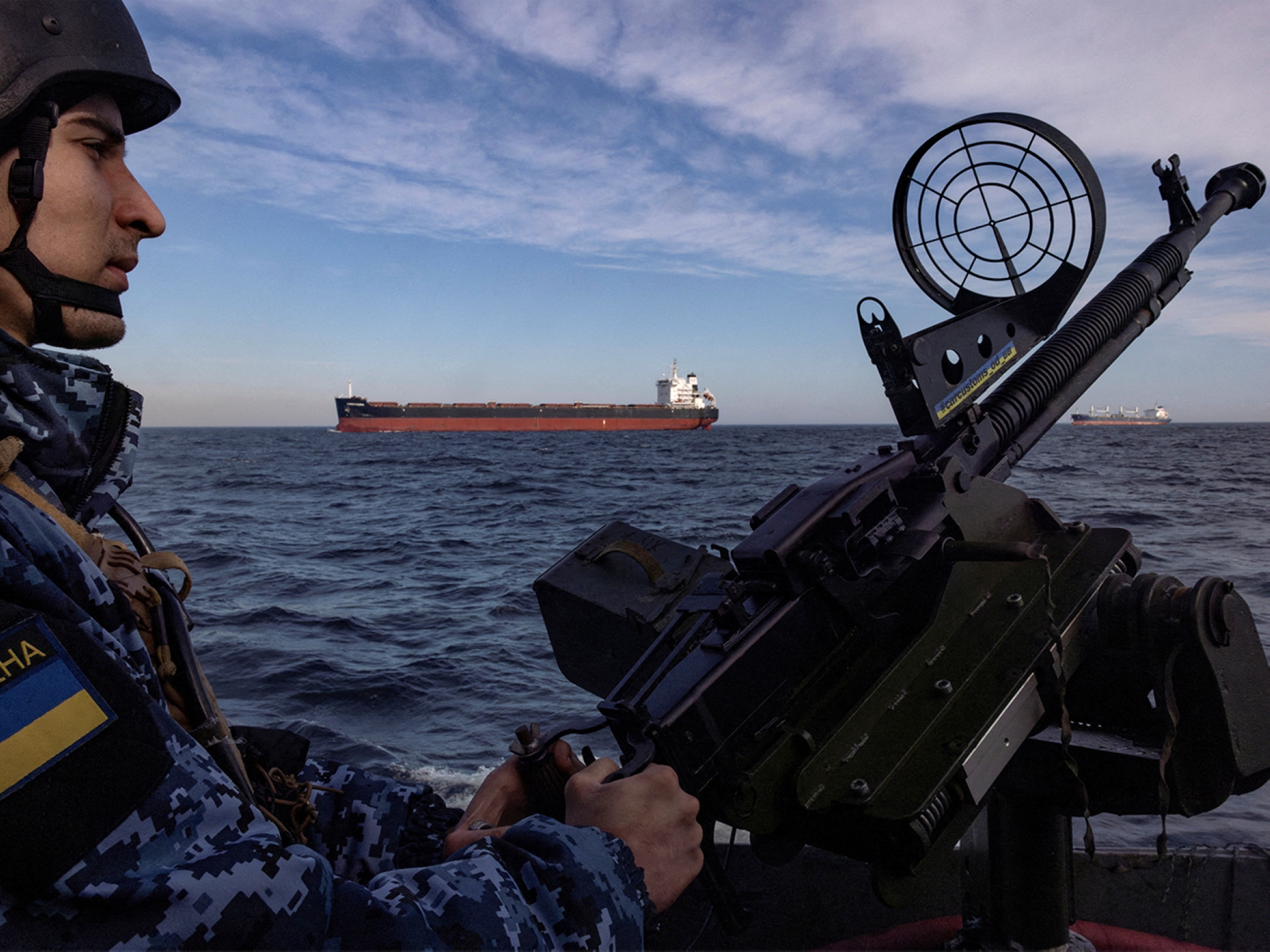
A Ukrainian Coast Guard soldier aboard a patrol boat as a cargo ship passes by in the Black Sea, on 7 February 2024.

Falling exports

Before the latest escalation, ports in the Odesa region handled around six million tonnes of cargo a month. Attacks on port facilities and merchant vessels have since reduced available capacity and raised the risks faced by shipping companies and insurers. Ukraine’s Deputy Economy Minister, Taras Vysotskyi, said in June that monthly exports through these ports could fall to four million tonnes, with only about one million tonnes capable of being diverted to terminals on the Danube because of the higher cost of using that route.

Official Ukrainian figures show that exports of grain and pulses from the beginning of the 2026-27 marketing season to 16 October reached 5.93 million tonnes, compared with around 7.90 million tonnes during the corresponding period of the previous season—a decline of roughly 25%. The fall was steeper for wheat, exports of which dropped by about 41% to 3.34 million tonnes, and for barley, which declined by approximately 52% to 473,000 tonnes. Maize was the only major grain to record an increase, reflecting differences in harvest schedules and contractual arrangements between crops.

These figures do not mean that the same quantity of food has immediately disappeared from the world market. Buyers may replace some Ukrainian wheat with supplies from Russia, the European Union, Argentina, Australia or the United States. But replacement grain may have to travel farther, cost more, come with different specifications and arrive after delays that not every country can afford.

A prolonged blockage also creates a deferred problem within Ukraine. If farmers cannot sell their crops—or must accept lower prices because of the high cost of transport —they will lack the cash needed to purchase seeds, fertiliser and fuel for the following season. A transport crisis in 2026 could therefore become a production crisis in 2027.

On the eve of Russia’s full-scale invasion in 2022, Russia and Ukraine together accounted for between 27 and 30% of global wheat exports, according to estimates from the UN Food and Agriculture Organisation and the Organisation for Economic Cooperation and Development. Ukraine exported around 45 million tonnes of grain a year, including nearly 20 million tonnes of wheat in 2021.

The war began as the world was emerging from the Covid-19 pandemic, when supply chains had yet to regain their balance, energy and fertiliser prices were high, and global stocks offered less reassurance. During the opening weeks of the conflict, more than 20 million tonnes of grain became stranded in Ukrainian silos and ports, according to the UN Conference on Trade and Development.

Markets did not know whether Ukrainian exports would resume, whether sanctions would disrupt Russian supplies or whether producing countries would impose export restrictions to protect their domestic markets. Genuine shortages were therefore compounded by panic, speculation and precautionary stockpiling. The FAO Food Price Index reached a record high in March 2022.
Diana Estefana Rubio

Adaptive measures

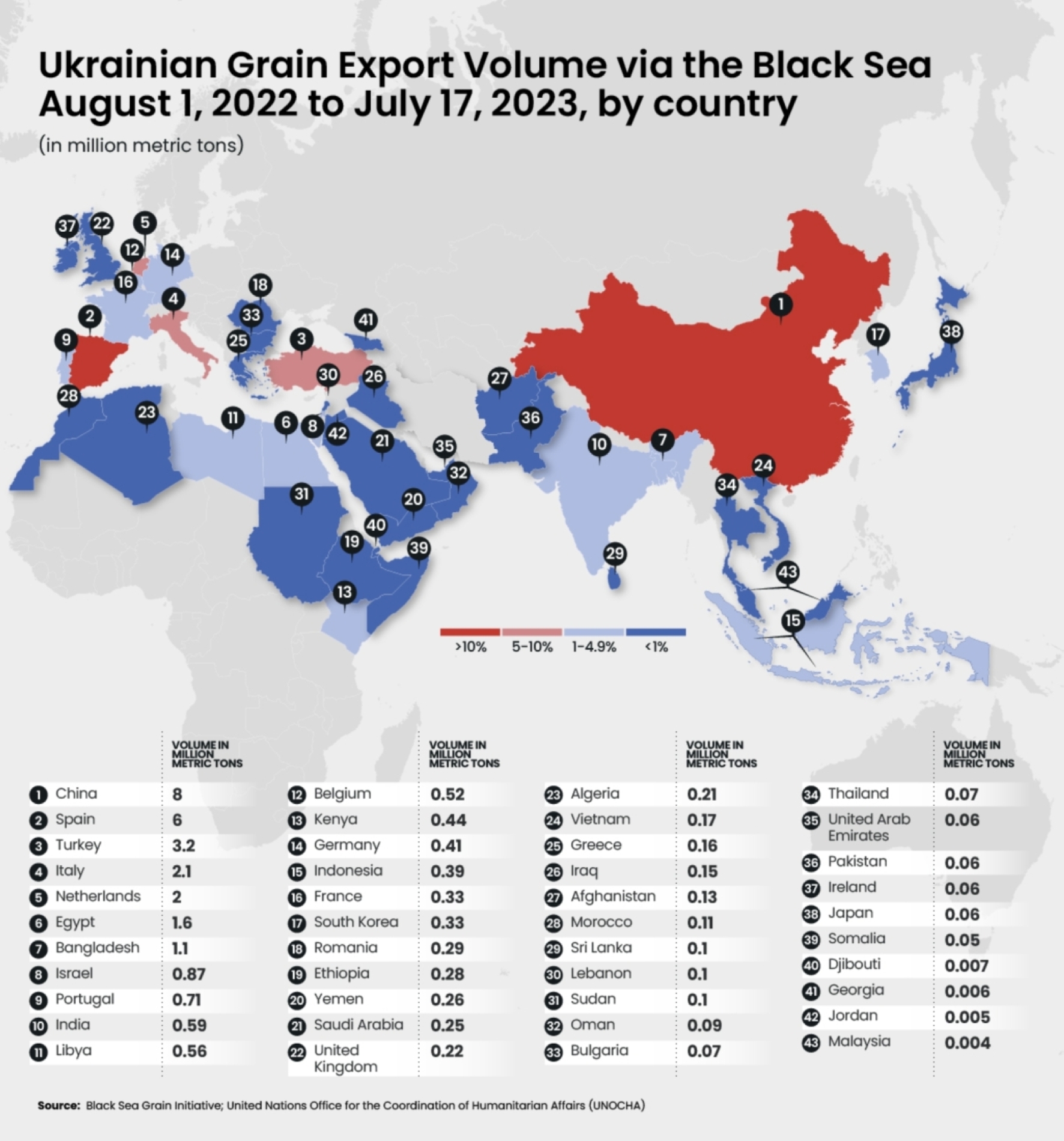
The Black Sea Grain Initiative—brokered by the United Nations and Türkiye to enable Ukrainian grain to be exported by sea—helped to ease the shock. UN figures indicate that between July 2022 and July 2023, the initiative enabled some 33 million tonnes of grain and other foodstuffs to leave Ukrainian ports. Not all the shipments went directly to poor countries, but their return to the international market increased supply and lowered the prices paid by importers and humanitarian relief programmes.

By 2026, traders had gained experience in using Danube ports, railways and European transport corridors. A number of importing countries had also spread their contracts among a wider range of suppliers. On paper, global supplies appear healthier than they were four years ago. Experience cannot overcome geography, however. A river or railway line cannot fully replace seaports designed to handle millions of tonnes at low cost.
On paper, global supplies appear healthier than they were four years ago, but a railway cannot replace ports designed to handle millions of tonnes at low cost

FAO forecasts

In its October bulletin, the FAO forecasts global cereal production of about 2.979 billion tonnes in 2026. Although this would be 2.1% below the previous year's record, it would still represent the second-largest harvest in history. Even so, the organisation has lowered its forecast for global grain trade by 0.7% from its previous estimate, citing weaker wheat and maize exports and the restrictions affecting Black Sea shipping.

US Department of Agriculture estimates also point to sizeable harvests among several major exporters. Russian wheat production is put at around 88 million tonnes, while Argentina is expected to produce 21.5 million tonnes. These harvests give the market a buffer that was not as strong in 2022, but they do not mean that the price crisis is over.

The FAO Food Price Index stood at around 136 points in September 2026, up 1.5% over the month and 5.8% year on year, although it remained 15.1% below its March 2022 peak. The cereals index alone rose by 5.1% in September, while international wheat prices increased by 6.3% to their highest level since August 2023. The FAO attributed the increase principally to logistical constraints in the Black Sea, which prompted importers to turn to alternative origins, as well as dry weather in parts of North America ahead of sowing.

AFP
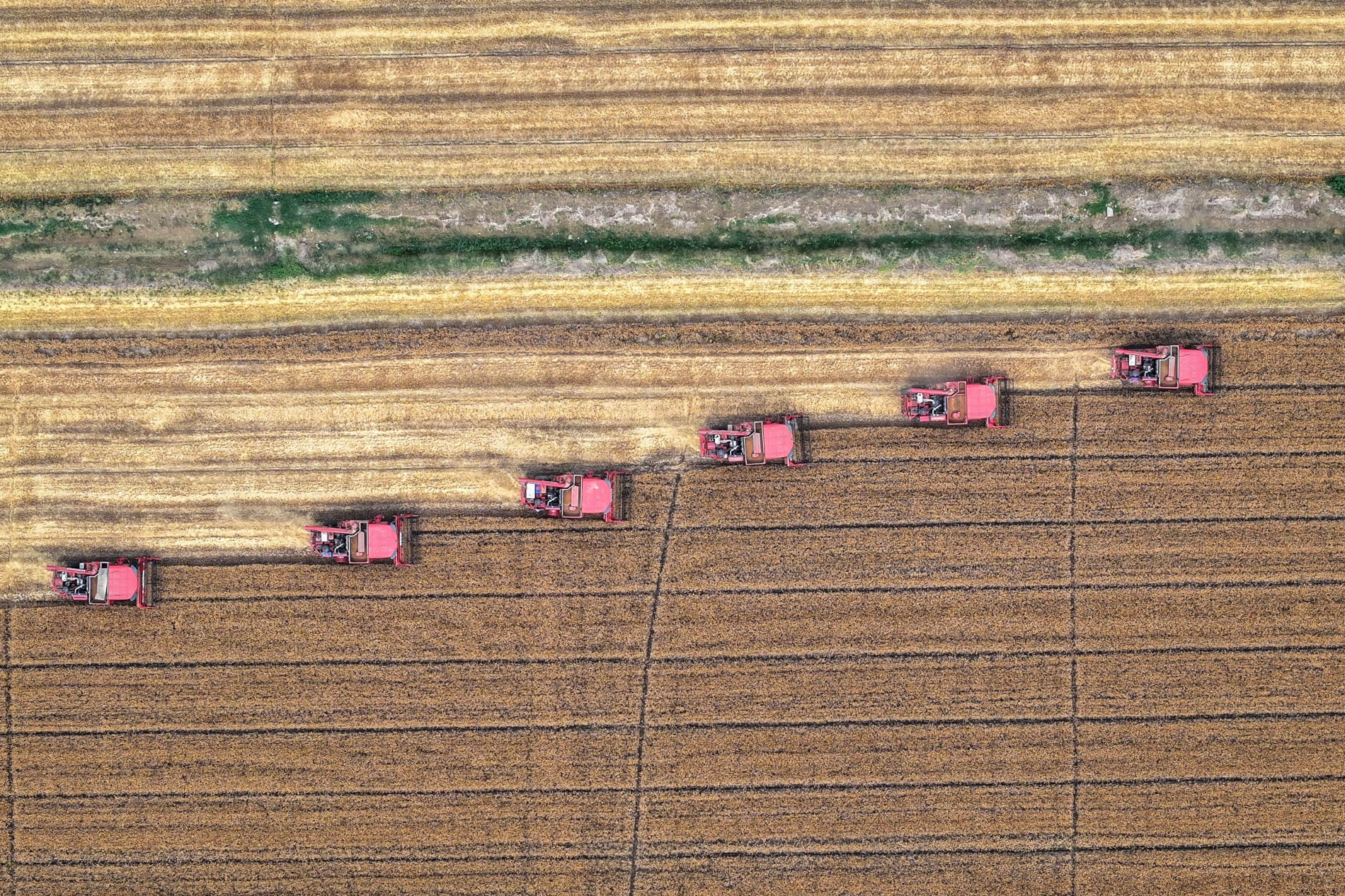
An aerial view shows combine harvesters working a wheat field in Huaian, in eastern China's Jiangsu province, on 27 May 2025.

Key distinction

This is where the distinction between food being available globally and people being able to afford it locally becomes clear. Wheat may be available in other countries, but delivering it to the eastern Mediterranean or East Africa requires a longer voyage, more fuel and more expensive insurance.

The Black Sea crisis also coincides with higher energy and fertiliser costs, disruption to other shipping routes, volatile currencies in developing economies and a reduced ability among governments to subsidise bread or build up reserves. The record price surge of 2022 may therefore not be repeated, but the final cost borne by poor consumers could still be more severe because their incomes and currencies have weakened.

Countries will not be affected at the same pace or to the same extent. Their exposure can be measured against three factors: their dependence on Black Sea grain, the size of their strategic reserves and their financial capacity to pay higher prices and freight costs.

In the Middle East and North Africa, Egypt remains one of the world's largest wheat importers and a major buyer of Russian and Ukrainian grain. Cairo has nevertheless entered the crisis with a somewhat stronger buffer after the government purchased a record 4.6 million tonnes of domestic wheat by June, approaching its target of five million tonnes. The private sector, however, does not have access to the same stocks or financing terms, while switching to more distant suppliers raises costs.

Countries that entered the crisis with comfortable reserves will be better placed to wait and avoid buying at the peak of the market. In Jordan, the Ministry of Industry, Trade and Supply announced in August that existing reserves and contracted quantities covered approximately 9.6 months of consumption. Yet even countries with substantial stocks will not be insulated from higher costs if maritime routes remain severely disrupted for an extended period.

The additional cost of disruption is already evident in recent wheat tenders, although prices vary according to the delivery date, origin and shipping terms. Importing countries are having to seek alternatives from Romania, Bulgaria and more distant producers. The extra expense reflects not only wheat availability, but also higher insurance charges, longer journeys, and the cost of rerouting shipments.

In Asia, markets including Indonesia, Bangladesh, Vietnam and Thailand rely on competitively priced Black Sea wheat. Reuters cited traders as saying that Asian buyers had booked between two million and 2.5 million tonnes of wheat from the region for delivery between July and September, equivalent to between 30 and 50% of demand among some importers. Australian wheat has been offered at around $315-330 a tonne, compared with $260-280 for some Black Sea supplies.

DAVID GRAY / AFP
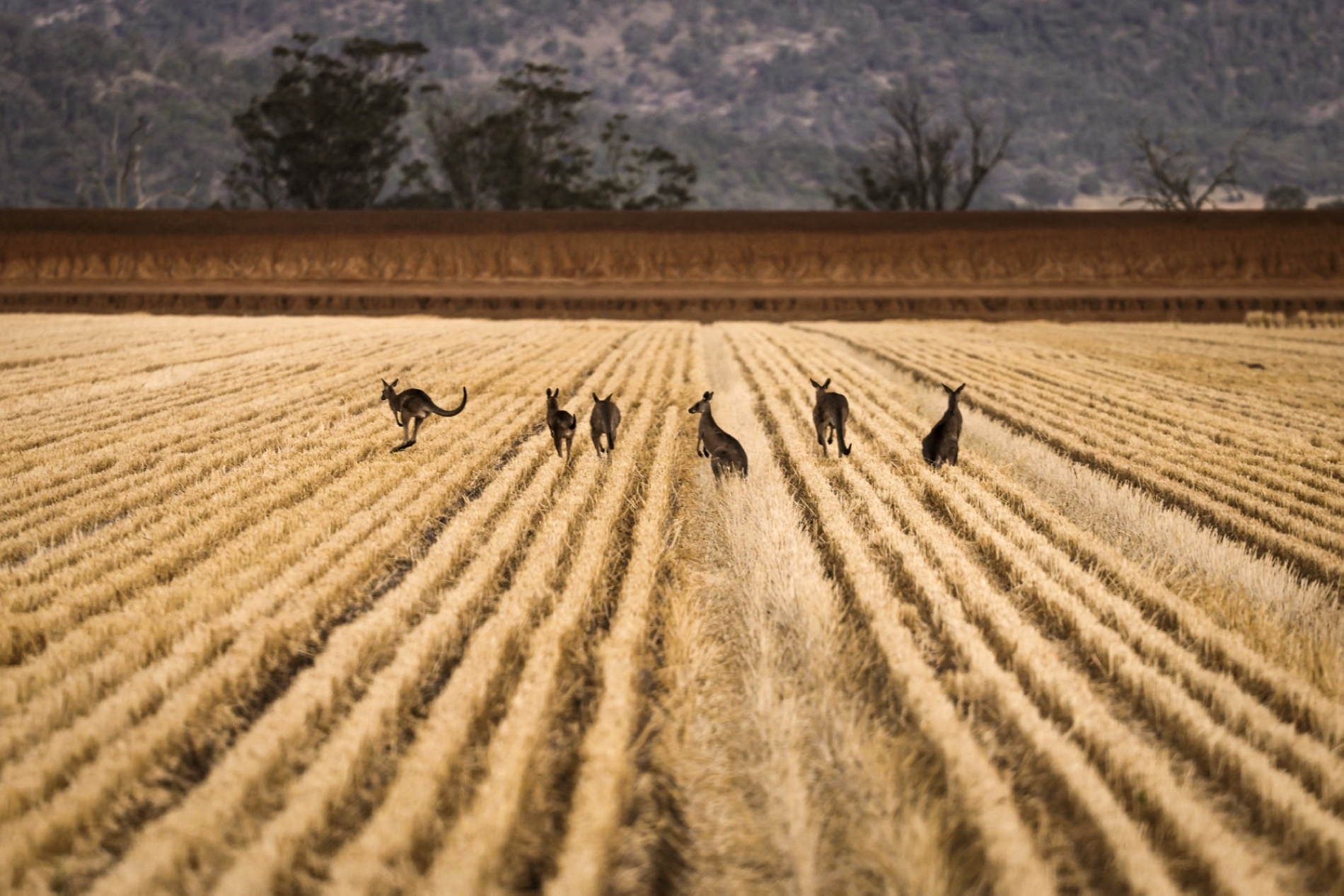
This picture taken on 13 November 2025 shows kangaroos standing in a paddock of wheat on the outskirts of the north-central New South Wales town of Gunnedah.

Greatest danger

The greatest danger, however, lies in countries where dependence on imports is compounded by domestic conflict and dwindling aid. According to the latest estimates from the World Food Programme and other UN agencies, around 5.4 million people in Somalia are expected to face crisis levels of hunger or worse between October and December 2026.

In Sudan, an Integrated Food Security Phase Classification assessment estimated that nearly 19.5 million people were facing high levels of acute food insecurity in May. More recent reporting indicates that conditions in parts of Darfur and Kordofan have continued to deteriorate, while humanitarian operations remain severely underfunded.

For some countries, grain does not have to disappear from world markets for disaster to strike. A rise in purchasing and transport costs lasting only a few weeks may be enough, particularly when relief organisations lack the money needed to keep pace with the increase.

Since 2022, Ukraine and its partners have invested in Danube ports, rail transport, overland routes and European transit corridors. These outlets have helped prevent exports from coming to a complete halt, but they are more expensive and have less capacity than Black Sea ports.

Increasing overland exports is not simply a matter of providing additional trains. Ukraine and the European Union use different railway gauges, requiring cargoes to be transferred at the border. Shipments also face queues and customs inspections, as well as political sensitivities among farmers in neighbouring countries who fear that Ukrainian grain will enter their domestic markets rather than merely passing through them.

This is why the agreement of neighbouring countries to facilitate transit is particularly important. The proposal discussed by Zelensky with their governments would transport maize and other grain in sealed trains to their final destinations, preventing the cargo from leaking into local markets. It would nevertheless require customs supervision, political coordination and transport capacity that cannot be provided overnight.

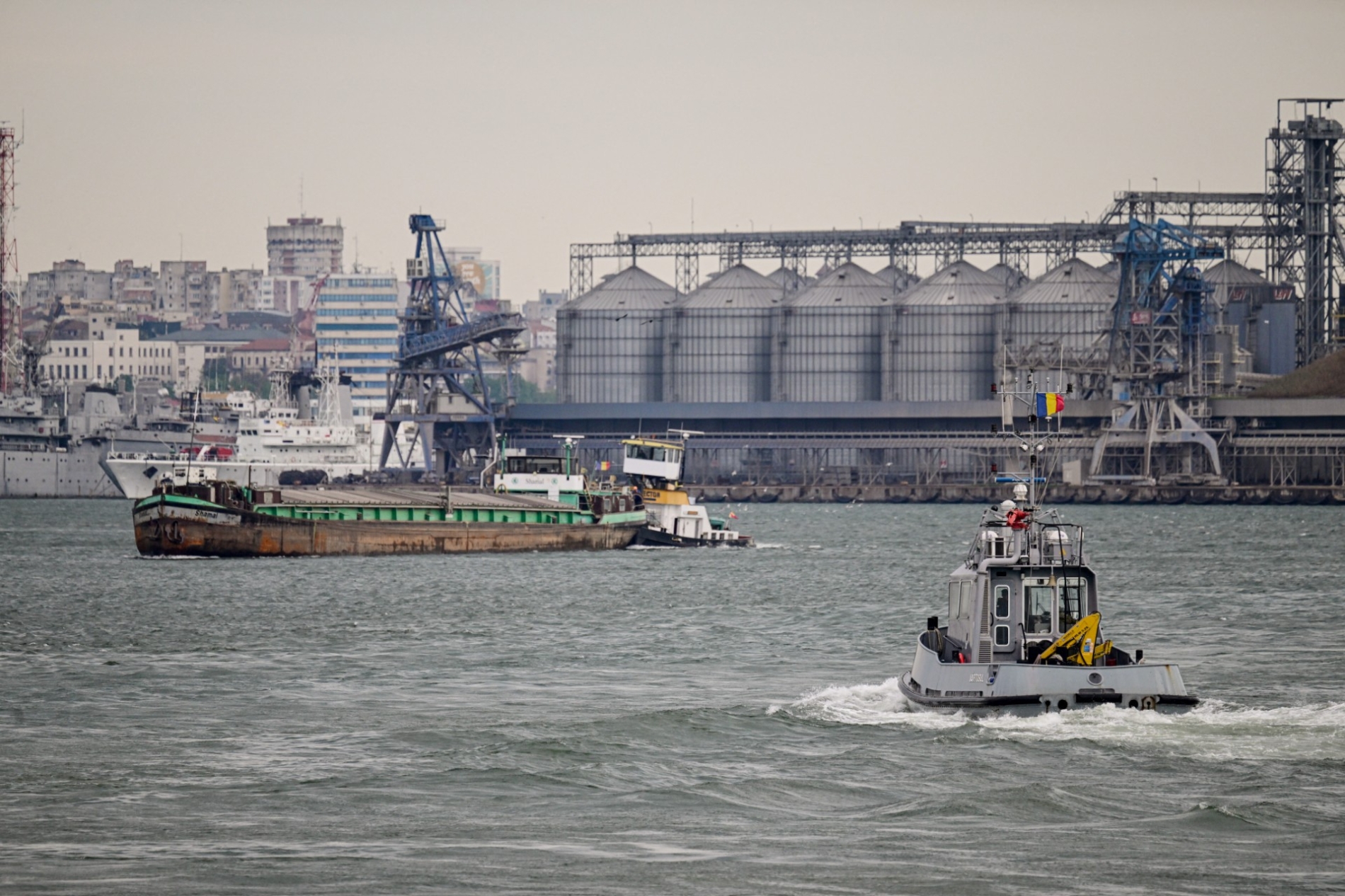
Redirecting exports to Danube ports also places greater pressure on Romanian infrastructure and brings vessels closer to areas exposed to attack. Romania's Black Sea port of Constanța has so far played a crucial role in keeping part of the trade flowing. Any widening of the maritime danger zone, however, would drive up insurance premiums and could persuade more shipping companies to stay away.

DANIEL MIHAILESCU / AFP
Picture taken on 18 May 2026 shows ships at the entrance to the port of Constanta, Romania.

Impact on Russia

Russia also lacks a rapid and comprehensive alternative to the Black Sea. According to industry and shipping data, around 46.3 million tonnes of Russian grain passed through Black Sea and Sea of Azov ports during the 2025-26 season, accounting for approximately 90% of the country's seaborne grain exports. Although Baltic ports could be used more extensively, they could not accommodate a large-scale shift in volumes within a short period.

This matters because simultaneous disruption to Russian and Ukrainian exports would leave importers with few inexpensive alternatives, even if total global production remained abundant.

font change