Ukrainian attacks are putting pressure on Russian exports, while Moscow strikes at Odesa’s grain-shipping capacity
AFP
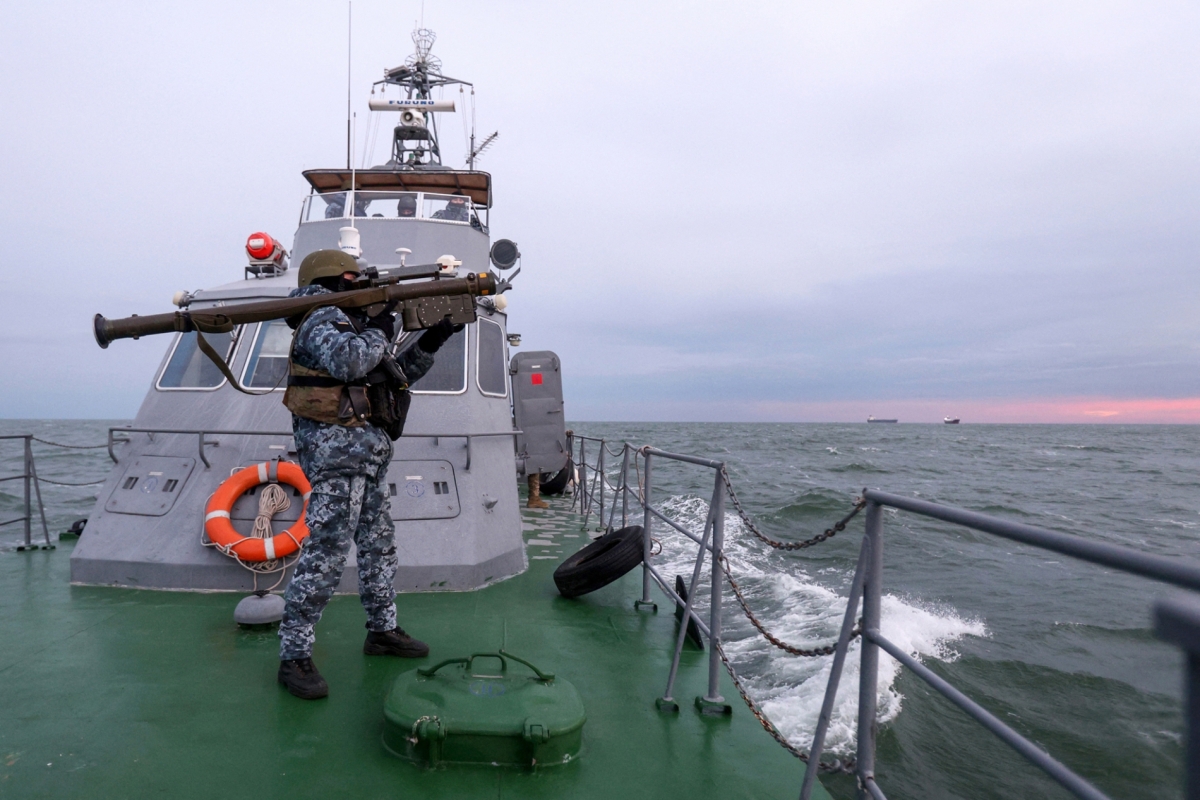
A Ukrainian soldier carrying a Stinger anti-aircraft missile aboard a maritime guard boat in the northwestern part of the Black Sea on 18 December 2023.
No wheat carrier needed to sink, and no Russian grain silo needed to be destroyed, for wheat prices on European exchanges to jump by about 4% on 10 July. News that Russia had halted navigation through the Azov-Don Shipping Canal was enough. The move followed Ukrainian attacks on 13 Russian vessels in the Sea of Azov, 10 of them tankers.
Russia’s border guards told shipping companies they would no longer accept new requests for passage through the Kerch Strait, which connects the Sea of Azov to the Black Sea. They gave no indication of when they might lift the measure. Ships could still move within the Sea of Azov, but they could neither enter nor leave it, nor travel between it and the River Don. One of the main routes carrying Russian grain to foreign markets had, in effect, been cut off.
Russia did not close the whole Black Sea, as a quick reading of the news might suggest. The restrictions applied to the Azov-Kerch-Don junction, while Russia’s deep-water Black Sea ports continued to operate. The significance of the move lies partly in its timing: it came as Russia was intensifying its strikes on ports in the Odesa region. Pressure on the Russian grain route, alongside pressure on its Ukrainian counterpart, could turn a local disruption into a threat reaching far beyond the war.
The Sea of Azov is not just any waterway. Market estimates suggest that as much as a quarter of Russia’s grain exports passes through it. Russia, meanwhile, is the world’s largest wheat exporter. Rostov and Krasnodar, two of the country’s richest grain-producing regions, lie along the network connecting the Don to the Sea of Azov and, beyond it, the Black Sea.
The escalation quickly widened. Ukrainian forces said they had damaged dozens of Russian vessels within days and insisted that they were targeting ships and facilities supporting Russia’s military capacity, not civilian cargoes. Shipping industry sources, however, reported that grain carriers had been hit and that some had caught fire. Moscow accused Kyiv of attacking civilian shipping; Ukraine described the accusation as an attempt to justify Russian strikes on its infrastructure.
Across the water, Russia was stepping up the pressure on Ukrainian ports. According to the Ukrainian Agrarian Council, damage and bottlenecks caused by attacks on Odesa, Chornomorsk and Pivdennyi—formerly known as Yuzhny—reduced monthly grain-shipping capacity from about six million tonnes to four million. Four of Ukraine’s 13 large grain terminals stopped buying crops, while Kernel, the country’s largest grain exporter, suspended operations at Chornomorsk.
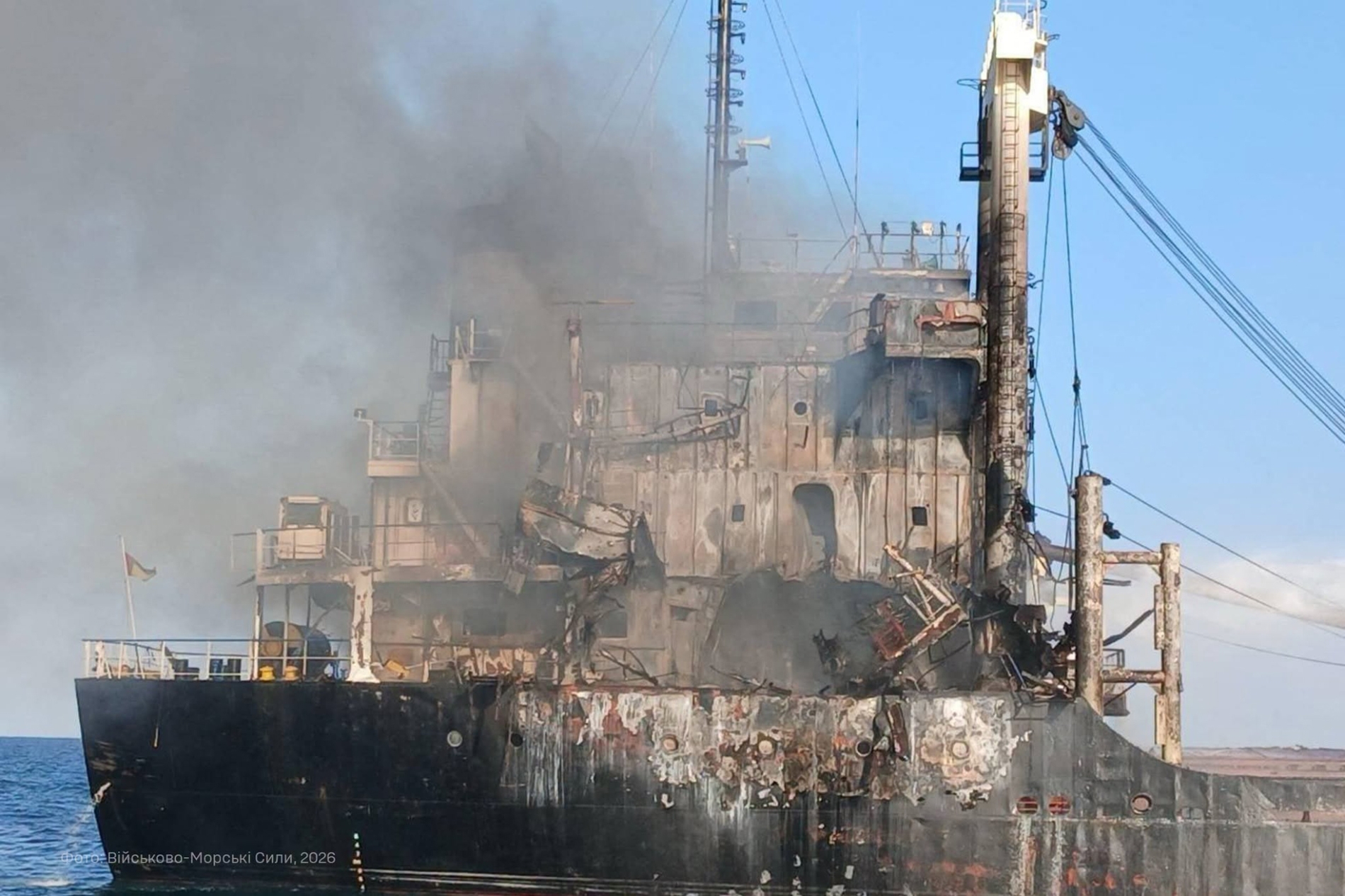
A charred grain carrier following a Russian strike in the Black Sea on 20 July 2026.
On 20 July, three Russian missiles struck a maize carrier off Odesa, killing 10 people. The danger was no longer confined to silos, quays and loading terminals. Seafarers and merchant ships had themselves become part of the battlefield.
This round of escalation is different because Russia’s sustained pressure on Ukrainian ports now coincides with a Ukrainian campaign of unprecedented intensity against Russian vessels and transport networks in the Sea of Azov. The battle over ports is no longer moving in one direction, from Russia towards Ukraine. Both sides of one of the world’s most important food-producing and exporting regions are now exposed.
From the Don to the world’s tables
The Azov-Don Shipping Canal links the River Don with the Sea of Azov, whose only outlet to the Black Sea is through the Kerch Strait. Small and medium-sized vessels carry grain from southern Russia through the region’s river ports and shallow-water harbours, either to nearby markets or to transfer points in the Black Sea, where it can be reloaded onto larger ocean-going ships.
Deep-water ports such as Novorossiysk and Taman can receive larger vessels, bringing down the cost per tonne. Yet none of these facilities operates in isolation. They belong to a network beginning in the fields, silos, and railway lines of Rostov and Krasnodar, running through the Don, Azov, and Kerch, and ending in the Mediterranean and markets across the Middle East, Africa, and Asia.
Russia and Ukraine together account for 29% of global wheat exports, 13% of maize exports, 63% of sunflower-oil exports and 60% of trade in sunflower meal.
US Department of Agriculture estimates
The ports of the Odesa region perform a similar role for Ukraine. Kyiv established its own maritime corridor in 2023, after Russia withdrew from the Black Sea Grain Initiative, allowing these ports to resume the main burden of the country's agricultural trade. More than 90% of Ukrainian grain and vegetable-oil exports now pass through them. Those exports are a crucial source of foreign currency for an economy worn down by war.
The figures show why this network matters well beyond the region. The US Department of Agriculture forecasts that Russia will export 47.5 million tonnes of wheat in the 2026-27 season and Ukraine 14.5 million tonnes, out of global trade of about 214.5 million tonnes. Together, they are expected to provide roughly 29% of the world's wheat exports.
Ukraine is also forecast to export 23 million tonnes of maize and Russia four million, giving them about 13% of global trade. The concentration is greater still in sunflower oil. Russia is expected to export five million tonnes and Ukraine 4.9 million, out of a global market of only 15.6 million tonnes. The two countries therefore account for more than 63% of sunflower-oil exports and about 60% of trade in sunflower meal, an important component of animal feed.
These figures do not cover every grain shipment crossing the Black Sea. Romania and Bulgaria are exporters too, and cargoes also arrive from other countries. Agricultural institutions do not publish a single agreed figure for the Black Sea's share of global grain trade. They instead tend to record exports by country or traffic through individual ports, and their definitions of the Black Sea region differ.
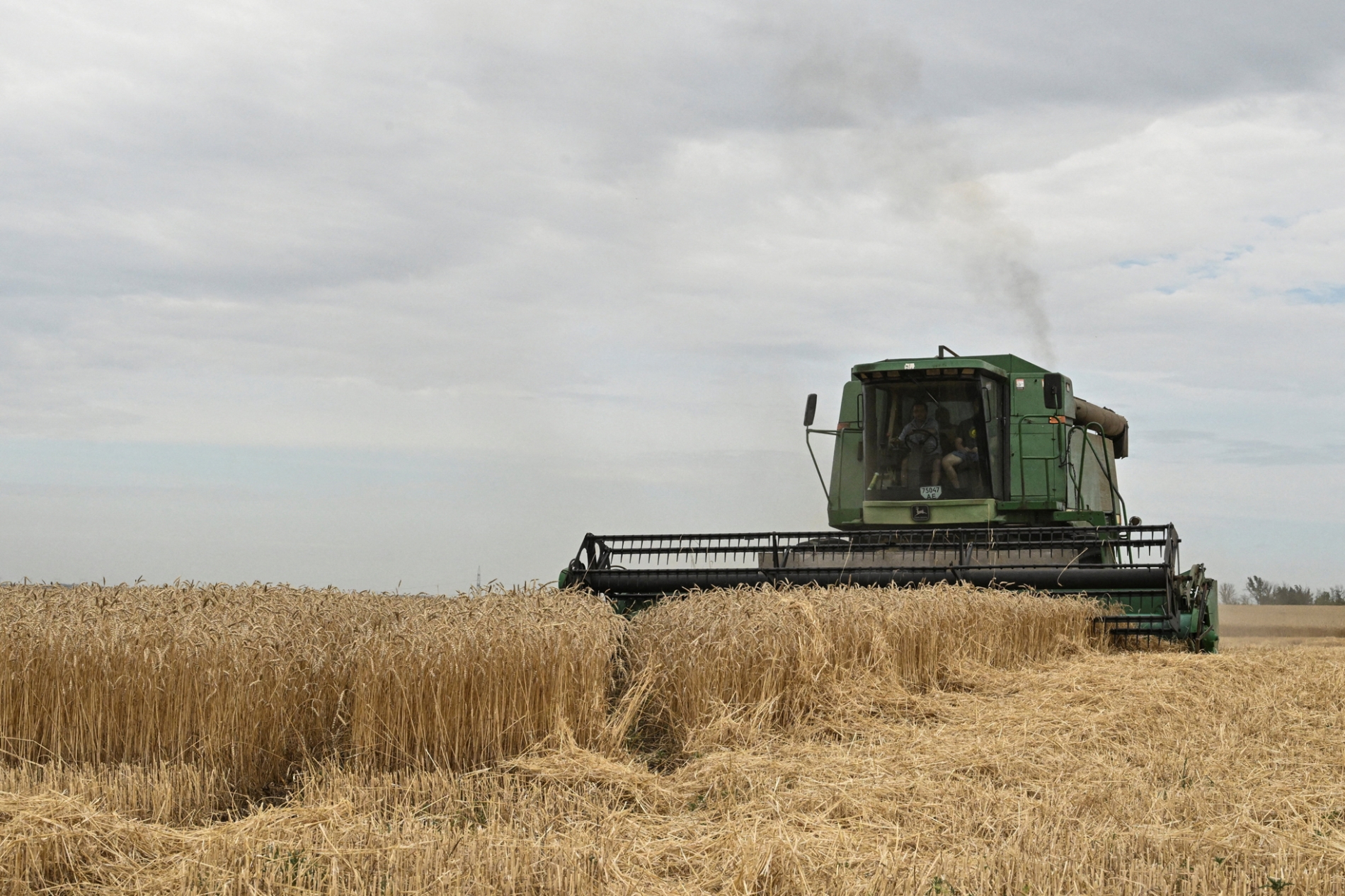
A farmer harvesting wheat fields in Zaporizhzhia, eastern Ukraine, on 23 July 2026.
The clearest measure is that Russia and Ukraine alone are expected to supply about 29% of global wheat exports, before counting other exporters around the Black Sea. This helps explain why markets react whenever a ship is disabled or a route is closed.
Market estimates indicate that as much as a quarter of Russia's grain exports use the Sea of Azov. One initial estimate suggested a similar share might apply to Russian wheat exports. However, no consistent official breakdown of volumes by commodity and route exists. The one-quarter figure is best treated as a measure of Azov's importance, rather than the basis for calculating an exact annual tonnage of wheat passing through it.
Disruption in Azov by itself may not cause a global food crisis. The risk grows when it coincides with Ukraine losing a third of its export capacity through Odesa, or if attacks spread to the Russian deep-water ports expected to receive vessels and cargoes diverted from Azov.
Moscow can absorb closures by redirecting cargoes to other ports, but Kyiv's alternatives through the Danube, Constanța and European land routes are more limited.
Prices rises ahead of grain shortages
Markets do not wait for grain to disappear from silos before reacting to disrupted navigation. The first effects are felt in insurance offices and freight contracts. Every strike on a merchant vessel raises war-risk premiums or encourages insurers to reduce cover for voyages to the region. Shipowners may decide that the payment on offer is not worth the danger, even when a port remains officially open. Fewer vessels willing to sail means higher freight rates and rising costs for crews, inspections and delays.
The pressure then reaches farmers. If grain cannot be moved to port, it accumulates inside the producing country, and domestic prices may fall, even as importers abroad pay more. Farmers in southern Russia are already facing this squeeze alongside a fuel crisis caused by Ukrainian attacks on refineries and energy-storage facilities. Diesel has become more expensive and harder to obtain during the harvest, while uncertainty over exports has reduced offers from grain buyers.
A prolonged disruption could lead farmers to store their crops rather than sell at low prices. Some may plant less in the following season. A temporary blockage at sea would then begin to shape future production. Nor would the impact stop at wheat. Higher wheat prices can push buyers towards maize, barley or rice. A shortage of sunflower oil increases demand for palm, soya and rapeseed oils. More expensive grain and sunflower meal push up animal-feed costs, which eventually filter through to meat, poultry and dairy prices.
Yet higher futures prices do not necessarily point to a repeat of the 2022 shock. Markets entered the summer in a reasonably comfortable position. In June, the UN Food and Agriculture Organisation (FAO) recorded a monthly decline of 4.4% in global wheat prices, reflecting rapid harvesting and expectations of strong Black Sea supplies. The US Department of Agriculture also raised its estimate of Russia's wheat harvest to 88.5 million tonnes.
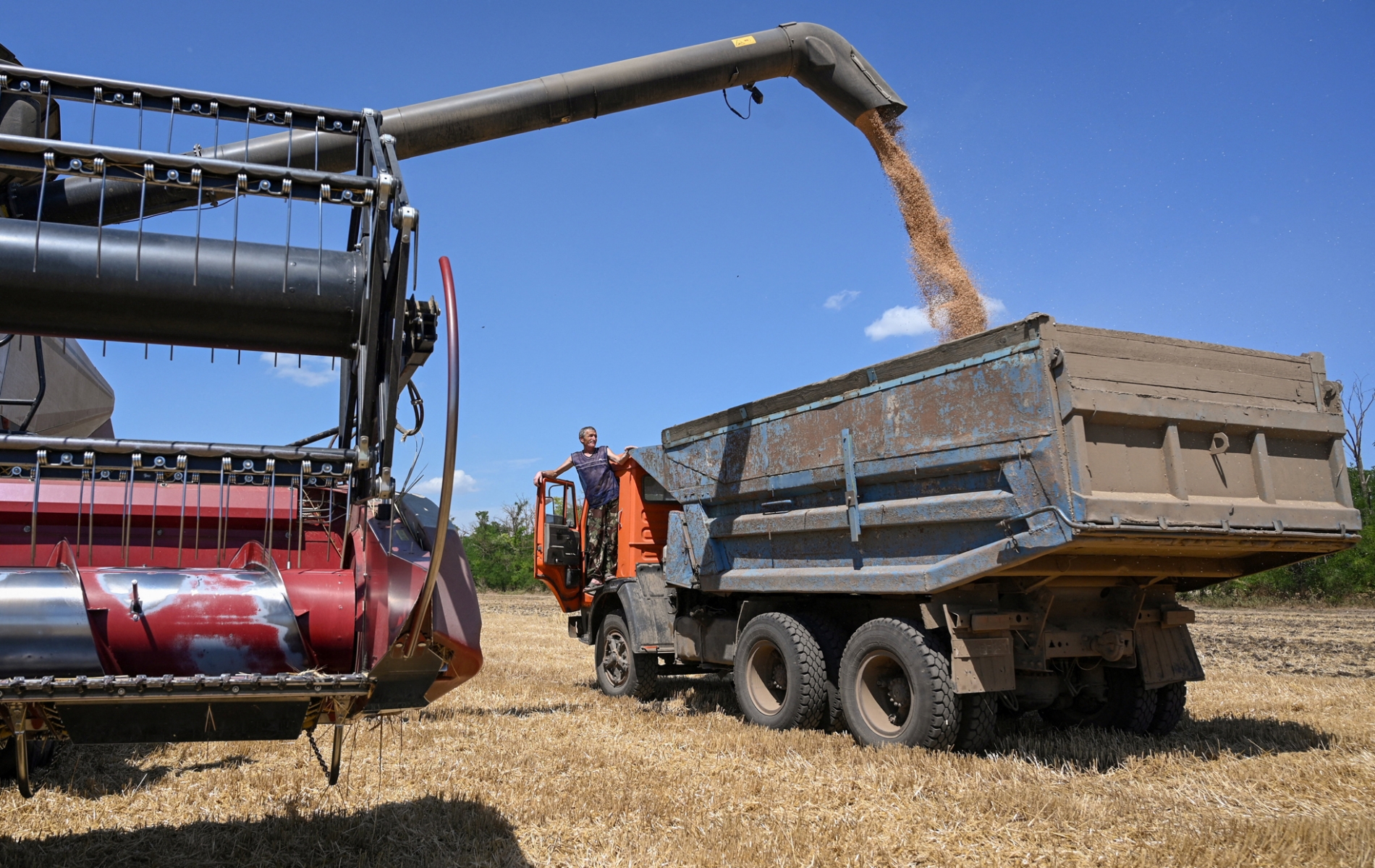
The wheat harvest season in Russia's Rostov region on 14 July 2026.
The grain is there. Whether it can leave the fields and silos and reach buyers at the right time and price is another matter. The gap between an abundant harvest and an unsafe route is where the "war premium" emerges —and importers begin paying it before any physical shortage appears.
Fertiliser: the delayed shock
Grain is only one part of Russia's importance to global agriculture. The country accounts for about one-fifth of international fertiliser trade and holds an even larger share of some markets, particularly nitrogen fertilisers and ammonium nitrate.
The Black Sea was historically an important outlet for Russian ammonia through the Togliatti-Odesa pipeline. The line carried as much as 2.5 million tonnes a year to the Ukrainian port of Pivdennyi before it stopped operating in February 2022 and was later damaged.
Russian fertiliser exports now move through several ports and routes. No available data show the Azov-Don Shipping Canal playing the same role in fertiliser trade as it does in grain. It would therefore be misleading to suggest that a quarter of Russia's fertiliser exports passes through Azov, or to explain Russia's global position through this route alone.
The larger risk would come if attacks reached fertiliser plants, railway lines or export terminals used by Russia on the Black Sea or the Baltic. The market is already strained. Fertiliser prices in the first five months of 2026 were about 35% higher than during the same period a year earlier, following disruption to energy supplies, shipping and production. Natural gas is essential to manufacturing many nitrogen fertilisers, so tensions in Hormuz increase production costs. Fighting in the Black Sea can, at the same time, disrupt shipments of fertiliser and of the grain grown with it. The full effects do not arrive overnight. If high prices prompt farmers to use less fertiliser, crop yields may fall in the next season. The consequences could outlast the disruption at sea by months.
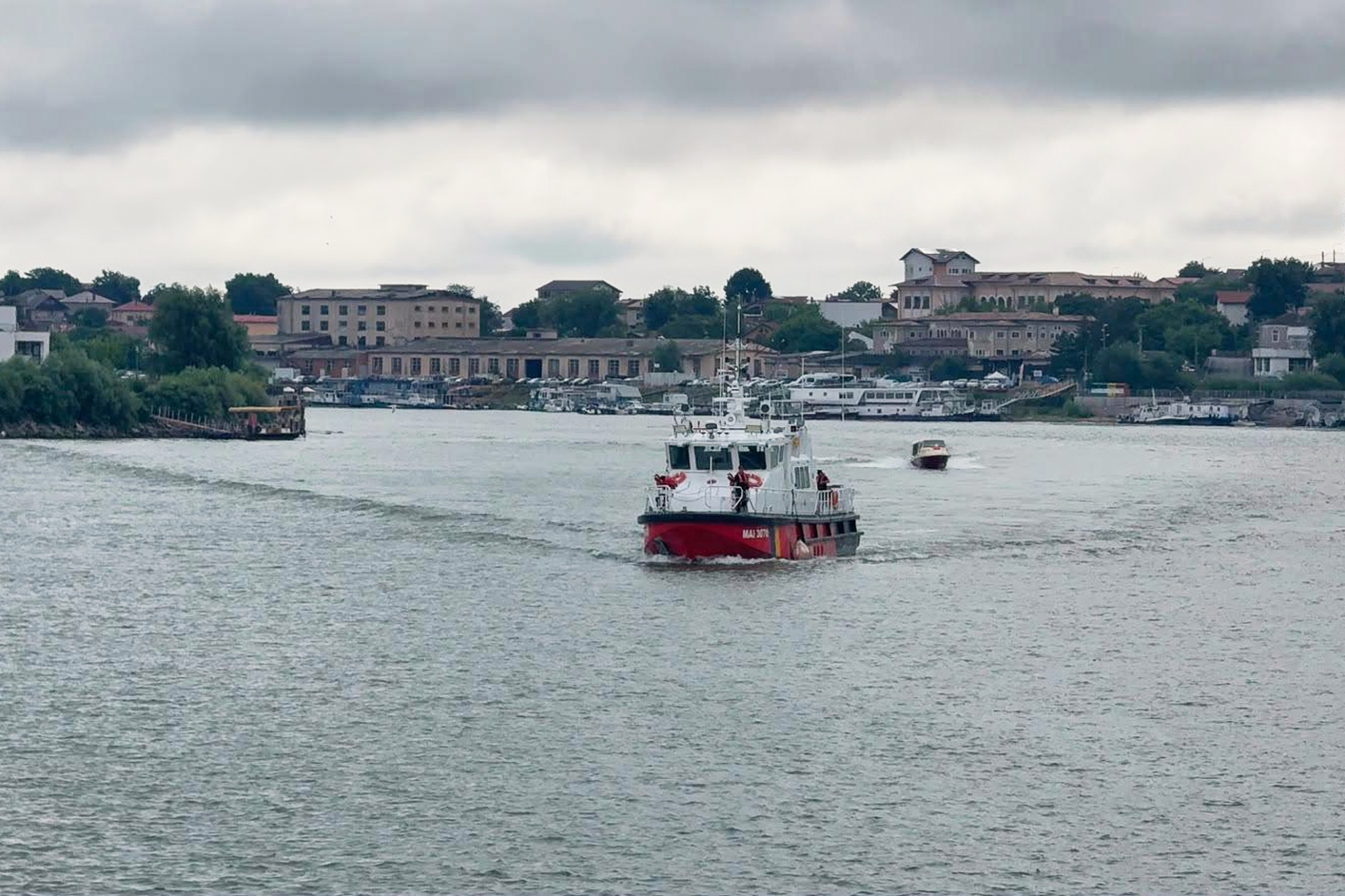
A rescue vessel carrying the crew of a Romanian ship damaged by shelling in the Black Sea, near Tulcea, Romania, on 21 July 2026.
Alternative routes, higher costs
Moscow says it has enough port capacity to redirect its exports. It can send grain to Novorossiysk and Taman on the Black Sea, or to ports on the Baltic and Caspian seas and in the Far East. In practice, rerouting a cargo involves far more than changing a port name in a contract. The alternative facility needs silo space, loading capacity and a berthing slot. The grain needs trains, transport routes and new commercial arrangements. Sending crops from Rostov and Krasnodar north to Baltic ports takes longer and costs more than moving them through Azov. Far Eastern ports are far from both the principal growing regions and buyers in the Mediterranean and Middle East.
Russia should be able to absorb a closure lasting several days or perhaps two weeks. The delayed harvest has given exporters a little time to redirect cargoes. Pressure will build as the new crop reaches the ports, however. Russian grain exports exceed five million tonnes a month during the peak season, and an extended disruption would create congestion and losses that could not be recovered quickly.
Egypt is among the countries most vulnerable to disruption: Russia and Ukraine supplied about 84.5% of its wheat imports between July 2025 and January 2026.
Ukraine has fewer options. It can use Danube ports such as Reni and Izmail and then Romania's port of Constanța, or move grain by rail and lorry through Poland, Romania, Slovakia and Hungary.
These routes helped prevent exports from stopping altogether after Russia's invasion in 2022, but they cost more and carry less than the Black Sea's deep-water ports. Ukrainian and European railways also use different track gauges, requiring cargoes to be unloaded or wagons changed at the border. Congested crossings add to the delays, as do disputes with European farmers concerned about competition from cheaper Ukrainian grain. The Danube and EU routes can cushion the blow, but they can't replace two million tonnes of lost monthly shipping capacity in the short term.
The comparison is appealing: Hormuz threatens energy security, while the Black Sea threatens food security. But it works better as a description of function than as a comparison of geography or scale.
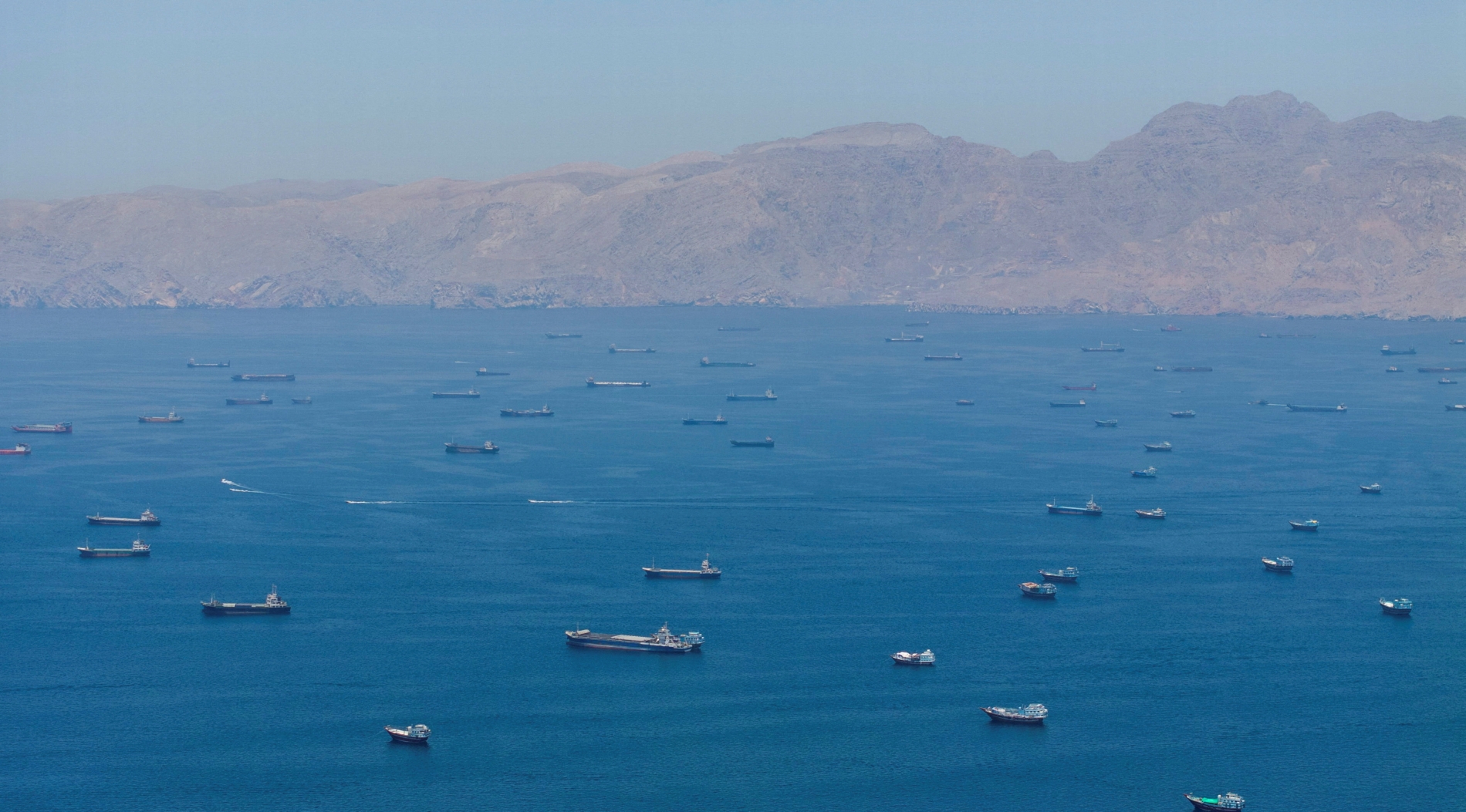
An aerial view showing ships anchored in the Strait of Hormuz, as seen from Musandam, Oman, on 25 May 2026.
The "Hormuz of Food"?
The Strait of Hormuz carries volumes equivalent to about one-fifth of global oil and petroleum-product consumption, more than a quarter of seaborne oil trade and roughly one-fifth of liquefied natural gas trade. It is a narrow, clearly defined passage, and available pipelines cannot fully compensate for its closure.
The Black Sea is different. It is not one chokepoint but a network of ports, rivers, straits, railways and roads. Some cargoes can be redirected, although more slowly, at greater cost and in smaller volumes. A disruption there would not immediately remove a share of food trade comparable to the energy flows that a closure of Hormuz could halt.
The political geography differs too. Hormuz is an international passage used by several energy exporters. In the Sea of Azov, Moscow now exercises de facto control over most of the coastline and both sides of the Kerch gateway to the Black Sea, following its occupation of parts of southern Ukraine and its declared annexation of them—a move not recognised internationally. Ukraine is attacking an export network controlled by its adversary. A closure of Hormuz, by contrast, would impede exports from several countries, not all of them necessarily direct participants in the conflict.
Food has its own particular sensitivity. Governments maintain both energy and grain reserves, but food-price increases reach poor households more directly because food absorbs a larger share of their income. They also strain public finances in countries where bread is subsidised. A food shock smaller than an oil shock in purely quantitative terms can therefore create social and political pressure more quickly in fragile economies.
Hormuz is a concentrated geographical chokepoint. The Black Sea is better understood as a dispersed market chokepoint. A closure of Hormuz delivers an immediate energy shock. Black Sea disruption begins with higher insurance and freight costs and changes in trade flows; if it lasts long enough or spreads to deep-water ports on both sides, it can develop into a physical shortage.
The two crises may also reinforce each other. Trouble in Hormuz raises the cost of fuel, gas, fertiliser and maritime transport. Trouble in the Black Sea pushes up grain, vegetable-oil and animal-feed prices. If both occur together, food becomes more expensive to produce and deliver.
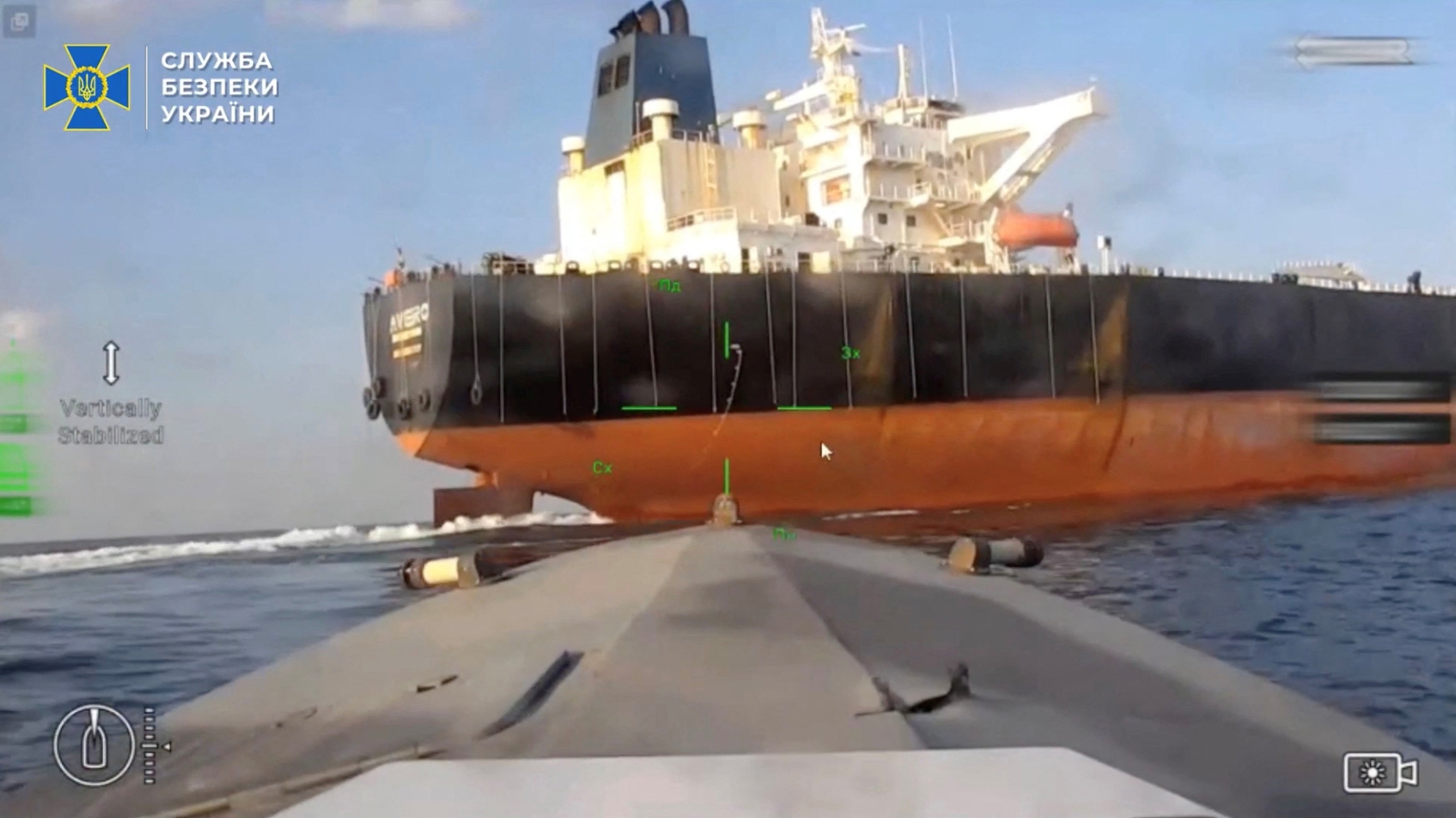
An image released by Ukrainian forces showing the targeting of Russian oil tankers in the Black Sea on 19 July 2026.
Shift to economic targets
Kyiv claims it does not attack civilian cargoes, only military targets and facilities that support Russia's war effort. But even if this were true, the scope of its operations has expanded. It first targeted vessels of the Black Sea Fleet and naval bases, then refineries and fuel-storage facilities. Ports, tankers and ships that Ukraine considers part of Russia's supply network have now joined that list.
This does not mean Kyiv has abandoned military targets in favour of economic ones. Its definition of military capacity has widened to include the economic and logistical infrastructure that finances the war and keeps it going. Oil, gas, grain and fertiliser are not ordinary exports for Russia. They bring in foreign currency and public revenue. Disrupting them imposes domestic costs through fuel shortages, higher prices and losses for farmers and exporters. Seen in this light, the Azov campaign extends Ukraine's strategy of striking the Russian energy sector into another field – and one to which foreign markets are especially sensitive: food.
Russia has also used maritime routes as leverage. Since the start of the war, it has blockaded Ukrainian ports, withdrawn from the Black Sea Grain Initiative, attacked silos and export terminals, and linked safe navigation to the facilitation of its agricultural and fertiliser exports and banking transactions.
Maritime trade has become an extension of the battlefield for both sides. As the category of "economic targets serving the war" expands, however, the line between military infrastructure and civilian commerce grows less distinct. Importers thousands of miles from the front are increasingly likely to bear part of the cost.
Vulnerable countries
Egypt is among the countries most exposed to a prolonged disruption. It imported about 8.8 million tonnes of wheat between July 2025 and January 2026, including 5.28 million tonnes from Russia and 2.16 million from Ukraine. The two countries provided about 84.5% of Egypt's wheat imports during that period. For Cairo, this is not simply a question of securing enough wheat. It is also about the cost of a subsidised bread programme supporting tens of millions of people. Higher world prices or freight rates place further pressure on the public finances.
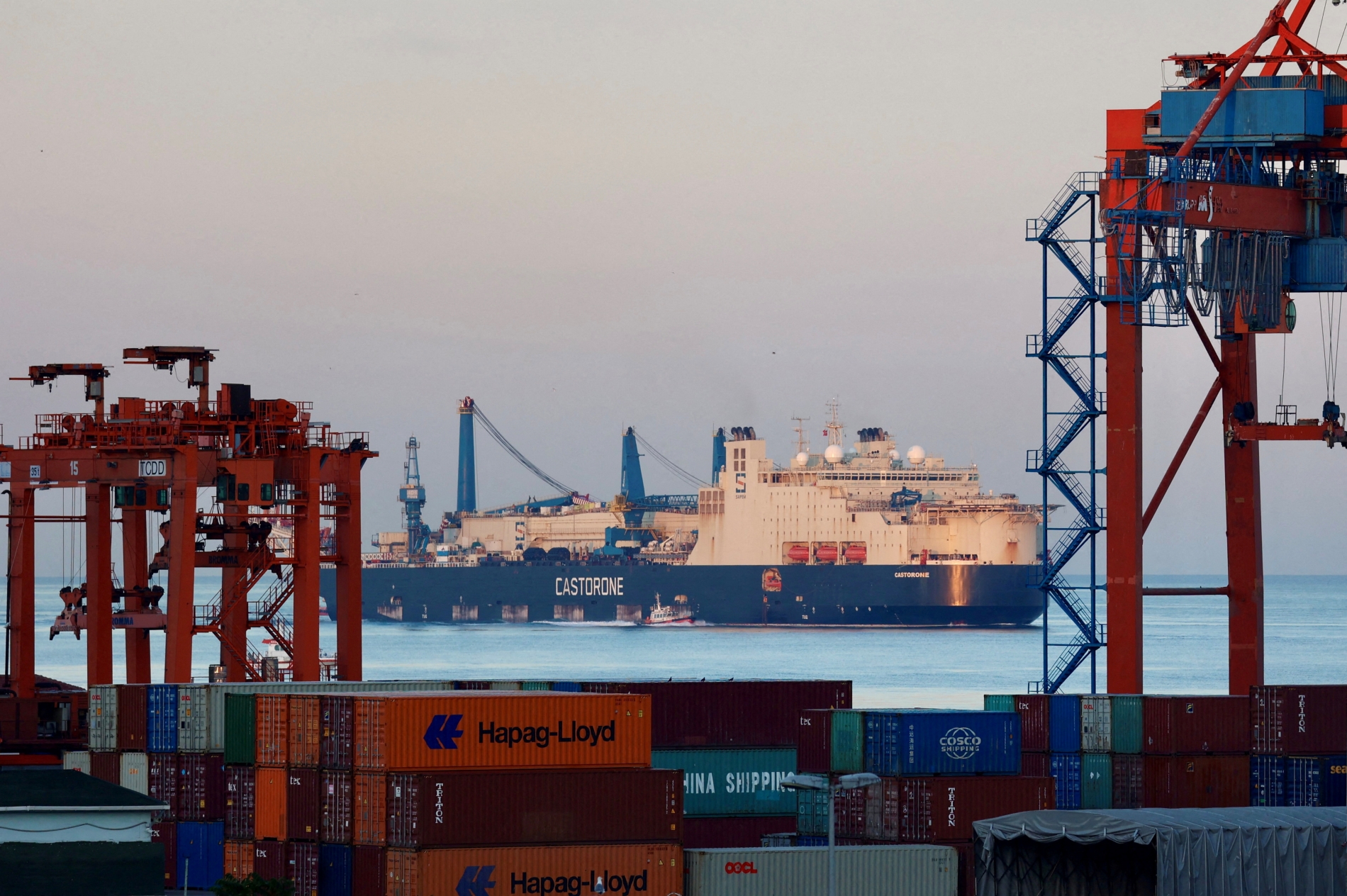
Saipem's pipelay vessel Castorone sails in the Bosphorus on its way to the Black Sea, in Istanbul, Türkiye, on 5 July 2022.
Türkiye also sits in the first circle of vulnerable countries. It buys large quantities of Russian wheat and is a major centre for producing flour and pasta for re-export.
Elsewhere in the Middle East and North Africa, the more sensitive countries include Lebanon, Yemen, Libya, Tunisia, Algeria, Morocco, Jordan and Syria. Some have diversified their suppliers since 2022, but Russian wheat still benefits from competitive prices and geographical proximity. The pressure is greater in countries short of foreign currency or committed to subsidising bread.
Many sub-Saharan African countries are not directly dependent on Russia and Ukraine, but they have less room to absorb higher prices. Sudan, South Sudan, Somalia, Ethiopia and the Sahel countries are already dealing with war, food emergencies or climate shocks. When grain and freight costs rise, relief agencies can buy less with the same budgets.
Exposure in Asia takes several forms. Wheat prices matter to Bangladesh, Pakistan and Indonesia; sunflower oil and animal-feed markets affect India, China and others. A country may replace sunflower oil with soya or palm oil, but the additional demand then raises the cost of those substitutes for everyone else.
Dependence on Russian or Ukrainian wheat is therefore only part of the picture. The most vulnerable countries combine reliance on imports with weak currencies, limited reserves, extensive bread subsidies, high poverty or internal conflict.
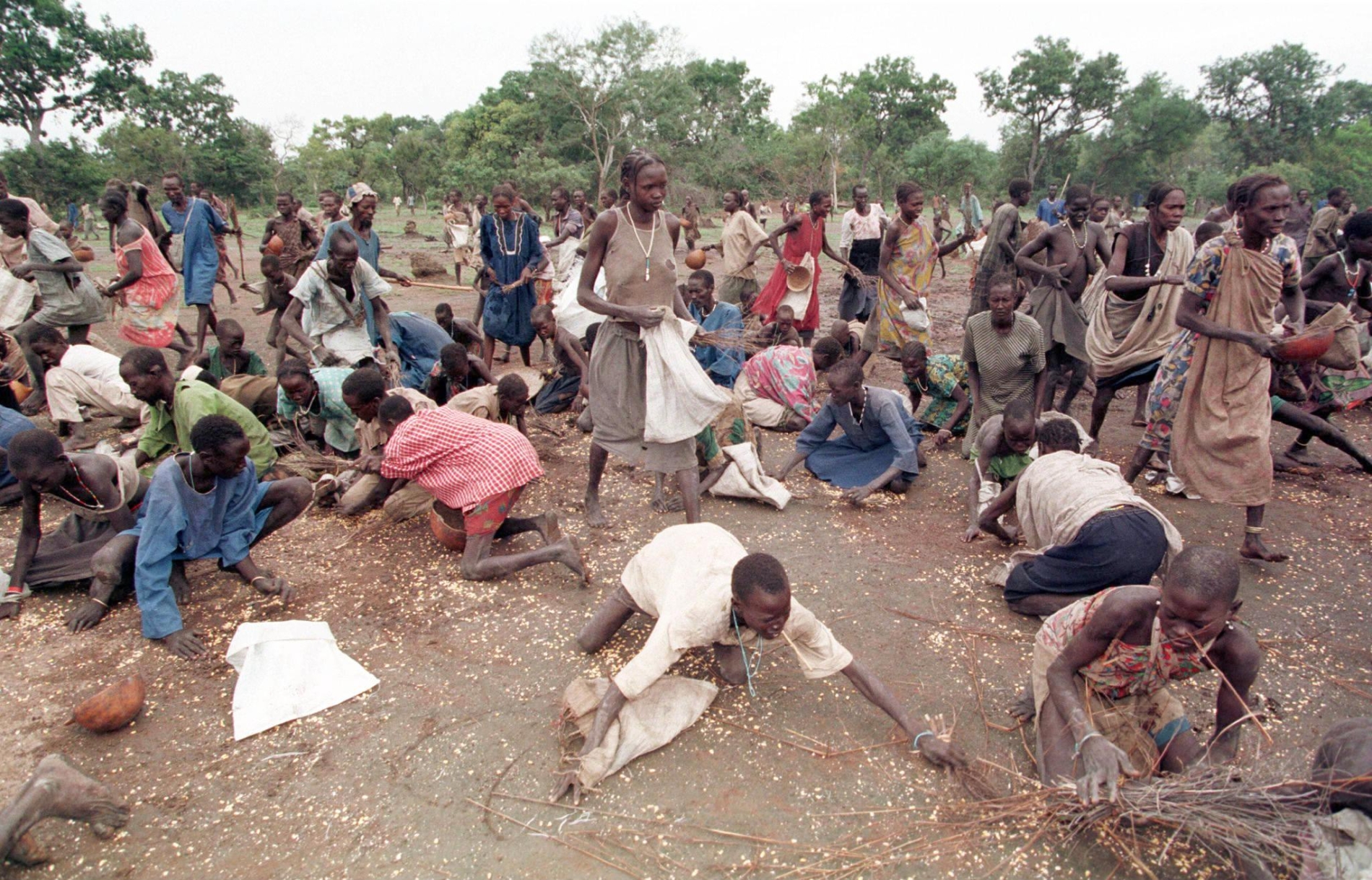
Famine-stricken Sudanese collect grains scattered from aid dropped by World Food Program planes in the Bahr el-Ghazal region in South Sudan.
From disruption to crisis
The best outcome would be a quick resumption of navigation in the Azov, with Russia redirecting some cargoes to its deep-water ports while Ukraine repairs damaged terminals. Plentiful global harvests could then help the war premium recede.
If restrictions last for weeks during the peak harvest season, grain will accumulate in southern Russia, and freight rates will rise. Millions of tonnes could be delayed or fail to leave during the season. Industry participants estimate that the combined effects of the Azov disruption and Russia's fuel crisis could reduce Russian wheat exports by between five and 10 million tonnes. This is a projection of what might happen, not a loss already recorded.
The most dangerous scenario would see Ukrainian attacks spread to Novorossiysk or Taman, and to their connected silos and railway infrastructure. These are the ports meant to compensate for the closure of Azov. Disabling them would turn a problem of delayed and redirected cargoes into an actual loss of export supply.
Continued Russian strikes, meanwhile, could disable more of the Odesa port system or drive away shipowners and insurers. If deep-water ports on both sides were disrupted, prices could rise sharply. Other countries might then impose export restrictions to protect their own markets, as they have during previous food crises.
Markets do not wait for grain to disappear from silos before reacting to disrupted navigation. The first effects are felt in insurance offices and freight contracts.
Russia and Ukraine both rely on agricultural export earnings, however. That shared dependence might still encourage a limited maritime arrangement, perhaps brokered by Türkiye, the United Nations, or the United States, to keep merchant ships and ports outside the conflict. It would not require a peace agreement—only an acknowledgement that disrupting an adversary's exports may endanger the attacker's trade as well.
The Sea of Azov has not yet become another Strait of Hormuz. On its own, it is less important, and Russia has more alternatives than Arabian Gulf exporters would have if Hormuz were closed. But the danger does not end with Azov. It lies in the whole Black Sea becoming an open arena for attacks on ships, ports and sources of revenue.
The issue would then cease to be another episode in the Russian-Ukrainian war. It would become a crisis linking food security with energy security. The strike may land in the Black Sea, but its repercussions will reach loaves of bread in Cairo, Beirut and Khartoum—along with government budgets and household tables thousands of miles away.