Afghanistan: Iran's strategic depth card in Central Asia

Once nurtured by Pakistan, the Taliban now works closely with Iran, much to the delight of Russia and China

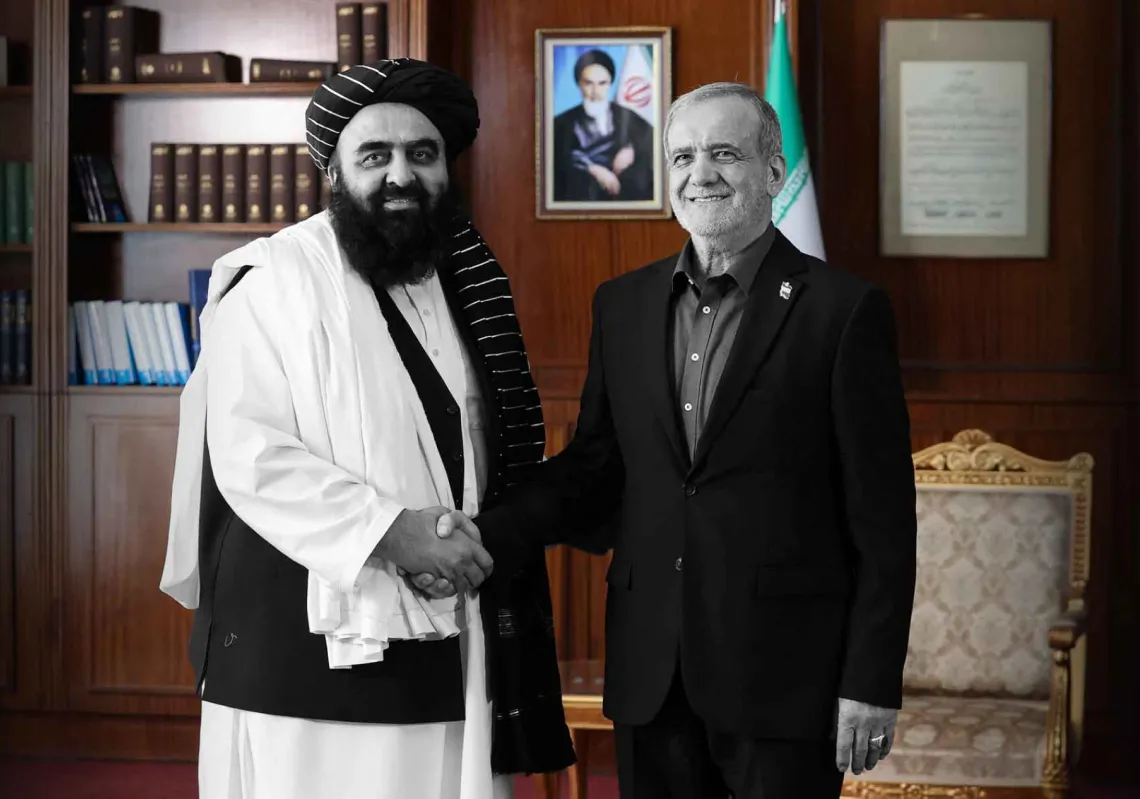
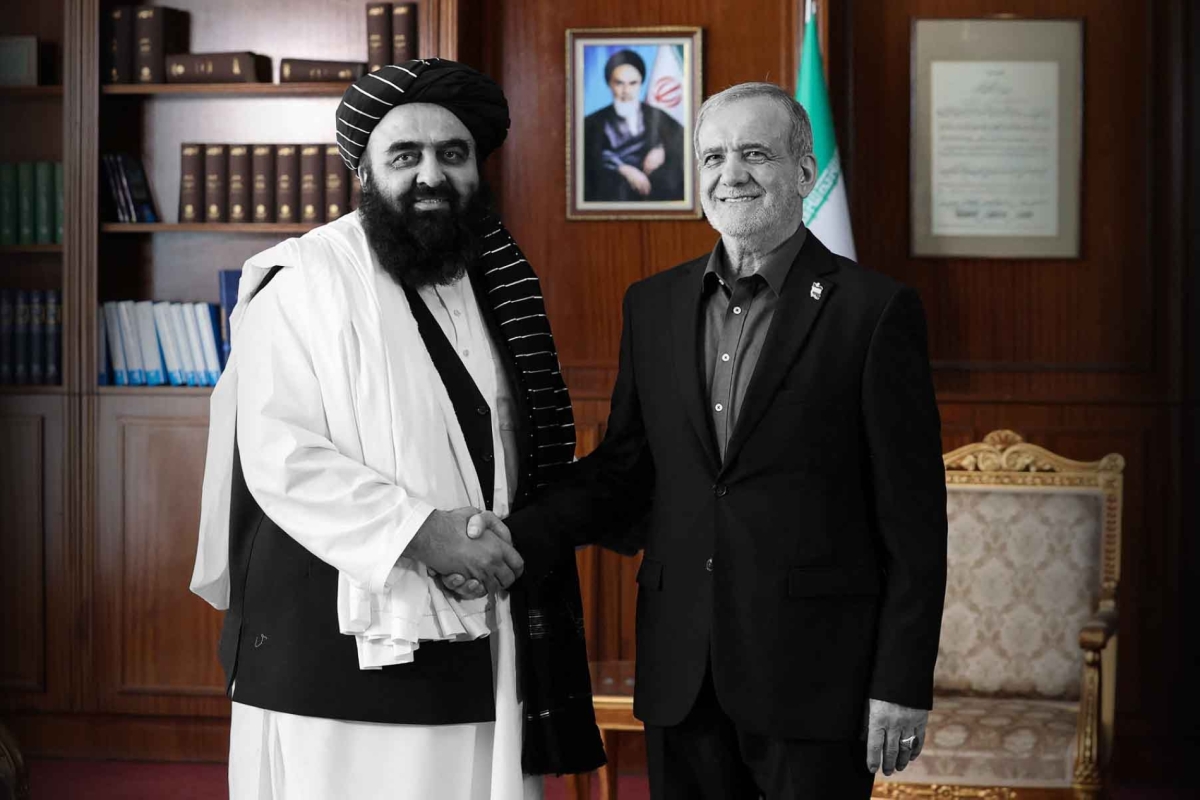
President Masoud Pezeshkian (R) greeting Afghanistan's Foreign Minister Amir Khan Muttaqi (R), in Tehran on 18 May 2025.
Iranian Presidency / AFP
President Masoud Pezeshkian (R) greeting Afghanistan's Foreign Minister Amir Khan Muttaqi (R), in Tehran on 18 May 2025.

Afghanistan: Iran's strategic depth card in Central Asia

In 1998, Iran was hours away from invading Afghanistan after the Taliban killed 11 senior Iranian diplomats in the northern city of Mazar-i-Sharif. Iranian General Qasem Soleimani, who led the elite Quds Force for decades, had waged a proxy war against the Pakistani-backed Taliban for much of the 1990s, so he knew it well.

Years later, American diplomats confirmed that Soleimani had helped them oust the Taliban by providing key intelligence and tactical support; such was the animosity. But that was then. Today, it is highly unlikely that the US and Iran would work together in this way.

Three decades on, Iran is increasingly cooperating with the Taliban, which has turned on its former backer, Pakistan. For their part, Russia and China also have an interest in Iran working in concert with Afghanistan, as this forms an anti-American nexus spanning central and southern Asia. Tehran’s relationship with Kabul may be a marriage of convenience, but it has given the Iranians strategic depth. To understand how Iran and the Taliban became partners, one must explore Iran’s long-standing links to al-Qaeda.

Around 2010, top American generals began accusing Iran of supporting the Taliban insurgency against the NATO forces in Afghanistan. Although the Taliban was nurtured, sheltered, and armed by Pakistan’s intelligence service (ISI), Islamabad began to lose control over the group it had supported. Iran and Soleimani were beginning to outsmart both the ISI and the CIA.

Although Soleimani and the IRGC had helped the Americans topple the Taliban, Tehran and Washington were at odds over how Afghanistan should be governed. The disagreement related to Iraq (where Soleimani had also helped the Americans get rid of Saddam Hussein). They also differed on how Iraq should be run, and by whom.
Russia and China have an interest in Iran working in concert with Afghanistan, as this forms an anti-American nexus across Central Asia

Afghanistan was more complicated than Iraq, where the Sunni-Shiite divide dominated considerations. In Afghanistan, the Persian-speaking Tajiks (who came to power after 9/11) were Sunnis. Whilst they had cultural links with the Iranians, they were not Shiite. At the same time, many Afghani Shiites (such as the Hazaras) were being recruited by the Americans to fight on their behalf.

As Mullah Zaeef outlines in his book My Life with the Taliban, the organisation lost trust in the Pakistanis as Taliban leaders like Zaeef were arrested by Pakistan's military and handed over to the Americans in Guantanamo Bay. The Taliban needed a new patron, one who wouldn't hand them over to a military benefactor. Iran and Russia spotted an opportunity. Working closely with the US, Pakistan had used the Taliban to purge Afghanistan of Iranian influence in the 1990s; now Soleimani could get his revenge.

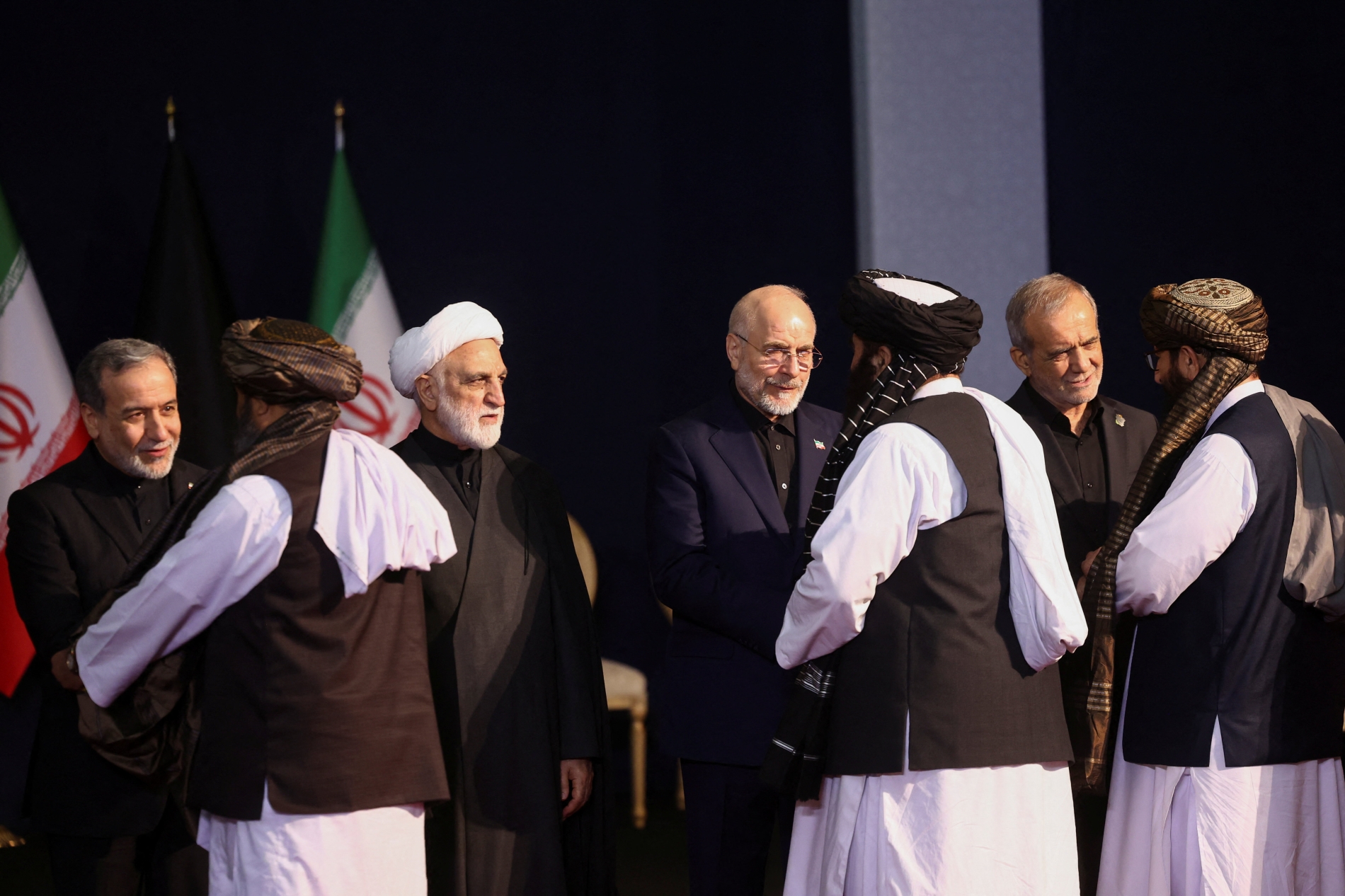
Majid Asgaripour/REUTERS
Iranian leaders greet Afghanistan's Taliban Foreign Minister Amir Khan Muttaqi on 3 July, 2026 during the funeral of Iran's late Supreme Leader Ayatollah Ali Khamenei, assassinated by the US and Israel on 28 February, 2026.

Shifting alliances

The Taliban grew more tolerant towards Afghanistan's Shiites while Iran began supporting al-Qaeda, who were on the run in the mountains between Afghanistan and Pakistan. Lt. Gen. Michael Flynn, then head of US military intelligence in Iraq and Afghanistan, showed how Iran was supporting al-Qaeda, bringing some of its fighters from Afghanistan into Iraq.

Adrian Levy's The Exile: The Flight of Osama bin Laden outlines how the IRGC housed al-Qaeda leaders and bin Laden's family in Iran. Some of the group's leaders still live there to this day. As the US withdrew from Afghanistan in 2021, the Taliban's new benefactors looked set to be the Iranians, with the implicit approval of Russia and China. Finally, 20 years after Pakistan's military handed the Taliban's leaders over to the Americans, the Taliban was getting its revenge.

For their part, the Russians and Chinese are increasingly investing in Afghanistan. Beijing wants a stable Afghanistan to counter instability in Pakistan, which has affected Chinese investments in Baluchistan. China has funded road and rail projects to take goods from the Chinese-Afghan border to Kabul, and to the Iranian port of Bandar Abbas on the Arabian Gulf, near the Strait of Hormuz. Russia is also using Afghanistan as a land route to Iran.

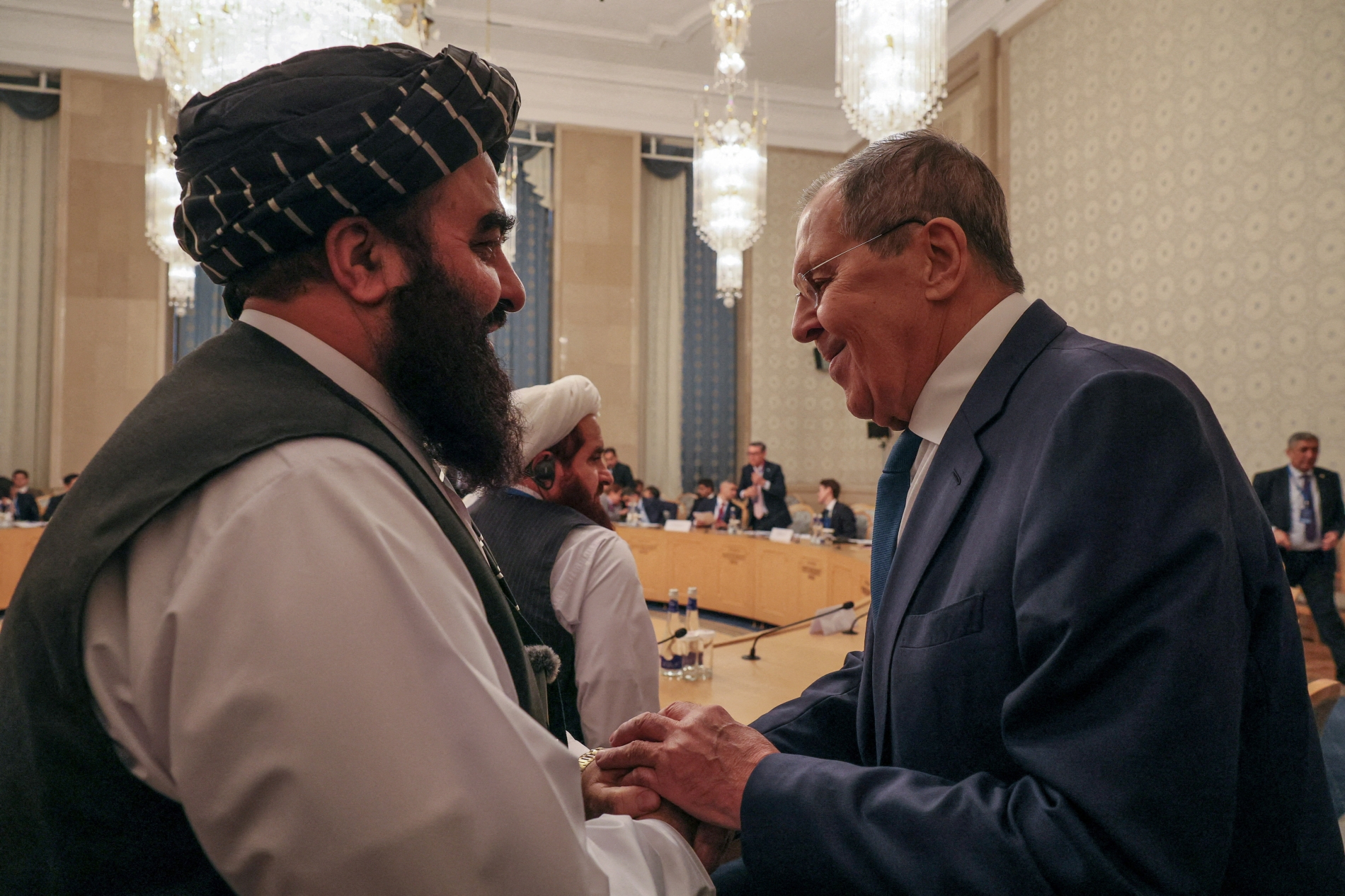
REUTERS/Anastasia Barashkova
Russian Foreign Minister Sergei Lavrov welcomes Afghan Foreign Minister Amir Khan Muttaqi during a meeting of the Moscow Format Consultations on Afghanistan in Moscow, Russia, on 5 October 2026.

Although Iran lost control of Syria in December 2024, at the same time Afghanistan has become a partner that it did not have before. The Central Asian connections are spreading. Russia has moved some of Iran's major drone factories to Tajikistan (which also houses almost 6,000 Russian troops). Geographically, Afghanistan links Iran to Central Asia.

If the US-Israeli war against Iran resumes, the Iran-Afghanistan relationship could become an important security reliance. The irony is that the Taliban are Pashtuns, not Persian speakers. The Persian speakers in Afghanistan are the Tajiks, Uzbeks, and Hazaras (who fought for the Americans, so have been abandoned by Iran). In this patchwork quilt of a region, war is never straightforward.

font change