China challenges the West for the ‘keys to knowledge’https://en.majalla.com/node/333777/science-technology/china-challenges-west-%E2%80%98keys-knowledge%E2%80%99
Since the first scientific journals appeared in Europe in 1665, academic publishing has evolved from a means of exchanging discoveries into a system that helps determine which research gains international recognition. Over time, influential journals and publishing institutions, particularly in the West, have acquired considerable power in shaping scientific reputations. China is now seeking to challenge that dominance.
With the launch of Vita, a journal specialising in life sciences and biomedicine, Beijing is entering a new phase of global scientific competition. It wants to build an integrated system for disseminating and evaluating knowledge, with a greater say in which research receives international recognition.
First printed in July, the journal is part of a broader effort to build an academic publishing industry that can attract important research from around the world and reduce the country’s reliance on international publishers. Beijing is backing this effort with government funding, domestically owned journals, and free open access publishing.
Vita is part of a wider Chinese publishing system that includes Langtaosha, a preprint platform where researchers can share findings before formal peer review.
China’s vast scientific research base puts it in a position to reshape parts of the international publishing system. It ranked first globally for research contributions in the Nature Index between May 2025 and April this year. The index allocates credits among the institutions and countries involved in papers published in the journals it covers.
China ranked first in chemistry, physics, biological sciences, and applied sciences, and second in health sciences. Yet research output does not necessarily translate into influence over scientific publishing. The index measures research output in a selected group of journals, not ownership of those journals or control over how research is published and evaluated.
Scientists in protective suits conduct laboratory research to develop a vaccine against the novel coronavirus.
Addressing the imbalance
This is the imbalance Beijing is trying to address. Chinese scientists have become some of the world’s leading contributors to published research, yet many papers containing significant findings are published through institutions based outside China. They are subject to editorial standards, ranking systems, and citation mechanisms administered by international organisations.
That does not mean these institutions have absolute authority over the value of scientific knowledge, or that geography or politics necessarily influence their judgements. Nevertheless, the reputation of the journal in which a paper appears can affect how widely it is seen and read, as well as how universities and funding bodies assess the achievements of its authors.
China therefore wants to move beyond its position as a leading producer of research and gain greater influence over the institutions that shape how research is published, disseminated, and evaluated.
China wants to move beyond its position as a leading producer of research and gain greater influence over the institutions that shape how research is published
Vita is Chinese-owned and managed and published by Higher Education Press, which is affiliated with China's Ministry of Education, with support from Westlake University in Hangzhou and institutions in the Alliance of Open Life Science. Its joint editors, Dangsheng Li and Yigong Shi, have extensive experience in scientific research and academic publishing, including work at international research institutions and universities.
The journal's advisory boards also include scientists based at institutions outside China, helping to establish its credentials as an international publication rather than a platform devoted exclusively to Chinese research.
Vita's success will therefore depend less on how many papers it receives from Chinese universities than on whether it can persuade scientists in the US, Europe, Japan, and elsewhere to submit their most important work, despite the availability of older journals with established international reputations.
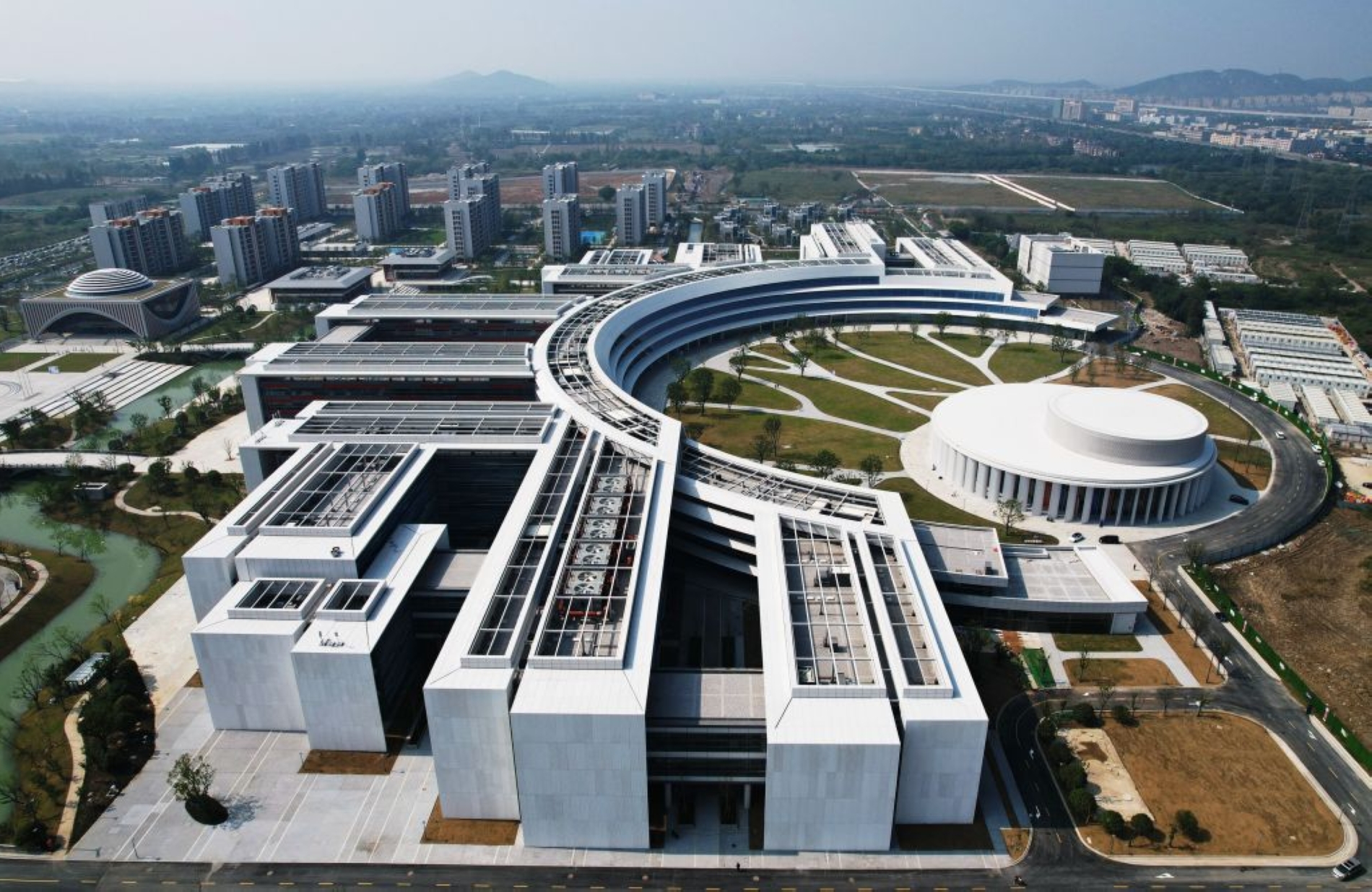
An aerial view of the main building at Westlake University's new campus, China's first university of its kind dedicated to research.
An economic weapon
One of Vita's main competitive advantages is its publishing model, which differs from that of many leading international journals. It offers open access to published research without charging authors to publish. Known as diamond open access, the model allows readers to access research without a subscription, while authors pay no article processing charges.
According to Nature, researchers and institutions in China paid approximately $909mn in open access publication fees to international publishers in 2024. The figure highlights the cost of publishing research through international outlets. Nature also reported that the Chinese Academy of Sciences stopped funding publication fees at 30 of the most expensive open access journals in March, reflecting growing concern in China over the cost of academic publishing.
For researchers, the chance to publish in a journal that maintains rigorous peer review without charging fees could be a strong incentive, particularly for scientists at institutions with limited resources or in countries where funding for international publication is scarce. But free publication does not mean cost-free publishing. Journals need specialist editors, peer-review systems, manuscript editing, digital platforms, research archives, technical infrastructure, and arrangements to ensure continued access to published material.
Under Vita's model, funding institutions rather than authors or readers cover these costs. This raises an important question about its long-term financial sustainability: can Chinese institutions continue to cover the cost of publishing research by scientists from other countries if the journal becomes a major international outlet attracting large numbers of submissions?
China's science initiative aims to develop domestic journals, strengthen digital infrastructure, and train specialists in scientific publishing and peer review
Broader initiative
The journal is part of a broader initiative. The Vita series consists of a flagship journal and five sister publications. By August 2026, the flagship journal had received more than 400 research submissions and published 60 scientific papers. The Alliance of Open Life Science, one of the institutions supporting the initiative, also expanded from 15 institutions in 2025 to 39 in August this year.
Participating institutions have pledged to treat the new journals as equivalent to prestigious international publications when evaluating researchers, in the hope of encouraging more submissions. International recognition, however, still depends on research quality, editorial independence and the confidence of the scientific community. Institutional decisions alone cannot confer that standing.
Vita forms part of China's Excellence Action Plan for Scientific and Technological Journals, launched in 2019 with the involvement of government ministries and major scientific institutions. The initiative aims to develop domestic journals, strengthen digital infrastructure, and train specialists in scientific publishing and peer review.
The first phase, from 2019 to 2023, supported approximately 439 journals. During that period, the number of English-language scientific journals published in China rose from 341 to 477. The second phase, which runs until 2028, focuses on developing integrated publishing groups and digital platforms, with the aim of competing internationally by 2035. Some journals receive up to 1.5 million yuan in government funding for five years. The programme also supports 13 publishing group projects with a combined annual allocation of 45 million yuan.
Professor Shi Yigong, who gave up a high-level research position in the US to become the dean of life sciences at the prestigious Tsinghua University in Beijing in 2008, stands in the lobby of a campus building in Beijing.
Dominance of the publishing industry
In October, the Financial Times estimated the industry's annual value at approximately $22bn, at a time when publishers face growing challenges from rising research output and the spread of poor quality content produced with the assistance of AI.
Companies such as Elsevier, Springer Nature, Wiley, and Taylor & Francis dominate large parts of academic publishing through their control of journals, manuscript submission platforms, data analytics, and research services.
Web of Science, operated by Clarivate, and Scopus, owned by Elsevier, play major roles in assessing scientific impact through metrics such as the Journal Impact Factor and CiteScore. This year, Clarivate's reports covered approximately 22,643 journals across 254 scientific categories.
These indicators do not necessarily reflect the quality of individual papers, however, and citation rates vary between disciplines. Despite their limitations, they continue to influence recruitment, promotion, and research funding decisions.
China's ambitions therefore extend to developing reliable databases and indexing services. Many Chinese journals still depend on inclusion in Web of Science to gain international visibility and recognition.
Beijing is also seeking to place greater emphasis on research quality rather than relying excessively on publication counts and journal rankings. The aim is to address some of the shortcomings of conventional academic evaluation. Yet this approach requires independent experts and transparent procedures to guard against bias and conflicts of interest. It could also result in Chinese evaluation standards that differ from those used in Western systems.
The transition to a new system of research evaluation remains uncertain. In 2026, the National Science Library of the Chinese Academy of Sciences discontinued its journal ranking system after more than two decades of use, without announcing what would replace it.
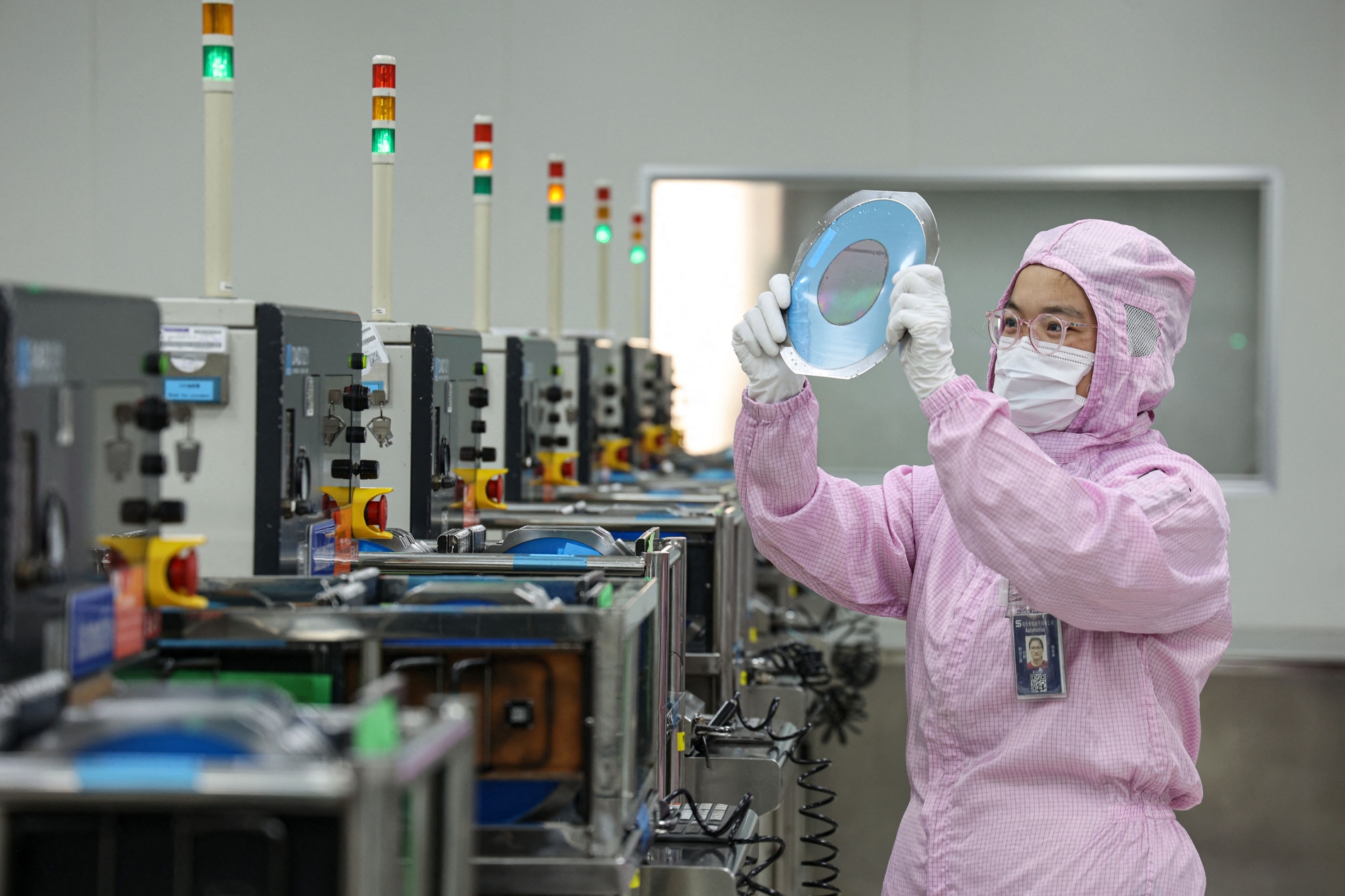
This photo taken on December 25, 2024 shows an employee producing semiconductor chips for export at a factory in Binzhou, in eastern China's Shandong province.
Greater competition
China has considerable advantages in its effort to challenge the established publishing order: a vast research output, government backing, strong universities, and a publishing model that offers free access to readers without charging authors publication fees.
The initiative comes amid the global growth of open-access publishing. According to the International Association of Scientific, Technical and Medical Publishers, open access accounted for 44% of approximately 4.2 million research publications released in 2025.
China nevertheless faces substantial obstacles, including the established reputations of Western journals, concerns about editorial independence, and questions surrounding the free exchange of scientific data. Beijing is also considering reducing the publication of research abroad in certain sensitive fields to protect scientific information. This creates a difficult balance between reducing dependence on foreign institutions and maintaining international openness.
The rise of Chinese journals could increase competition, lower publishing costs, and improve services. But it could also lead to parallel systems of journals, databases, and rankings, making it harder to compare the performance of scientific institutions.
For Vita, success will depend on attracting influential research from different countries and securing international recognition and citations. Its early results do not yet provide a basis for comparison with established journals such as Nature, Science, and Cell, whose reputations have been built over decades.
The success of that effort, however, will depend not on funding or the number of new journals established, but on the quality of research, independent editorial decisions, transparency, and international openness.