Xi Jinping: the man remaking China in his own image

The Communist Party’s general secretary since 2012 may have grown up in a secure compound for the elite, but he forged his values in the fields of rural Shaanxi province

Bill Mcconkey

Xi Jinping: the man remaking China in his own image

Xi Jinping sat quietly, looking both severe and indifferent as he turned his gaze away from his predecessor, Hu Jintao, who was arguing with security guards before being escorted out of the Great Hall of the People at the opening of the Communist Party’s 20th Congress in October 2022. A heavy silence hung over a hall dominated by vast red flags, only shattered by the clicking of journalists’ cameras.

Every element of the scene had been prepared with precision, dense with symbolism. The congress, which would confirm Xi as the first leader since Mao Zedong to serve a third term as general secretary of the party, was intended to draw the formal curtain on the era of collective leadership and executive general-secretaries. Yet the congress itself was less a decisive turning point than a symbolic event.

Xi had already governed for two presidential terms, during which he concentrated power in his own hands. His thoughts on socialism with Chinese characteristics had been written into the party constitution, and the constitutional barrier to lifelong rule had been removed. When he was unexpectedly named in 2007 as the likely successor to Hu Jintao, Xi was not an obviously charismatic figure.

His record rested on accumulated administrative experience and a reputation as a relatively ‘clean’ man capable of confronting corruption, as well as an economic pragmatist able to deliver results within the rules of the system. Within party circles at the time, he was seen as a consensus figure acceptable to all. Yet a reading of his life suggests that he was gradually being prepared for high office, as part of a broader response to the challenges facing both party and state.
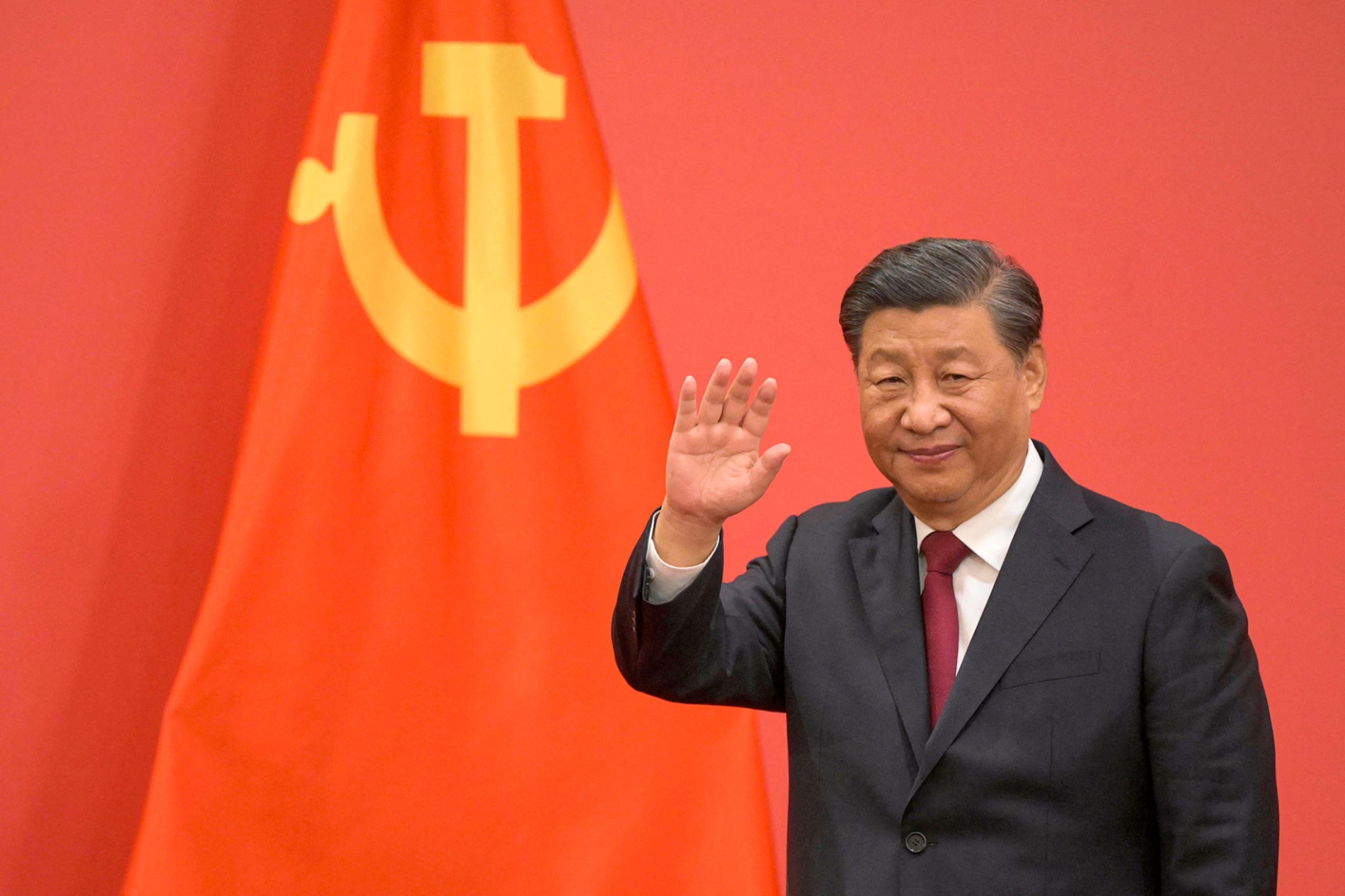
AFP
Chinese President Xi Jinping waves his hand during the introduction of the new members of the Standing Committee of the Politburo of the Communist Party of China, the highest state decision-making body, on 23 October 2022.

The Red Prince

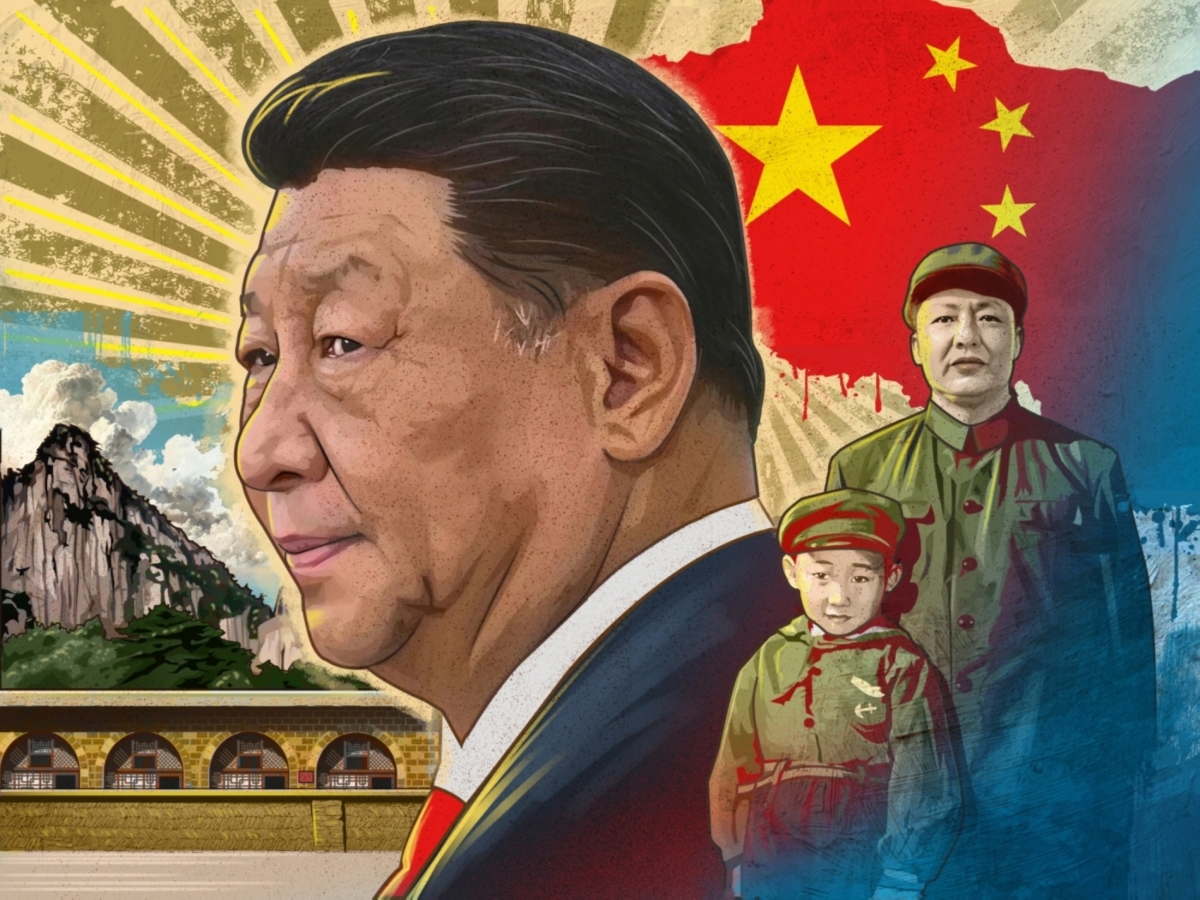
Few outside China know that Xi is the first general secretary to belong to the class of ‘red princes’—the children of the first revolutionary generation that founded the People’s Republic of China. His father, Xi Zhongxun, held senior posts, including vice-premier of the State Council, first general secretary of the State Council, and head of the Central Propaganda Department. He also undertook sensitive missions in relations with the Soviet Union before and after the great split, as well as with North Korea.

Xi was born in 1953 and spent part of his childhood inside Zhongnanhai, the closed compound adjacent to the Forbidden City where the top leaders live. There, he was educated in schools reserved for the children of senior officials, in what resembled a sealed space for the creation of an elite. Then came the rupture.

In the atmosphere that followed the failure of the ‘Great Leap Forward,’ and as the turbulence that would later lead to the Cultural Revolution gathered force, his father fell into political disgrace after accusations linked to his approval of a literary work deemed sensitive towards Mao. With the onset of the Cultural Revolution, the family fell apart. According to some accounts, his half-sister committed suicide under the weight of pressure, while his mother, Qi Xin, a communist activist, was publicly humiliated.

Xi himself, at the age of 15, became one of 18 million young Chinese sent to the countryside to “go up to the mountains and down to the villages”. In the village of Liangjiahe, in Shaanxi province, amidst yaodong cave dwellings carved into the mountains, he experienced gruelling agricultural labour, merciless mosquitoes, scarce food, and a complete severance from any formal educational path. He formed an emotional bond with peasants and the lower classes, and came to know China from its roots, a knowledge acquired through hardship. It was the start of an “obsession” with political stability that would later become one of the defining features of his rule.
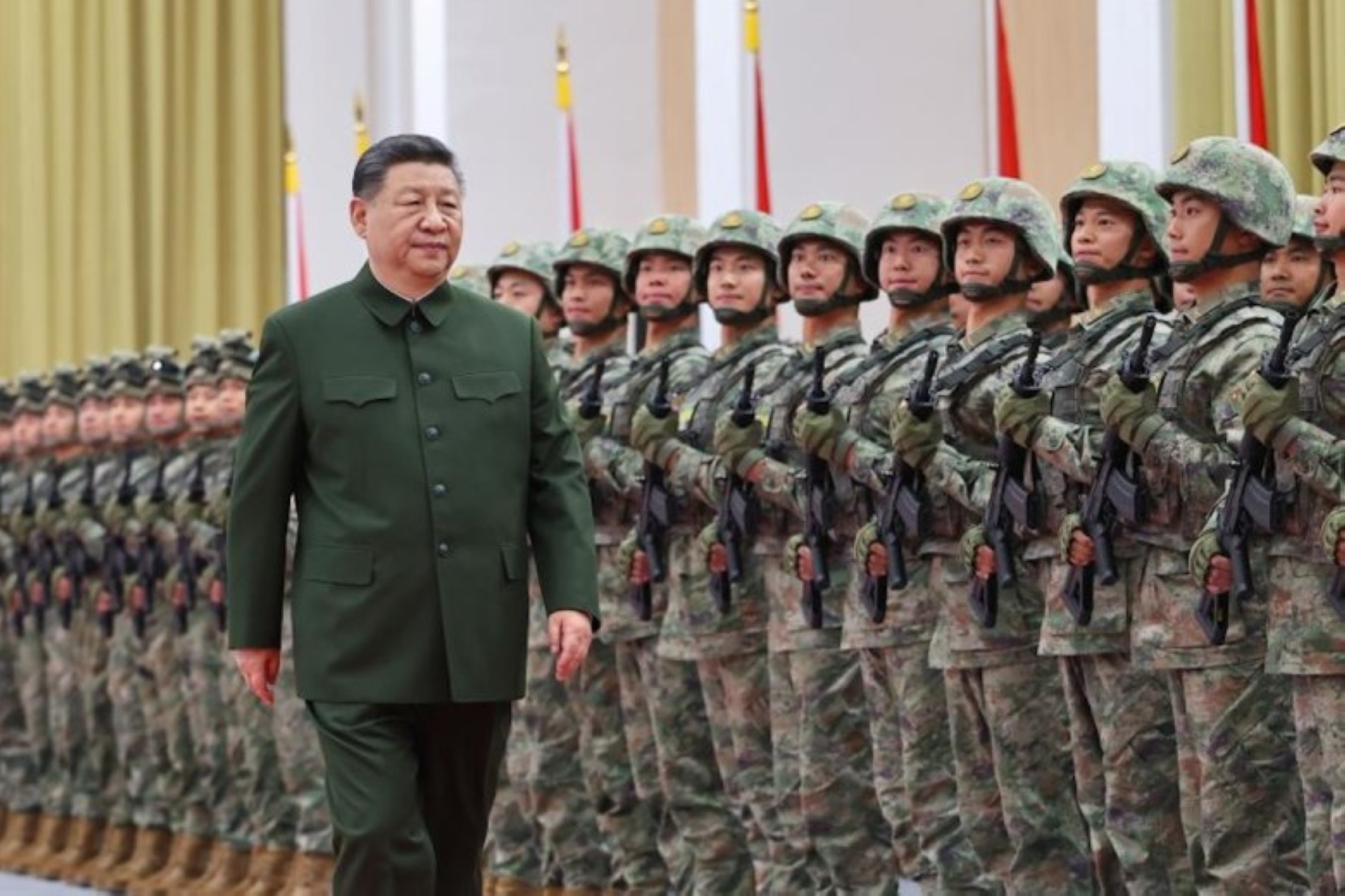
Xinhua / Li Gang
Chinese President Xi Jinping inspecting a unit of the Chinese People's Liberation Army in Macau, southern China, on 20 December 2024.

China changes

During the seven years he spent in the countryside, Xi’s application to join the party was rejected eight times before he was finally accepted and became secretary of the village party branch. In 1975, he returned to Beijing to enrol at Tsinghua University. By then, Xi’s fate had become inseparable from China’s own transformation. Mao died in 1976. Two years later, Deng Xiaoping emerged as the country’s de facto leader, opening the way for reform and for Xi’s father’s full return to the heart of power.

By the 1980s, Xi Zhongxun had assumed the highest political post in Guangdong province, China’s gateway to the capitalist world, where he oversaw the experiment of the special economic zones in Shenzhen and Zhuhai. From this, Xi learned that the market was not an adversary but an instrument, and that partnership with the private sector was unavoidable, provided it was conditioned by political control.
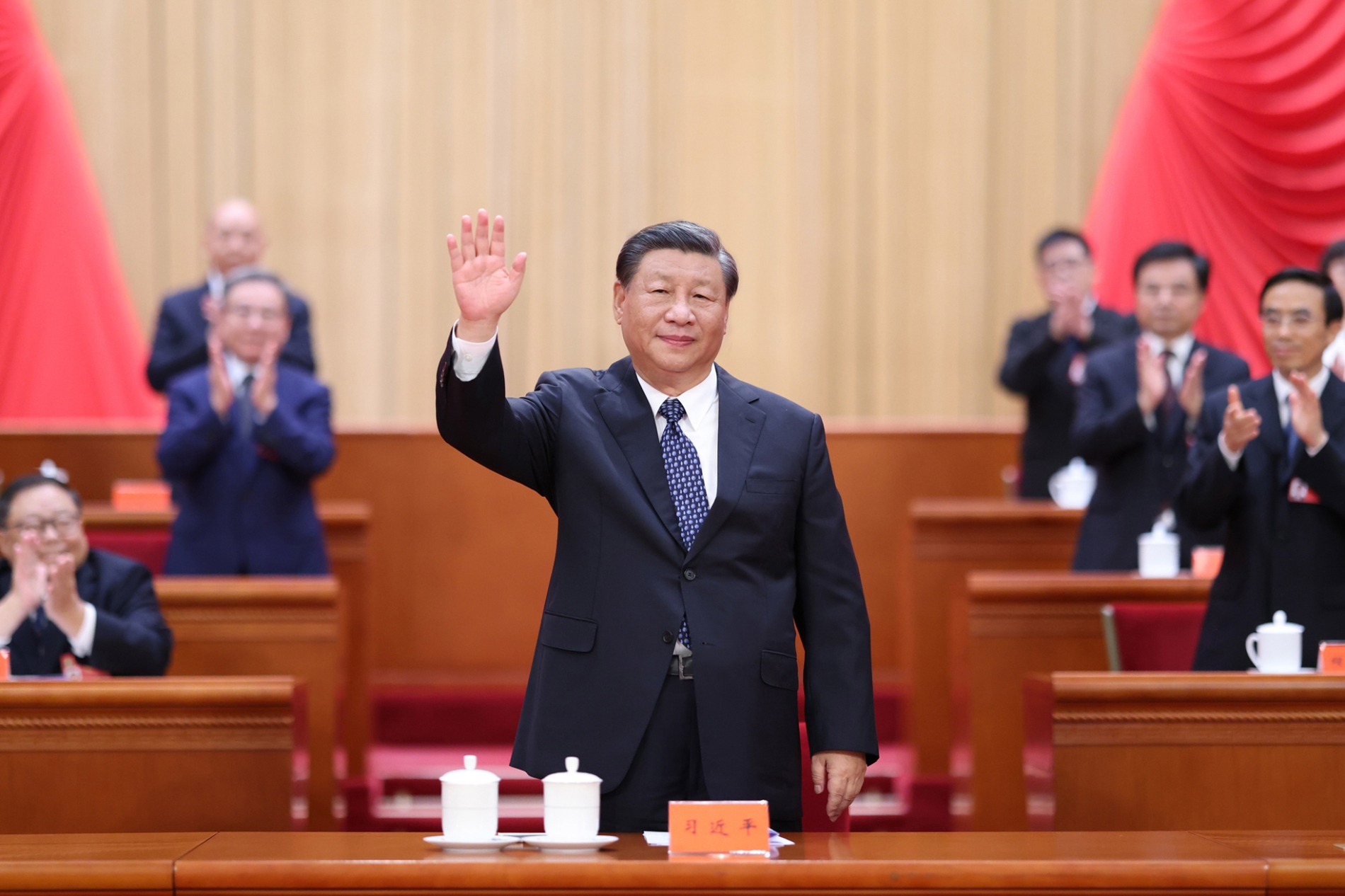
During the seven years he spent in the countryside, Xi's application to join the party was rejected eight times before he was finally accepted

After graduating in 1979, Xi worked as an assistant in the office of the senior defence official Geng Biao, whom his father described as his "closest comrade-in-arms". There, Xi built an important network of relationships within the party and the army. In 1982, in the poor agricultural province of Hebei, he confronted a highly complex form of daily administration imposed by limited resources and immediate needs. This taught him that governance was about mastering detail, not issuing slogans.

A second formative experience came in Fujian in 1985, where the landscape changed dramatically: cross-border trade, Taiwanese investment, smuggling, and networks of interest in which bureaucracy intertwined with business figures and security agencies. There, he became known as the "clean man" when faced with a rising China, where markets moved faster than the state. His saw that corruption was not an individual deviation, but a structure capable of creating parallel centres of power inside the state.

Through the ranks

Xi would later go on to lead Zhejiang, and then Shanghai, China's financial capital. In 2007, he worked to restore discipline and contain the repercussions of a corruption scandal linked to figures close to the powerful former president Jiang Zemin. That same year, Xi entered the Politburo Standing Committee, the highest circle of power. In 2008, he became vice-president. Several appointments then followed, and he assumed leadership of the party at the next congress in 2012.

Anti-corruption campaigns had been a tradition among leaders since Deng Xiaoping, but they often receded after an initial surge of enthusiasm. Xi's was different. It reached the so-called 'tigers' among senior officials and extended all the way down to the most junior employees. A month before his election as general secretary, on 4 September 2012, Xi suddenly cancelled all his meetings—including one with US Secretary of State Hillary Clinton—and only reappeared 15 days later.

His disappearance unleashed a wave of rumour and analysis. One account says that, during party deliberations over his appointment, Xi demanded a full mandate, free of any factional constraints imposed by party elders, to fully confront corruption, hinting that he would withdraw from the process if his request was rejected.

To-date, Xi's campaign has encompassed more than 7.2 million people who have been investigated since 2012, with many subsequently disciplined. While it has helped tackle corruption, it has also led to fear, with cadres now too scared to take the initiative and innovate. Meanwhile, Xi's campaign to reform and modernise the army has been described in Western media as a purge designed to centralise power in his hands.

Communists have long treated the military with suspicion. Mao once said: "The party must command the gun; the gun must never be allowed to command the party." Xi's campaign had two aims: to address corruption in the army, which uses secrecy as its cover, and to ensure that major military decision-making belongs to him and him alone, not to the generals. 

EPA
Xi Jinping greets members of the Communist Party while attending the 8th National Congress of the China Disabled Persons' Federation at the Great Hall of the People in Beijing, on 18 September 2023.

Party revival

When he became general secretary, Xi sought to revive the party as a political and ideological apparatus. He believed that one of the main reasons why the Soviet Union collapsed was that the Soviet Communist Party forgot its history. The harsh reassessments of the Stalin era produced a rupture with the founding narrative, weakening the symbolic bond between past and present and creating a vacuum in ideological legitimacy.

Xi is a communist who believes in communism. His father was subjected to persecution, repression and torture, and his family was torn apart, yet he remained loyal to the party and saw no meaning beyond it. Restoring the party to itself, therefore, became a personal and familial mission, a form of profound fidelity to the course of an entire life, where politics becomes entwined with fate, and where the party ultimately grows into something more than an institution.

Since Xi was first elected, China's economic figures speak for themselves, and its technology now competes with America's in most areas. The sun has set on the doctrines that long governed Chinese foreign policy: strategic caution, the concealment of strength, and patience. For Xi, the hour is nigh. China is pushing on with its plans and achieving its objectives, whether through the Belt and Road Initiative, the expansion of the BRICS group, or the reinvigoration of the Shanghai Cooperation Organisation.

Since Xi was first elected, China's economic figures speak for themselves, and its technology now competes with America's in most areas.

Domestically, his is less an outstretched palm than a clenched fist at home. The collapse of the Soviet Union, the colour revolutions, and the demonstrations across the Arab world all feed his security anxieties. From Xinjiang and Tibet to Hong Kong, his priority is control and stability, especially in an age of social networks and digital flows. Nearly every domain of life came to be read through the lens of national security, in a state redefining stability as a comprehensive condition for survival.

Some read the story of Xi Jinping as a reflection of the trajectory of the Chinese Communist Party itself, with all its tragedies and successes. From a wider perspective, however, the details of his life appear almost as a compressed retelling of modern Chinese history across nearly two centuries of upheavals and fractures: a fall from the empire of the centre into a century of humiliation, occupation and poverty, followed by the long march, through pain, tears, sweat and blood, towards the summit.

font change