Dmytro Kuleba on Trump’s drift towards Moscow

Ukraine’s former foreign minister is pragmatic about the war, peace talks, Kyiv’s opponent, Washington, the Chinese, and the Gulf. His thoughts are a fascinating insight into Europe’s biggest battle

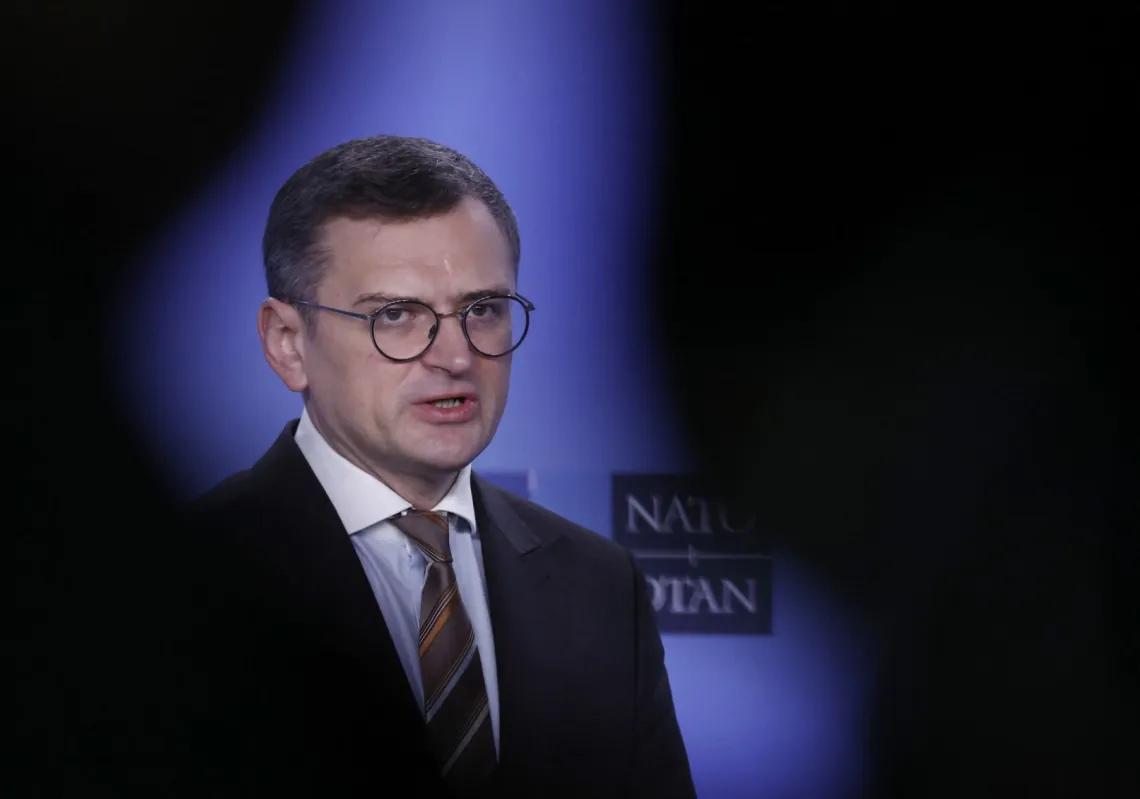
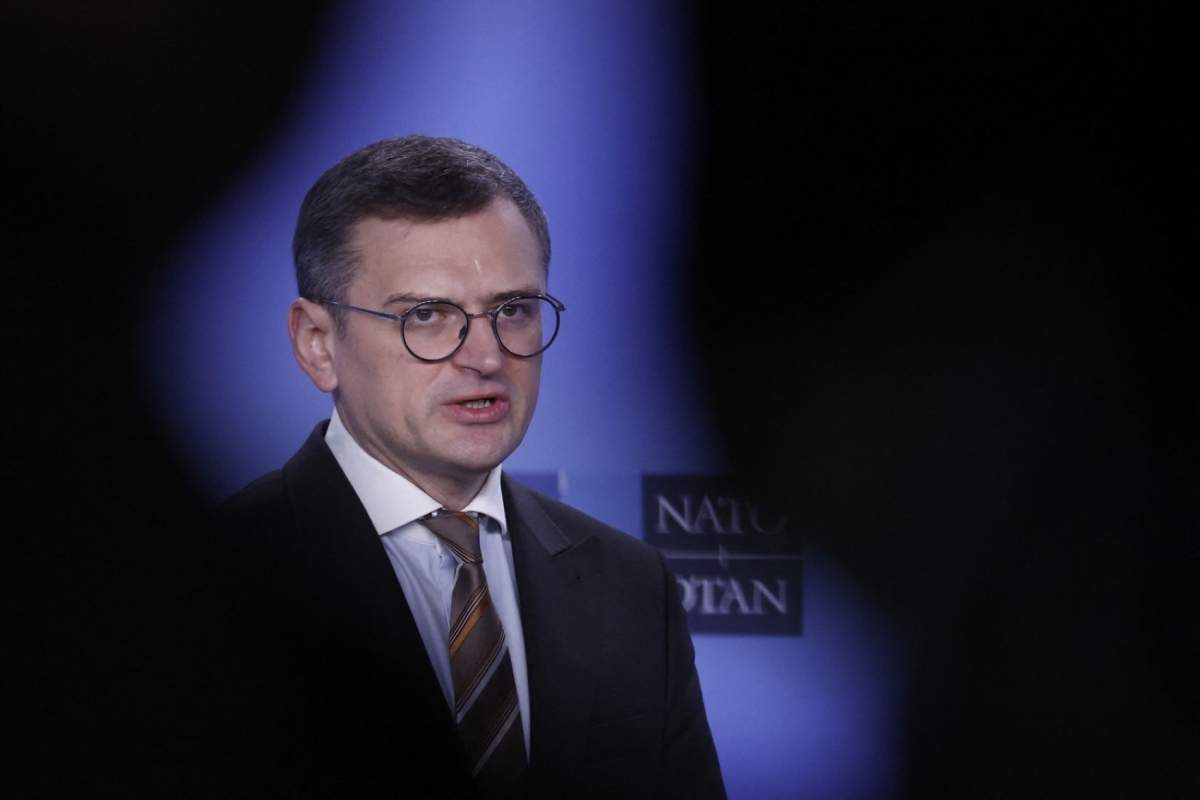
Ukranian Minister for Foreign Affairs Dmytro Kuleba listens to the North Atlantic Treaty Organization (NATO) Secretary General during the alliance's 75th anniversary at the NATO Headquarters in Brussels on 4 April 2024.
KENZO TRIBOUILLARD / AFP
Ukranian Minister for Foreign Affairs Dmytro Kuleba listens to the North Atlantic Treaty Organization (NATO) Secretary General during the alliance's 75th anniversary at the NATO Headquarters in Brussels on 4 April 2024.

Dmytro Kuleba on Trump’s drift towards Moscow

Nearly five years into Russia’s full-scale invasion of Ukraine, Dmytro Kuleba sees no end in sight. Ukraine’s former foreign minister (2020-24), he steered Kyiv’s diplomacy for more than two years of the war, mainly during US President Joe Biden’s administration. Now a senior fellow at Harvard’s Belfer Centre, he believes the conflict is no longer just about territory, but about Russian President Vladimir Putin’s conclusion that ending the war carries greater risk for him than continuing it.

That assumption shapes everything else. Kuleba argues that a ceasefire would be broken quickly. For him, Ukraine’s victory means independence and the chance to choose to be part of Europe, not part of Russia. He felt Donald Trump’s promise to end the war within 24 hours was a slogan and worries about Trump’s “drift” towards Moscow, having literally rolled the red carpet out for Putin in Alaska earlier this year.

Kuleba is unsentimental about the wider map. He thinks China wants Russia to stay bogged down in Ukraine, making it weaker and more dependent. On the other hand, he says Beijing may want to play the role of peacemaker. In his reading, sanctions constrain Russia’s war-fighting abilities but will not, by themselves, end the war. Likewise, he thinks NATO membership should not be taken off the table, because Ukraine has yet to find a better example of a security guarantee.

His most pointed remarks concern the Gulf. Despite Saudi Arabia hosting talks in 2025, he expects limited engagement from Gulf capitals, which he sees as constrained by their ties to Moscow. Even Riyadh’s drone-defence discussions with Kyiv after the Iran war were, in his words, “a spike, not a strategy”. Here is the conversation with Al Majalla.


More than four years into this war, what is your assessment?

Strategically, (Russian) President (Vladimir) Putin has put his country on a war trajectory and will be fighting different wars until his last day in office. He has concluded that ending the war in Ukraine carries greater risk for him than continuing and expanding it, so we should be ready for a long-term confrontation with Russia, whose actions will become even more hostile in different directions.

Ukraine has no choice; if we’re serious about defending our independence, our sovereignty, and our choice to be part of the European project, not the Russian one, then we must endure and adapt to changing circumstances.

What is your view of victory, or of a ceasefire with Putin?

Even if a ceasefire agreement is reached, which I doubt, it is not going to last long, because Putin is a guarantee of war. He has chosen war as his main policy instrument, so even if a ceasefire is reached, it should not be seen as salvation from war, because it will be broken very quickly. As for Ukraine’s victory, I imagine it simply as this: Ukraine remains an independent, sovereign, European country.

In Europe, some taxpayers are asking how long the war will go on...

No one can honestly estimate how long this war will last. Neither British nor Ukrainian taxpayers will decide that; President Putin decides to wage a long war that defines our effort, and Ukraine has no choice but to adapt. If taxpayers in a country that supports Ukraine speak out against continuing support, Ukraine will have to adapt to that reality as well. I follow developments in several key countries, including the UK, and hear politicians describe support for Ukraine as a problem, yet the polls show support for Ukraine remains strong.

President Trump and his envoys are pursuing a revised 20-point framework for peace. Given his promise of ending the war almost two years ago, has he failed?

From the very beginning, it was clear to me that the promise to end this war within 24 hours was a slogan, nothing more. I don’t think the problem is President Trump’s failure to end the war but Putin’s willingness to continue it. To end a war, you need to persuade the side driving it forward to stop.

The problem is more President Trump's drift towards Moscow's position and his recent policy of restraining Ukraine's capabilities to repel Russian attacks. I don't buy the claim that the war is about to end, because I don't think the circumstances are ripe for that. I'm more concerned about policy decisions that weaken Ukraine and strengthen Russia.
AFP
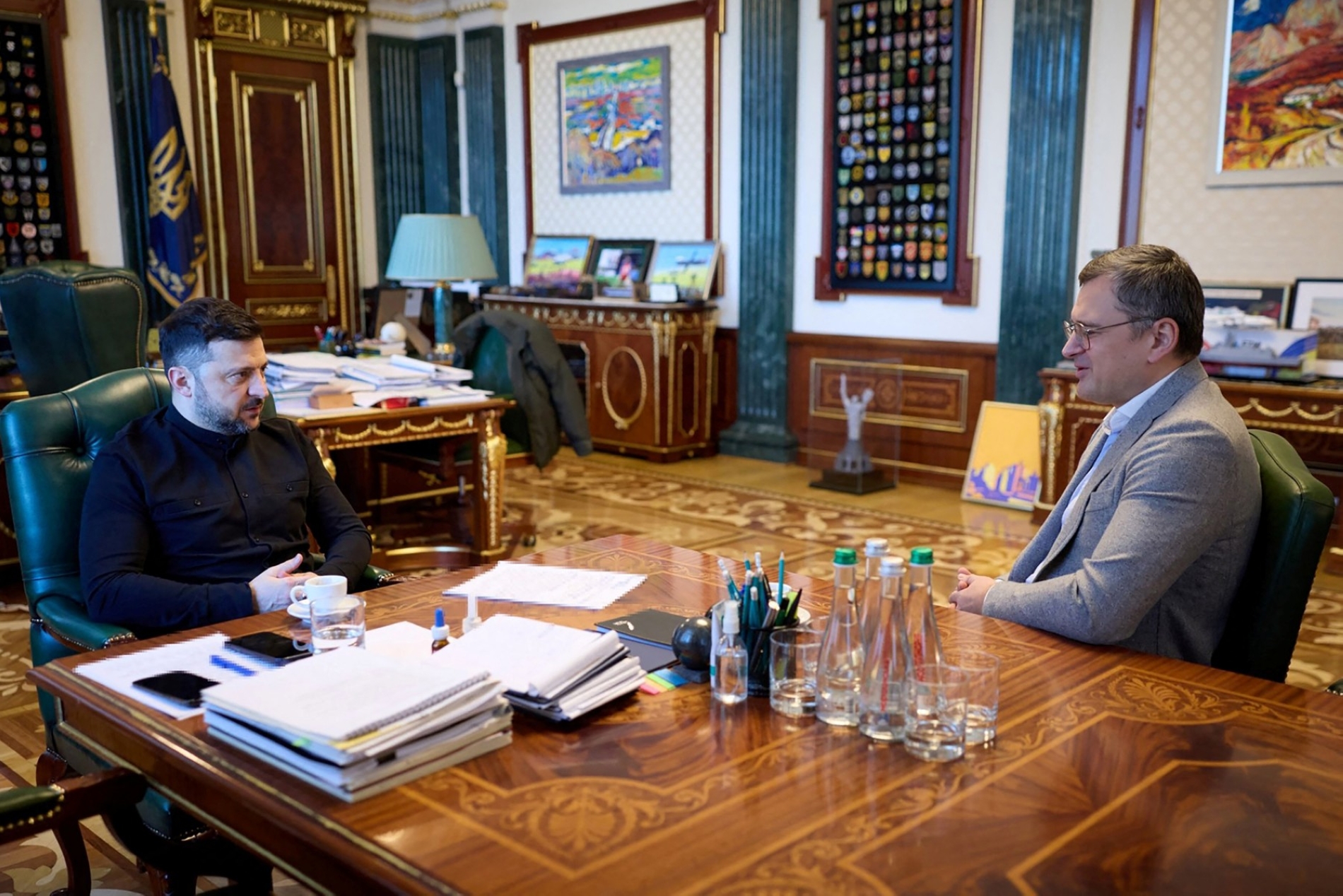
Ukraine's President Volodymyr Zelensky attends a meeting with former foreign minister Dmytro Kuleba (R) in Kyiv on 5 January 2026.

Some think Ukraine's President Volodymyr Zelensky sounds more like a warrior than a politician and will keep fighting until victory. Do you agree?

I'm puzzled that people are surprised by his language. He has been a wartime leader since February 2022 and has made many strong statements to both President Biden and President Trump, but he has always stopped short of ruining the relationship.

Whatever President Zelensky says, whatever message he sends, he always leaves room for continued dialogue and restoring the relationship. It's not a bad thing to disagree openly with friends when you have to defend a position that is critical to you, but the art of diplomacy is to do it in a way that leaves room for further dialogue, and I think President Zelensky has mastered that quite effectively.
Gulf states are driven by a simple foreign-policy calculation: doing anything for Ukraine would cost them their relationship with Russia

Dmytro Kuleba, former Ukrainian foreign minister

Is NATO membership still a 'must' to deter future Russian aggression?

Returning to the roots of Ukraine's bid to join NATO, we applied decades ago not because we saw NATO as a sacred place, but because we sought membership in a security architecture. So, it is not a question of NATO membership as such; it is a question of Ukrainian security. To date, NATO has been the best mechanism available, which is why Ukraine sought membership.

If Ukraine and its partners can come up with a solution equal to, or more effective than, the NATO promise, that would, of course, also suffice. The problem is that no one has come up with a better answer so far. That is why NATO membership should remain on the agenda. But if an effective alternative exists, we should seriously consider it.

Sergei Guneev/Reuters
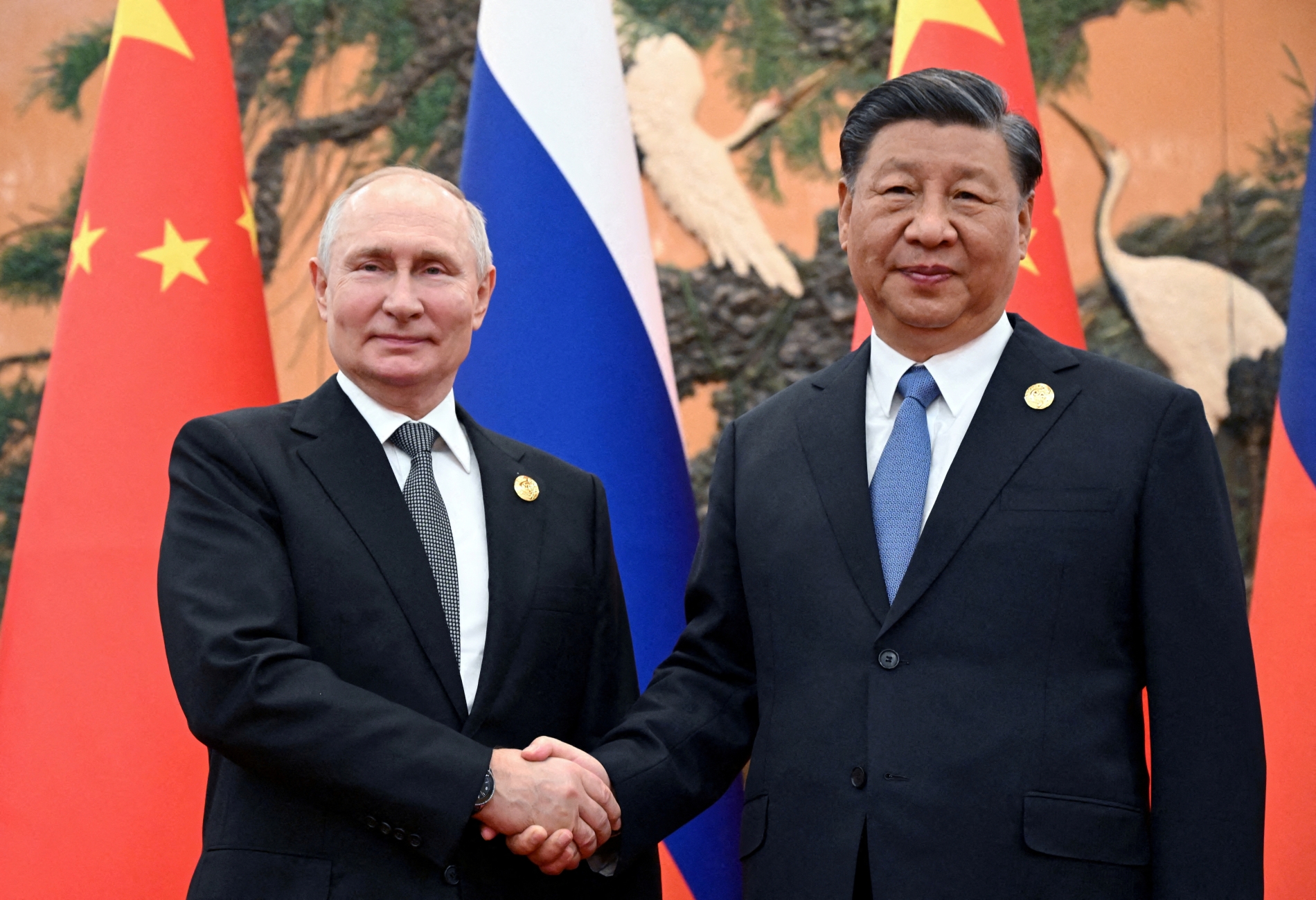
Russian President Vladimir Putin with Chinese President Xi Jinping. Russia has had to find new buyers for its oil and has turned to Asia.

You have argued that China gains from prolonging the war. How do you see its role, and what would Ukraine do if Beijing tilted the balance?

My basic assumption is that China doesn't want a strong Russia; it needs Putin's Russia to stay afloat and deepen its dependence on China. If Russia wins in Ukraine, it escapes that trap, is reinvigorated, feels strong and capable of historic achievements, gains access to Ukraine's enormous resources, and becomes the major military power in Eurasia, from Lisbon to Shanghai. I don't think China needs that kind of Russia.

So, when I think about Ukraine's interests in ending this conflict, the biggest thing that could bring China on board, while respecting Ukraine's interests, is to let China be the nation that restored peace when everyone else failed. It would be another great example of Chinese diplomacy, after the Saudi Arabia-Iran deal, with Foreign Minister Wang Yi standing in the middle. I think this is what China is really looking for: recognition of its stabilising role in global affairs.

Sanctions on Russia seem to be losing their effect, as the latest US-Russia agreement on diesel shows. What is your view of the sanctions now?

Imagine you have $100 to wage a war, and sanctions take $50 away from you. You still have $50 to wage war, but for the side defending itself, fighting someone with $100 in their pocket is different from fighting someone with only $50, because they have to stretch their resources and curtail some of their plans. So, the argument that sanctions don't work is politicised and not a true assessment.

The real lesson is different. In the 21st century, if you sanction a country, it will find ways to circumvent them, because someone will always help, and the West cannot enforce sanctions in a way that truly cuts a country off from global markets. So, sanctions are a constraint, not a game-changer.

AFP
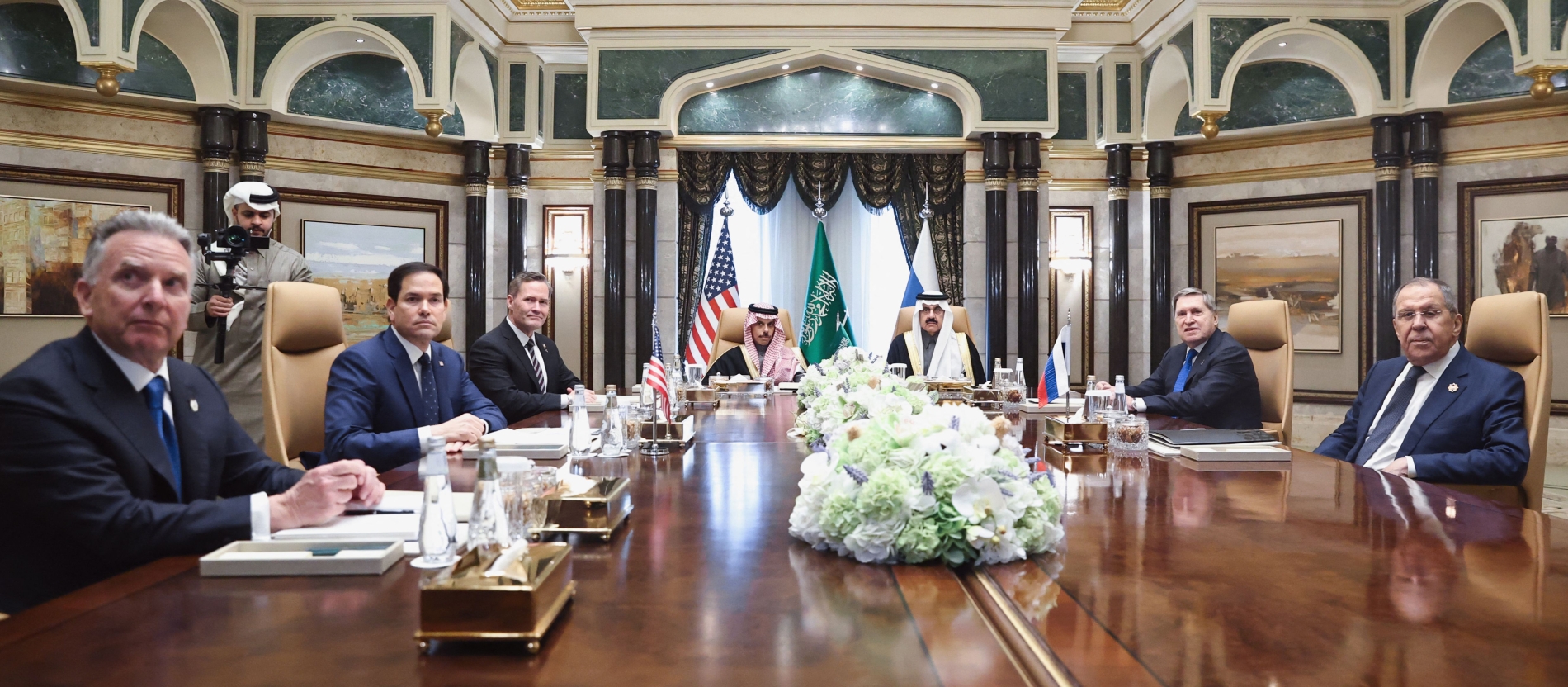
US, Russian and Saudi officials, including US Secretary of State Marco Rubio and Russian FM Sergei Lavrov, meet at Riyadh's Diriyah Palace on 18 February 2025.

Saudi Arabia hosted US-Russia and US-Ukraine talks in 2025. Can Gulf mediation genuinely help Kyiv at this stage of the war?

I think the Gulf has its own problems right now, and I don't expect particularly proactive engagement from them, because the stakes are very high. The Gulf states are driven by a simple foreign-policy calculation: doing anything for Ukraine would cost them their relationship with Russia. That's how they see it. So, I think the Gulf will remain trapped in this way.

It may be willing to play a greater role. Saudi Arabia, the UAE, and Qatar may even compete for a role in resolving major global political crises. But they will always be constrained by not wanting to incur Russia's wrath, because they care about their relationship with Moscow.

For example, when Saudi Arabia needed help with drones during the US-Iran war, Crown Prince Mohammed bin Salman tilted towards President Zelensky. They discussed drone-defence projects, because Saudi Arabia's immediate national interest outweighed its interest in maintaining good relations with Russia. But it was a spike, not a strategy. Honestly, at this point, I don't see how to turn such spikes into a stronger strategic relationship, given how important the Gulf monarchies consider their relations with Moscow.

font change