
Egypt has weathered the effects of the Middle East’s latest conflict better than the spillover from Russia’s 2022 invasion of Ukraine. Yet, fundamental weaknesses in the North African country’s economy remain, and analysts now wonder how many more shocks it can absorb.
Russia’s invasion disrupted global supply chains, so commodity prices soared, including for wheat and oil, both of which Egypt imports. At one point, oil hit $130 per barrel. Still recovering from the pandemic, Egypt was hit hard by the sudden price hike, and it has 110 million people to feed. As the country dealt with a severe liquidity crunch, a parallel market emerged, as hard currency became scarce. Default loomed.
In February 2024, as Israel was flattening Gaza, the Abu Dhabi sovereign wealth fund ADQ stepped in with a massive $35bn cash injection, buying development rights in Egypt’s premium Mediterranean coastal area of Ras El-Hekma. It threw Egypt a lifeline at the height of its foreign currency crisis. Further funding followed, from institutions such as the International Monetary Fund (IMF) and the European Union (EU). In total, it amounted to $57bn, by far the largest bailout in Egypt’s history.
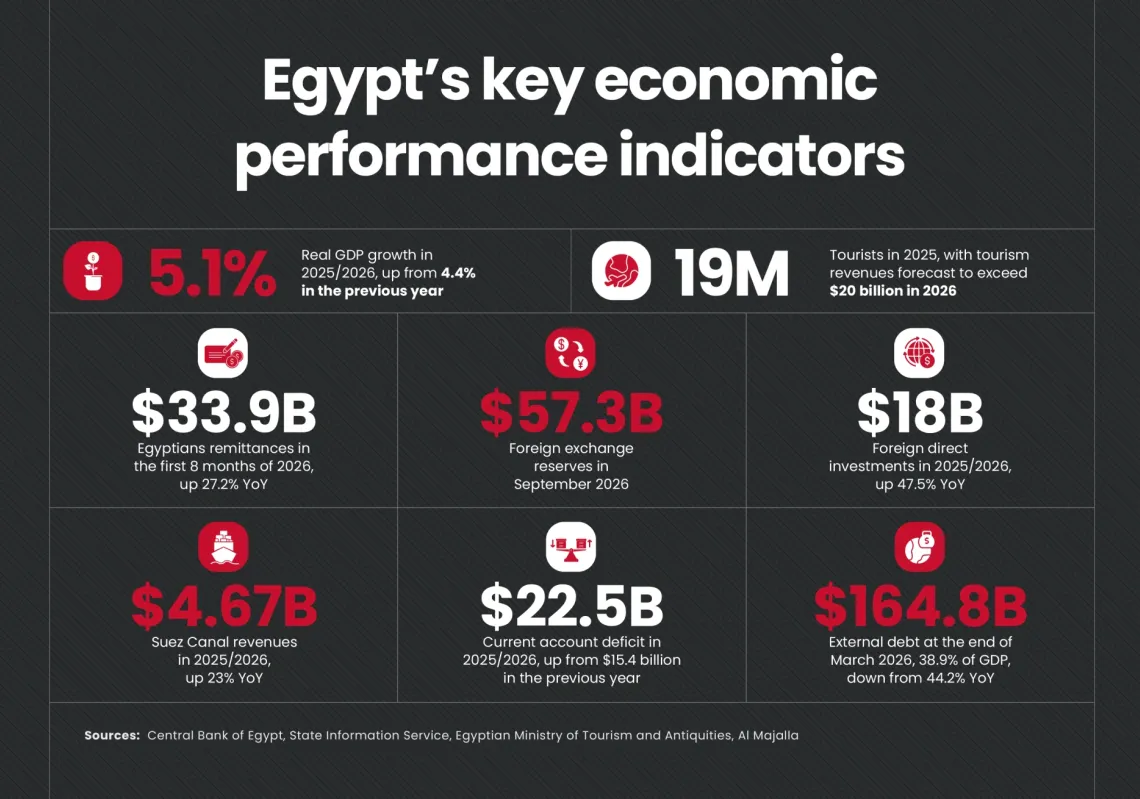
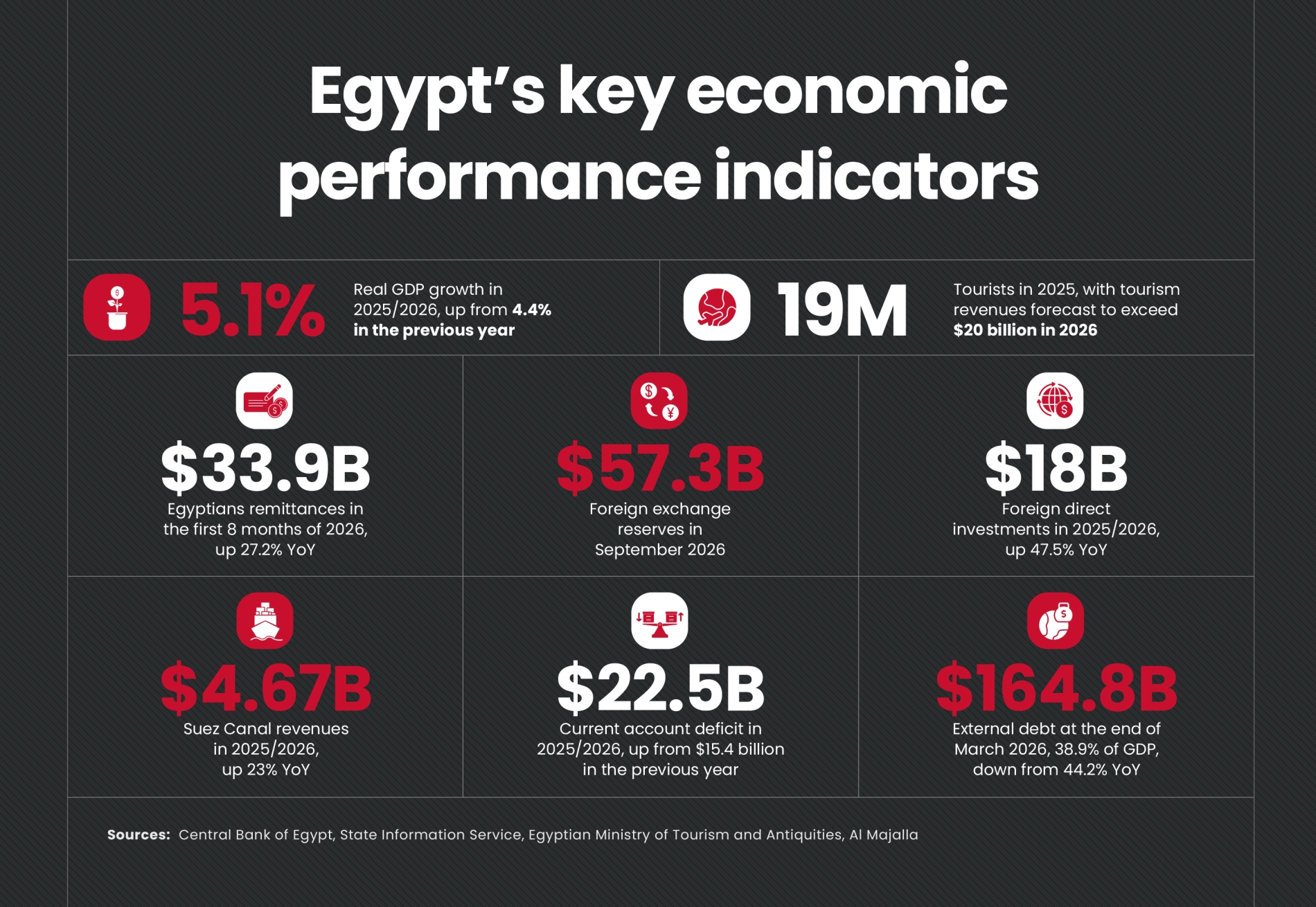
Several other factors have strengthened Egypt’s buffers, including increased dollar remittances from Egyptian workers abroad, mostly in the Gulf. This inflow totalled nearly $34bn in the first eight months of this year, up from $27bn in the same period in 2025. Egypt’s foreign reserves have continued to increase month over month, reaching $57.3bn in September. However, the state still needs to address its mounting debt, widening current account deficit, business obstacles, and rampant poverty.
Flexible exchange rate
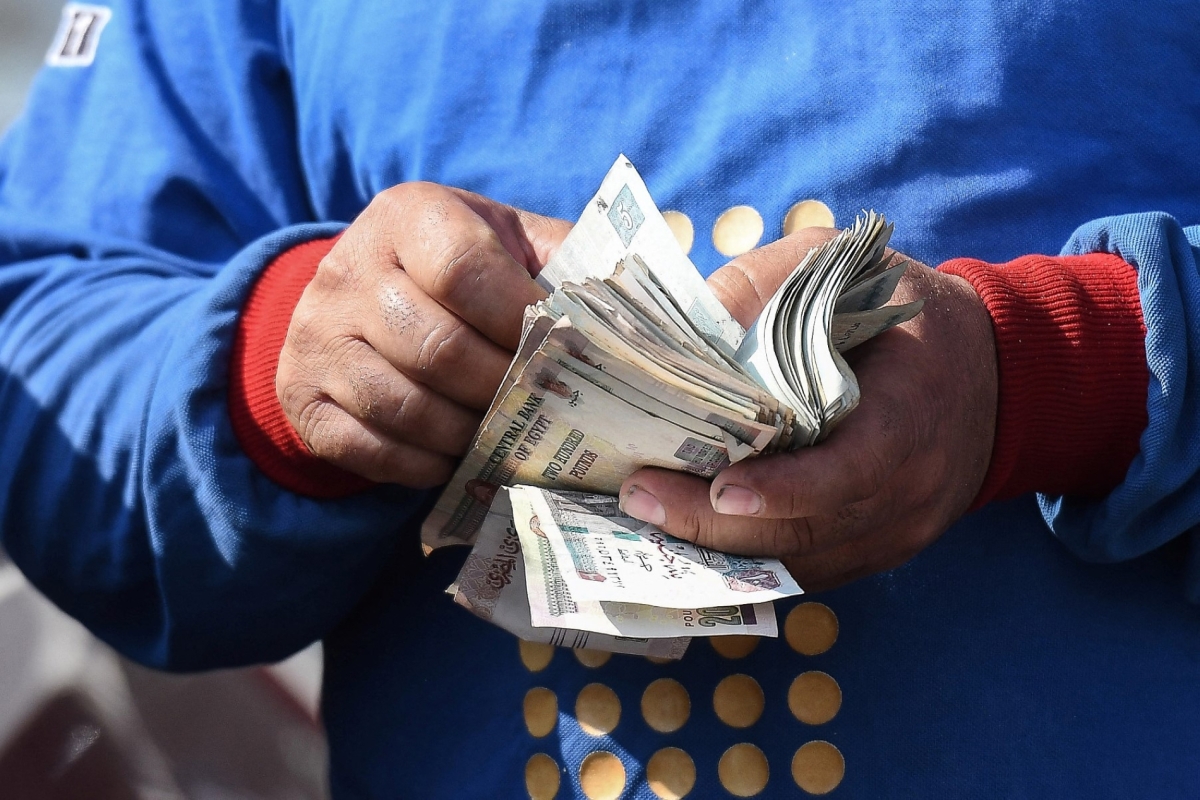
Maintaining multiple exchange rates has been one of Egypt's biggest challenges over the past decade. Under agreements with the IMF since 2016, Cairo devalued the Egyptian pound (E£) more than once to maintain a unified rate. This repeatedly proved insufficient, as both investors and hard currency headed for the exit.
A flexible exchange rate (not another ‘managed float’) has contributed to Egypt’s recent macroeconomic stability and helped avoid a repeat of previous bottlenecks, such as those after the Ras El-Hekma deal. It was implemented under the guidance of new Central Bank Governor Hassan Abdalla, who took the helm in 2022, succeeding Tarek Amer, who had resisted this kind of flexibility, which slows the departure of ‘hot money’ in crises.
The new set-up reflects the exchange rate fluctuations, with the Egyptian pound’s value constantly changing, unlike the stability of previous devaluations during Amer’s tenure. The pound’s rate against the US dollar now largely corresponds with oil prices (E£53 to the dollar), with the US-Iran war and maritime attacks increasing energy bills. Before the war erupted in February 2026, it was nearly E£47 to the dollar.
Reforms and revenue
Cairo has enforced austerity measures in recent years under its IMF obligations, which has helped preserve its fiscal health. This year, it raised fuel prices by up to 17% and gas prices for domestic heating and some energy-intensive industries. Spending has also been trimmed (belatedly).
After taking office in 2014, President Abdel-Fattah el-Sisi signed off on massive infrastructure projects, including new cities (the New Administrative Capital east of Cairo and New Alamein on the Mediterranean), a huge pyramids museum, and an enormous new military headquarters in the desert. State revenue rose; Egypt’s tax takings increased but remained below the emerging-market average of 18-20% of GDP (gross domestic product).
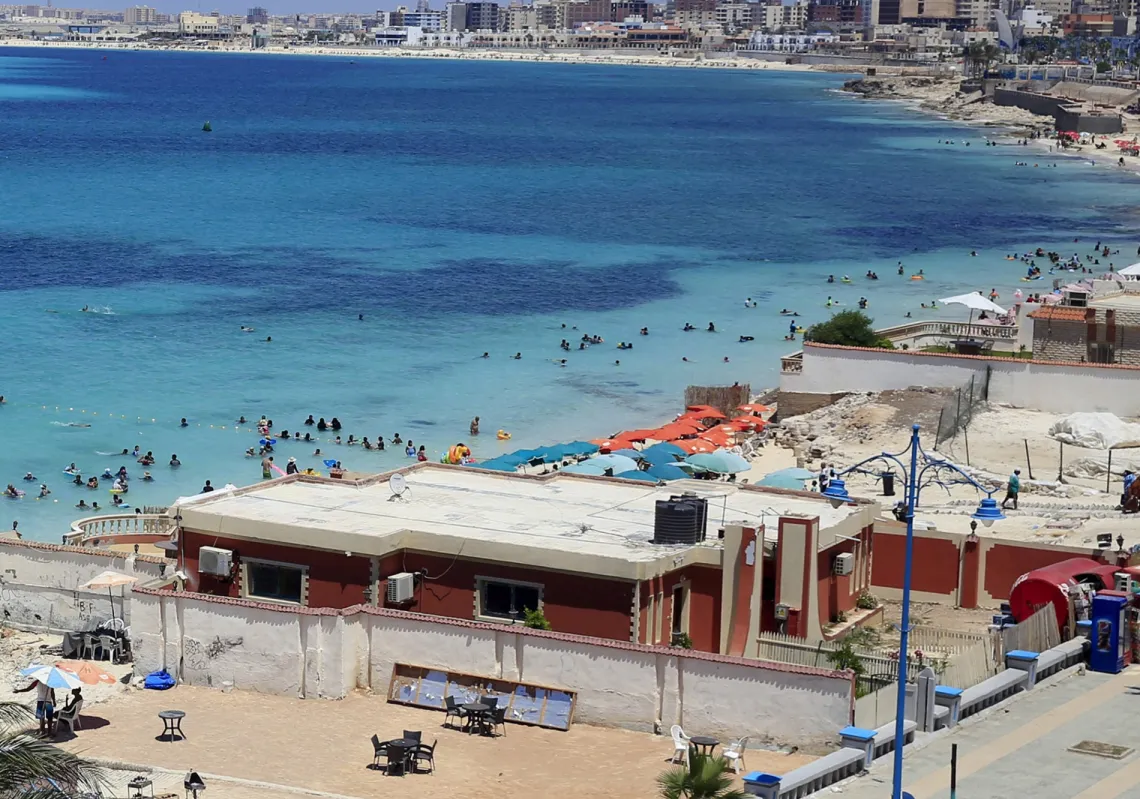
Egypt’s booming tourism industry also brought in much-needed hard currency, with a record number of arrivals in recent years (despite regional conflicts). The sector is expected to rake in $20bn in revenue this year, helped by the inauguration of the $1bn Grand Egyptian Museum next to the Giza Pyramids.
Suez Canal recovery
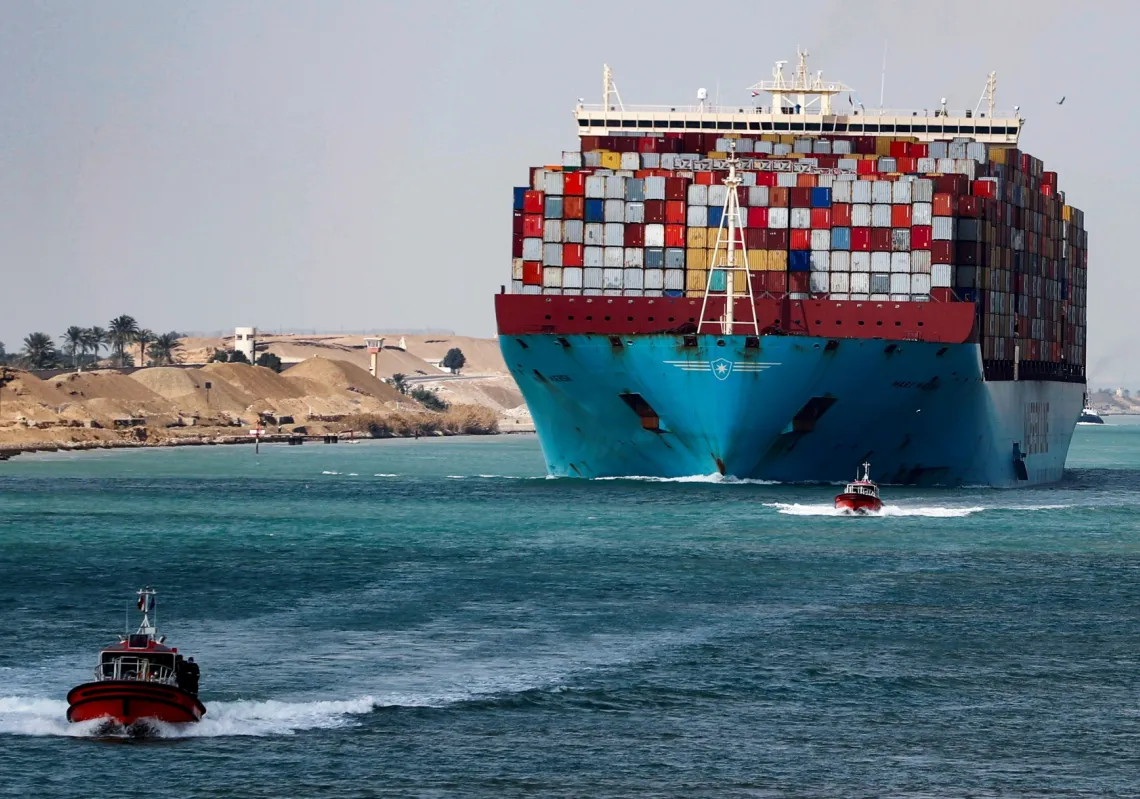
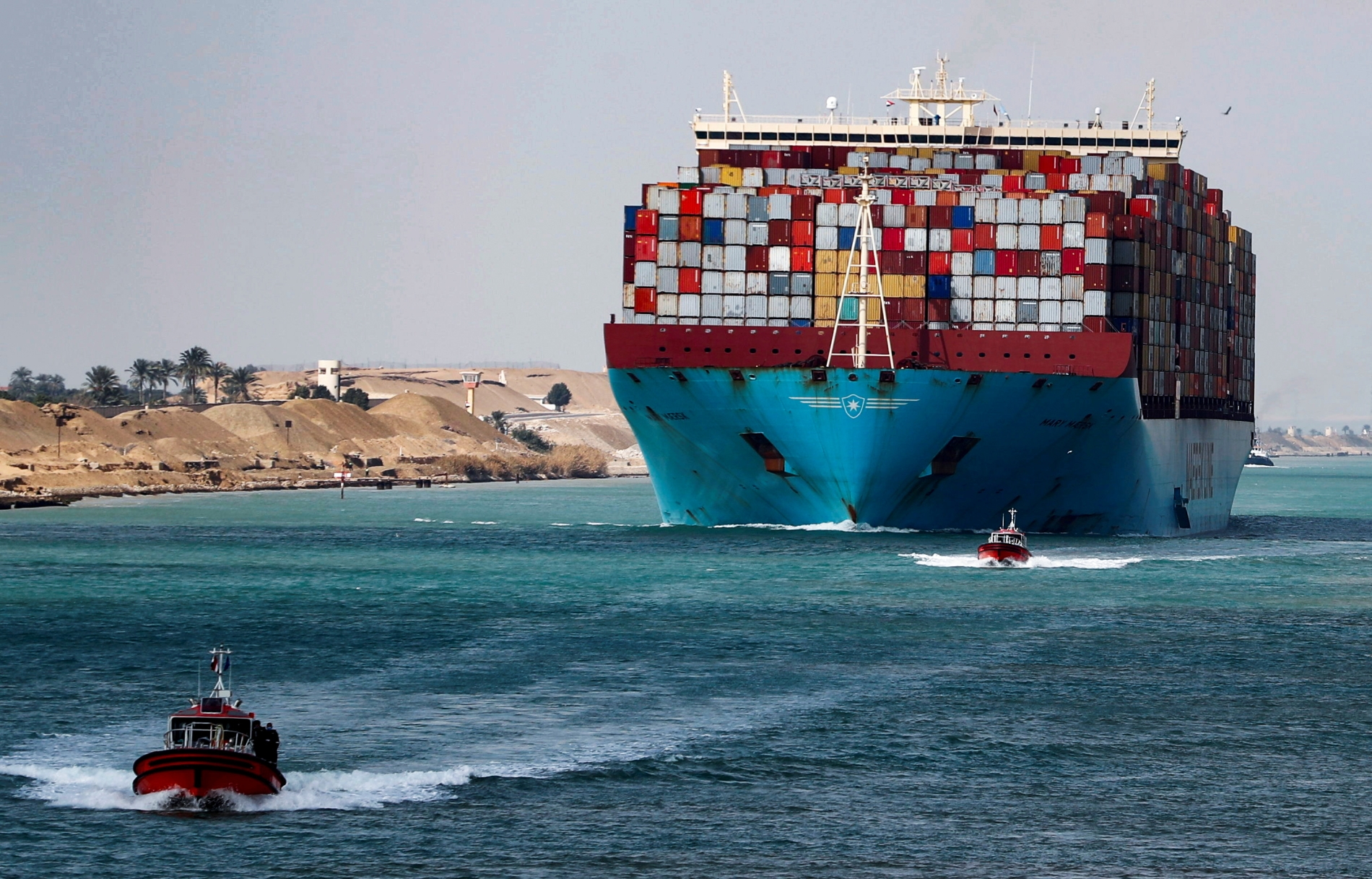
Yet transit fee revenue from Egypt’s Suez Canal, through which around 12% of global trade normally passes, has been down since late 2023, when the Houthis in Yemen began attacking Western commercial shipping through the Red Sea in solidarity with Palestinians of Gaza. Recently, canal fees have shown signs of recovery, up to $4.4bn in 2025-26 from $3.6bn in 2024-25. Yet the figure is still less than half what it was just a few years ago.
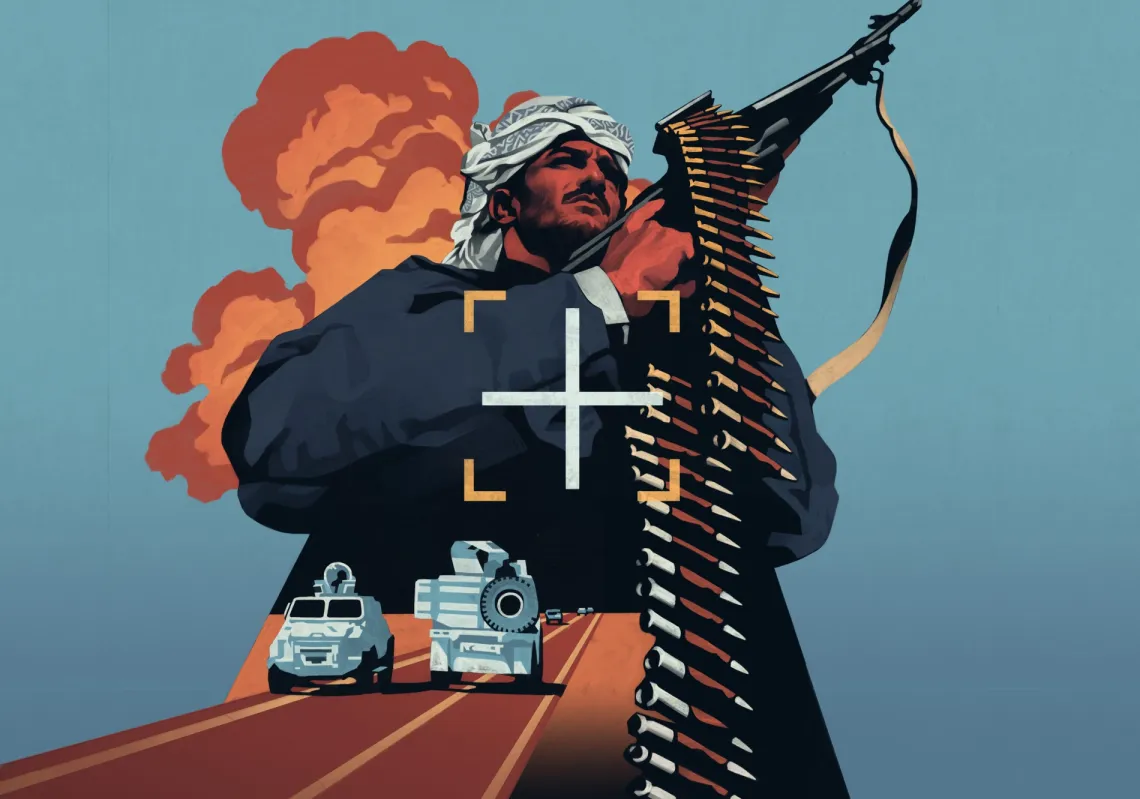
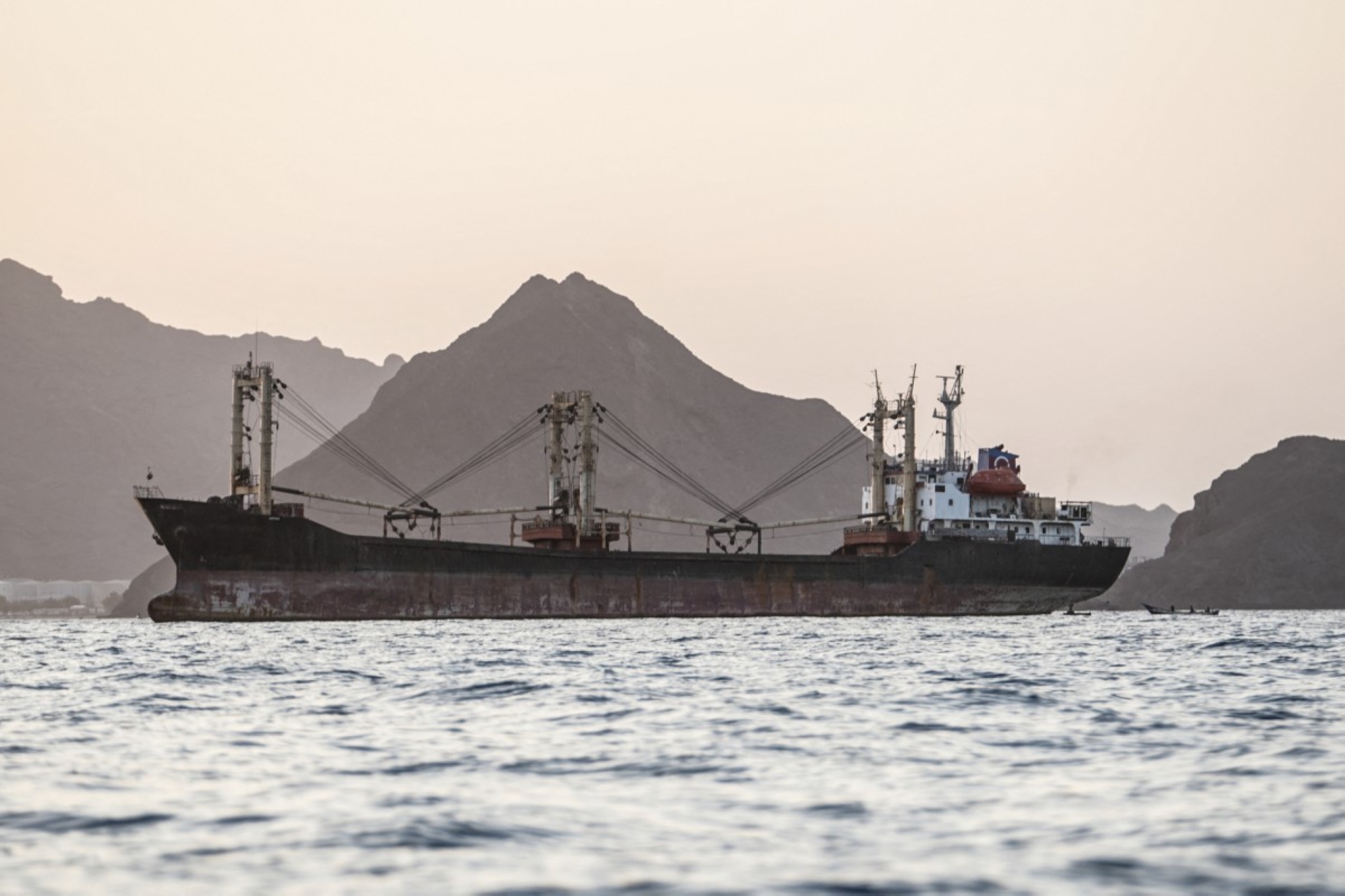
Iran’s blockade of exports through the Strait of Hormuz since March 2026 has steered both shippers and oil exporters such as Saudi Arabia to the Red Sea and the Suez Canal instead, but the Iran-backed Houthi militia took government-held Yemeni territory along the coast last month, allowing the group to renew its threats to shipping through the Bab al-Mandab Strait, which links the Red Sea to the Gulf of Aden.
Although the group’s explicit threat was against Saudi tankers, other operators gave the strait a wide berth. As a result, Red Sea tankers collecting oil from Saudi Arabia’s west-coast port of Yanbu (where oil runs through pipelines from its eastern fields) have chosen to sail north through the Suez Canal before arcing around Africa, rather than take the much quicker route south via Bab al-Mandab.
Privatisation push
Egypt’s stalled privatisation programme is now expected to resume, starting with the long-awaited initial public offering (IPO) of the state-run Banque du Caire. The third-largest bank in Egypt is set to float a 30% stake on the Egyptian Exchange, following an October IPO by financial technology (fintech) firm MNT-Halan, the country’s largest stock exchange offering in recent years.
“What the turbulence in the region around us has proven is that we’ve come out as the most stable economy,” said Banque du Caire boss Hussein Abaza, speaking to Bloomberg. “The stage is set, and it’s a much better stage than it was over the past 6-7 years.” The IPO will be Egypt’s first major state offering since the sale of 30% of United Bank two years ago, and comes after the IMF repeatedly called on Cairo to limit state involvement in the economy.
Other state companies are in the pipeline, but with no clear timeline for their listings. A successful Banque du Caire IPO could speed up the privatisation push, according to Abaza, with MNT-Halan's placement having been 11 times oversubscribed, indicating strong investor appetite. Egypt's foreign direct investment (FDI) jumped to $18bn in the fiscal year 2025-26, up from $12.2bn.
The IMF said Egypt's policy reforms had strengthened growth, dampened inflation, helped rebuild reserves, and improved banks' foreign asset positions. "Exchange rate flexibility absorbed external pressures," it said, "while energy price adjustments in the wake of higher international oil prices, spending restraint, and expanded targeted support helped preserve policy discipline."
Alarming indications
Despite the reforms, though, Egypt's current account deficit widened to a worrying $22.5bn for 2025-26, up from $15.4bn in 2024-25. Analysts think this was chiefly driven by a trade gap and higher oil import bills. The government has kept interest rates competitive to keep its debt attractive to investors, but this has kept borrowing costs high, discouraged business activity , and not helped reduce debt servicing.
To bridge the financing gap, the state auctions Treasury Bills, commonly known as T-bills, which local banks buy. A T-bill is a short-term, low-risk debt obligation issued by a national government to raise cash. The downside is that relying heavily on short maturities like T-bills (whose yields are higher than long-term instruments) makes debt management more difficult. Egypt's lenders now invest heavily in sovereign debt at the expense of providing loans to businesses, which stymies private-sector growth.