Western Sahara's MINURSO faces an uncertain future

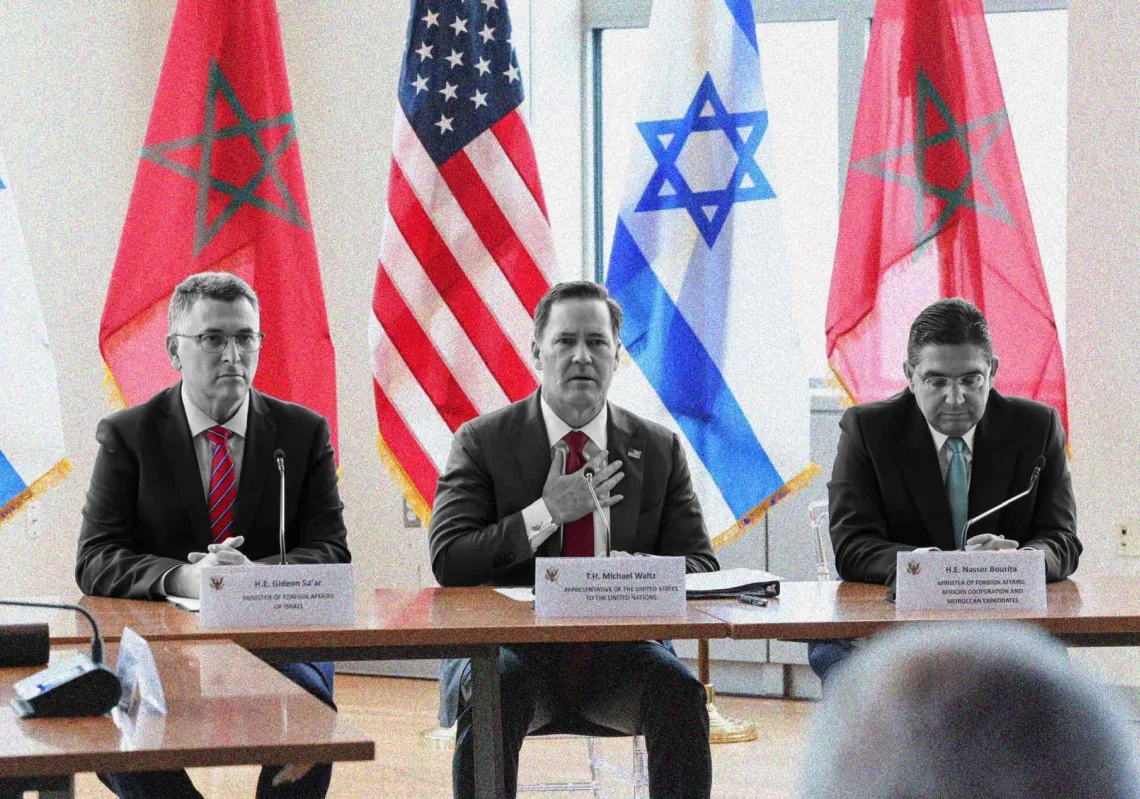
Boulos's remarks shattered expectations that UN Security Council Resolution 2797—which made Morocco’s autonomy plan the basis for negotiations—would quickly translate into a final settlement

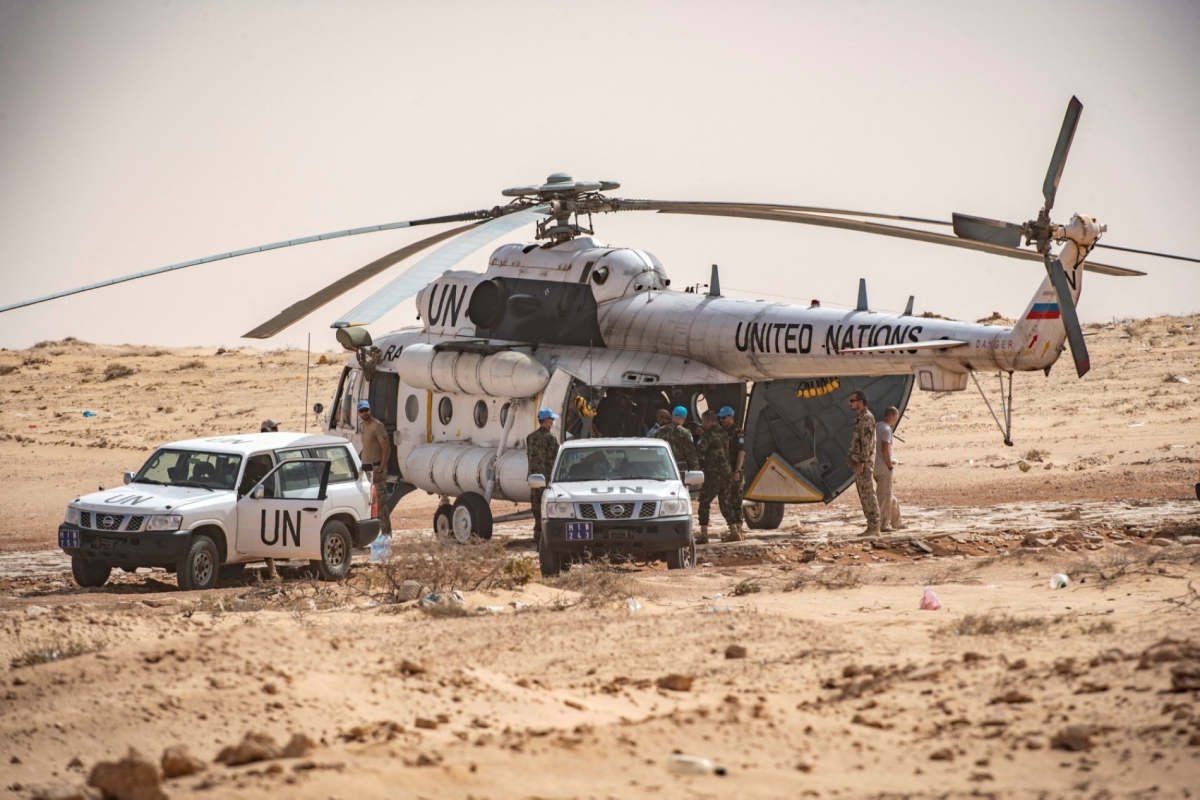
Members of the UN Mission for the Referendum in Western Sahara (MINURSO) arrive at the Moroccan side of the border crossing between Morocco and Mauritania in the Guerguerat area of Western Sahara on 25 November, 2020
AFP
Members of the UN Mission for the Referendum in Western Sahara (MINURSO) arrive at the Moroccan side of the border crossing between Morocco and Mauritania in the Guerguerat area of Western Sahara on 25 November, 2020

Western Sahara's MINURSO faces an uncertain future

In an interview with France 24 on the sidelines of the UN General Assembly in September, Massad Boulos, US President Donald Trump’s senior adviser for Arab and African affairs described the three rounds of UN and US-backed Western Sahara negotiations held earlier this year as “constructive and productive”, but publicly acknowledged that no political settlement was likely in the foreseeable future.

Boulos’s remarks contrast with the decisive tone of US special envoy to the Middle East Steve Witkoff’s October 2025 prediction that Washington would secure a peace deal in 60 days. This diplomatic posture marks a clear departure from earlier American enthusiasm for reaching a settlement and reflects a more sober recognition of the obstacles that continue to impede a settlement.

The timing and substance of Boulos’s remarks give them particular weight. While some regional assessments had anticipated a decisive breakthrough, the US adviser’s acknowledgement of an impasse has prompted a recalibration of diplomatic expectations.

The three rounds of talks, held in Washington and Madrid, brought together representatives of Morocco and the Polisario Front, with Algeria and Mauritania also participating as observers. The Polisario Front, a Sahrawi independence movement, opposes Morocco’s claim to Western Sahara and advocates self-determination.
AFP
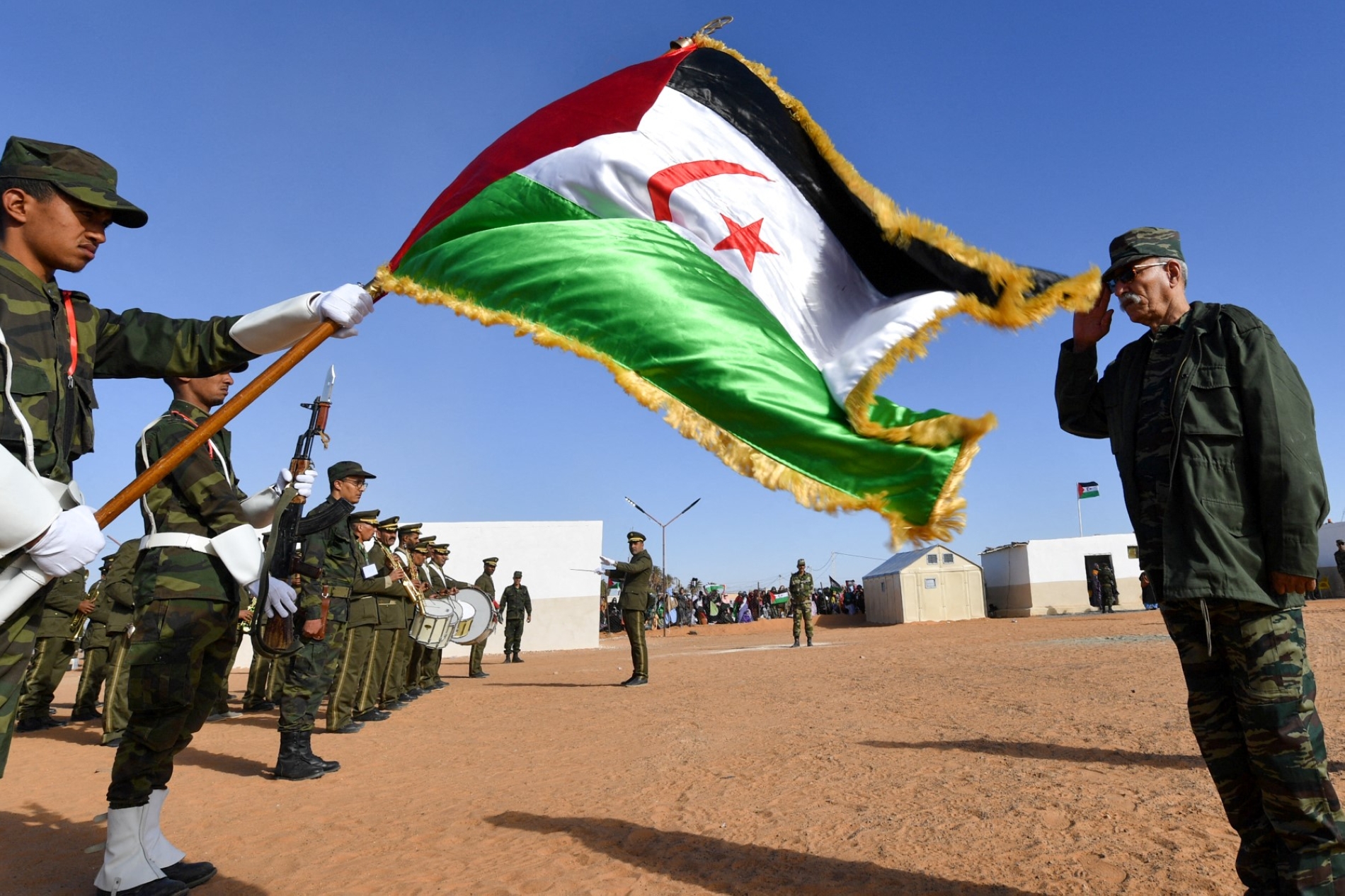
The flag of the self-proclaimed Sahrawi Arab Democratic Republic is raised ahead of a Polisario Front conference at the Dakhla refugee camp, located about 170km southeast of Tindouf, Algeria, on 13 January, 2023

On the regional balance of power, Boulos characterised Algeria as “a very good partner” of the US. While noting that Algiers could not impose a settlement on the Polisario Front, he said it could “encourage” a political process, adding: “We believe that they have been encouraging.” He even went further, rejecting Morocco's narrative that Algeria is a direct obstacle to resolving the conflict, describing Algiers as a "vital partner".

Expectations shattered

Boulos's remarks shattered expectations that UN Security Council Resolution 2797—which made Morocco’s autonomy plan the basis for negotiations—would quickly translate into a final settlement. His acknowledgement of the difficulty of resolving the dispute makes the approaching 31 October expiry of the MINURSO mandate—the UN Mission for the Referendum in Western Sahara—all the more significant. This relegates MINURSO to a body that maintains the status quo rather than advancing a political settlement. It also demotes UN Resolution 2797 to a framework for negotiations rather than a definitive instrument for resolving the dispute.
Boulos's remarks have shattered expectations that UN Security Council Resolution 2797 would quickly translate into a final settlement of the Western Sahara dispute

For his part, Abdelrafik Kachout, an academic and political analyst specialising in security and strategic studies, political science, and international relations, identifies several obstacles preventing the negotiations from producing a final agreement. Speaking to Al Majalla, he said: "The current meetings lack serious procedural engagement and genuine discussion of the substantive issues. There is also no agreement on which matters are up for negotiation."

Morocco claims full sovereignty over Western Sahara, which it refers to as its "Southern Provinces" or the "Moroccan Sahara". For its part, Algeria officially backs the Polisario Front and the right to self-determination for the Sahrawi people in Western Sahara.

In Kachout's view, Algiers is using the diplomatic process as a stalling tactic to buy time and effect demographic changes on the ground. In his view, such changes are intended to stamp out any prospect of a future referendum.

AFP
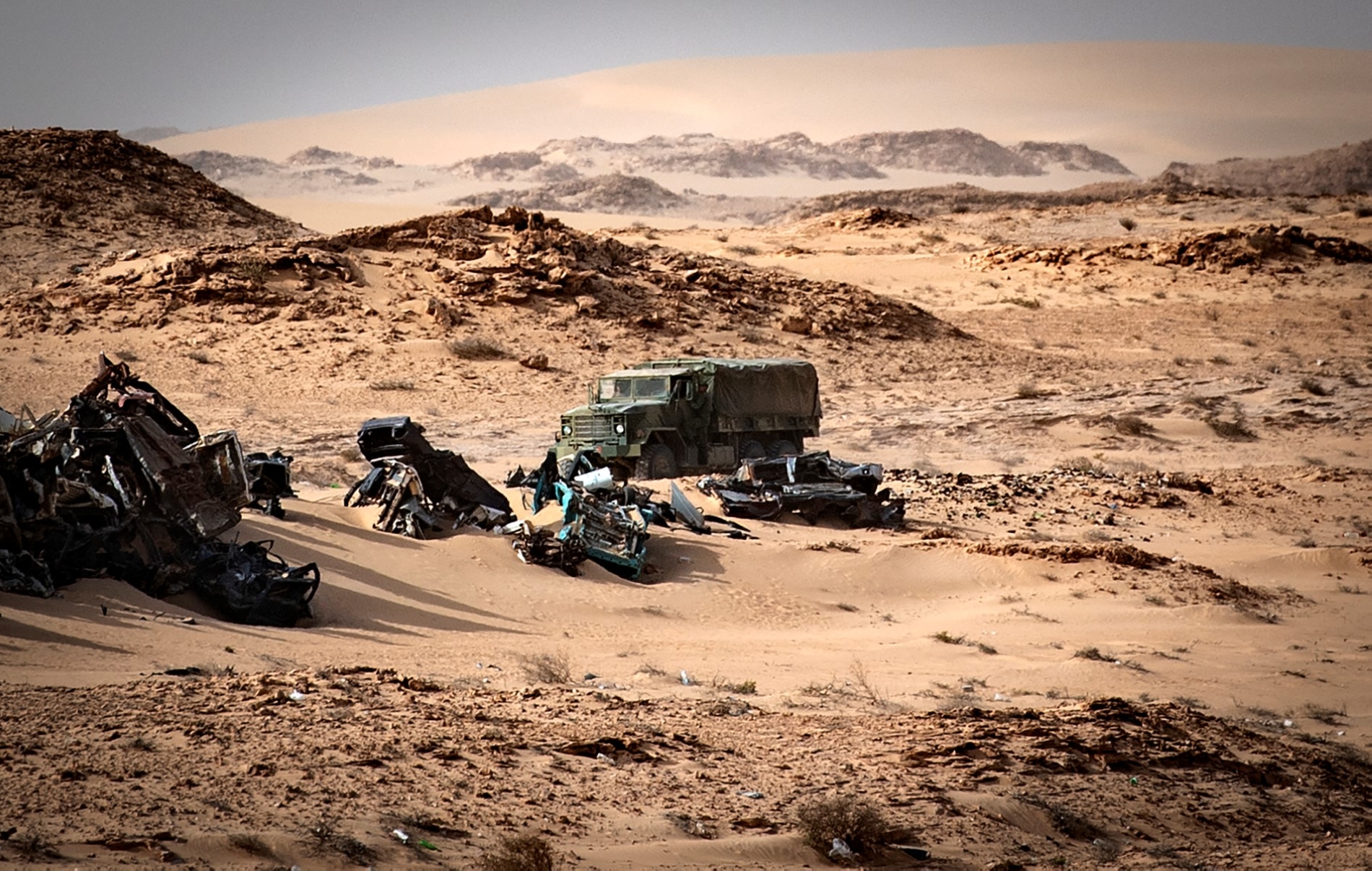
Moroccan military vehicles pass by the wreckage of cars in the Guerguerat area of Western Sahara on 24 November, 2020

Looming expiry

With diplomatic efforts stalled and tensions on the ground unresolved, attention is turning to the expiry of the MINURSO mandate on 31 October. Before then, the UN Security Council will hold closed consultations to hear a briefing from the mission's head, Alexander Ivanko, the UN Secretary-General's special representative, and an anticipated political report from Staffan de Mistura, the Secretary-General's personal envoy, on the outcome of his latest diplomatic efforts. The forthcoming decision will test whether the Security Council intends to preserve the existing arrangements and regional stability or pursue a different political approach that can break the stalemate.

While the council is believed to be tilting in favour of the Moroccan position, with between 11 and 12 of its members supporting the autonomy plan to varying degrees, this majority is tempered by the reservations of influential powers such as China and Russia, which, alongside Pakistan, formed the group that abstained from voting on Resolution 2797 in October 2025.

Speaking to Al Majalla, Amar Belani, an Algerian politician and diplomat who previously served as special envoy for Western Sahara and the Maghreb, shares his insights on why that might be. "Pakistan's position stems from its principled attachment to the Kashmir question and the issue of self-determination, while Beijing and Moscow are guided by broader geopolitical calculations concerning their spheres of influence. Both remain wary of any international precedent imposed outside the framework of a genuine, mutually agreed settlement between the parties".

The complete termination of MINURSO remains unlikely in the near term, given the security vacuum it could leave behind

Possible outcomes

Belani outlines several possible scenarios for the next phase. "The political and military situation is now open to several possible outcomes," he says. "Foremost among them is the renewal of MINURSO's mandate for one year, accompanied by a reduction in its civilian functions. The mission would remain in a more limited form, concentrating on military monitoring of the ceasefire, while the focus of political efforts would shift to direct American diplomacy between the parties."

Another possibility he says is a six-month technical extension, giving Washington time to secure a political agreement. A third option would be a renewal aligned with current realities on the ground, "although such a course could provoke a firmer response from Moscow and Beijing". 

While a reduction of MINURSO's military mandate cannot be ruled out, its complete termination remains unlikely in the near term, given the security vacuum it could leave behind, especially as low-intensity hostilities have continued since 2020.

font change