Said Jawish Interview Part 4: Cohen's execution aftermath

The man who caught Israel’s most famous spy in the heart of Damascus speaks exclusively to Al Majalla about the aftermath of the operation, Cohen’s watch, and where he was buried

Eduardo Ramón

Said Jawish Interview Part 4: Cohen's execution aftermath

In the final part of a four-part interview, Al Majalla speaks to Said Jawish, the former Syrian soldier specialising in signals intelligence who tracked down secret transmissions to Israel coming from the apartment of Eli Cohen, Mossad’s man in the Syrian capital. After the surveillance, arrest, and interrogation of Cohen in Damascus in 1965, questions about his case have long been asked. Where was he buried? What became of his papers? And how did his watch end up in Israel?

Now an old man with poor eyesight, Jawish speaks candidly about the details of the operation and its aftermath and reveals how the Syrians cottoned on to a network of Israeli surveillance equipment hidden in telegraph poles in the Golan.

Jawish, who was part of Signals Company 134, says that on the night Cohen was executed on 18 May 1965, he was part of a six-man group that discussed where Cohen’s body should be buried after he was hanged, knowing that the Israelis would seek to retrieve it, and why he believes it is still there today.

Meanwhile, Cohen’s wristwatch, which later turned up in Israel to great fanfare, had been taken during his interrogation, Jawish explained. Years later, after he had left the army and was running an import business, he saw it being worn by Cohen’s interrogator, who he met by chance in a street in the United Arab Emirates, an account he later relayed to Maj. Gen. Ali Mamlouk, director of the National Security Bureau.


After Cohen’s execution, where was buried?

We were sitting in Adnan Tayyara’s office. Adnan (head of the Israel Branch), Abdul Qader Abdul Jalil (Cohen’s interrogator), several other officers, and I were there. Warrant Officer Melhem Qassem, or Qassem Melhem, who accompanied the burial party, was also there. There were six of us. We said the Israelis would not let the matter rest and would try to recover Cohen’s remains, so each of us began suggesting where he should be buried.

Was that after his execution?

No. It was the night before the sentence was carried out. We were discussing what to do after the execution.

What was decided?

Adnan Tayyara suggested burying him at the entrance to a military barracks where guards were permanently stationed. That way, the grave would not need to be guarded separately. Everyone thought it was a good idea, and he was buried the next day. There were several barracks. I do not know which one was chosen. Melhem Qassem, who was present at the burial, would know.
AFP
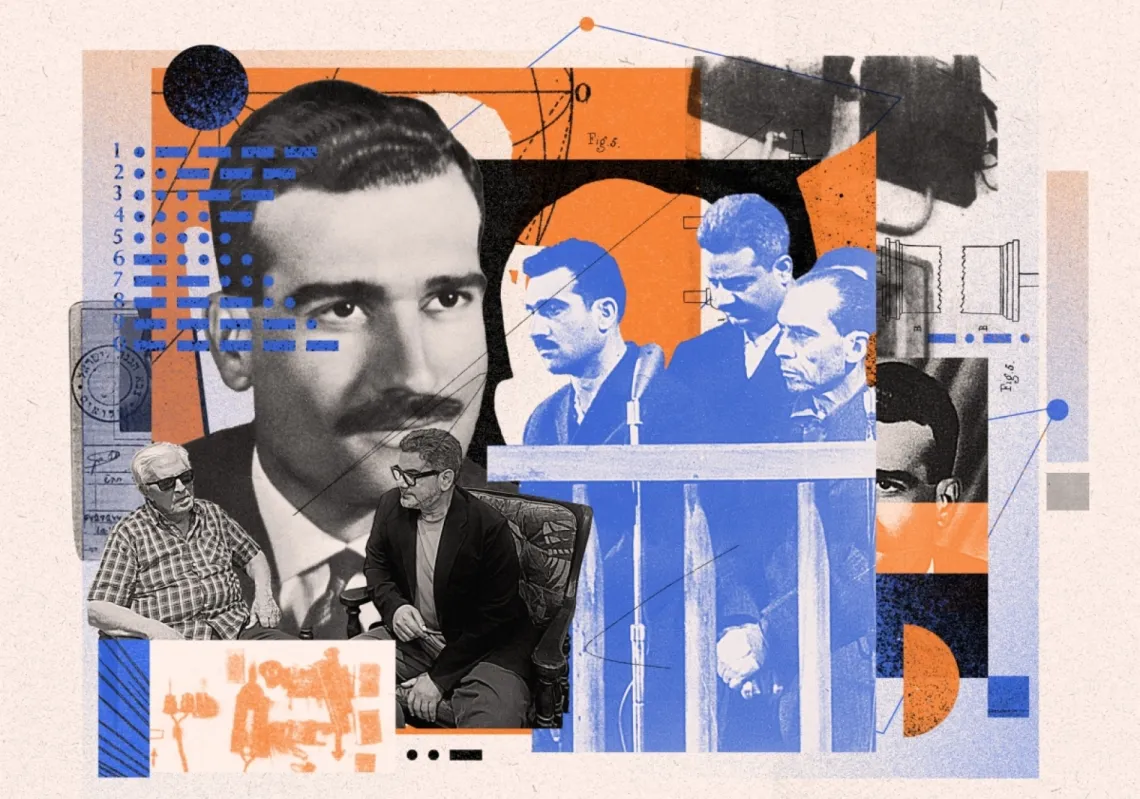
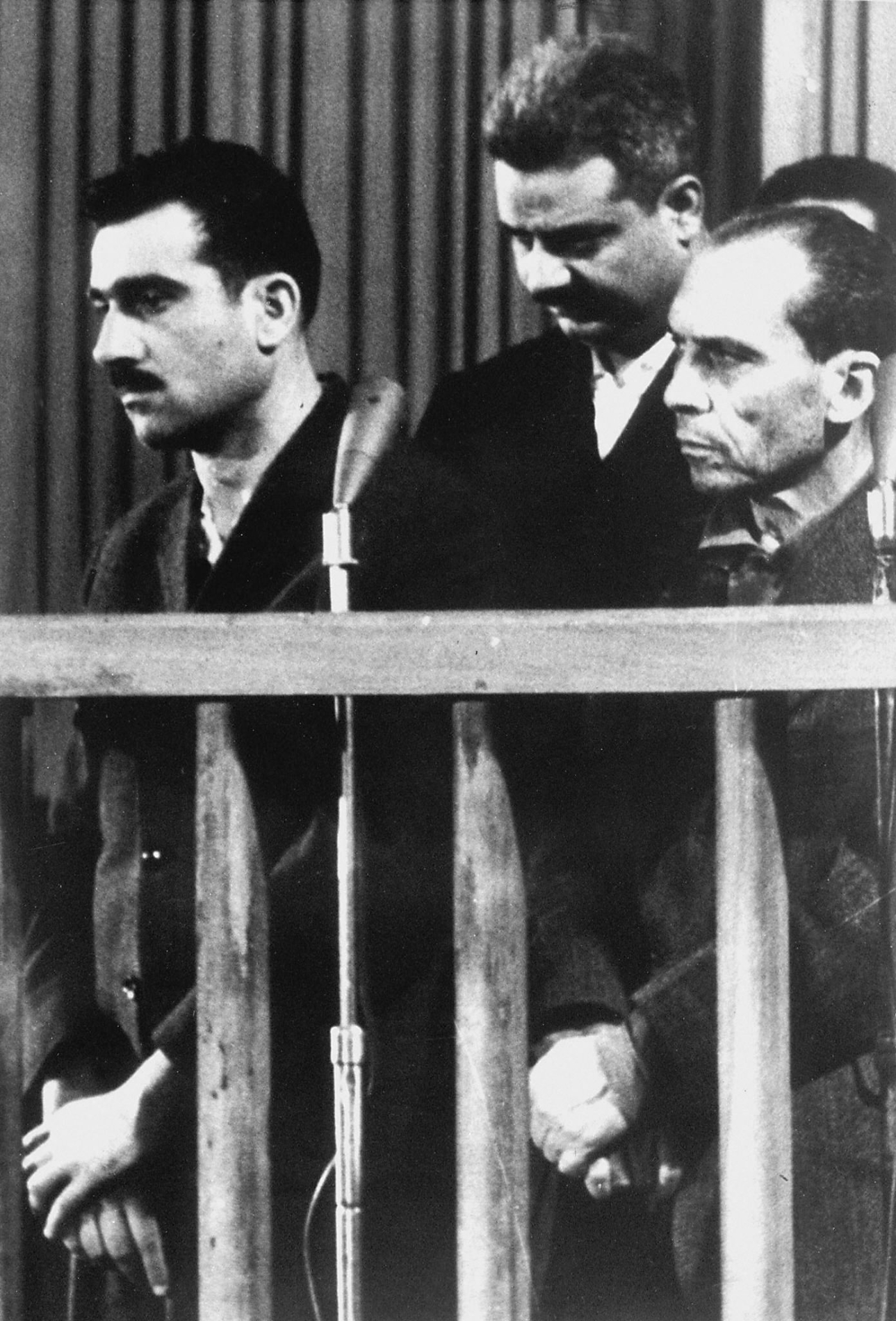
A photo dated 9 May 1965, showing Israeli spy Eli Cohen (left) and two other unidentified defendants during their trial in Damascus, ten days before his execution.

Where do you think his body is now?

Buried outside one of the barracks.

What happened to the messages you deciphered?

They came here and took all of them.

Who?

Mossad. There were intermediaries, and they reached an agreement with Damascus. Mossad came and took all the messages.

Was that within the past two years?

Yes. That’s what I was told by a source who I consider reliable. The messages had already been deciphered and translated. One way they concealed them was by sending them in French rather than Arabic or Hebrew. Once the code was broken, the text itself was in French. I asked a relative of mine who knew French, Ahmad Shawqi Al Rashi, director of the Postal Institute, to translate them. He translated all the messages.

Do you remember any of the most important?

In my view, the messages were not especially valuable. There is a book called Eliyahu Cohen: An Unfinished Spy Project. My assessment now is that he wanted Syrian citizenship and a government post.

Do you remember anything of the messages?

They were things like: ‘I went to see so and so’ or ‘so and so came to see me.’ From what we read, they did not contain any particularly important information.

After the change of regime, there were reports that Cohen’s entire file had been handed over to Israel...

That is what I was told.

What about his body?

I believe it is still here.

Why?

If they had found it, they would have announced it and made a great deal of it. Take the watch, for example.

There were reports that the watch was sold at auction before it reached Mossad...

Before the (Assad) regime fell, there was an event in Israel attended by (Israeli Prime Minister) Benjamin Netanyahu and the head of Mossad. They announced that they had recovered the watch from inside Syrian intelligence. I was surprised. Maj. Gen. Hassan Sharif, deputy director of Military Intelligence, called me and said that someone wanted to meet me and that a car would be sent to pick me up.

Here in Syria?

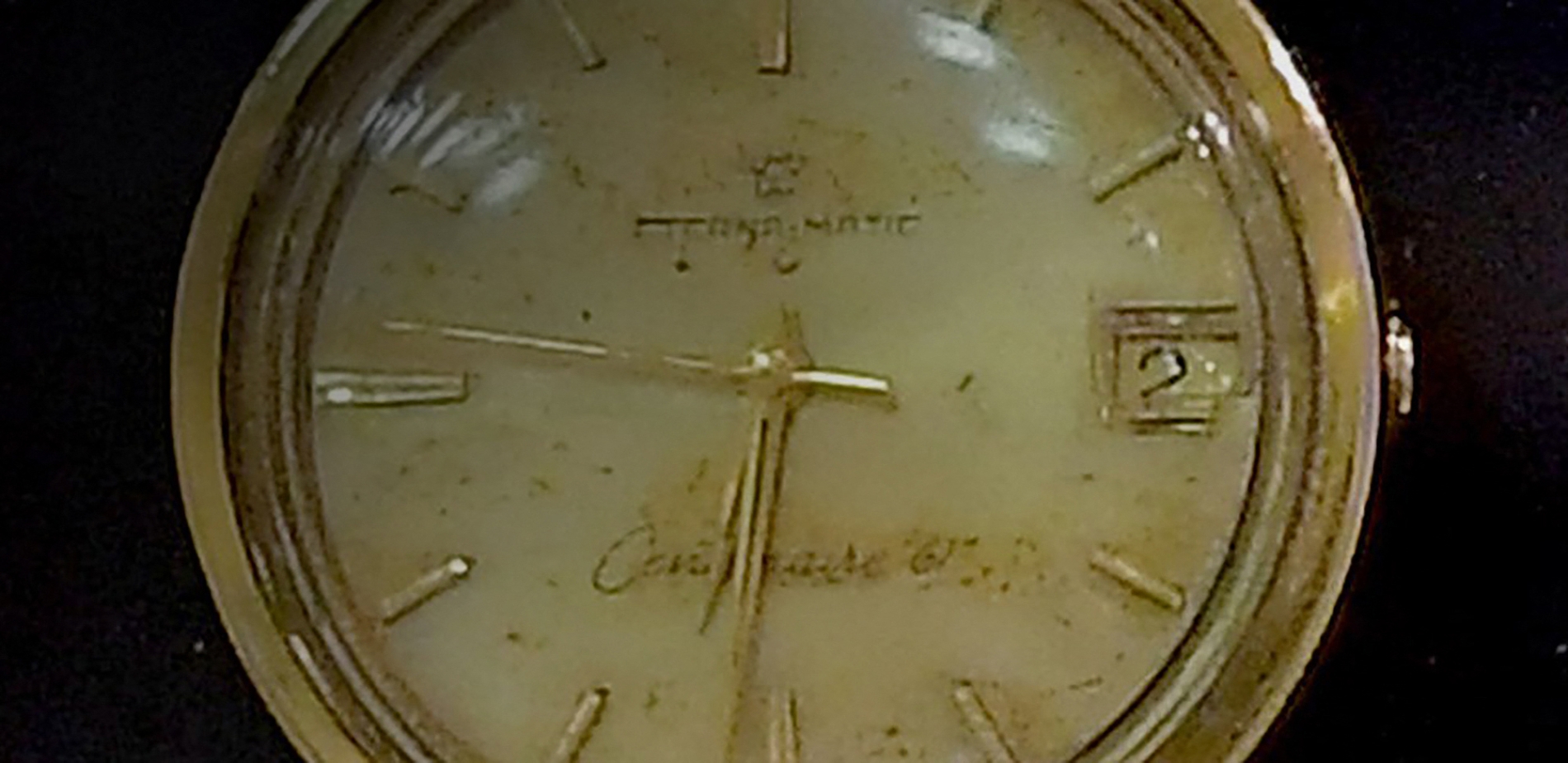
Yes. They took me to a place where an elderly man came in, greeted me, and introduced himself as Maj. Gen. Ali Mamlouk (the former head of the National Security Bureau and Deputy Vice-President for Security Affairs, one of President Bashar al-Assad’s closest advisors). We sat down. He had a photograph of Cohen’s watch and asked whether I recognised it. I said: “That is Cohen’s watch.”
AFP
An undated photo released by the Israeli Government Press Office on 5 July 2018, showing the wristwatch of Eli Cohen, who was executed in Damascus in 1965.

He told me that the Israelis were saying they had taken it. I said: “That is right, they did.” He asked how I knew. I explained that when we arrested Cohen, we took his possessions, but I left the watch on his wrist. He was still wearing it when they transferred him to the Palestine Branch. The officer who interrogated him was Abdul Qader Abdul Jalil.

After I left the army and went into business, I had an office in Sharjah (UAE), where I spent three years. I imported machinery that we sold to the Qasioun Housing Company. One day, I ran into Abdul Qader Abdul Jalil in the street. He was with an Emirati man. I greeted him, and he asked what I was doing there. I told him about my work and invited him to visit my office. He said he had been transferred to the naval college there.

In Sharjah?

Yes. He said it was affiliated with the Arab League and trained Arabs from different countries. We went to a café for coffee and talked for a while. He told me: “I’m the only person who got anything out of the Cohen case. I took his watch!” Then he showed me the watch on his wrist.

Are you certain it was the same watch?

Yes. He was boasting that he had interrogated Cohen and taken the watch. As for how it changed hands after that, I do not know. Someone may have bought it from him, either directly or through an intermediary, or perhaps from his children after his death.
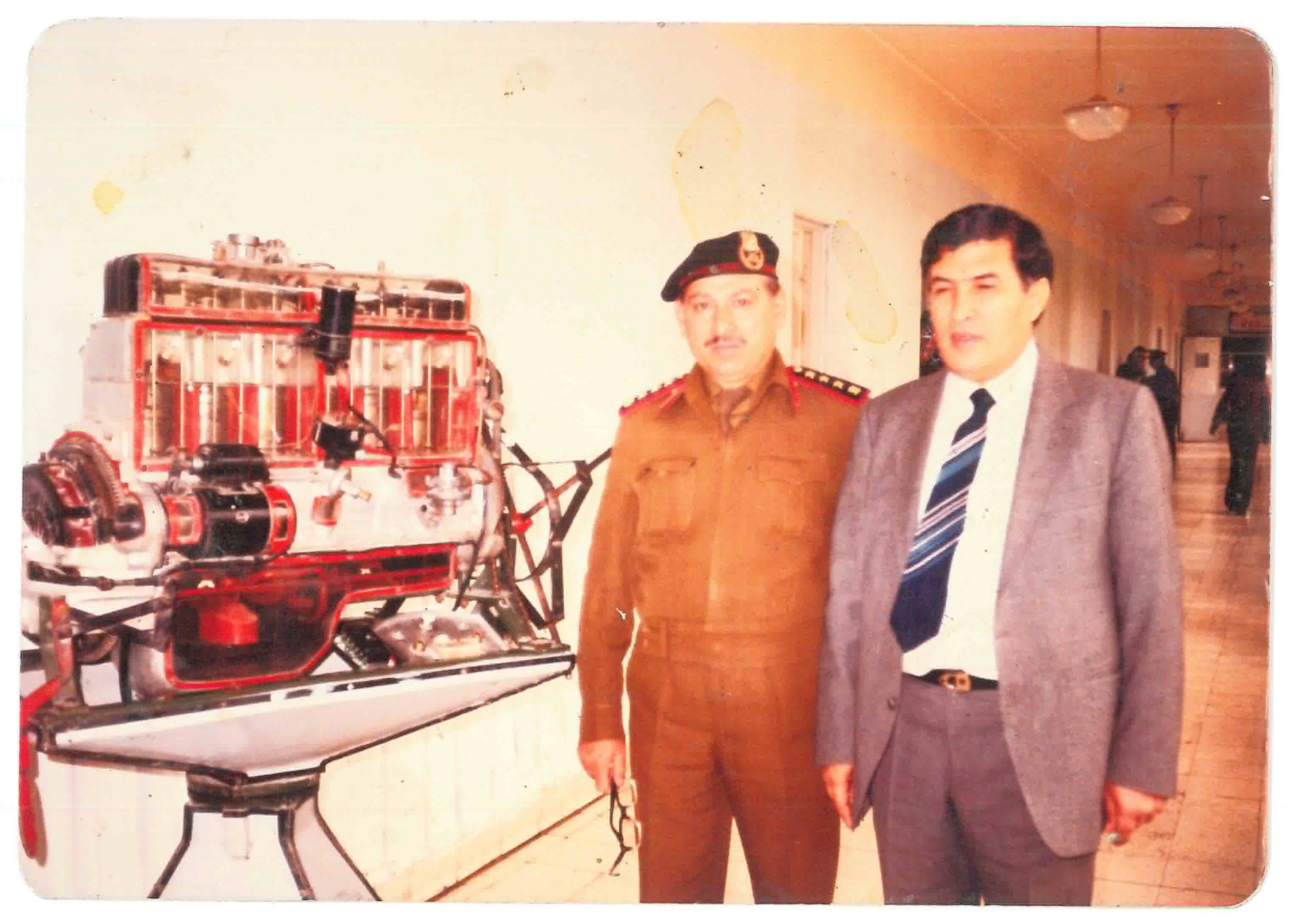
Cohen was buried at the entrance of a military barrack where guards were permanently stationed. That way, the grave would not need to be guarded separately

That is only my assessment. I told Ali Mamlouk that this was all I knew about the watch. Then I criticised the intelligence service. He stood up angrily and left without saying a word. I left afterwards.

Were all of Cohen's files handed over, as people say?

From what I heard, they took the messages. There were no 'files' in the sense that people imagine. What existed were the messages, the texts they already had.

Regarding the Soviet direction finder and the Indian embassy…

I do not believe that account is correct. There were international frequency lists showing which frequencies were used by different stations and embassies, and at what times, rather like a telephone directory. When a service wanted to send someone out with a radio, it would look for a frequency that appeared unused, monitor it, and then test it by sending unimportant messages.

I assess that they selected a frequency and continued using it until we became accustomed to receiving signals on it. Cohen then began transmitting on that same frequency. That is how I understand what happened.

So, the Russian monitoring vehicle had nothing to do with it? Nor did the Indian embassy's transmissions?

As far as I knew from the work we were doing, neither had anything to do with it. 

Al Majalla
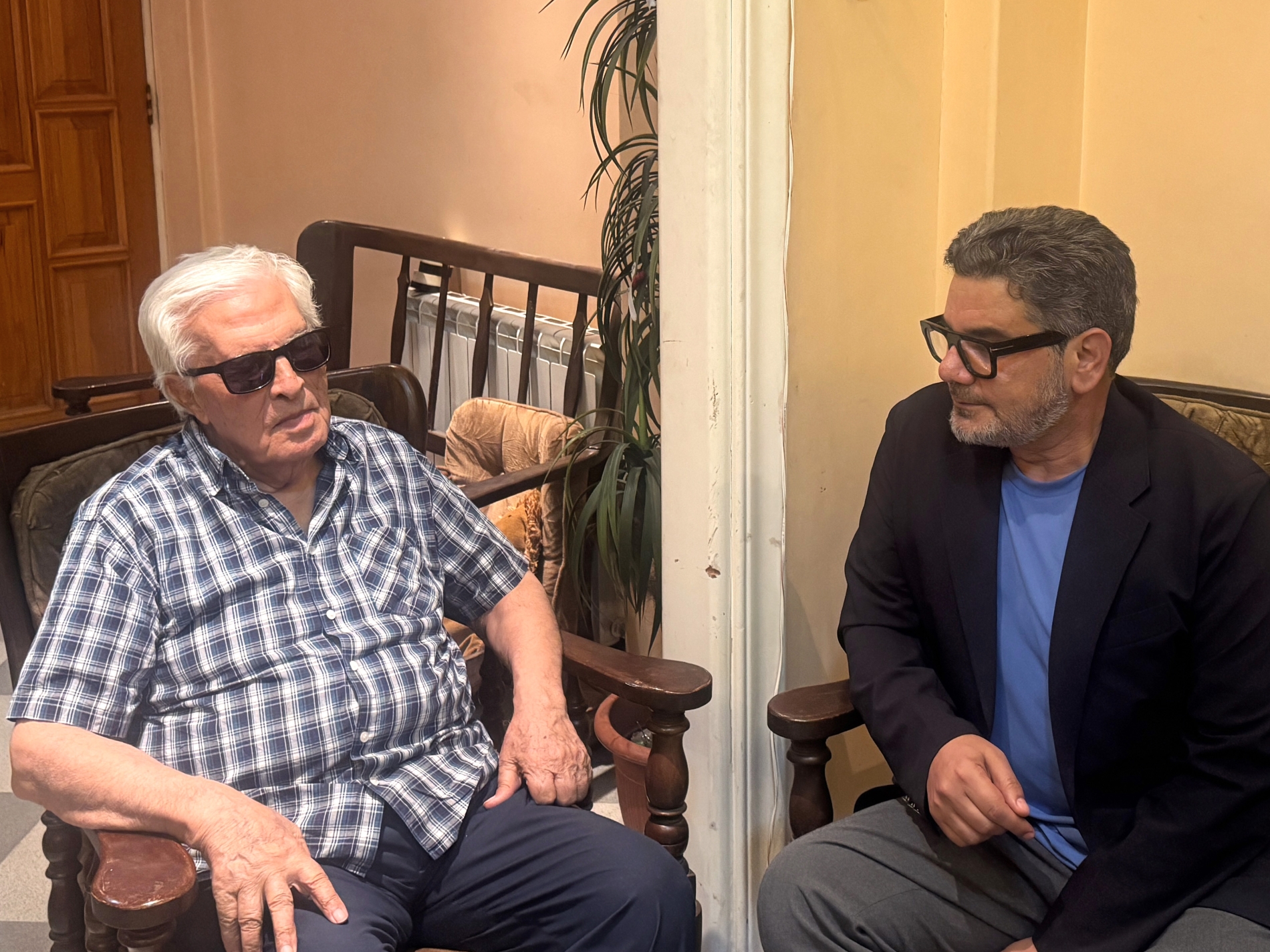
Al Majalla Editor-in-Chief Ibrahim Hamidi during his interview with Said Jawish at his home in Damascus.

Was Salah al-Dalli (president of the military court that tried Cohen) the one who sentenced him?

They decided to execute him, and issued instructions to carry it out. The sentence came within that process. Abu Mughwar, Salah al-Dalli, contacted me several times about publishing a book together. I declined because his book ends at a certain point, after which the trials begin. I did not see enough of a connection between the two to justify combining them in a single volume.

We have talked about Cohen, but I consider another case much more serious. In my view, our telephone communications on the Golan front had been intercepted since the 1950s. We only discovered some of the methods later. From the messages I read, Cohen did not send important information about the Golan. The interception of communications was another matter altogether.

How did that begin?

In the 1950s, wooden telephone poles stood near Banias in the Golan. A thin wire was found hidden in a crack in one of the poles, connected to the telephone line and to a transmitter. The wire had been coated in a material close to the colour of the wood, while the aerial was concealed inside a basalt rock.

How was it discovered?

I did not discover that myself; I was still at the Military Academy at the time. From what we later learned, severe winter weather damaged the pole and broke the wire, cutting off the transmission. An Israeli patrol came to inspect the fault and clashed with Syrian patrols, which captured its five members. Uri Ilan (who took his own life whilst in detention, becoming an Israeli hero) was among them.

After that, communications patrols began inspecting the wooden poles for hidden wires or anything unusual. Later, they used other methods that took longer to uncover. In 1964, before the Cohen case, we were checking the communications systems of foreign companies, including the Iraq Petroleum Company, which had a facility in coastal Baniyas. I suggested to Widad Bashir (head of Signals Company 134) that we visit one of its stations to make sure it was using the frequency assigned to it.

We went first to the T4 station, then travelled to Baniyas the next day. There, a leather case for a signal strength meter caught my attention. I asked about the device and requested permission to take it with us. Using it, we could trace transmissions coming from around the telephone poles.

We found what appeared to be a device concealed inside one of the telephone-line insulators, with the iron arm supporting the insulator serving as an aerial. The device also contained explosives, which made it dangerous to open. We continued our checks and found other devices connected to communications used by the sectors, the front command, and the General Staff.

Al Majalla
Said Jawish with a Syrian officer.

Where was that?

On the military telephone lines serving the Golan.

Were they intercepting communications from Baniyas?

I mean Baniyas in the Golan, not coastal Baniyas. The poles there were close to the border. Using the meter, we found other devices, including one on an old wooden pole near Kafr Harib. We assessed that important communications had been intercepted this way for many years.

What was your reaction when you heard about Hezbollah's pagers exploding?

I thought more attention should have been paid to the security and technical risks involved in acquiring the devices. They turned to pagers because they believed their radio communications could be intercepted. If I had been responsible for purchasing them, I would have found a way to conceal the identity of the eventual users. As for what happened inside the devices and how they were detonated, that would require a technical investigation. My assessment is that a security lapse in the procurement process contributed to what happened.

Would you like to add anything?

I repeat: Cohen was uncovered by the technical unit, Signals Company 134, commanded by Maj. Mohammed Widad Bashir. The other agencies became involved only after we found him. I do not believe the account involving the Indian embassy is correct.

I also want to say something about those who were imprisoned in the case. In my view, not everyone who knew Cohen knew that he was a spy. Some saw him simply as a wealthy businessman looking to invest and approached him with project proposals. Majed Sheikh al-Ard (a wealthy Syrian businessman who helped Cohen buy an apartment, become a shareholder in his company, and who inadvertently helped Cohen infiltrate the Syrian government) was one of them.

When Cohen entered Syria through Lebanon, Majed had come from Europe in a car. At the time, Syrians bought cars in Germany and sold them in the free zone. I believe those arranging Cohen's entry looked for someone travelling in a car who could take him into Syria. Cohen met Majed on the journey, and the two began talking, as travellers often do. Cohen said he was an expatriate who wanted to go to Damascus, and Majed offered to take him there in his car.

Was that used as evidence against him?

That was exactly what I objected to. Cohen told the investigators that he met Majed during the journey, but in my view, simply meeting someone on a journey does not mean that you know what they are really there to do. I believe Majed Sheikh al-Ard (who was jailed for life and later committed suicide in prison in Palmyra) was treated unjustly. I believe he was innocent.

font change