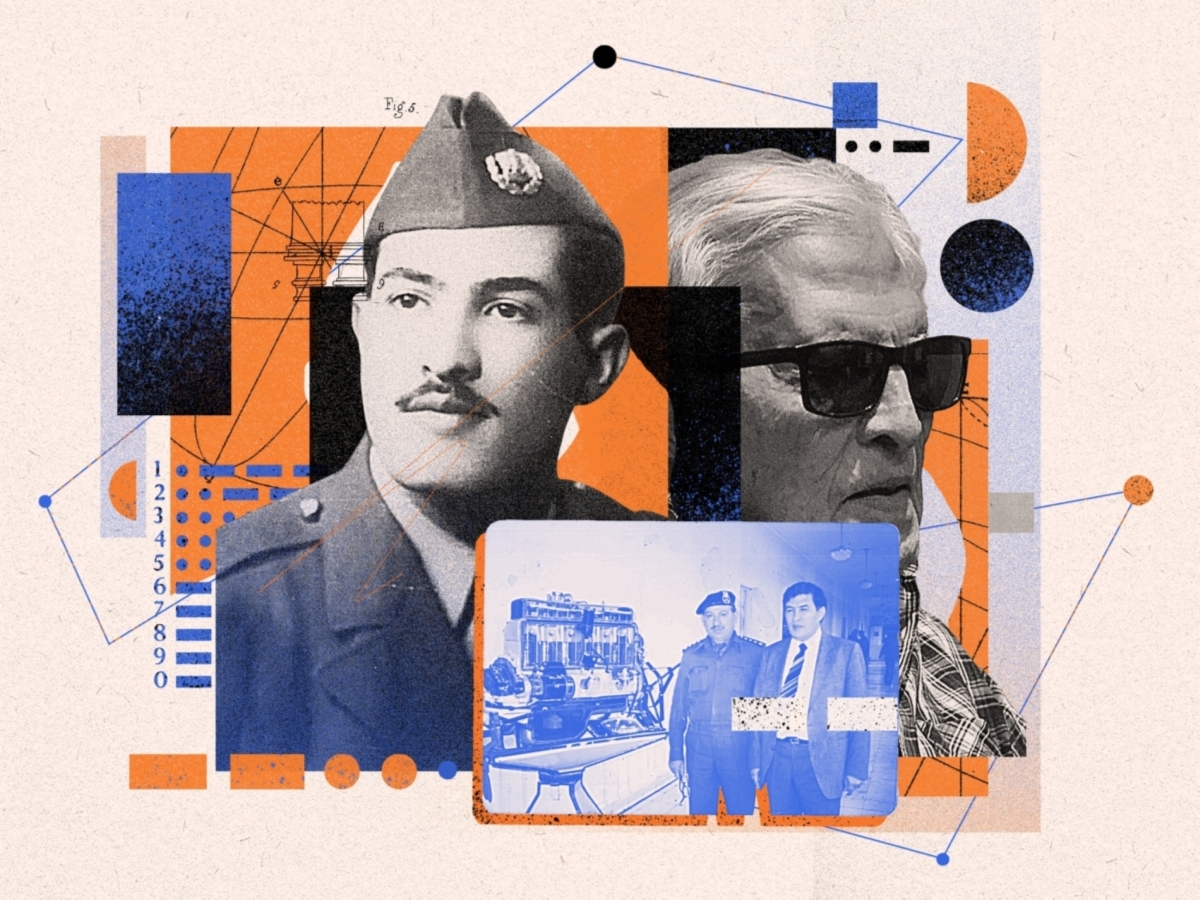
Said Jawish Interview Part 1: monitoring Israeli communications

The man credited with catching Mossad spy Eli Cohen in Damascus in 1965 speaks exclusively to Al Majalla about his early career and his idea to tap Israeli messages

Eduardo Ramón

Said Jawish Interview Part 1: monitoring Israeli communications

Said Jawish grew up in the Kurdish Quarter of Damascus, in a family that knew financial hardship, and worked as an electrician before joining the army. He learnt Hebrew from two Palestinians and later taught other Syrian soldiers the language. Still, he could not have imagined that Hebrew would lead him to an Israeli spy: Eli Cohen.

Now an old man with poor eyesight, Jawish specialised in signals and taught at the Military Academy in Homs. His students later held leadership positions in politics, the army, and intelligence. On his way back from teaching his students about signals, he hit on an idea for listening to Israeli communications. This was outside his remit, though, so he had to convince the army’s senior command.

At his home in Damascus, he told Al Majalla about his attempts to get permission to set up listening stations in the Golan Heights and to train dozens of Syrian soldiers how to intercept Israeli messages. Finally, a stroke of luck and a flower bouquet helped get him the nod he needed. It marked the beginning of an undertaking that Jawish recounts in detail, including its locations, equipment, and personnel.

Signal Company 134, part of the Signal Corps, was established to carry out this work. As he explains, its activities were not confined to military communications; they also included radio broadcasts, news agencies, and other work. Some were transmitted in Morse code, in groups of letters or numbers, without any clear indication of the sender or recipient. The messages were intercepted and recorded. There was just one problem: Jawish’s team could not decipher them. As the logs filled with these transmissions, no one could know where one of the messages would eventually lead.

Here is the first part of the interview:


How would you introduce yourself?

I am a Syrian from Damascus, from the Kurdish Quarter. I grew up there in difficult economic and material circumstances. I worked in the electrical trade. Some Palestinians came and settled in our neighbourhood, including Muhammad Atiya and Ibrahim Bakr, both of whom became my Hebrew teachers.
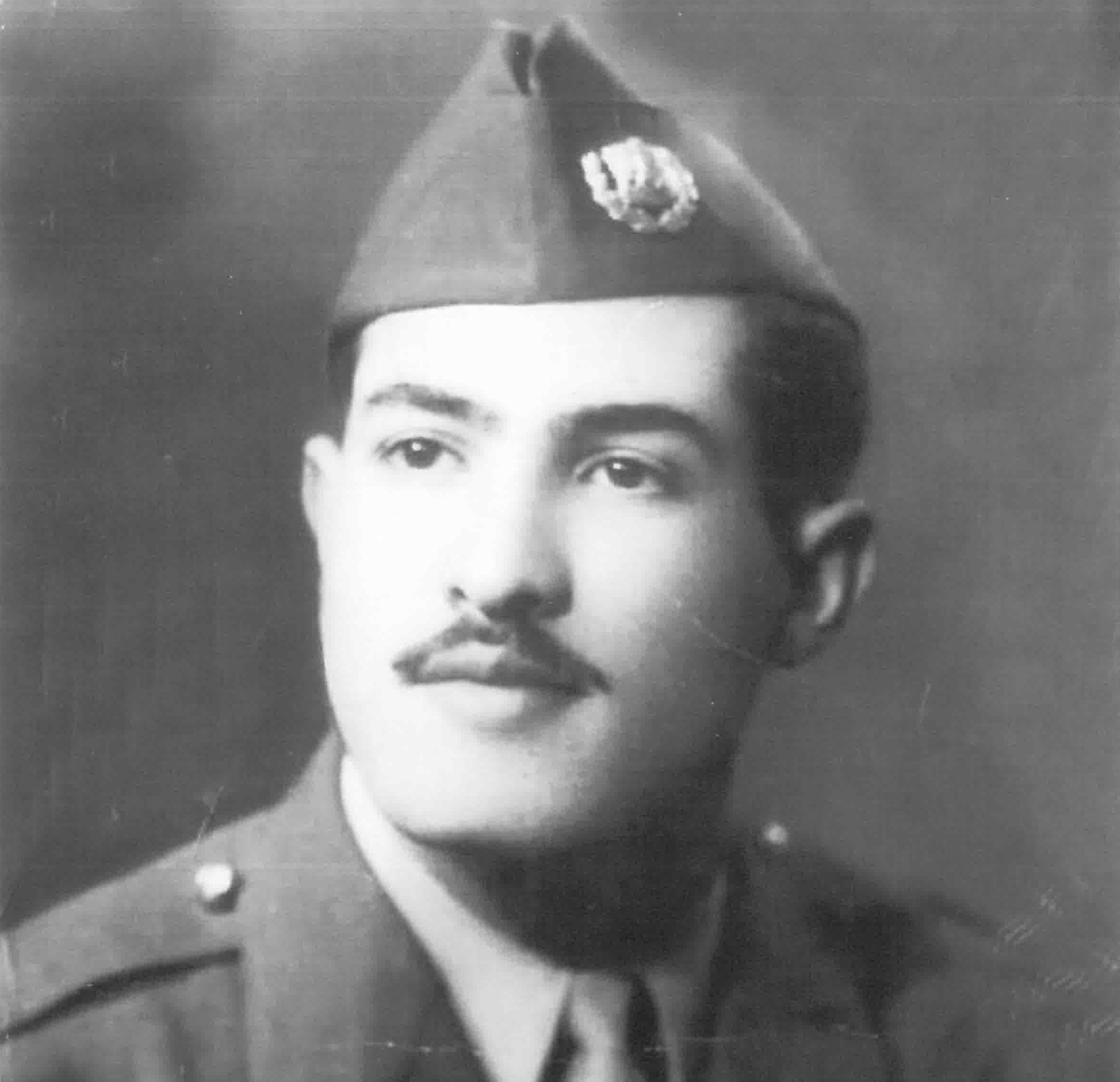
Al Majalla
Said Jawish

As a young man enthusiastic about the Palestinian cause, I learnt Hebrew from them. In 1951, I joined the army at the School of Specialists, and specialised in the Signal Corps. They gave me a Hebrew-language course because I already knew the language. My teachers were Muhammad Atiya and Yahya al-Yahya.

Did they come to Syria before the Nakba?

Yes, in 1946. I joined the army during Adib Shishakli’s rule. He was the greatest, most honourable and most patriotic figure Syria ever had. I didn't know him, and we weren't related, but I know Syria prospered during his time. He was not seeking power when the Baathists and the British conspired against him through the Iraq Petroleum Company. I know about that whole conspiracy and how it happened.

What year was it?

Early 1954. At the time, after I had been transferred there, I was teaching Hebrew at the Military Academy in Homs while also reporting for duty at the Central Branch. During Shishakli’s time, the intelligence branches were called the Central Branch. So, I taught at the academy and reported for duty at the Central Branch. Among the people I taught in my first course who became well known were Mustafa Tlass and Ali Zaza.

Tlass became defence minister, and Zaza became director of General Intelligence.

Correct. Zaza later became interior minister. I was teaching Hebrew. My first course included Ali Zaza, Ali Aslal, Mustafa Tlass, and Abdullah al Khatib. The latter was an intelligence officer during the Syrian-Egyptian union, from 1958 to 1961. Well-known officers graduated in 1955 from a later course that I taught, including Rabah al Tawil, Salim Hatum, Adnan Dabbagh, Nasir al Din Nasir and Hassan Turkmani, who later became defence minister. In 1956, I taught students how to use a radio communications set, how to receive signals, and so on.

What kind of set was it? Soviet?

It was Canadian. We did not have Soviet equipment. It was a Canadian set of the kind used during the Second World War. I heard one station calling: “Torch One, Torch Two, Fox One, Fox Two.” I told the students to listen. The lesson was about how to use the equipment, and I told them it was a military station calling another station. The lesson ended, and I returned to my room. Then a thought occurred to me: why don’t we monitor the Israeli army’s radio communications?
Getty Images
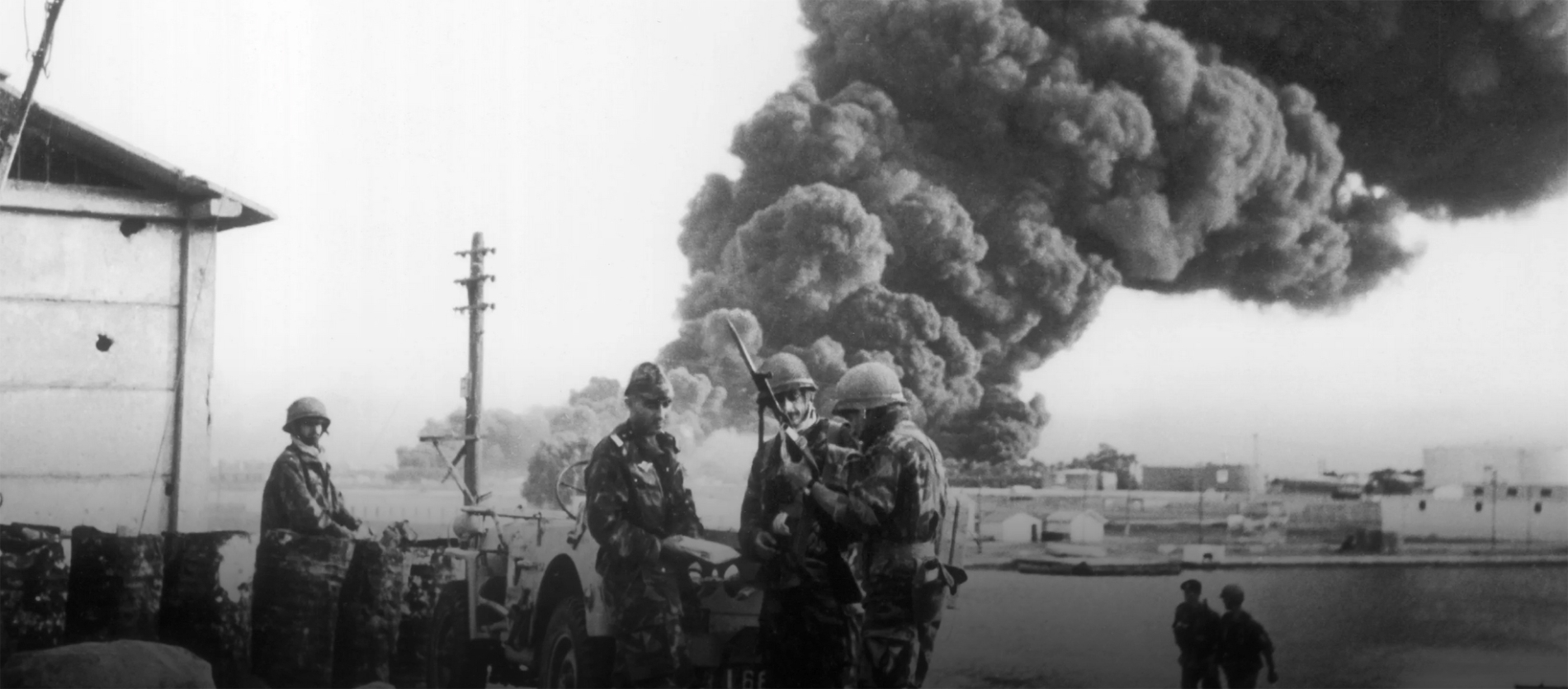
French soldiers in Suez in 1956.

When was that?

It was 1956, the year of the Tripartite Aggression against Egypt (the Suez War, fought by Britain, France, and Israel). I prepared a proposal and submitted it to the command through the academy director. Incidentally, the directors of the Military Academy at the time were all Damascenes, while the instructors came from different regions. About 20 days later, the commander summoned me to the Signal Corps.

Two officers were with him, and I had the proposal on the table in front of him. He said: "What is this?" I told him it would let us hear what the Israeli army was saying, gather information, learn how they communicate, and determine the echelon of the unit transmitting. For example, was it a battalion, a company, a platoon, or a brigade? We could estimate its size, decipher the cipher they use, and so on.

How did he respond?

He began mocking me. "Oh, those poor Jews," he said. "What will happen to them if you decipher the cipher they use!" He continued mocking me. I controlled myself and answered seriously. In the end, he said: "This is a big job. Go back and keep teaching Hebrew. This is not your job."

I came away deeply shocked by the negative response. I went back to Homs on one of the old buses known as bosta. Tears streamed down my face throughout the journey. I felt as though I had failed. But I took it as a challenge, so I submitted the proposal to the Intelligence Section.
The lesson ended and I returned to my room. Then a thought occurred to me: why don't we monitor the Israeli army's radio communications?

Was there an Intelligence Section at the time, or was it the Second Bureau?

It was called the Second Section, because the General Staff had four sections: First, Second, Third, and Fourth, each with its own responsibilities. The Second Section was for intelligence; the First handled personnel, transfers, and related matters; the Third handled training and operations; and the Fourth handled supplies.

I got nowhere. Then, in 1955, Adnan al-Malki was assassinated, and Col. Said al-Aqel took over. He had served in Signals and had been my instructor. He was a lieutenant when he trained me, but was later promoted to oversee army operations in the Third Section.

What happened?

I asked about him and was told that he was ill at home. I asked for his home address and was told that he lived in the Midan district of Damascus. I bought a bouquet of flowers and went to visit him. He received me because he knew me. He asked: "How are you, Said? How's the Hebrew at the academy?" I said: "Well, sir, I have a project."

He asked what it was. I told him I wanted a recorder and another device, and that I wanted to go to the Golan and stay there on an open-ended assignment to record all Israeli army communications on tape and in writing. Then I said I wanted to train personnel on a course and deploy them to monitoring posts. He liked the idea very much. "Can you carry it out?" he asked. I said I could, but that the first step needed to be taken. He said: "Fine. I will return to work in two days and summon you."

A week later, a telegram arrived dated 30 September 1957. I remember the date because I regard it as important. I reported to Army Operations. I prepared a letter to the Signal Corps asking them to provide the equipment I had requested. I collected the equipment, and we went looking for a location in the Golan, which at the time was ours, meaning Syrian. The command there was in Quneitra, so I chose the nearest location.

 I needed cover because Israeli intelligence was buying off shepherds. If they learned that there was a radio set somewhere, they would try to find out about it

Where did you take the equipment?

I took it to a village called Na'ran, near another village called Julaybina. The house owner was a Circassian named Shawkat Bagh. We contacted him, and he asked what our mission was. I told him that if communications in the area were cut, if the Israelis bombed it from the air and the telephone lines went down, I would be able to establish communications.

That was my cover for being there, not my real mission. I needed cover because Israeli intelligence was buying off shepherds. If they learned that there was a radio set somewhere, they would try to find out about it. I leaked that information as cover, and I stayed there for an entire year.

Until 1958?

By then, the (Syria-Egypt) union had taken place, and I had recorded all the communications both on tape and in writing. The Training Directorate requested nominations, and 44 NCOs (non-commissioned officers) were put forward. I taught them Israeli radio procedures, how the Israelis communicated, and gave them comprehensive information. The course lasted six months.

When it ended, we selected locations in the Golan: Skoufia in the south, Na'ran in the central sector and Zaoura in the north. We rented the last location from the village chief, Wajih Badr, whose son was a major in the army. We also established a post in Damascus, between the General Staff and the Military Theatre. We were a unit called Signal Company 134. It had absolutely nothing to do with intelligence.

Who was it under?

The Signal Corps. That was where our work began. We monitored the Israeli army. One section monitored radio broadcasts, and another monitored news agencies to complement the work. Encrypted messages sent in Morse code also caught our attention.

Al Majalla
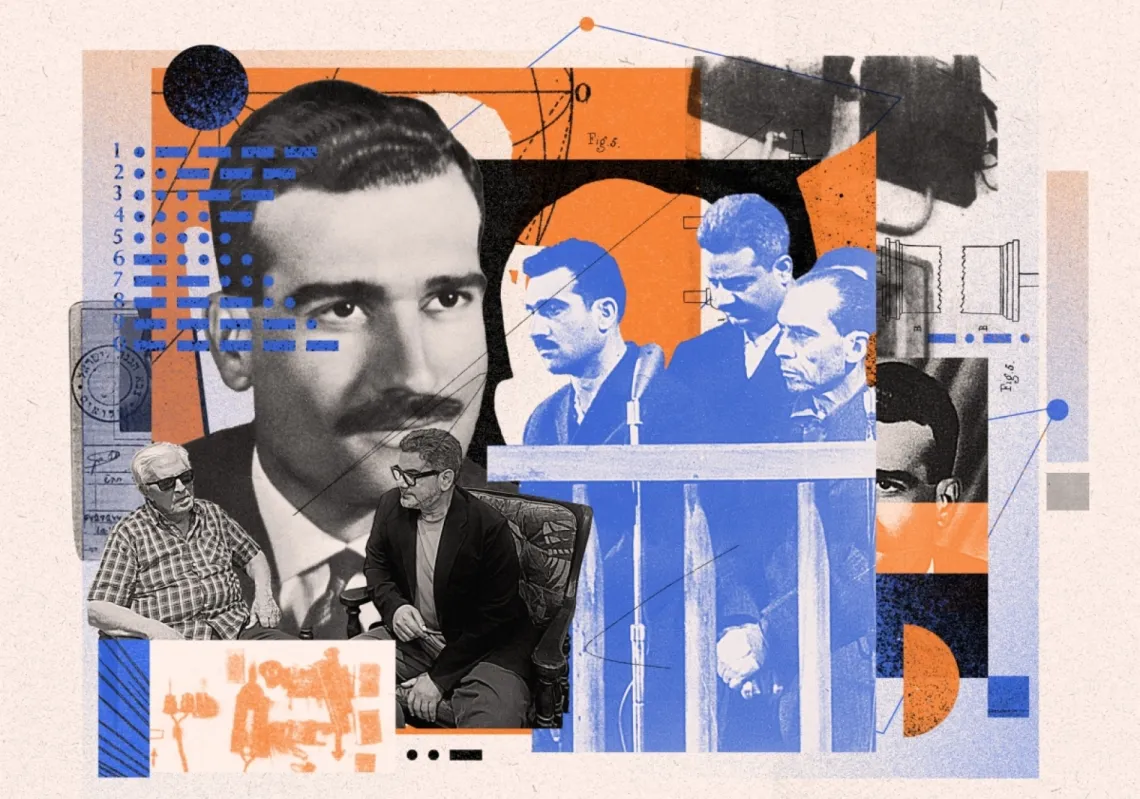
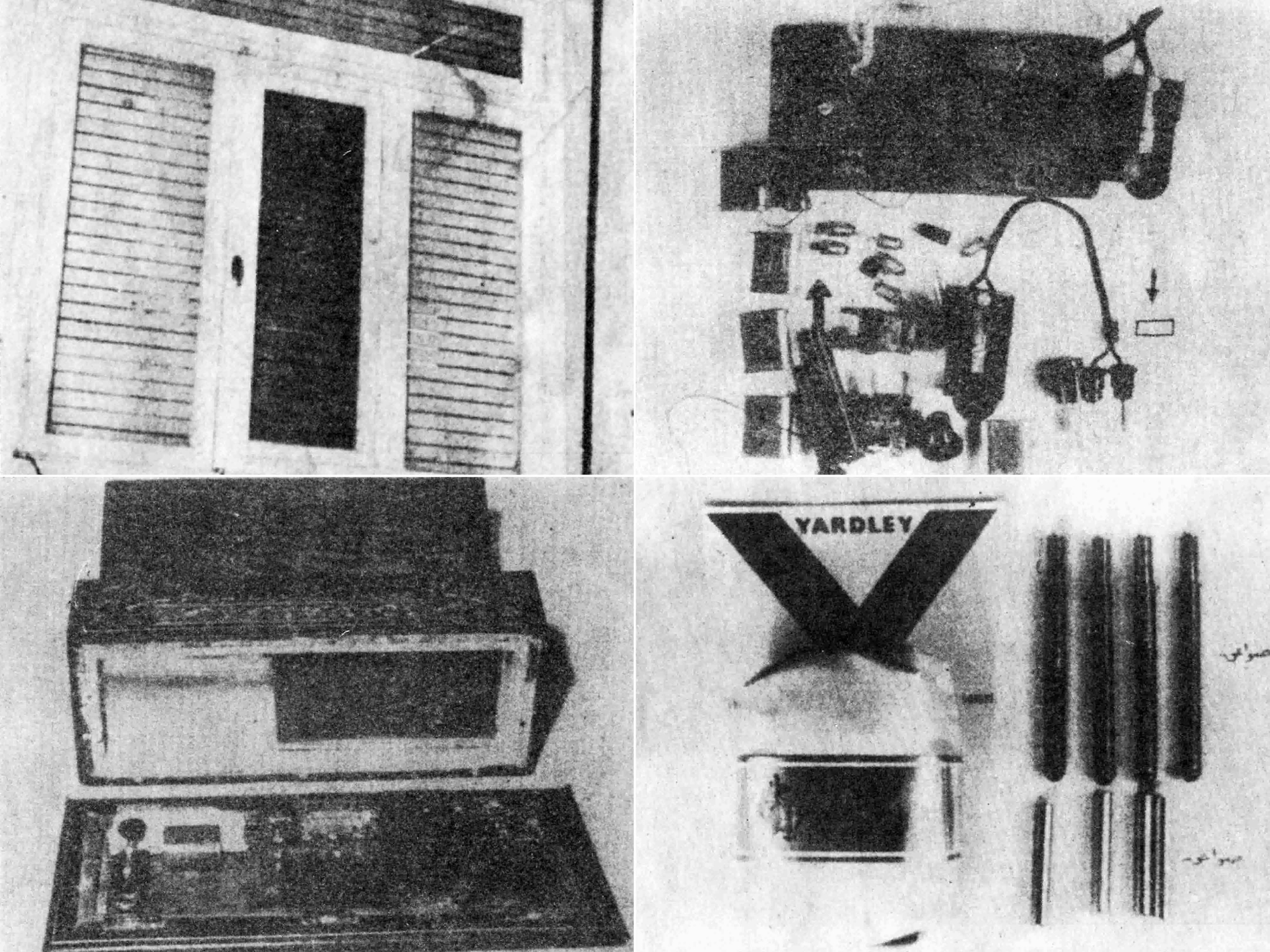
A photo showing the equipment used by the Israeli spy Eli Cohen.

When was that?

In 1958. Those communicating by Morse usually began their messages with "VVV", as though they were saying, "Test, test, test." They would then transmit "N-O-NOW" and begin the message. The sender would not give his name or identify the person he was contacting. The message consisted of groups of five letters or numbers and could fill almost an entire page. It ended with a full stop, after which the transmission ended.

The other party did not acknowledge receipt. No name was given for the sender or recipient. It was sent in modulated Morse. Morse is sent in two ways: modulated Morse (MCW, which you hear as a whistle on an ordinary radio) and CW, which is more like a blowing sound. CW has a longer range and is used by spies, while MCW has greater transmitting power.

A spy's equipment is low-powered so its signal doesn't travel too far, making the transmission harder to intercept. That was how we began monitoring those communications and trying to decipher them, but we couldn't. We had no computers back then, so we tried to do it manually. We managed to break Arab ciphers, including Saudi and Iraqi ones. They were easy to decipher, but we couldn't break the Israeli cipher.

Did anything change for you during the union?

Not for me, but they objected to my certificate and to the instructor from whom I had received my training, so they summoned me. I went to Egypt in 1958, to the Military College, sat an examination there, received a certificate, then returned, but nothing changed; we continued our work. We were technicians; we had absolutely nothing to do with politics. Our work concerned Israel alone, and nobody questioned us. The Baath Party came to power, and we continued working. Nothing changed for us.

You were intercepting messages but couldn't decipher them...?

Correct. Then Unit 134's commander changed. In 1958, they appointed a man named Muhammad Ali Alwan. I had trained him at the academy on special courses. That was during the union. When the secession took place, they appointed a Major named Mukhtar Kilarchi, who was from Damascus. After the Baath coup, they replaced him with Aziz Abdullah Dioub, who was from the Syrian coast. After him came Muhammad Widad Bashir, and during his tenure we accomplished certain things.

When was this?

This was 1964.

***Coming up next in Part 2: Three years tracking an unidentified signal***

font change