Said Jawish Interview Part 2: tracing the cable to Cohen

Speaking exclusively to Al Majalla, the man who caught one of Israel's most famous spies working undercover in Damascus tells how he broke the rules to catch Mossad's top spy in Syria

Said Jawish Interview Part 2: tracing the cable to Cohen

When Syrian army personnel at Signals Corps 134 intercepted an Israeli message in 1962, they had no name to search for. They had a radio frequency, a transmission date, and a code assigned to the unknown sender to distinguish their messages from others, but they had not yet broken Israel’s cipher, so they did not know what it said. Said Jawish, a signals specialist who taught Hebrew, led the team and the operation. He recently sat down with Al Majalla and revealed details of a famous Syrian counterintelligence operation more than 60 years later.

His small team kept the intercepted Israeli messages and sent copies to other teams. One team worked to break the cipher; another used Soviet equipment to locate the source. For three years, they saw what would prove to be Mossad spy Eli Cohen’s messages, but they did not know it was him. Later, they triangulated the sender’s position to 1km, then to a block, then finally to a building, whose residents they immediately investigated.

In this second instalment, Jawish retraces his team’s route from the signal to the address, from their searches of the wrong apartment to their rooftop escapades that revealed a professionally installed aerial. It stood out from all the other ham-fisted DIY jobs. The businessman on the fourth floor who spoke fluent Arabic was suddenly of interest when the team traced the cable to his home.

Ironically, if he had followed his commander’s steer, the diligent Jawish would not have pursued the clues to Cohen. Finally, after six decades, he has told how his team got their man, when their superiors had been too busy to bother. The details read like a John Le Carré novel, but they are true. For decades, Israel has lauded Cohen as a legendary Mossad figure who won the trust of Syria’s most powerful men and relayed their secrets, but the details of how he was exposed in 1965 as an Israeli spy are only now being revealed. Here is Part 2 of our conversation.

Not yet caught up? You can read the introduction and Part 1 of this instalment.


How did the Eli Cohen case begin?

We monitored several signals, including Cohen's and tracked them step by step. In 1962, we intercepted his first message, but we did not know who he was or where he was transmitting from. Whenever we intercepted a signal, we recorded the frequency and the date and assigned the sender a number or code. We did not know who he was, but we had a code for him. Cohen was one of those people.

Mustafa Wahbi al Kayyali, from Idlib, intercepted the signal. Mustafa intercepted the messages and filed each one. We did not know what they meant. A copy went to the cipher section, which could not decipher it, and another to the direction-finding section to locate the source. This continued from early 1962 until 1965, when we narrowed the location to Damascus, then to a triangular area south of Abu Rummaneh, between Abu Rummaneh and Air Force Command.

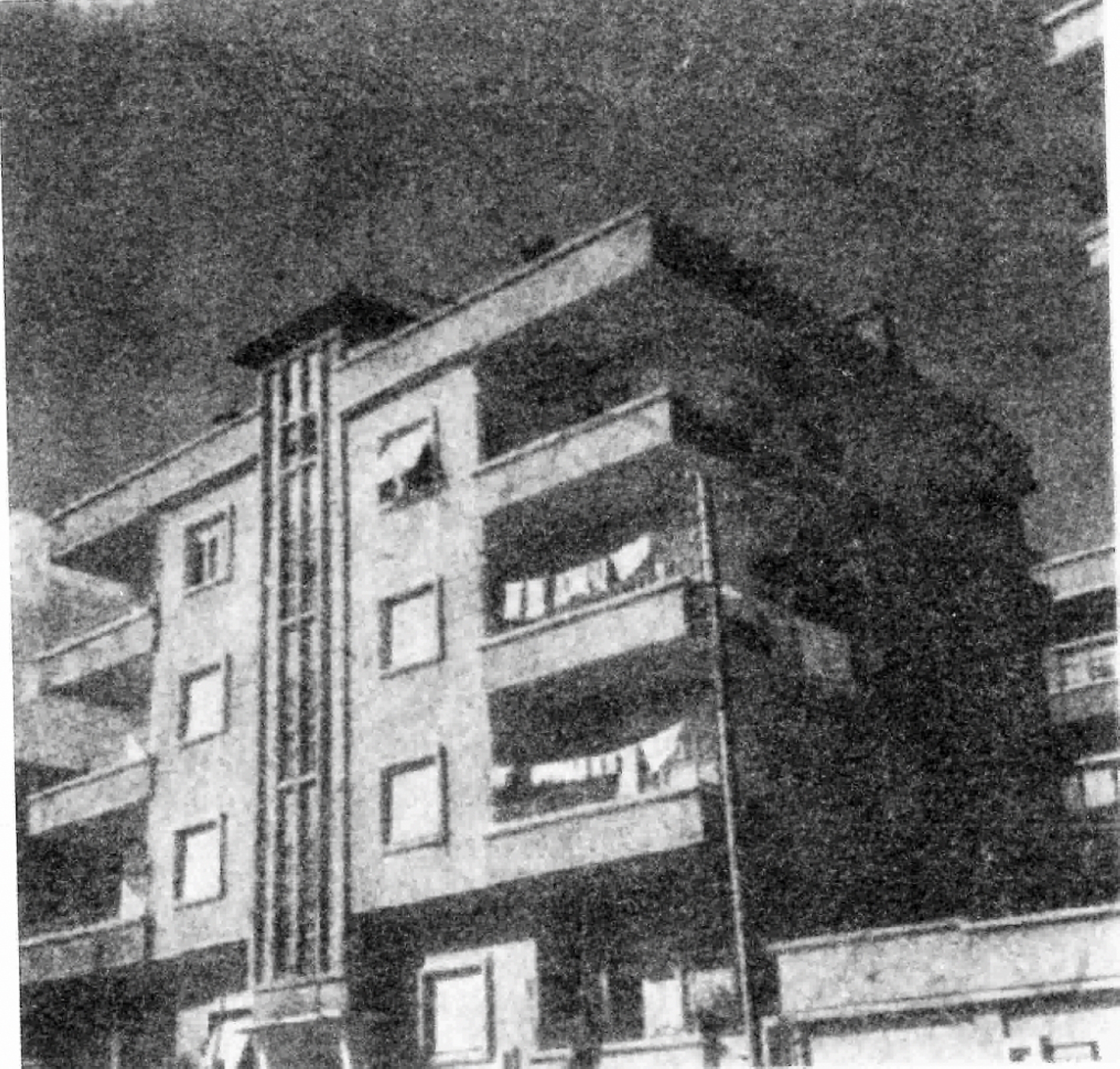
The Russian direction-finding equipment could not pinpoint the location exactly. It could identify an area extending 1-2 km, but not a house or a room. It identified this triangle, so we began investigating residents in that area, from the well-known Najma Square to the area near the Méridien Hotel. We continued until we narrowed the location down to just one building.
Al Majalla
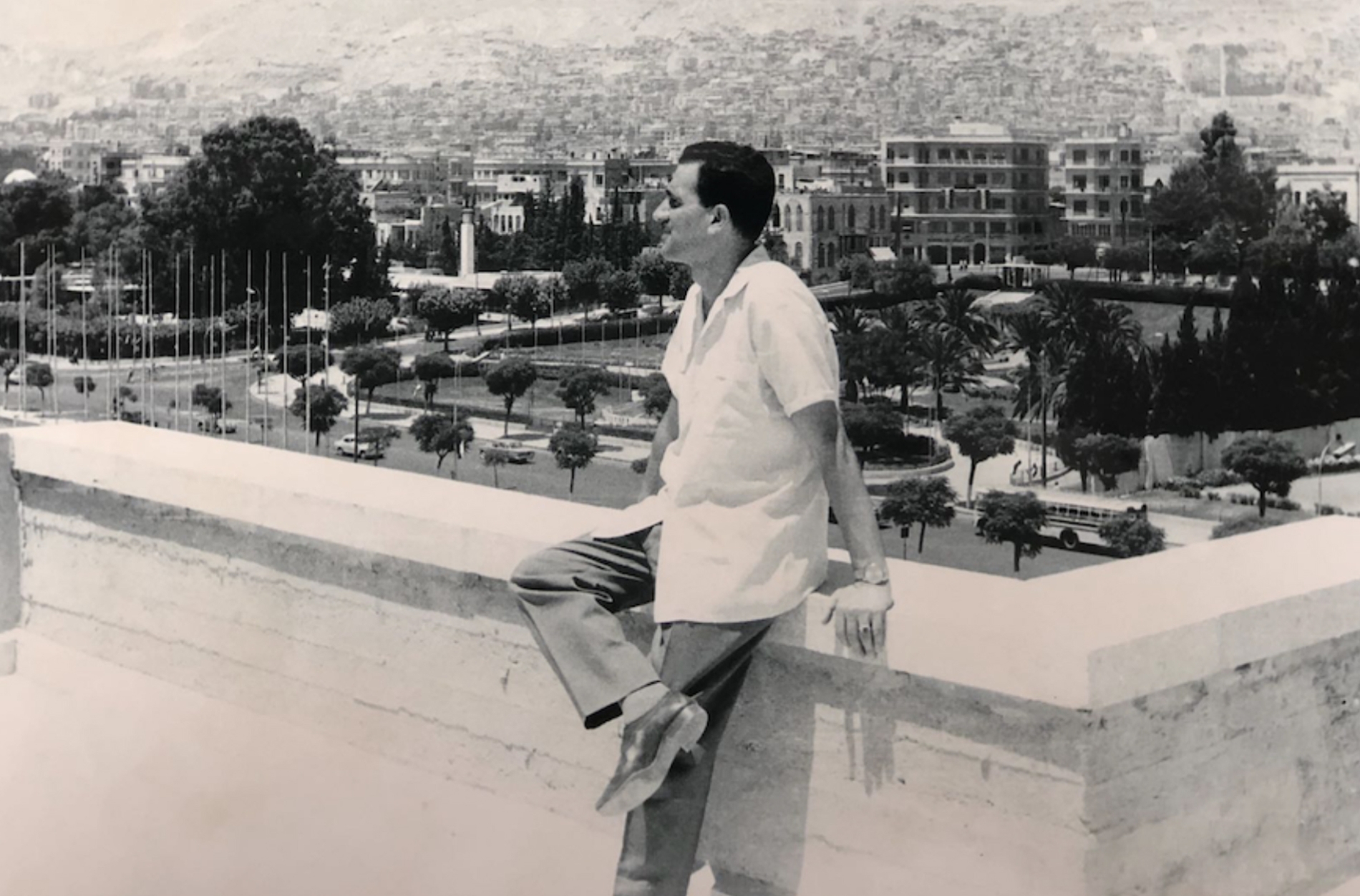
The building where Eli Cohen lived in Damascus.

How did you narrow it down? With the direction-finding equipment?

Yes, we continued using it until the search focused on one building, then we investigated its residents. A foreign officer serving with the international monitoring body lived in the basement.

Was that during the armistice with Israel?

Correct. He was serving with the armistice mission. A pilot of Greek origin who worked for Syrian Airlines lived on the ground floor. The apartments in the building were small. A diplomat from the Turkish embassy lived on the first floor. There were also elderly, unmarried women from Damascus who worked as seamstresses, so we ruled them out.

I went to the airline and obtained the pilot’s travel schedule for the previous year. We compared it with the transmission times and found that, on most days when the pilot was away, there was no transmission, whereas there were transmissions on the days he was in Damascus. We presented our findings to the unit commander. He said: “By God, it is the pilot!”

What happened?

We had to enter the pilot’s home. We went to the Criminal Security Department and obtained Criminal Security and Interpol identity cards. Our pretext was that we were searching for drugs, so we would not reveal our real mission. On the appointed day, we went and knocked on the door. An elderly man opened it. He was elegantly dressed and appeared to be Greek. He was the pilot’s father and had been an army general before retiring. We entered and told him that we were from the police. We asked about the pilot, who was still in bed, as it was 8am.
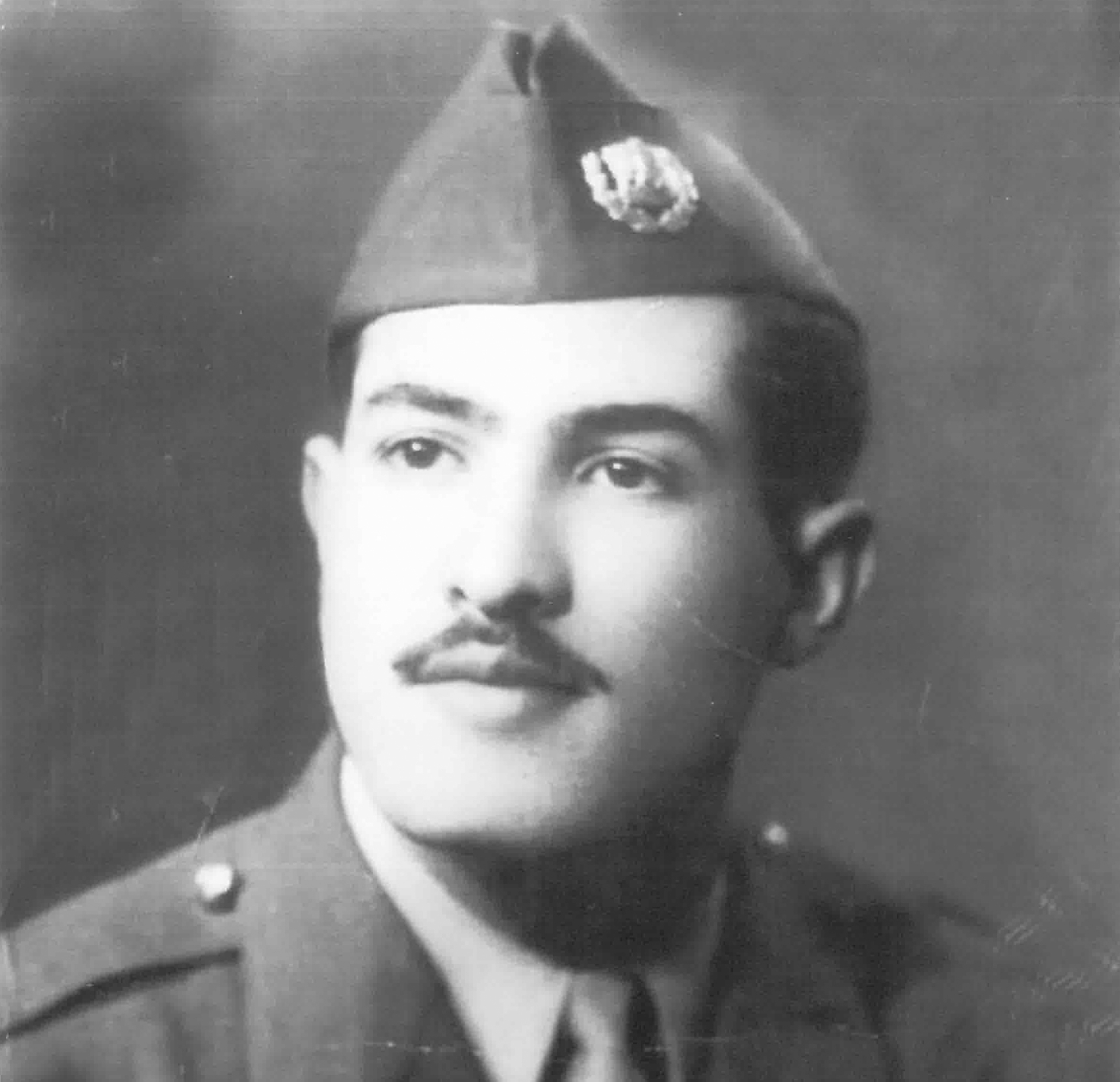
He said that he had encrypted his messages using a French book called The Three Musketeers

Said Jawish

The pilot said, "I speak Arabic; I'm a pilot with Syrian Airlines." We told him our information indicated that hashish was being brought to him from Lebanon and that he was smuggling it to Europe. We gave him a plausible explanation, given that Syria was a transit country. He said: "I have nothing to do with drugs." We told him that telling us where the drugs were would reduce his punishment and asked again. He said: "Absolutely not. Search."

We searched every inch of the flat and found no sign of any communications device. We apologised and left, but he was angry because we had body-searched him, his father, and his wife as well, so he said he would complain. We stood outside, unsure what to do, then said: "Since we have come this far, let us check the other flats."

We went down to the foreign officer's home and knocked. We said we were from the police. He told us he would not allow us in and that we had to contact the Syrian officer responsible for liaison with him. We entered and searched but found nothing. Then we searched the Turkish diplomat's home and found nothing there either. We returned to the unit bitterly disappointed.

Al Majalla
Said Jawish

Do you remember the exact date?

The dates are recorded, but I cannot recall the exact date now. Two days later, the Army General Staff received complaints. The head of the Intelligence Branch, Ahmad Suwaydani, summoned the unit commander and severely reprimanded him. He told him: "You want cars? Say so. You need anything? Say so. But do not infringe on people's rights." After that, the unit commander summoned me.

He looked pale despite the flush of anger in his face. He said I had put him in an embarrassing position after telling him there was a spy. I assured him there was a spy, and he ended our conversation with the words: 'Get out.' He had been my student and respected me greatly, and I was the driving force behind the work. That meeting hurt me deeply. As far as he was concerned, the matter was closed. I sat there thinking: Could three years of work fail just like that?

What did you do?

It occurred to me to inspect the aerials in the area where we had searched the homes. I took some men with me, and we climbed onto the roof. Looking closely, I found an aerial that differed from the others. Someone who knew what they were doing had properly installed it, not merely strung up a wire for radio reception, as people used to do. A coaxial cable ran from it down to an apartment on the fourth floor, the building's top floor.

Several men were with me, including Sgt. Fawaz. I asked him to go to the door where the black cable entered and read the name on it. He returned and said: 'Kamel Amin Thabet.' The name did not arouse our suspicion. We went back, and I began working on my own. The unit commander knew nothing about what I was doing, because he considered the matter closed after the branch chief had reprimanded him.

The following day, we arrived at 7am, his transmission time. We entered the building. It was a Friday during Ramadan, and there was no movement. His apartment was on the right, facing east. We stood a few steps from its door and waited for the transmission. When it began, I cut the power three times using the circuit breaker outside the apartment. The interruptions appeared in the recording. We were then certain that the transmission was coming from that apartment.

Al Majalla
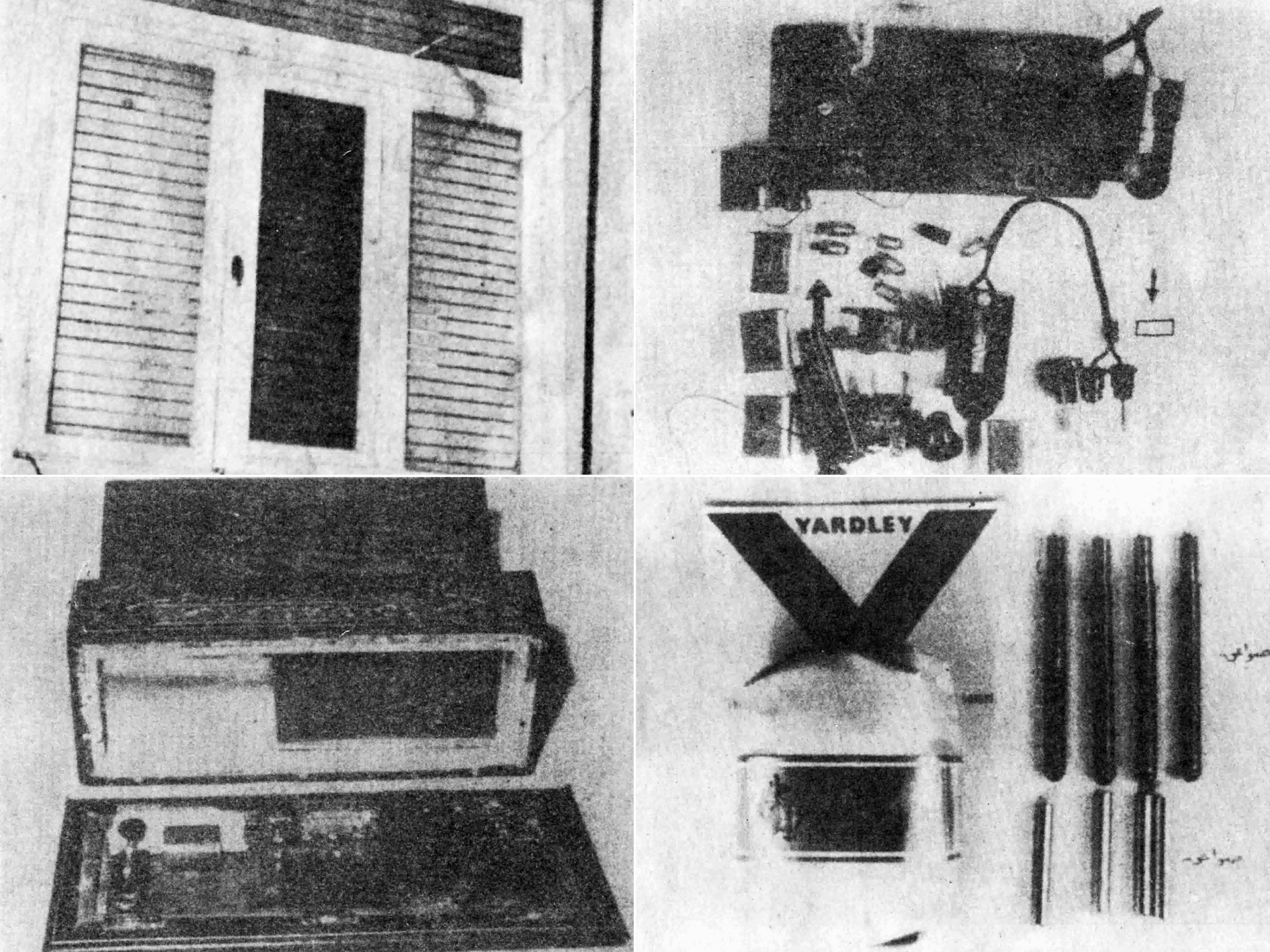
A photo showing the equipment used by the Israeli spy Eli Cohen.

Where were you? Near the electrical panel?

We were downstairs; no one was around. I returned to the unit around 7.45am and called Maj. Widad Bashir to tell him we had identified the apartment. He said: "I am busy. Handle it yourself." I said: "Sir, we must break into the apartment." He repeated that he was busy and told me to handle it.

I decided we had to break in, because the interruptions we had recorded might show up at Mossad's end, where the message was being received. They might notice them and tell him to escape. The British and American embassies were nearby, and if he entered either one, he would get away from us. We could no longer wait. All we knew was the source of the transmission and the name on the door. We did not know how many people were inside or whether they were armed.

Did you break in?

I had two men with me, Rifaat Orfali and Mahmoud Qabbani, may God have mercy on them, and a driver whose name I cannot recall now. I told the driver to stand at the building entrance and not let anyone out if he saw people running. We had only 9mm Browning pistols. We went upstairs and decided to force the door open without knocking. We broke it open and entered.

One room was open and visible from the entrance. The man was lying on the bed and got up when we reached him. A round electric heater sat on the floor. We took its cord and tied him up with it. Mahmoud and Rifaat held him while I went into the other rooms. They were almost empty. There were four rooms, three of them unfurnished, as though nobody lived there.

The room where we found him contained a bed, a table, chairs, a metal cabinet, and curtains. In the kitchen, there was a refrigerator and a wire rack holding eggs. In the bathroom, his white shirt and socks had been washed and were hanging up. I am describing exactly what I saw. I returned to him and asked for his papers. I told him: "You are smuggling drugs." He said: "No."

Al Majalla
Israeli spy Eli Cohen in Syria in the 1960s.

Did he speak Arabic?

Fluently. I can usually distinguish accents, but his gave me no clue. He said he was an expatriate and a businessman who had come to set up projects in the country. We again accused him of smuggling drugs, and he denied it. We searched the flat and found nothing.

The wooden pelmet above the window suddenly caught my eye. There was something black inside it. I put a chair underneath and opened the cover. Inside was a Kodak film box. I opened it and found a small Morse key, with the device beneath it. I kissed the key. I still feel happy when I remember that moment.

I went back to him and said: "Mr Kamel, we are counterintelligence, not the drug squad." Mahmoud Qabbani asked him: "Do you write with your right hand or your left?" He said: "My right." When he saw the device, he sat down on the bed and could no longer stand. He broke down. I told him: "You are as good as dead now. Do you want to live?" He said: "Yes." I said: "Cooperate with us honestly and you will stay alive, provided they do not find out that we have found you."

We closed the door again so the neighbours did not realise we had forced it open. He said the device we had found was a spare and that the actual transmitter was on the table. A document case sat on it, covered in green leather. He pressed a spot in one corner, and it opened to reveal the transmitter. There were also frequency crystals, including one for an emergency frequency he could use at any time outside his daily transmission slot, and a notebook with the cipher letters, with a separate cipher for each day.

I forgot to tell you that, when he rented the flat, he asked the landlord to convert the bathroom heater to burn wood, claiming that the smell of diesel made him ill, so they changed the heater. I believed that he wanted to use it to burn papers. We also found a box containing six pieces that looked like coloured bars of Yardley soap. He took a knife and cut them open, and we found explosive detonators inside.

So, he cooperated with you?

He did. We asked him about the encryption. That was the most important thing to us, because we had thousands of messages whose contents we did not know. He said that, during the first year, he had encrypted his messages using a French book called The Three Musketeers. So, we began looking for the book.

***Next up in Part 3: Six days with the Israeli spy before his last message***

font change