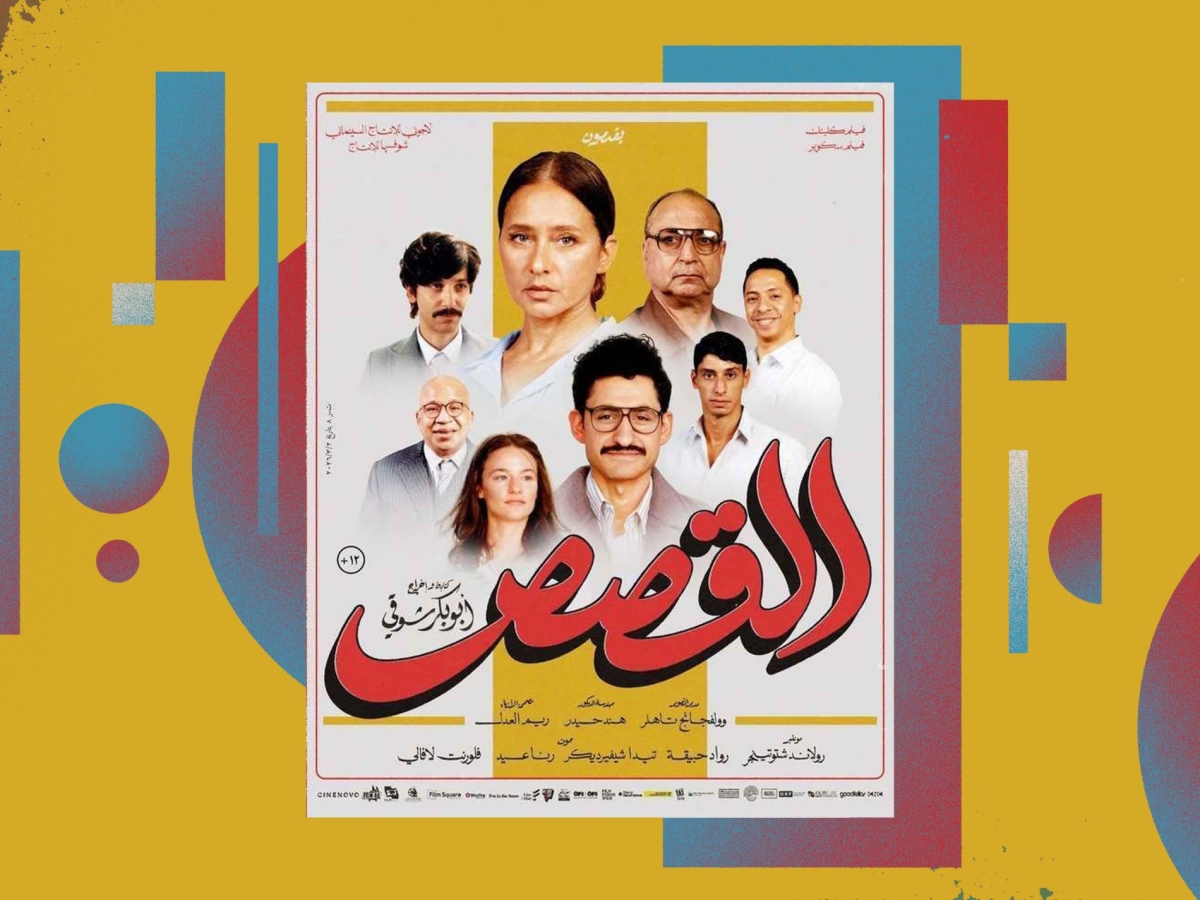

Gabriel García Márquez opened his memoir Living to Tell the Tale with the words: “Life is not what one lived, but what one remembers and how one remembers it in order to recount it.” The line serves as a fitting key to the world of The Stories, Egypt’s entry in the best international feature film category at the 99th Academy Awards.
The work of Egyptian-Austrian director Abu Bakr Shawky, the film covers a turbulent period in Egyptian history, from defeat in the 1967 war, through the 1977 bread riots in Cairo, to the assassination of Anwar Sadat in 1981 and beyond.
Inspired by the true story of how Shawky’s parents met, this immersion in fragments of the past does not lead the director to history books. Instead, he chooses a more modest, intimate, unassuming path, assembling a family archive and letting history seep into daily life, revealing what a changing Egypt did to its members.
Major events unfold in the background, the director focusing instead on the reverberations at home and in the street. The film sides with the marginal and the ordinary, letting the past resemble an emotional family diary: contradictory, impulsive, sentimental, and full of gaps only imagination can fill.
From the opening shots, Shawky needs neither war nor a presidential speech nor a decisive historical event to capture the details of one family: father Ragheb, played by Ahmed Kamal; mother Fairouz, played by Nelly Karim; and their three sons. From this crowded home spring dramatic and comic stories alive with spontaneity, subverting the conventional formula of the period film. History here is not narrated in the stern voice of the victors. Instead, marginal characters are given the right to tell their own version.
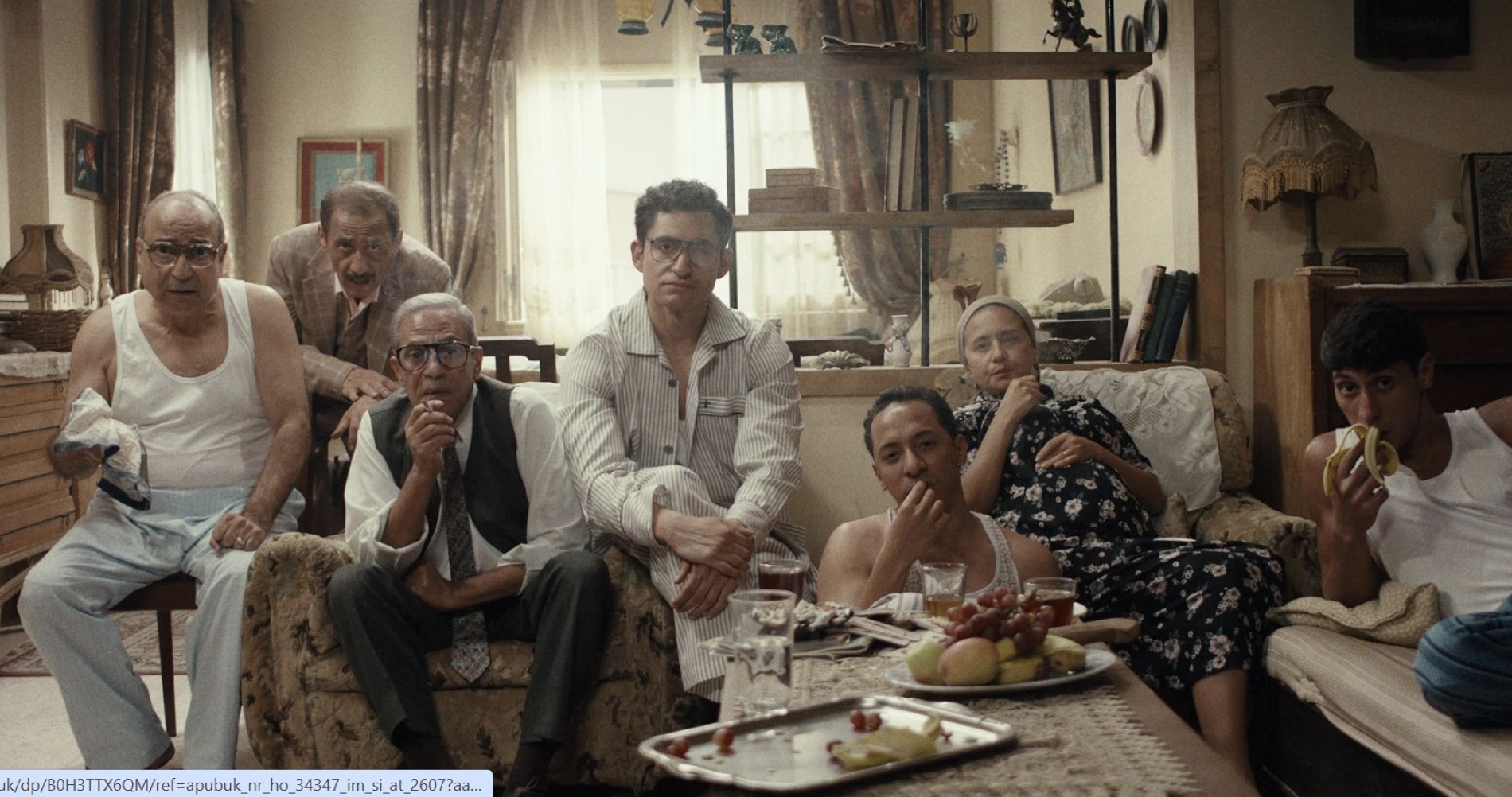
Stories within stories
In his third feature film, following Yomeddine and Hajjan, Shawky tells the story of his parents—his Egyptian father, Ahmed (played by Amir El Masry), and his Austrian mother, Liz (Valerie Pachner)—whose relationship began in the late 1960s through a series of letters exchanged between Cairo and Vienna.
In interviews, the director has explained that he initially wanted to make a film about how his parents met. During the writing process, however, the project grew beyond their story. Their relationship was reshaped into a fictionalised narrative and interwoven with stories of uncles, aunts, and neighbours. These voices, which helped shape Shawky’s sense of memory, do not lead him to document his family’s past. Instead, they become material for reimagining it—a past already transformed by retelling, revision, exaggeration, and forgetting. Marriage, family, music, football, war, and politics thus converge around a single question: how can a person build a private life when history insists on barging into it?
Hence the film’s simple, straightforward title, The Stories: a collection of small stories that converge, diverge, and overlap. Some are personal, others political. Some end before they are complete, while others endure despite everything. The film unfolds as a series of fragmented chapters across time, populated by people who are gone, dreams that remain stubbornly out of reach, lingering political events, and family phrases repeated countless times.
Just as Shawky deliberately distances himself from grand slogans, he avoids presenting Egypt as a tourist backdrop or picture postcard image. The pyramids are not his point of entry, nor is the Nile. Instead, his Cairo is smaller in scale: a crowded flat, a chaotic market, neighbours with different temperaments, Zamalek football matches, a television broadcasting presidential speeches, and rousing military music in the background.
Austrian cinematographer Wolfgang Thaler captures all this disorder. He is not chasing crowds, open doors or ceaseless movement, any more than he is chasing a postcard image. Even when the camera remains still, the frame feels crowded with motion.
When history enters the home
The repercussions of both the 1967 War and the 1973 War are not overlooked. However, Shawky avoids direct representation. The camera never travels to the front. War reaches the home through television and radio. It arrives as sound, as news, as absence, as a face whose features have changed and as a chair suddenly left empty. When news arrives that one of the family’s sons has been killed in battle, death requires no combat scene. A letter is enough to convey the anguish.
In much the same way, politics enters the home through anxiety over employment, while national mobilisation takes the form of songs and anthems. Decisions issued from presidential palaces soon reach the family table. The small screen becomes a window through which the state imposes its narrative on private life. Presidential speeches, patriotic songs, and football matches share the same domestic space, making it difficult to separate politics, culture, and everyday life.
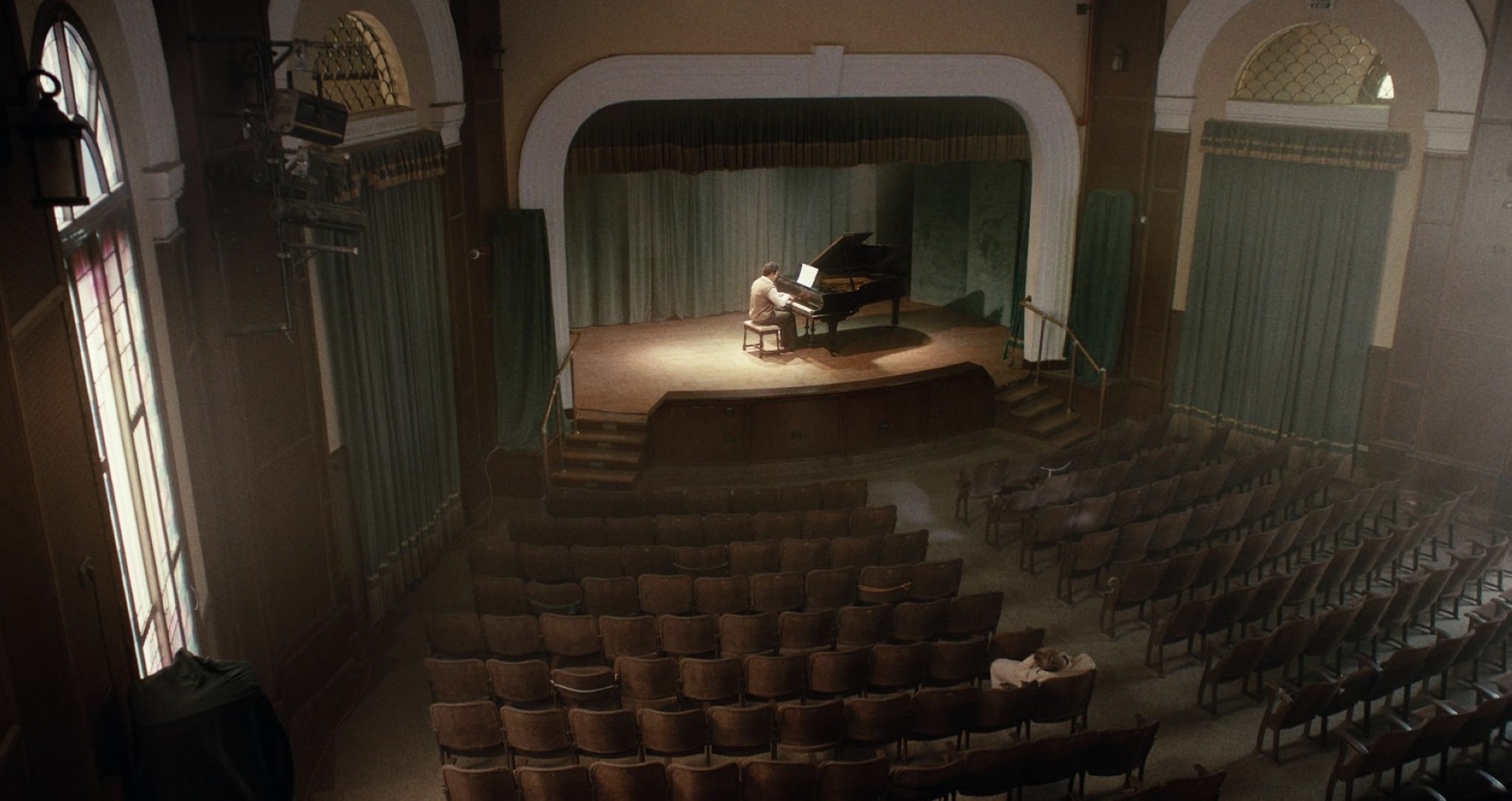
One of the film’s most effective visual metaphors lies in the contrast between the piano and the television. The piano has a quiet presence but a profound effect, as though memory itself were playing slowly. The television, by contrast, is perpetually loud with football matches, speeches, and rousing patriotic songs.
The editing matches the pace of the family’s life. Dialogue comes thick and fast, cuts are quick and sounds overlap, mirroring the family’s own experience. These people do not live in the quiet, orderly world found in Vienna, where the protagonist, Ahmed, travels to meet his beloved Liz and study music. They struggle to come to terms with all this absurdity.
Each character has particular habits, superstitions, fears, and ways of interpreting misfortune. The family’s devotion to Zamalek Football Club becomes an extension of this outlook: a team accustomed to disappointment, yet still capable of inspiring loyalty and hope.
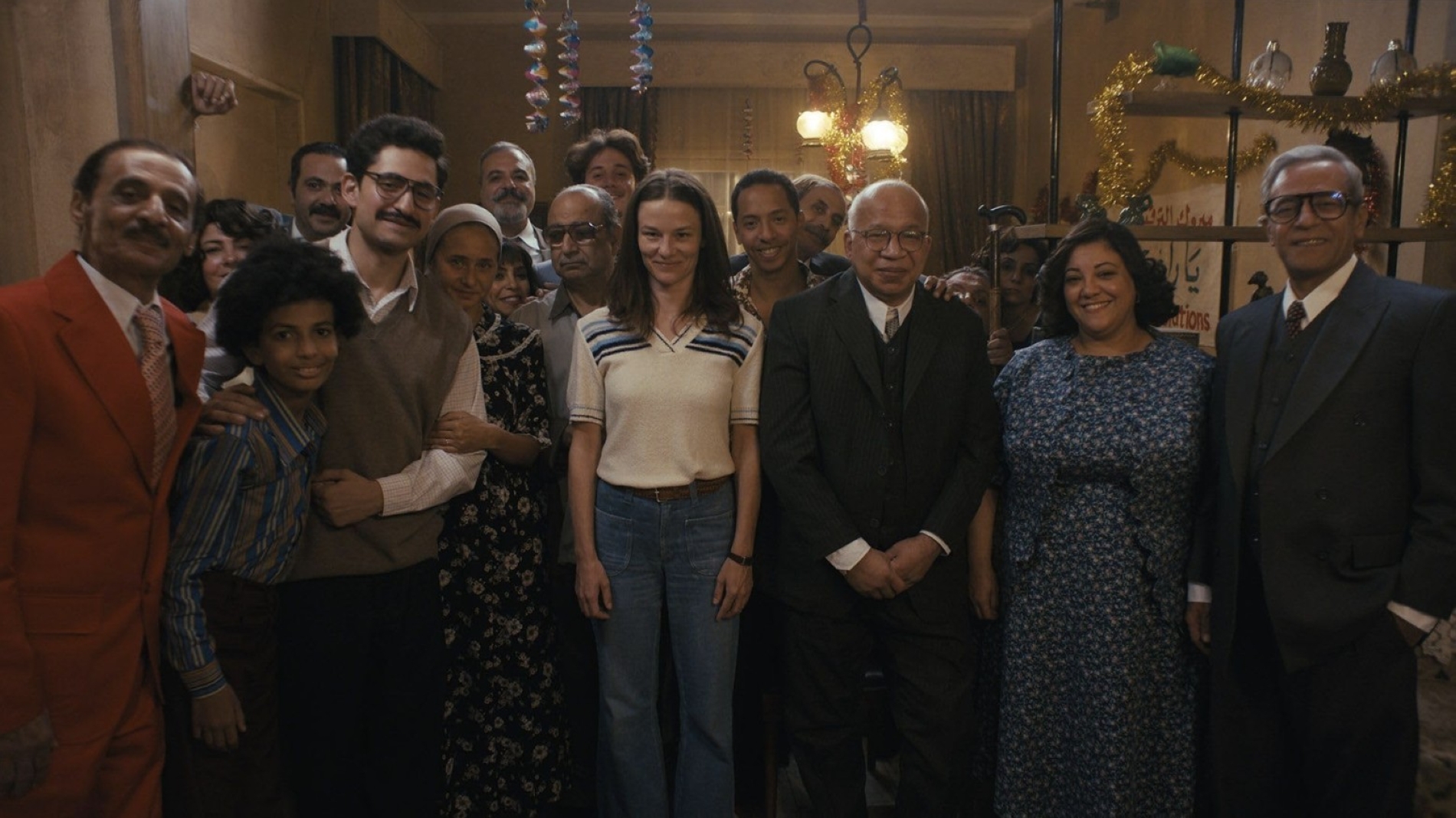
The warmth of melodrama
A film that draws its material from layers of memory cannot entirely escape melodrama: tears, separation, illness, war, death, return, love, music, deferred dreams, surprises, and small victories along the way. Yet melodrama is not necessarily a flaw here. It lends the film a warmth that keeps it from slipping into artistic austerity.
Alongside this melodrama is a complex interweaving of narrative strands. This film is about love, music, migration, family, class, war, politics, football, identity, Egypt, children, parents, success, and failure. All these themes crowd the screen at once, and whenever one dramatic thread begins to gather weight, the film shifts to another.