Hope sells: inroads in cancer treatment excite markets

For every positive clinical result, pharmaceutical (pharma) companies stand to secure billions of dollars in revenue

Al Majalla

Hope sells: inroads in cancer treatment excite markets

A cancer diagnosis can shake lives, but in 2026 it is not the death sentence it once was. Scientists are becoming increasingly precise at striking tumours, developing technologies that ‘teach’ the immune system, designing vaccines tailored to each tumour's genetic signature, and using artificial intelligence (AI) and genomic data to reveal targets long hidden.

For every positive clinical result, pharmaceutical (pharma) companies stand to secure billions of dollars in revenue, attracting investment in biotechnology (biotech). Big drugmakers compete for partnerships and acquisitions, while venture capitalists look for the company that may unlock the next transformative therapy. Research requires capital to turn ideas into blockbusters, while investors wager that financing new life-saving technologies may create new markets and considerable wealth.

Cancer remains a problem in need of solutions. Around 54.2 million people worldwide are within five years of a cancer diagnosis, according to the International Agency for Research on Cancer estimates from 2024. In that year alone, 20.6 million new cases were recorded, and 9.8 million people died from the disease. As incidence rises, treatments advance, and patients live longer, the market expands in parallel.

Immunotherapies, targeted treatments, cell therapies, and personalised vaccines based on messenger RNA (mRNA) technology are opening new possibilities for patients who only a few years ago faced limited options. These advances are reshaping laboratories and drawing capital. The world’s largest pharma companies spend billions of dollars on oncology research and billions more acquiring and working with biotech firms, all in a race to secure the next big breakthrough before others do.

Cancer medicines are already some of the pharma industry’s most significant sources of revenue. Merck’s Keytruda generated $31.7bn in 2025, Johnson & Johnson’s Darzalex earned $14.35bn, and Bristol Myers Squibb’s Opdivo recorded sales of $10bn. In 2023, Pfizer paid $43bn for biotech company Seagen. This doubled Pfizer’s oncology pipeline.

According to the latest figures in the IQVIA Institute’s Global Oncology Trends 2025, spending on cancer medicines reached $252bn in 2024 (calculated at list prices and excluding other medical-care costs and supportive therapies). IQVIA expects that figure to rise to $441bn by 2029—a 75% increase in just five years. If so, the market will grow from an average of $21bn per month in 2024 to $37bn per month by 2029.

In the pharma industry, markets seldom wait for a treatment to reach the shelves before placing their bets. Success or failure in big, randomised trials can add or erase billions in market capitalisation within hours. As such, companies pursue experimental technologies that could give birth to entire families of treatments.
REUTERS/Brendan McDermid
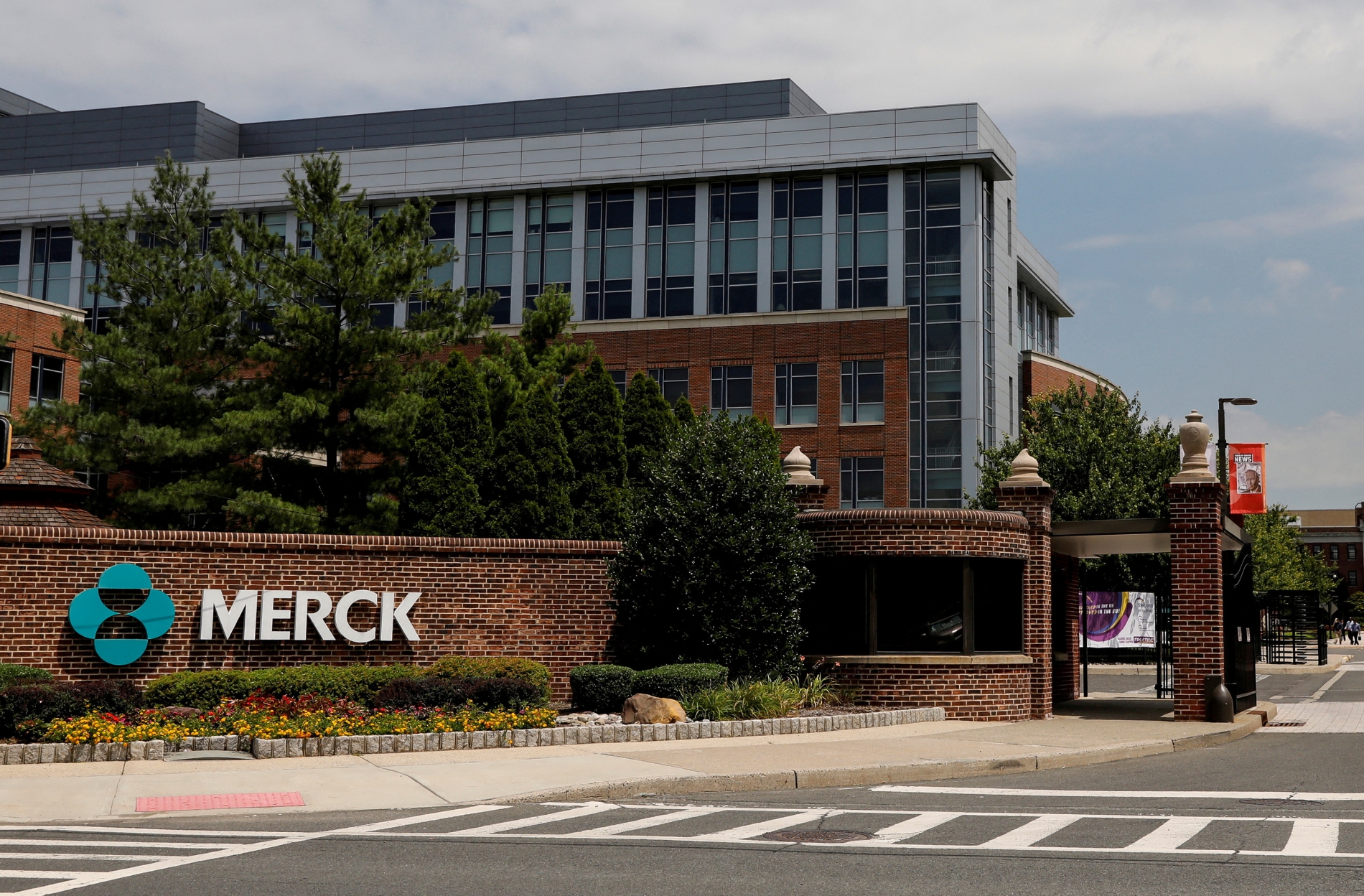
The Merck logo is seen at a gate to the Merck & Co campus in Rahway, New Jersey, US, on 12 July 2018.

In the field of antibody-drug conjugates, American company Merck signed an agreement in 2023 with Japan’s Daiichi Sankyo valued at $22bn for the development and commercialisation of three experimental cancer therapies. Merck paid $4bn upfront, and a further $1.5bn later, but most of the deal’s potential value rests on future sales milestones. In cell therapy, Switzerland’s Roche acquired the US biotech company Poseida Therapeutics in 2025 for $1bn, with the total value potentially rising to $1.5bn. The acquisition bet on a new generation of off‑the‑shelf CAR‑T therapies. This type of immunotherapy reprogrammes a patient’s own immune cells (T-cells) to find and destroy cancer cells.

Cancer vaccines are attracting commitments of similar magnitude. Merck and Moderna are developing a personalised vaccine based on mRNA technology, while Germany’s BioNTech is pouring more of its scientific effort into oncology, spending $2.4bn on cancer research and development (R&D) in 2025.

On 19 August 2026, Moderna and Merck announced that their experimental personalised cancer vaccine had achieved the primary endpoint of a Phase III trial in patients with high‑risk melanoma when administered alongside Keytruda. They did not release detailed data but said the treatment had extended the period before the cancer returned and reduced the likelihood of its spread. Moderna’s shares rose 177% in the next trading session, adding almost $45bn to its market value, while Merck’s shares climbed 12.6% to a record high.
According to the latest figures in the IQVIA Institute's Global Oncology Trends 2025, spending on cancer medicines reached $252bn in 2024

Such a spike in value does not simply reflect investors' enthusiasm for the vaccine's potential in melanoma; they regarded the trial's success as commercial validation of the broader personalised mRNA platform, meaning the same technology can eventually be applied to other cancers, including lung, bladder, and kidney. For Moderna, whose income dipped as demand for its covid‑19 vaccine receded, this is an opportunity to build a more durable revenue base beyond vaccines for infectious diseases.

The British bank Barclays estimated that annual sales of the melanoma treatment alone could reach $3bn by 2035, but Reuters' Breakingviews argued that this figure alone could not explain the increase of more than $30bn in Moderna's market value. The implication is that investors are already assigning value to the prospect of broader success in other cancers, which shows how the 'market of hope' works, despite the vaccine not yet having received regulatory approval, with full details yet to be published.

It has echoes of November 2020, when results from the Pfizer-BioNTech and Moderna covid-19 vaccines showed how quickly scientific news can move markets. After Pfizer announced efficacy exceeding 90%, shares in the vaccine developers rose, as did those of companies expected to benefit from a return to normal life, such as Disney. A week later, Moderna's shares climbed after it announced preliminary efficacy of 94.5%. Over November, the stock gained 126%, compared with roughly 11% for the S&P 500. 

REUTERS/Hannah Beier
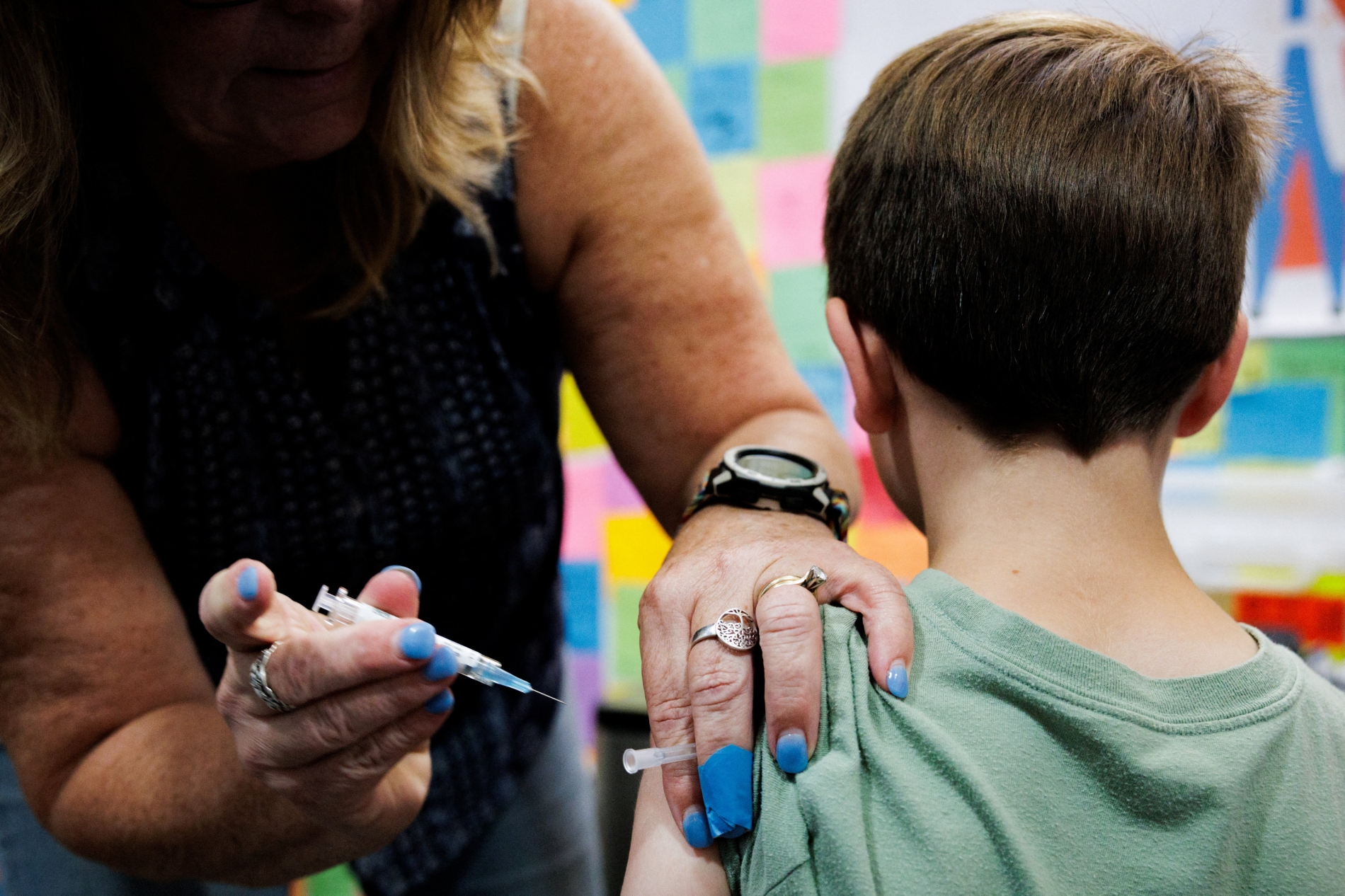
A child receives a dose of the Moderna coronavirus vaccine at Skippack Pharmacy in Schwenksville, Pennsylvania, US, on 11 September 2025.

America and China

The US retains a commanding position in the economics of cancer treatment. It accounted for 46% of global spending on oncology medicines in 2024, while seven American companies are among the world's ten largest by cancer-drug revenue (those seven generated roughly 30% of global sales). But over the past five years, China has almost matched the US in launching new oncology medicines.

Globally, 132 new cancer medicines or new active substances were introduced over the past five years, and 282 over the past two decades. China has witnessed a striking acceleration since 2019. Chinese companies launched 37 new oncology medicines in 2015-19, but 84 over the past five years. The US recorded 85 launches over the same period. Notably, 45 of the medicines introduced in China have yet to reach other markets. This suggests the emergence of an innovation model that begins within China or remains confined to its domestic market, a pattern that was once rare.

The race to treat cancer extends far beyond the pharma giants. Biotech start‑ups are assuming a bigger role in innovation and as sources of new drugs and therapeutic platforms. In the US and Europe, investment is flowing into firms focused on immunotherapy, cell therapies, antibody-drug conjugates, precision medicine, and AI for drug discovery.

During the first half of this year, 68 biotech companies raised more than $9.1bn in venture capital, according to BioPharma Dive. Around two-thirds went to companies that already had a drug candidate undergoing human trials, reflecting investors' growing preference for businesses whose programmes have advanced further along the development pathway.

China has its own generation of biotech start-ups that have become important sources of therapeutic assets acquired or licensed by global pharmaceutical companies. Data published in 2025 showed that 46 companies specialising in cancer-treatment innovation secured more than $2.2bn in funding.

REUTERS/Wolfgang Rattay
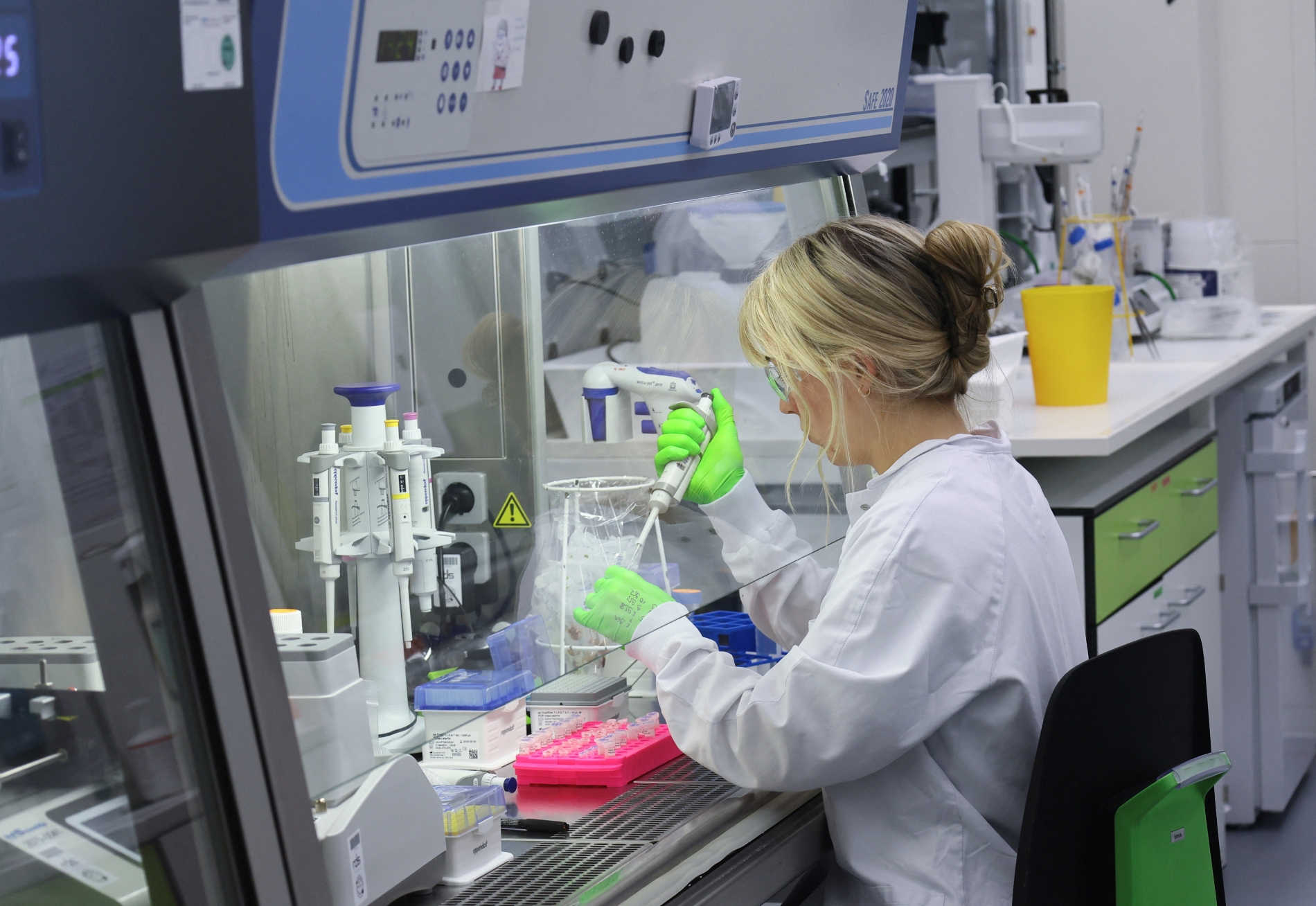
An employee of BioNTech works at the "Area 100 R&D" research laboratory for personalised mRNA-based cancer vaccines at a new facility of BioNTech in Mainz, Germany, on 27 July 2023.

Oncology in the Arab world

Arab countries are also entering the race, with domestic capabilities taking shape in precision medicine, cell and gene therapies, AI‑assisted cancer diagnosis, and drug discovery. Saudi Arabia and the UAE stand out for their capital and infrastructure. In Saudi Arabia, the National Biotechnology Strategy aims to build a domestic sector spanning drug discovery, manufacturing, vaccines, and genomics.

The government expects around $34bn in investment opportunities in biotech, vaccine production, medical manufacturing, R&D, and digital health by 2040. Last year, it announced more than $625mn in life-sciences investments, including $266mn from BD to localise medical technologies and $20mn from Roche to strengthen clinical research. These commitments were accompanied by $3.24bn from venture‑capital and strategic funds intended to promote innovation and localise healthcare capabilities.

In oncology, Saudi start‑ups are emerging. The Saudi Biotechnology Accelerator supports Valere Therapeutics (developing precision immunotherapies for breast cancer), ONOIDS (building a precision‑oncology platform that combines patient‑derived tumour organoids with validation of CAR‑T therapies), and EpiNova (developing non‑invasive early cancer diagnostics using biomarkers and AI).

The UAE is going a step further, transforming sovereign investment into an integrated ecosystem. In 2025, Abu Dhabi launched the Health, Endurance, Longevity and Medicine group (HELM) to bring R&D, manufacturing, biotech, and AI under a single framework. It is projected to make a long-term contribution to Abu Dhabi's economy and create up to 30,000 jobs by 2045.

The UAE is also investing in cancer research through an agreement between the Abu Dhabi government and the British pharma giant GSK to establish a multi‑omics institute. Multi‑omics integrates genomic, proteomic, metabolic, and other biological data to provide a more comprehensive understanding of disease. The institute will focus on genomics, precision medicine, and oncology.

Elsewhere in the Gulf, Qatar is concentrating on research infrastructure, genomics, and precision medicine. Sidra Medicine is developing capabilities in genomic sequencing, multi‑omics and AI, while state funding has helped to build a national sequencing capacity and establish a regional reference resource for genomic analysis.

REUTERS/Wolfgang Rattay
The logo of BioNTech is pictured at BioNTech's research laboratory for individualised vaccines against cancer in Mainz, Germany, on 27 July 2023.

A rigged game?

While the markets are hopeful and investors are ready to throw huge amounts at incoming cancer treatments, whispers about this being a rigged game seem to grow. The idea is that big pharma has no interest in eliminating cancer because it is good for sales. This is the realm of conspiracy, not demonstrable economic reality. Still, there is a genuine tension worth examining.

The pharma business model can reward treatments over extended periods because they generate recurring revenue, whereas a definitive cure or single‑dose therapy means no repeat sales, sceptics say. Yet this overlooks the fact that a successful one-off cure can nevertheless be highly profitable, particularly if it commands a high price or treats a large patient population.

More importantly, this conspiracy treats cancer as a single disease. It is not. It consists of hundreds of distinct forms, each with its own biological character, and several can now be cured or controlled for many years. This is where the new competition over cancer vaccines and prevention becomes visible. A company that succeeds in preventing disease may not be shrinking its market, but instead creating a far larger one, encompassing millions of people willing to pay for prevention.

Investors may be betting on the companies most likely to lead the next phase. Humanity's greater wager is that this will ultimately translate into more days, longer lives, and a diagnosis that no longer necessarily signals the end of the road.

font change

Related Articles