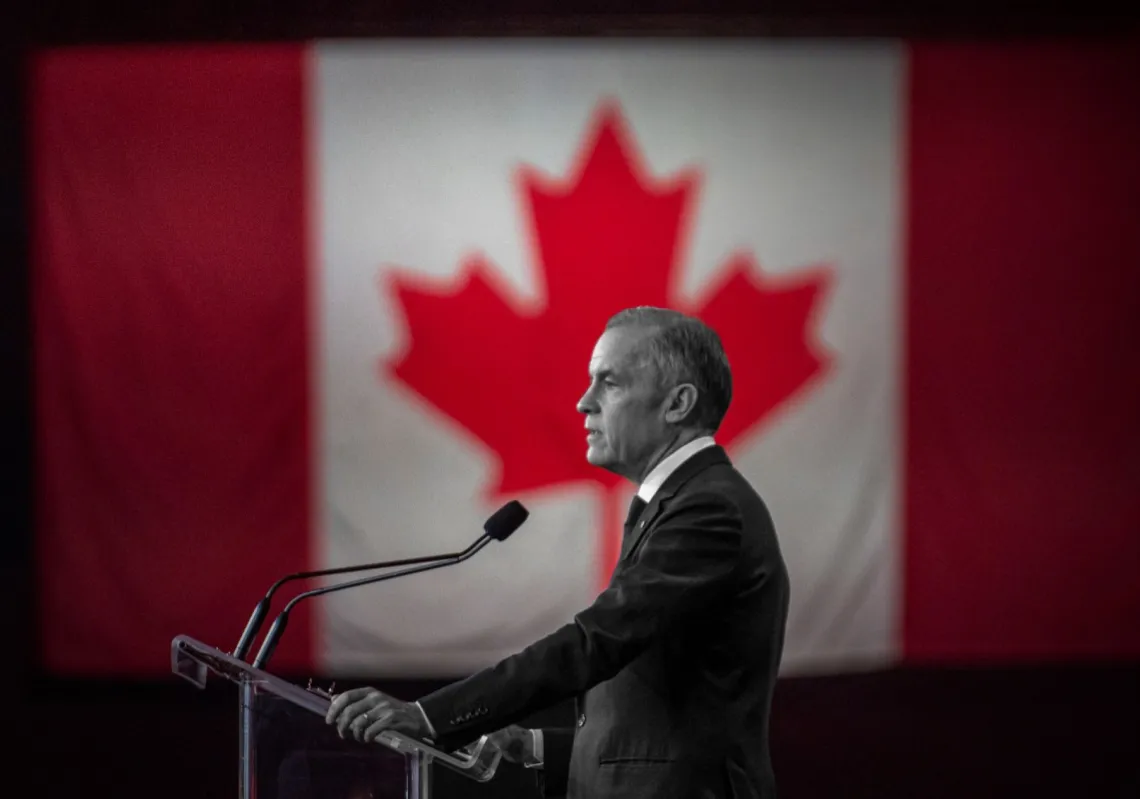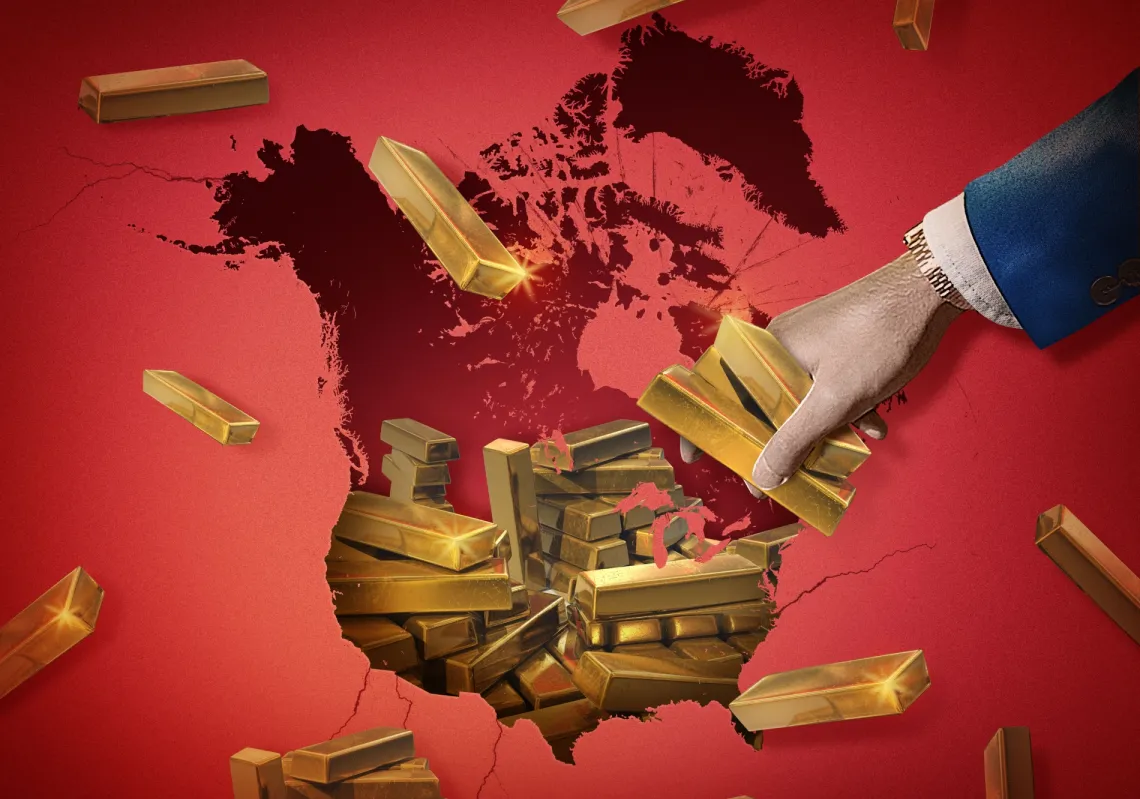

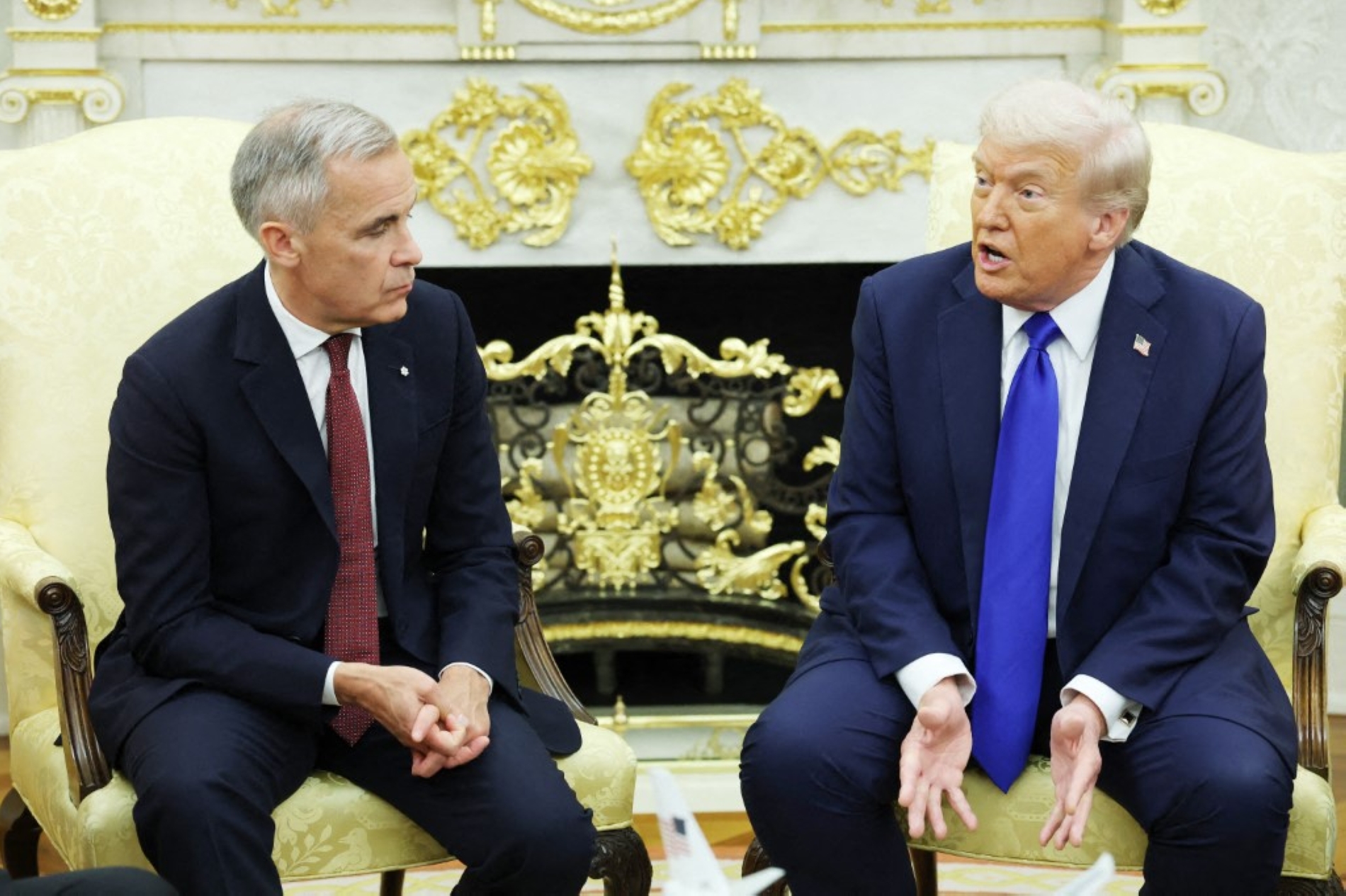
When Donald Trump first ordered tariffs on Canadian goods in February 2025, he said they were needed to force Canada to stop drugs and migrants from crossing America’s northern border. He soon dropped that justification only to spew out a litany of other grievances: the trade deficit, national security, Canada’s dairy industry, a Canadian tax, a television advertisement, Canada’s trade with China, wildfire smoke. He repeatedly mused, with a mob boss’s ambiguity, about annexing Canada and making it America’s “cherished” 51st state.
The caprice of the world’s most powerful man has now taken Mark Carney, Canada’s prime minister, to the brink of a disastrous trade war. On 25 August, the Canadian government announced $20bn-worth of dollar-for-dollar retaliatory tariffs on American goods. The trouble is that America’s economy is 13 times larger than Canada’s and far better equipped to cope. Canada’s tariffs go into effect on 8 September. Mr Carney has until then to find a way to defuse a grave threat to his country’s economy. It will take all his guile.
The trigger for the latest hostilities was Mr Carney’s decision on 21 August to walk away from a trade deal that Mr Trump had earlier declared as “wonderful” and on the brink of agreement. If the prime minister’s version of events is to be believed, Canada had little choice. Mr Carney says that the Americans added late demands that Canadian truck plants remain subject to high tariffs, that Canada curb its trade deals with other countries and weaken its protections for French language and culture—a red rag to separatists in Quebec. (The Americans blame the Canadians for the collapse of the negotiations, but have been vague on the reasons why.)
The stabilisation of economic relations with the United States is essential to Mr Carney’s efforts to attract investment for the infrastructure needed to diversify Canada’s economy away from its irrational neighbour. So in past disputes the prime minister has wisely tried to play for time, avoid aggression and make every effort to keep negotiations alive. He repealed a tax that Mr Trump did not like, removed most of the retaliatory tariffs inherited from his predecessor and resisted repeated calls to cut off energy exports to the United States. But this time, America’s demands were so extreme that no prime minister could have meekly accepted them.
It is a dangerous moment for North America. America’s tariffs went into force shortly after the talks collapsed. Mr Trump has said that he will slap further duties of 50% on Canadian cars, trucks and auto parts from January 1st. Canada is unusually vulnerable to outright trade war with the United States. About two-thirds of its exported goods are sold to its southern neighbour. Unlike commodity giants such as Brazil, whose exports are mostly sold in spot markets, most of Canada’s exports are deeply integrated into American supply chains. This makes it hard for Canadian firms to find alternative buyers quickly. The $32tn American economy can tolerate losing market share in Canada’s $2.5tn economy; Canada, not so much.
Add to that the fact that Canada’s counter-tariffs will only deepen the economic pain from America’s. Curbing energy exports or withholding security cooperation would ultimately hurt Canada more than it would hurt the United States. Escalation will also damage the case for much-needed investment in Canada.
And so, having made his point, Mr Carney should look for ways to walk back his retaliatory tariffs. If that is politically unfeasible, they should at least be made as targeted and easy to reverse as possible. One example is to focus on swing states in November’s midterm elections, such as Michigan, which does most of America’s trade with Canada, and whose politicians may have some sway with Mr Trump. There is already some public grumbling about the needless harm to American interests from picking a fight with such a close ally.