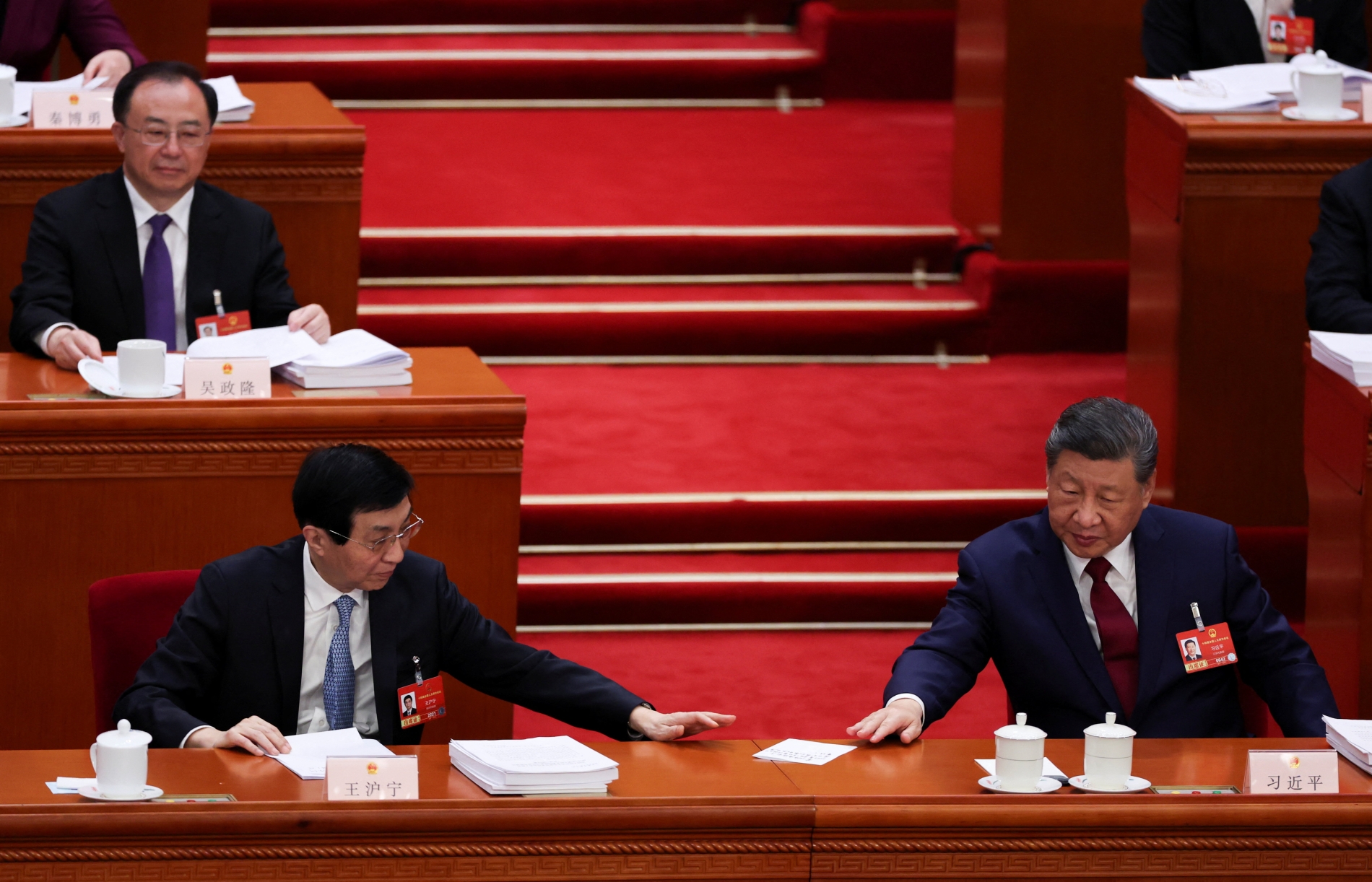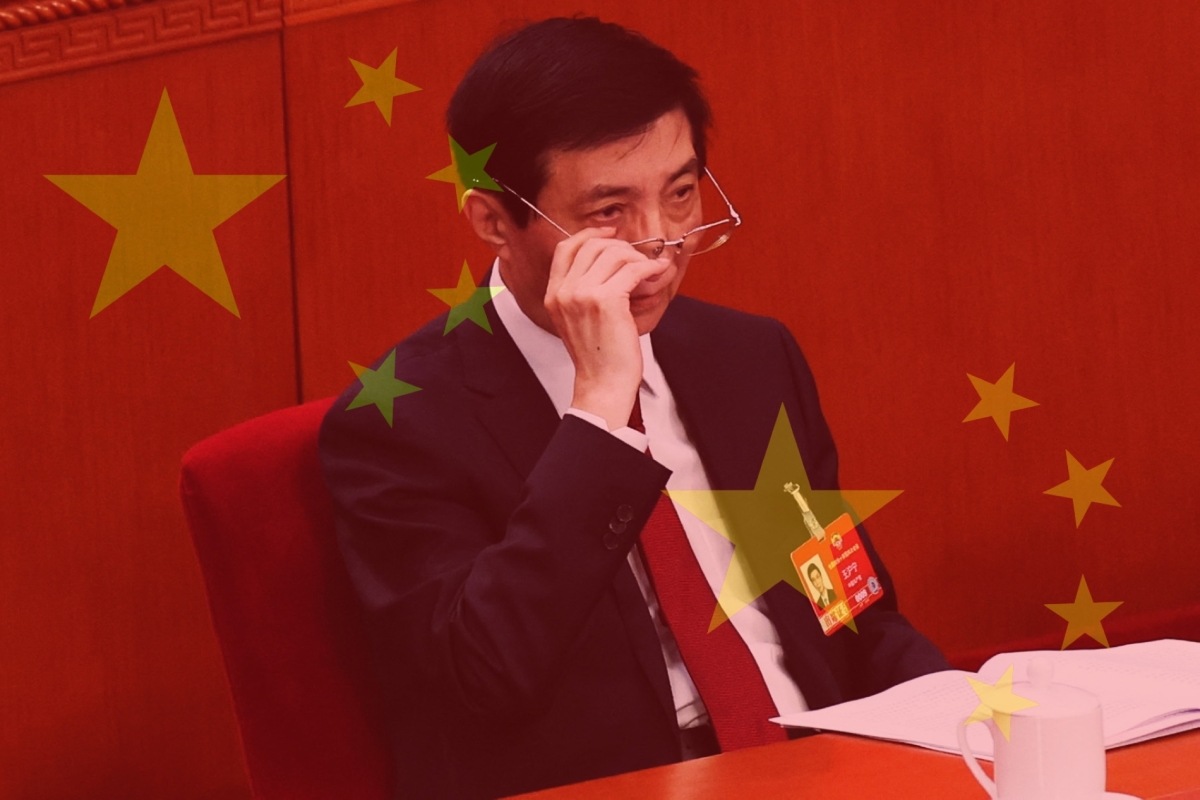

Wang Huning has been described by some Western observers of Chinese politics as “the world’s most influential intellectual,” “the mind behind Xi Jinping’s vision,” and China’s “ideological tsar”. Some even call him “the hidden ruler”. Chinese political tradition has a more appropriate moniker: a guoshi (meaning ‘mentor of the nation’ or ‘teacher of the state’). This figure was regarded as exceptionally wise and learned and was entrusted with offering the emperor strategic and spiritual counsel, helping shape the philosophy of government.
Wang is sometimes described by the expression san chao di shi, literally ‘teacher of three emperors,’ having advised Presidents Jiang Zemin, Hu Jintao and Xi Jinping. His prominence, and his ability to win the confidence of China’s leaders, can be traced to a stellar career as an independent scholar and prolific public intellectual. It was in 1995, during the second half of Jiang Zemin’s tenure, that he was first summoned to advise the modern-day emperor.
Revolutionary lineage
Wang was born in Shanghai into a family of revolutionaries. His parents, originally from Shandong province, joined the Communist Party during the civil war and fought in the Red Army, which later became the People’s Liberation Army. They helped the Communists capture Shanghai in 1949. They chose to settle there, in China’s economic heart, and named their son, born in 1955, Huning, a compound name meaning ‘peace in Shanghai’.
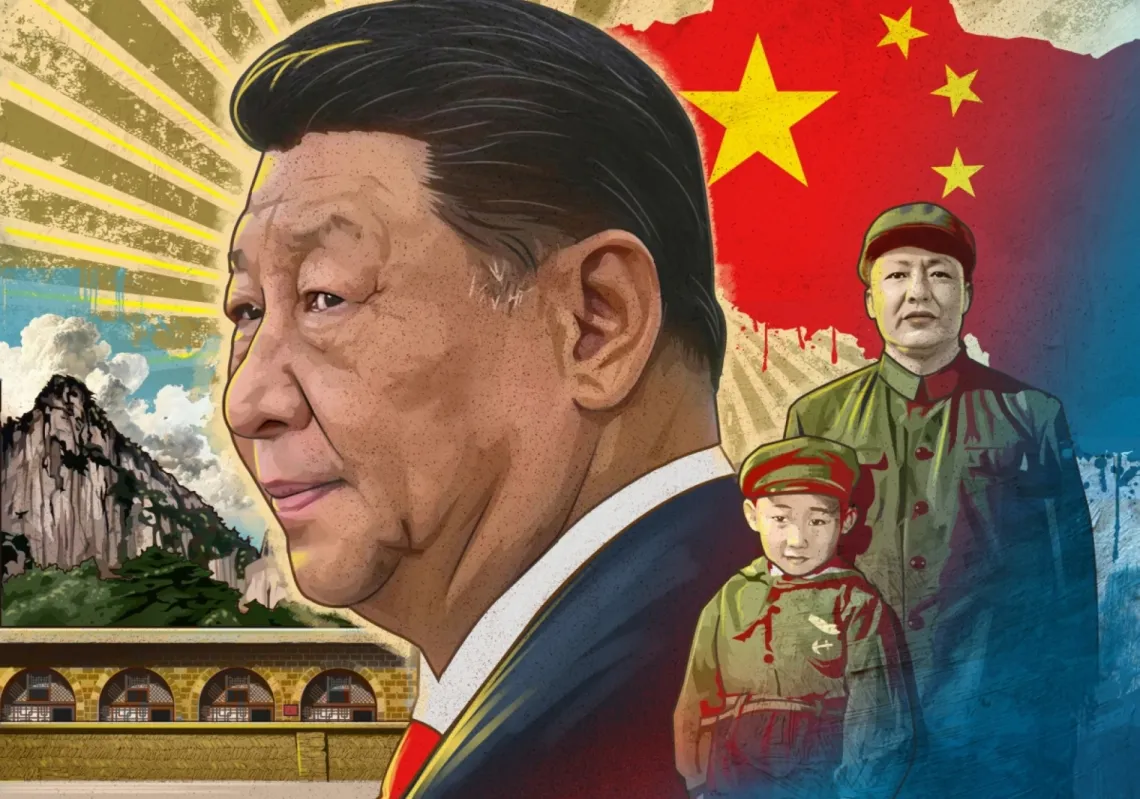
The family’s subsequent fate was not peaceful. During the Cultural Revolution and Mao’s political purges, Wang’s father, an army officer, was implicated in the case of Peng Dehuai, the Chinese marshal and defence minister who angered Mao and was subsequently cast aside. It affected Wang’s family. The young Wang spent much of his adolescence at home. He became introverted, devoted to reading, and convinced that knowledge was the path to salvation. Loyalty had only led to his parents’ ostracism.
Thousands like Wang and Xi Jinping were compelled to join the ‘Up to the Mountains and Down to the Countryside’ campaign. A frail Wang was spared the most remote provinces. After completing secondary school in 1972, he spent four years working part-time in rural districts of the Shanghai municipality and surrounding areas.
New centralism
Wang’s relative escape from the ordeals suffered by so many in his generation profoundly shaped his academic development. Instead of enduring hard labour on distant farms, he was assigned to Shanghai University, where he studied and trained in French. In 1978, Deng Xiaoping reopened the universities that had been closed during the Cultural Revolution. Wang sat the national university entrance exam (the gaokao) and achieved an exceptional result.
Fudan University, one of Shanghai’s most prestigious institutions, admitted him to a Master’s degree in international politics, allowing him to bypass undergraduate study altogether. He completed his thesis in 1981. It was a Marxist analysis of Western theories of sovereignty and reflected an early interest in political independence and sovereign authority, themes that would later reappear in his insistence that China preserve its sovereignty and ability to determine its own course.
Wang joined the Communist Party relatively late. A year later, in 1985, at age 30, he became the youngest associate professor at Fudan, where he distinguished himself through prolific academic output. In Comparative Political Analysis (1987), he presented ‘strategic centralism’ as a prerequisite for economic modernisation. He argued that a developing country undergoing rapid economic transformation could not bear the consequences of competitive liberal democracy. In his view, a strong, stable central authority offered the only reliable guarantee that market reforms would succeed and that society could be guided smoothly toward modernity.