Global warming is turning sleep into a global health crisishttps://en.majalla.com/node/332677/science-technology/global-warming-turning-sleep-global-health-crisis
Global warming is turning sleep into a global health crisis
Warmer nights are messing with our bodies’ ability to shed the heat we accumulate during the day. This is having all sorts of effects, none of them good
Sara Padovan
Global warming is turning sleep into a global health crisis
In Chicago on 13 July 1995, in the middle of a heatwave, the city recorded a temperature of 41.1 degrees Celsius (°C), while the heat index (the ‘feels like’ temperature) soared to 52.2°C. That was during the day. At night, temperatures averaged 27°C. The cool that night normally brings was absent. When that happens, the body struggles to release the heat it accumulates during the day. By 20 July, more than 700 had died, making it one of the deadliest such events in American history.
The episode reveals a quieter, less visible dimension of the dangers posed by global warming. Attention tends to focus on effects such as drought, wildfires, water scarcity, and rising sea levels, but behind the headlines, climate change is affecting one of our most intimate biological rhythms: sleep. And the consequences extend far beyond the discomfort of a stifling night.
Excessive night-time heat can disrupt a physiological process the body relies on each day to repair tissue, regulate the immune system, consolidate memory, stabilise emotional states, and maintain cardiovascular and metabolic health. As temperatures rise, warmer nights risk becoming a chronic health burden. Although night-time temperature may seem like just another figure in a weather report, for the human body it belongs to a distinct physiological state.
Sleep depends on more than simply closing one’s eyes. It requires a thermal environment in which biological mechanisms can proceed in their natural sequence. Before sleep begins, the body initiates a controlled decline in core temperature. Heat moves from internal organs to the extremities and skin, where it can dissipate through perspiration and increased blood flow near the body’s surface. This cooling is integral to the onset of sleep. The fall in body temperature forms part of the biological signalling that guides the brain from wakefulness into slumber.
When the surrounding air remains hot throughout the night, the temperature gradient between the body and its environment narrows, reducing the body’s ability to shed heat. When compounded by high humidity, sweat evaporates less efficiently, further weakening this natural cooling process. The body is then caught between competing signals. Its internal clock draws it towards sleep, but the surrounding environment obstructs one of the main physiological mechanisms that makes sleep possible.
Once ambient temperatures rise beyond the range the body can comfortably tolerate, both falling asleep and remaining asleep become more difficult.
Sleep appears outwardly passive. In fact, it is an intricately organised biological process. Over the course of the night, the body moves between two main forms of sleep: rapid eye movement sleep (REM) and non-rapid eye movement sleep (NREM). The latter progresses through successive stages before reaching Stage 3, a deep and restorative phase associated with tissue repair and immune function. REM sleep follows. REM is associated with dreaming, memory consolidation, and the organisation of information.
This sleep cycle typically lasts 90-120 minutes and repeats several times during the night, but sleep quality cannot be measured by duration alone. A person may spend seven hours in bed but wake repeatedly or spend insufficient time in Stage 3. The result is a less restorative sleep that supports repair less effectively and leaves the body less prepared for the demands of the next day. This helps to explain the danger posed by hotter nights. They threaten not only sleep duration, but the delicate architecture on which restorative sleep depends.
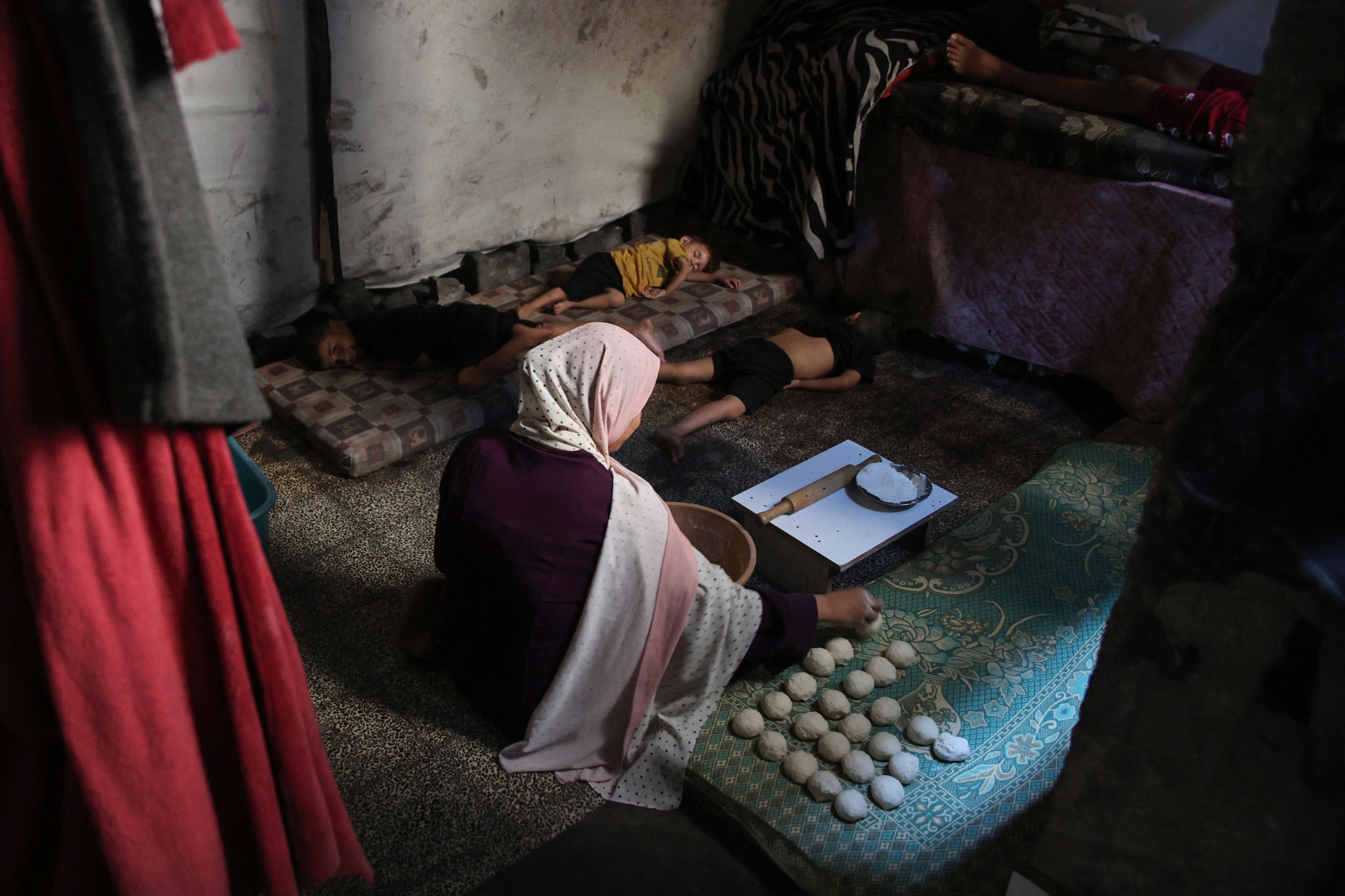
A displaced Palestinian woman prepares bread as children sleep in a tent at a UN Relief and Works Agency for Palestine Refugees (UNRWA) school in the Jabalia camp for Palestinian refugees in the northern Gaza Strip.
Consistent pattern
Research into the relationship between temperature and sleep reveals a remarkably consistent pattern: once ambient temperatures rise beyond the range the body can comfortably tolerate, both falling asleep and remaining asleep become more difficult. The effects take several forms. It can take longer to fall asleep, awakenings become more frequent, and some of the most important stages of sleep, including REM and deep sleep, may be shortened.
An experiment published in Sleep Advances shows how even relatively modest changes in ambient temperature can affect both core body temperature and sleep architecture. Seven healthy men, with an average age of 26, took part in the study. On one night, researchers kept the room at 29.5°C. On another, it began at 27.5°C and rose gradually over the course of the night.
The results showed that conditions allowing a greater decline in core body temperature were associated with more deep sleep. This does not suggest that there is a single ideal sleeping temperature for everyone. It points instead to a fundamental biological principle: restorative sleep depends, in part, on the body's ability to shed heat.
Two principal systems regulate the timing of sleep. The first is known as sleep pressure. From the moment we wake, certain compounds (including adenosine) begin to accumulate as we expend energy and stay active. The longer we are awake, the stronger the biological drive for sleep becomes.
The second system is the circadian rhythm. This governs the cycle of sleep and wakefulness over roughly 24 hours. At its heart lies the body's internal clock (in the suprachiasmatic nucleus region of the brain). Light strongly influences this clock, although temperature also shapes the environment the body responds to. Global warming is now changing that environment at a pace increasingly at odds with the thermal conditions in which sleep functions best.
By the end of the day, sleep pressure may be strong, and our biological clock may be signalling that it is time to rest, but our body struggles to release the heat it accumulated during the day, when our body is exposed to work, movement and thermal strain. We may therefore be tired enough to sleep, but still too warm to sleep well. Physiological strain then accumulates because the night no longer provides meaningful relief.
Think of it as a kind of thermal debt. During the day, the body accumulates heat. At night, it repays the debt by shedding heat, reducing activity and entering sleep. If the night remains hot, the next day begins before the previous day's debt has been fully discharged. During heatwaves, thermal strain and sleep loss can accumulate.
During sleep, many of our organs slow down, allowing cells to redirect energy toward repair and maintenance. Insufficient sleep is associated with hypertension, cardiovascular disease, stroke, obesity, metabolic disorders, and impaired immune function. The brain is affected directly. Concentration and attention may weaken, emotional regulation becomes more difficult, anxiety may increase, and mental wellbeing can deteriorate. Heat need not push the body into acute collapse to cause harm; small and repeated losses of sleep accumulate, gradually exacting a toll.
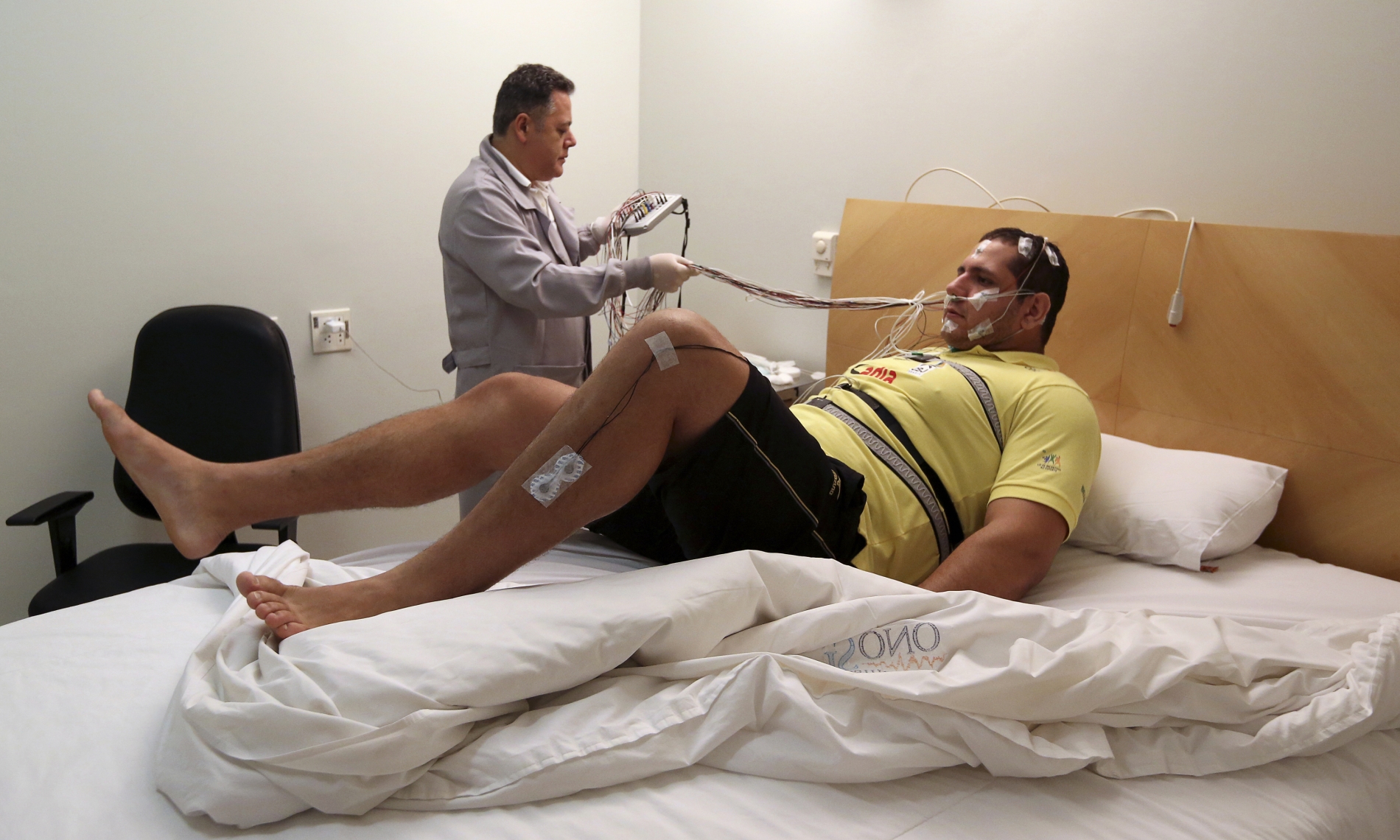
A photo of London 2012 Olympic judo bronze medalist Rafael Silva of Brazil having electrodes attached to his body at the Sleep Institute in São Paulo on 9 March 2015.
Cumulative loss
A large-scale study was published in Nature Communications in March 2025. Researchers analysed 23 million repeated sleep records from more than 214,000 participants and matched them with night temperatures where they lived. They found that warmer nights were associated with less deep, restorative sleep, and a greater likelihood of waking during the night.
Among the most striking findings was that every 10°C rise in ambient temperature increased the likelihood of insufficient sleep by as much as 20%, while reducing average sleep duration by just less than ten minutes. This may seem insignificant over a single night, but when that loss is repeated by hundreds of millions or even billions of people across dozens of nights each year, it becomes an enormous cumulative loss of sleep for entire populations.
The study projects that by the end of this century, rates of insufficient sleep could rise by around 10.5%, while the average person could lose more than 33 hours' sleep annually due to higher temperatures, equivalent to more than four nights' sleep. Yet the burden will be distributed unevenly.
A review of 36 studies published in Sleep Medicine Reviews in 2024 found that heat has a greater effect on sleep among those living in hotter regions, older adults, those with illnesses, and socially disadvantaged groups. Sleep therefore becomes another expression of climate inequality. Some can afford to keep a bedroom cool at night; others cannot. Seen in this light, wealth can buy rest and restoration.
Until now, the severity of heatwaves has generally been measured in deaths, hospital admissions, and temperatures. Another measure may be how much sleep a population loses. Likewise, societal adaptations to heatwaves may need to treat sleep as a public-health concern, rather than just affecting the body's release of heat at night, giving a better chance of recovery. For planners, it all adds up to sleepless nights.
Heat need not push the body into acute collapse to cause harm; small and repeated losses of sleep accumulate, gradually exacting a toll.
The second system is the circadian rhythm. This governs the cycle of sleep and wakefulness over roughly 24 hours. At its heart lies the body's internal clock (in the suprachiasmatic nucleus region of the brain). Light strongly influences this clock, although temperature also shapes the environment the body responds to. Global warming is now changing that environment at a pace increasingly at odds with the thermal conditions in which sleep functions best.
By the end of the day, sleep pressure may be strong and our biological clock may be signalling that it is time to rest, but our body struggles to release the heat it accumulated during the day, when it is exposed to work, movement, and thermal strain. We may therefore be tired enough to sleep, but still too warm to sleep well. Physiological strain then accumulates because the night no longer provides meaningful relief.
Think of it as a kind of thermal debt. During the day, the body accumulates heat. At night, it repays the debt by shedding heat, reducing activity and entering sleep. If the night remains hot, the next day begins before the previous day's debt has been fully discharged. During heatwaves, thermal strain and sleep loss can accumulate.
During sleep, many of our organs slow down, allowing cells to redirect energy toward repair and maintenance. Insufficient sleep is associated with hypertension, cardiovascular disease, stroke, obesity, metabolic disorders, and impaired immune function. The brain is affected directly. Concentration and attention may weaken, emotional regulation becomes more difficult, anxiety may increase, and mental wellbeing can deteriorate. Heat need not push the body into acute collapse to cause harm; small and repeated losses of sleep accumulate, gradually exacting a toll.
A photo of London 2012 Olympic judo bronze medalist Rafael Silva of Brazil having electrodes attached to his body at the Sleep Institute in São Paulo on 9 March 2015.
Cumulative loss
A large-scale study was published in Nature Communications in March 2025. Researchers analysed 23 million repeated sleep records from more than 214,000 participants and matched them with night temperatures where they lived. They found that warmer nights were associated with less deep, restorative sleep, and a greater likelihood of waking during the night.
Among the most striking findings was that every 10°C rise in ambient temperature increased the likelihood of insufficient sleep by as much as 20%, while reducing average sleep duration by just less than ten minutes. This may seem insignificant over a single night, but when that loss is repeated by hundreds of millions or even billions of people across dozens of nights each year, it becomes an enormous cumulative loss of sleep for entire populations.
The study projects that by the end of this century, rates of insufficient sleep could rise by around 10.5%, while the average person could lose more than 33 hours' sleep annually due to higher temperatures, equivalent to more than four nights' sleep. Yet the burden will be distributed unevenly.
A review of 36 studies published in Sleep Medicine Reviews in 2024 found that heat has a greater effect on sleep among those living in hotter regions, older adults, those with illnesses, and socially disadvantaged groups. Sleep therefore becomes another expression of climate inequality. Some can afford to keep a bedroom cool at night; others cannot. Seen in this light, wealth can buy rest and restoration.
Until now, the severity of heatwaves has generally been measured in deaths, hospital admissions, and temperatures. Another measure may be how much sleep a population loses. Likewise, societal adaptations to heatwaves may need to treat sleep as a public-health concern, rather than just affecting the body's release of heat at night, giving a better chance of recovery. For planners, it all adds up to sleepless nights.