Firing up: the effects of heat on the body at the 2026 World Cup

With some matches being played in extreme heat, teams and players are having to prioritise safety, as science sheds new light on how sport in oppressive weather pushes the limit of biology

Heat is the unseen participant in a match. Its effects appear in heart rate, fluid loss, reaction speed, pressing intensity, and decision-making.
Scarlett Yang
Heat is the unseen participant in a match. Its effects appear in heart rate, fluid loss, reaction speed, pressing intensity, and decision-making.

Firing up: the effects of heat on the body at the 2026 World Cup

At noon on 24 June 1994, the men’s football match between Mexico and Ireland at Orlando’s Citrus Bowl in the United States became far more than a World Cup group-stage fixture; it was a punishing test beneath a merciless sun, in temperatures that rose to 43 degrees Celsius.

It was so hot that more than 100 spectators collapsed in the stands. Players later described the contest as being more akin to a physiological experiment than a game of football. More than three decades later, the World Cup returned to North America, and the safety of playing 90 minutes in extreme heat is back on the agenda.

The 2026 FIFA World Cup is an expanded format, so much bigger than any previous tournament, with millions of spectators attending dozens of fixtures, often in conditions of heat, humidity, and severe weather. Players are expected to maintain the highest levels of running, pressing, and decision-making in conditions that test the limits of the human body, in particular its ability to cool itself.

Measuring heat stress

The danger cannot be judged by air temperature alone. In sport, specialists rely on a more revealing measure known as the wet-bulb globe temperature, or WBGT. The index combines air temperature, humidity, wind speed, and solar radiation. In this wider sense, modest temperatures may still be dangerous if humidity is high, sunlight is direct, and air circulation is poor. Conversely, a hotter day may impose less strain when the air is dry and well ventilated. According to World Weather Attribution, WBGT offers a more accurate indication of the thermal burden placed on the body during physical activity.

Getty Images via AFP
To help players manage extreme heat, football tournaments need more intelligent scheduling, better-prepared stadiums, a stronger role for sports medicine, and a clear recognition that climate has become part of the game itself.

Modern football demands far more than continuous running. Players press opponents, which means accelerating over short distances, changing direction sharply, repositioning repeatedly, and making split-second decisions. As the body heats, the consequences go beyond general fatigue and begin to affect the finer mechanisms of performance, including the number of sprints, the distance covered at high speed, the pace of defensive recovery, the precision of passing, and even spatial awareness.

A study published in the journal Temperature in February 2026 offered a significant practical illustration. It examined player performance at the 2025 FIFA Club World Cup, staged in the United States during June and July. Researchers analysed 57 of the tournament’s 63 matches and drew on more than 1,000 observations of player performance, alongside weather data. It found that WBGT exceeded 28 degrees Celsius in 31 of the 57 matches, a level associated with a substantial risk of heat stress. It also found that rising temperature, humidity and WBGT were linked to a reduction in the distance players covered at high speed.

The implications are important for modern football. While a team’s total distance may not decline dramatically, the nature of its exertion changes. Players may continue to move at low or moderate intensity while losing the ability to repeat explosive runs. Those bursts of acceleration frequently determine the course of a match, as they underpin high pressing, counterattacks, defensive covering behind an advancing full-back, and the pursuit of a striker breaking towards goal. Heat, at that point, becomes a tactical force rather than merely a physical condition.

Physical exertion

The study also found that age, playing position, the timing of the match, and a player’s climatic background were influencing factors. Younger players generally covered greater distances, while midfielders and forwards appeared more mobile than other positions. Evening fixtures also seemed to impose less strain than those played around midday. These findings do not suggest that teams from warmer countries will necessarily enjoy an automatic advantage, or that younger players are protected from danger. Effective acclimatisation requires a carefully structured physical and medical programme. Familiarity with hot weather alone is not enough.
Getty Images via AFP
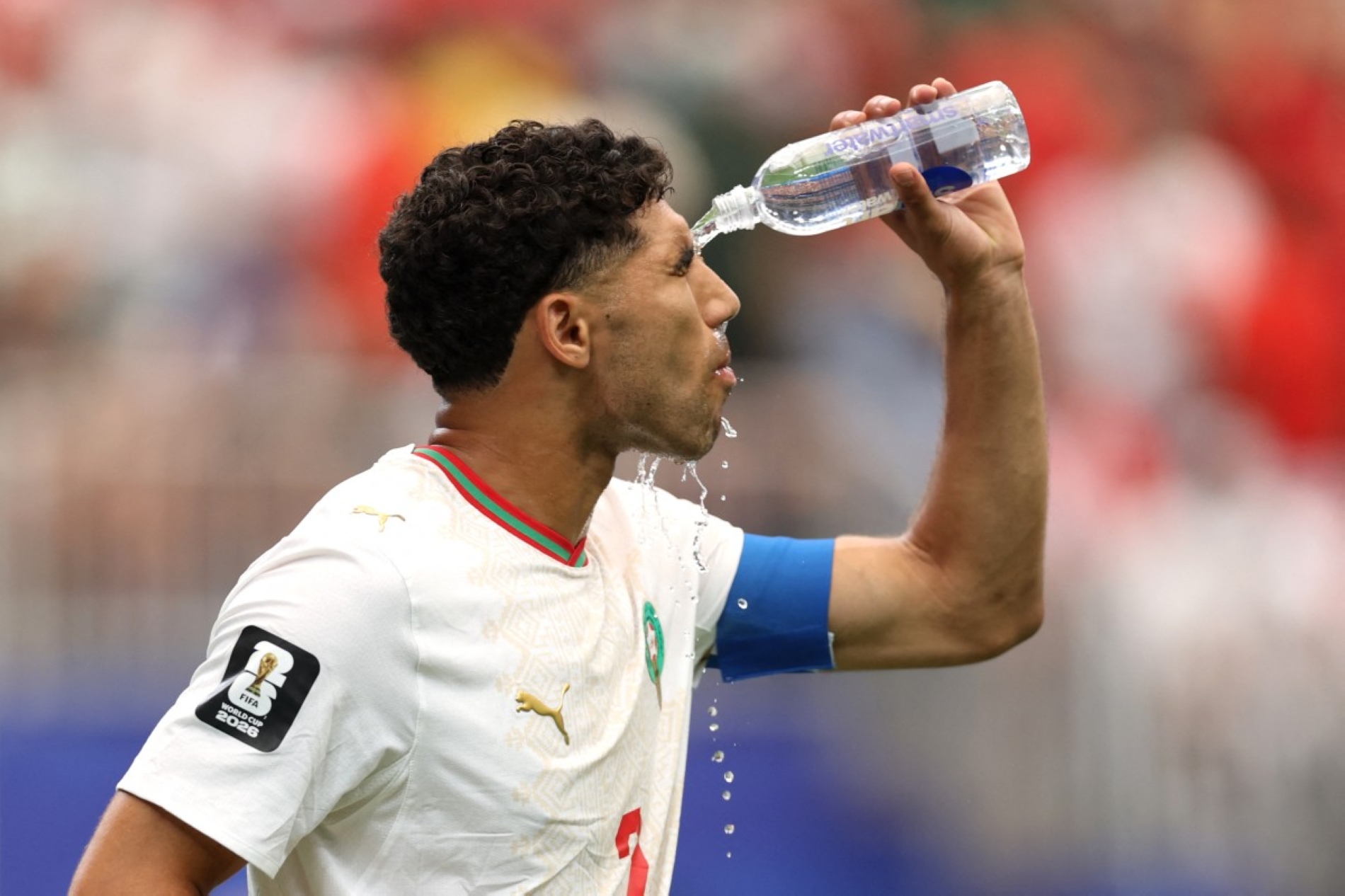
Achraf Hakimi of Morocco cools off during the FIFA World Cup 2026 match between Canada and Morocco on July 04, 2026 in Houston.

The physiological process begins in the muscles. During intense exertion, they generate considerable internal heat. Under moderate conditions, the body can disperse much of it through perspiration and the widening of blood vessels near the surface of the skin. In hot and humid weather, however, cooling becomes markedly more difficult because sweat evaporates more slowly. The heart must work harder to direct blood towards the skin and support the cooling process, while continuing to supply blood and oxygen to muscles that are still required to compete.
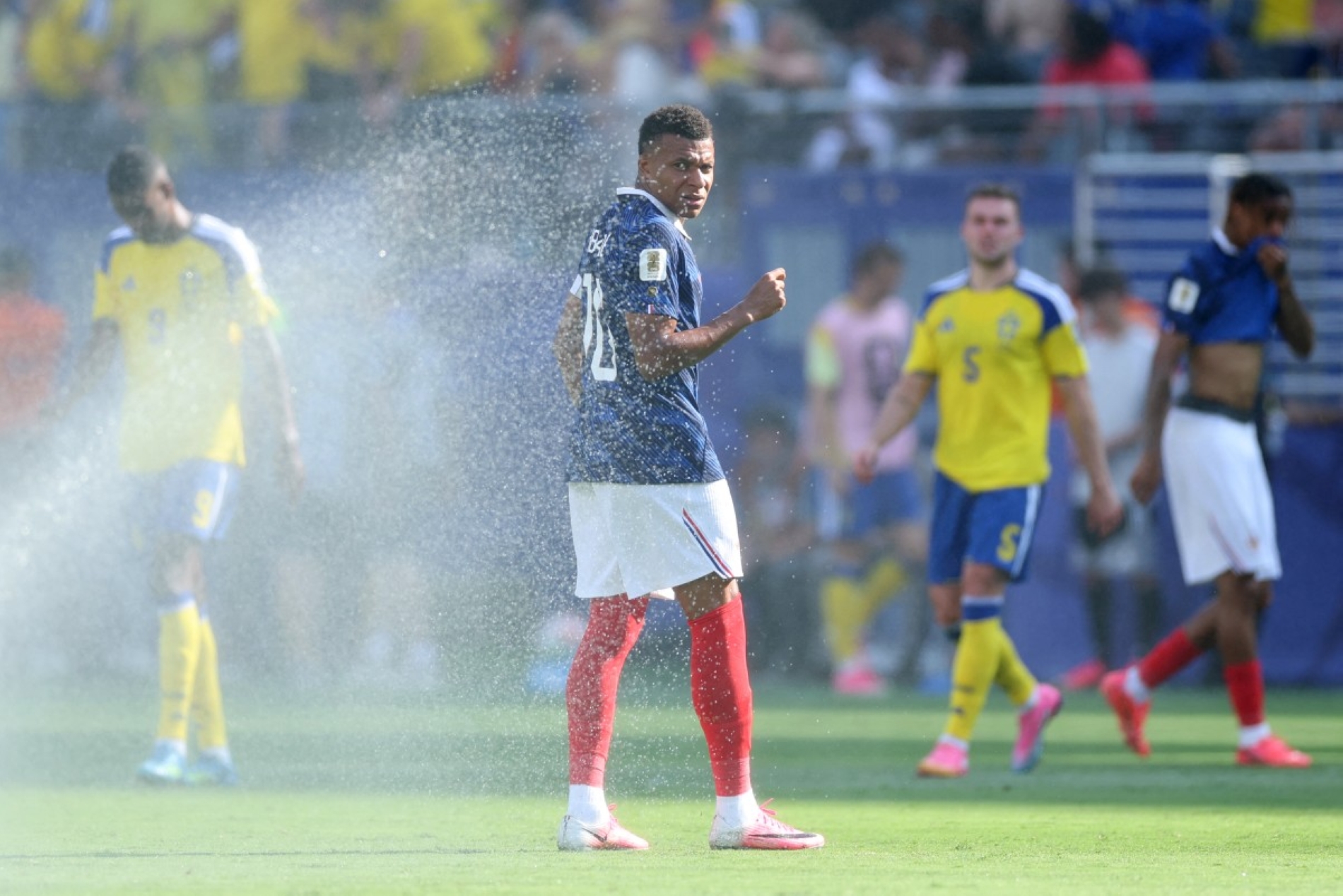
In the heat and humidity, the heart must work harder to direct blood towards the skin and support the cooling process, while continuing to supply blood and oxygen to muscles

A scientific review published in the journal Sports in 2024 examined 133 studies on the effects of heat on footballers. It concluded that prolonged exposure to high temperatures may impair both physical and cognitive performance, while creating health risks that extend far beyond fatigue. According to the review, a footballer's core body temperature may rise up to 40 degrees Celsius during a match played in severe heat, with fluid loss of up to 5% of body mass if not adequately replaced.

The footballing mind

Such extensive fluid loss signifies far more than thirst. As dehydration sets in, blood plasma volume declines, cardiovascular strain intensifies, the pulse quickens, and the body becomes less able to distribute blood efficiently around the skin, muscles and brain. The review notes that dehydration of more than 2% of body weight may impair attention, memory, and psychomotor function.

Each of these faculties is essential to a game governed by anticipation, positioning, and quickfire judgement. Heat may therefore impose its heaviest burden on the 'footballing mind'. A midfielder who passes with precision under pressure in the 20th minute may hesitate in the 75th, for instance. Similarly, a defender may misread a striker's movement, or a forward may mis-control the ball before shooting.

Getty Images via AFP
Kylian Mbappe of France cools off during a hydration break in the FIFA World Cup 2026 match between France and Sweden in New Jersey on June 30, 2026.

Ahead of the 2026 World Cup, a study published in Scientific Reports analysed the climatic conditions expected at the tournament's 16 host stadiums across the US, Canada and Mexico. Its calculations incorporated physical exertion, clothing, fluid loss, and oxygen levels. The study concluded that cities including Arlington, Houston, and Monterrey would face the most severe risks during afternoon fixtures, where average fluid loss during games could exceed 1kg/hour.

It also found up to 70% probability of heat stress in Arlington and Houston during afternoon games, and more than 50% in Monterrey, but this declined sharply for matches starting after 6pm, showing how the kick-off time is an important component of teams' risk management plans. In the same stadium, the difference between a 3pm kick-off and an 8pm kick-off could be substantial. Scheduling decisions have therefore acquired exceptional sensitivity.

The World Cup has traditionally taken place in June and July, between the end of the European football season and the beginning of the next, meaning summer conditions in the northern hemisphere. Yet Qatar 2022 departed from convention by moving the tournament to November and December, in order to shield players and spectators from the fiercest summer heat, according to FIFA's sustainability report on the event.

Economic interests

Transferring every tournament to the winter offers no simple remedy; such a move would disrupt domestic league calendars, broadcasting agreements, recovery periods, club obligations, and commercial and spectator interests. In many cases, the more practical course lies in managing the heat, including safer kick-off times, better cooling systems inside stadiums, less exhausting travel, adequate shade and water for supporters, and clear medical protocols for players, referees, and staff.

AFP
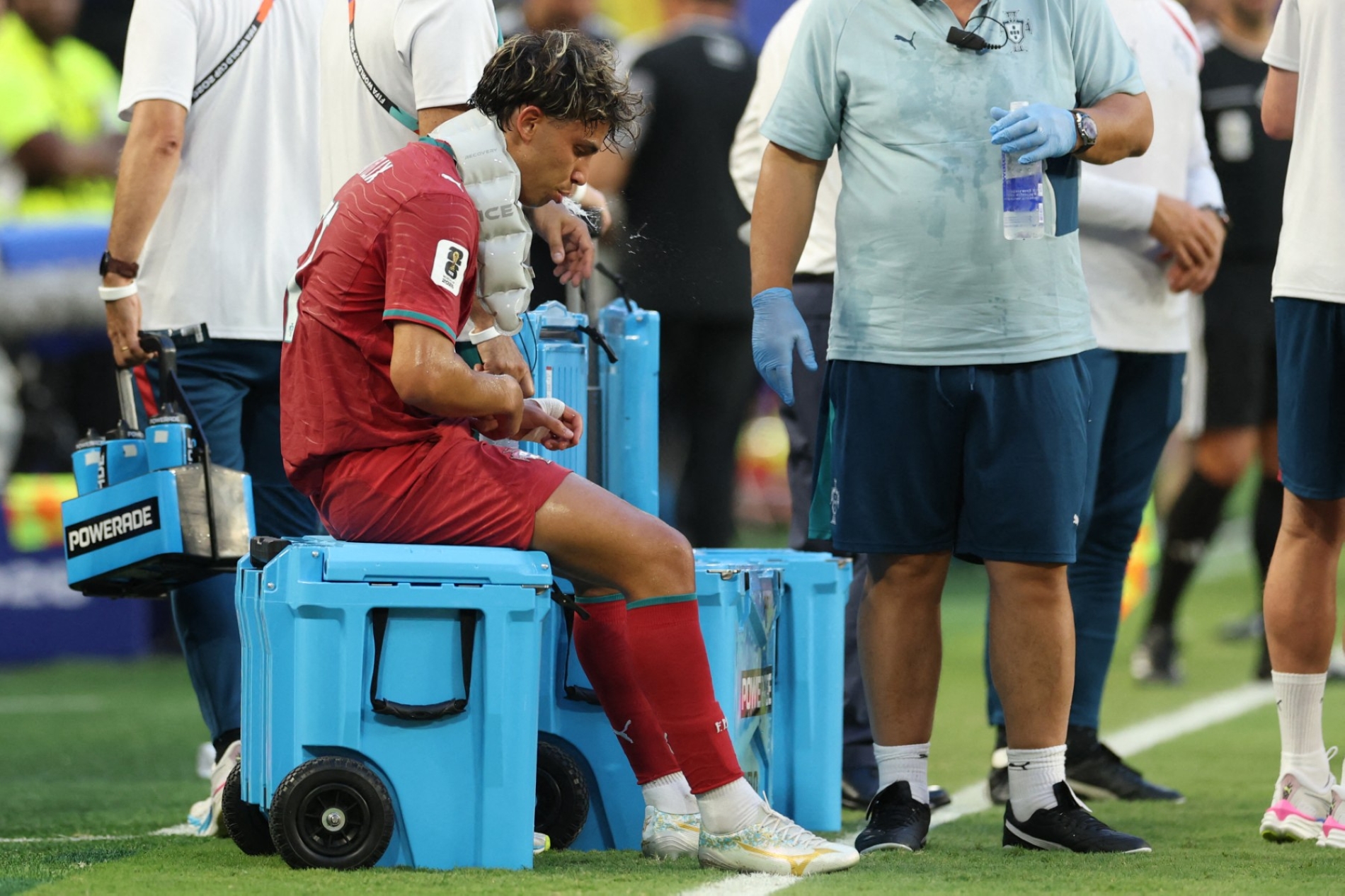
Portugal's Joao Felix rests during a hydration break in the 2026 World Cup match between Colombia and Portugal in Miami Gardens on June 27, 2026.

The 2026 World Cup is the first to include three-minute hydration breaks midway through each half of every match, irrespective of weather conditions, as part of its player protection policy. This gives players the chance to drink and cool down, with ice packs often seen draped across their necks. Yet World Weather Attribution highlighted a discrepancy between the recommendations of the international players' union, FIFPRO, and the regulations applied by tournament organisers.

FIFPRO considers a wet-bulb globe temperature of 26 degrees Celsius to constitute a genuine risk of heat stress requiring cooling breaks. At 28 degrees, it argues, conditions may become unsafe and postponement should be considered, but tournament regulations envisage postponement only at 32 degrees Celsius.

In Toronto, public health officials cautioned supporters attending the Portugal-Croatia match that a heatwave could drive the perceived temperature towards 40 degrees Celsius. They urged spectators to drink water and limit their consumption of alcohol. In Kansas City, extreme heat warnings were issued ahead of the Colombia-Ghana match, with conditions expected to place severe strain on players and spectators alike.

Performance and safety

In competitive football, heat can no longer be dismissed as a scientific curiosity, an excuse for defeat, or a passing complaint; it has become a question of performance, safety and competitive fairness. A team playing an evening fixture in a less humid city will have less physiological burden than one playing at midday in oppressive conditions, struggling to prevent its core body temperature from climbing beyond safe limits.

Getty Images via AFP
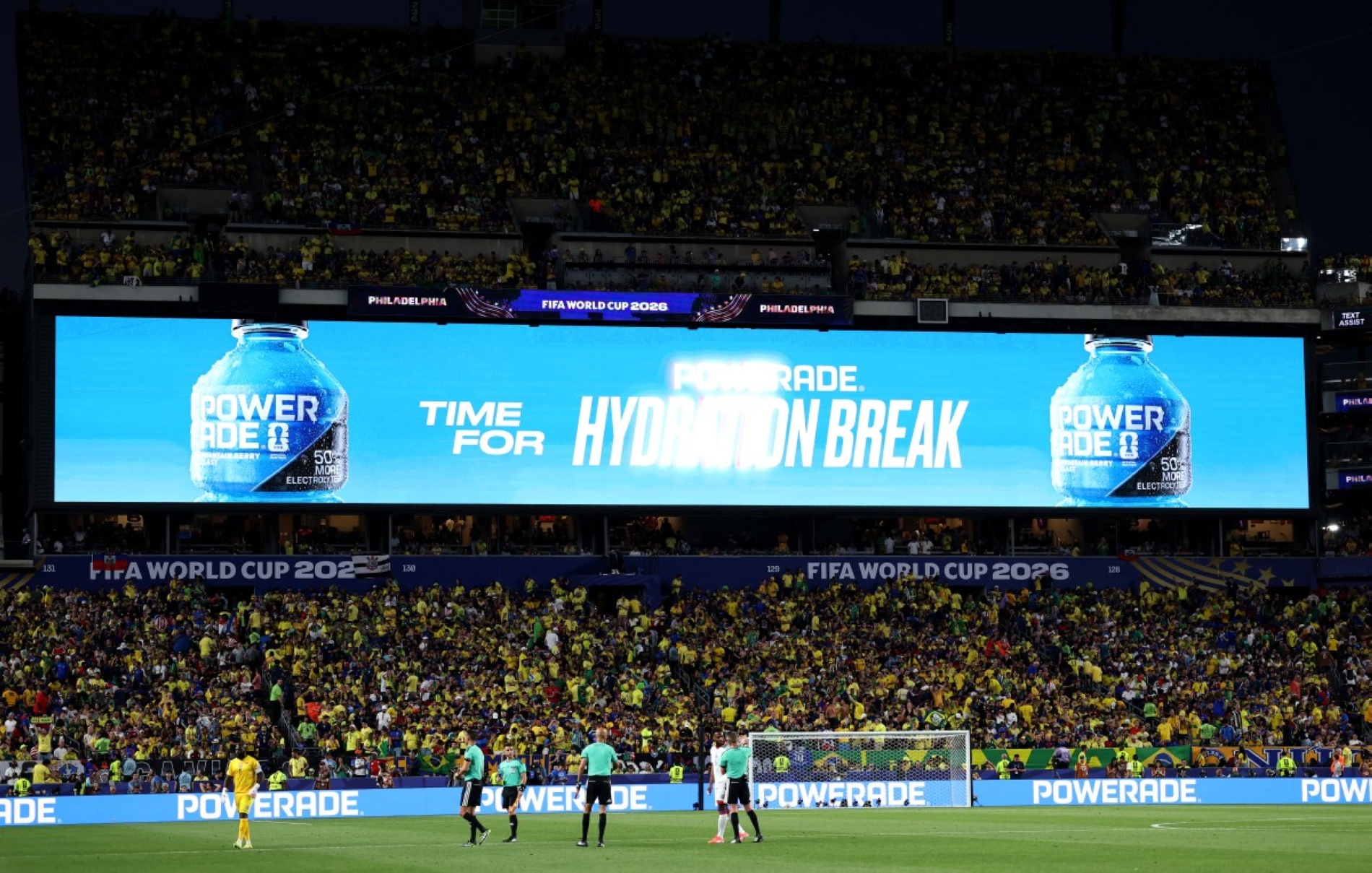
While the crowds may boo the three-minute hydration breaks midway through each half, they are arguably part of the solution.

In this way, heat is the unseen participant in a match. It can diminish the explosive runs that create goals, or delay the reaction that would prevent one. Its effects appear in heart rate, fluid loss, reaction speed, pressing intensity, decision-making, and the quality of the final touch. As a result, extreme heat may compel the sport to evolve.

Whether elite football can preserve its speed and intensity without testing biological limits is an increasingly urgent question. While the crowds may boo the hydration breaks, they are arguably part of the solution, as is more intelligent scheduling, better-prepared stadiums, a stronger role for sports medicine, and a clear recognition that climate has become part of the game itself.

font change