Pakistan's UN envoy: there is no military solution to Iran war

Ambassador Asim Iftikhar Ahmad speaks to Al Majalla about Islamabad’s diplomatic role in the talks between the US and Iran, its balancing act between Tehran and Riyadh and the Mecca Pact

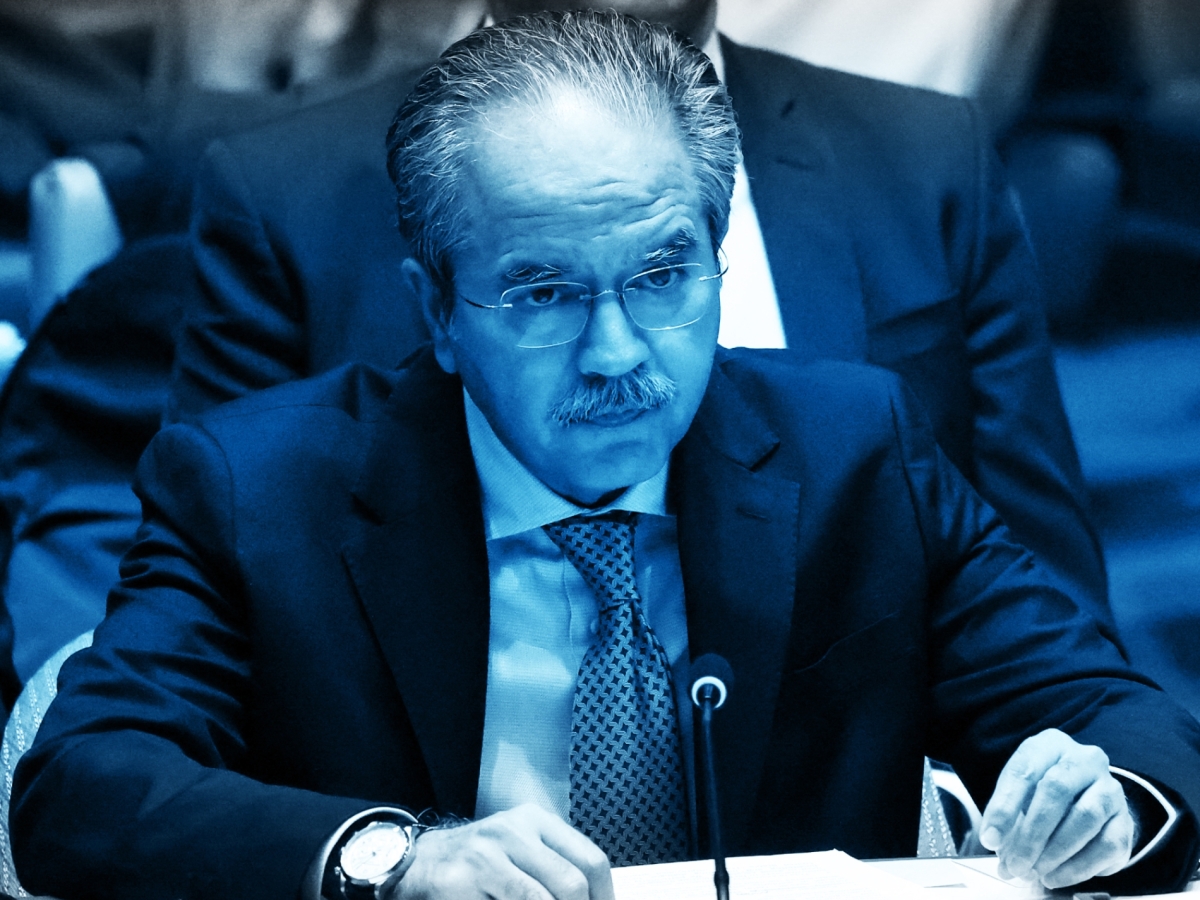
Pakistan's Ambassador Permanent Representative to the UN, Asim Iftikhar Ahmad, attends a United Nations Security Council meeting after the US and Israel launched strikes on Iran, in New York, on 28 February 2026.
REUTERS/Heather Khalifa
Pakistan's Ambassador Permanent Representative to the UN, Asim Iftikhar Ahmad, attends a United Nations Security Council meeting after the US and Israel launched strikes on Iran, in New York, on 28 February 2026.

Pakistan's UN envoy: there is no military solution to Iran war

Pakistan's two-year term on the United Nations Security Council has coincided with one of the most turbulent stretches in the region's recent history—and with an unusually visible run of Pakistani diplomacy.

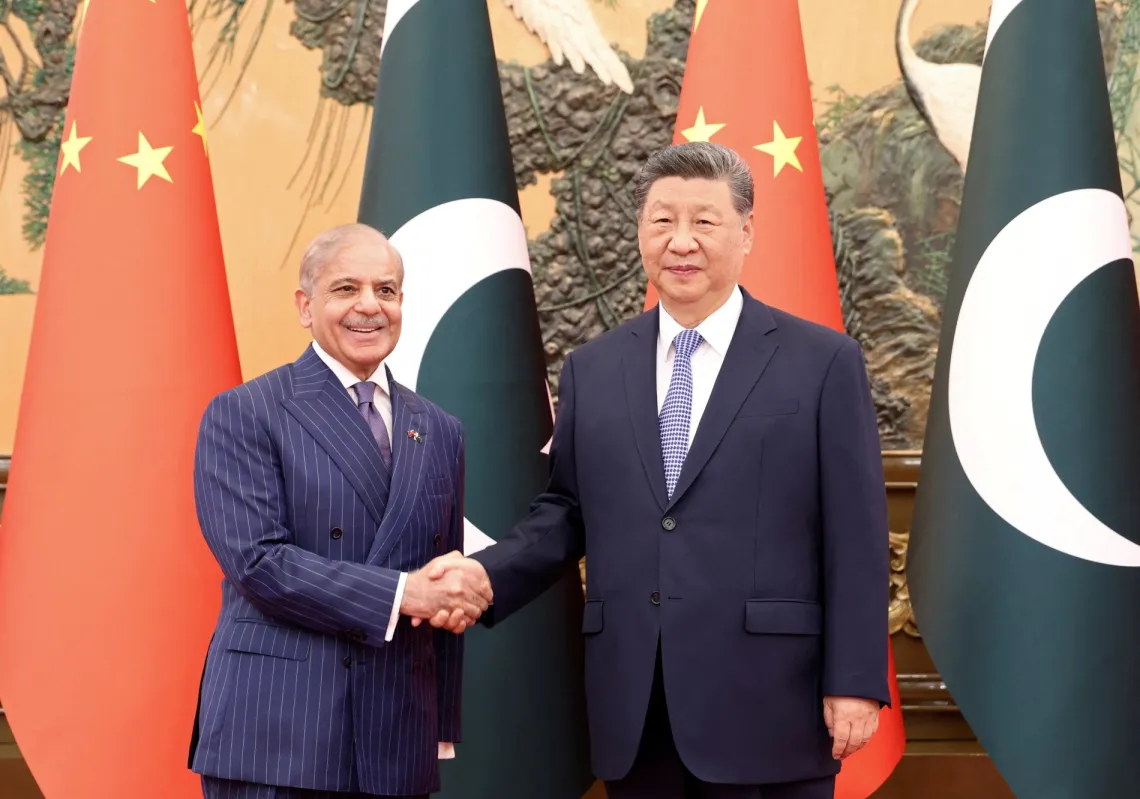
Islamabad has cast itself as the channel between Washington and Tehran, hosting talks that Pakistani officials describe as the first direct, face-to-face engagement between the two governments in more than four decades. Those contacts produced a ceasefire and the framework document now known as the Islamabad Memorandum of Understanding—an agreement that renewed fighting has since strained, with the status of the Strait of Hormuz still unresolved.

At the same time, Pakistan has broadened its security commitments in the Arab world. The trilateral accord signed in Mecca with Saudi Arabia and Türkiye, which builds on the mutual defence agreement Islamabad concluded with Riyadh last year, has prompted questions in several capitals about its scope and its intended audience.

Ambassador Asim Iftikhar Ahmad, Pakistan's Permanent Representative to the United Nations, has been one of the public faces of that effort. Speaking exclusively to Al Majalla, he sets out why Islamabad believes there is no military solution to the US–Iran confrontation, why he will not speculate about Hormuz, and why the Mecca accord is a defensive grouping, not directed at any third country. Here is the conversation.


Let me start with the latest news between the United States and Iran, and Pakistan's role in bringing this war to an end. Are we heading towards a breakthrough, or towards more escalation?

That is a difficult question, but for me the answer is straightforward. The escalation in the region was a source of grave concern—not only for the immediate neighbourhood but for the international community as a whole. Pakistan was affected, many regional countries were affected, and all our brotherly countries in the Gulf had serious concerns. Everyone was looking for a way to address the crisis, and Pakistan's leadership assumed that responsibility: to try to see that the conflict was resolved peacefully and that peace and stability were restored.

That is the context in which Pakistan played its role. We are one of the few countries with that level of trust on both sides, with the United States and with Iran, and with the acceptability required to facilitate a dialogue. I think we did that quite successfully.

The first ceasefire that was announced came through Pakistan. Then the first-ever direct, face-to-face engagement between the US and Iran took place in Islamabad after more than four decades—that, too, was groundbreaking. The process continued and culminated in the signing of the Islamabad Memorandum of Understanding.
Reuters
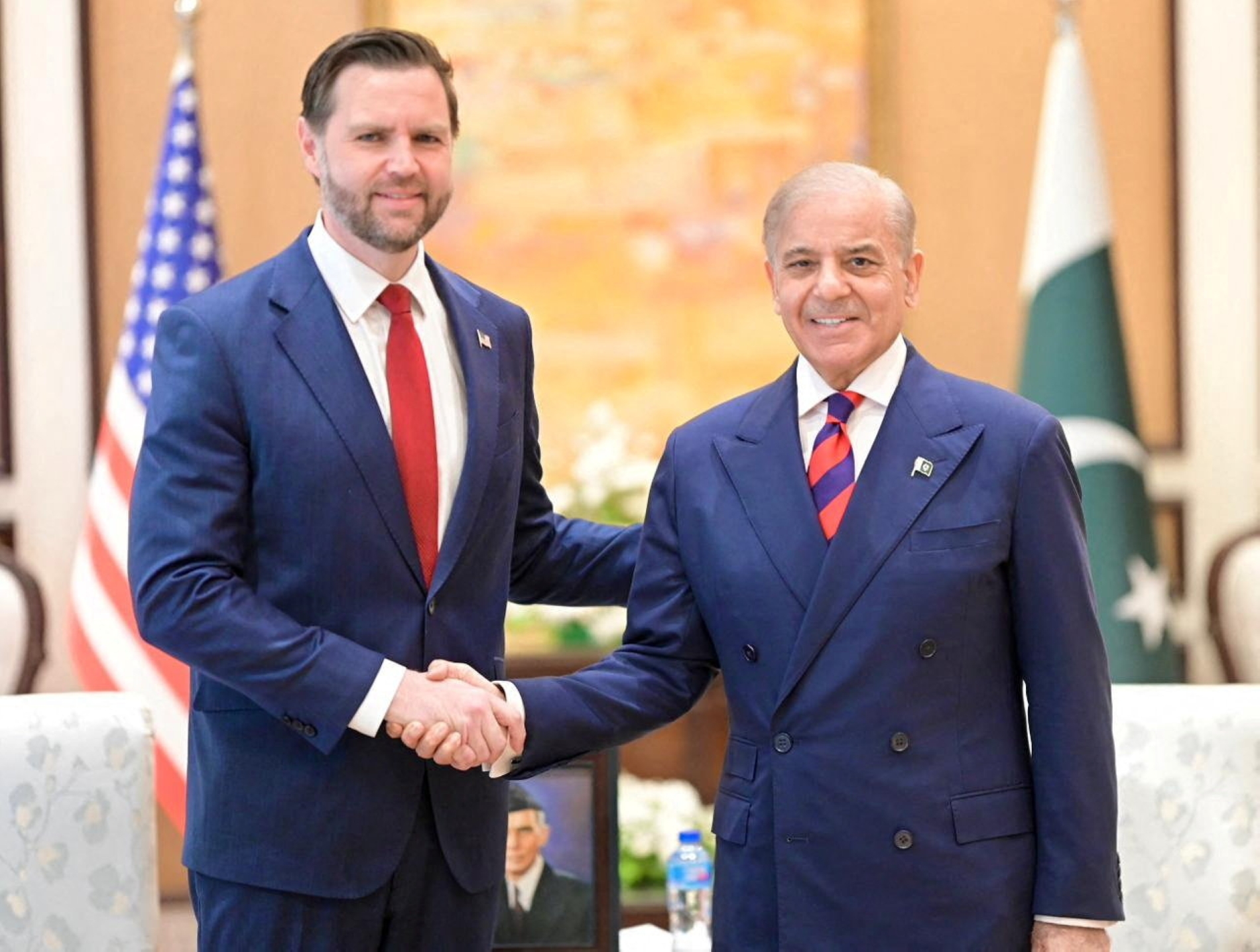
Pakistan's Prime Minister Shehbaz Sharif shakes hands with US Vice President JD Vance during their meeting, on the day delegations from the US and Iran are to hold peace talks, in Islamabad, on 11 April 2026.

I recall this because the memorandum provides the basic framework within which the key underlying issues are to be negotiated to reach a conclusive, comprehensive, and final settlement. That is why it was important, and why it remains important. It would be in the interest of all parties to return to the negotiating table with the Islamabad MOU as the basis and to engage on all the key elements it contains. The structure is there to work out a comprehensive settlement that would lead to durable peace and stability in the region.

Among those key issues, one of the most important is reopening the Strait of Hormuz. Do you think Iran will bring the strait into its talks with the United States—or will it prefer to keep the matter separate, in bilateral channels with Oman or Qatar?

Since we have been facilitating and mediating this entire process, it would not be in the fitness of things for me to speculate about what Iran would or would not like to do, or how the United States might respond to any particular proposal or suggestion. We also know the positions of our brotherly Gulf countries.
What matters is that the US and Iran negotiated and reached an agreement: the Islamabad MOU. The challenge now is implementation. 

Ambassador Asim Iftikhar Ahmad, Pakistan's UN envoy

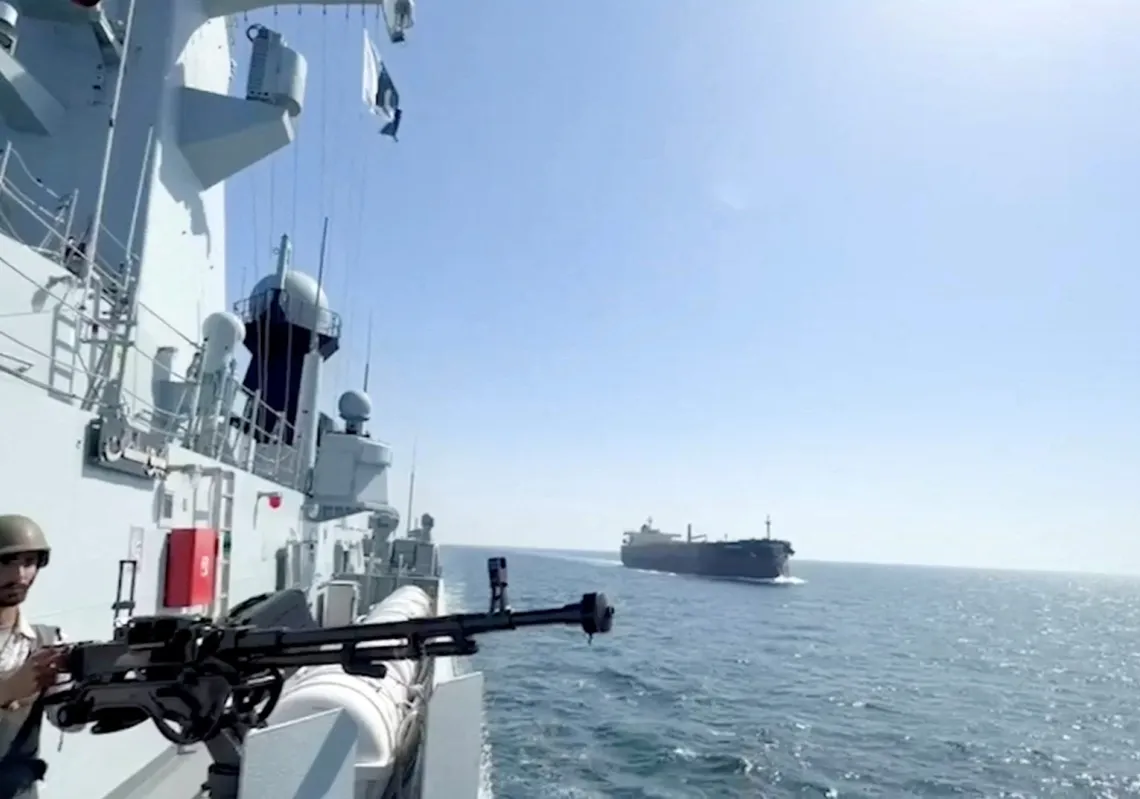
Pakistan's own position has been very clear: we want maritime security and freedom of navigation in accordance with international law. We have a clear national position on maritime routes, including the Strait of Hormuz, and similarly in the Red Sea and elsewhere in the world.

What matters is that the two sides negotiated—in a process facilitated and mediated by Pakistan—and that they reached an agreement: the Islamabad MOU. All the important points are set out in that agreement. They know what they agreed to. The challenge now is implementation. 

Everything we have seen—before the war, during the conflict, and after the signing of the MOU with the renewal of attacks—has only reinforced our view that there is no military solution to this situation. The only viable long-term solution is through negotiations, and the Islamabad MOU has provided the framework for that. That is what we have continued to emphasise in our engagement with both sides, with our friends in the Gulf, and with other partners.

SPA / AFP
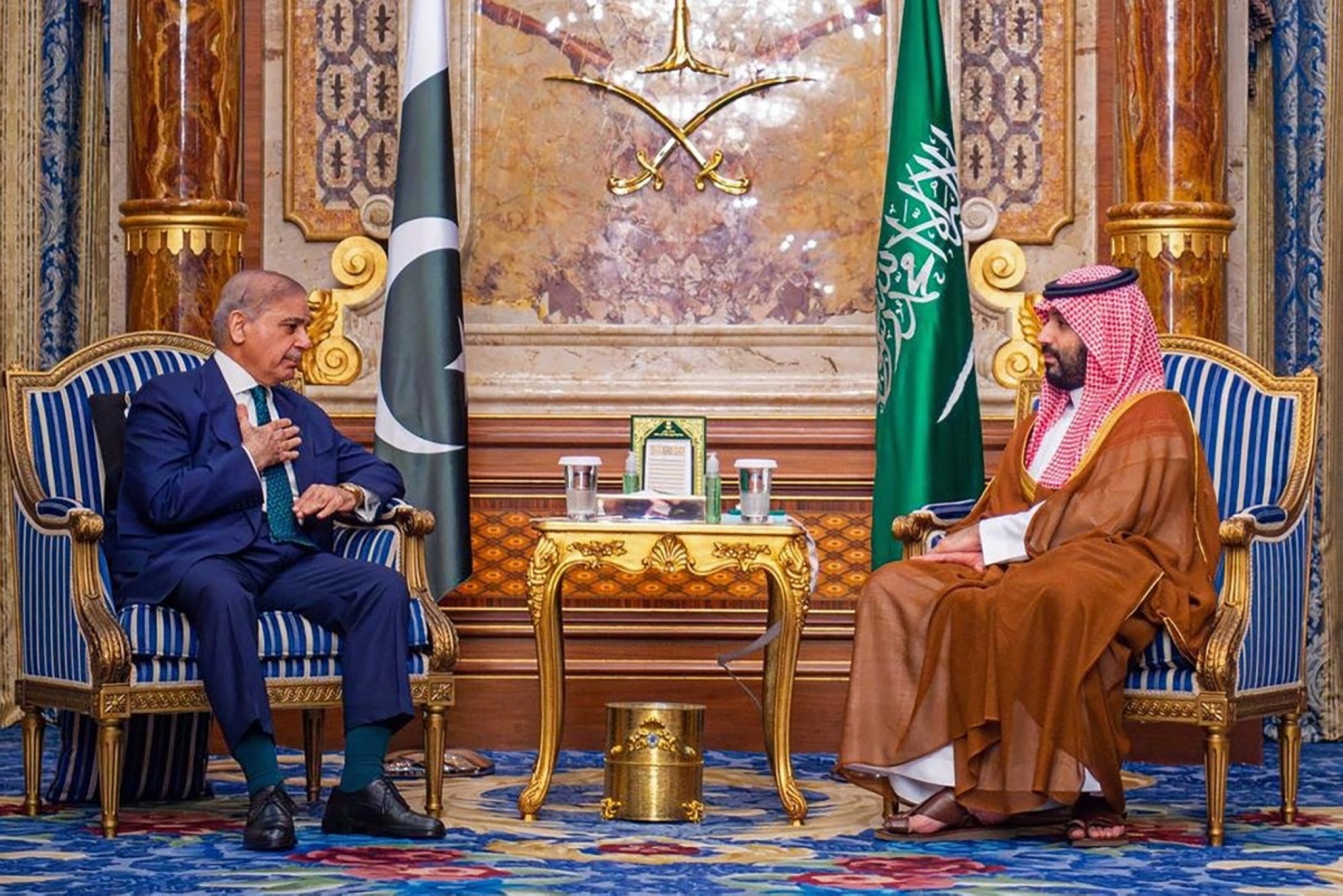
Saudi Arabia's Crown Prince Mohammed bin Salman (R) speaks with Pakistan's Prime Minister Shehbaz Sharif during a meeting in Jeddah on 16 April 2026.

Pakistan picks up the phone and can talk to Beijing, Tehran, Riyadh, and Washington. What is the recipe for that success?

Several factors are at play. First, our long-standing and historic relations with all the countries of the region—and this is not new: with our Gulf brothers and sisters, with Iran, with the United States. Second, in this particular situation, Pakistan took a very objective position from the outset, based on principle. That principle is, first, the inadmissibility of the use of force contrary to the purposes and principles of the UN Charter; and second, that the best way to address any situation of peace and security is through dialogue, mediation and peaceful settlement. Pakistan is deeply attached to the principle of peaceful settlement of disputes.

When the conflict broke out, everyone looked to the United Nations, to other organisations, and to individual countries. At that particular moment it appeared that Pakistan was the country with the historical perspective and context, with the parties and with the countries of the region; with the outreach and the channels of communication; and, very importantly, with that level of trust with both Iran and the United States, and lines of communication at the highest levels of decision-making in both countries.

It was active diplomacy, but also quiet and very discreet diplomacy, conducted far from the media glare. The situation demanded it, as did our responsibility as facilitator and mediator.

Beyond that, Pakistan was not acting alone. We have a circle of close friends. We coordinated very closely with Saudi Arabia in particular, with Egypt, with Türkiye. We coordinated our positions and remained in regular contact with our Chinese friends—you will recall that Pakistan and China announced the Five-Point Initiative. And we are also in the Security Council, taking a very responsible approach to the discussions there.

PAKISTAN PRIME MINISTER'S OFFICE / AFP
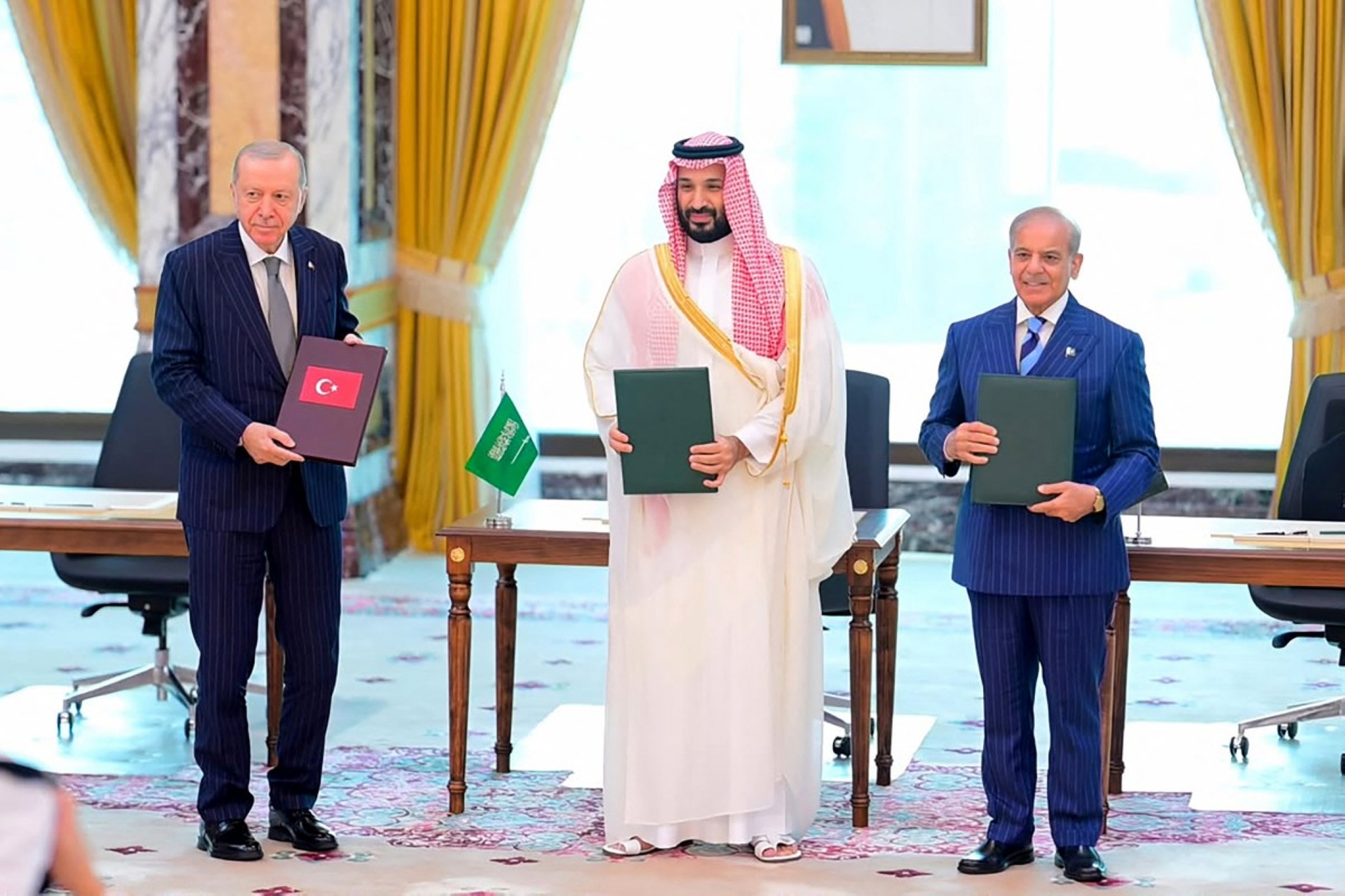
Saudi Crown Prince Mohammed bin Salman (C), Turkish President Recep Tayyip Erdogan (L) and Pakistani Prime Minister Shehbaz Sharif posing after signing the Mecca Joint Defence Agreement in Mecca, Saudi Arabia on 7 August, 2026.

Let me turn to the accord signed recently in Mecca, in Saudi Arabia. Do you think it might expand to include other geopolitical powers?

This is a historic landmark between Pakistan, Saudi Arabia and Türkiye. It builds on the bilateral agreement between Pakistan and Saudi Arabia concluded last year, but more than that, it builds on common aspirations and deep-rooted cultural and religious understanding—on the long-standing relationship and the deep respect the peoples of these three countries have for one another. The people of Pakistan hold that sentiment and respect strongly towards the people and the land of Saudi Arabia.

That sentiment has now been transformed into a very close strategic relationship between our three countries. So I would say the Mecca agreement is monumental. It is very significant. It reflects the common aspirations and thinking of three very important countries in the Islamic world about the regional situation, about developments as they evolve, and about the role we can play as responsible countries and as friends to ensure peace and stability.

That is why all three of us, and our leaderships, have explained that this is an agreement defensive in nature. The intent is deterrence against aggression and instability, and it is not directed against any third country. Its overall objective is to enhance cooperation among our three countries and to enhance preparedness, with a view to ensuring that our region is stable and secure and that we have the level of cooperation that will ensure longer-term peace and stability.

IRAN FOREIGN MINISTRY / AFP
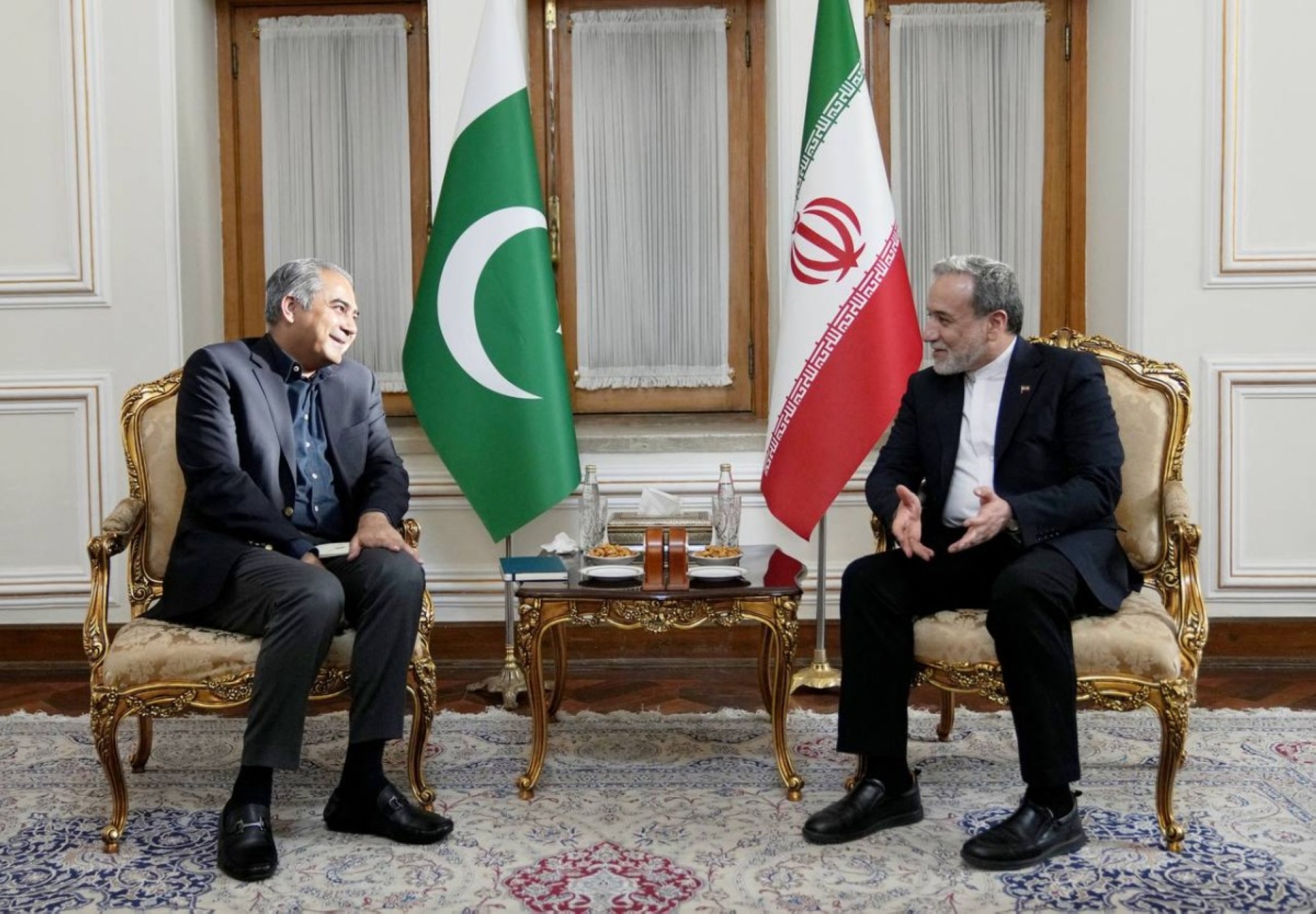
Iranian Foreign Minister Abbas Araghchi meeting with Pakistan's Minister of Interior Syed Mohsin Raza Naqvi in Tehran on 11 August 2026.

But what about Pakistan's ties with Iran? Do you think they might complicate the Mecca accord—or support it?

As I was explaining, Pakistan has been successful in maintaining friendly and cooperative relations with brotherly countries, and that includes Iran and Saudi Arabia at the same time. So I do not think there is any complication, or that there should be any apprehension in this regard.

In fact, you will have seen the statement of the Iranian foreign ministry spokesperson, which was very clear: as far as Iran is concerned, they do not see any problem with regard to the Mecca agreement. Basically, I think it should be a welcome development for them also.

The Mecca Agreement is defensive in nature. The intent is deterrence against aggression and instability, and it is not directed against any third country.

Ambassador Asim Iftikhar Ahmad, Pakistan's UN envoy

My last question is on Pakistan–US relations under President Trump. What signals might Pakistan be sending to regional powers—chiefly India, for example?

I am not sure what lies behind the question, but Pakistan's position has always been clear when it comes to our relations with the major countries, including the permanent members of the Security Council—and obviously the United States is one of them. Our approach has always been to have objective, broad-based and mutually beneficial relations with the major powers, including the United States, and that also includes China and the other permanent members. This has been the basis on which we have operated for years, and it continues to be the driving force.

When you look at it, the relationship is progressing and developing as a mutually beneficial, objective and broad-based one. We have security and defence cooperation. The United States is an important trade and investment partner. We have collaborated closely in the Security Council. Pakistan has also had the opportunity to contribute to peace and stability in the region by facilitating the process between the United States and Iran, leading to the ceasefire and the Islamabad MOU.

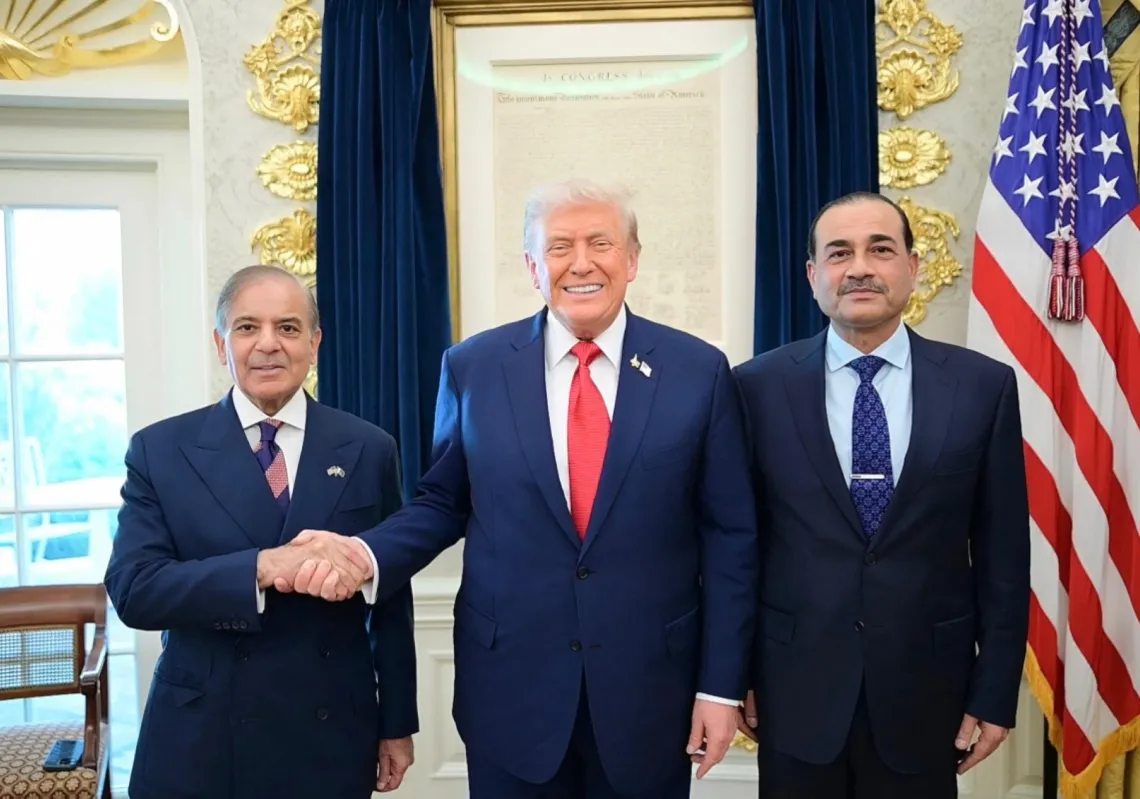
It is not a one-way relationship. You will recall that when we faced aggression last May from our eastern neighbour, we were on our own and were able to defend ourselves and successfully deter that aggression. That four-day conflict also ended with a ceasefire that was appreciably facilitated by President Trump, and we have acknowledged that. 

Yoan Valat / REUTERS
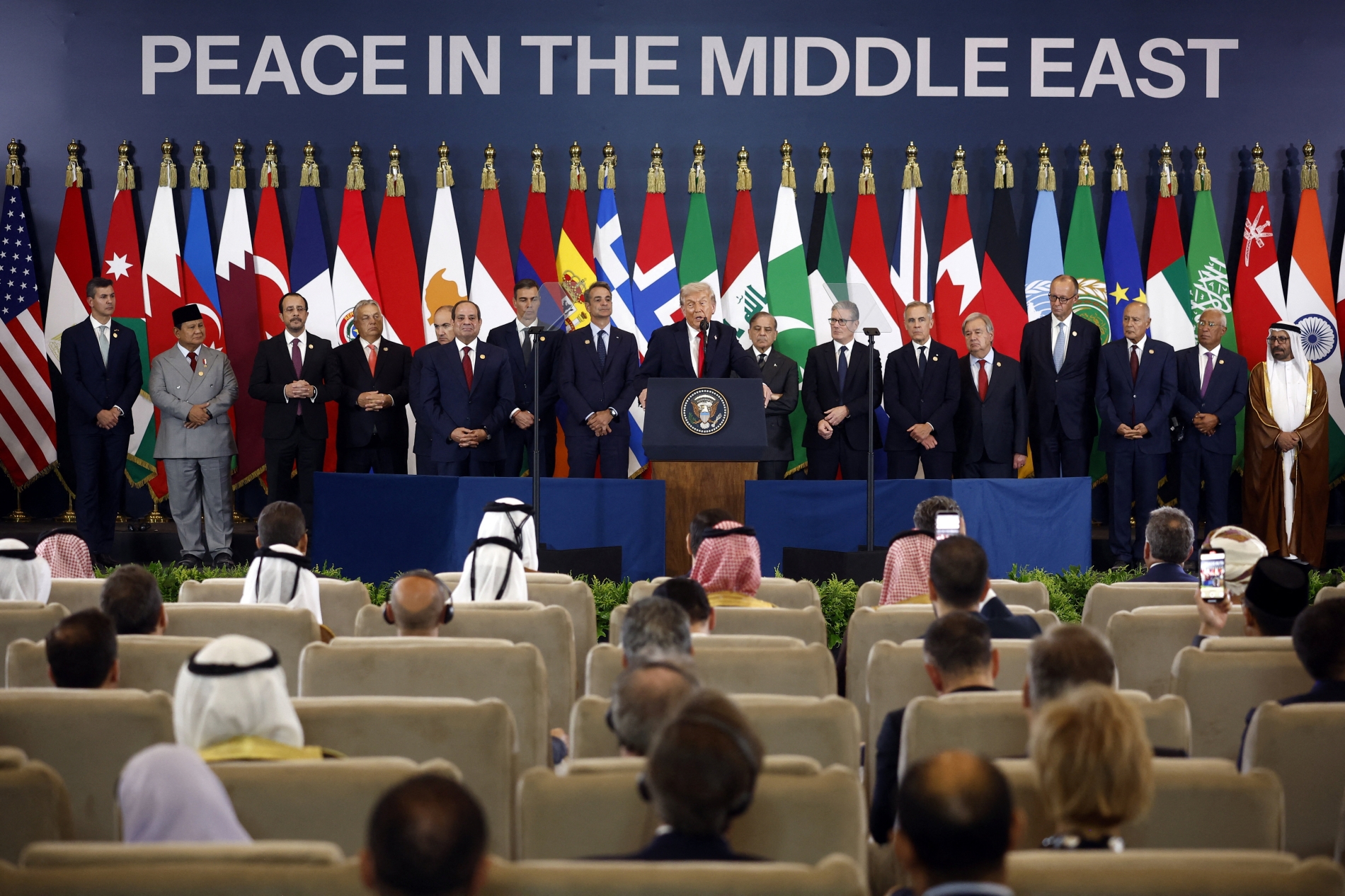
US President Donald Trump speaks during a world leaders' summit on ending the Gaza war, amid a US-brokered detainee swap and ceasefire deal between Israel and Hamas, in Sharm el-Sheikh, Egypt, on 13 October 2025.

I would also recall that last year Pakistan, together with Saudi Arabia and a group of Islamic and Arab countries, supported President Trump's comprehensive plan on Gaza. That was an important development, because the way the situation was evolving in Gaza was truly unbearable. Supporting that plan led to the ceasefire and opened up the horizon for Palestinian statehood and self-determination, which was also very important. So we have contributed to that objective in that way as well.

To come back to your question on Pakistan and the United States: you will have seen a very important statement in which President Trump welcomed the Mecca agreement in a big way. That is very substantial, because it clarifies matters for any of those countries that may be wondering what the Mecca agreement means for third countries. President Trump's statement itself has clarified and welcomed it, which is a good thing.

Our approach is always inclusive. We know other countries in the region are watching these developments with great interest, and consultations are ongoing. We remain in touch with all our friendly and like-minded countries to determine the best ways to proceed based on this agreement reached between Pakistan, Türkiye, and Saudi Arabia.

font change