
The Arab world has a vibrant and rich literary scene. Al Majalla picks out some choice titles in our fortnightly round-up of the latest Arabic books, which aims to highlight some trends and thinking in the Arab world.
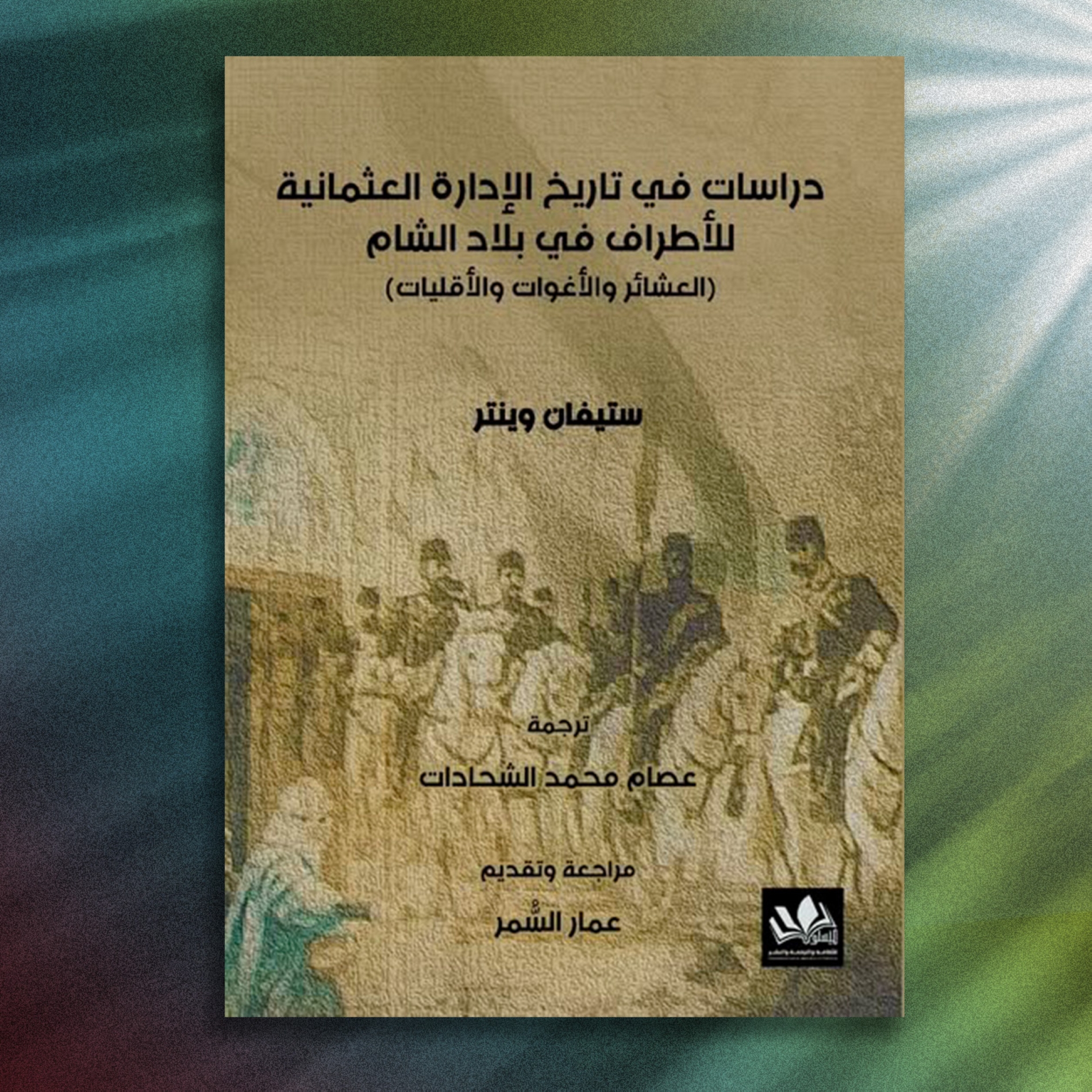
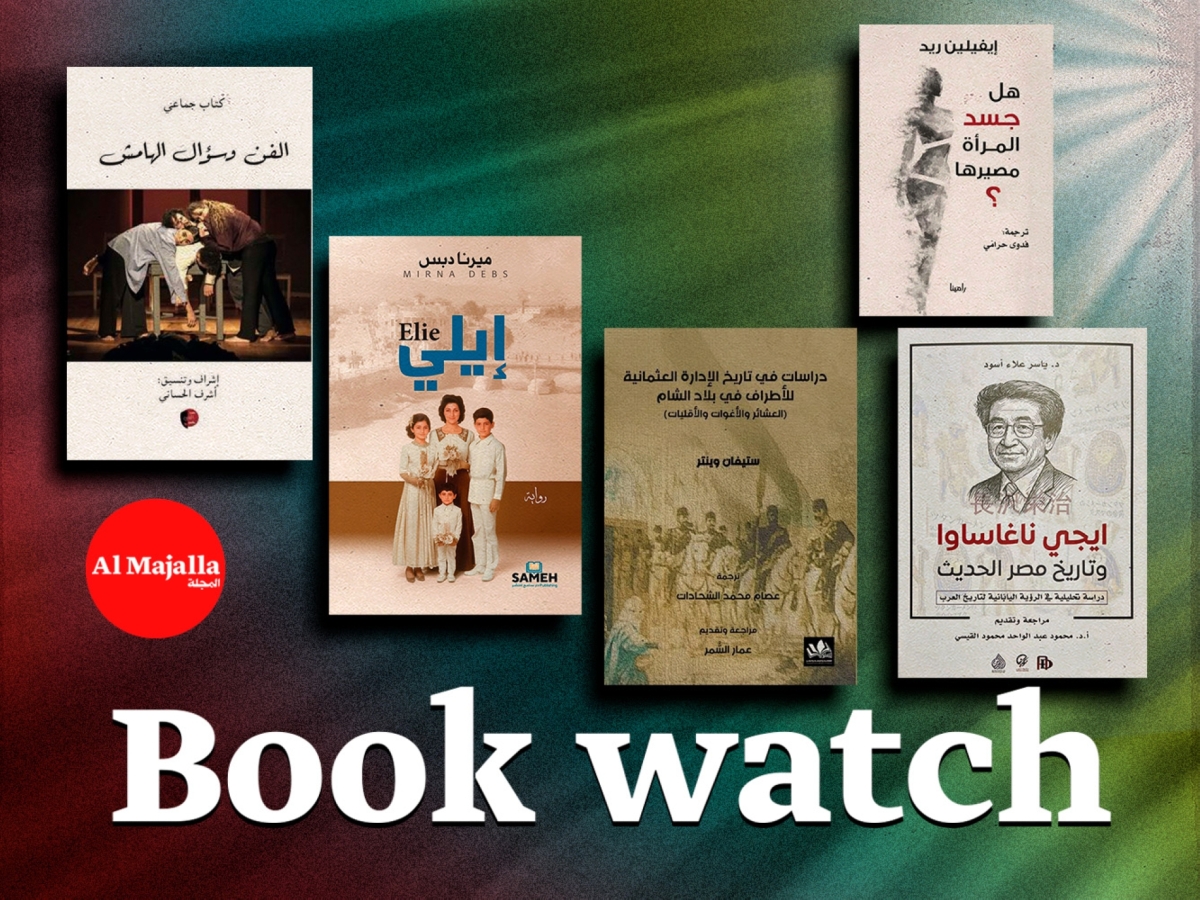
Studies in the History of Ottoman Administration in the Peripheries of Bilad al-Sham: Tribes, Aghas and Minorities
Author: Stefan Winter
Translation: Issam Muhammad al-Shahadat
Reviewed and introduced by: Ammar al-Samar
Publisher: Maysaloon for Culture, Translation and Publishing, Türkiye and France
In his book Studies in the History of Ottoman Administration in the Peripheries of Bilad al-Sham: Tribes, Aghas and Minorities, Canadian historian Stefan Winter offers an expansive reading of the relationship between the Ottoman state and local societies in Syria, Lebanon and neighbouring regions. He does so by concentrating on areas and peripheries largely overlooked in traditional historical writing. The book was published in Arabic in a translation by Issam Muhammad al-Shahadat, with a review and introduction by Ammar al-Samar.
The volume brings together 17 studies published by Winter over roughly a quarter of a century in peer-reviewed academic journals and edited books, as well as papers, some of which were presented at conferences. What unites these studies is an attempt to understand Ottoman administration from outside the imperial centre, through the political, social and economic life of rural areas, frontier regions, tribes, sects and local elites.
The importance of this perspective lies in its treatment of the Ottoman state not as a central apparatus that imposed its authority directly on the peripheries, but as a complex network of cooperation, negotiation and conflict involving the central administration, local notables, tribes, and religious and economic leaders. In his studies of tribes, for example, Winter examines policies of tribal settlement, the management of mobility and taxation, and the incorporation of tribal groups into the administrative system. He shows that tribes were not merely a force outside the state, but were often part of the mechanisms of governance themselves. His study of the Kurdish Rishwan confederation in Syria shows how a large tribal group could be integrated to varying degrees into the Ottoman system, with some members attaining important positions in the region.
The studies of aghas and local notables offer another model of this relationship. In his research on the Hammud family in Sidon, Winter traces its rise through trade, tax collection and relations with the Ottoman administration, showing how the family’s influence became part of the local political and economic structure before declining amid the transformations of the 18th century.
The book also devotes particular attention to minorities and sects, moving away from simplified interpretations that reduce their history to persecution or isolation. In his study of the Alawites during the Ottoman period, Winter draws on administrative documents and Ottoman sharia court records to argue that their relationship with the state was more complex. The Alawites enjoyed a degree of administrative recognition and used judicial institutions, while their society saw social differentiation and the emergence of local elites, some of whom were linked to the state.
The book’s value lies in its attempt to construct a history of Ottoman Bilad al-Sham from the peripheries towards the centre. Drawing on documents from the Ottoman archives, court and tax records, and administrative correspondence, it sheds light on a social and political history often absent from broader narratives. In doing so, it offers a more nuanced picture of how Ottoman authority operated in rural and frontier areas, and of the role played by tribes, aghas and minorities in shaping that history.
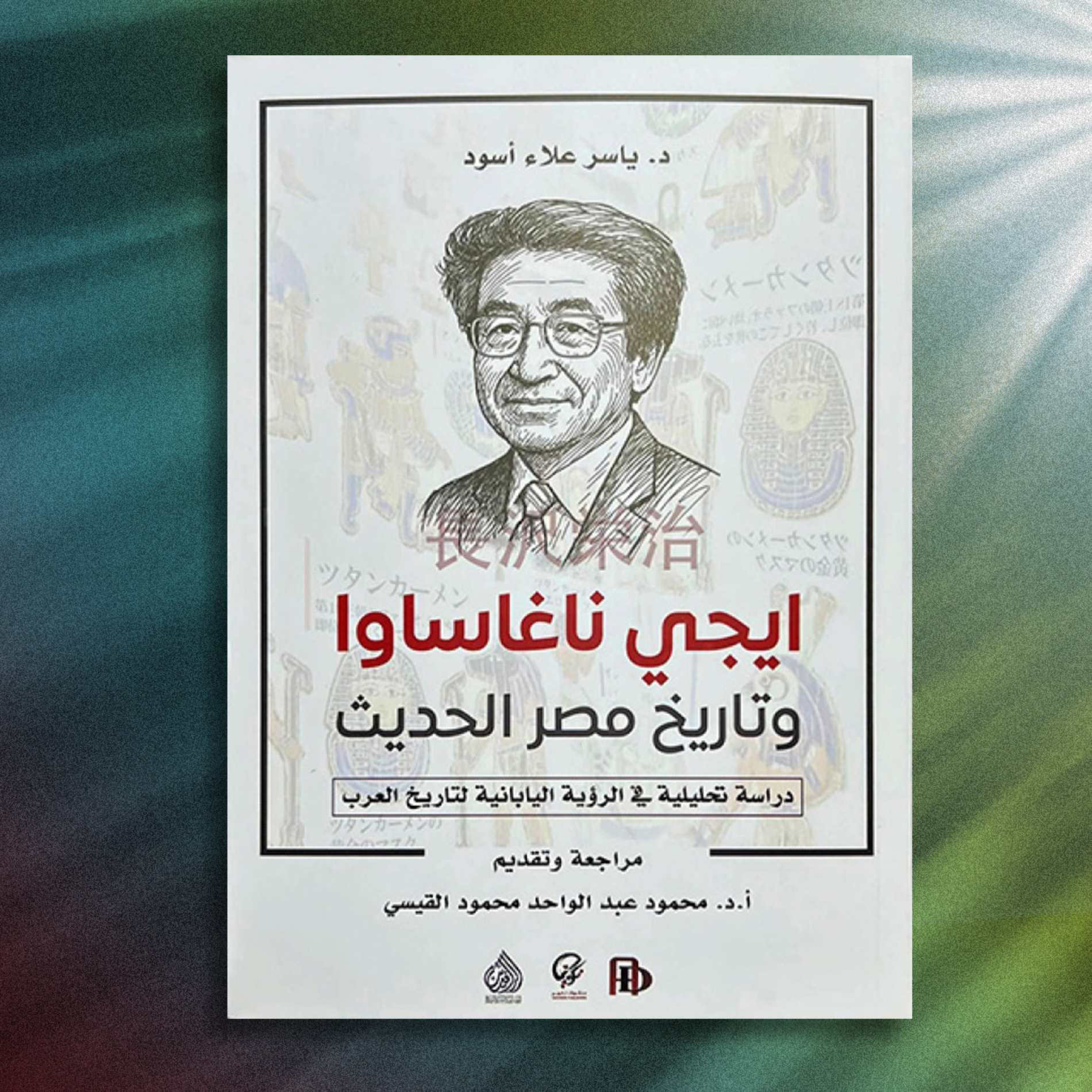
Eiji Nagasawa and Modern Egyptian History: An Analytical Study of the Japanese View of Arab History
Author: Dr Yasser Alaa Aswad
Reviewed and introduced by: Prof Dr Mahmoud Abdul Wahid Mahmoud al-Qaisi
Publisher: Dar al-Rafidain, Lebanon and Iraq
When a Japanese historian reads the history of modern Egypt, an urgent question may arise about the relationship between that reading and Eurocentrism, as well as the traditional image of the East produced and entrenched by Orientalist writings. Yet that question begins to recede once we realise that this reading of Egyptian history in particular, Arab history more generally and Muslim history more broadly is largely free of both Orientalism and Eurocentrism. This is what readers will encounter in Eiji Nagasawa and Modern Egyptian History: An Analytical Study of the Japanese View of Arab History, by the Iraqi writer Dr Yasser Alaa Aswad, reviewed and introduced by Prof Dr Mahmoud Abdul Wahid Mahmoud al-Qaisi.
The book focuses on Nagasawa as a Japanese scholar who took an interest in Egypt and the Arab world. It also examines how his view of Egyptian history and society formed, and the path that led him from development studies and economics in Japan to a specialisation in the Middle East and modern Arab history. The study grew out of academic research the author conducted at the University of Baghdad, aiming to present the Japanese perspective on modern Egyptian history and Japanese researchers' engagement with Arab issues after the Second World War.
The book offers a different lens on Egypt. After tracing Nagasawa’s writings on Egyptian history, the author turns to the Japanese intellectual environment that produced this kind of scholarship. Nagasawa joined the Institute of Developing Economies after graduating in 1976, before moving on to the study of the Middle East and drawing on traditions of area studies that combine history, economics, sociology and politics. The interviews Yasser Alaa Aswad conducted with Nagasawa reveal personal and intellectual aspects of his career, as well as the circumstances that contributed to his shift from an interest in China to the study of the Arab world.
Nagasawa appears in the book as a leading figure of the third generation of Japanese Arabists. According to the book’s introduction, this generation sought to develop an approach less beholden to Eurocentrism and more attentive to Arab experiences within their historical and social contexts. Yuzo Itagaki, Nagasawa’s teacher, described him as having led the third wave in the development of Middle Eastern studies in Japan, while his works were distinguished by their analysis and critique of Arab experiences without preconceived judgements.
This is a book about the life of a Japanese scholar, but it also poses a question: how does the other read our history, and what issues might a Japanese perspective discern in modern Egypt that differ from those familiar in Arab or Western writing? It is a book about Nagasawa, but at the same time a book about Egypt, Japan and the distance between two cultures, a distance that can become a space for a broader and deeper understanding of modern Arab history.
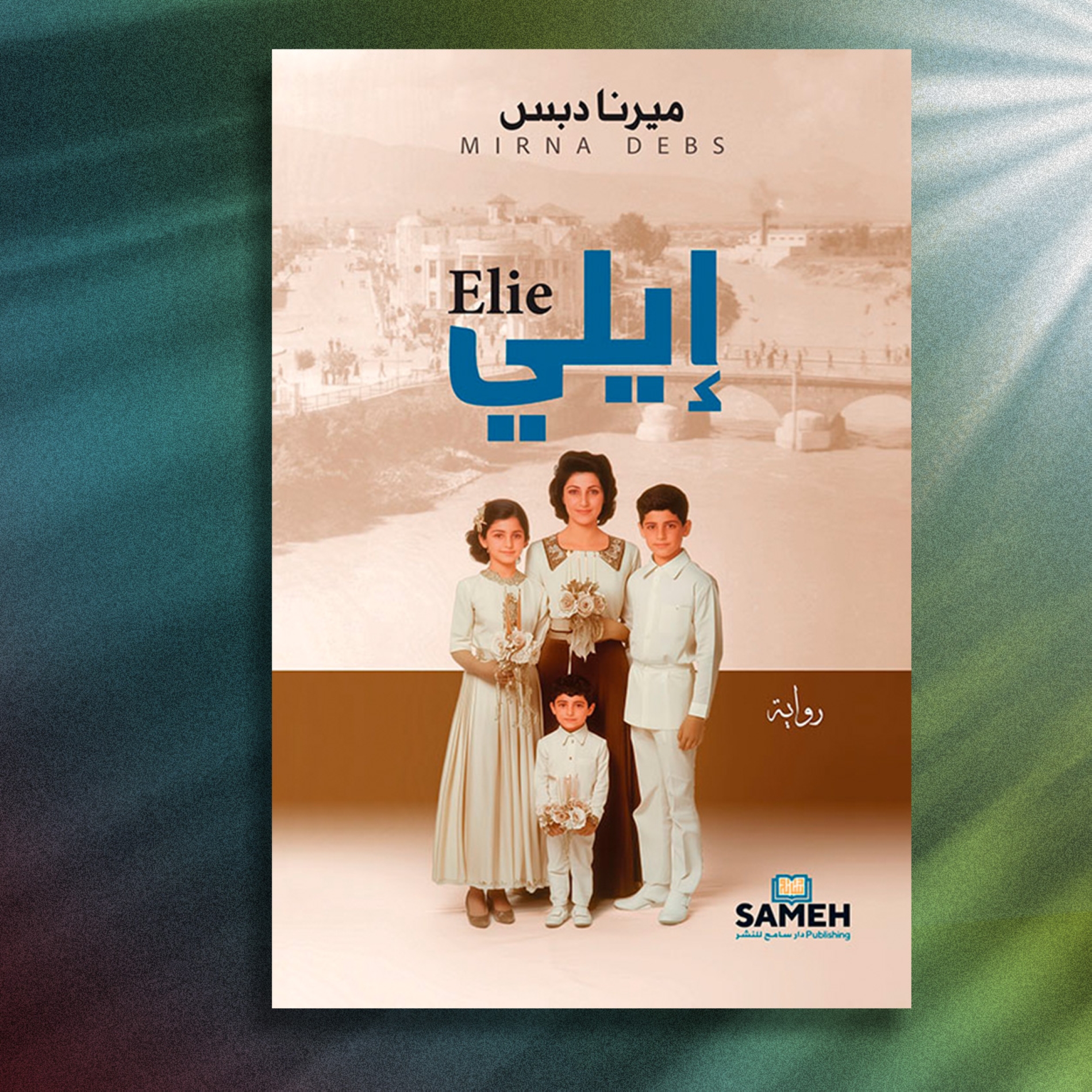
Elie
Author: Myrna Debs
Publisher: Dar Sameh for Publishing and Distribution, Sweden
In her novel Elie, Lebanese writer Myrna Debs confronts her characters with a question that appears simple on the surface but grows more complex as the story unfolds: what remains of a person when they are uprooted from the place they had grown accustomed to calling home? Through intersecting journeys between Antakya, Aleppo, Tripoli, Athens and Berlin, Debs builds a novel about migration, uprooting and identity. Yet it is also a novel about the search for meaning in a world pulled in different directions by politics, religion and ideology.
Doria is a child from a Christian family, with a father of Greek origin and a mother from an Aleppine family. She and her family find themselves facing displacement from Antakya to Iskenderun and then to Aleppo, against the backdrop of the violent events witnessed in Türkiye in the 1950s, particularly the Istanbul pogrom. Here, place ceases to be a mere backdrop. It becomes a wounded, bloodied memory and part of an identity repeatedly uprooted and reshaped.
Elie, the character after whom the novel is named, is a young man from a poor family in Tripoli with communist leanings, whose life later takes him in contrasting intellectual and spiritual directions. He moves from the world of politics and ideas to the study of theology in Athens, and later becomes a priest in Berlin. Through these transformations, Debs portrays a character who never settles on a single definition of himself, as though the geographical journey he undertakes cannot be separated from a long inner journey in search of certainty and belonging.
Yet Elie does not confine itself to politics or history. Religion, Christianity, spirituality, communism, love and estrangement are woven into a single fabric, making the novel something close to a journey into the inner self when certainty of place has been lost, and the search begins for an alternative homeland in ideas, faith or even memory. Here, the significance of the novel’s multiple voices and experiences emerges, as movement through place becomes not merely geographical movement, but part of the formation of memory, identity and meaning.
From this perspective, place may be one of the novel’s most prominent themes. Antakya, Aleppo, Tripoli, Athens and Berlin become stages in the formation of memory and identity, rather than simply places or cities through which the characters pass.
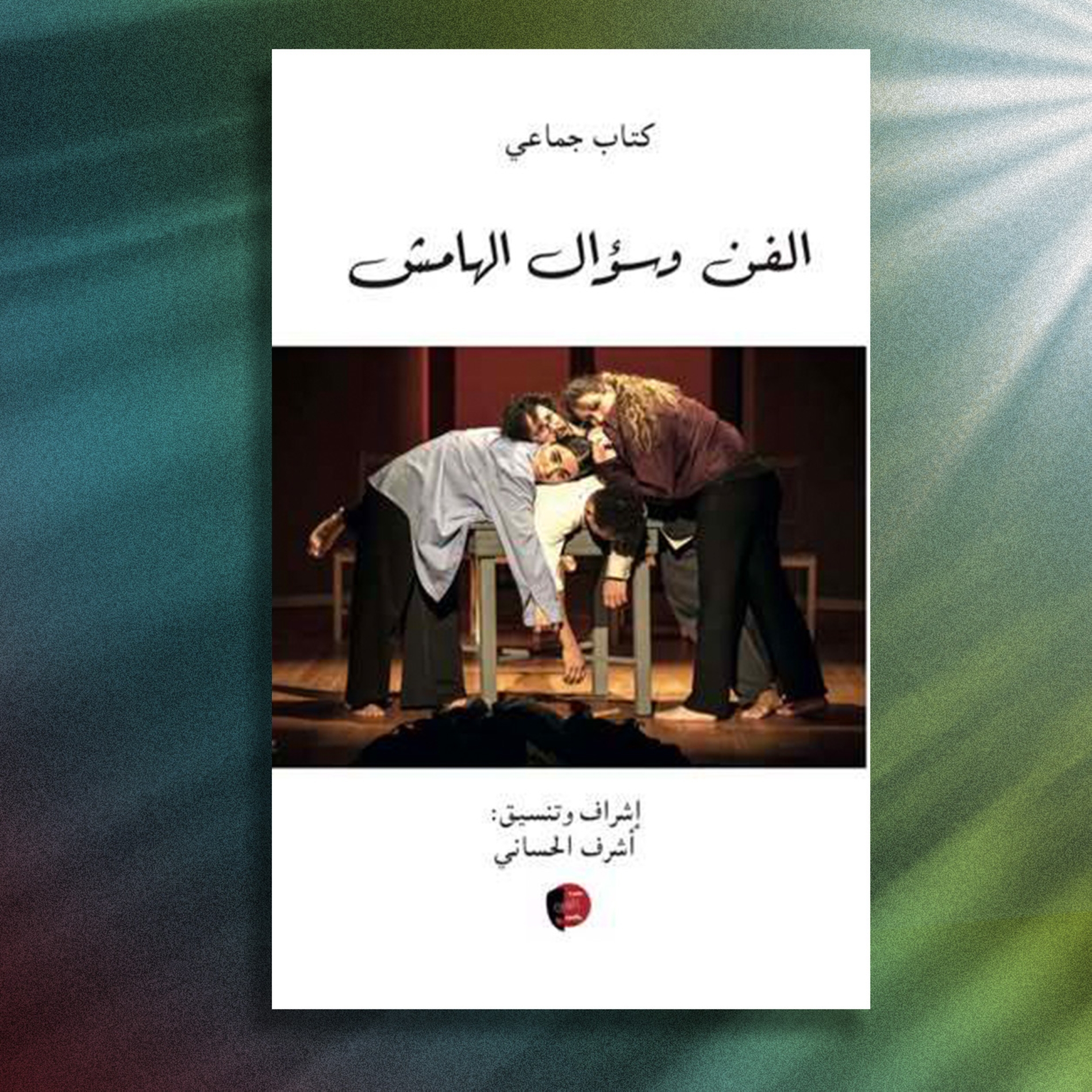
Art and the Question of the Margin
Supervised and coordinated by: Ashraf al-Hassani
Publisher: Al-Noon Centre for Sociocultural Arts, Morocco
Art and the Question of the Margin approaches the margin as an epistemic and aesthetic question that prompts a reconsideration of how we read history, art and society. This concern lies at the heart of the book, supervised and coordinated by Moroccan critic Ashraf al-Hassani, with contributions from a number of Moroccan and Arab figures: Abdelkarim Berrechid, Ashraf al-Hassani, Hamid Rkata, Abdel Latif Najib, Khazal al-Majidi, Ahmed Diyaa, Izzeddine Abu Anan, Ezz al-Arab al-Alawi, Mohammed Chouika, Mohammed Benaaziz, Noureddine Mohakkik, Ali Safar, Suleiman al-Haqbawi and Hafsa al-Khal.
Al-Hassani begins with an important and problematic observation about contemporary culture: why has the centre received so much attention, while the margin has remained, in many studies, merely a social structure or secondary field? In Thinking about the Margin, Al-Hassani argues that writings that took the centre as their starting point have, in many cases, produced and continually reproduced the narratives of power and institutions, while many phenomena outside those narratives have remained overlooked and neglected.
It is a call to do justice to the margin, but it also shifts the question from the social sphere into the realm of art and imagination. From this perspective, the artist can see what official documents cannot see, or choose not to see, and turn the unspoken, forgotten, excluded, and neglected into material for thought and creativity. For this reason, the book draws, in its theoretical framework, on intellectual traditions concerned with what lies outside dominant narratives, from Michel Foucault’s excavations of madness, the institution of sexuality and the prison, to David Le Breton’s work on the body, silence, pain and the senses.
One of the book’s most significant ideas is that the margin is not necessarily the opposite or inverse of the centre. It may sometimes be the place from which the flaws of the centre itself can be discerned. This is what distinguishes the artistic question from the traditional historical one. If official history tends to celebrate sultans, states, institutions and political relations, art retrieves and honours what does not appear in such documents, giving voice to the body, place, memory, the individual, and forgotten, neglected and abandoned experiences.
The idea also extends to theatre, cinema, literature and the various arts. In this sense, the book’s project emerges within the context of the Moroccan theatrical debate around the question of the margin, which occupies a prominent place in the broader cultural sphere.
The book thus looks at the centre itself from a position it had long regarded as marginal and to which it had paid little attention. This may well be the book’s central proposition: art does not merely represent what exists; it changes the angle from which it is seen.
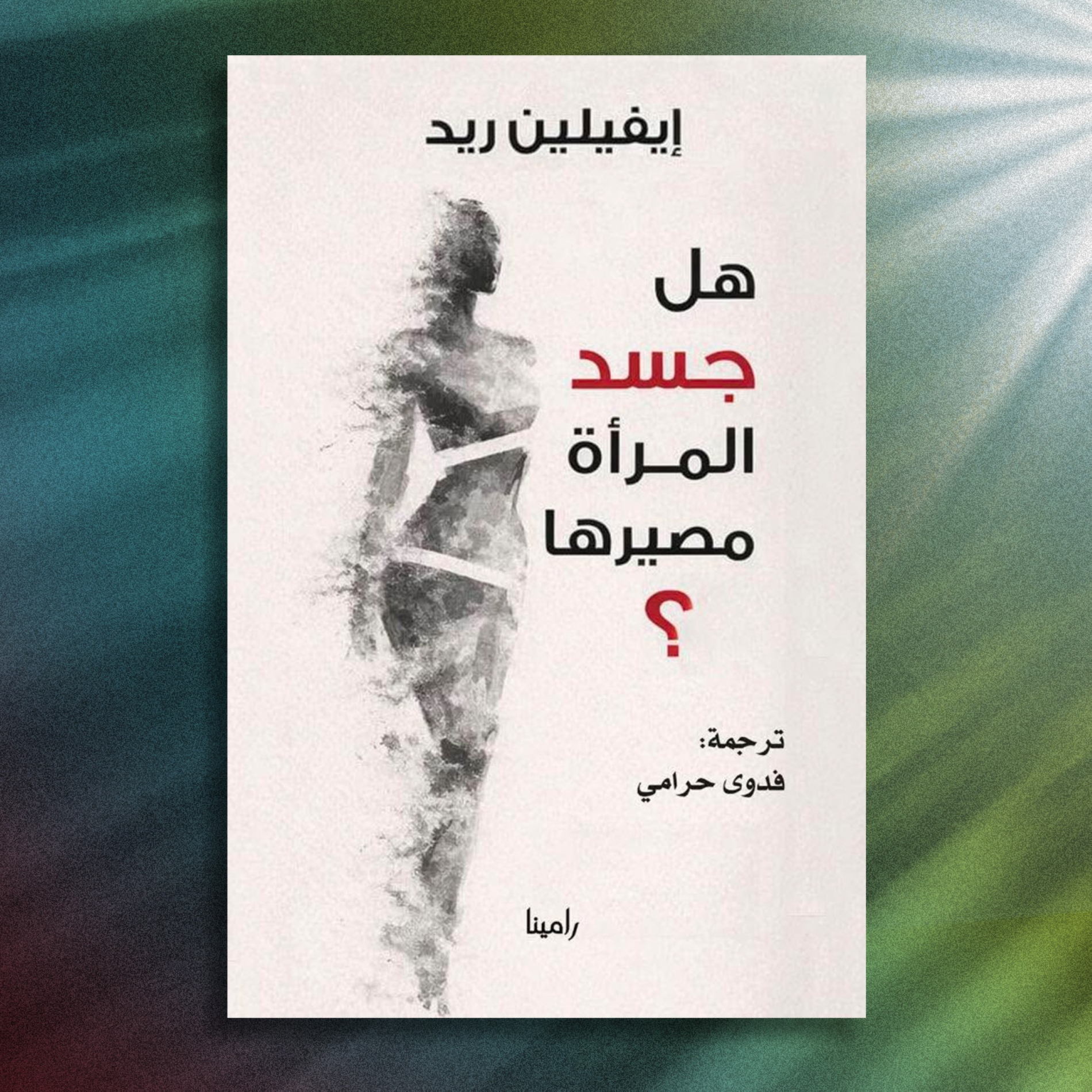
Is a Woman’s Body Her Destiny?
Author: Evelyn Reed
Translator: Fadwa Harami
Publisher: Ramita Publications, Britain
Motherhood, the body and the biological differences between women and men have, throughout history, been transformed from physical facts into social pretexts for control and subordination. This is the starting point for the American feminist writer and activist Evelyn Reed in her book Is a Woman’s Body Her Destiny?, published in Arabic in a translation by Fadwa Harami.
The book’s central idea is both sharp and simple: biology is not social destiny. The biological difference between the bodies of women and men is a fact, but turning that difference into an explanation for power and submission is not a scientific truth. Reed attacks what she mockingly calls the ‘womb theory’: the belief that women’s reproductive functions make them inherently less capable of work, production, independence and participation in public life. In her view, this kind of thinking confuses the biological with the historical and social.
Reed then turns to ancient history and anthropology. Instead of the familiar image that presents women as subordinate to men from the beginning, she recovers women's roles in early societies as participants in food production, toolmaking, agriculture, and the management of communal affairs. In this reading, motherhood was never an obstacle that condemned women to incapacity, but part of a broader social and economic system. With the emergence of private property, class divisions and the patriarchal family, women’s position changed, and their bodily functions were turned into a justification for excluding them from wide areas of production and social life.