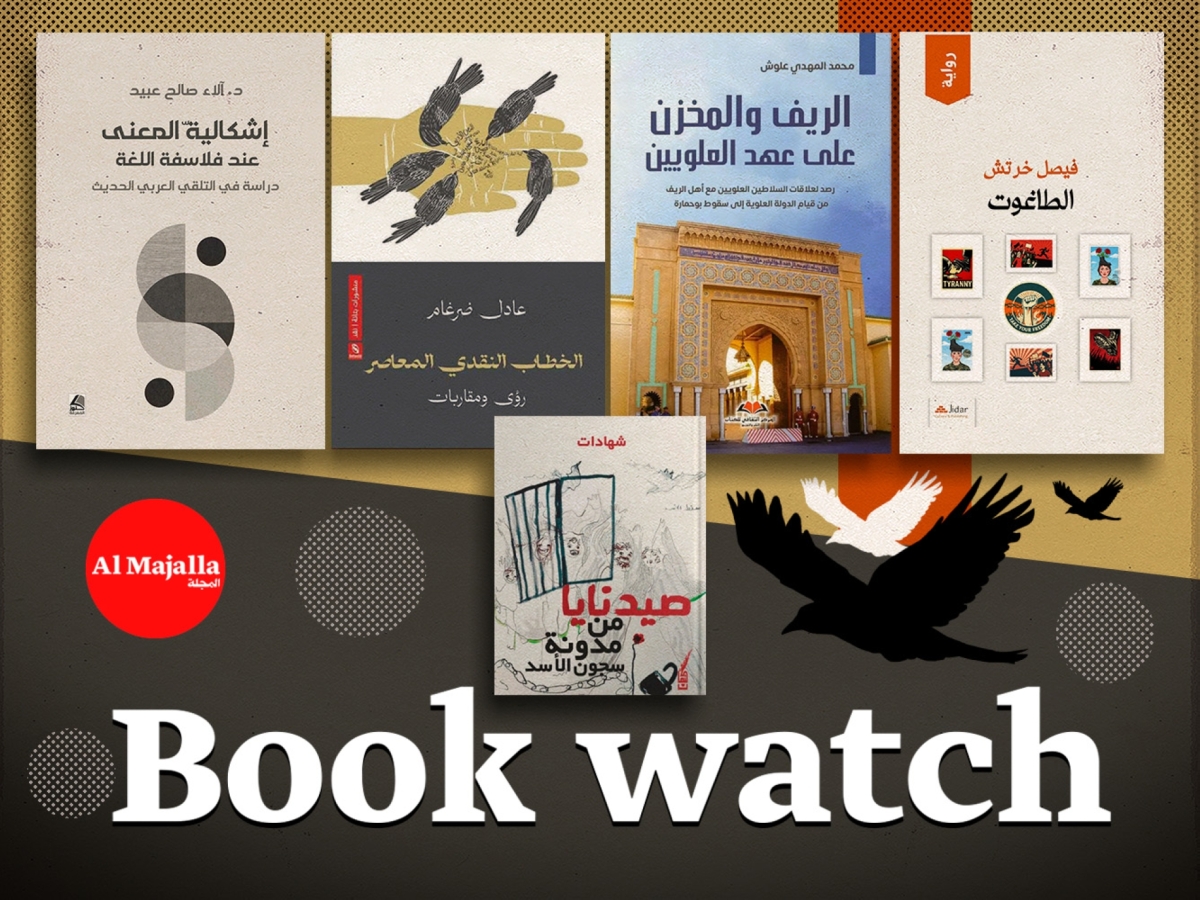

The Arab world has a vibrant and rich literary scene. Al Majalla picks out some choice titles in our fortnightly round-up of the latest Arabic books, which aims to highlight some trends and thinking in the Arab world.
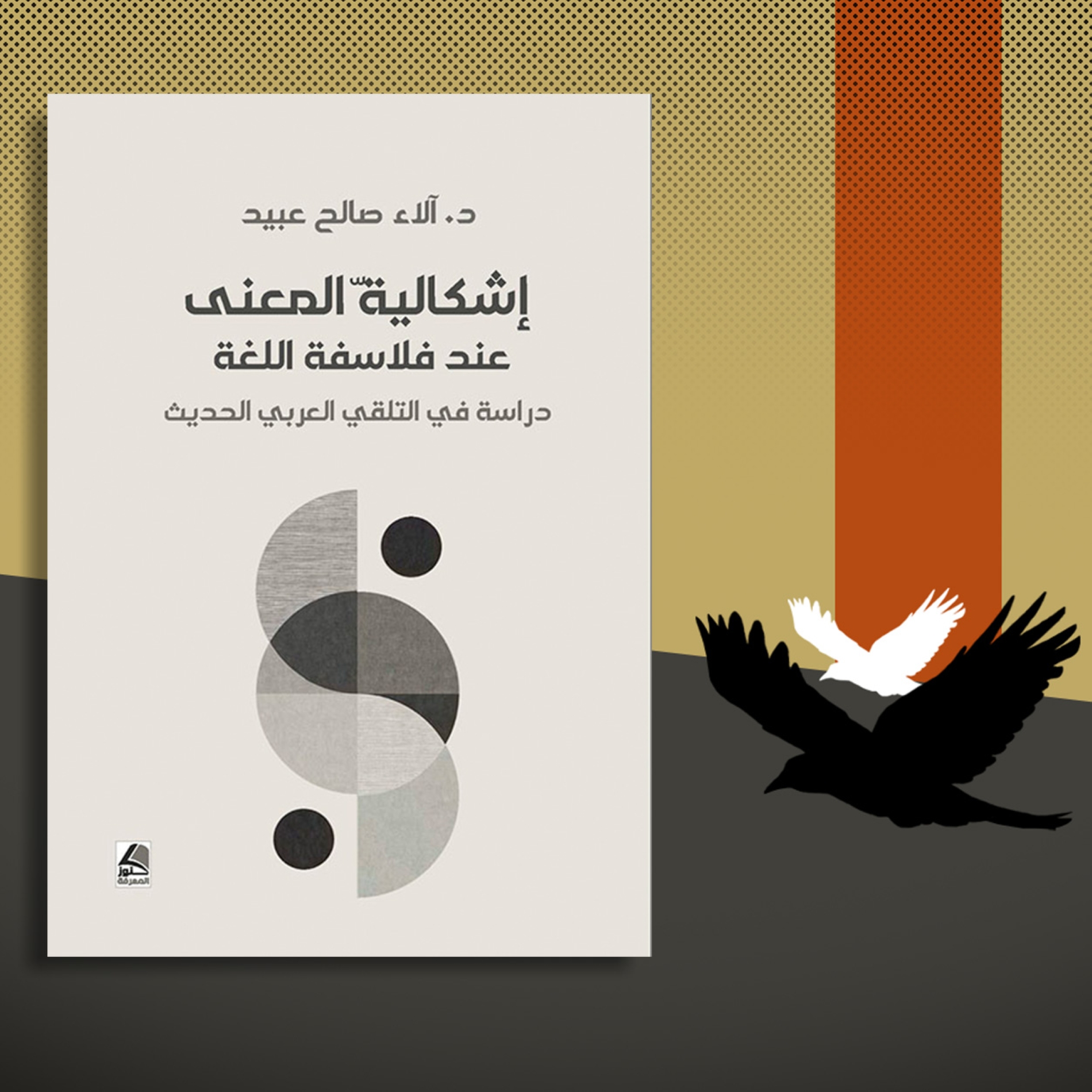
The Problem of Meaning Among Philosophers of Language: A Study of Modern Arab Reception
Author: Dr Alaa Saleh Ubaid
Publisher: Dar Al-Kunooz Al-Ma‘rifiyya, Iraq
This new book by Iraqi scholar Dr Alaa Saleh Ubaid has attracted growing interest in modern Arab thought and is closely linked to the philosophy of language and the theory of meaning. It tackles a question that has plagued philosophers and linguists alike: what is meaning, and how can it be understood across different linguistic and philosophical contexts?
Dr Ubaid traces the concept of meaning, which, since the late 19th century, has been a key preoccupation of linguists and philosophers alike. The latter have debated the nature of the relationship between word and meaning: does meaning rest on mental representations, arise from the relation between speech and reality, or take shape within social and pragmatic contexts? These are questions explored by the Western analytic school through philosophers such as Frege, Russell, and Wittgenstein. They later entered Arabic scholarship through contemporary intellectual reception, which the author examines in detail.
The study traces how Arab thinkers received, developed, or reformulated these Western concepts in light of the Arabic language's rhetorical and intellectual particularities. The book discusses a set of central questions: is meaning anchored in an external referent, or is it the product of a linguistic function? What role does social context play in making meaning intelligible? And to what extent has Arab intellectual heritage shaped concepts of philosophical meaning?
The book is a valuable reference for readers seeking an Arab perspective on the study of meaning in modern philosophy, and raises important questions about the philosophy of language within Arab culture.
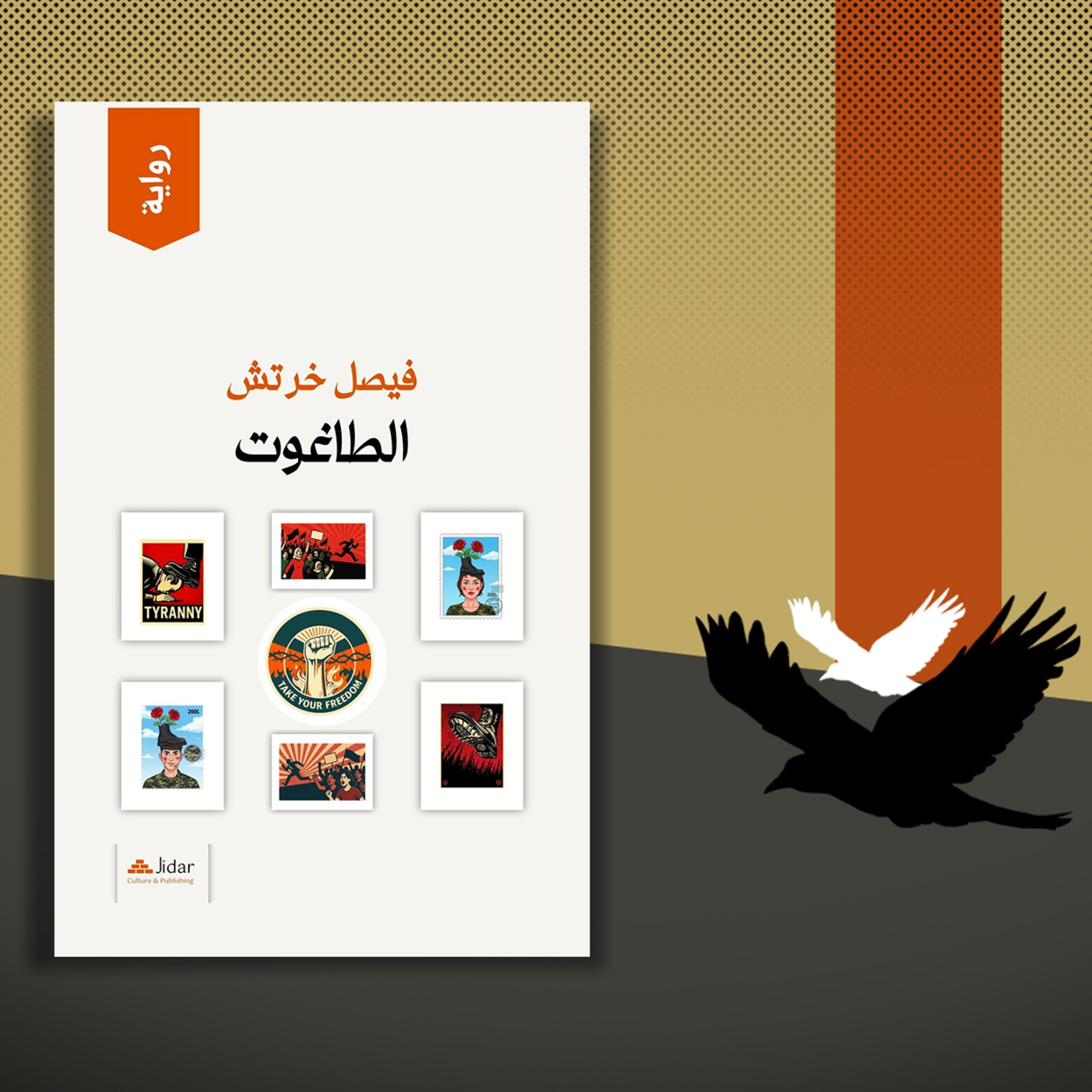
Al-Taghout (The Idol of Tyranny)
Author: Faisal Khartash
Publisher: Dar Jidar for Culture and Publishing, Sweden and Egypt
Syrian novelist Faisal Khartash offers a powerful narrative reading of people’s experiences, both individual and collective, within a turbulent political and social setting. Set in Syria in the late 1970s and early 1980s, it follows a narrator-protagonist who digs into his memory and retraces the threads of his life, his relationships, and the places he has known, in moments marked by pain and a longing for freedom, far from a machinery of repression that reaches into every aspect of human existence and the country’s internal political conflict.
The story is dense, infused with impressionistic touches and charged memory and moves between real and symbolic atmospheres to reflect the brutality of despotism and the faces of power that control the characters’ destinies, turning daily life into a nightmare of torment and anxiety. Marginalised figures appear with particular force, their ambitions shattered, yet despite that, or because of it, they continue to impress upon the reader the reality of oppression and suffering.
The novel revisits the conflict between the Muslim Brotherhood and the Syrian regime during that period, and addresses horrific historical incidents such as the Artillery School massacre and the killing of officer cadets in Aleppo, showing how the regime used those events to justify a broad crackdown that did not cease.
This adds a non-fiction dimension to its depiction of the country’s political and social divisions during those years. The characters oscillate between belonging and rejection, between repression and the search for personal deliverance, allowing the novel to probe both the psychological and social layers of human life under a brutal system of coercion.
Al-Taghout is marked by its interweaving of personal and collective memory, and by its fusion of realism and symbolism, making it a concentrated text that reflects the human experience of confronting despotism and political and social repression. A psychological and social reflection, the novel reveals multiple understandings of a conflict that pits power against freedom. It raises questions about identity, belonging, and human resilience in the darkest of circumstances, making it accessible to any reader seeking to enter the Syrian experience in its human and political depth.
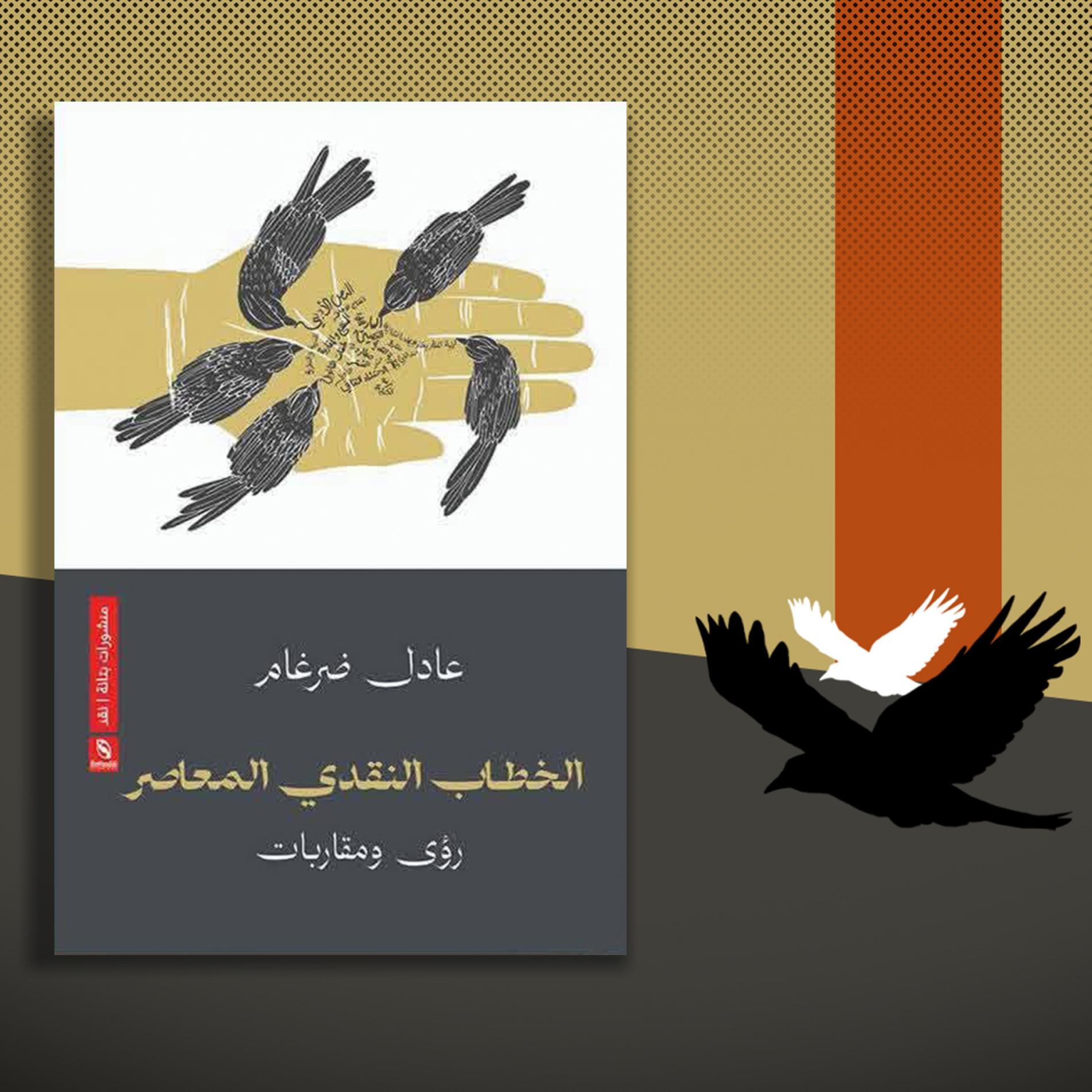
Contemporary Critical Discourse: Visions and Approaches
Author: Adel Dargam
Publisher: Batana Publishing and Distribution, Egypt
Egyptian literary critic Adel Dargam's latest book adds to the growing repository of contemporary Arab critical renewal, offering a distinctive critical vision within today’s Arab cultural landscape by combining the critical essay with an examination of the features of critical discourse in modern Arabic literature.
Dargam brings together critical essays and analytical approaches that he has written and published in various Arab periodicals with the aim of mapping the contours of critical currents on the Arab literary and critical scene. He also presents a critical language of his own that blends academic discourse with the style of journalistic commentary, making his approach clear to the thoughtful reader without reducing it to ready-made critical terminology.
Divided into six main sections, the book addresses a wide range of topics—from literary criticism between methodology and textual practice to readings of books on cultural criticism—delving into interpretive, poetic and narrative readings, before turning to writers such as the poet Abdel Moneim Ramadan. He also tackles questions of literary identity, cultural distribution, and a critical analysis of Jabir Asfour’s writings.
Dargam is careful not to confine himself to a single critical theory. He doesn't draw a strict line between theory and application, but instead proposes a flexible reading responsive to the literary texts themselves— one that is not constrained by a specific theoretical method but remains open to their literary and cultural diversity. It is an orientation that combines the text’s aesthetic particularity with the epistemic approaches demanded by each stage of cultural production.
The book engages with current critical discourses by analysing and dissecting their approaches, while at the same time siding with the author's view of the literary text's critical and aesthetic value. This makes it a meaningful contribution to modern Arabic literary criticism.
The book attempts to build a contemporary critical view that doesn't merely repeat existing critical methods but devises its own methodological procedures in keeping with the author's vision for reading the literary text and analysing critical discourse itself.
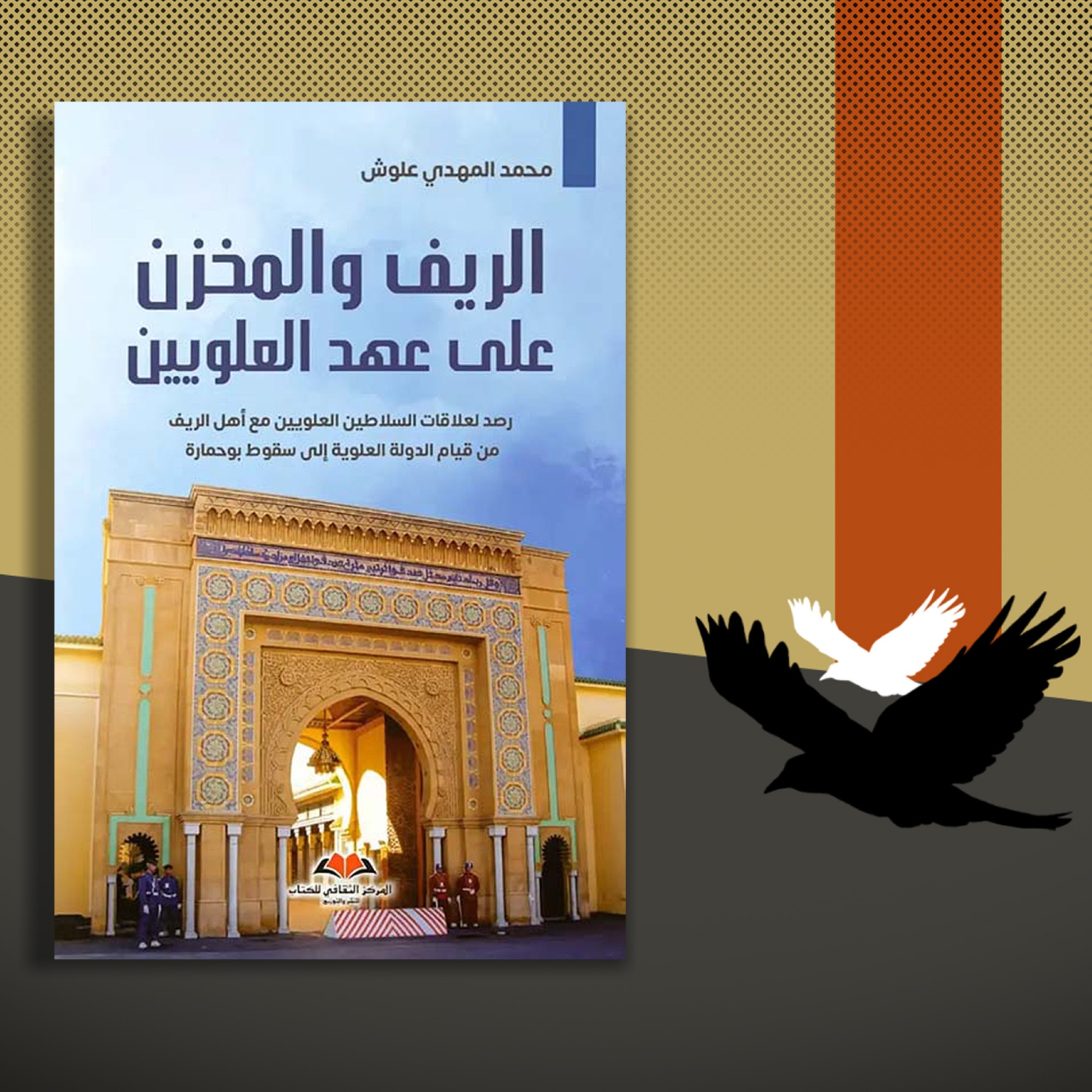
The Rif and the Makhzen Under the Alawites
Author: Mohammed El Mehdi Alloush
Publisher: Al Markaz Al Thaqafi Lil Kitab for Publishing and Distribution, Morocco
The book, The Rif and the Makhzen Under the Alawites: Tracking the Relations Between Alawite Sultans and the People of the Rif from the Rise of the Alawite State to the Fall of Bou Hmara, by Moroccan researcher Mohammed El Mehdi Alloush, is an important scholarly work in modern Moroccan history.
It examines the historical relationship between Morocco’s Rif region and the authority of the Alawite state from its establishment under Sultan Moulay al Rashid in the 17th century, through the reign of Moulay Ismail, and on to the events of the early 20th century and what followed, up to the fall of the Bou Hmara movement.
In this work, Alloush offers an analytical historical account that goes beyond conventional narrative, reading these relations through an objective lens that highlights the Rif’s inhabitants as actors in Moroccan political history, rather than treating the region as peripheral.
The book highlights the Rif people's contribution to the founding of the Alawite state and their support for Sultan Moulay al Rashid during the period of unification. It then traces Moulay Ismail’s reliance on Rif fighters to liberate Morocco’s northern frontiers, before noting how some Rif leaders went on to serve as the sultan's deputies in the north of the country.