As the US and Iran spar over Hormuz deal, the world waits with bated breathhttps://en.majalla.com/node/332494/business-economy/us-and-iran-spar-over-hormuz-deal-world-waits-bated-breath
As the US and Iran spar over Hormuz deal, the world waits with bated breath
Any agreement that restores traffic through the strait will bring much-needed relief, but repairing the damage wrought by war—and restoring confidence—will take far longer
As the US and Iran spar over Hormuz deal, the world waits with bated breath
Only six vessels passed through the Strait of Hormuz on 10 August, according to shipping data reported by Reuters. Before the war broke out in late February, between 130 and 140 crossed each day. One of the world’s busiest trade routes now looked like an abandoned port, with ships gathered at its edges while politicians decided what came next.
That scene captures what is at stake in the talks between Washington and Tehran. They concern more than ending the war or returning to ‘nuclear negotiations’. Before it closed, this narrow passage carried roughly one-fifth of the oil consumed worldwide and a similar share of global trade in liquefied natural gas (LNG).
Mediators, notably Qatar, Pakistan, and Oman, have recently reported progress. New conditions from both sides have nonetheless raised doubts over whether an agreement is possible, and how soon. Tehran wants the war ended, the blockade and sanctions lifted, its frozen funds released, and compensation paid. Washington wants unconditional freedom of navigation. It rejects both sole Iranian control over the passage of vessels and the imposition of transit fees.
Markets treat every statement as though it were already a clause in the deal. Prices fall on signs of diplomatic progress, then rise when another condition emerges, or threats resume. The constant unease points to the agreement’s real value. Iranian oil matters, but reviving a Gulf energy system that has run far below capacity for months matters more.
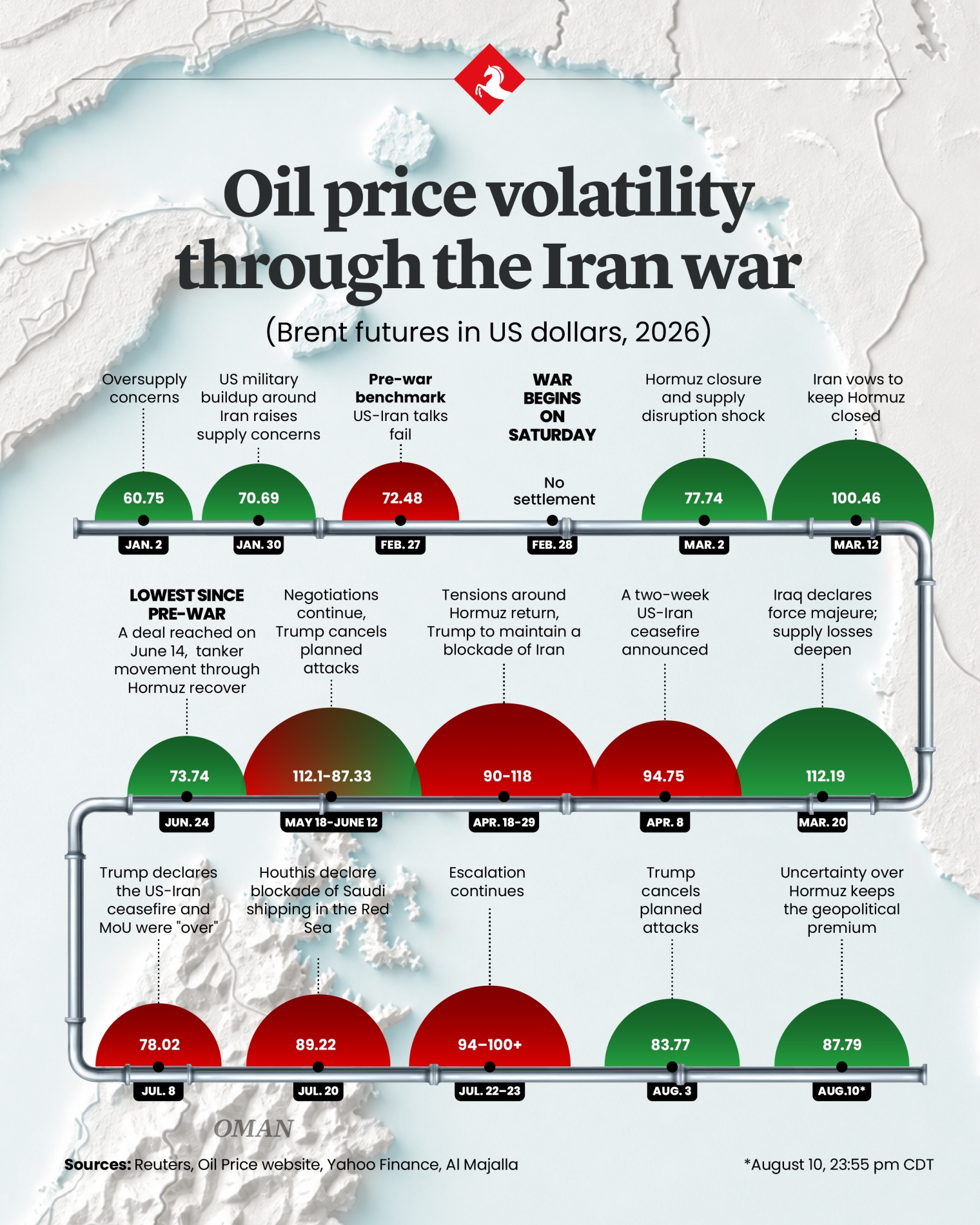
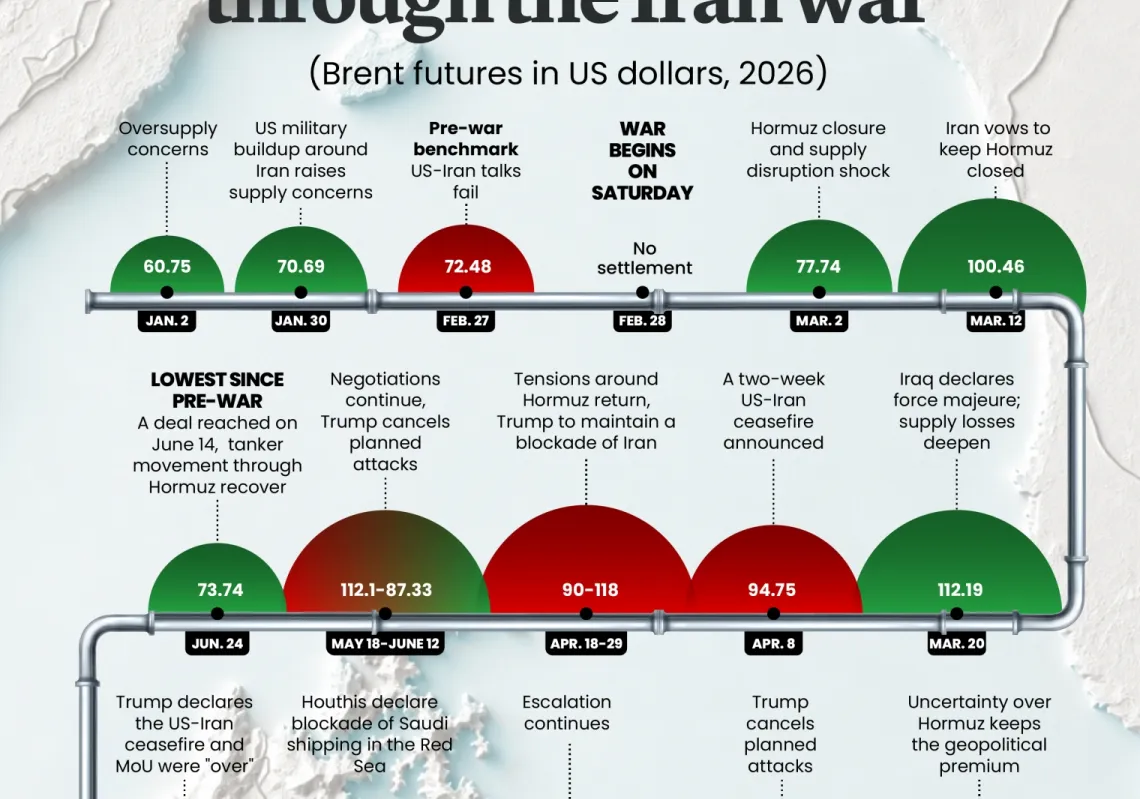
How the US-Iran war took oil prices on a wild ride
Hormuz first, then Iranian oil
At first glance, sanctions relief for Iran might seem the deal’s most important economic consequence. The volume of supplies trapped behind the strait suggests otherwise. Exports from the Gulf states could recover faster—and have a greater impact—than any near-term increase in Iranian production.
Around 20 million barrels per day of crude oil, condensates, and petroleum products passed through the Strait of Hormuz in 2025, according to International Energy Agency (IEA) estimates. The US Energy Information Administration (EIA) says that petroleum liquid flows through the strait reached 21.6 million barrels per day in the final quarter of that year, representing about one-quarter of seaborne oil trade.
The IEA reported a 10.1 million barrels-per-day fall in global supply in March, calling it the largest oil-market disruption on record.
Once shipping was disrupted, producers could no longer deliver large volumes of Saudi, Iraqi, Kuwaiti, Emirati, Qatari, and Iranian oil. Storage tanks filled, forcing companies to cut production or shut some wells. There was no shortage of buyers. The route connecting them with sellers had been all but severed.
The figures show the scale of the upheaval. Average flows of petroleum liquids through Hormuz fell from 21.6 million barrels per day in the final quarter of 2025 to 4.9 million in the second quarter of 2026, according to the EIA. It put average curtailed oil production at 5.5 million barrels per day in July. The IEA had recorded a 10.1-million-barrel-per-day fall in global supply in March, calling it the largest oil-market disruption on record.
In July, exports of crude and condensates from Saudi Arabia, the UAE, Iraq, Kuwait, and Iran remained about 40% below pre-war levels, despite improving from the first months of the crisis. Reopening the strait would therefore do more than add Iranian oil to the market: it would also release still larger volumes from other Gulf producers.
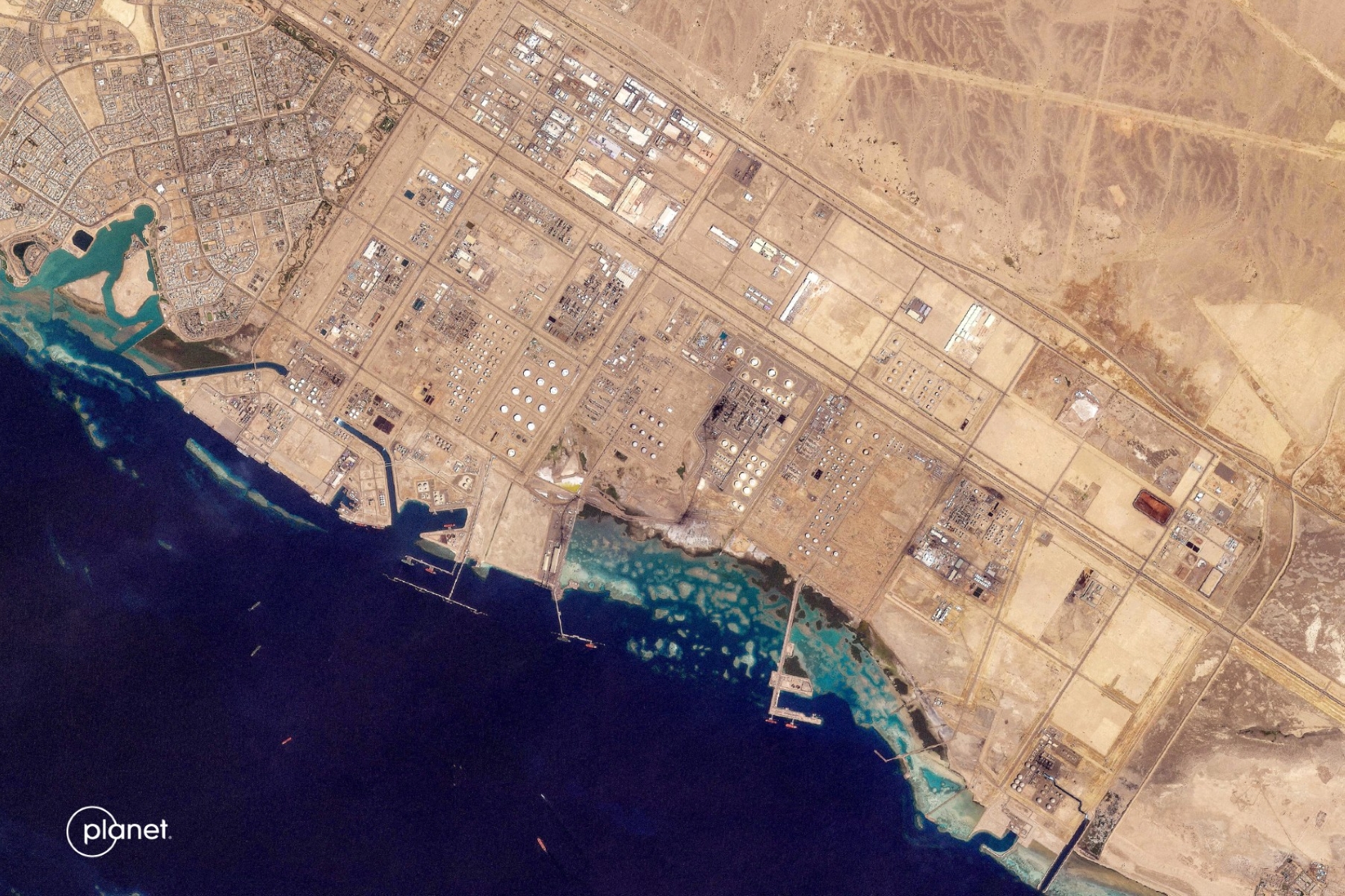
A satellite image of the oil infrastructure at Saudi Arabia's western Red Sea port of Yanbu on 4 March 2026.
Saudi Arabia and the UAE have the best alternatives. Saudi Arabia can pipe oil to Yanbu on the Red Sea; the UAE has a line linking its fields to Fujairah on the Gulf of Oman. The IEA puts the available bypass capacity at between 3.5 million and 5.5 million barrels per day. That falls far short of the volumes once moving through Hormuz, and Iraq, Kuwait, Qatar, and Iran have no comparable outlet.
An agreement would allow producers to empty storage tanks, restart wells, and recall tankers. But 'reopening Hormuz' is easier said than done. Who guarantees the ships' safety? Who conducts inspections? Who pays if a tanker is attacked? And can transit fees be levied without breaching sanctions or the rules of international navigation?
Negotiators and shipping executives have discussed possible transit charges. Iran is said to want between 5% and 7% of a cargo's value, against about 3% in an Omani proposal. Washington rejects fees altogether. None of these terms appears in a published final agreement; a temporary toll-free corridor has also been proposed.
Shipping companies fear that payments to a sanctioned Iranian entity could expose them to US penalties or cost them their insurance cover. A political agreement on a new corridor is not enough. Shipowners, banks, and protection and indemnity insurers must be willing to use it.
Signing an agreement would not end the crisis. It would merely begin a recovery that will proceed at very different speeds.
Impatient markets
Oil markets will not wait for implementation. On 11 August, Brent crude futures traded at around $88 to $90 a barrel, having briefly exceeded $126 in late April. A mediator's report of progress has sometimes been enough to push prices down; a new condition from Tehran has sent them back up.
A credible deal would strip part of the 'war premium' from prices at once, before the first additional tanker was loaded. The physical effect would follow as Gulf exports resumed, oil stored on land and at sea reached the market, and tanker rates and war-risk premiums fell.
In a report published on 11 August, the EIA forecast an average Brent price of about $85 a barrel in the third quarter of 2026, falling to $78 in the fourth. Its scenario assumes that traffic through the strait remains severely restricted throughout August, then improves gradually from September. A quicker or broader agreement would change that trajectory. Failure would keep the risk premium high.
Lower prices would not mean the crisis was over. Supplies have been disrupted for months, and vast quantities have been drawn from commercial and strategic stocks to cover the shortfall. The EIA estimates that global inventories fell by 4.2 million barrels per day in the second quarter and expects a further decline of 3.8 million barrels per day in the third.
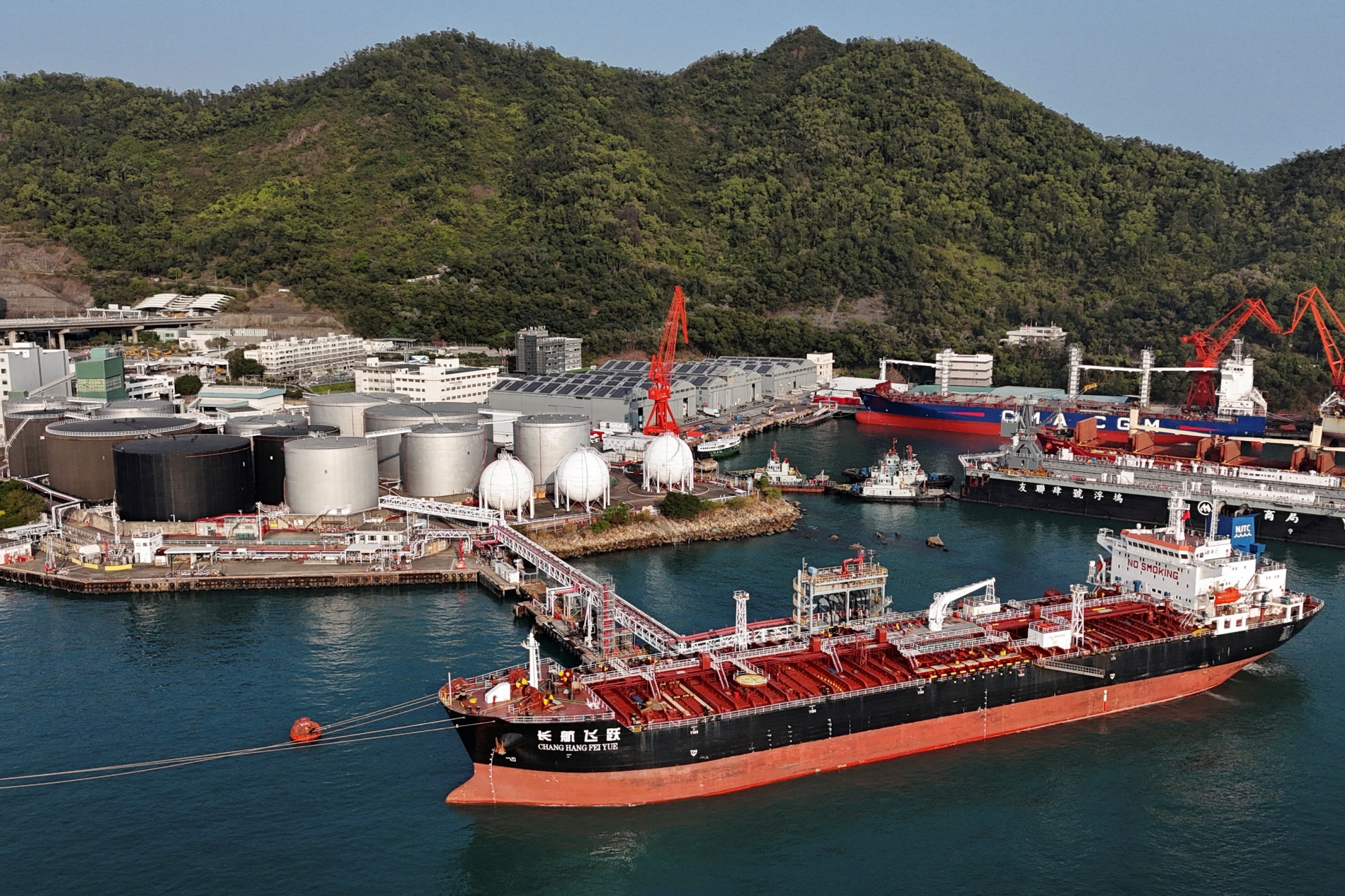
Oil tankers docked in Hong Kong port, China, on 19 March 2026.
Amin Nasser, president and chief executive of Saudi Aramco, said the disruption had deprived the global market of more than 2.6 billion barrels of supply since February, warning that inventories were now low. This figure represents the supply the market lost because of the war; it does not mean that inventories themselves fell by the full amount.
Nor would a US-Iranian agreement extinguish every regional fire. Attacks in the Bab al-Mandab and the Red Sea still threaten the route between the Arabian Gulf and Europe, while the Russia-Ukraine conflict and disruption in the Black Sea put further strain on oil and commodity flows.
OPEC+ may step in if prices fall too quickly. Millions of returning barrels could prompt the group to cut quotas or slow planned increases, lest a political breakthrough produce a glut and damage members' revenues. Prices are therefore likely to fall sharply at first, then follow a gentler path. Political news moves futures within minutes. Tankers, wells, and storage tanks keep slower time.
Immediate Iranian gains
Iran would gain immediately from an agreement. Lifting the blockade and oil sanctions would let it sell stranded crude, increase revenue and narrow the discounts offered to buyers. Tehran would also rely less on the 'shadow fleet', disabled tracking systems and clandestine ship-to-ship transfers.
The June agreement offered a clear example. Following the signing of the interim memorandum of understanding, the US Treasury issued 'General Licence X' on 22 June, authorising the production, delivery, and sale of Iranian crude oil, petroleum products, and petrochemicals until 21 August.
Vessel-tracking data suggest that Iranian exports rebounded strongly after restrictions were eased, although estimates of their volume vary because tracking systems were switched off and oil was transferred between tankers. United Against Nuclear Iran—an organisation that tracks Iranian tanker movements and openly states its political opposition to Tehran—estimated June exports at around 52.7 million barrels, or 1.75 million barrels per day. In May, exports had fallen below 300,000 barrels per day, according to shipping data and sources who spoke to Reuters.
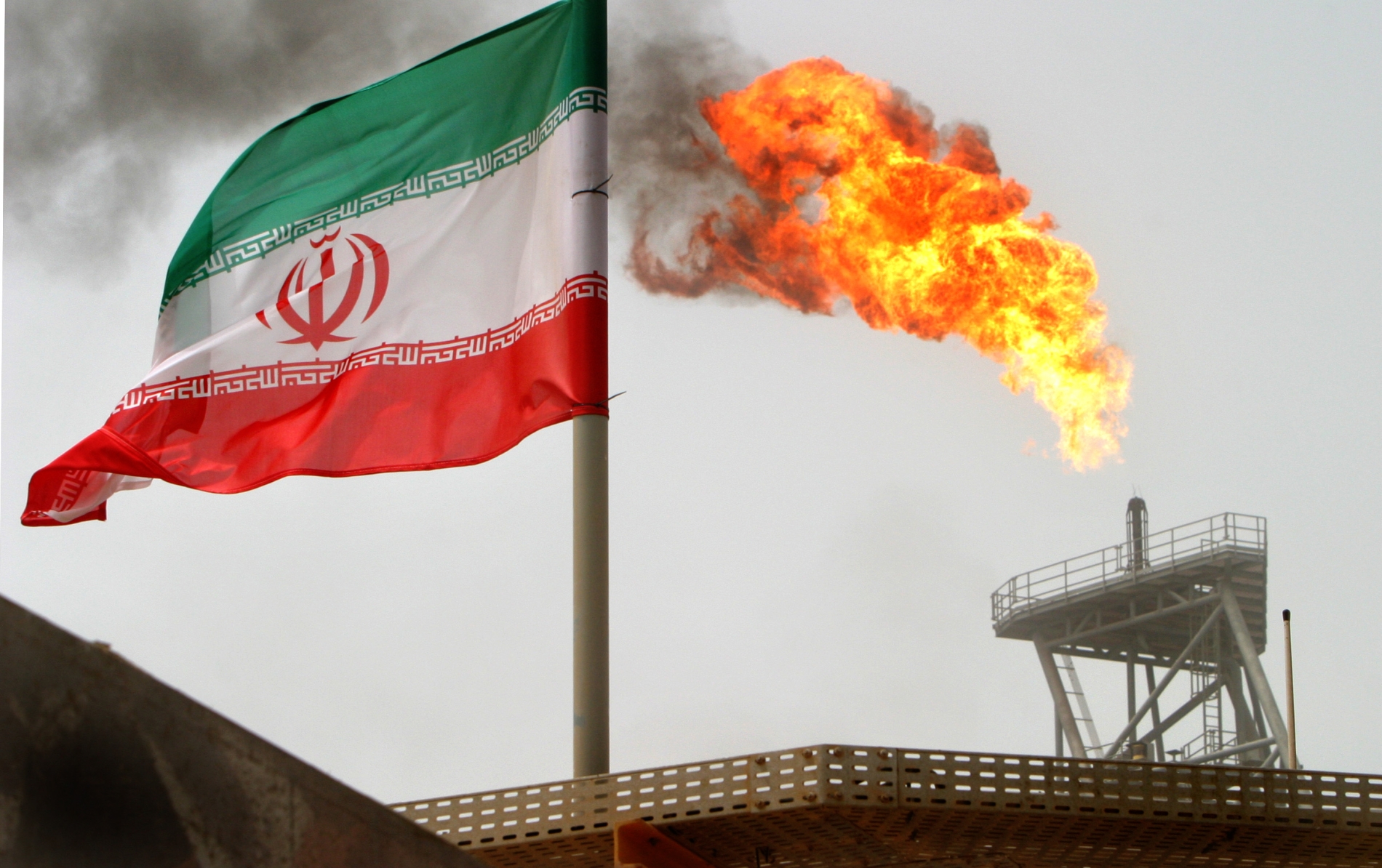
An oil production platform at the Soroush field, flying the Iranian flag, in the Gulf, 25 July 2005.
Whatever the precise figure, the surge showed how quickly Iran can move large volumes when maritime and financial restrictions ease. Tehran sold some of the oil accumulated in tankers and storage during the blockade. That rebound did not represent an equivalent expansion in production capacity. It was chiefly the release of oil already produced and stored, which could finally reach buyers as restrictions loosened.
Before the war, Iran was a major producer and exporter of crude oil, condensates, and petroleum products; China bought most of its crude. Its fields, however, are ageing and production is declining naturally. Years without foreign investment and technology have taken their toll, and the war inflicted fresh damage on facilities already in need of modernisation. Maintaining field pressure, drilling new wells, and developing complex reservoirs demand equipment, expertise, and capital that a temporary sales licence cannot provide.
Much will depend on what sanctions relief actually covers. Removing nuclear or oil sanctions would not necessarily lift restrictions linked to the Islamic Revolutionary Guard Corps, missiles, drones, or human rights. The European Union still enforces the economic, financial, and oil sanctions it reimposed in September 2025.
Iran cannot fully return to global markets without US-European co-ordination and durable arrangements for financial transfers, insurance, and investment. A short waiver, liable to disappear at the first disagreement, will not suffice.
Oil companies have not forgotten 2018, when the US withdrew from the nuclear deal and reimposed related sanctions. Without firmer guarantees, few will commit billions of dollars to projects that take years to complete. Tankers will return before investors; sales before the oil majors.
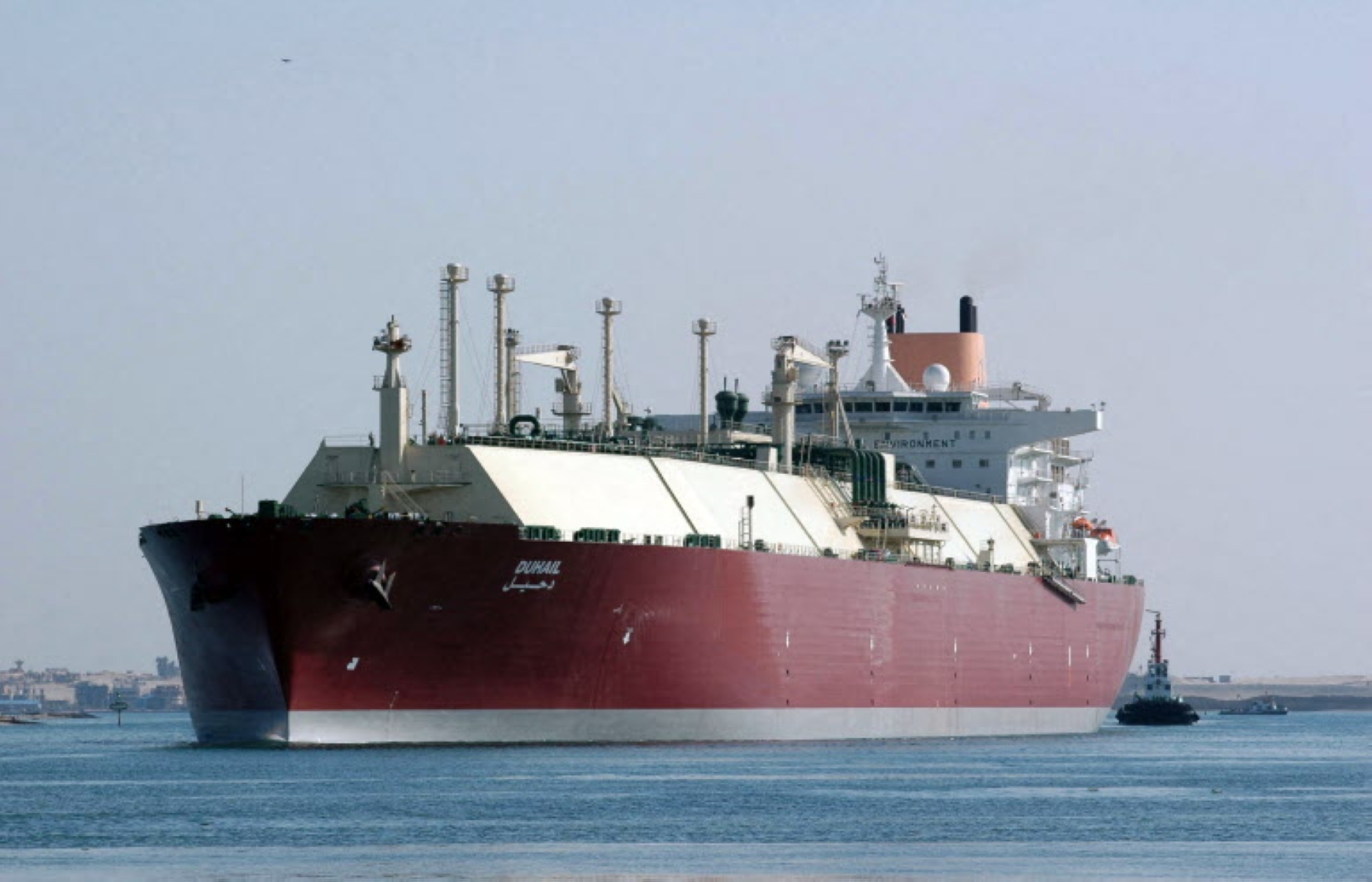
Qatari Liquefied Natural Gas (LNG) carrier "Duhail" passes through the Suez Canal near the Egyptian port city of Ismailia on 1 April 2008.
More than oil
The Strait of Hormuz affects far more than petrol stations. Its closure reaches electricity bills, factories, and farmland because the strait also carried about one-fifth of the world's LNG trade. Around 11.4 billion cubic feet per day of LNG passed through in the first half of 2025, according to the EIA, most of it from Qatar and then the UAE. The IEA says more than 110 billion cubic metres crossed Hormuz during 2025, about 90% bound for Asia.
Since the beginning of March, the market has lost more than 300 million cubic metres per day of Qatari and Emirati exports—over two billion cubic metres every week. Global LNG production fell by 8% year on year in March, while Qatari and Emirati exports plunged by almost 80% between March and June compared with the same period of 2025.
Consumers soon felt the shock. In the week ending 24 April, Europe's Title Transfer Facility (TTF) gas benchmark reached $14.8 per million British thermal units—35% above its pre-closure level. Asia's Japan Korea Marker (JKM) benchmark jumped by 51% to $16.02.
The return of Qatari gas should lower prices, ease pressure on European and Asian factories, and make a return to coal-fired power less likely. Developing countries would also have a better chance of securing spot cargoes for which richer economies had outbid them.
Opening the route will not repair what the war damaged. Two of the 14 LNG trains at Ras Laffan in Qatar were hit; together, they can produce 12.8 million tonnes a year. The IEA estimates that repairs could take three to five years. The Gulf nation's North Field East expansion project is also likely to start later than planned.
Gas is only part of the picture. The Gulf states and Iran are major producers of urea, ammonia, methanol, ethylene, polyethene, and liquefied petroleum gases. More than 30% of global urea trade and about 20% of trade in ammonia and phosphates pass through Hormuz, according to the IEA. A deal could drive down the cost of fertilisers, farm production, packaging, plastics, marine fuel, and aviation fuel. Its effects would spread from energy markets to food and everyday goods—and ultimately to inflation.
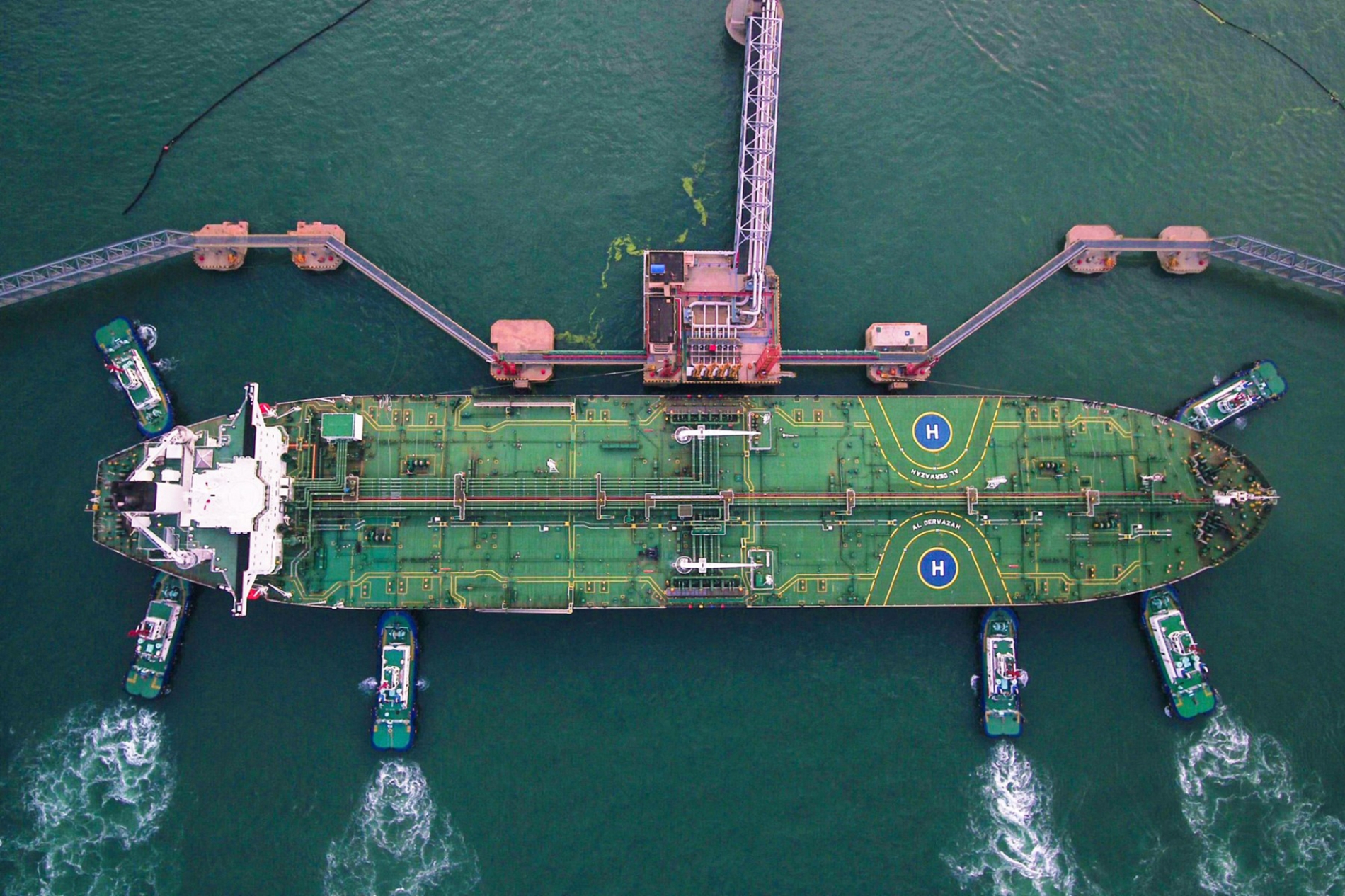
Tugboats help an oil tanker dock at Qingdao port in Shandong province, eastern China, on 4 August 2019.
Other beneficiaries
And while Iran would be among the biggest beneficiaries, it would by no means be the only one. Lower prices would reduce the value of each barrel, but higher sales and lower insurance and security costs could offset much of that loss.
China would breathe a sigh of relief. It buys more Iranian oil than any other country and is Asia's largest importer of Gulf crude. Imports averaged 7.78 million barrels per day in June and July, down from about 11.99 million before the war, forcing China to draw on stocks estimated at more than 1.2 billion barrels.
Independent Chinese refiners may lose a familiar advantage: steep, sanctions-driven discounts on Iranian oil. If India, South Korea and Japan—and perhaps some European refineries—resume purchases, Tehran will no longer depend on one principal buyer and can demand better terms.
For US consumers, lower petrol and diesel prices would help ease inflation. US producers, by contrast, could lose part of their share of the Asian oil and gas market. Gulf cargoes travel a shorter distance and cost less. Returning Qatari gas would also erode the high prices that have benefited US exporters, though damage to Qatari facilities will slow the process. As for Russia, falling prices and renewed Iranian sales to China and India may mean that Moscow offers steeper discounts to retain customers.
A deal could drive down the cost of fertiliser, packaging, plastics, marine fuel, and aviation fuel.
Long road to recovery
Signing an agreement would not end the crisis. It would merely begin a recovery that will proceed at very different speeds. The war premium could recede within hours; some tankers might return within weeks; most Gulf production could resume within months.
Replenishing stocks, repairing facilities, restoring confidence in the banking system, and expanding Iran's production capacity may take years. That is the paradox that will remain after the negotiators shake hands: a deal can reopen the strait, but it cannot restore in one day everything the war brought to a halt.