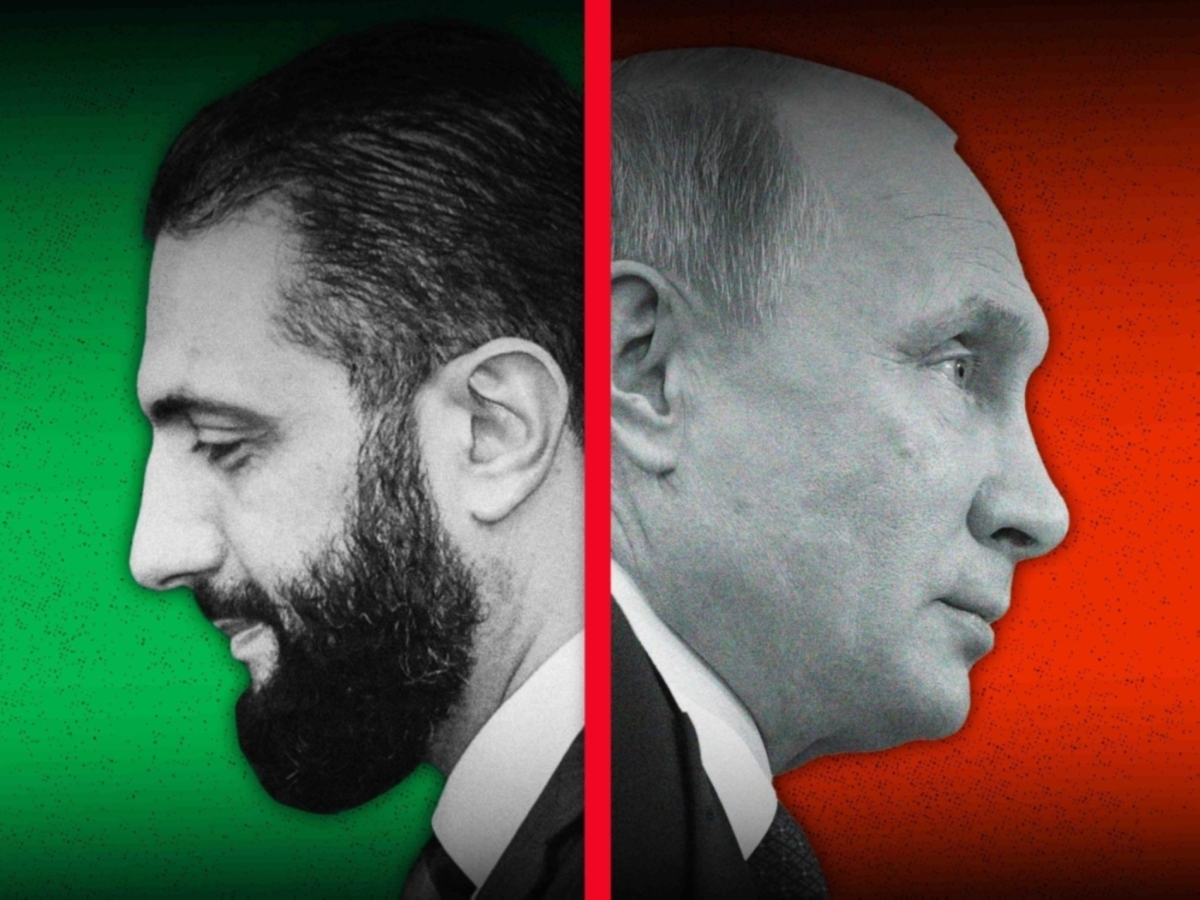
Russia bids farewell to its last strongholds in Syria

After a decade of military dominance, Russia is being forced to surrender its last strongholds in Syria as Damascus reasserts control over the country

Al Majalla

Russia bids farewell to its last strongholds in Syria

Nearly 18 months after the fall of the Assad regime, Russia has lost the privileged military and security position it had worked to consolidate for more than a decade. Syria has entered a new phase in which the former Russian and Iranian camp retains far less authority and fewer privileges than it enjoyed under Assad.

On 9 August, a memorandum of understanding was signed between Damascus and Moscow that redefined the future of Russia’s last military strongholds in Syria—the Hmeimim and Tartus bases. The agreement will see Syria take control of civilian facilities at the Hmeimim airbase and the commercial section of Tartus port. The military facilities, meanwhile, will be transformed into joint training and capacity-building centres, with the transition expected to be completed within three months.

For 18 months, the Syrian government worked to gradually neutralise the security and economic flashpoints that Russia could have exploited as its authority and decades of investment in Syria came under threat. The process began with conditional acceptance of Russia’s presence and agreements aimed at protecting its bases and personnel in Syria under Syrian supervision.

This marked a departure from the Assad era, when the Syrian presidency, army, and security services were unable to intervene in the affairs of Russian bases or personnel.

Before 8 December 2024, Russia had three bases in Syria: Qamishli airport, east of the Euphrates; Hmeimim airport, in the Qardaha countryside; and Tartus port. Russia also maintained military command centres in the capital, Damascus, and military positions across several Syrian regions, most notably in southern and northwestern Syria.

Russia also exercised authority over military formations outside its formal armed forces, including non-Syrian forces such as Wagner, as well as local forces operating both within and outside the Syrian army. These included some National Defence Forces groups, the Tiger Forces (Quwwat al-Nimr), the Fifth Corps, ISIS Hunters, the Eighth Brigade, and others.

With Assad’s fall, Russia lost its other military positions and its local and foreign-affiliated forces, leaving it with only the three main bases in Qamishli, Hmeimim, and Tartus. Russian control over Qamishli did not last long. Russia withdrew last January after repeated messages from the Syrian authorities that its presence in Qamishli was unsafe and threatened Syria’s efforts to unify its territory and establish security.

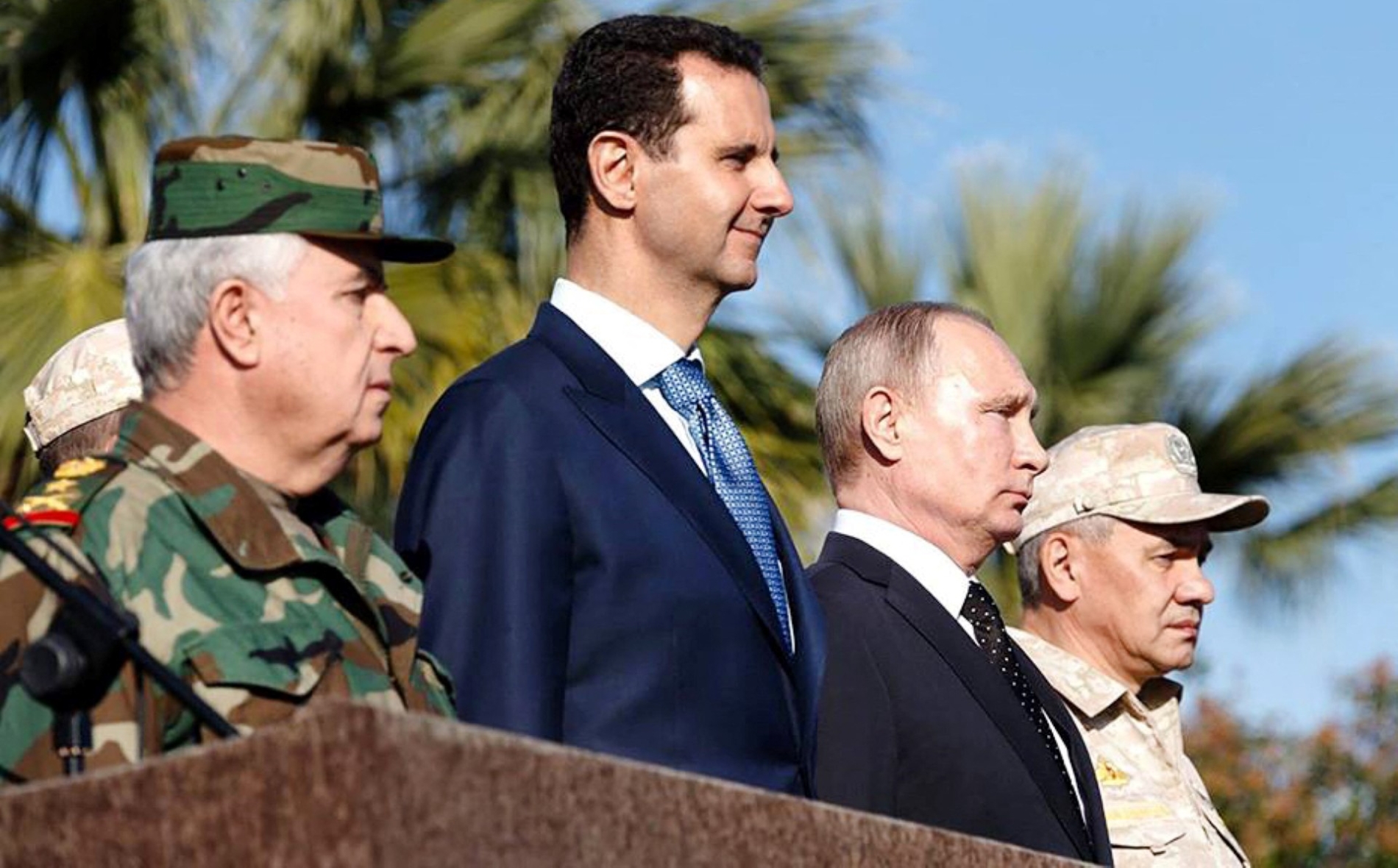
Syrian Presidency Facebook page / AFP
Russian President Vladimir Putin (second right) and Syrian President Bashar al-Assad (second left) inspect a military parade at Hmeimim air base in Latakia on 11 December, 2017

Carving out a foothold

Following its military intervention in Syria in late 2015, Russia spent years seeking to establish a presence that would secure broad geopolitical, military, and economic gains. The military agreements signed with the Assad regime went far beyond ordinary arrangements. They gave Russia unprecedented authority over Syrian territory within its bases, limiting the ability of Assad and his regime to intervene in Russian affairs and activities there. At one stage, this effectively deprived Syria of sovereignty over parts of its territory.

The Qamishli base, located at Qamishli airport, gave Russia a political and military card with which to pressure the international coalition and the US. It sought to exploit Arab hostility towards the Syrian Democratic Forces (SDF) and the international coalition, while presenting itself to the SDF as a potential mediator between Damascus and the group. Russia also convinced the SDF that its relationship with Türkiye enabled it to reach understandings with Ankara and open channels of communication.

From 2021 to 2024, Russian and SDF officials held weekly meetings at Qamishli airport, while Russia also transported SDF leaders to Hmeimim and Damascus for meetings with the Assad regime.

In Latakia, the situation had a different dimension. Hmeimim was effectively Russian territory on Syrian soil, where the Assad regime could exercise no authority. The base became one of Russia’s largest in the region and a source of political and military leverage over the Syrian opposition and Türkiye. Its proximity to northern Syria allowed Moscow to threaten military action against opposition-held areas and exploit Turkish fears of another wave of Syrian displacement.

The benefits of Hmeimim airport extended beyond geopolitical influence in the Middle East. It also became a departure point for the recruitment and transport of thousands of Syrians to Libya and Russia, including recruits who were later sent to Ukraine to fight for the Russian army.

In Tartus, the Russian base served as Moscow’s foothold in warm waters, demonstrating Russia’s return to the region and giving it political, economic, and naval influence. To strengthen its power and influence, Russia signed several agreements with the Assad regime relating to Syria’s oil and energy sectors, including contracts linked to oil in Syrian waters. The base also allowed Russia to deploy naval vessels and maintain a permanent military presence in the Mediterranean.

Together, these bases gave Russia a combination of military reach, political leverage, and economic influence that made Syria one of Moscow’s most important strategic gains in the Middle East since the collapse of the Soviet Union.
Satellite image ©2024 Maxar Technologies / AFP
A photo released by Maxar Technologies shows the Russian naval base in Tartus, western Syria, on 10 December, 2024

Defining the contours of a new era

Since the fall of the Assad regime, the Syrian authorities have dealt with Russia delicately. Over the following 18 months, the Syrian government sought to create conditions that could slowly squeeze Moscow out.

Less than a month after the fall of the Assad regime, a Russian delegation headed by Mikhail Bogdanov, Russian President Vladimir Putin’s special envoy to the Middle East, arrived in Damascus. During that visit, Moscow received positive but conditional messages from Syrian President Ahmed al-Sharaa. The new Syria was open to relations with Moscow, provided Russia respected the will and interests of the Syrian people.

Less than two months later, in mid-February 2025, al-Sharaa held his first official call with Putin. During the conversation, Putin expressed Russia’s readiness to reconsider the Syrian-Russian agreements signed under the Assad regime.
Gradually, and with help from the West, Damascus succeeded in creating a new reality for Russia, leaving Moscow with few good options.

Moscow was keen to preserve its influence in the "new Syria", which had begun to show a historic openness towards Arab states and the West. It viewed its negotiating strength as deriving from its military presence east of the Euphrates and on the Syrian coast, as well as its close ties with officers and members of the former regime and with the SDF.

The Syrian government, meanwhile, sought to neutralise Russia's sources of leverage, reach a political understanding with Moscow without armed confrontation, and contain Russian influence in a way that would ease Western concerns and encourage greater engagement with the new Syria.

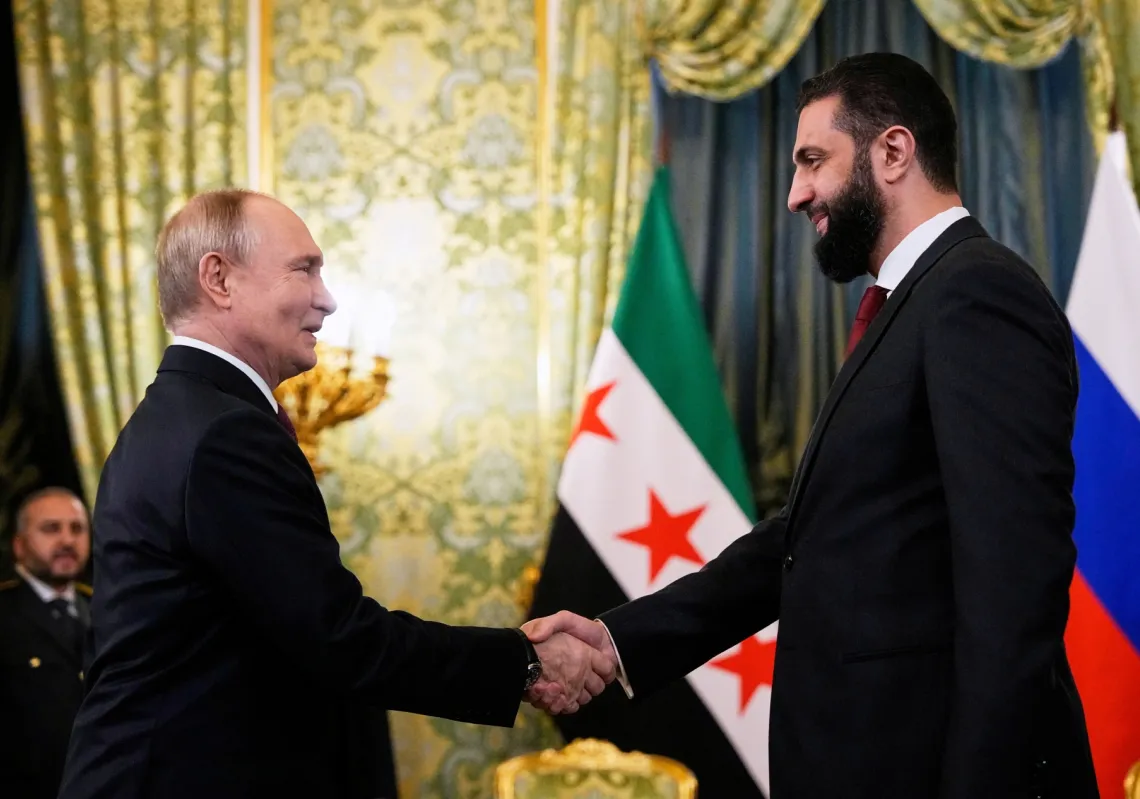
Intensive meetings took place between the Syrian and Russian sides. These included two visits by al-Sharaa, accompanied by political and military delegations, to Moscow in October 2025 and January 2026. During both visits, he met Putin and other Russian officials. Al-Sharaa's visits to Moscow laid the groundwork for intensive military, security, and economic meetings between the two sides, led by Syrian Foreign Minister Asaad al-Shaibani. These meetings aimed to review the old agreements with Russia and define the scope and limits of its military presence in Syria.

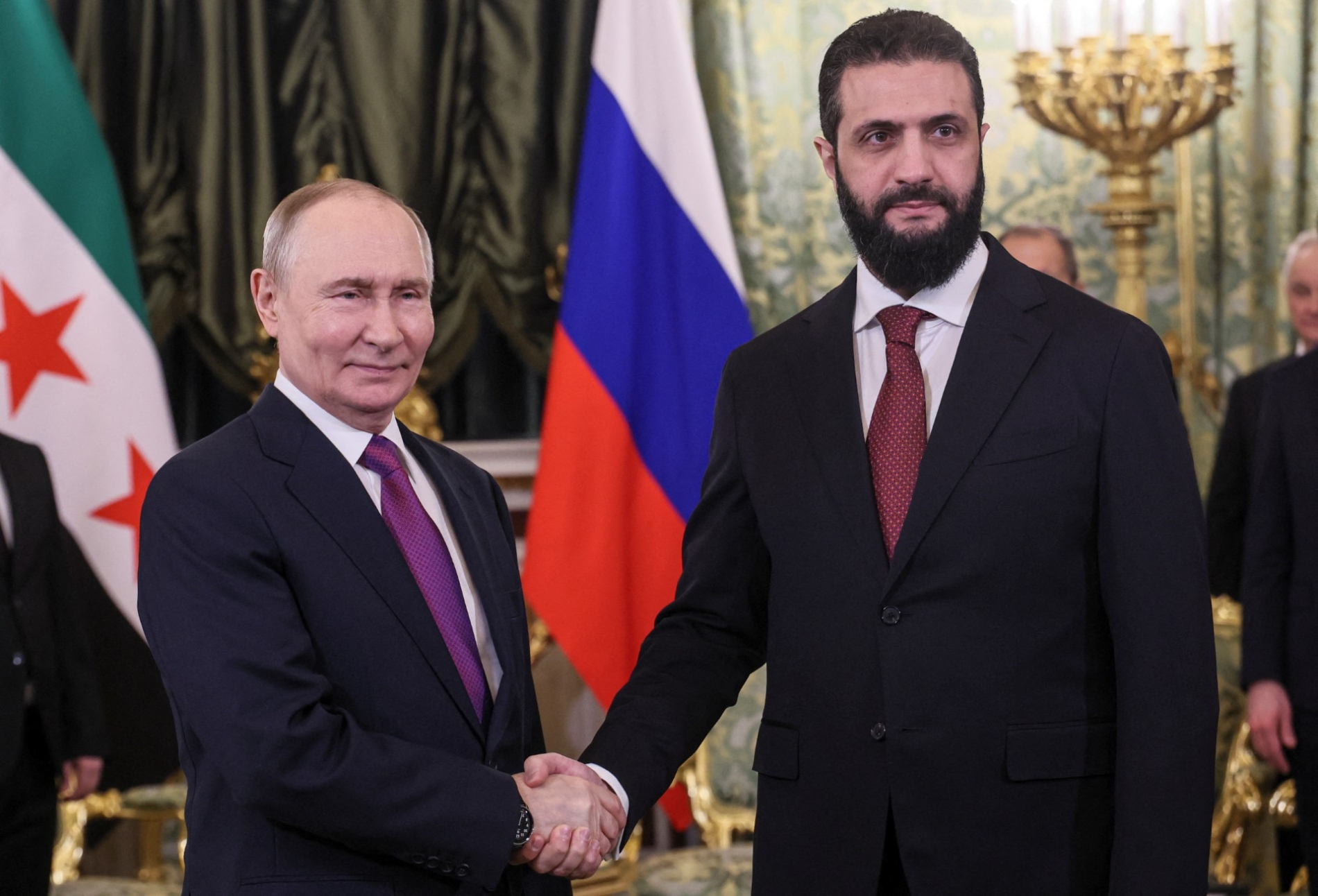
Maxim Shipenkov / Pool / AFP
Russian President Vladimir Putin and Syrian President Ahmed al-Sharaa shake hands during a meeting at the Grand Kremlin Palace in Moscow on 15 October, 2025

On the negotiating table

The Syrian side took several factors into account during the negotiations with Russia. The first was Syrian sovereignty, ensuring that Russia would have no ability to influence Syrian decision-making or destabilise the new Syria. The second was the interests and aspirations of Syrians, including the need to ease public anger towards Russia, which had rained missiles and fire on them, killed thousands, displaced Syrians, and forced them from their homes towards the north under settlements imposed through fire and military force.

The third was that any opening towards the US and the West would struggle while Russian military influence remained in place, threatening Western interests and future investments in Syria. It was therefore necessary to curb Russian military power in Syria to secure political balance and strengthen relations with the West and the US. The fourth was that reconstruction, investment, and the return of Syrian and foreign businesspeople would remain difficult as long as an uncontrolled Russian military presence persisted.

The fifth was that Russia's continued military presence in Syria in the form it had taken under Assad would turn Syrian territory into a platform from which Russian reinforcements and military equipment could be dispatched to other parts of the world in pursuit of Moscow's interests. The new Syria did not want to become a source of regional or international instability.

Syria's return to the Arab fold and to Arab decision-making, the failure of remnants of the former regime to destabilise the Syrian coast and create a power structure beyond the authority of the Syrian state, and the ability of Syrian security forces to impose security in coastal areas all strengthened Damascus's position. 

Other sources of leverage included Russia's withdrawal from the Qamishli base, the opening of Hmeimim's gates to patrols by the new Syrian army, the Syrian government's deployment around the Hmeimim and Tartus bases, the military collapse of the SDF and the Syrian state's entry east of the Euphrates, Syria's entry into the international coalition, and Syrian-American and Syrian-Western understandings.

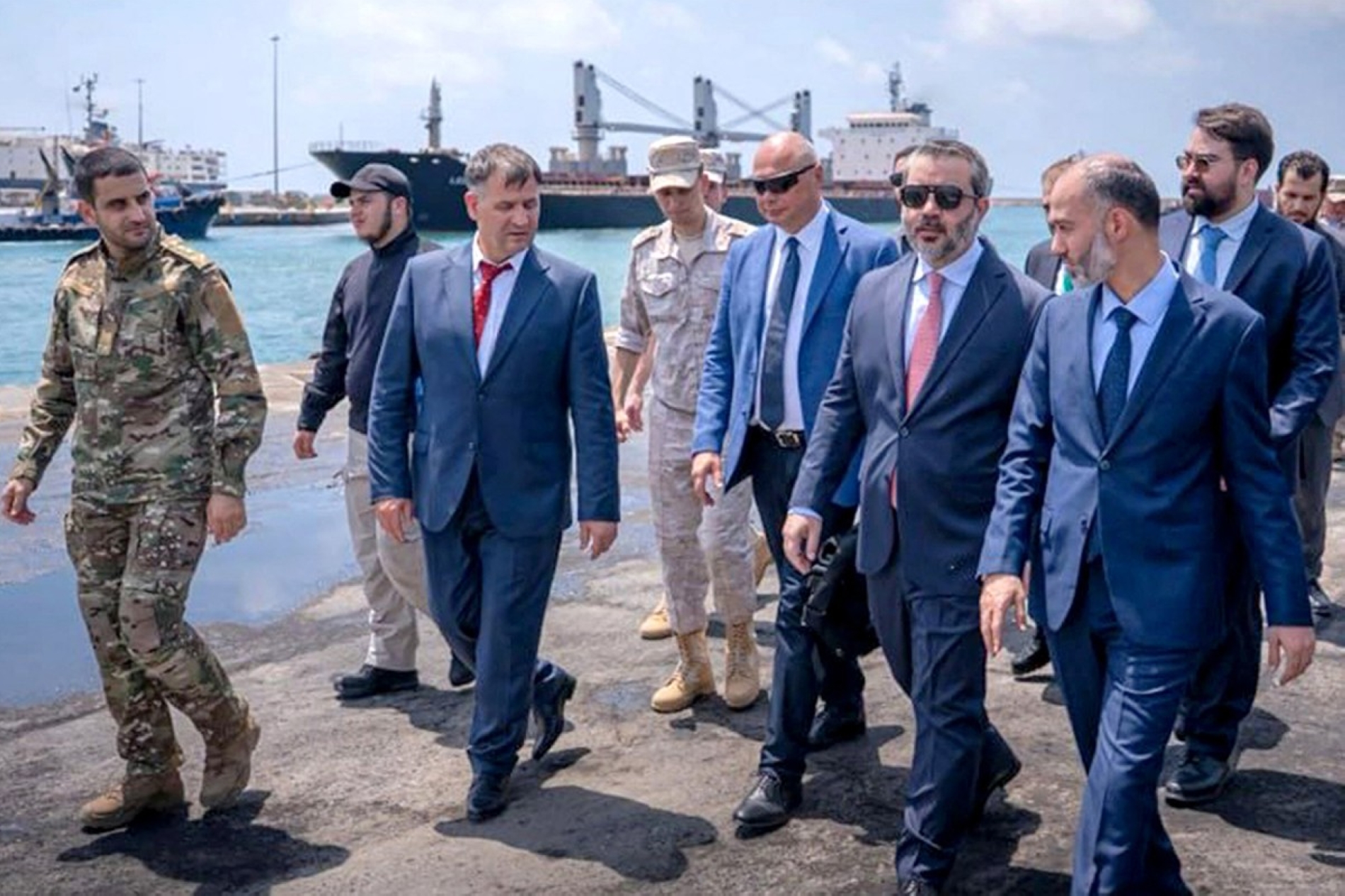
SANA / AFP
Syrian Foreign Minister Asaad al-Shaibani during an inspection tour of Tartus port on 9 August, 2026

Gradually, and in parallel with Arab and regional support and growing Western engagement, the Syrian government succeeded in creating a new reality for Russia. Moscow was left with few options. It could try to remain in Syria under the same terms secured during the Assad era, but in an environment that was no longer as friendly or subordinate as before, placing both the security of its presence and its ambitions at risk.

Alternatively, it could move towards the path welcomed by the new Syria: political and economic relations with Damascus in exchange for relinquishing the military strongholds granted to it by Bashar al-Assad.

Russia appears to have chosen the latter path, based on political and economic relations with the new Syria alongside specialised agreements on military training.

font change