Damietta strike: will Egypt be dragged into the Iran war?
A major Egyptian gas facility on the Mediterranean coast was attacked by unknown parties, but both Iran and the Houthis denied responsibility. So, who was behind it?
REUTERS/Amr Abdallah Dalsh
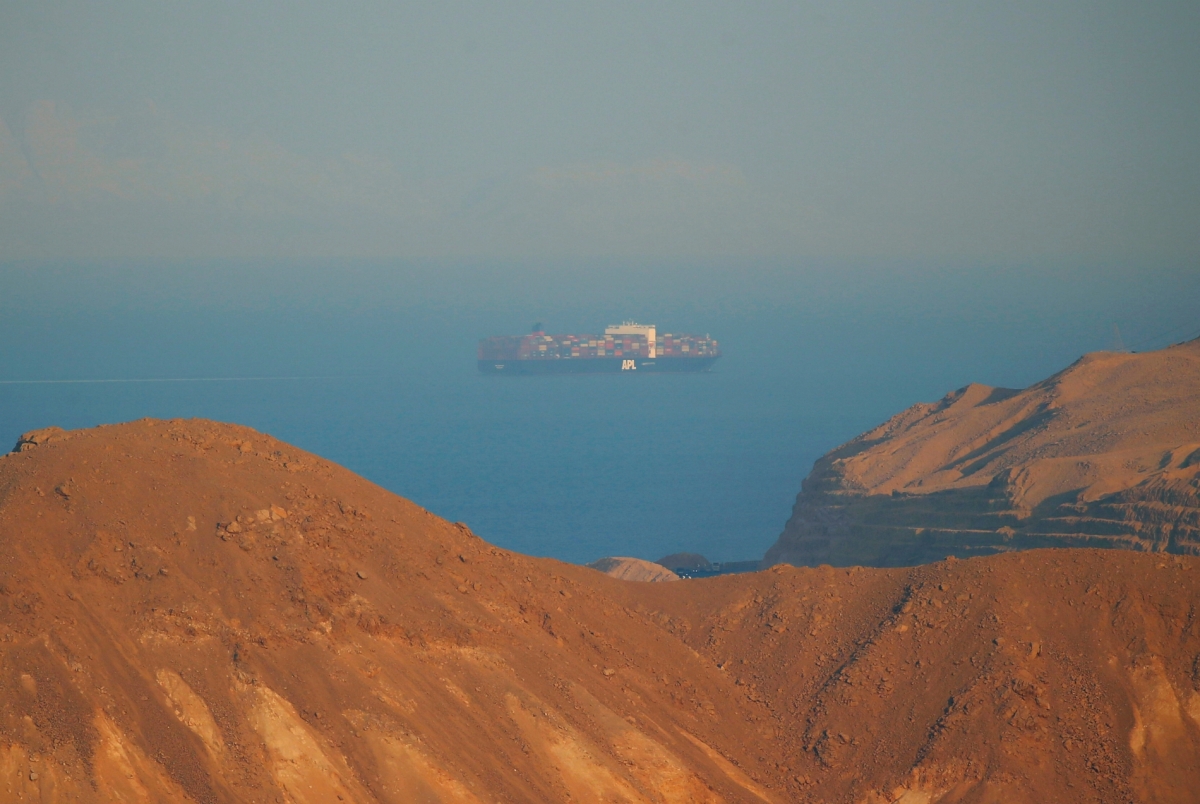
A container ship crosses the Gulf of Suez towards the Red Sea before entering the Suez Canal, in El Ain El Sokhna in Suez, east of Cairo, Egypt, on 24 April 2017.
Damietta strike: will Egypt be dragged into the Iran war?
On 29 July, a drone struck a floating American storage and regasification unit at Damietta Port on Egypt’s Mediterranean coast, setting it ablaze. The fire spread to a Greek-owned LNG tanker anchored nearby. The port is central to Cairo’s plan to turn Egypt into an energy hub for the Eastern Mediterranean and a route for Gulf oil to bypass Iran and the Strait of Hormuz.
Egypt has sought to capitalise on its location, its liquefaction plants at Damietta and Idku, and its ability to build gas-centred regional alliances. The attack targets that ambition and tests Egypt’s neutrality. The Egyptian cabinet has been told that the port was attacked by a drone, but no fingers have yet been officially pointed, with investigations underway.
Egyptian authorities said they would preserve Egypt’s interests and national security. This will likely involve multiple agencies, including the General Intelligence Service, and military intelligence. But results may take time to appear, or may never be made public, depending on how Cairo chooses to respond. Egypt rarely opts for megaphone diplomacy; when it acts, it does so quietly, but in a manner measured enough to protect its interests.
Finding the culprit
A raft of theories has circulated in the past two days about how the attack was carried out, but questions over the apparent failure of Egypt’s air defence network have largely been neglected. Egypt maintains a layered air-defence system designed to protect its airspace, defence analysts said. Gen. Hamdi Bekheit, a 1973 October War veteran and advisor at the Command and Staff College (an affiliate of the Egyptian Ministry of Defence), said the defence system can deal with objects that enter Egyptian airspace.
He told Al Majalla that the attack was most probably staged from what he described as a “non-traditional” threat source, but did not exclude the possibility that the drone was launched from the port’s immediate vicinity. Iranian Foreign Minister Abbas Araghchi denied his country was involved in the attack, as did the Houthi militia in Yemen.
Since the beginning of the Iran war on 28 February 2026, Egypt has performed a balancing act
Both denials are plausible. Since the beginning of the Iran war on 28 February 2026, Egypt has performed a balancing act, offering political, diplomatic, and military support to Gulf states, but keen not to become part of any anti-Iran coalition. This allows Cairo to be a broker in a region torn by conflict. Egypt sees Iran as neither friend nor foe, but as an important component of the regional balance of power.
Political researcher Islam Mansi said it "boils down to Egypt's view of the Islamic Republic as an important Middle Eastern power, a country that enjoys a geographical and a political weight that cannot be underestimated or overlooked". Egypt's balancing act, he added, is also grounded in its belief that war is not the long-term answer to the region's problems; it will only complicate the issues and widen the scope of violence.
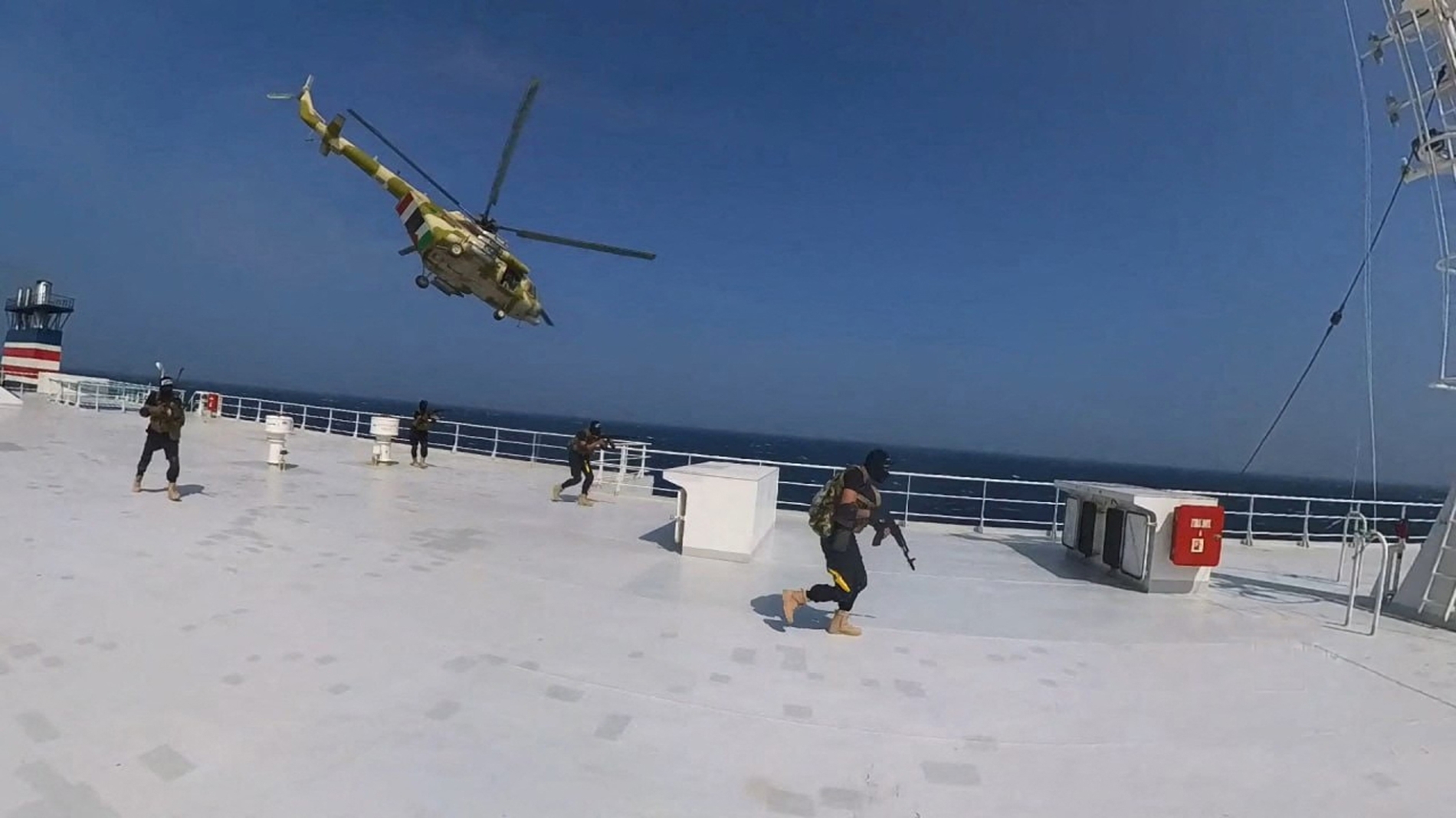
A Houthi helicopter flies over the cargo ship Galaxy Leader as Houthi fighters walk on the deck of the ship in the Red Sea, on 20 November 2023.
Reasons not to strike
During Israel's war against Gaza in 2024-25, the Yemen-based Houthi militia attacked commercial shipping in the Red Sea and the Bab el-Mandeb Strait, costing Egypt billions of dollars in lost Suez Canal transit fees, yet still Egypt did not attack the Houthis and is unlikely to do so now, as the militia once again threatens navigation through the Bab el-Mandeb Strait.
Underlying this approach is Egypt's view of the Houthis as an Iranian proxy, whose actions are directed from Tehran, so attacking the Houthis would essentially equate to attacking Iran. Such an approach could always change, however. This possibility may explain why neither Iran nor the Houthis have attacked Egyptian assets directly.
This does not mean that Iranian aggression has been ruled out, only that there are grounds to assume it may not have emanated from Iran or north-west Yemen. Indeed, it may have. The US-Israeli war appears to have fragmented Iranian decision-making, splitting the political leadership and military institutions such as the Islamic Revolutionary Guard Corps (IRGC).
Since March, the IRGC has attacked neighbouring Gulf states, even as Iran's foreign ministry and presidential office spoke of mending ties. When it comes to Egypt, it may be that Araghchi and the IRGC (or the Houthi leaders) are not on the same page. If true, this may signal shifting calculations in Tehran and a preparedness to antagonise even neutral states.
Who benefits?
Among other aspects, Egyptian intelligence analysts will be looking at the motivations of various regional actors. The drone struck a Mediterranean port at the centre of the gas industry in a country positioning itself as an energy hub, so the choice of target feels considered and strategic. Another question to be asked may be: who would like Egypt to be drawn into the war with Iran?
Israeli media commentators have mused on the idea of turning the US-Israeli war against Iran into a wider, more open-ended Arab-Iranian confrontation. With elections looming in the US and Israel, meaning added domestic sensitivity to losses, both Washington and Tel Aviv may be keen to see others take over the task of attacking Iran. Might Damietta have been a nudge in this direction? Doubtless, rumour and suspicion will abound until the investigations are concluded and the outcome publicised, if it ever is.
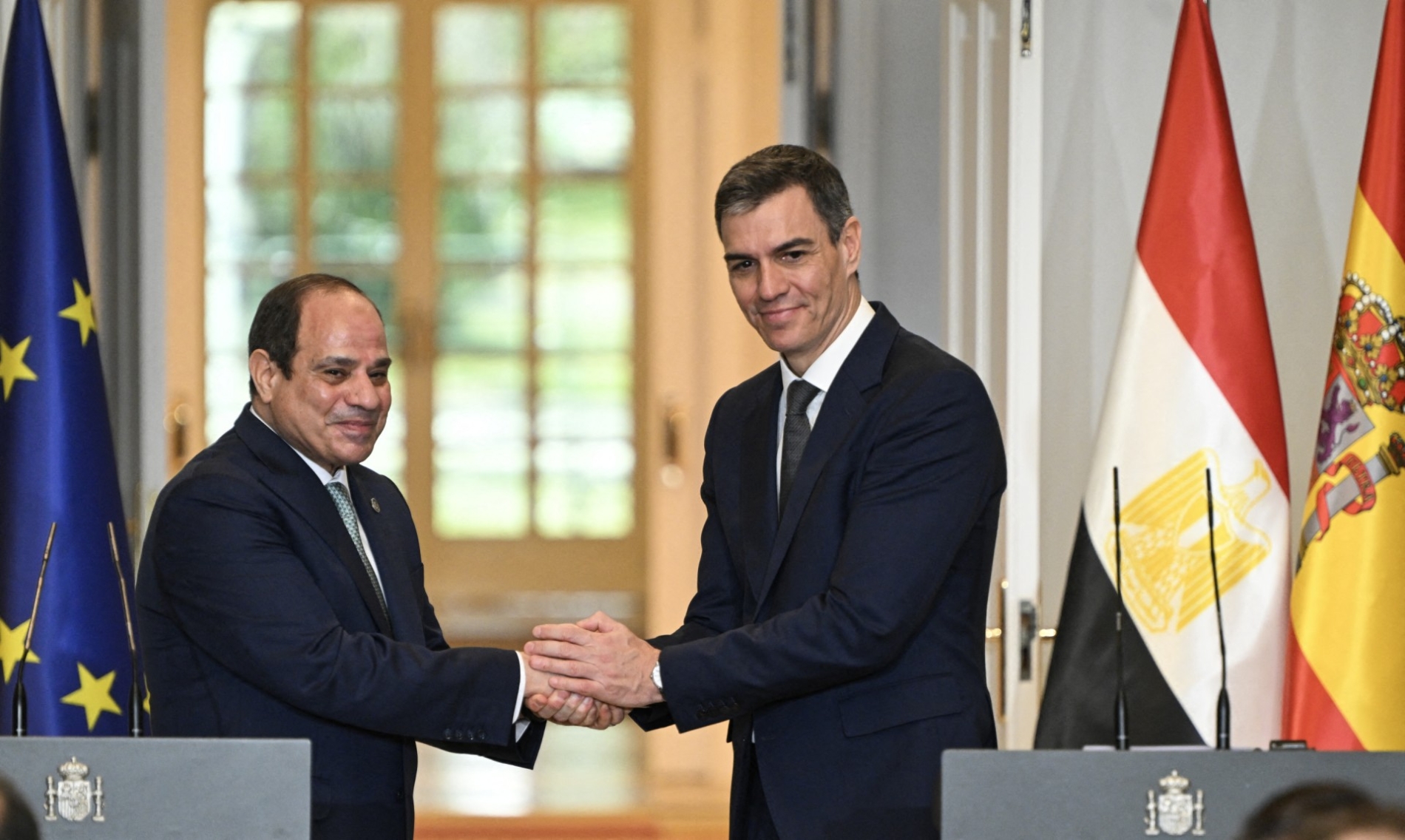
Egypt's President Abdel Fattah al-Sisi (L) shakes hands with Spain's Prime Minister Pedro Sanchez after joint statements and a signing ceremony of bilateral accords at the Moncloa Palace in Madrid, on 19 February 2025.
Regardless of who was behind the Damietta attack, Egypt will almost certainly now adjust its tactics. So far, Cairo has addressed regional threats (including those that touch its own security) in a cooperative manner and in the language of collective regional and international frameworks. A call between Egyptian President Abdel Fattah el-Sisi and Spanish Prime Minister Pedro Sanchez the day after the strike was an early signal of such continuity.
Nevertheless, Cairo's next step will likely be more practical, opening the door for accelerated protection of energy infrastructure and ports. Continuing the careful balancing act without hardening these defences would leave Egypt's most vital assets increasingly exposed. How Cairo responds diplomatically, militarily, and commercially will test both Egypt's regional policy and the practical limits of remaining neutral in 2026.