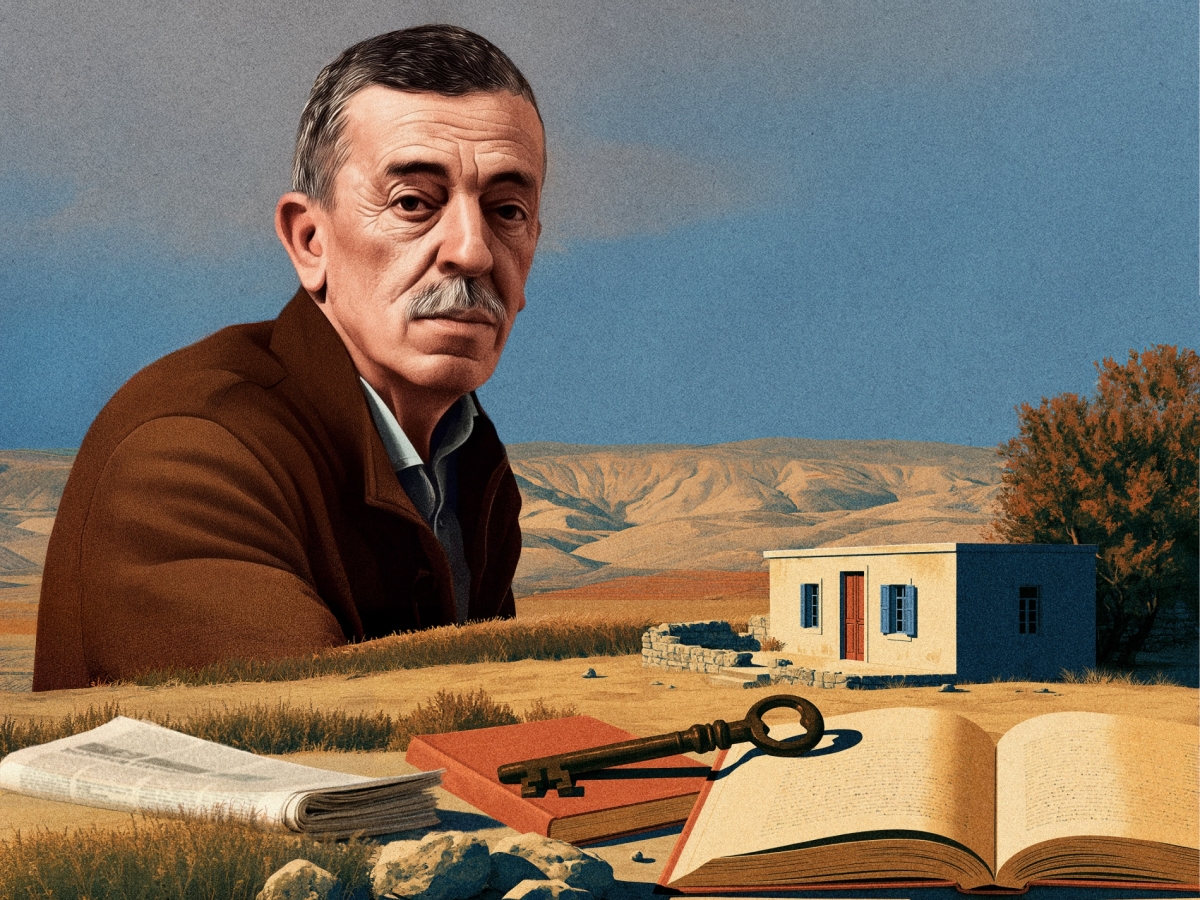

In Beirut, as evening falls, the Lebanese novelist Jabbour Douaihy sits correcting his French editorial before it goes to press, weighing each adjective and turning it over in his mind. His reader is of the sort who devours the news in the morning and throws it into the wastepaper basket by noon.
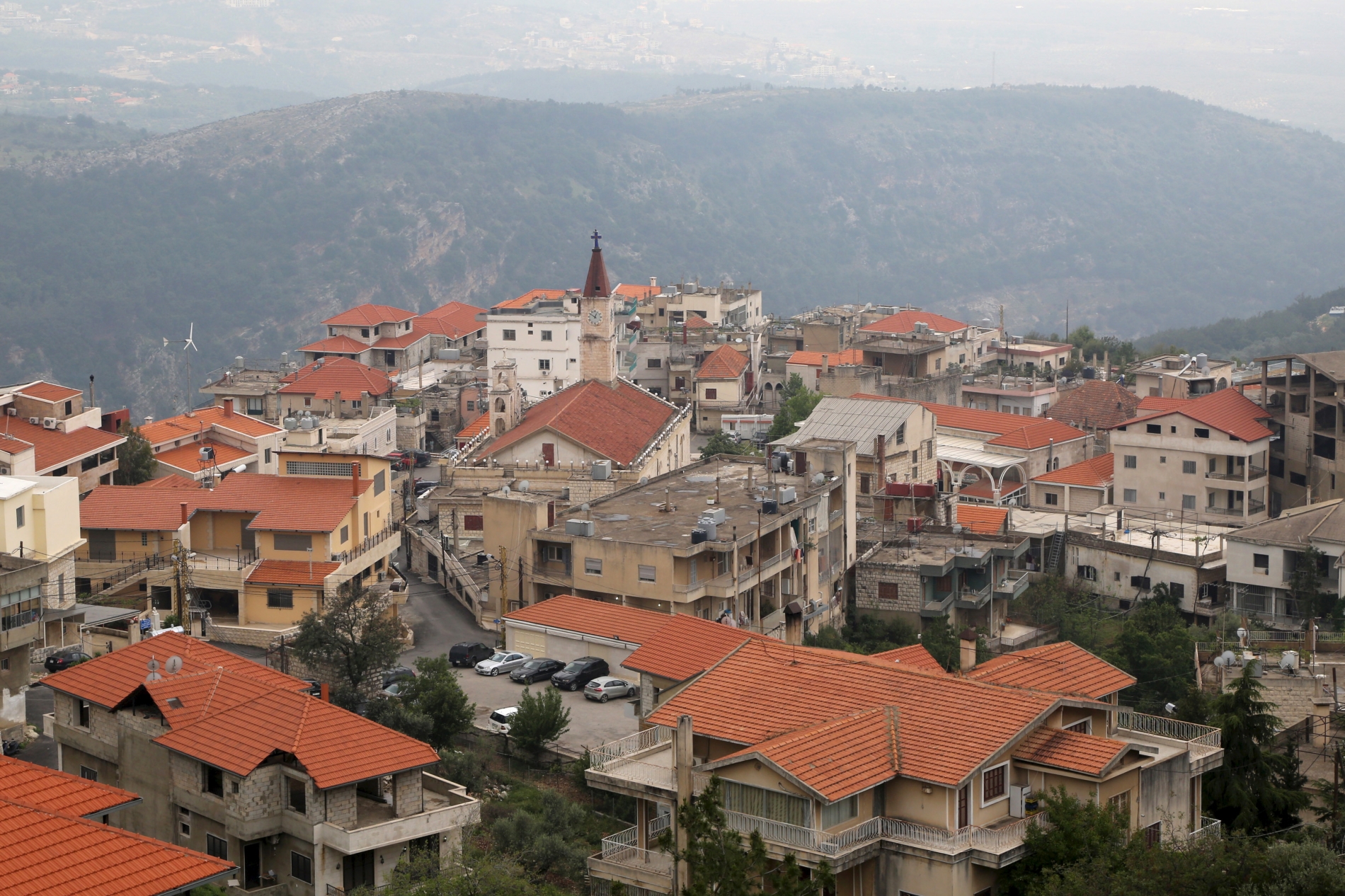
When he closes his notebook and takes the road north towards the mountains, another language awaits him, as do the dead: women reciting the names of the slain at evening gatherings and men who remember the year of a massacre down to its month and day.
Between the two cities, something deeper than vocabulary and grammar changes within him. He leaves behind a man who passes judgement on the affairs of the hour, while another receives him as the road begins to climb, a man who listens to what has passed.
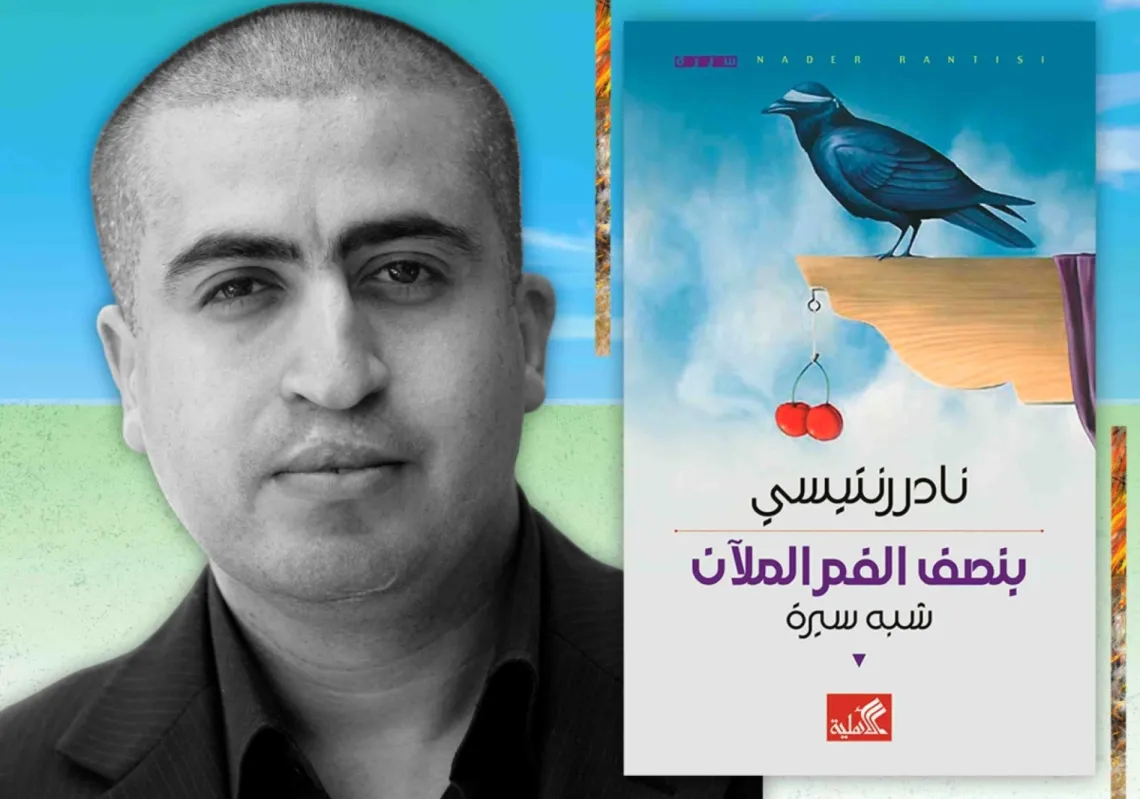
Born in Zgharta in 1949, Douaihy chose a discipline founded upon placing two things side by side. His primary and secondary education took him to Tripoli, his degree in French literature to the Faculty of Education in Beirut, and eventually to Paris III University, where he earned a doctorate in comparative literature.
The discipline trains its practitioner in a singular craft: to hold two texts from opposite shores and listen to what each says to the other. Douaihy returned with his degree to Tripoli, where he became a professor of French literature at the Lebanese University. From there, he led a double life for three decades. He wrote editorials and literary criticism in French for L’Orient Express and later for the literary supplement L’Orient littéraire. He translated from French and wrote a children’s story in that language, The Soul of the Forest (L’Âme de la forêt), which received the Saint Exupéry Prize in 2001. Arabic alone he reserved for his major novels.
The Lebanese call him the novelist of their lives. Critics tend to dwell upon sectarianism, the civil war, and the fragility of the country, leaving the deepest layer of his experience buried beneath those imposing headings. Anyone who reads his life through this lens discovers the same architecture repeated at every level: always two, and always one man attempting to reconcile them, and paying the price.
News in French, stories in Arabic
The division in Douaihy’s life may at first appear to have arisen from professional circumstance. A closer look reveals a strict law governing its arrangement. French carried whatever belonged to the present, from the editorial and the university lecture to the printer’s deadline. Arabic bore what had happened long before and still refused to disappear: the village, the blood feud, and the names recited at evening gatherings. One language for the present hour, another for all that would not pass away.
Douaihy judged the books of others in French, writing for a literary supplement read by Beirut’s elite on Saturday mornings, then withdrew to write his own books in his mother tongue. He began his career as a novelist in French before returning to Arabic and making it his final home. All his major works appeared in that language, from Death Among the Family Is a Kind of Sleep and Rayya of the River, through June Rain, The Vagrant, and The American Quarter, to The King of India and Poison in the Air. It is as though he understood that judgement may be delivered in an acquired language, while mourning requires an inherited one.

The chronology confirms what this division suggests. His only collection of short stories, Death Among the Family Is a Kind of Sleep, appeared the year the civil war ended, after Douaihy had spent two decades teaching French literature, writing in French, and translating from it. He opened his Arabic notebook on the day the gunfire fell silent and began gathering the stories of the Christian countryside in northern Lebanon. The story waited for the news to end before it could begin.