Jabbour Douaihy and the art of living between two shores

Five years after his death, Douaihy’s novels reveal how one of Lebanon's greatest writers lived between two languages, two worlds, and transformed the news of the day into stories that outlasted it

The Lebanese novelist Jabbour Douaihy lived between two worlds and two languages
Lina Jaradat
The Lebanese novelist Jabbour Douaihy lived between two worlds and two languages

Jabbour Douaihy and the art of living between two shores

In Beirut, as evening falls, the Lebanese novelist Jabbour Douaihy sits correcting his French editorial before it goes to press, weighing each adjective and turning it over in his mind. His reader is of the sort who devours the news in the morning and throws it into the wastepaper basket by noon.

When he closes his notebook and takes the road north towards the mountains, another language awaits him, as do the dead: women reciting the names of the slain at evening gatherings and men who remember the year of a massacre down to its month and day.

Between the two cities, something deeper than vocabulary and grammar changes within him. He leaves behind a man who passes judgement on the affairs of the hour, while another receives him as the road begins to climb, a man who listens to what has passed.

Born in Zgharta in 1949, Douaihy chose a discipline founded upon placing two things side by side. His primary and secondary education took him to Tripoli, his degree in French literature to the Faculty of Education in Beirut, and eventually to Paris III University, where he earned a doctorate in comparative literature.

The discipline trains its practitioner in a singular craft: to hold two texts from opposite shores and listen to what each says to the other. Douaihy returned with his degree to Tripoli, where he became a professor of French literature at the Lebanese University. From there, he led a double life for three decades. He wrote editorials and literary criticism in French for L’Orient Express and later for the literary supplement L’Orient littéraire. He translated from French and wrote a children’s story in that language, The Soul of the Forest (L’Âme de la forêt), which received the Saint Exupéry Prize in 2001. Arabic alone he reserved for his major novels.

The Lebanese call him the novelist of their lives. Critics tend to dwell upon sectarianism, the civil war, and the fragility of the country, leaving the deepest layer of his experience buried beneath those imposing headings. Anyone who reads his life through this lens discovers the same architecture repeated at every level: always two, and always one man attempting to reconcile them, and paying the price.

News in French, stories in Arabic

The division in Douaihy’s life may at first appear to have arisen from professional circumstance. A closer look reveals a strict law governing its arrangement. French carried whatever belonged to the present, from the editorial and the university lecture to the printer’s deadline. Arabic bore what had happened long before and still refused to disappear: the village, the blood feud, and the names recited at evening gatherings. One language for the present hour, another for all that would not pass away.

Douaihy judged the books of others in French, writing for a literary supplement read by Beirut’s elite on Saturday mornings, then withdrew to write his own books in his mother tongue. He began his career as a novelist in French before returning to Arabic and making it his final home. All his major works appeared in that language, from Death Among the Family Is a Kind of Sleep and Rayya of the River, through June Rain, The Vagrant, and The American Quarter, to The King of India and Poison in the Air. It is as though he understood that judgement may be delivered in an acquired language, while mourning requires an inherited one.

Leonardo Cendamo / Getty Images
Jabbour Douaihy, photographed in Mantova, Italy, 2010

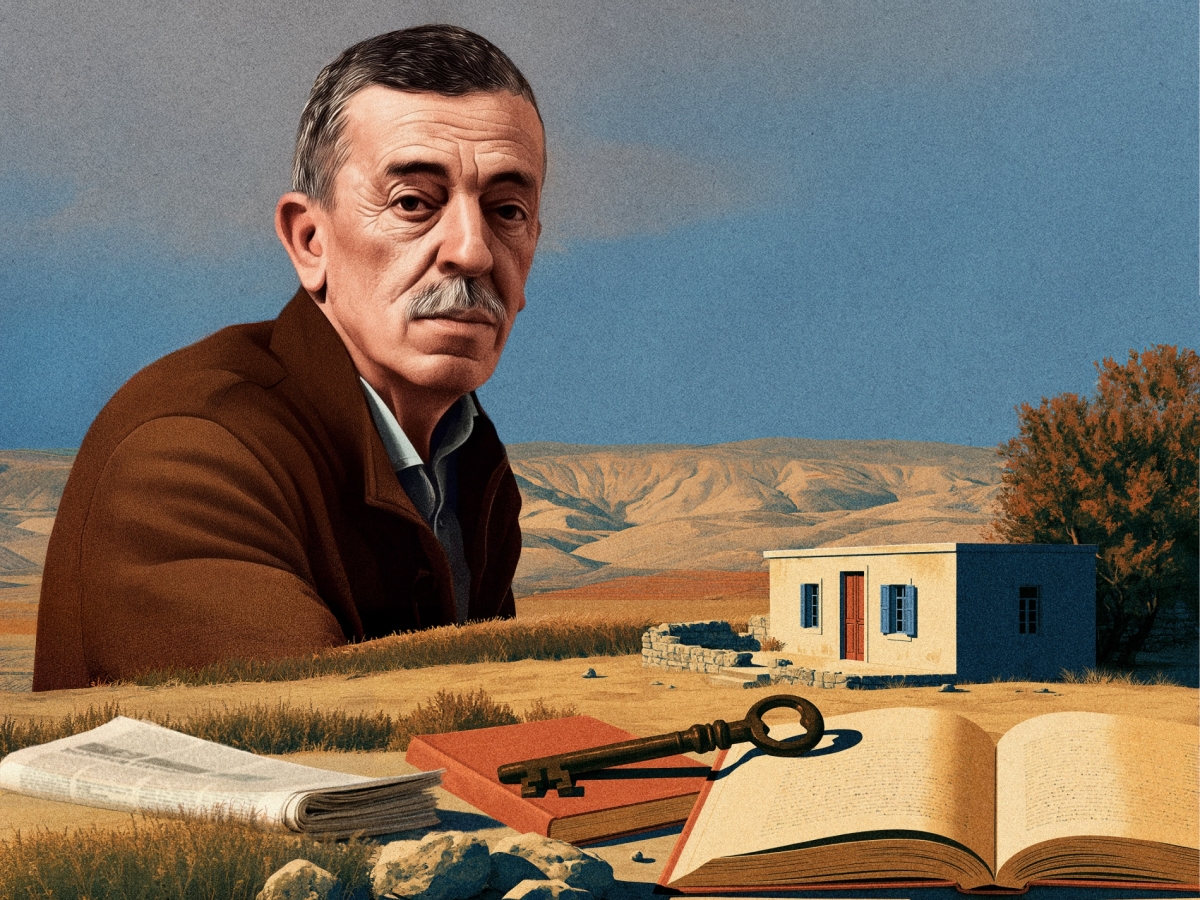
The chronology confirms what this division suggests. His only collection of short stories, Death Among the Family Is a Kind of Sleep, appeared the year the civil war ended, after Douaihy had spent two decades teaching French literature, writing in French, and translating from it. He opened his Arabic notebook on the day the gunfire fell silent and began gathering the stories of the Christian countryside in northern Lebanon. The story waited for the news to end before it could begin.
He opened his Arabic notebook on the day the gunfire fell silent and began gathering the stories of the Christian countryside in northern Lebanon

Readership gave the division another dimension. His French audience in Beirut belonged to a narrow elite whose members knew one another by name and discussed the literary supplement around the same dinner table that evening. His Arabic readership, by contrast, stretched like an open sea from the Atlantic to the Gulf, comprising readers who had never heard of Zgharta and might confuse one family with another. 

There was a further irony. French, which he had left behind as a novelist, reclaimed him years later through translation. His novels appeared in French, English, German, Italian, Spanish, Turkish, and other languages.

The German philosopher and cultural critic Walter Benjamin gave this craft its name when he distinguished between news and storytelling. News demands belief in the hour of its appearance and dies as soon as it is consumed. The story keeps its force folded within it and releases it many years later. Journalism presents the day already explained and relieves its readers of the need to interpret it. Benjamin therefore regarded it as storytelling's foremost adversary. Douaihy, however, arranged an improbable truce between the two. 

A single example reveals the entire equation. On 18 June 1957, Ghassan Tueni wrote an editorial in An Nahar about the bodies lying inside the church at Miziara. He warned that the state's failure to confront the roots of the crime would turn every Lebanese village into another Miziara. Exactly 18 years later, the prophecy was fulfilled.

Aziz Taher / REUTERS
The village of Miziara, northern Lebanon, where a massacre took place in June 1957, claiming 10 members of Douaihy's own family

The editorial performed its duty on the morning of publication, then slept in the archive for half a century, until Douaihy awakened it in Arabic in 2006 as the novel June Rain. In its pages, he renamed the town Barqa, the church Burj al Hawa, and the two families al Rami and al Samaani. When the novel was shortlisted for the inaugural International Prize for Arabic Fiction in 2008, and later translated into French, English, Italian, and German, that small piece of Lebanese news began travelling towards readers who knew nothing of Zgharta, half a century after its first death.

The same logic reached its culmination in 2016 with Printed in Beirut, in which Douaihy wrote the history of the country from inside a venerable printing house, tracing its rise and decline and carrying the reader back to an age when type was set by hand, letter by letter. The man who had spent his life dispatching editorials to the printers devoted one of his final novels to the printing press itself.

A house that expels its inhabitant

From language to place, the titles alone reveal an obsession that criticism has largely overlooked: The Vagrant, The American Quarter, Printed in Beirut. For Douaihy, the unit by which belonging is measured is the house rather than the sect. This distinction carries profound implications. A sect speaks of creed and lineage. A house speaks of things closer at hand: a key in the pocket, the scent of a staircase in the morning, a bed that recognises its owner. Douaihy turned away from doctrine and held fast to the key. His novels became a land registry of souls.

The roots of this obsession lie in geography before they enter literature. Most inhabitants of Zgharta possess two towns: Zgharta, their winter home near the coast, and Ehden, their summer home some 1,500 metres above sea level in the northern highlands. Every family owns a house and property in both, and twice a year the entire town moves from one dwelling to the other, carrying its furniture, its saints, and its vendettas. Douaihy therefore grew up in a place that teaches its children that residence is a state of movement, and that a person remains the child of two houses throughout their life.

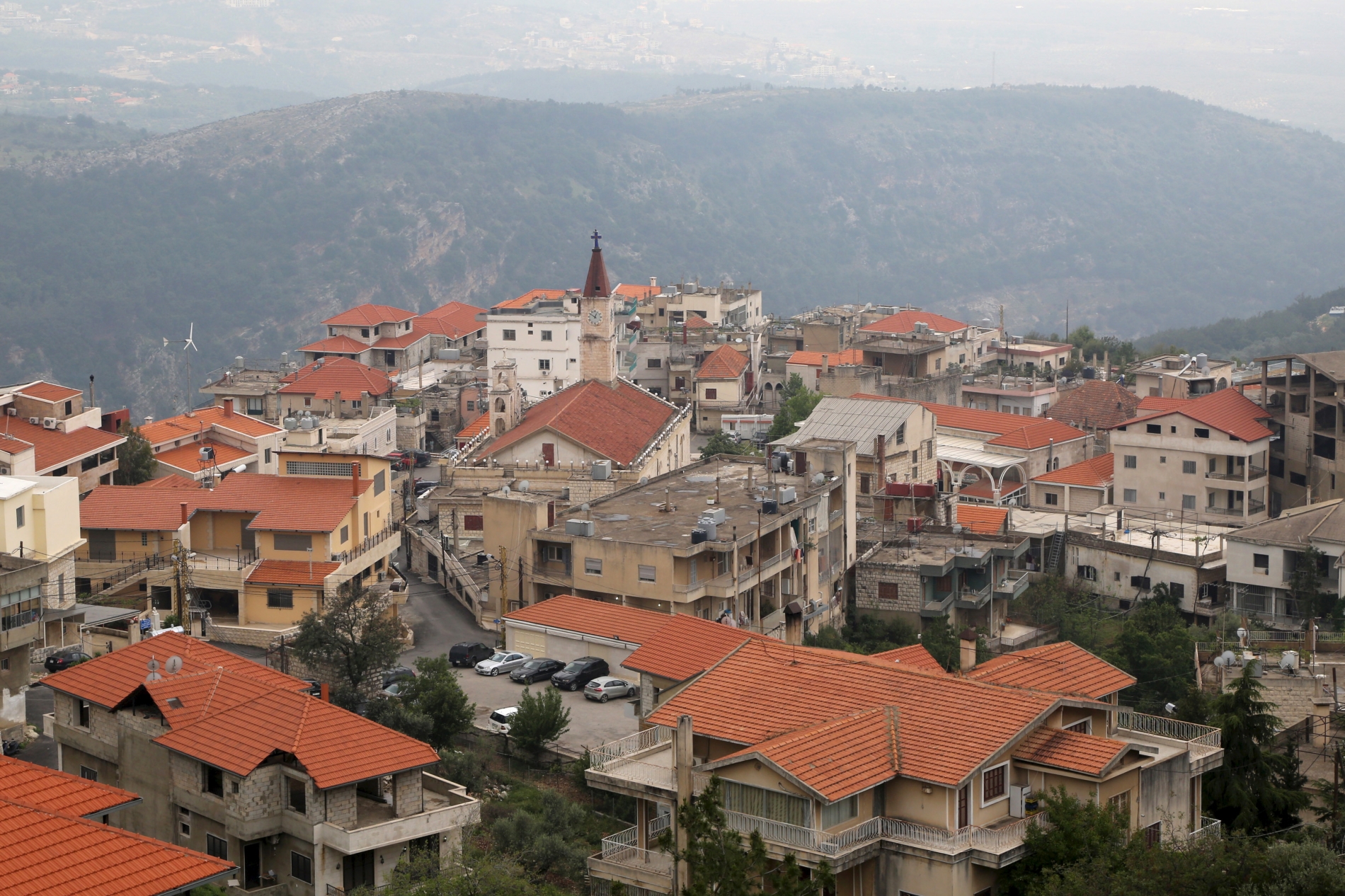
JOSEPH EID / AFP
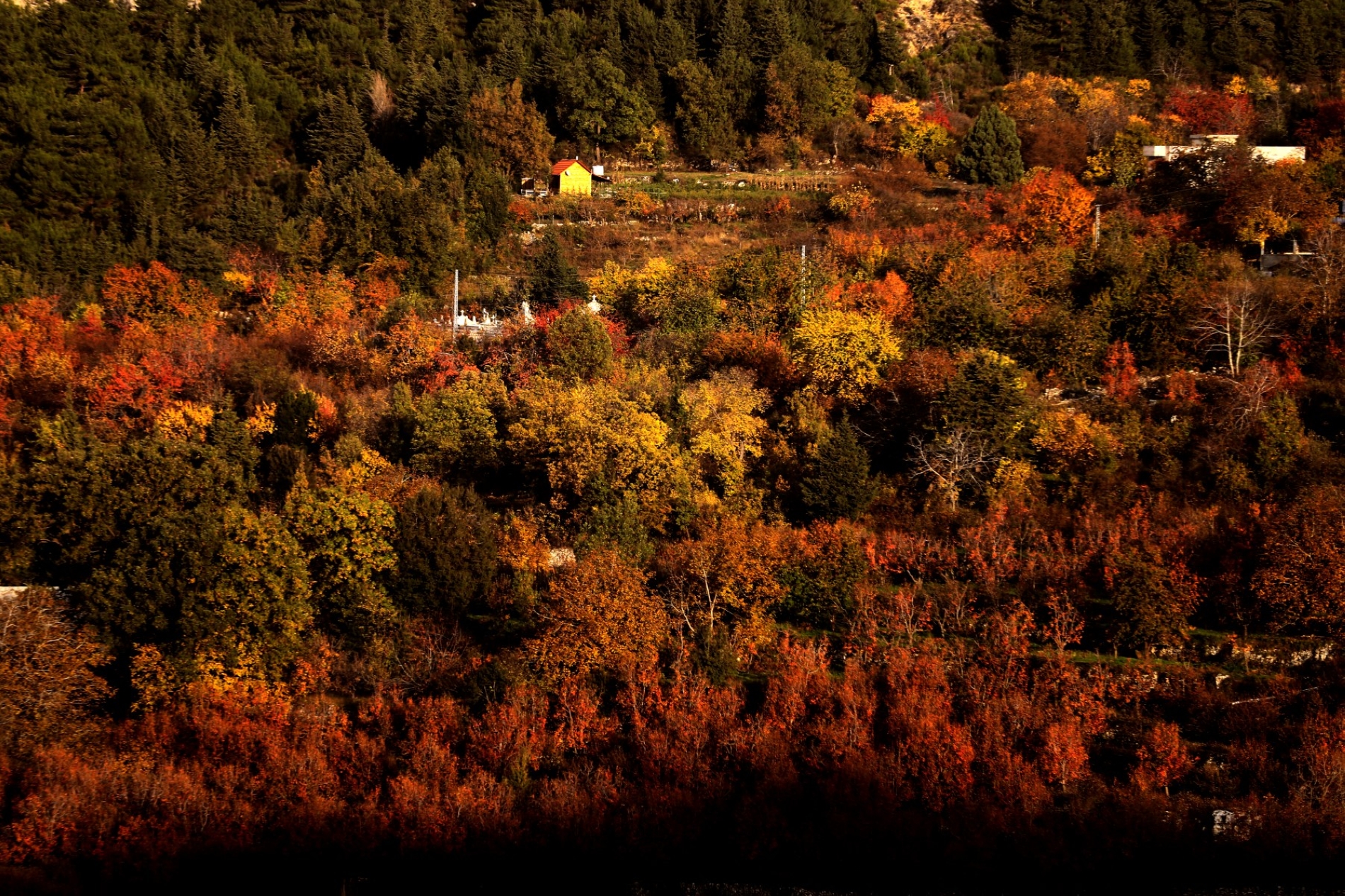
Autumn fields surround the mountain village of Toula, north of Beirut, 1 December 2020

The lesson reaches its most extreme expression in the protagonist of The Vagrant, which was shortlisted for the International Prize for Arabic Fiction in 2012 and received the inaugural Arab Literature Prize in Paris in 2013. The boy is born into a Muslim family and raised by a childless Christian couple. During the war, he befriends both sides of the conflict, believing that his multiple identities offer him room to manoeuvre. Instead, they prove to be the cause of his death. His family then commits an act crueller than the killing itself. Convinced that he had abandoned Islam and become a Christian, they bury him secretly in the Muslim cemetery, leaving the Christian among them to lie alone in the darkness.

The British anthropologist Mary Douglas helps explain why this happens. In her account, dirt is a matter of location: soil in a garden is soil, while soil on a dining table is filth. Systems can accommodate almost anything, yet recoil from whatever stands between two categories.

Seen in this light, the nocturnal burial assumes another meaning. It was neither an act of honour nor one of revenge. It was a final attempt to return a stray file to its proper drawer. Unable to classify him, the system erased the ambiguity. Nizam paid the price for having lived among every household while belonging wholly to none.

Yet an empty category can kill its occupant, and a fully occupied one can do the same. Douaihy approached this truth from the opposite direction in The American Quarter, which won the Said Akl Prize in 2015 and was long-listed for the International Prize for Arabic Fiction that same year.

The novel is set in a poor neighbourhood of Tripoli overlooking the Abu Ali River, reached only by flights of steps. Nearby stands the mansion of the al Azzam family, where Intissar, a daughter of the neighbourhood content with her lot, works as a servant. Her son suddenly disappears, and she later learns that a group has recruited him to carry out a suicide bombing in Iraq.

The neighbourhood gives its sons a complete and unambiguous identity, then sends them to their deaths carrying it. The difference between Nizam and Intissar's son lies only in the road each follows. Their destination is the same. 

Douaihy stands where his protagonists stand, and this is what gives his voice its remarkable composure in the presence of massacre

Douaihy stands where his protagonists stand, and this is what gives his voice its remarkable composure in the presence of massacre. He recounts atrocity with the calm of a man keeping vigil in the village square, dispensing his compassion equally between killer and victim. This serenity recalls an old image from European thought: a man standing on the shore, watching a ship sink. Yet the shore collapsed beneath Douaihy's feet. The Miziara massacre claimed 10 members of his own family. The man who appeared to be watching from a distance had been aboard the ship all along.

This helps explain the structure he chose for June Rain. A succession of narrators speaks, each contradicting the others, while the novel remains open to competing possibilities. A single narrator in possession of the truth requires a shore from which to speak. Even Elia Kfoury, the child whose mother carried him away from the gunfire to New York, returns 20 years later to a town that has no room for him. He searches people's faces for some proof that he belongs among them and invents stories about his origins and upbringing along the way.

Douaihy described it as his most difficult novel. In its pages, he attempted to narrate the mourning of his own house in the language of a man expelled from every house. Neutrality itself became a form of homelessness, and homelessness a style.

A notebook left open

This summer, young people will leave through Beirut airport and return 20 years later to search the faces of others for some proof that they belong among them. In poor neighbourhoods, children are growing up within ready-made categories that offer them everything the state has denied them. 

Perhaps therein lies the secret of Douaihy's enduring relevance in a country that sorts its people back into categories whenever danger appears on the horizon. 

More worthy of reflection is the fact that Douaihy departed while thousands of editorials remained asleep in the country's archives, waiting for someone to awaken them: from a massacre in a refugee camp to an explosion at the port, from a bank that closed its doors to a boy who left in haste.

When he died on 23 July 2021 at the age of 72, only weeks after the publication of his final novel, Poison in the Air, the poet and critic Akl Awit wrote in mourning: "Is your death truly a kind of sleep among the family, Jabbour?"

Five years have passed since that sleep, and his texts remain suspended there, awaiting the return of their narrator.

font change