
A prospective agreement between Washington and Tehran could unlock one of the largest economic relief packages in Iran's modern history, offering access to investment, energy revenues, international finance, and global markets. According to details emerging from the draft framework, Iran stands to benefit from a combination of sanctions relief, foreign investment, and the release of frozen assets.
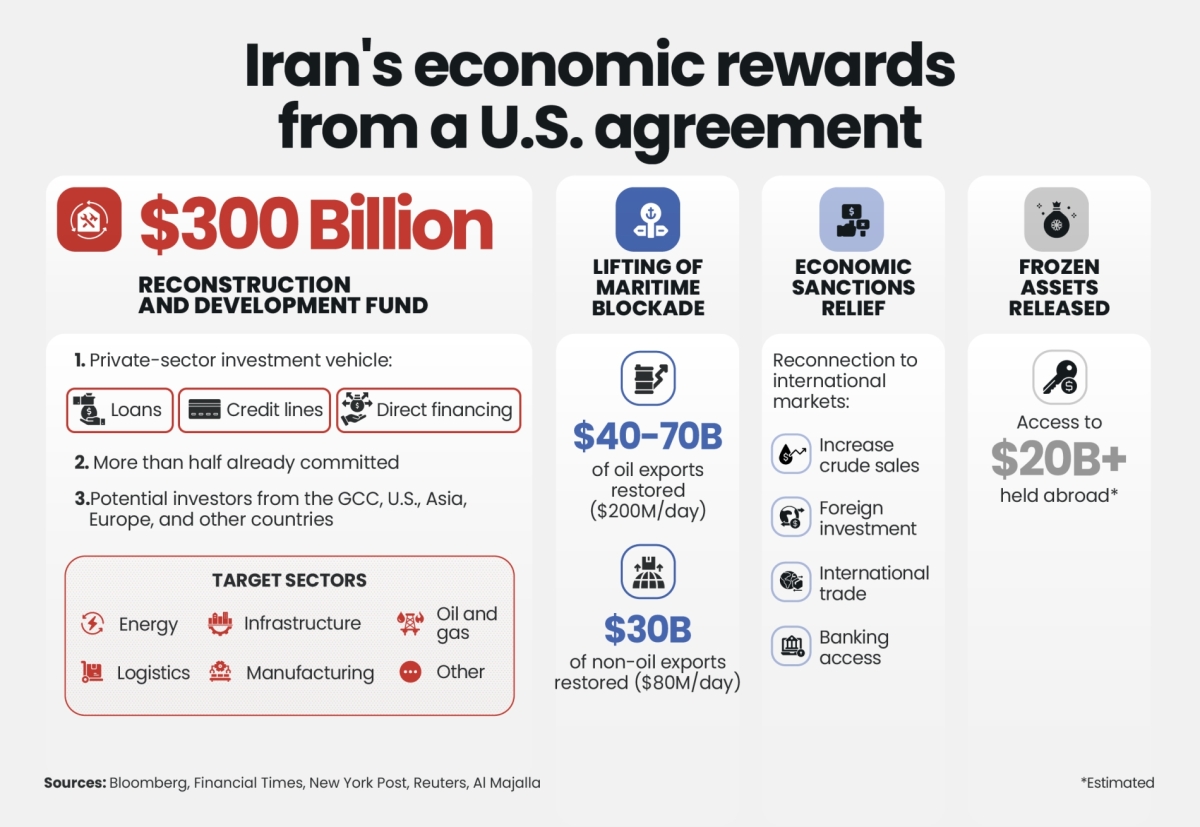
At the centre of the package is a proposed $300bn Reconstruction and Development Fund, structured as a private-sector investment vehicle rather than direct government aid. The fund is intended to attract investors from Gulf countries and international companies, channeling capital into sectors such as energy, transportation, logistics, manufacturing, and infrastructure. Reports indicate that more than half of the funding has already been pledged.
The agreement would also provide immediate sanctions waivers, including on oil exports, allowing Iran to increase crude and petrochemical sales and regain access to revenues previously restricted by US measures. It would also enable the gradual restoration of financial transactions and banking channels, paving the way for Iran's reintegration into international markets after years of isolation.
The reopening of maritime routes and the lifting of the naval blockade would facilitate exports, potentially restoring between $70-100bn in oil revenues and non-oil trade, while reducing transportation costs and helping Iran reclaim its role in global energy markets.
Another major incentive is the phased release of frozen Iranian assets held abroad. Access to these funds could strengthen foreign-exchange reserves, support public spending, stabilise the currency, and finance economic recovery programmes.