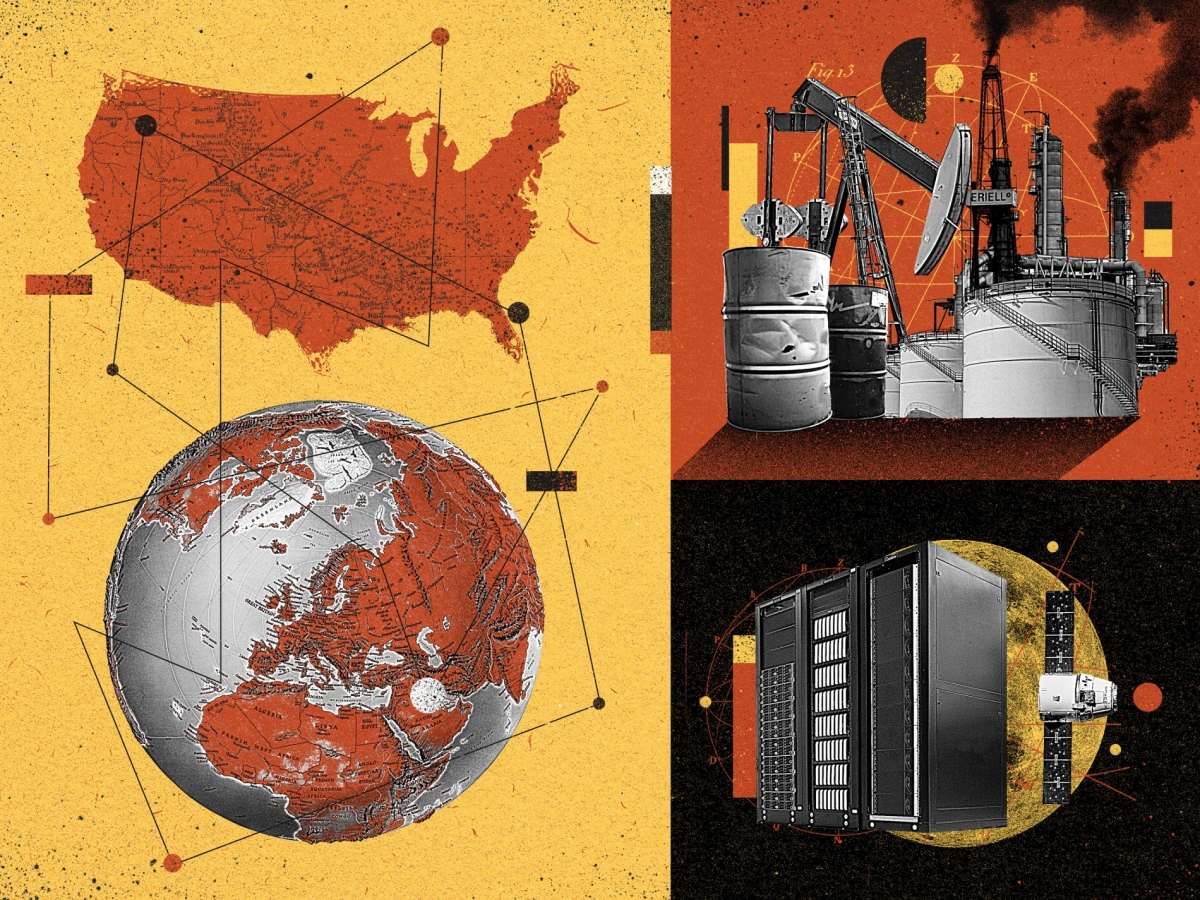

The Gulf’s importance in US calculations is no longer measured only in barrels of oil, shipping lanes, and military bases. With the rise of artificial intelligence, the states of the Gulf Cooperation Council (GCC) are emerging as partners in the physical infrastructure underpinning one of the most consequential technologies in the global economy.
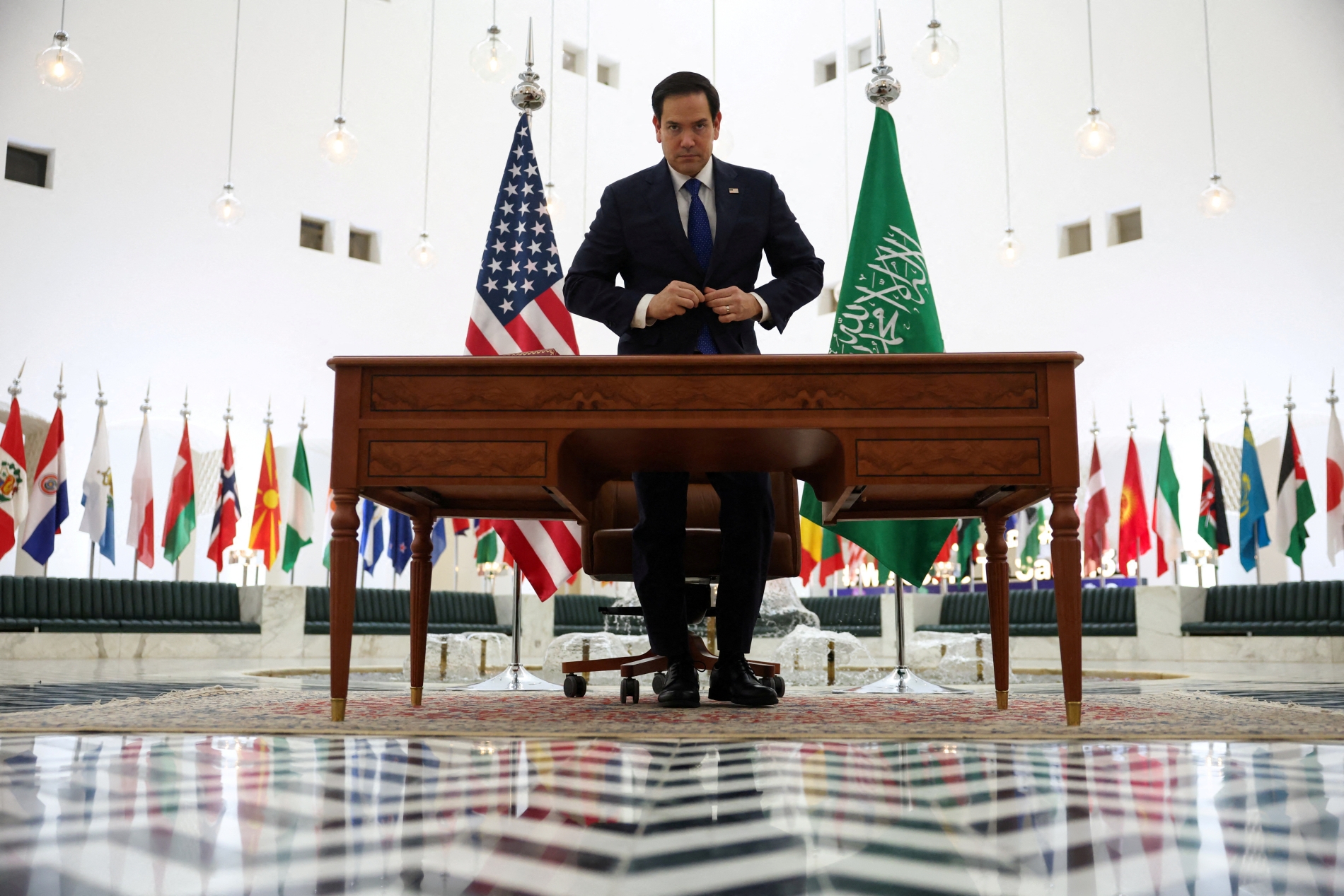
US Secretary of State Marco Rubio’s recent tour of the Gulf made this shift unmistakable. Traditional security files, from Iran to freedom of navigation in the Strait of Hormuz, remain central, but they no longer suffice to explain the depth of the relationship between Washington and the Gulf capitals.
Rubio’s June tour of the UAE, Kuwait, and Bahrain came at a sensitive moment in the region. It included a meeting in Bahrain with the foreign ministers of the GCC states, where the two sides reaffirmed their strategic partnership, Gulf security, and freedom of navigation, while stressing the need to address Iran’s missile programme and regional role.
On the surface, the visit looked like an extension of traditional US policy in the region, founded on reassuring allies, protecting maritime corridors, and monitoring regional balances. Yet viewing the visit through that lens alone leaves the picture incomplete.
Land and electricity
AI is often discussed as a world of software, language models, and digital applications. That image, however, conceals an enormous physical dimension. Artificial intelligence requires advanced chips, vast data centres, stable electricity, cooling systems, developable land, communications networks, long-term financing, and a stable political and security environment that allows this infrastructure to operate without disruption.
Here, the Gulf states possess advantages rarely found among many of Washington’s allies: financial surpluses, vast sovereign wealth funds, energy resources, land available for rapid development, and governments able to make major investment decisions quickly. Add to this a geographic position linking Asia, Europe, and Africa, and the region appears increasingly well placed to become a hub for AI infrastructure.
Market estimates suggest that the GCC states have around 106 operational data centres, with another 77 under development. Current data centre capacity in the Gulf exceeds 850 megawatts, while planned future capacity approaches 3.5 gigawatts. Around $8.5bn is expected to be invested in new data centres in the region by 2027.
These figures do not make the Gulf a direct rival to the larger and more mature American and European hubs, but they do reveal an important trend: the region no longer treats technology merely as a service to be imported, but as infrastructure to be built on its own soil.
This advantage becomes more significant when compared with Europe. European markets possess deep regulatory expertise, strong universities and research centres, and advanced companies across multiple sectors. At the same time, they face acute bottlenecks in electricity grids and energy supply. International estimates indicate that the waiting time to connect new data centres to electricity grids in the European Union can range from two to 10 years. In some major hubs, including Frankfurt, London, Amsterdam, Paris, and Dublin, the average wait can reach seven to 10.

The comparison does not mean that the Gulf has overtaken Europe in technology or scientific research. It points instead to a different reality. Europe is strong in regulation, markets, and expertise, while the Gulf can move faster in providing the physical foundations data centres require: land, energy, financing, and speed of decision-making. In the age of artificial intelligence, these elements matter no less than the software itself.
From consumer to partner
The Gulf’s transformation in artificial intelligence is not confined to the construction of data centres. It also reflects government preparedness and a clear political vision. The Oxford Insights Government AI Readiness Index measures the ability of 195 governments to use artificial intelligence in public policy, services, and regulation. In the 2025 edition, Saudi Arabia ranked first in the Middle East and 15th globally, while the UAE ranked 19th, placing two Gulf states among the world’s top 20. Bahrain came 48th, Qatar 54th, Oman 61st, and Kuwait 83rd.
A similar picture appears in Boston Consulting Group’s classification of AI readiness in the region. Saudi Arabia and the UAE stand out among the ‘AI contenders’—the countries closest to regional leadership in this field. Bahrain, Kuwait, Oman, and Qatar fall within the category of ‘AI practitioners’, meaning they have entered the stage of implementation and strategy-building, but are less advanced in the scale of their infrastructure, investment, and capacity for expansion.