
Iran has caused consternation after sending a civilian aircraft to collect and return Houthi officials for the funeral of Supreme Leader Ali Khamenei, who was killed on 28 February on the first day of the US-Israeli war again the Islamic Republic. The funeral ceremonies for Khamenei were on a scale unprecedented in the Shi’ite world. Through this, Iran aimed to send a message to the West, to demonstrate the greatest possible solidarity with Iran. The airlift occurred while Tehran continued to attack other countries in the region on the grounds that it was targeting interests in response to American aggression.
Yemen has no connection to the US-Israeli war against Iran, nor to Iran’s attacks on the interests of others in the region, so Iran’s actions add to a growing list of grievances, illustrating Tehran’s hostile posture by breaching Yemeni airspace. It coincided with military action by the coalition supporting Yemen’s internationally recognised government. According to the Houthis, the coalition destroyed the runways at Sanaa Airport to prevent the Iranian aircraft from returning, but the aircraft instead landed at Hodeidah Airport, on Yemen’s western coast. In response, the Houthis launched missiles at Saudi Arabia’s southern border, which were intercepted.
Gauging reactions
Human rights activist Huda Luqman captured the prevailing sentiment among Yemenis of differing political backgrounds. The Iranian transport was about “more than a flight,” she said. “It was a message about sovereignty and regional power in the clearest possible terms. Disregarding official warnings and proceeding with the landing despite publicly stated objections went beyond a challenge to measures on the ground; it tested the limits of Yemeni sovereignty and sent a message to the region.”
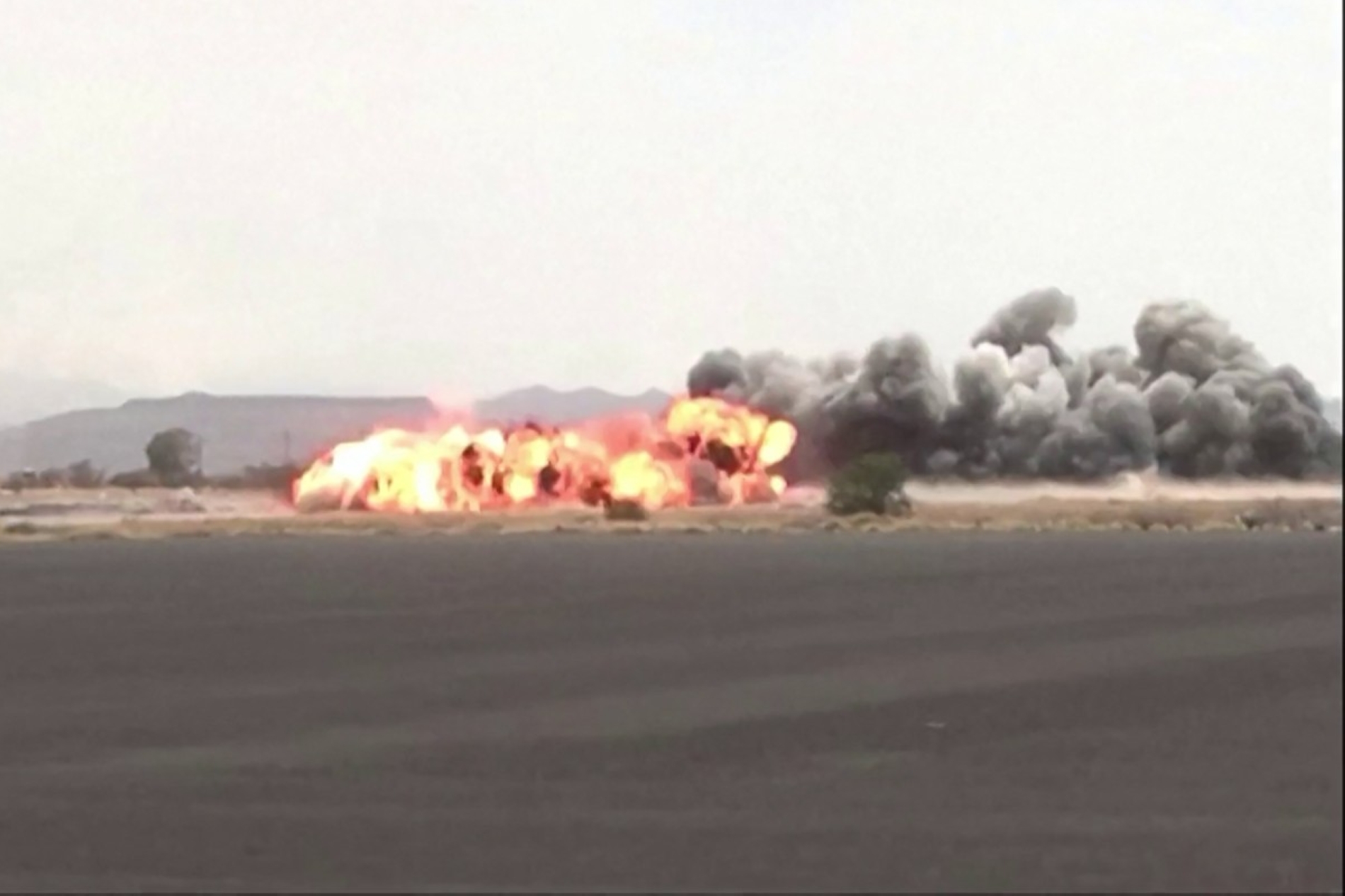
Whether Iran intended to test the patience of the coalition supporting Yemen’s internationally recognised government, its actions can lead only to further escalation in a country that can ill afford it. Following an emergency meeting of the UN Security Council to discuss developments in Yemen, the United Nations said recent developments there were “a reminder that there is no alternative to an inclusive political process led by Yemenis” and that a negotiated settlement reached through dialogue under UN auspices “can provide a lasting and sustainable resolution”.
In a briefing to the emergency meeting, Khaled Khiari, the UN Assistant Secretary-General for the Middle East, Asia and the Pacific, stressed that Yemen and the wider region “cannot afford another round of escalation”. He urged all parties to engage constructively in negotiations, as they were “essential to ensuring de-escalation and improving safe, predictable and sustainable civilian air access, among other priorities”.