
Greek researcher Irene Theodoropoulou calls Qatar 2022 “the Ghutra World Cup,” showing how the ghutra and agal—the traditional male headwear of the Gulf states—were used during the four-yearly football tournament as instruments of cultural reimagining. She argues that Qatar deployed ‘ghutratisation’ to give the 2022 World Cup a distinct Arab Gulf identity, while countering attacks in Western media and challenging negative stereotypes about Arabs through an alternative visual language, one that spoke of dignity, hospitality and openness.
Organisers drew on national dress in designing the official elements of the World Cup. The mascot La’eeb appeared as a playful flying ghutra, welcoming visitors at the airport and leaving a vivid first impression, while the official emblem took inspiration from the winter woollen shawl and its Arab embroidery, fusing modernity with authenticity. Alongside this, the ‘Agal Sculpture’ by Qatari artist Shouq Al Mana on Lusail Boulevard gave visible form to identity, rootedness, and Qatar’s welcome to the world.
Beyond these, designed and purposeful interventions were popular, spontaneous, and bottom-up examples, including Ghutra Mundo, a project launched by a young Qatari entrepreneur to sell ghutras in the colours of the participating nations' flags. Demand was enormous. Foreign fans found ghutras a joyful way to step into the local culture whilst showing support for their nation. In her study, Theodoropoulou notes how Qatari police officers were seen helping foreign visitors arrange the ghutra on their heads.
It was not just male fans, either. Female fans and foreign residents bought and wore ghutras in the colours of their own countries. Through this creative gesture, women gave an item originally associated with male dress a more fluid and adaptive character, expressing both their delight in the Arab Qatari atmosphere of the World Cup and their gratitude to the host country. By the end of the tournament, Theodoropoulou says, the ghutra was much more than a piece of cloth; it was a cultural symbol, a vessel of nostalgia, a medium of communication, and a global fashion statement.
That legacy has continued beyond the event. During the ongoing 2026 World Cup being held in the United States, Mexico, and Canada, Gulf fans in traditional dress have been asked for selfies.
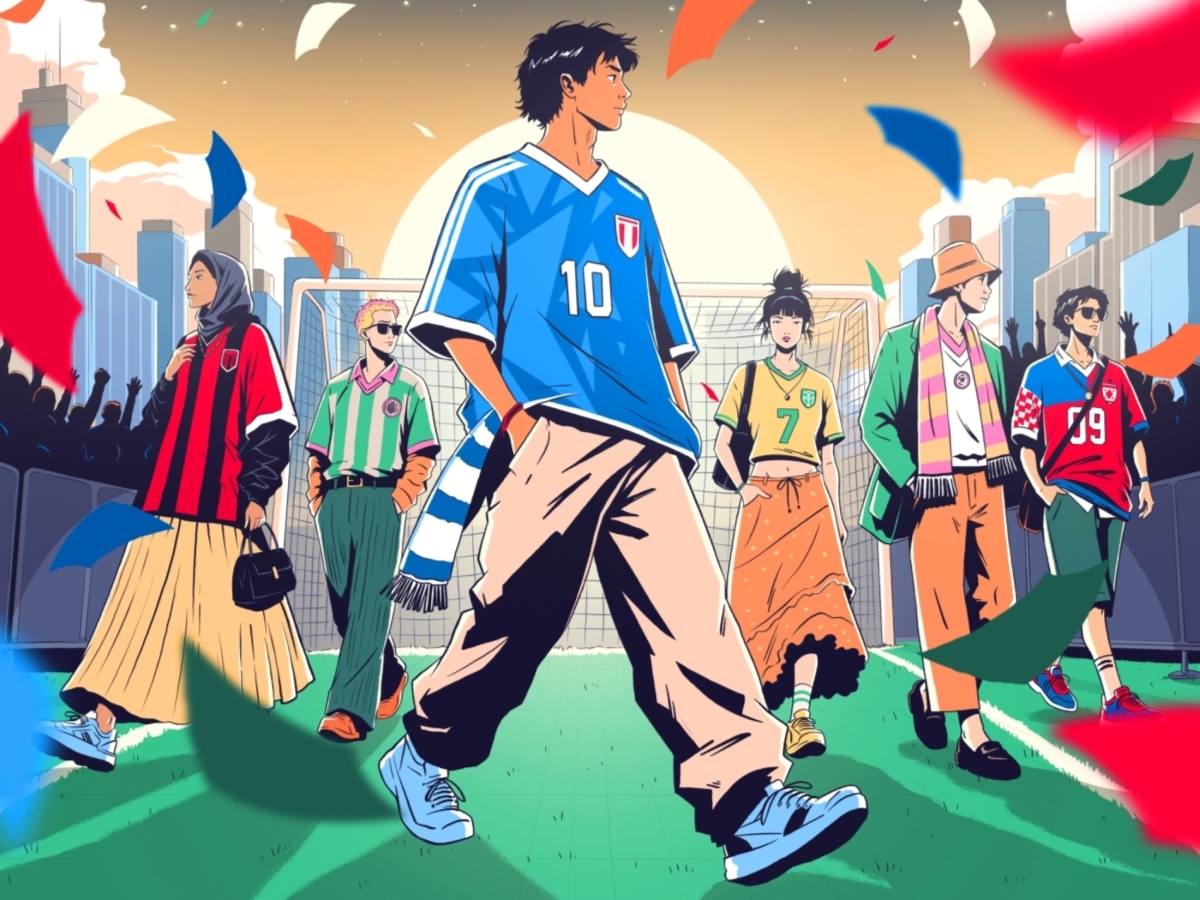
Whether a fan appears in traditional heritage dress or simply wears their national team shirt, they are declaring their identity. Indeed, the national football jersey has its own fashion history. On 12 July 1998, shortly before the World Cup final in Paris, the designer Yves Saint Laurent staged a historic 15-minute show on the pitch of the Stade de France, presenting 300 designs from its archive to a TV audience of 1.7 billion.
Remarkable for its strangeness, audacity, and vitality, this was a unique fashion show, broadcast live to a global audience, that gave sport a cultural dimension, witnessed by 75,000 spectators in the stadium who went on to watch France win 3-0 on a night that made midfielder Zinedine Zidane a national hero.
France has been the historic cradle of haute couture since the 19th century, and is home to some of the great houses of recent decades, such as Louis Vuitton and Hermès, so it is no surprise that players in today’s French national team should dominate online fashion interest at the 2026 World Cup, their luxury bags photographed and discussed almost as much as their football.
If haute couture entered the stadium through luxury fashion houses, the football jersey began with the fans, before evolving. A research paper titled From Sportswear to Leisurewear: The Evolution of English Football League Shirt Design in the Replica Kit Era, traces this evolution. Although it focuses on club league matches, it draws on national team jerseys at the World Cup as key examples to explain how the jersey became both a vast commercial industry and an everyday garment.
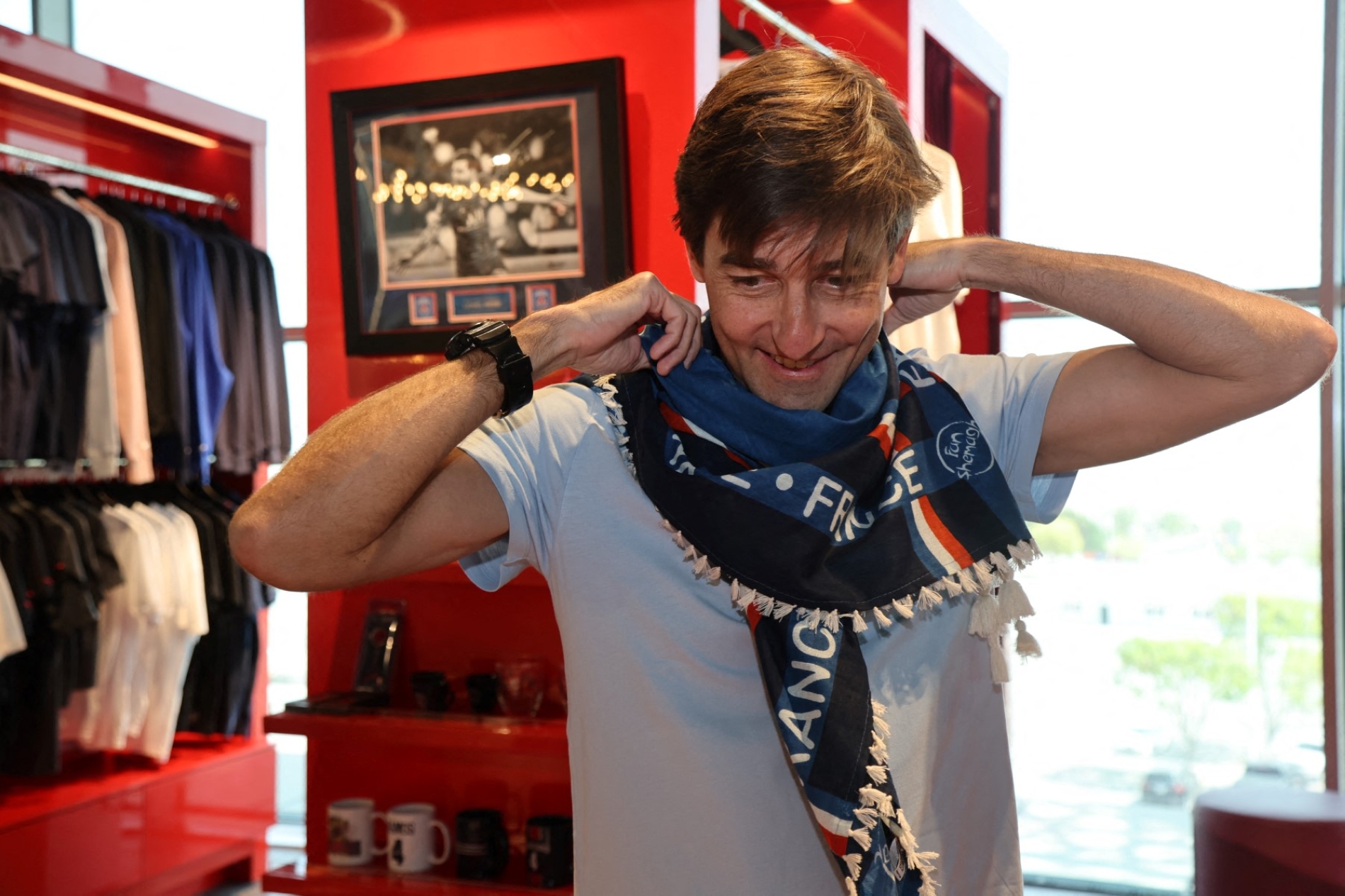
Stadiums to streets
In the early 1970s, the basic design of the football jersey was simple, uncluttered and free of commercial logos. In a 1973 advertisement, Admiral promoted a plain white shirt and navy shorts, explaining that the outfit could represent a club such as Tottenham Hotspur or the England national team at the World Cup. A fan could buy a single shirt and imagine himself as a player in more than one team.
From 1978, companies began to notice that people wore national team jerseys both inside and outside stadiums. Advertisements aimed at children soon showed them in football jerseys on city streets. The idea of casual football-inspired clothing began to take shape. By the 1990s, retro football jerseys were all the rage. Companies such as Toffs began reproducing replica national team jerseys from the 1950s and 1970s.