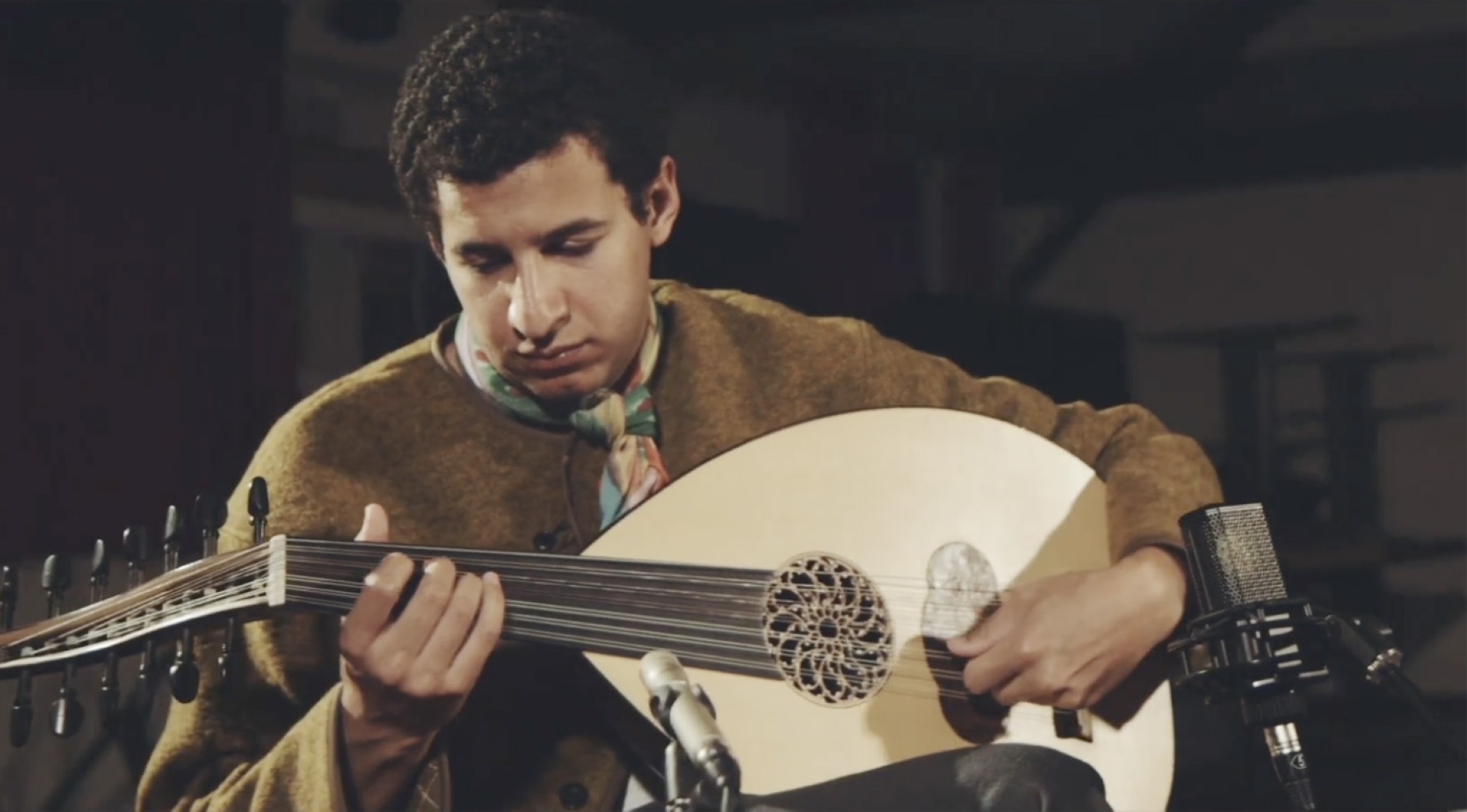

In a musical landscape largely governed by two tendencies—an openness to fusion and collaboration or a retreat into tradition and conservatism—several questions press upon the listener. The work of the young Egyptian oud player Aly Eissa offers a valuable perspective from which to think them through.
If tradition and repetition produce no true richness, contenting themselves with seizing upon inherited forms and turning them into commodities, how should we approach heritage without commercialising it or embalming it?
And if openness, together with encounters with foreign musicians, most often European, naturally entails adventure, where failure and success remain equally possible, what does a musician rooted in Eastern traditions bring to such openness, provided they do not wish to offer their own heritage as scattered fragments lending an exotic, Orientalist sheen to the surface of an end product whose roots, in truth, remain Western?
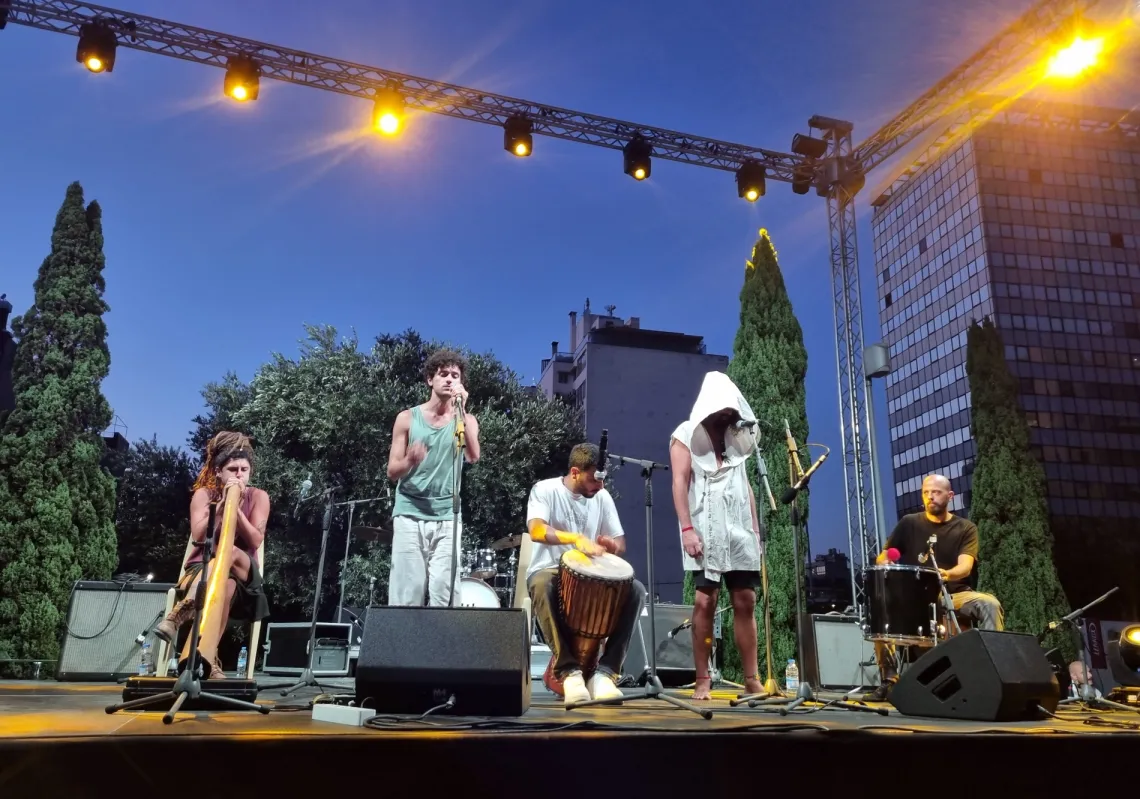
Eissa avoids the traps of fusion first by composing the pieces through which he meets foreign musicians. This is the case in one of the two releases appearing this month, Menoh Fih (New Old Medicine), recorded with the band Taslim wa Taslim (The Handover) and released by Sublime Frequencies. There he is joined by the Egyptian violinist Ayman Asfour and the organ and synth player Jonas Cambien, who makes use of that familiar 1980s organ sound, before the updates of pop and before electro-shaabi. Eissa had also previously collaborated with other European musicians in live concerts.
Improvisation as method
Eissa does not compose his pieces in the Western manner. He composes in his own way, inviting others onto his own terrain. This terrain does not draw its borders solely from the Eastern melodic heritage. It also absorbs from that heritage a sense of freedom in handling, play, and improvised surprise. Eissa does not seize upon his heritage. He embeds it in his work through its deepest qualities: freedom and a playful melodic spirit, far removed from any act of preservation that turns into petrification.
Thus Egyptian Eastern music—with its celebrated modes such as rast, bayati, hijaz, and others, and with the history that Eissa gathers with diligence, showing non condescension toward its popular or rural forms or the theme music of its TV serials, even as he makes no secret of his passion for al-Sunbati—does not appear as a guest in the proposed space of fusion. It becomes the space itself, and in Eissa’s earlier works the question is reversed: what can foreign musicians offer to its heterophony, which resists any prior subjection to rigid rules?
Eissa, who studied with the great violinist Abdo Dagher and the renowned oud player Hazem Shaheen, absorbed many oud techniques from the latter, just as he took from the former the idea of introducing semi-structured improvisations into composed works. He extended this approach to the point that an entire concert, or even a full recording, can consist of improvisations linking phrases agreed upon by him and the other players. This confronts them with the challenge of contributing to, and merging into, a sound that remains in constant dialogue with different stages of what might be imagined as the soundtrack of a country as vast and layered as Egypt over the past century.
In the other work, Qishr al-Bayd (Eggshells), also released this month, Eissa steps forward alone with his oud, outside the encounters that had previously brought him together with others, though traces of those encounters have also become part of his sound. Here, his path appears more clearly, in at least two respects: time and microtonality.
Time and microtonality
When I attended my first concert by Eissa with Taslim wa Taslim, I was struck by his ability to play continuously for a full hour, moving between fixed phrases or motifs and improvisations born in the moment. When music unfolds over such an extended span, it draws us into a temporal field severed from the ordinary course of time. Time itself changes in nature, becoming the offspring of tones and rhythms that continue to point toward the richness of what Eissa has absorbed from Egyptian popular music, moulid celebrations, religious chanting, and sophisticated musical traditions. He moves from the popular sagat—the metallic hand cymbals evoked by the sharpness of his strings—to the delicacy of an accomplished, elevated music that seems almost to dissolve in the air before it reaches our ears.
In Qishr al-Bayd, released by Motvind Records, the composer-performer’s strategy changes. Rather than proceeding through a single extended piece, Eissa divides the recording into several adjacent, more concentrated compositions. Within them, the repetition of certain motifs, together with a more explicit rhythmic element, organises our sense of time, generating rhythm both within the piece and within us.
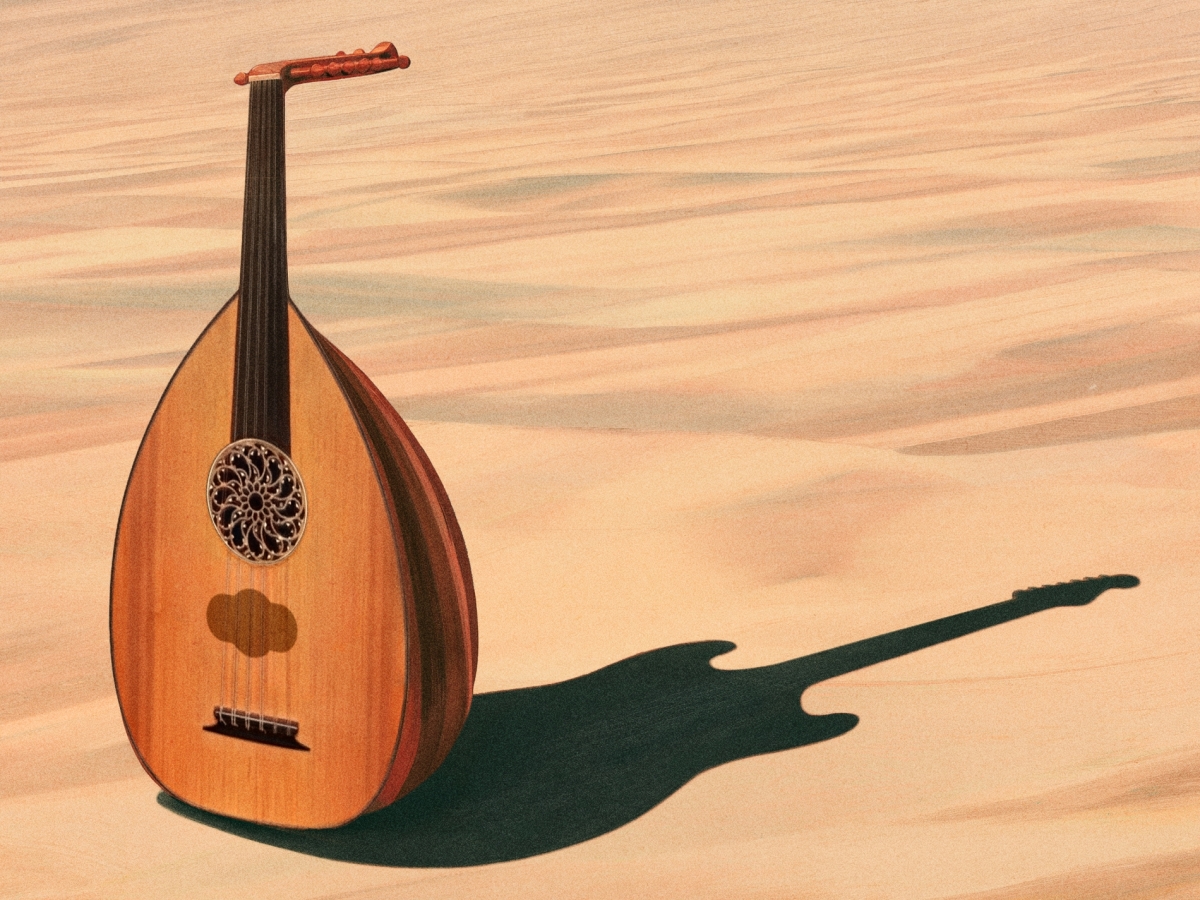
Within these temporal spaces, Eissa explores the geography of the instrument—namely, the microtonality that is only loosely described as quarter-tones. His auditory reservoir, joined to a desire for exploration, gives rise to repeated attempts to determine where the finger should fall on the neck, and how the sound changes when the fingertip is shifted by an almost imperceptible degree.