How Peru's economy survived the collapse of its politics

Why one of Latin America’s most politically fragile democracies continues to deliver macroeconomic credibility despite institutional decay

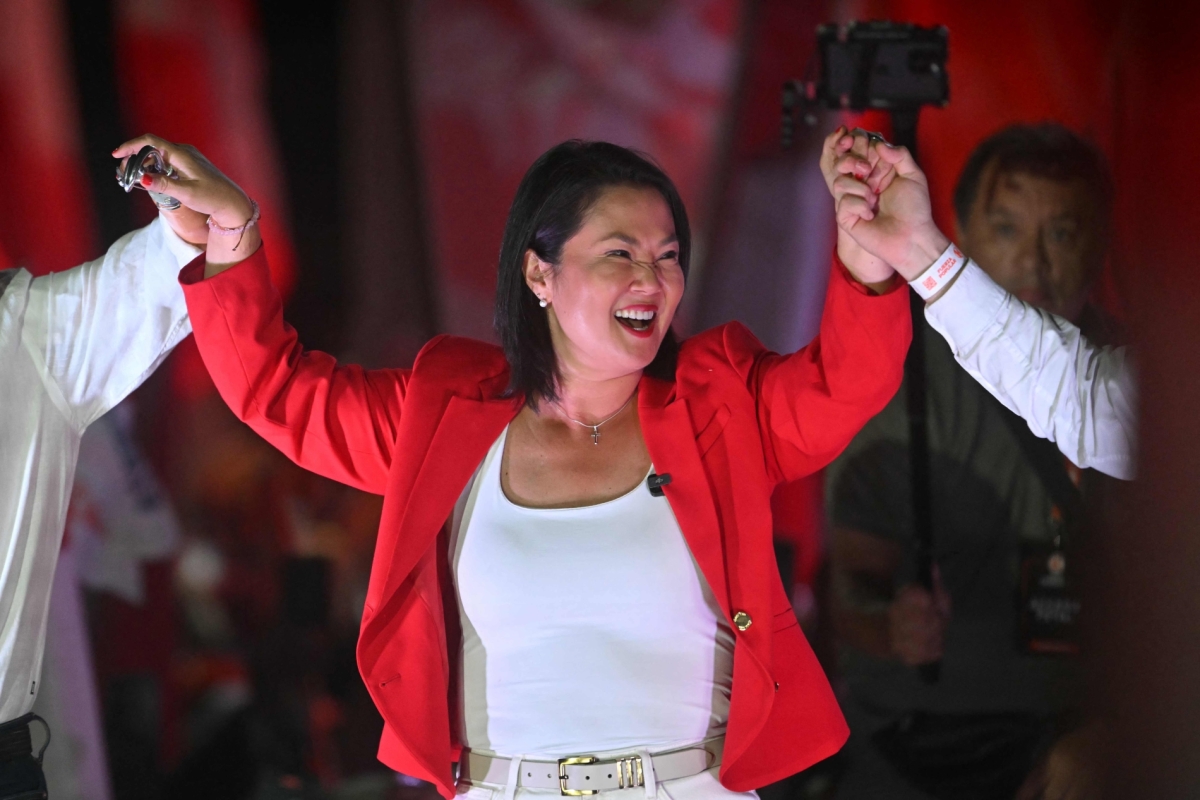
Peru's presidential candidate for the Fuerza Popular party, Keiko Fujimori, smiles during her closing campaign rally in Lima on 4 June 2026.
MARTIN BERNETTI / AFP
Peru's presidential candidate for the Fuerza Popular party, Keiko Fujimori, smiles during her closing campaign rally in Lima on 4 June 2026.

How Peru's economy survived the collapse of its politics

Peru has become one of South America’s clearest political contradictions. Presidents fall, parties fragment, voters withdraw, and Congress repeatedly turns constitutional procedures into instruments of self-preservation. At the same time, the economy continues to project a level of discipline that seems almost detached from the political disorder surrounding it.

Keiko Fujimori's election victory raises the question of how Peru can preserve macroeconomic credibility as its political system loses authority. When voting took place in April, no presidential candidate achieved a majority, leading to a June runoff that has exposed that contradiction with unusual clarity.

The contest between Fujimori, the conservative leader of Fuerza Popular and the daughter of former president Alberto Fujimori, and Roberto Sánchez, a left-wing congressman associated with the political space opened by Pedro Castillo, was exceptionally tight. Castillo, a former rural teacher and left-wing president, was removed from office in 2022 after attempting to dissolve Congress, a crisis that still shadows Peru’s electoral landscape. Fujimori inherits a presidency shaped more by fragility than by victory.

The first round had already revealed the scale of democratic disaffection. More than six million Peruvians did not vote, despite compulsory voting rules, and blank and null votes together surpassed three million. In a crowded field, neither finalist emerged with a broad mandate.

This is not only an electoral drama. It is the latest expression of a deeper crisis of representation. Peru still holds elections, even as they have become poor instruments for producing durable authority. The country has moved through presidents, provisional leaders, corruption scandals, impeachment threats, street protests, and congressional manoeuvres, without rebuilding the political intermediaries that could connect voters to institutions. The presidency is formally powerful and politically exposed, with Congress constitutionally central and widely mistrusted. Parties exist, often as vehicles assembled around candidates, factions, or temporary ambitions instead of durable organisations.
ERNESTO BENAVIDES / AFP
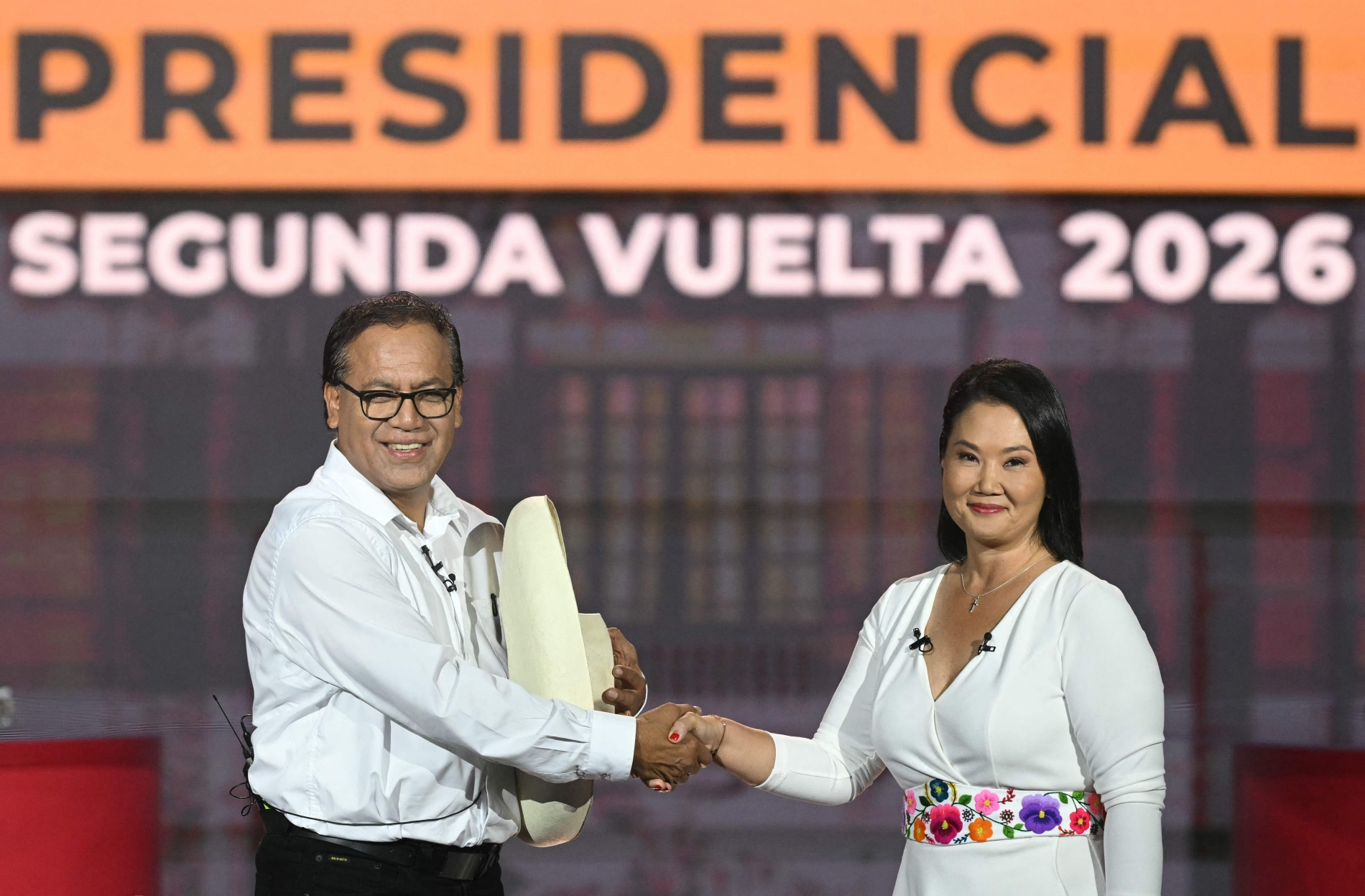
Peru's presidential candidates Keiko Fujimori and Roberto Sanchez shake hands during a debate in Lima on May 31, 2026, ahead of the presidential runoff election on 7 June.

Democracy without durable parties

Peru’s current volatility has roots in the collapse of its party system during and after the Fujimori era. The old parties that structured political competition in the 1980s were weakened by economic crisis, social transformation, and the rise of outsider politics. Alberto Fujimori’s 1992 self-coup, in which he dissolved Congress and suspended the constitution before introducing a new constitutional framework in 1993, accelerated their decomposition by showing politicians that democratic institutions could be bypassed and that electoral success no longer required a durable party organisation.

What followed was a system of personalistic movements, weak programme identities, and short-lived electoral brands. In such a landscape, candidates can reach power without the organisational foundations needed to govern.The result is a political order in which presidents often arrive alone. Winning the office does not necessarily mean commanding disciplined parties, stable legislative blocs, or a coherent coalition. Peru’s vulnerability to congressional pressure grows from this structural solitude.
Keiko Fujimori's election victory raises the question of how Peru can preserve macroeconomic credibility as its political system loses authority.

Impeachment, formally a tool of accountability, has increasingly operated as a weapon of political bargaining. In fragmented presidential systems, remaining in office depends on more than legal innocence or public legitimacy; it requires the president to maintain a legislative shield. Once that shield breaks, Congress can turn constitutional procedure into a sword.

The fall of Pedro Pablo Kuczynski, Peru's president from 2016 to 2018, illustrates the pattern. He narrowly defeated Keiko Fujimori in 2016, when Fuerza Popular held a dominant position in Congress. Kuczynski's party controlled only a small share of seats, leaving him dependent on fragile negotiations with hostile or opportunistic legislators. His first reprieve from impeachment was tied to a factional bargain inside the right-wing populist movement Fujimorismo, which soon unravelled. His resignation before a second vote revealed a broader feature of Peruvian politics: the president is not judged solely by law or performance, and endures only for as long as enough legislators consider continued tenure useful.

This fragility has since become normalised within a political structure in which frequent presidential turnover has led to the presidency being treated as an increasingly disposable office. That disposability carries profound democratic consequences, weakening the link between elections and authority, encouraging short-term congressional opportunism and deepening public cynicism. Voters are asked to choose presidents, only for the system to repeatedly show them that presidents can be neutralised, removed, or replaced before any mandate becomes settled. Against that background, the 2026 election reads as another episode in a longer institutional exhaustion, not as a new beginning.

ERNESTO BENAVIDES / AFP
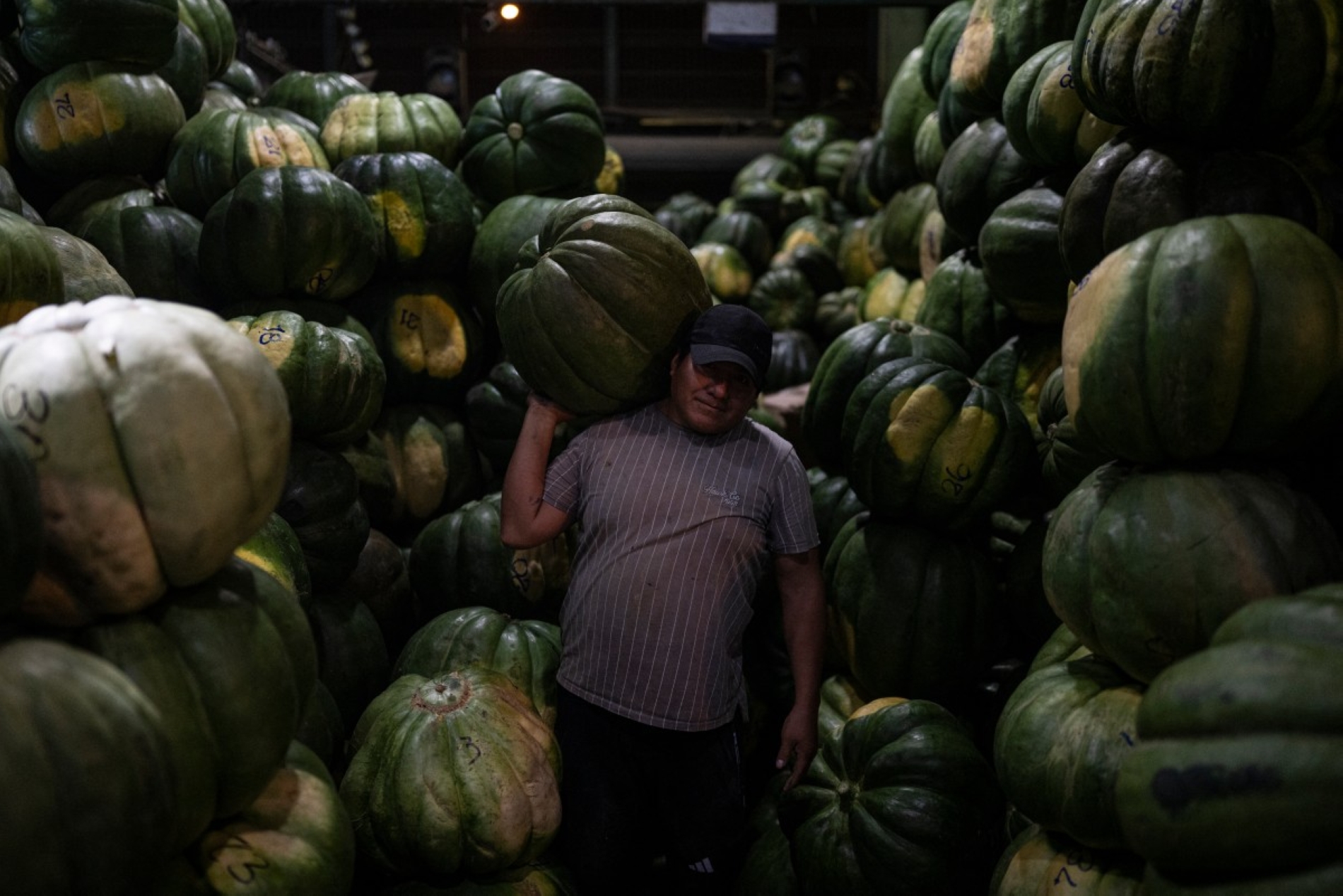
A merchant poses for a photo at a pumpkin stall at the Gran Mercado Mayorista market in Lima on 28 May 2026.

The technocratic anchor 

The paradox is that Peru's economy has resisted the collapse so often suggested by its politics. The country has benefited from favourable terms of trade, high metal prices, disciplined monetary policy, and a strong external position. Its public debt remains low by regional standards, inflation targeting has continued to command confidence, and international reserves have reached exceptional levels. These indicators do not erase the political crisis. They show instead that part of the state continues to function according to rules, routines, and expectations that are more stable than the elected leadership surrounding it.

The reason is not good luck alone. Peru's economy has been protected by a technocratic shield that has outlasted presidents. Since the early 1990s, economic experts in the Ministry of Economy and Finance have accumulated autonomy, authority, and continuity. They were first empowered in response to hyperinflation and market breakdown, then retained influence after the fall of Alberto Fujimori in 2000 and the return to competitive democracy. Even leaders who criticised the economic model found it costly to remove them. The macroeconomic apparatus became the country's anchor as political leadership grew more volatile.

Eduardo Dargent, a Peruvian political scientist whose work focuses on technocracy, public policy, and the state, helps explain why this is possible. In his study of technocratic autonomy, experts do not derive their power only from politicians, business groups, or international financial institutions. Their authority also stems from expertise itself. In weak political systems, technical knowledge creates asymmetry. Ministers are often temporary, parties are thin, and many elected officials lack the bureaucratic experience needed to master budgets, fiscal rules, external financing, regulatory systems, or macroeconomic risk. Experts can therefore become autonomous actors inside the state, able to shape policy, constrain politicians, and raise the cost of irresponsible intervention.

Alberto Vergara and Daniel Encinas, scholars of Peruvian politics whose work examines democracy, institutional fragility, and state capacity, reach a similar conclusion from another angle. In their account, Peru's institutional continuity has depended on the shifting balance between a precarious political class and empowered techno-bureaucrats. Politicians who might otherwise seek to alter the economic model have often lacked the capacity, discipline, or political strength to do so. Technocrats and bureaucrats, meanwhile, have learned to defend continuity through fiscal rules, administrative procedures, trade commitments, and policy locks, meaning that Peru's economy has not been protected by political stability so much as from politics.

MARTIN BERNETTI / AFP
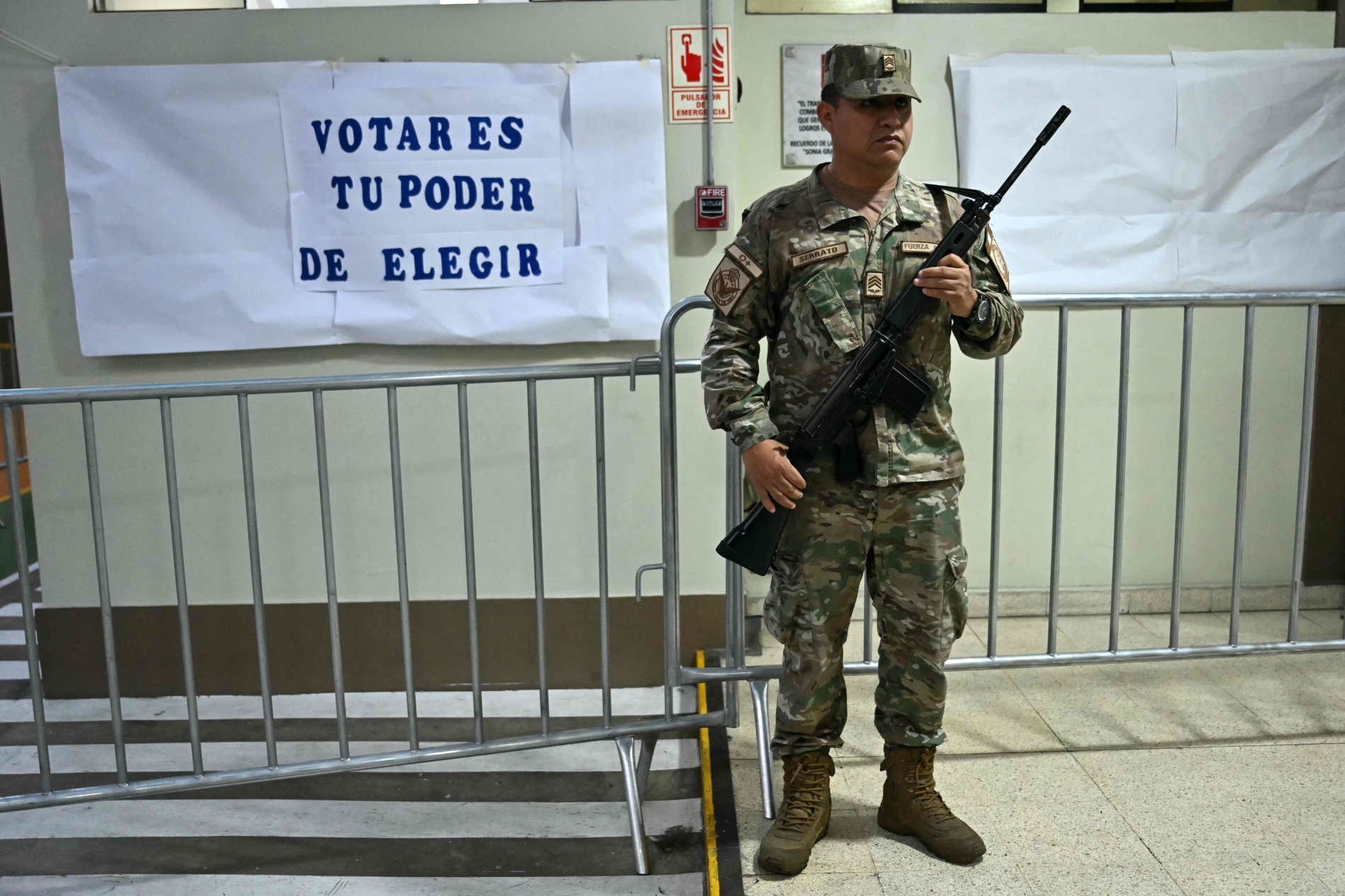
A Peruvian soldier stands guard before the opening of polls during the presidential election runoff at a polling station in Lima on 7 June 2026.

The limits of insulation 

This shield is real, even if it should not be confused with broader institutional strength. Macroeconomic credibility can coexist with weak representation, social anger, and uneven state capacity. Peru's stability is narrow because it is strongest where democratic input is weakest. The central bank, fiscal authorities, and economic bureaucracy can reassure investors, contain inflation, and sustain external confidence. They cannot rebuild parties, reduce distrust, govern neglected regions, or persuade citizens that elections produce meaningful representation. The more the economy is insulated from politics, the more visible the weakness of politics becomes.

Nor is this insulation cost-free. Recent research on economic policy uncertainty in Peru shows that political instability and legal insecurity have increased since 2016. Uncertainty rises around political transitions, elections, institutional conflict, and crisis episodes. It also has measurable economic effects, including weaker output, currency depreciation, and lower domestic short-term interest rates. Peru has so far absorbed political shocks with unusual resilience. Absorption, however, is not immunity, since stability can bend for a long time before it begins to fracture.

The normalisation of a state divided between a disciplined economic core and a discredited representative shell is dangerous.

Fujimori inherits a country whose macroeconomic performance appears stronger than its political disorder would suggest, even as its democratic foundations look weaker than its economic indicators allow. The danger is not immediate economic collapse. It is the normalisation of a state divided between a disciplined economic core and a discredited representative shell. That divide can preserve confidence for a time, perhaps even for years, yet it cannot substitute for legitimacy indefinitely.

Peru's paradox, therefore, offers a wider warning. Economic institutions can retain authority amid political disorder, even when they lack the capacity to repair the surrounding system. Technocratic resilience can buy time, anchor expectations, and prevent a crisis from becoming a collapse. It cannot create parties, restore trust, or turn a narrow electoral victory into a national mandate. Peru still functions, which makes its unresolved dilemma all the more urgent: how long can a country rely on economic credibility as its democratic authority grows thinner with every election?

font change