The problem with the 'Axis of Resistance' narrative on Palestinehttps://en.majalla.com/node/331597/politics/problem-axis-resistance-narrative-palestine
The term ‘Axis of Defiance’ was once associated with a number of Arab states opposed to any peace agreement with Israel, particularly after the defeat of 1967. However, as political alignments evolved, the concept gradually transformed. Over time, its meaning progressively narrowed to the ‘Axis of Resistance’, a phrase linked, in media discourse, to Iran and its regional proxies.
According to the literature of those affiliated with it, this axis is united in its military struggle against Israel, its confrontation with the US, and its efforts to limit American influence in the region. The concept rests on two principal aims: unity around shared regional objectives and enhanced mutual support among the armed groups that belong to the axis, whose military capabilities Iran has sought to strengthen through the Quds Force, a branch of Iran’s Islamic Revolutionary Guard Corps.
By contrast, the US State Department and the government of Israel have applied the term' Axis of Evil’ to Iran and its proxies, as well as to Iraq and Syria under their former regimes and to a number of other states, including North Korea, that have been characterised by their opposition to the US.
The term ‘Axis of Moderation’ also entered political discourse to denote various Arab and Islamic states that refrained from direct confrontation with Israel following the 2006 Lebanon War. These nations saw no obstacle to developing political and economic relations with the West, particularly the US and several European countries.
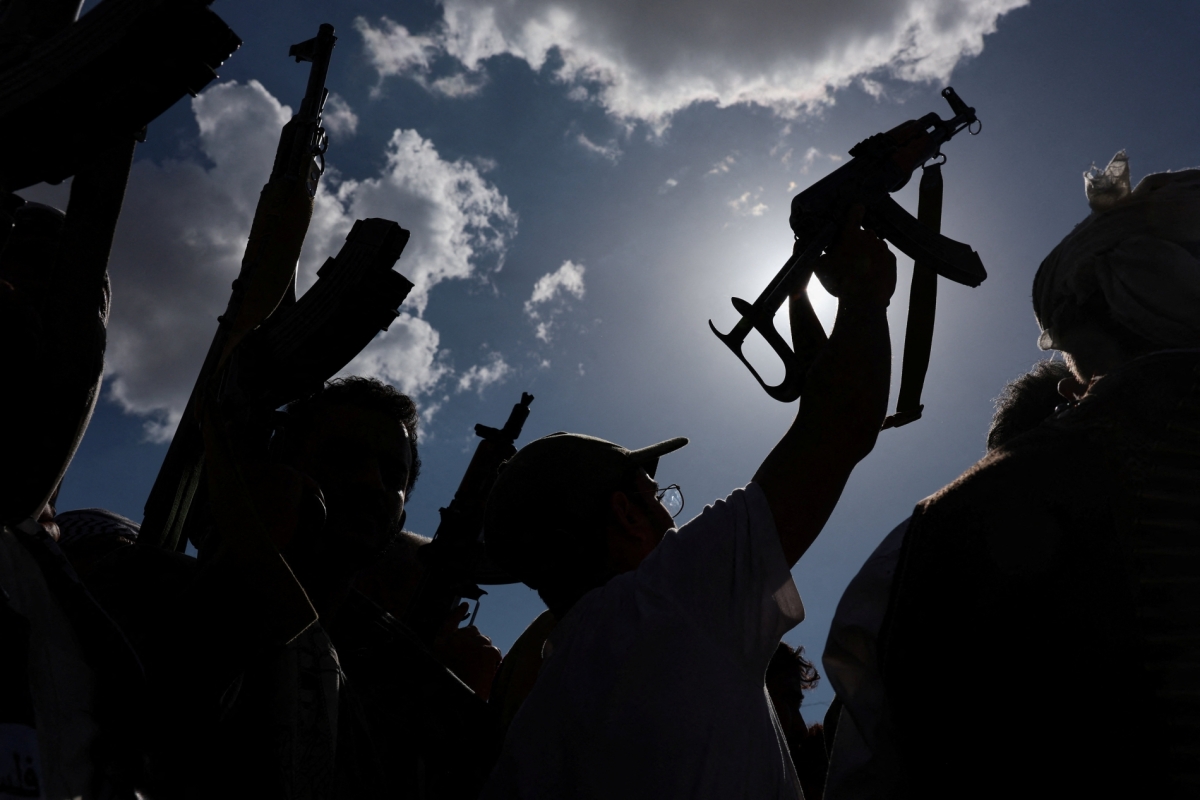
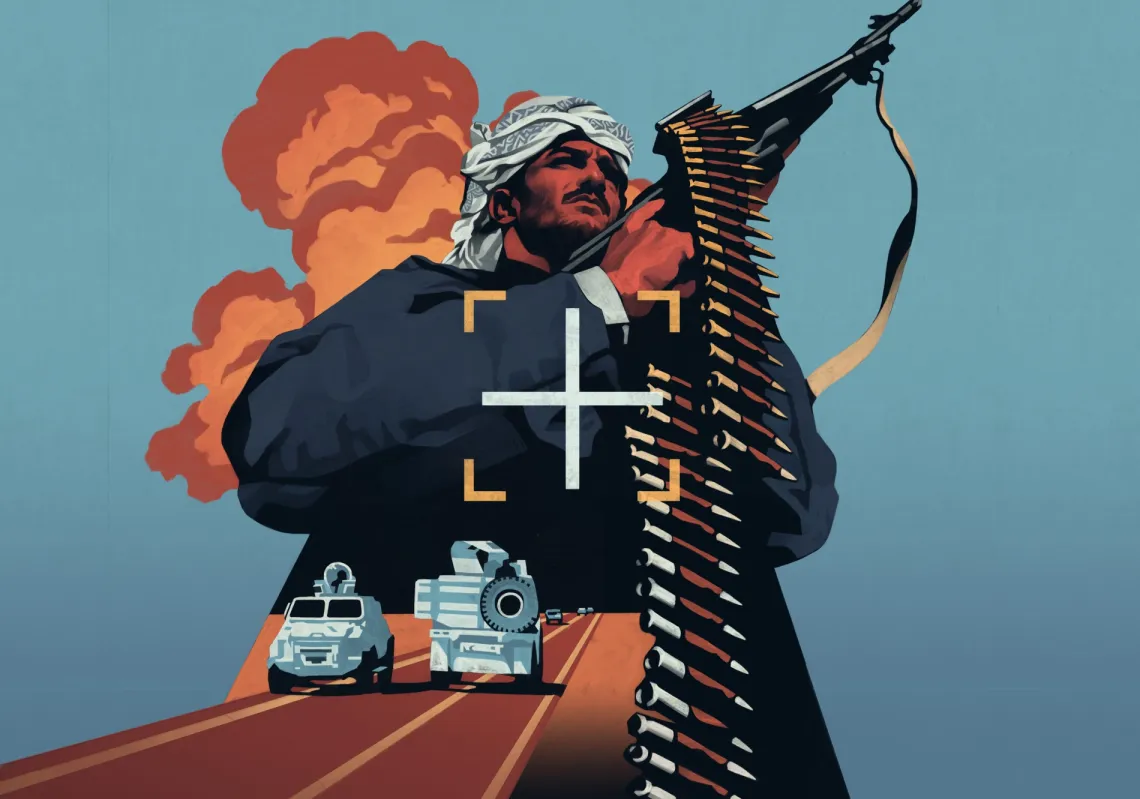
Thus, a distorted image took shape in the Arab imagination. Confrontation with Israel came to be regarded as the exclusive preserve of the Axis of Resistance, which encompasses a number of armed groups operating outside the framework of the state. These include Hezbollah in Lebanon, Ansar Allah (the Houthis) in Yemen, factions of the Popular Mobilisation Forces in Iraq, and Hamas and Islamic Jihad in Gaza.
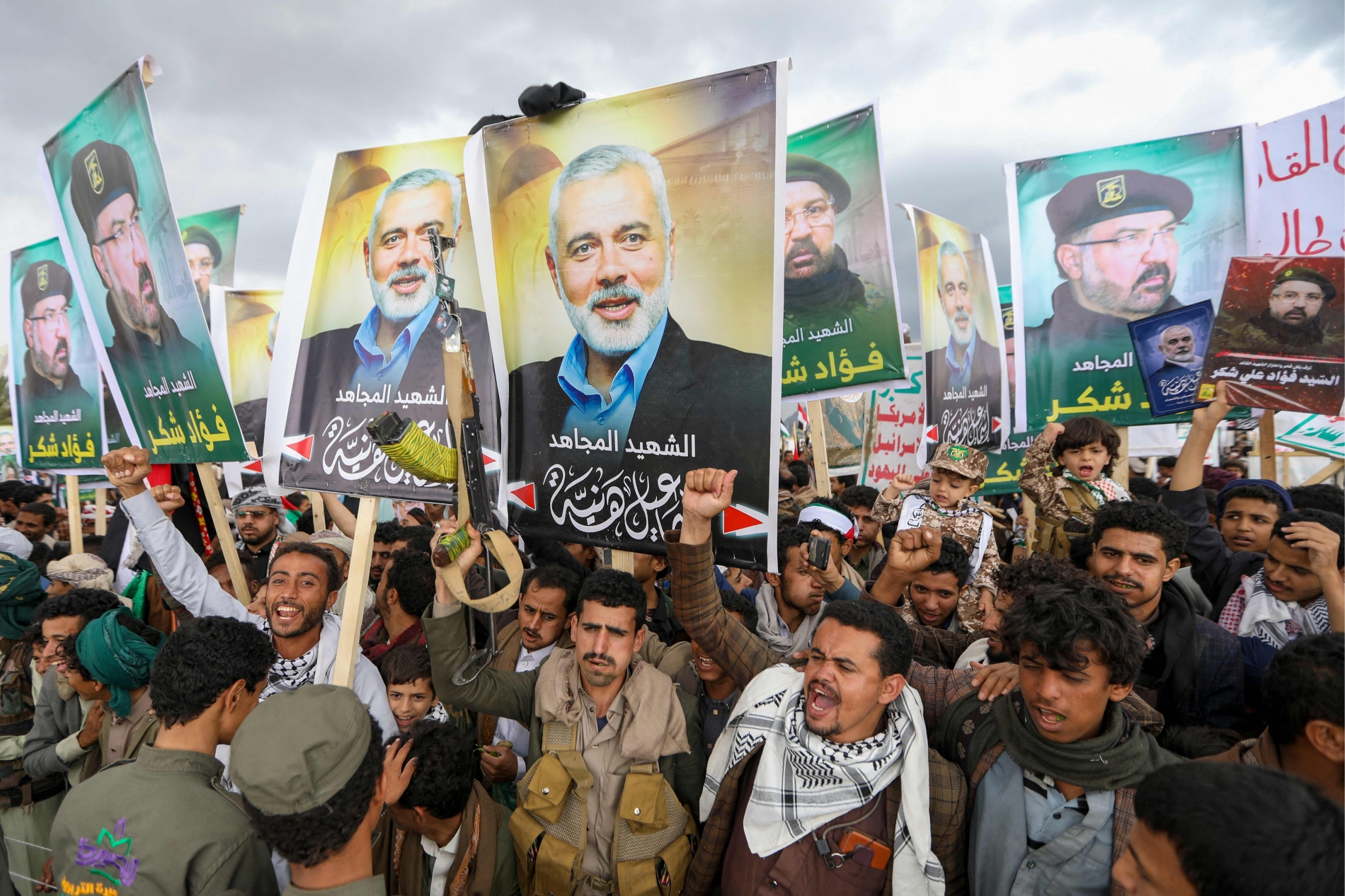
Yemenis wave flags and lift placards of Hezbollah senior commander Fuad Shukr, who was killed in an Israeli strike, and slain Hamas chief Ismail Haniyeh, during a rally in the Houthi-controlled capital Sanaa on 2 August 2024
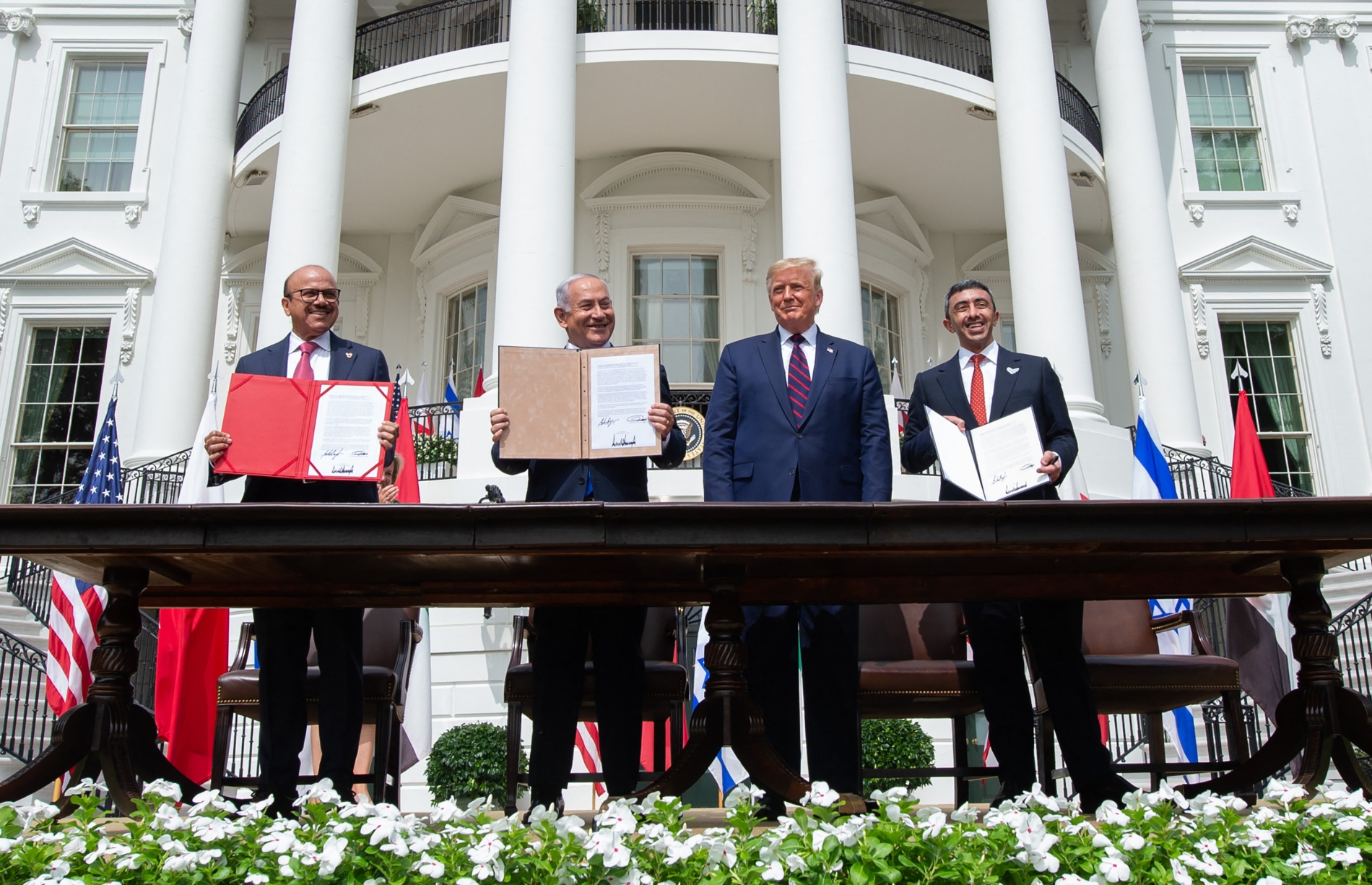
In contrast, the remaining Arab states were portrayed as conciliatory toward Israel and submissive to the Western order, particularly those that had concluded peace agreements with Israel. It is important to distinguish between Egypt, Jordan, and the Palestine Liberation Organisation, which signed peace agreements for compelling political reasons shaped by the circumstances of the time—before the Arab states adopted the Arab Peace Initiative in 2002—and the UAE, Bahrain, and Morocco, which later normalised relations with Israel through the Abraham Accords in 2020.
Serious error
In truth, reducing the concept of ‘resistance’ to Iran and its armed proxies, while marginalising the positions of various Arab states on the nature of the conflict with Israel, is a serious error. This is particularly evident in the case of the Taliban, which fought a prolonged war against the US in Afghanistan yet was never incorporated into Iran’s so-called Axis of Resistance, despite periods of pragmatic engagement between Tehran and the movement. It may therefore be argued that Iran fashioned the concept of the Axis of Resistance within an ideologised political framework to pursue its own strategic interests.
It has become necessary to liberate the concept of resistance from its narrow confinement, and to affirm that resistance is a legitimate right belonging to all
Hezbollah Secretary-General Hassan Nasrallah subsequently popularised the term in speeches that resonated with audiences across the Arab world, particularly during the 2006 Lebanon War. In this way, Iran succeeded in reshaping the prevailing narrative: moderation came to be equated with appeasement, and both terms were stripped of their conventional positive connotations and recast in a pejorative sense associated with relations with Israel and the West. This outcome served the interests of both Iran and Israel. Here, their interests converge, as each benefits from a political landscape in which control over the Arab Levant is increasingly concentrated in its own hands.
In light of this, it has become necessary to set the record straight, to liberate the concept of resistance from its narrow confinement, and to affirm that resistance is a legitimate right belonging to all. It is a right that may be exercised through a variety of means, and no one has the authority to confine it to a single method or prescribed mode. Nor is it appropriate to expand its geographic scope in accordance with the Iranian state's vision, which has broadened the concept to include the US as a target of resistance, reflecting the enduring conflict between Tehran and Washington since 1979. As a result, the concept has been drawn into a broader geopolitical struggle that extends beyond its original context and purpose.
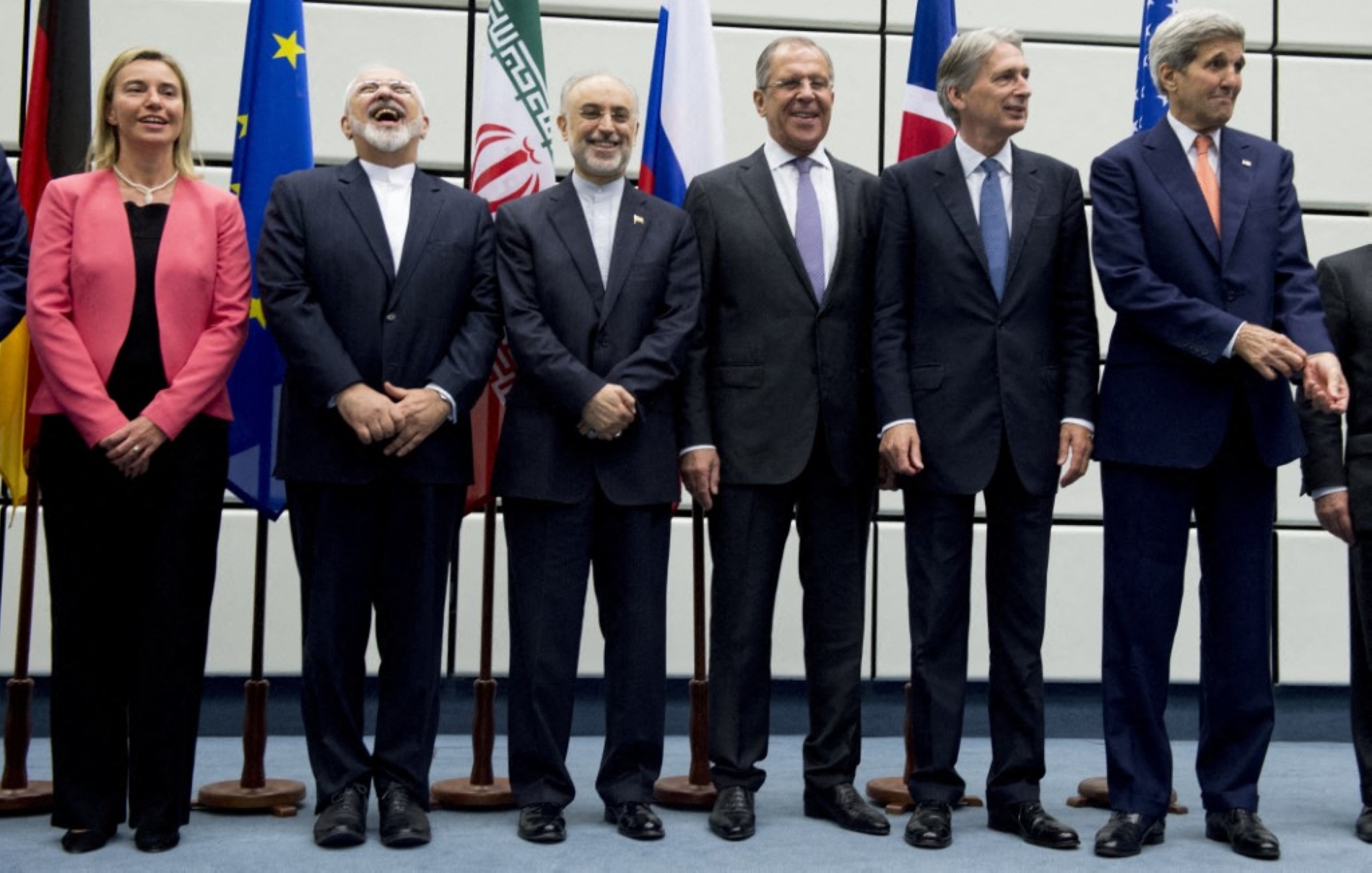
Foreign ministers of Iran, the US, the UK, the EU, and Russia pose for a group picture in Vienna, Austria, on 14 July 2015, after reaching the JCPOA nuclear deal that capped more than a decade of on-and-off negotiations.
The conflict with the US is ultimately Iran's own, not that of the wider Arab world. Should Washington one day ease its demands and reach an accommodation with Tehran, the Islamic Republic may well establish friendly relations with the US. In such a scenario, its political rhetoric would likely soften, and the US could cease to be cast as the 'Great Satan'. Palestine, however, is unlikely to occupy the same place in any future Iranian-Western political dialogue, as its significance has often been tied to the broader strategic contest between Tehran and Washington.
Indeed, it carries little such resonance today, as negotiations proceed with the US over regional conflicts involving Iran and Hezbollah, with scant mention of Gaza or the future of Hamas. For this reason, should Iran eventually reach a broader political accommodation with the US, it may also seek an accommodation with Israel. Such a settlement would likely be framed as a single-state encompassing Palestinians and Israelis, rather than the traditional two-state solution. This is an approach that a number of senior Iranian politicians have at times endorsed.
The question, then, is this: after all that, can resistance legitimately be reduced to a single axis, while all others are dismissed as proponents of appeasement simply because they have adopted a more moderate course?
The concept of resistance has never been the monopoly of any single party. Rather, it is a shared endeavour, expressed according to different capacities and means. Nor can it be confined to its military dimension alone. Resistance extends across the political, economic, social, and cultural spheres, the latter two of which may be among its most significant forms, despite often being overlooked.
The clearest evidence of this lies in Egyptian society's resistance to Israeli normalisation, despite the 1979 peace treaty between the Egyptian and Israeli governments. The same may be said of Jordanian society and, before both, of the Palestinian people under occupation, who continue to confront the occupation through their steadfastness and determination to remain on their land.
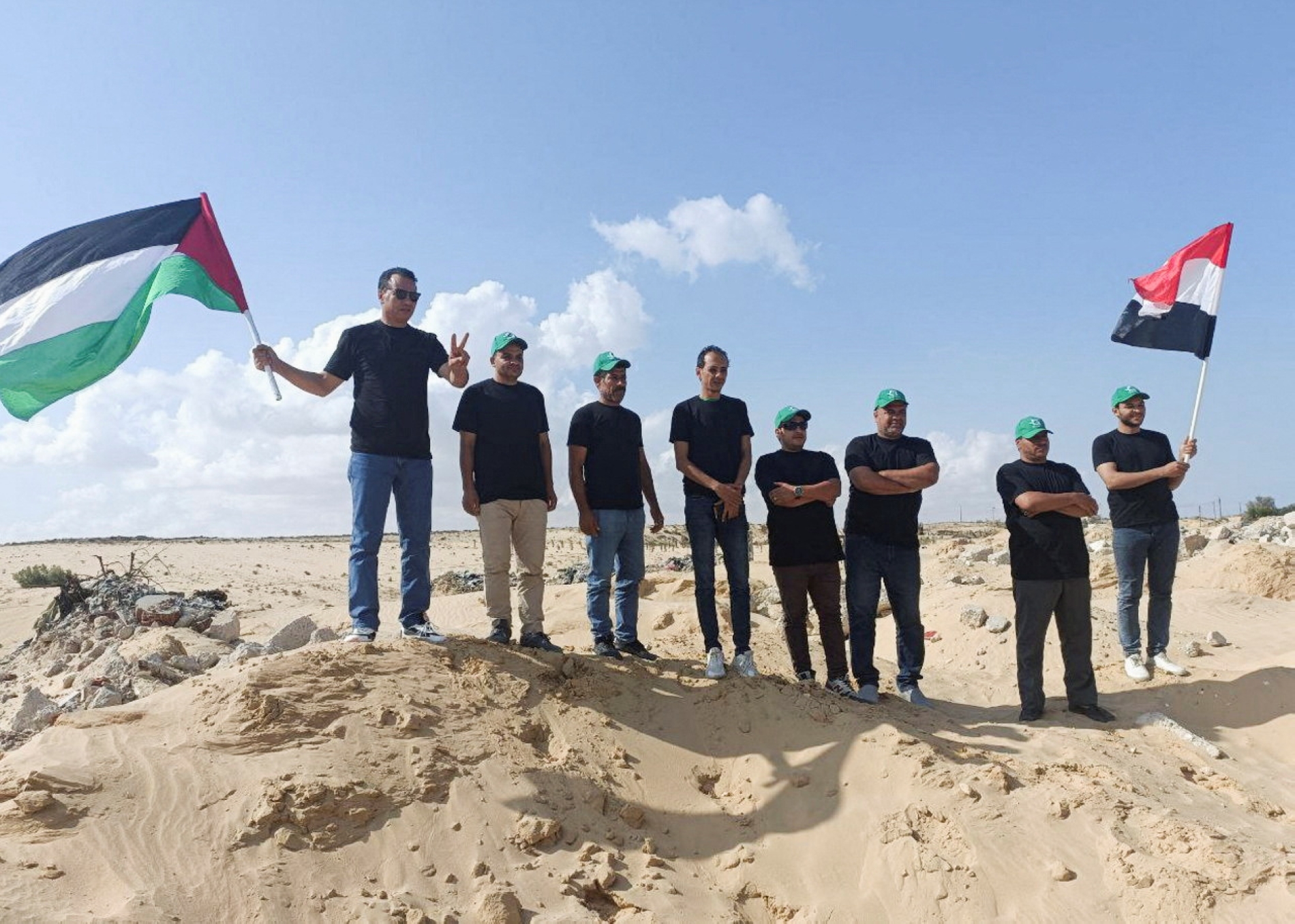
Egyptian volunteers gather while holding the Egyptian and Palestinian flags in front of the Rafah crossing, after an Israeli strike on a hospital in Gaza on 17 October.
A different form of resistance
On the political and economic levels, Saudi Arabia has led, and continues to lead, a different form of resistance—one pursued without clamour or fanfare and without reliance on political or armed non-state actors operating beyond the authority of the law. Through its diplomatic initiatives and official positions, it has consistently demonstrated a firm and resolute stance.
This is evident in its categorical rejection of peace with Israel despite sustained international pressure, particularly from the US. It has remained steadfast in its position that any lasting settlement must be based on a two-state solution, the achievement of a just and comprehensive peace, the fulfilment of the legitimate rights of the Palestinian people, and an end to the flagrant assault on Palestinians in Gaza and the West Bank.
Support for the Palestinian cause has remained one of the principal constants of Saudi policy from the era of King Abdulaziz to the reign of King Salman bin Abdulaziz. This continuity was underscored by King Salman's decision to rename the 29th Arab Summit, held in Dhahran in April 2018, the 'Jerusalem Summit'. In his opening address, he declared: "Let those near and far know that Palestine and its people live in the conscience of Arabs and Muslims."
Today, Saudi diplomacy operates on several fronts. Riyadh continues to engage with international powers to reaffirm its condemnation of the crimes committed by the Israeli government. At the same time, it calls on the international community to adopt just solutions that guarantee the Palestinian people their legitimate rights, foremost among them the right to establish an independent state with East Jerusalem as its capital.
This position has been articulated by Saudi Crown Prince Mohammed bin Salman in numerous speeches and international forums. He was also firm in rejecting the 'Deal of the Century' in 2019 and, in parallel, led a significant international effort to revive the two-state solution. Later, when the Abraham Accords were proposed, he repeatedly made clear that there would be no relations with Israel unless an independent Palestinian state based on the 1967 borders was recognised.
(L-R)Bahrain Foreign Minister Abdullatif al-Zayani, Israeli Prime Minister Benjamin Netanyahu, US President Donald Trump, and UAE Foreign Minister Abdullah bin Zayed Al-Nahyan after signing the Abraham Accords on 15 September 2020.
Palestinian statehood initiative
To achieve this objective, Saudi Arabia launched the International Alliance to Implement the Two-State Solution on 27 September 2024 on the sidelines of the 79th session of the United Nations General Assembly in New York. The country's intensive diplomatic efforts continued throughout 2025 and culminated in September of that year, when the UN General Assembly endorsed the New York Declaration on the Peaceful Settlement of the Question of Palestine and the Implementation of the Two-State Solution. The declaration was a Saudi and French-backed initiative aimed at advancing a credible pathway toward Palestinian statehood and a negotiated peace settlement.
This firm Saudi course has not been recognised in hostile media discourse as a form of resistance. For this reason, it has become necessary to reclaim the concept and restore its broader meaning. The concept of the Axis of Resistance has been reduced in a flawed and restrictive manner, narrowing a far wider concept and casting those outside its orbit as weak, passive, or guilty of appeasement.
Political developments have also demonstrated that resistance, in both its essence and practice, has never been confined to the Iranian camp, nor to other Arab-Islamic nationalist fronts or jihadist movements, some of which have inflicted considerable harm on themselves and others. Rather, it is a broad and inclusive concept that encompasses a wide range of actors across the Arab and Islamic worlds, even when they differ in method and approach.
It is therefore important to begin correcting this distortion, so that we, as an Arab and Islamic community, do not sink further into the darkness of mutual recrimination or the manipulation of political consciousness practised by Iran and its proxies in pursuit of political and ideological objectives that run counter to the broader interests of Arab and Islamic states.