Egypt's participation in Gaza stabilisation force comes with risk

While the decision to contribute forces to the ISF sends a strong signal about its commitment to stability, there are also huge challenges

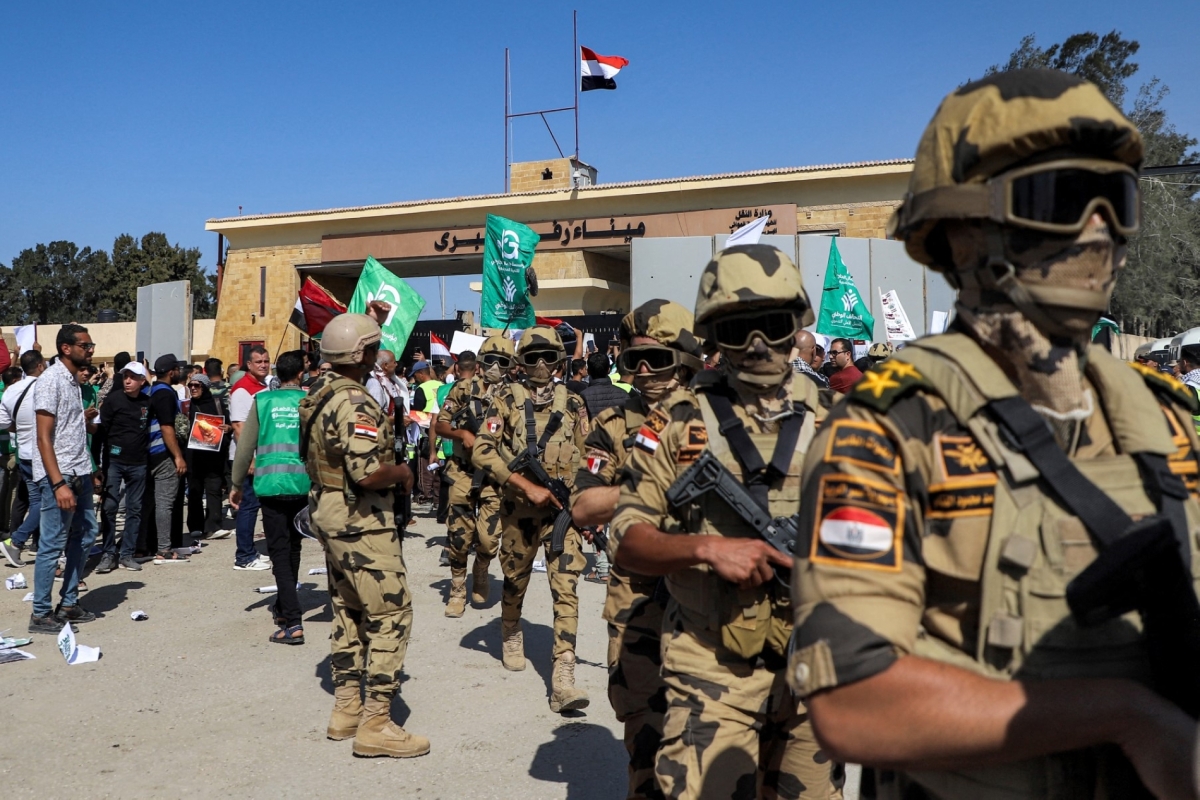
Egyptian army special forces soldiers deploy near the gate of the Egyptian side of the Rafah border crossing with the Gaza Strip in eastern North Sinai province on 20 October 2023.
KEROLOS SALAH / AFP
Egyptian army special forces soldiers deploy near the gate of the Egyptian side of the Rafah border crossing with the Gaza Strip in eastern North Sinai province on 20 October 2023.

Egypt's participation in Gaza stabilisation force comes with risk

Egypt has committed troops to the International Stabilisation Force (ISF) for Gaza, putting itself at the centre of the post-war order in the war-torn Strip. While the decision sends a strong signal about Cairo's commitment to security and stability, it forces Egypt to walk a fine line between protecting its national security and being drawn into an unpredictable conflict.

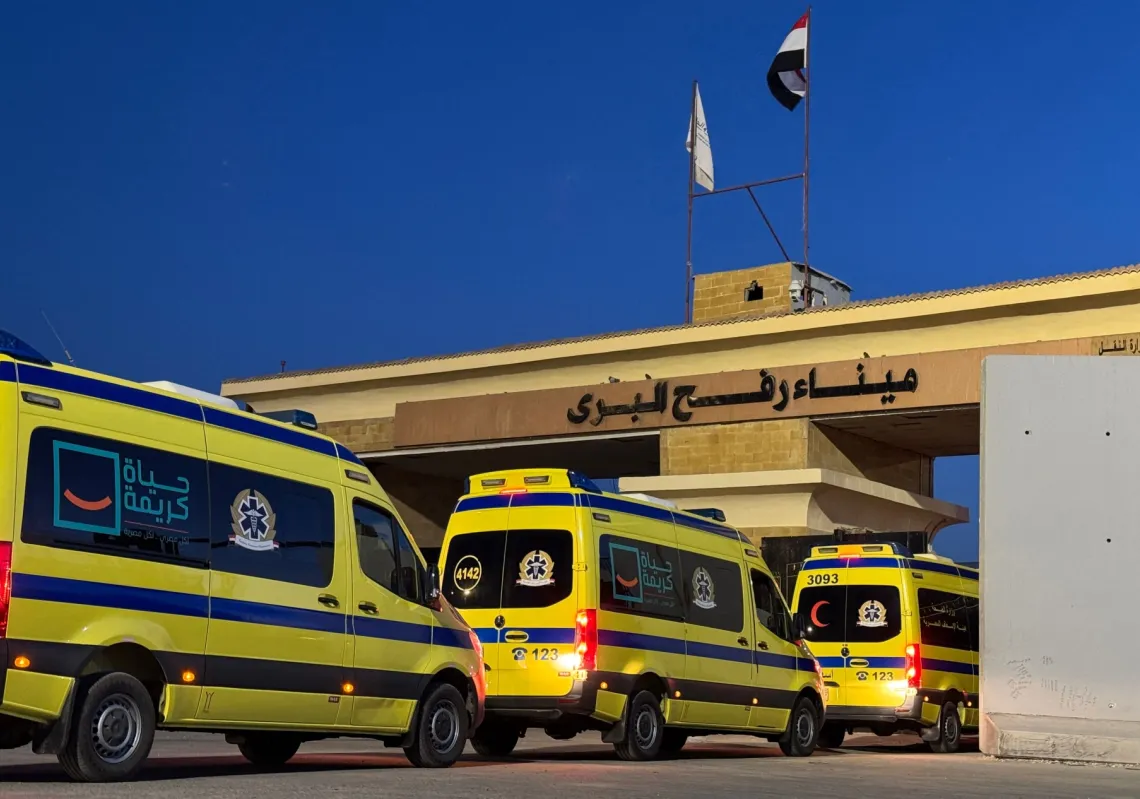
Cairo has helped plan the ISF from the beginning, reportedly establishing a command centre for it in al-Arish, the provincial capital of North Sinai, only a few kilometres from Gaza’s border. Al-Arish is home to a major logistics hub where humanitarian aid arrives from donor nations before being sent to Gaza. An ISF site and a logistics hub would make al-Arish a nerve centre for post-war Gaza stabilisation and rehabilitation. Egypt is also training hundreds of Palestinian security personnel before their deployment to Gaza.

Cairo has always insisted that the ISF be authorised by the United Nations Security Council. This materialised in November 2025, a month after the Gaza ceasefire plan was declared in Egypt’s Red Sea resort of Sharm el-Sheikh. The ISF’s mission is to provide security and advance the Gaza ceasefire towards a permanent calm, but Egyptian policymakers worry that an international force, once established in the strip, could veer away from its original aims.

The ISF is still being put together. So far, five nations—including Indonesia and Morocco—have committed troops. The size of Egypt’s contribution to the force or its deployment locations are not yet known, and there has been no announcement as to who will command it. Egypt may be given command, owing to its proximity to Gaza and its aspired role in post-war stabilisation and reconstruction, but that remains to be determined.

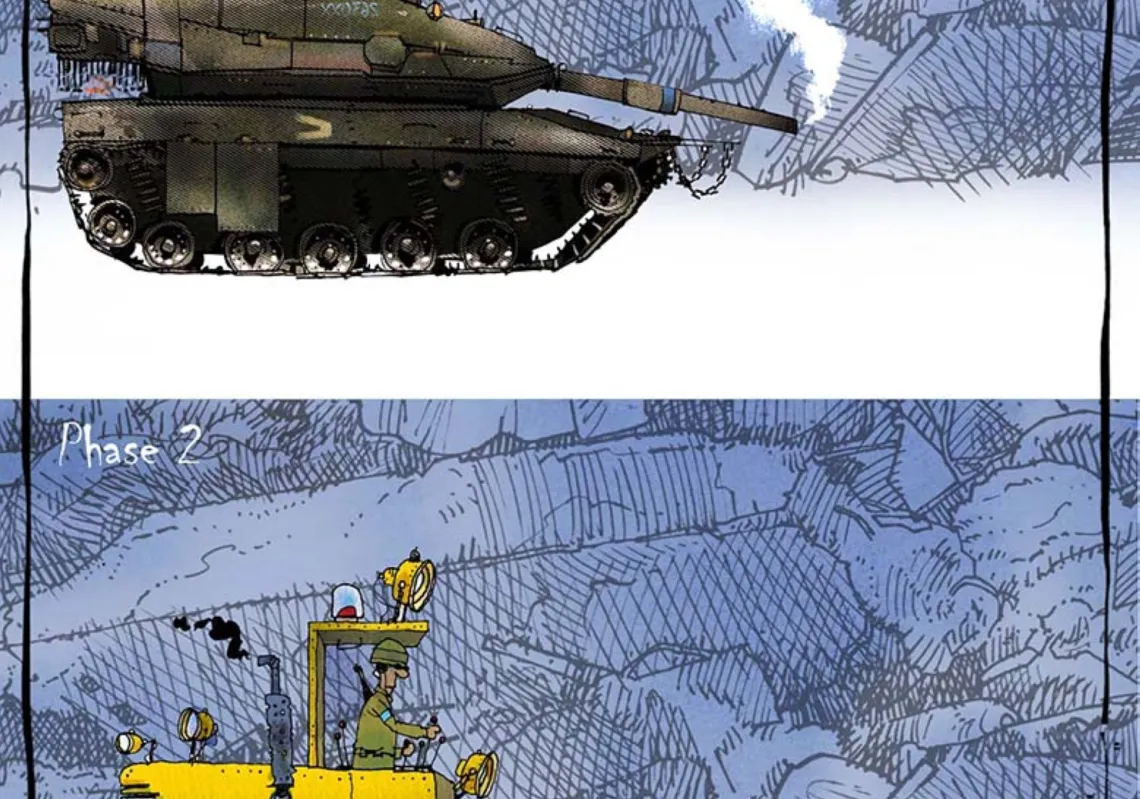
Deployment is part of Phase II of the Gaza ceasefire plan, which officially started in January. Gaza’s population of more than two million eagerly awaits the ISF, in part to facilitate the entry of more humanitarian aid into the hunger-stricken territory. Most importantly, they hope the ISF will end the conditions of war and restore a sense of calm. The 2025 ceasefire plan did not do so, with Israeli forces continuing to strike different parts of Gaza, taking the death toll beyond 73,000 since October 2023.
Mahmud HAMS / AFP
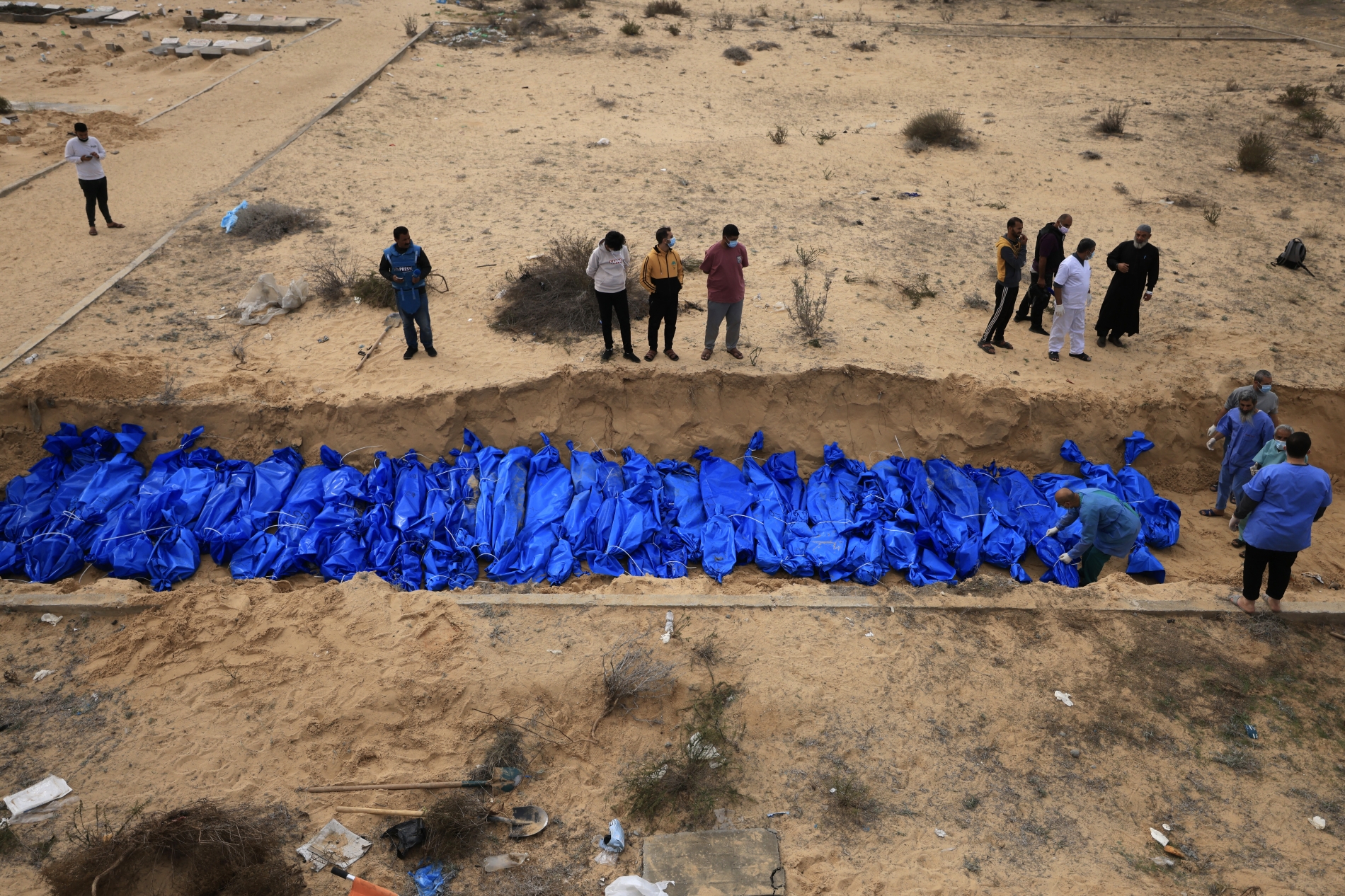
Murdered Palestinians are buried in a mass grave in Khan Yunis cemetery, in the southern Gaza Strip, on 22 November 2023, in the early months of Israel's war on Gaza.

Preventive measure

It is hoped that the presence of international troops will end Israeli strikes in Gaza or bring them down to a minimum, depending on the scope of the ISF deployment, which has the support of US President Donald Trump, the main sponsor of Gaza’s 20-point ceasefire plan.

Egypt has a long record of support for the Palestinian cause, mediating between Palestinian factions and between the Palestinians and Israel, so the country’s choice as force commander may nullify any incitement against it by those who want to derail the ceasefire plan. Egypt is always reluctant when asked to dispatch its troops beyond its borders, but by committing troops to the ISF, Cairo acknowledges the importance of Gaza’s stability, not least for its own national security.
It is unlikely that Egyptian forces will be tasked with forcibly disarming the myriad fighter groups in Gaza

One of Egypt's red lines since October 2023 has been mass Palestinian displacement into the Sinai, as had been Israel's preference. For Cairo, such a move would have risked the 1979 Egypt-Israel peace treaty. Another red line was President Trump's stated aim to turn Gaza into "a Middle East Riviera". 

Huge challenges

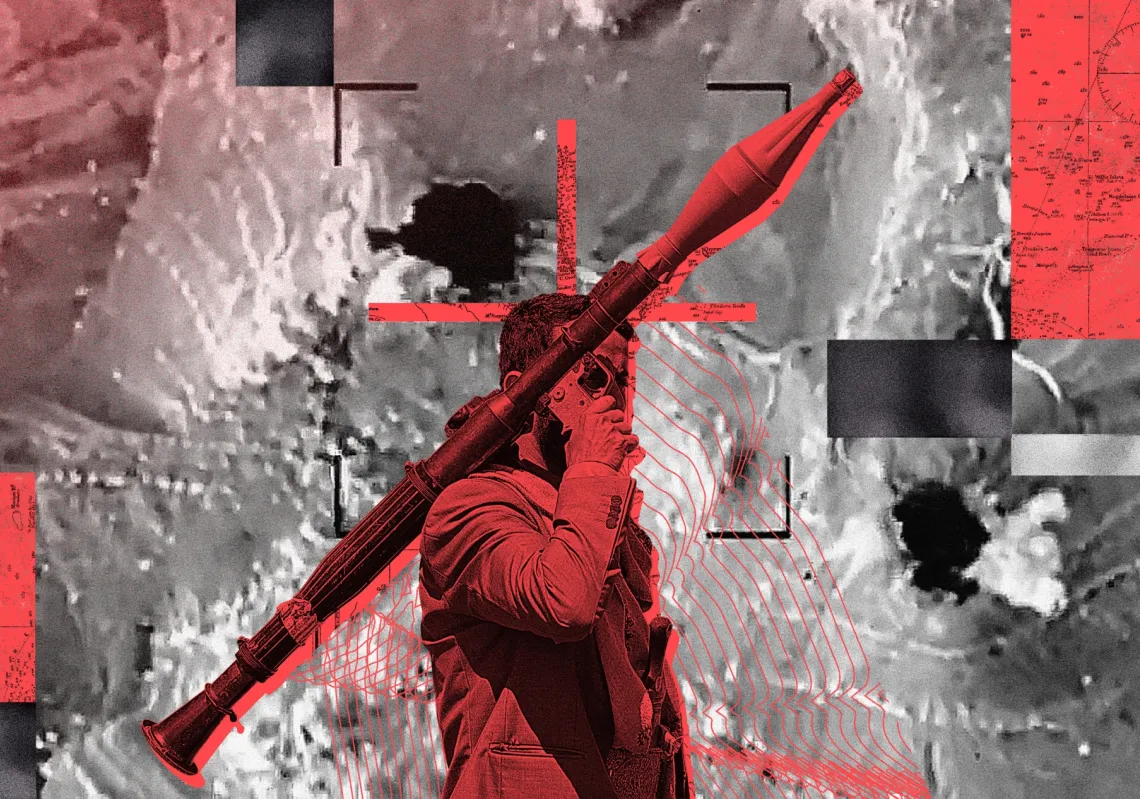
There will be huge challenges to move Gaza away from war. The ISF will be responsible for supporting Gaza's demilitarisation. If Gaza's armed factions refuse to disarm voluntarily, it is unlikely that Egyptian forces will be ordered to forcibly disarm them. This would turn the ISF into a mechanism for protecting Israel and would turn Palestinian public opinion against the ISF. Besides, embroiling the ISF in the fighting would simply make Gaza less safe.

Khaled DESOUKI / AFP
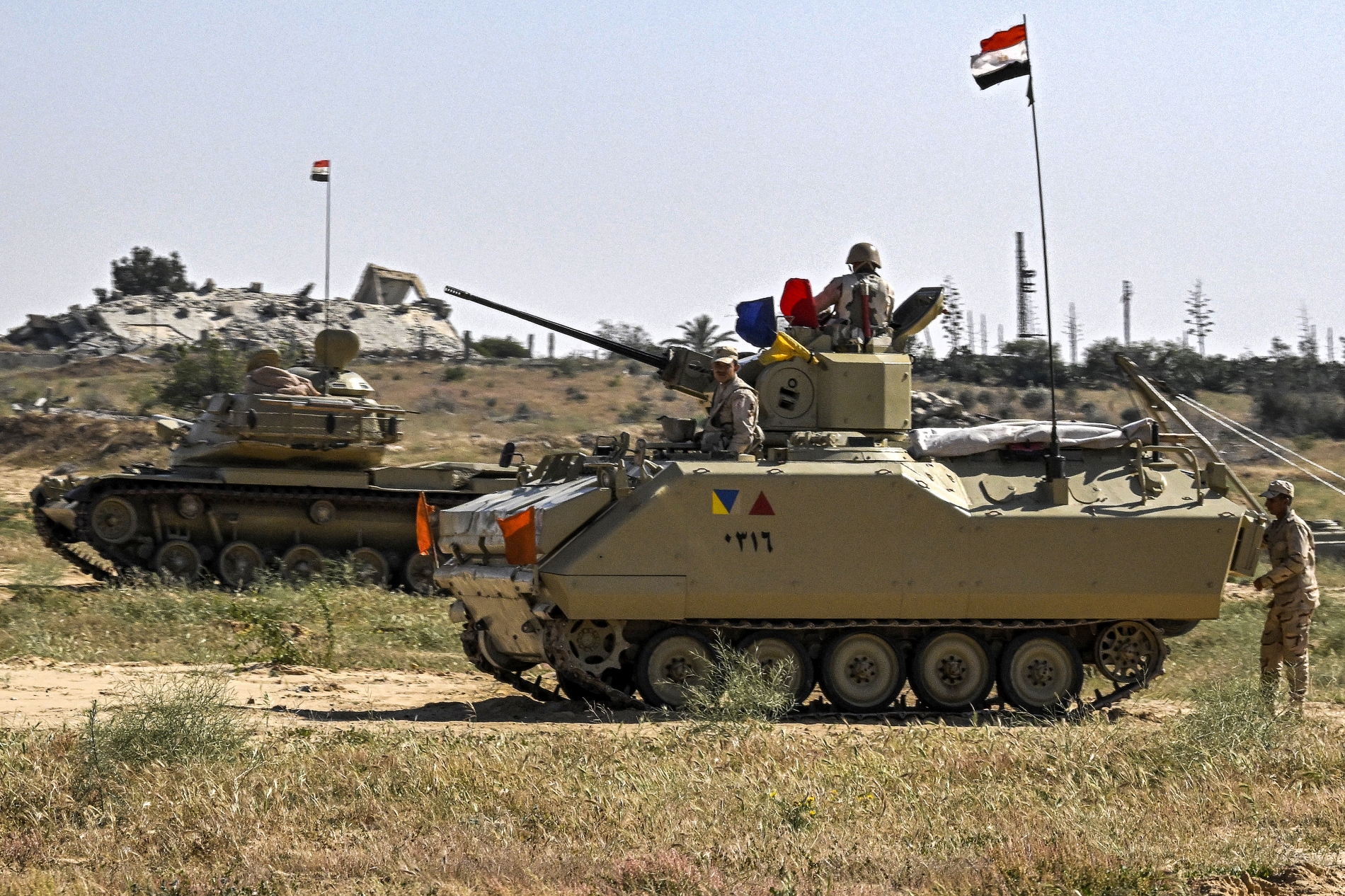
An Egyptian army M60 main battle tank and an infantry fighting vehicle (IFV) is deployed near the Egyptian side of the Rafah border crossing with the Gaza Strip on 23 March 2024.

It is far more likely that Egypt will enforce the demilitarisation provision in its own way, namely through persuasion, not coercion. It has hosted several meetings of Palestinian factions, during which they discussed their obligations to the ceasefire plan, including the requirement to lay down their arms. The same factions last met in Cairo on 7 June, three days after the Board of Peace (the Trump-headed body overseeing the implementation of the Gaza ceasefire) declared that Egypt had committed troops to the ISF.

The 7 June meeting of Palestinian factions in Cairo made no progress on disarmament. Hamas, which reportedly still has around 8,000 fighters, refuses to disarm, citing Israel's continued occupation of more than 60% of Gaza. Hamas suspects that Israel will not honour its part of the ceasefire plan: withdrawing from Gaza. But Israel's pull-out is conditional on Hamas disarming, giving it an excuse to stay. This shows how Gaza's population could remain permanently stuck between Israel and Hamas. If Israel were to remain in the strip and Hamas still refused to disarm, it could paralyse the ISF and prompt its contributing states to withdraw their troops.

Given its strategic and security interests in the Palestinian territory, Egypt would be reluctant to 'leave the field', but it could not be left to bear the burden of securing Gaza alone. For a country that prefers mediation to intervention, such an eventuality could lead to one of the most consequential foreign policy choices in recent history.

font change