US partial Gaza rebuild could prove a high-stakes gamble

A move towards reconstruction and governance in areas not controlled by Hamas was not the plan but is arguably better than nothing. At least it gives Gazans some hope.

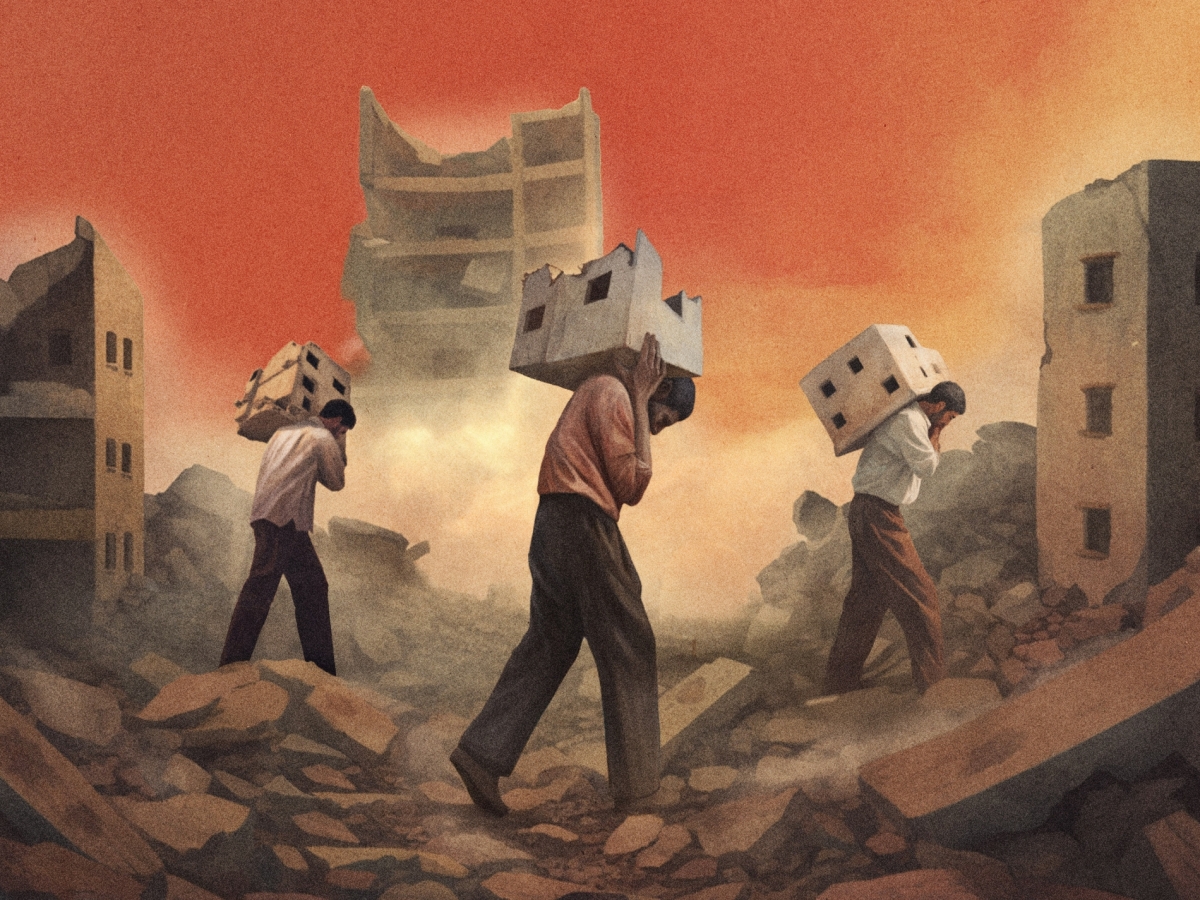
The rebuilding of Gaza looks likely to begin in a piecemeal fashion, but something is better than nothing.
Lina Jaradat
The rebuilding of Gaza looks likely to begin in a piecemeal fashion, but something is better than nothing.

US partial Gaza rebuild could prove a high-stakes gamble

Plans by the United States to press on with Gaza’s rebuilding and governance in areas not controlled by Hamas offer a glimmer of hope for the people of this war-shattered territory, even though considerable challenges lie ahead. The decision comes after the international Board of Peace, headed by US President Donald Trump, belately acknowledged that Hamas has no intention of honouring its commitment to disarm and disable its tunnel network.

The Board’s short-term plans centre on creating functioning pockets inside Gaza where a transitional civilian administration takes over, recovery efforts begin, aid flows in, and reconstruction commences. There are, however, currently questions about Egypt’s role, given that it helped broker a ceasefire and coordinated post-war recovery commitments across the region.

Cairo has hosted Board meetings, and it was in the Egyptian resort of Sharm el-Sheikh in October last year that Trump’s 20-point ceasefire plan was announced. Hamas refuses to disarm because it trusts neither the process nor Israel’s intention of meeting its own obligations under Trump’s plan.

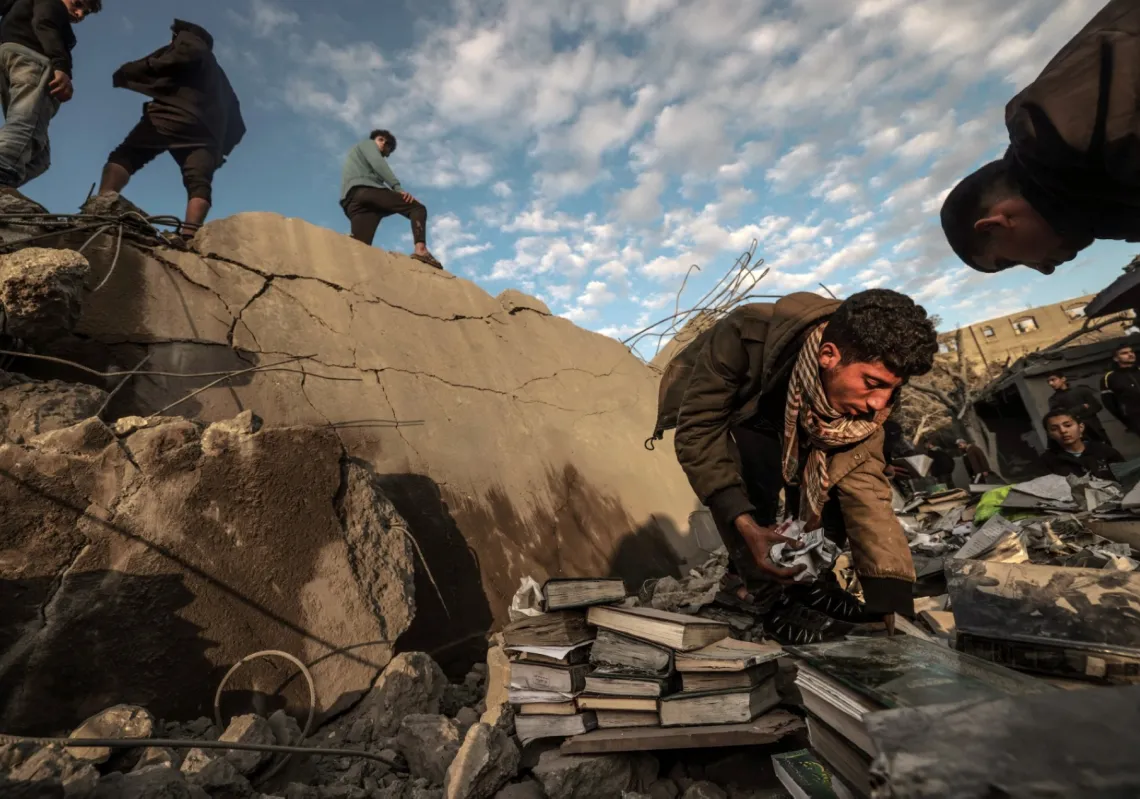
As a result, the Gaza ceasefire continues to hold on paper only. The Israeli army continues to attack different parts of Gaza, killing more Palestinians, adding to the 72,000 deaths since October 2023 while decimating whatever remains of the coastal enclave’s buildings and civilian infrastructure.
Bashar Taleb / AFP
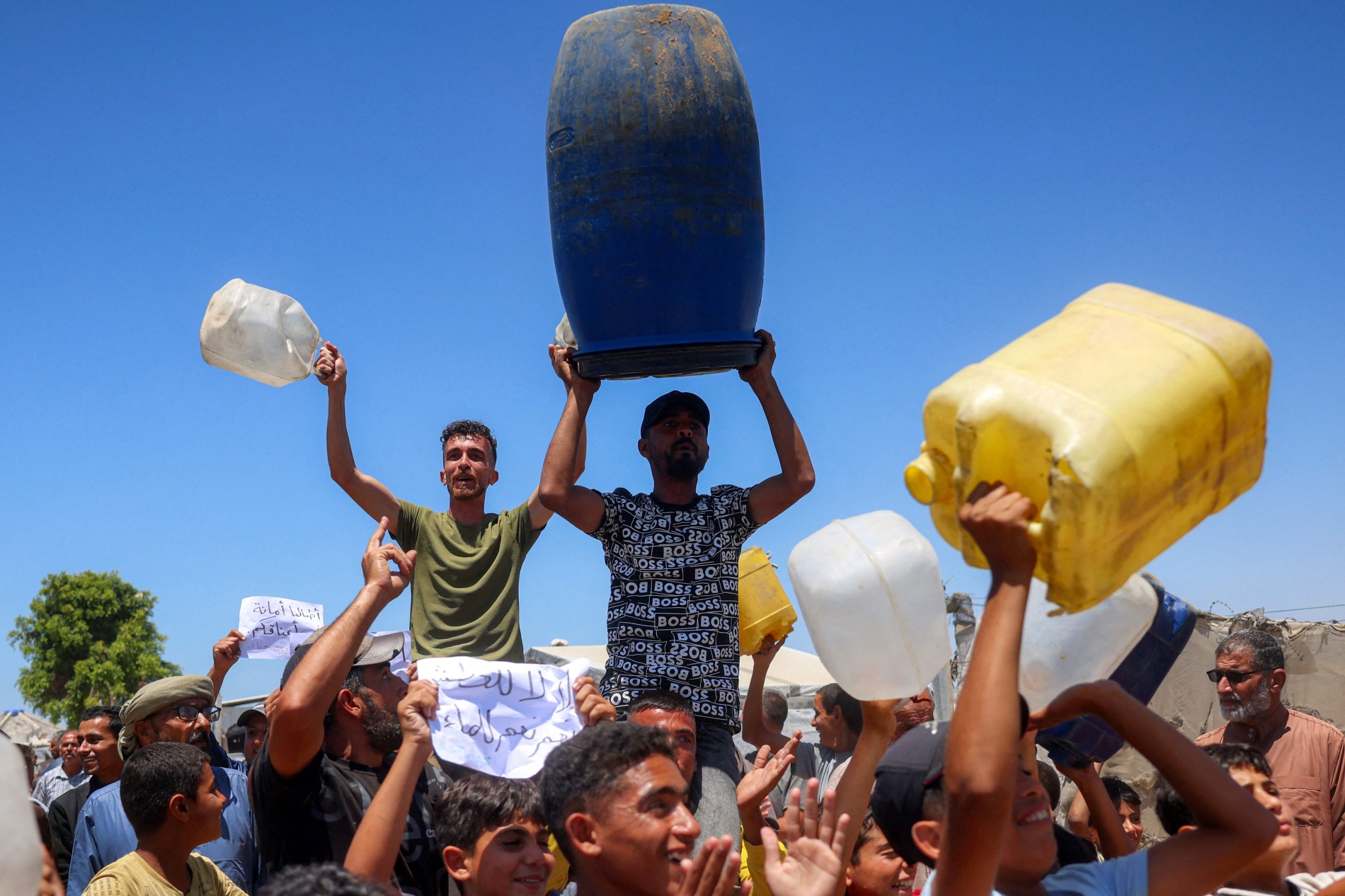
People displaced by conflict raise up water containers as they protest a severe water shortage during a demonstration in Khan Yunis in the southern Gaza Strip on 25 May 2026.

Israel continues to expand its occupation of Gaza, stretching the so-called Yellow Line, which marks the Israeli militarised zone, to include even a larger chunk of the territory. Israeli Prime Minister Benjamin Netanyahu revealed earlier in May that the army now controls more than 60% of Gaza, up from 53% of the 365-square-kilometre territory previously. This widening Israeli military footprint appears to justify some of the Hamas fears that Israel in fact aims to resettle Gaza, displacing Palestinians and turning the strip into an international resort.

Ray of hope

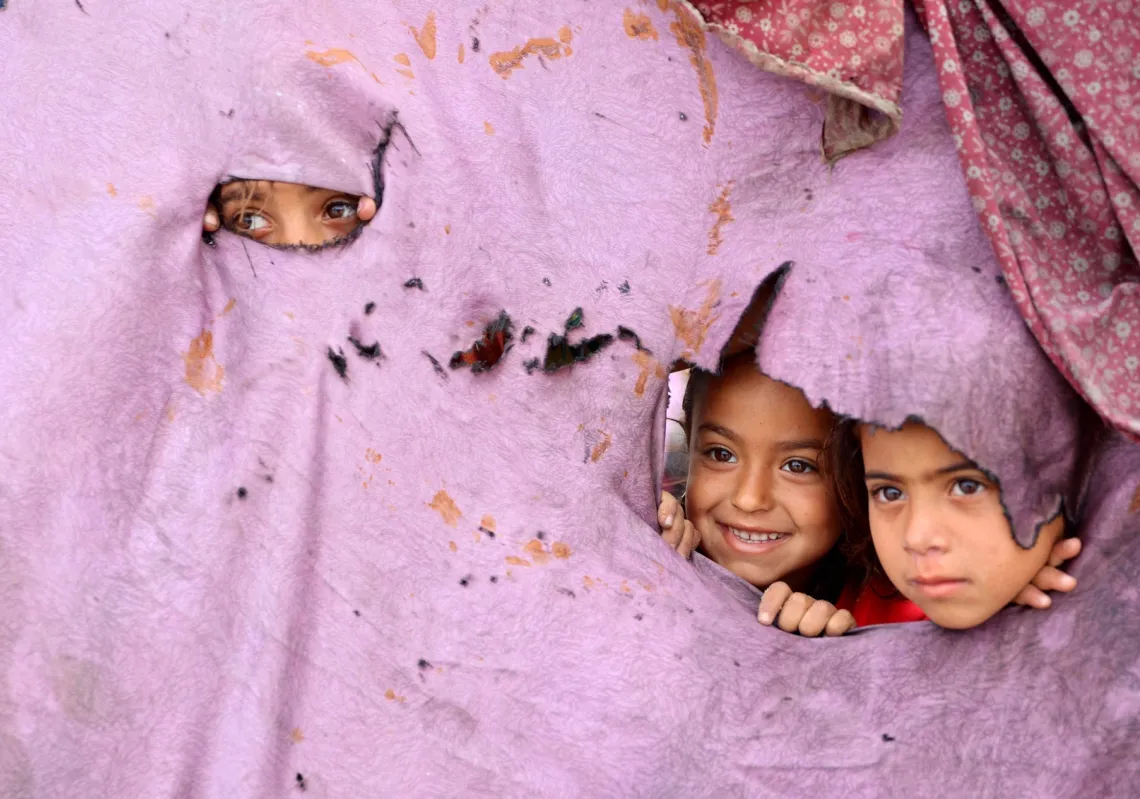
For Gaza’s population of more than two million, the ceasefire has not made life any better or easier. Although the mass killing and shelling has partially abated, life is as hard as it was during the war, with Gazans still living in tents, from where they brave the scorching heat and biting cold. Surrounded by rubble and memories, they have nowhere to go in a territory that resembles a demolition site, to use Trump’s own description, his Middle East envoy Steve Wittkoff having visited the territory in 2025.
Benjamin Netanyahu revealed in May that the Israeli army now controls more than 60% of Gaza

Humanitarian aid is entering Gaza in limited amounts, which is keeping malnutrition levels high, while the few medical facilities that continue to operate lack an endless list of basic requirements. Earlier this month, the United Nations said an expansion of the militarised area in Gaza would affect humanitarian interventions and further squeeze the population, increasing the risks posed by violence.

The UN Relief and Works Agency (UNWRA) also warned of the near collapse of Gaza's healthcare system, citing disease-carrying rodents and insects as contributing to a growing public health crisis and deteriorating living conditions. Gaza's transition into the recovery, reconstruction, and civilian governance phase offers hope to its people who simply want to live safely and peacefully. But the transformation will not happen overnight.

Pragmatic approach

Egypt has been lobbying for the implementation of subsequent phases of Trump's ceasefire plan since Phase 1 was completed on 16 October 2025. Cairo is no ally of Hamas and will likely not object to transitioning into reconstruction and governance in areas not controlled by the movement, having always favoured a Gaza administration that does not include Hamas.

The idea of a panel of nonpartisan Palestinian technocrats running Gaza (officially called the Palestinian National Committee for the Administration of Gaza) was first born in Cairo in March 2025, in response to Trump's plan to turn Gaza into a "Middle East Riviera". The panel excludes Hamas, which represents a brand of political Islam detested by Egyptian authorities.

Egypt sees Gaza's rebuilding as a national security issue, an important hedge against the displacement of the enclave's population into Sinai (the Egyptian territory that borders Gaza and Israel). Setting off reconstruction will help the Palestinian National Committee for the Administration of Gaza to relocate its operations to the strip from Cairo, allowing for a better management of the transitional phase.

Mahmoud Issa / Reuters
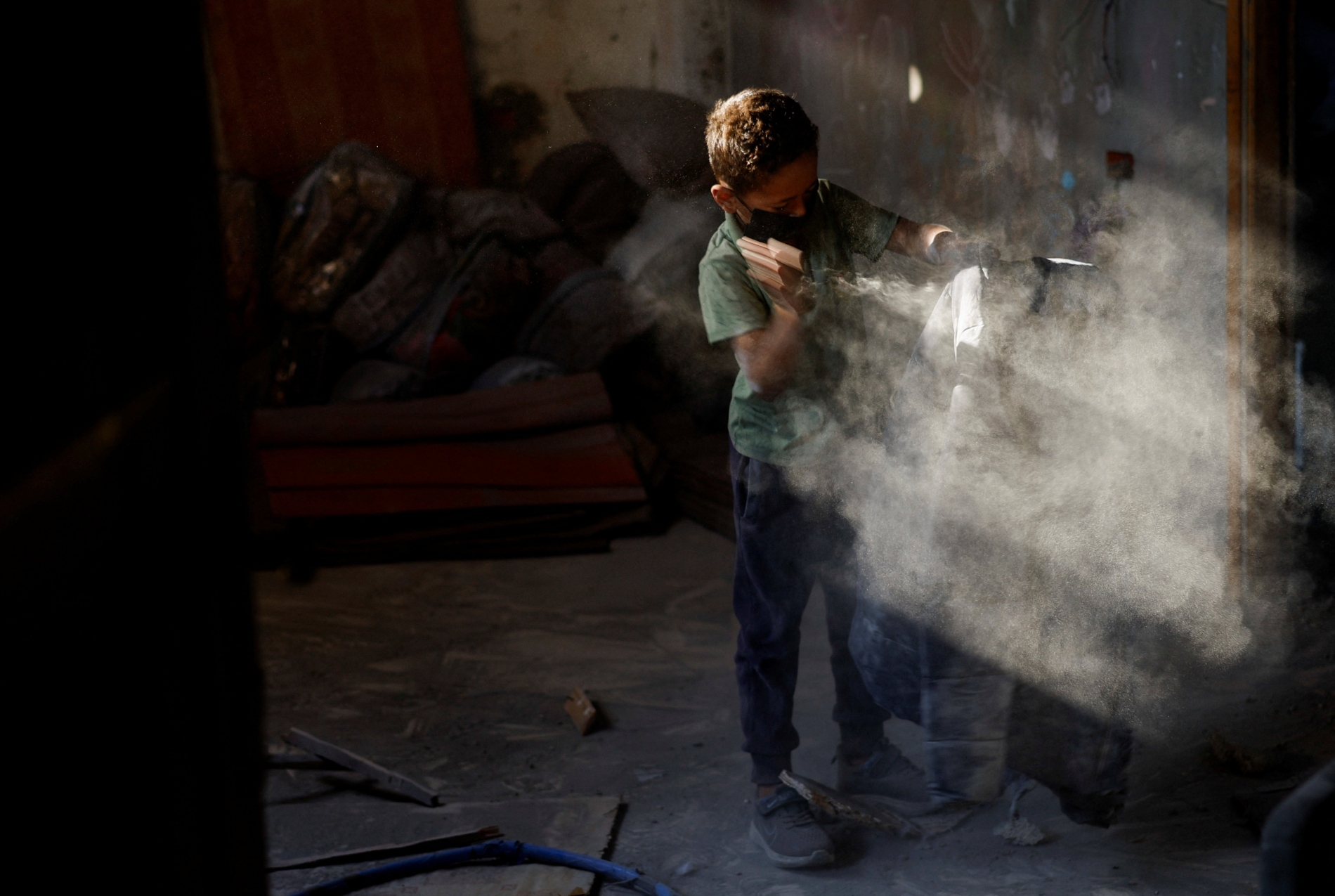
A Palestinian boy brushes dust off a jacket at the site of an Israeli strike on a house in Gaza on 24 May 2026.

Cairo is still worried about Hamas's exclusion heralding a security vacuum in Gaza and a lack of control over the territory's border with Sinai. Hundreds of Palestinian policemen are reportedly receiving training in Egypt now in preparation for deployment to Gaza to take charge of security affairs during the reconstruction phase.

Challenges remain

Reconstruction and governance in areas outside Hamas's control will be easier said than done. Areas still under Hamas control mean that movement between different areas of the territory will be curtailed, which in turn will obstruct reconstruction, the cost of which is estimated at $70bn.

On 19 February this year, nine Board of Peace member states pledged billions of dollars towards reconstruction, but only a tiny fraction of this money was sent to the Board. The US-Israeli war on Iran then dashed hopes for financing Gaza's reconstruction, given the cost of Iran's attacks and fuel export blockade on the Gulf states scheduled to provide the funds.

The war has also negatively impacted the international economy, making it less likely that other countries will donate money for rebuilding Gaza. Other donors said they would only do so if Hamas disarmed.

For Hamas, whose main leaders have all been killed, these conditions are tantamount to a death sentence. It knows that the few weapons and tunnels it has left are its last cards. Its decision to stage the 7 October 2023 attacks against Israel, inviting the war that followed, has severely dented the group's public reputation. Many see it as a miscalculation of historic proportions.

Reconstructing only parts of Gaza while reconciling with the notion that other parts remain under Hamas control will deal a painful blow to hopes of establishing unified civilian Palestinian governance in the territory and the occupied West Bank as a step towards Palestinian statehood. Despite all its benefits, Gaza's partial rebuilding carries huge risks. The Board of Peace will need to be well versed as it tiptoes in.

font change