Burnham and Streeting: possible Starmer successors?

As the walls seem to be closing in the UK premier's grip on power, these men are promising change

Burnham and Streeting: possible Starmer successors?

Events move fast in Britain nowadays. Just as I finished writing this article, Sir Keir Starmer lost one of his most important ministers. When the news came in that his Defence Secretary, John Healey, had resigned, it was clear I’d have to go back to the beginning and start again.

Soon after, Minister of State for the Armed Forces Al Carns also announced his resignation in a letter posted to X, saying that the government is “failing” to give the armed forces what they need to do the job and the “loyalty to stand by them when it’s done.”

Because the loss of Healey and Carns has brought yet more urgency to the question of how long the prime minister can survive. Last month, the loss of his Health Secretary, Wes Streeting, opened up the issue of the leadership. Now the Defence Secretary, a man known for his loyalty to previous leaders of the party, claims that he was unable to get the increase in defence spending he requested owing to the weakness of his boss: "...you have been unable, and the Treasury has been unwilling, to commit the resources that the nation needs to defend the country at this time of rising threats."

This amounts to saying that Starmer has been unable to overrule his own Chancellor, Rachel Reeves. It also strikes at the heart of the one policy area for which the PM has been given credit, even by some of his political foes: the defence of the realm. His refusal to get involved in the war on Iran and his continued support, through resolute cooperation with European partners, for Ukraine’s struggle against Russia have been rare success stories in the two years since he came to power. This resignation, like the one that preceded it, will further chip away at Number Ten’s crumbling authority.

And yet, thus far, it is being called a shadow contest for the leadership. War is yet to be declared. Soon after his resignation, Wes Streeting made it clear he would stand if a contest took place. But he insisted that, despite having enough supporters to trigger it, he had deliberately held back.

The reason was simple. Putting in a bid for the leadership so early would have looked opportunistic, given the absence of his main rival for the job, Andy Burnham, the mayor of Greater Manchester, from parliament. By staying his hand until the outcome of the Makerfield byelection is known, Streeting was able to counter his reputation for ambition. He wanted a free and honest debate over ideas, he said. He then made a virtue of necessity by portraying himself as ‘the underdog’.
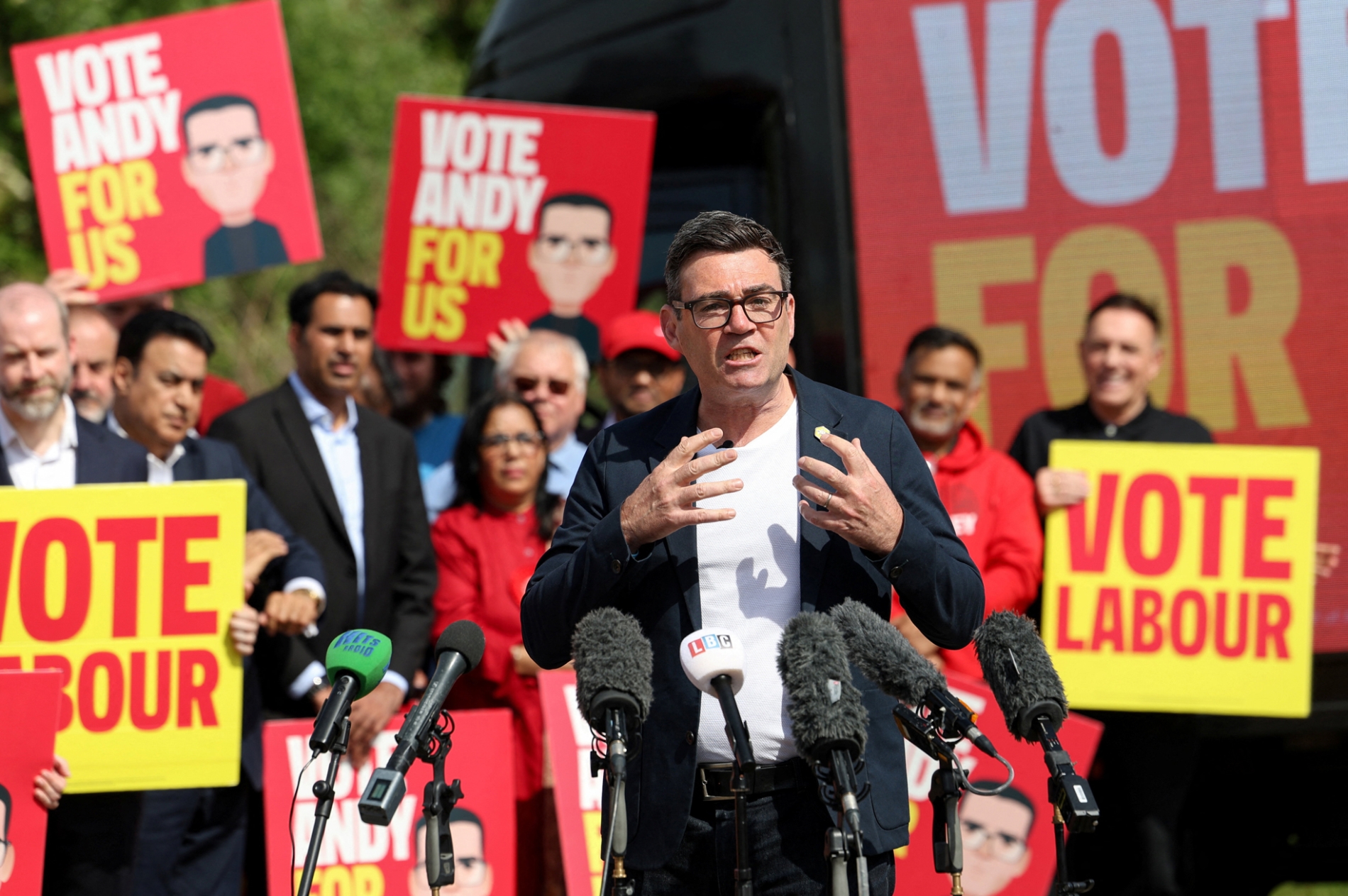
Reuters
Mayor of Greater Manchester Andy Burnham during the launch of his by-election campaign in Ashton-in-Macekerfield, on 22 May 2026.

Since then, something curious has been happening in this shadowy, undeclared war of succession. Seen by the party, and in particular its members, as a figure on the right, Streeting has been moving steadily leftwards. He has spoken of the resistance he encountered over his views on Gaza, for instance. He has let it be known that he favours a wealth tax and wants to speed up the reform of social care in the country. He has suggested that some of Shabana Mahmood’s changes to immigration rules are too severe. Most momentously, and perhaps most cunningly, he has made it clear that he thinks Brexit was a mistake and that the country should return to the European fold at the first opportunity.

The cunning here is not something that his main rival can easily acknowledge. Andy Burnham is standing in Makerfield, a constituency that only a matter of weeks ago voted overwhelmingly in favour of Nigel Farage’s Reform UK. When Streeting opened up the can of worms that is Europe in the tenth anniversary of Britain’s departure, it was designed to embarrass his competitor.

No one wishing to breeze through a byelection and return to parliament can afford to antagonise their electorate. You have to be wary of taking them for granted. For that reason, Burnham has tried to avoid the silly notion that he cares only about Downing Street. He has spent a lot of his time speaking about local issues, such as flooding. He has even, as I jokingly predicted, been sharing their pain over potholes. The one local issue he cannot discuss is that they all voted Reform five minutes ago.
 Andy Burnham undoubtedly has the gift for communication which the Labour government sorely lacks

Thus, Burnham has declared that he hopes to see the country return to the European Union 'in my lifetime', but it is not the issue for today. First, we must concentrate on domestic issues, including reversing the damage caused by Thatcher's privatisation of the utilities. Water, for instance. That would help fix the flooding problem. The potholes will be sorted by decentralising power from Whitehall to the local level, because there's really no contradiction between wanting to bring about change at the local or the national level. Change is change.

He may be able to allay some of their fears this way, but no one votes Reform to fix the highways. At some point, you have to provide some red meat too. Burnham has praised Mahmood's efforts to resolve problems over immigration: "I applaud the home secretary, actually, for the way in which she's faced up to some of the issues that need to be gripped." He has suggested that new detention centres be built to house asylum seekers. He has hesitated to call Israel's actions in Gaza genocidal. He's made no mention of taxing the rich and, though he talks about more investment in defence, he maintains it can be achieved with more borrowing.

On the vexed topic of borrowing, he has tempered his remarks about being 'in hock' to the markets—remarks which caused a flutter of panic in the world of finance—by claiming: "My argument was always that politicians have left the country in hock. If you give up, as we did … the levers of control, you end up losing control of public spending and not able to get a productive, efficient state as a result. My argument is about kind of retaking that control, so that you can give yourself some headroom and not be always looking over your shoulder." 

Kind of retaking that control doesn't come close to the potency of "Take Back Control," coined by the evil genius of Brexit, Dominic Cummings. Still, as a faint echo of the old slogan it might do just enough, subliminally, to reassure people who voted leave.

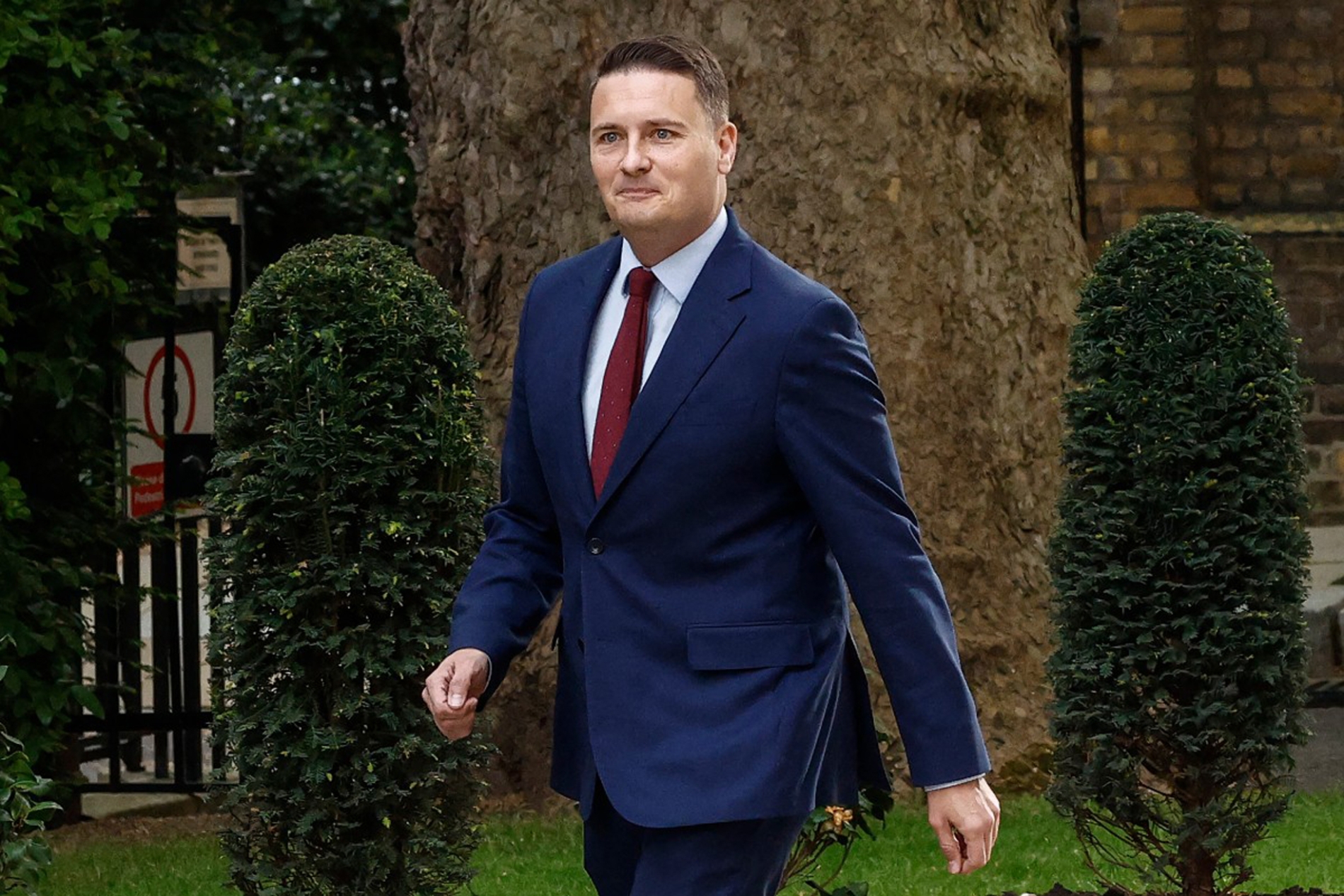
AFP
Resigned British Health Minister Wes Streeting arrives at the Prime Minister's residence at Downing Street on 13 May 2026.

In short, while Streeting has been able to adopt a left-of-centre image, Burnham has had to water down his left-wing positions, to the point where it's exactly as if the two of them have swapped places. While none of his positions are hair-raisingly right-wing, they do give some credence to the view that Burnham is slippery.

This image of a malleable, crowd-pleasing Burnham is useful to his enemies, whether on the left or the right of the spectrum. Back in September of last year, the Daily Express showed early on the attack lines that he would encounter. The paper began with the improbable assertion that women liked him, but they couldn't decide whether to coddle or to seduce him. His luxuriant eyebrows could be to blame. Whatever, it was beyond doubt that the Manchester mayor was 'telegenic' and that he dressed in a way befitting a blunt, straight-talking man of the people: "It's the uniform of soap boxes, draughty doorsteps and windy corners. A style that signals, "let's have a pint," and speaks directly to Labour's traditional working-class base."

However, there was a catch: Burnham had been branded a 'political weather vane' by colleagues for flip-flopping on his economic position. As one Labour insider (unnamed) had said: "He's agreed with so many different views, he's forgotten his own mind."

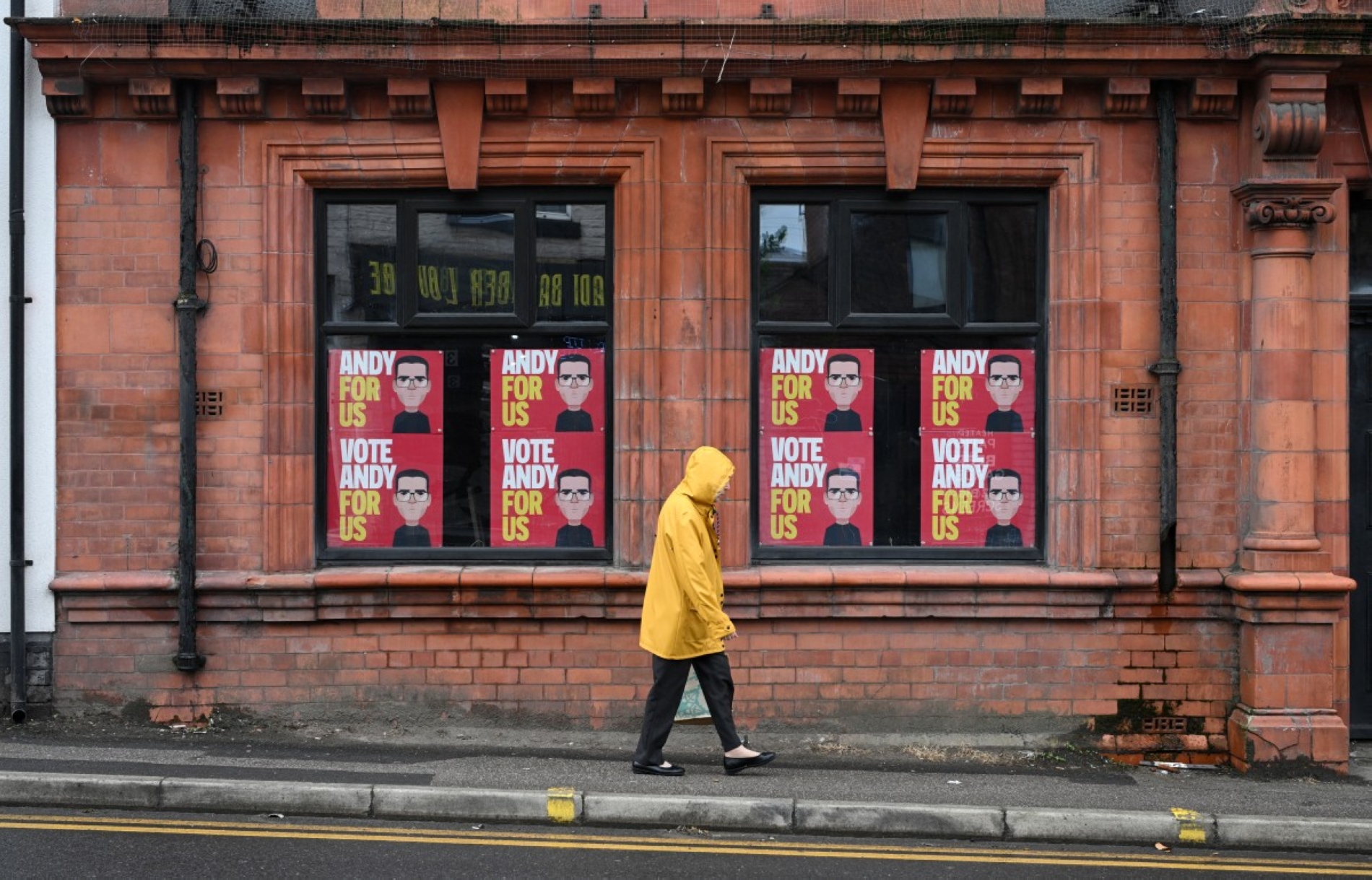
OLI SCARFF / AFP
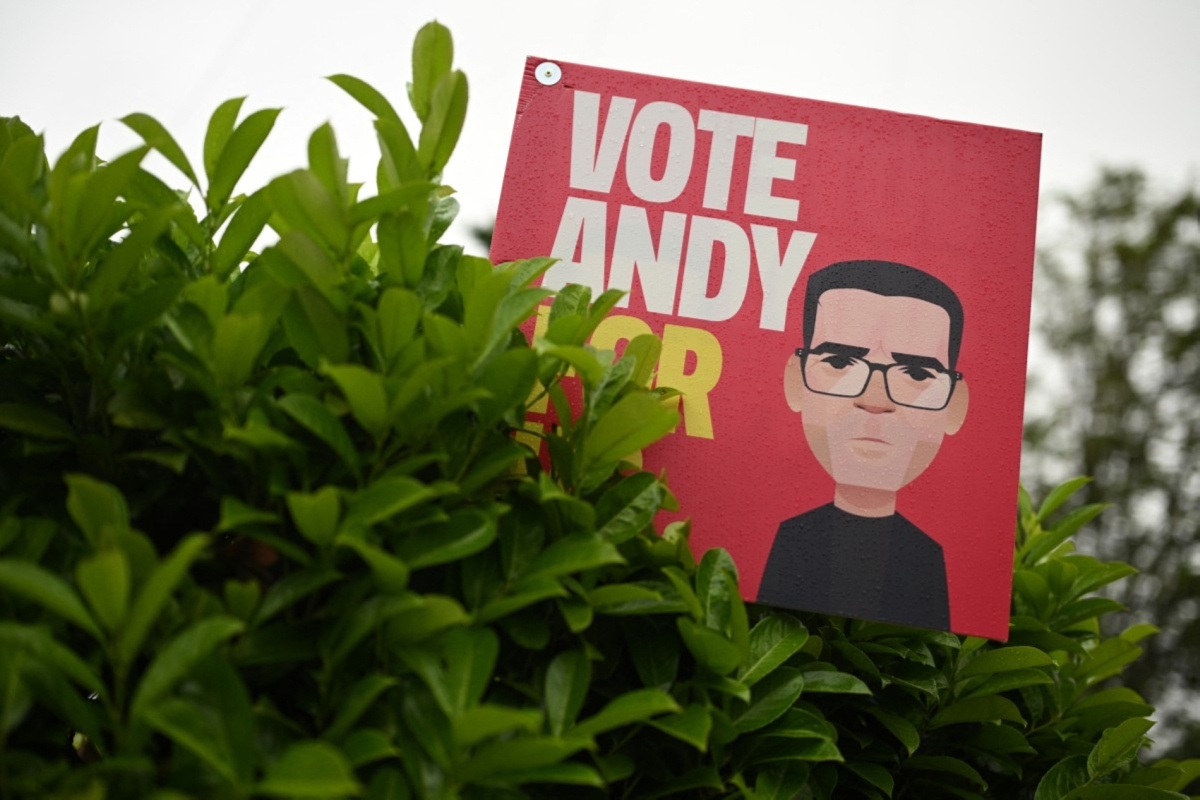
A pedestrian walks past a banners for Labour's Andy Burnham, as they pass a residential property in Ashton-in-Makerfield, west of Manchester in north-west England on 3 June 2026, ahead of the Makerfield by-election.

Such carping aside, the affability of the man is obvious when he is out and about in the Makerfield streets, canvassing on the doorstep. He has an easy charm. It also has to be said that he's had notable success as the mayor of Manchester, particularly with the public-private partnership that led to his Bee Network, which provides punctual buses at half the cost to passengers. It did him a lot of good when Tony Blair criticised his intention to reverse the trajectory of the country since the 1980's—code for declaring the legacy of Thatcher, but also of Blair himself, a failure.

But the manner in which he has had to chop and change in order to appeal to a very recently Reform-adjacent constituency may have confirmed the view of his critics. There is a line Groucho Marx comes out with that they might do well to quote as a warning: "These are my principles, and if you don't like them... Well, I have others."

If he has already shied away from his more radical pronouncements, just how much of the bold progressive will be left by the time Burnham gets into parliament? Meantime, just how left-wing will his main opponent be, by the time an open contest for the leadership begins?

Both men are better communicators than the present prime minister. That said, it would be hard to outdo Keir Starmer when it comes to policy changes, U-turns, and the like. Labour party members only have to cast their minds back to the positions he espoused when he himself was standing for the leadership. The real question is whether changeability is really so unique to Sir Keir. It may just be structural, arising naturally from changes among Labour's supporters. At root, the supporters' changeability is to blame.

ALBERTO PEZZALI / AFP
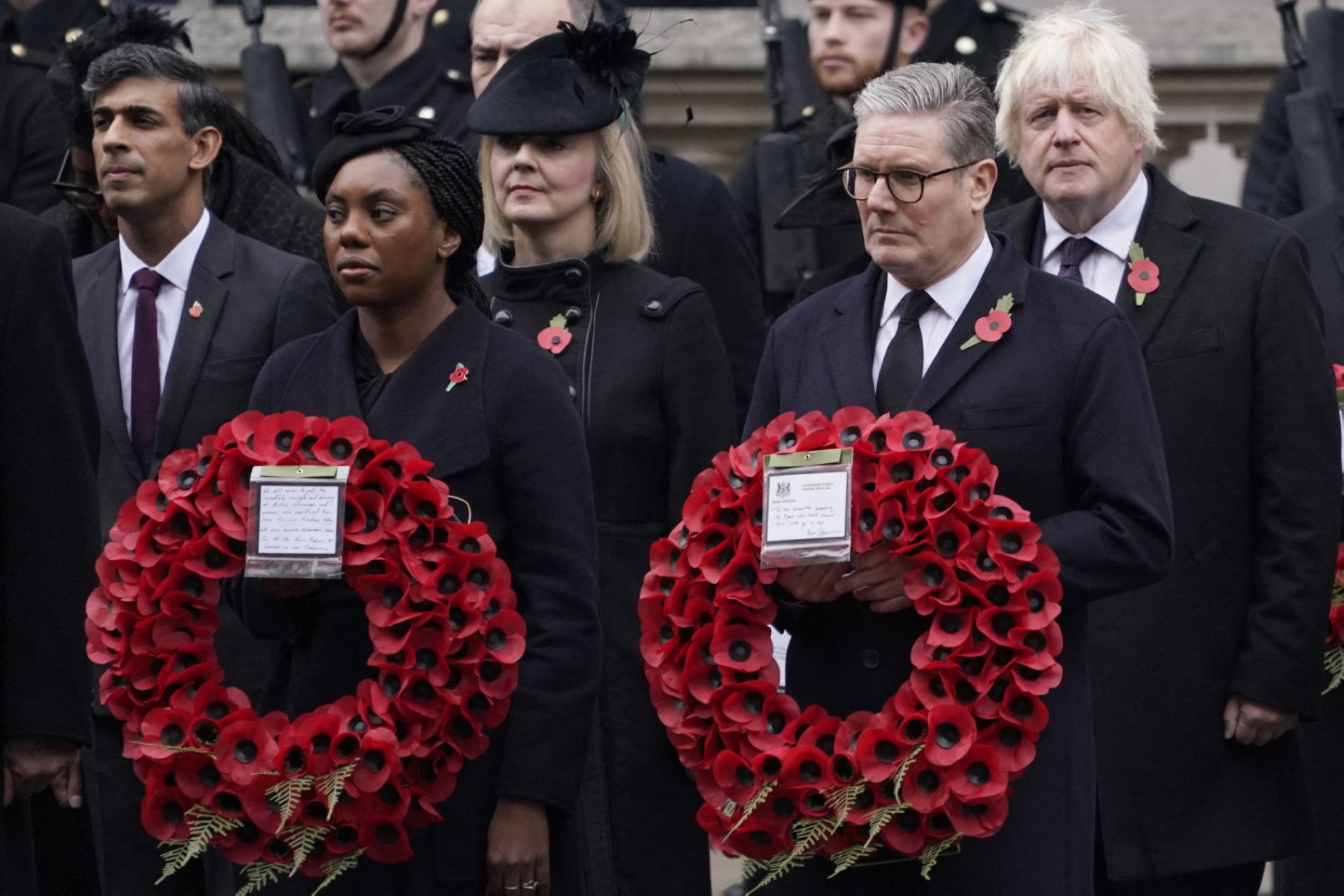
Britain's former Prime Ministers Rishi Sunak, Liz Truss, Boris Johnson, and current PM Keir Starmer at the Cenotaph on Whitehall in central London, on 10 November 2024.

The problem with all of this is that Britain is suffering from crisis-level disenchantment with its politicians. Commenting on the rapid succession of prime ministers over the past decade, some have even asked whether the country is governable at all. If people feel they are being bamboozled, they don't simply throw up their hands and stay away from the polling stations. Enough people continue to seek the answer in anti-politicians, the kind of popularists on the left and right who promise to overcome the main parties' inadequacies. In this way, as Plato observed, democracies can suddenly turn into tyrannies, through a disenchantment so comprehensive that voters abandon politics altogether.

The question also arises of what change could possibly mean in medias res. Andy Burnham undoubtedly has the gift for communication which the Labour government sorely lacks. Even his sternest critics would find it hard to portray him as a ruthless demagogue. Nonetheless, any change candidate will have to face a dilemma if they bring in policies that didn't appear in the party's manifesto. They will have to face the issue of a mandate.

If they merely change the face and tone of the government, Streeting and Burnham will not be able to live up to the promise of change on which both are running. That lack of change, in turn, feeds the resentment that benefits Nigel Farage. Substantial change, then, is the key offer from Burnham. 

Streeting and Burnham will not be able to live up to the promise of change on which both are running if they merely change the face and tone of the government.

As he told Tom McTague back in the autumn: "It's the plan that matters most, rather than me. Can we agree on a plan to turn this country around by retaking control of those essentials (the utilities, such as water) and being bold about it, and then helping to reduce the cost of living for people and helping control public spending as a result?" That sounds rather more like his plan than any plan likely to be agreed by this government. The point, Burnham says, is that "it can't be just a changing of the guard: you have got to change the whole culture and… are people up for that?" Burnham, then, is offering something far more radical than a change of leadership. He wants a change in direction and a wholesale change in personnel: a northern takeover."

Yet if things continue the way they've been going, how much of this zeal for change will be left? Burnham and Streeting might have swapped positions altogether by the time they run, shaped entirely by their attempts to reflect the views of their target electorates. In doing so, they risk abandoning whatever principles they had. They could end up confirming the suspicion that Groucho was right about politicians who offer change. It's a dangerous suspicion to be confirming right now, with so many wannabe tyrants standing by.  

font change